To buy coffee with a conscience, look for certifications like Fair Trade or seek out brands practicing Direct Trade. Fair Trade guarantees fair wages, good working conditions, and environmentally friendly practices, while Direct Trade emphasizes direct relationships with farmers for better prices and quality. Both aim to promote sustainability and social justice. If you want to understand which options best align with your values, there’s more to discover below.
Key Takeaways
- Look for Fair Trade certification to ensure fair wages, community support, and environmentally sustainable practices.
- Support Direct Trade brands that build transparent, ongoing relationships with farmers for higher quality and better social impact.
- Research brands’ practices beyond labels, verifying fair wages, environmental standards, and social initiatives through credible reports.
- Consider paying premium prices for ethically sourced coffee, which often reflects better compensation and sustainable farming.
- Be aware of limitations in certification standards and market gaps; prioritize transparency and direct communication when possible.

Amazon Fresh, Organic Fair Trade Peru Whole Bean Coffee, Medium Roast, 12 Oz
- Fragrant Medium Roast Coffee: Smooth finish and rich aroma
- 12-Ounce Whole Bean Bag: Freshly roasted coffee beans
- 100% Arabica Coffee: Grown in Peru for quality
As an affiliate, we earn on qualifying purchases.
As an affiliate, we earn on qualifying purchases.
Understanding Fair Trade Certification and Its Benefits
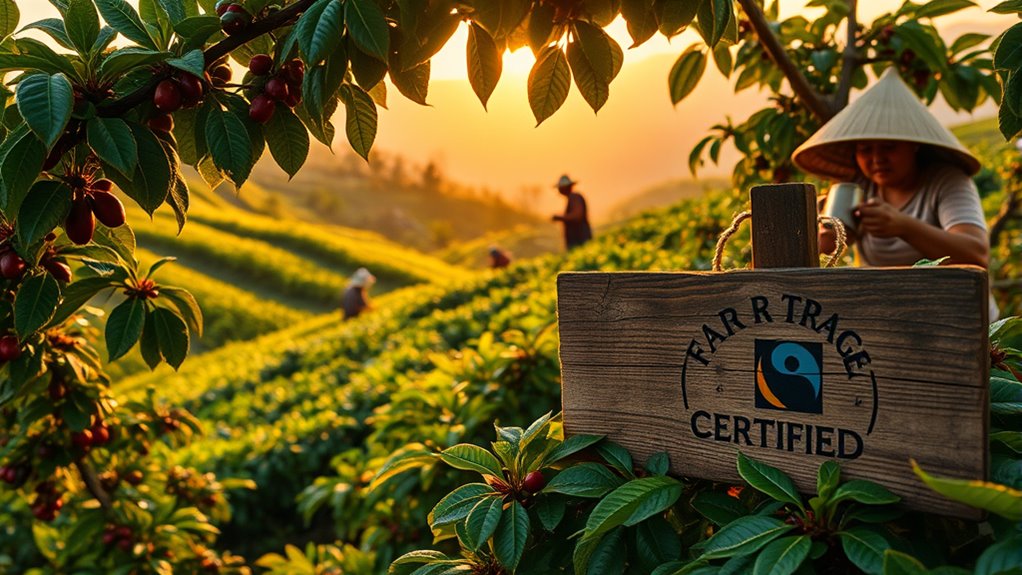
Understanding Fair Trade certification is key to recognizing how it benefits coffee farmers and consumers alike. When you buy Fair Trade coffee, you’re supporting farmers who receive a guaranteed minimum price, protecting them from volatile markets. This ensures they earn a fair income, which helps improve their quality of life and fund community projects like schools and clinics. Fair Trade also enforces social standards, prohibiting forced labor and child exploitation, and promotes environmentally friendly farming practices such as organic cultivation. By choosing Fair Trade, you contribute to a more sustainable coffee industry that values social justice and environmental health. Your purchase helps farmers build resilient communities while enjoying better working conditions. This certification provides transparency and assurance that your coffee aligns with ethical and sustainable principles. Additionally, Vetted – Mad Tasting highlights the importance of quality and sustainability in choosing coffee that supports ethical practices. Furthermore, supporting fair trade can empower farmers to adopt environmentally friendly farming practices that protect ecosystems and ensure the longevity of coffee cultivation. Engaging in fair trade practices also encourages the adoption of social standards, creating safer and more equitable working environments for producers.
The Role of Direct Trade in Ethical Coffee Sourcing

You can see how direct trade fosters greater transparency and traceability by building direct relationships between roasters and farmers. This approach often leads to better pricing and incentives that reward quality and sustainable practices. Focusing on quality and sustainability, direct trade aims to create ethical sourcing that benefits both farmers and consumers.
Transparency and Traceability
Direct trade plays a crucial role in enhancing transparency and traceability in ethical coffee sourcing by establishing direct relationships between roasters and farmers. This setup allows you to learn exactly where your coffee comes from, seeing the farms and communities involved. This transparency also enables consumers to verify farming practices, ensuring that the coffee meets ethical standards. Roasters often share detailed stories about each lot, including farming practices and social initiatives, giving you confidence in the coffee’s origins. Because there are no middlemen, you get clearer visibility into the supply chain, making it easier to verify ethical standards. This transparency helps you make informed choices aligned with your values. Additionally, traceability ensures that the coffee you purchase can be tracked back to specific farms or regions, supporting accountability and encouraging sustainable practices. This process often involves comprehensive documentation that fosters accountability in sourcing. Furthermore, supply chain transparency is essential for building consumer trust and promoting ethical trading practices. As a result, direct trade can help mitigate some of the risks of unethical practices common in more opaque supply chains. Overall, direct trade fosters trust and clarity in your coffee’s journey to your cup. Incorporating attention to detail during your research can further enhance your understanding of the ethical qualities behind your coffee choices.
Pricing and Incentives
Pricing and incentives are central to how direct trade supports ethical coffee sourcing by enabling closer negotiations between roasters and farmers. This approach allows roasters to pay above-market rates, rewarding farmers for quality, sustainable practices, and long-term partnerships. This flexibility encourages farmers to invest in better farming techniques and improve crop quality. Higher prices serve as strong incentives for farmers to adopt environmentally friendly methods and increase productivity. Because transactions are transparent, farmers often receive a larger share of the final price, reducing reliance on intermediaries and boosting their income. This system aligns economic rewards with ethical practices, fostering sustainable development and ensuring that farmers are motivated to maintain high standards. Additionally, the transparency inherent in direct trade builds trust and promotes sustainable farming practices that benefit both the environment and the farmers’ livelihoods. A focus on ethical certification can further reinforce the commitment to responsible sourcing. Furthermore, the incorporation of transparent pricing mechanisms helps maintain fairness and accountability throughout the supply chain, reinforcing the integrity of the system. Recognizing the importance of nutritional value in coffee and other crops can also incentivize farmers to grow higher-quality products that meet consumer demand for ethically sourced, nutritious options. Moreover, leveraging market data allows farmers and roasters to make more informed decisions that support long-term sustainability.
Quality and Sustainability
How does direct trade promote quality and sustainability in coffee sourcing? By fostering close relationships between roasters and farmers, direct trade encourages transparency and accountability. This connection allows you to negotiate higher prices directly with farmers, rewarding quality and sustainable practices. Farmers have more resources to invest in better cultivation techniques, which improves coffee quality and promotes environmentally sound methods. Because there’s no middleman, farmers often receive a larger share of the profits, supporting their long-term livelihoods and community development. These partnerships also enable farmers to adopt climate-smart practices, reducing environmental impact and increasing resilience. Additionally, direct trade often emphasizes plant health and sustainable farming methods, further enhancing the long-term viability of coffee production. Moreover, it encourages fair compensation, which motivates farmers to maintain high standards and invest in their land. This approach can also foster community empowerment, helping local communities thrive alongside environmentally responsible practices. Implementing these ethical practices helps ensure the long-term sustainability of coffee production, benefiting both farmers and consumers. Incorporating traceability into sourcing practices further enhances transparency and consumer trust. Choosing direct trade coffee aligns your purchase with both superior quality and a commitment to sustainability, ensuring your coffee supports ethical farming while delivering the best flavor.
Comparing the Impact of Fair Trade and Direct Trade Practices
You’ll find that transparency and relationships are stronger in direct trade, as buyers work directly with farmers, fostering trust and better communication. Implementing secure data practices can also reinforce the integrity of supply chain transparency, which is vital for consumer trust. Additionally, the use of natural materials can enhance the sustainability and authenticity of the coffee supply chain. Incorporating space optimization techniques can help organizations streamline their logistics and reduce waste in the supply chain process. Recognizing the importance of local knowledge can further improve the effectiveness of sourcing strategies and strengthen community ties.
Transparency and Relationships
Transparency and relationships are central to understanding the differences between Fair Trade and Direct Trade practices. Fair Trade emphasizes certification standards that guarantee transparency through third-party audits and reports, but the actual relationships between farmers and buyers can be indirect. In contrast, Direct Trade fosters close, personal connections, allowing buyers to understand farmers’ practices firsthand and negotiate directly. This often results in clearer, more consistent communication and trust. The table below highlights key differences:
| Aspect | Fair Trade | Direct Trade |
|---|---|---|
| Transparency | Certification audits | Personal relationships |
| Farmer-Buyer Contact | Indirect | Direct and ongoing |
| Information Sharing | Standardized reports | Custom, detailed stories |
Additionally, understanding transparency in these practices helps consumers make more informed decisions about their coffee purchases. Building trust between farmers and buyers can lead to more ethical and sustainable supply chains, ultimately benefiting both producers and consumers.
Price and Quality Control
Price and quality control are at the heart of what differentiates Fair Trade and Direct Trade practices. With Fair Trade, you benefit from a guaranteed minimum price, shielding farmers from market fluctuations and ensuring stable income. This helps maintain consistent quality, but sometimes limits farmers’ flexibility to respond to market demands. In contrast, Direct Trade emphasizes close relationships, allowing buyers and farmers to negotiate higher prices directly, often rewarding exceptional quality and sustainable practices. This can lead to better quality control and more tailored support for farmers. However, without a certification system, standards vary, making quality outcomes less predictable. Both approaches aim to improve price stability and quality, but they do so through different mechanisms—Fair Trade with standardized guarantees, and Direct Trade through personalized negotiations and partnerships.
Social and Environmental Impact
Fair Trade and Direct Trade practices both aim to improve social and environmental outcomes for coffee farming communities, but they do so through different mechanisms. Fair Trade guarantees minimum prices, enforces fair wages, and promotes organic, climate-positive farming, supporting community development and reducing child labor. It protects over 800,000 small farmers and invests premiums into health, education, and infrastructure. In contrast, Direct Trade fosters close relationships between roasters and farmers, often paying higher prices for quality and sustainability, which encourages environmentally sound practices. While Fair Trade emphasizes standardized social and environmental standards, Direct Trade’s impact varies depending on individual relationships and commitments. Both approaches can positively influence communities, but Fair Trade offers broader, more consistent protections, whereas Direct Trade often results in tailored, high-quality, sustainable farming.
Recognizing Consumer Demand for Ethical Coffee Products

Have you noticed that more consumers are actively seeking out ethically sourced coffee? This shift reflects growing awareness of social and environmental issues in coffee production. You’re likely to see labels like Fair Trade and Direct Trade, which signal ethical practices. Many buyers now prioritize transparency and provenance, valuing stories about farmers and sustainable methods. Consumers are willing to pay premium prices, driven by a desire to support fair wages, community development, and eco-friendly farms. Surveys show that over half of coffee drinkers recognize Fair Trade labels, and most hold positive impressions when they see them. This demand influences retailers and roasters to offer more ethically sourced options, making it easier for you to make choices aligned with your values without sacrificing quality or taste.
Challenges and Criticisms Facing Fair Trade and Direct Trade Models
While both Fair Trade and Direct Trade aim to promote ethical sourcing, they face significant challenges that can undermine their effectiveness. Not all Fair Trade premiums reach farmers directly, as complex market structures and multiple certifications create inefficiencies. Certification standards can be costly and difficult for small or poor farmers to meet, limiting participation. In Direct Trade, the lack of standardized criteria means practices vary widely, making it hard to guarantee social or environmental benefits. Market competition among certifications sometimes dilutes benefits, and price guarantees may distort local economies or discourage diversification. Additionally, intermediaries can suffer income losses, altering supply chain dynamics. These issues highlight ongoing concerns about whether these models consistently deliver the promised social, economic, and environmental improvements to farmers and communities.
How Social and Environmental Goals Are Achieved Through These Practices
Social and environmental goals are advanced through the targeted practices embedded in Fair Trade and Direct Trade models. Fair Trade guarantees minimum prices, fair wages, and safe working conditions, reducing exploitation and supporting social justice. It invests in community projects, such as health and education, fostering local development. Fair Trade also promotes organic farming and climate-positive practices, protecting ecosystems and enhancing resilience to climate change. Meanwhile, Direct Trade emphasizes close relationships and transparency between farmers and buyers, often paying above-market prices to incentivize quality and sustainable methods. These practices prioritize environmentally sound farming and long-term partnerships, encouraging farmers to adopt sustainable techniques. Together, these approaches align economic incentives with social equity and environmental stewardship, helping to create a more sustainable and equitable coffee industry.
Practical Tips for Making Conscientious Coffee Choices
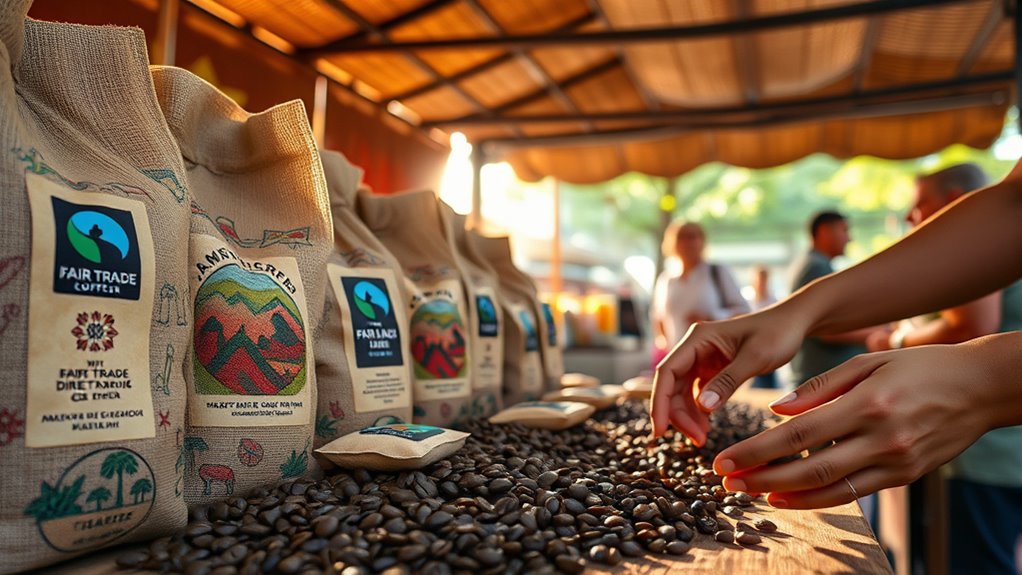
To make more conscientious coffee choices, start by looking for certification labels like Fair Trade or Organic, which indicate the product meets specific social and environmental standards. These certifications guarantee that farmers receive fair wages, work in safe conditions, and use sustainable farming practices. Additionally, research brands that prioritize transparency and ethical sourcing; many roasters share sourcing stories and direct relationships with farmers. Support companies investing in community development and environmental initiatives. Consider buying from local or small-scale roasters committed to sustainability. Finally, stay informed by reading credible reports and NGO data on ethical coffee practices. Your choices can promote better wages, environmentally friendly farming, and stronger communities—making your coffee consumption more aligned with your values.
Frequently Asked Questions
How Does Fair Trade Certification Ensure Fair Wages for Farmers?
Fair Trade certification guarantees fair wages for farmers by setting a minimum price, currently around $1.75 per pound, which acts as a safety net against market fluctuations. This guarantee helps farmers earn enough to cover their costs and sustain their livelihoods. Additionally, Fair Trade standards prohibit forced and child labor, ensuring that workers receive fair pay and work under safe, equitable conditions.
What Are the Key Differences Between Fair Trade and Direct Trade Pricing?
You might find it surprising that only 12% of eligible coffee is Fair Trade, yet demand remains high. When it comes to pricing, Fair Trade guarantees a minimum of about $1.75 per pound, ensuring farmers get a stable income. In contrast, Direct Trade allows buyers and farmers to negotiate prices directly, often paying above market rates for quality and ethics. This flexibility can lead to better support for farmers and higher-quality coffee.
Can Small Farmers Afford the Costs of Fair Trade Certification?
Small farmers often find the costs of certification challenging, especially without access to sufficient resources or support. Certification fees, compliance, and ongoing audits can be expensive, making it harder for the poorest farmers to participate. However, some programs and organizations offer financial assistance or simplified processes to help farmers afford certification. To support them, you can choose certified coffee and look for brands that invest in helping farmers bear these costs.
How Do Certifications Impact the Environmental Sustainability of Coffee Farms?
Certifications act like a green shield, boosting environmental sustainability on coffee farms. They encourage farmers to adopt organic methods, reduce pollution, and protect ecosystems. By adhering to strict standards, farms become more resilient against climate change and soil degradation. This creates a ripple effect, improving biodiversity and conserving water. When you buy certified coffee, you’re helping to nurture healthier farms and a greener planet, one cup at a time.
Are There Any Risks of Greenwashing in Ethical Coffee Marketing?
Yes, greenwashing is a real risk in ethical coffee marketing. You might see brands claiming to be sustainable or fair without genuine commitments or transparent practices. To avoid falling for it, you should research certifications, check for clear sourcing stories, and look for third-party verification. By staying informed and asking questions, you guarantee the coffee you buy truly supports social and environmental causes rather than just marketing claims.
Conclusion
Ultimately, choosing ethical coffee isn’t just about what’s on the label—it’s about making a difference with every cup. Fair Trade and Direct Trade each have strengths and flaws, but your informed choices drive change. Remember, “The proof of the pudding is in the eating,” so trust your values and support practices that align with your conscience. Your mindful selection can help build a more just and sustainable coffee industry for everyone.