
To bring out natural sweetness without adding sugar, focus on controlling your mash temperature—higher temps (65-70°C) produce more unfermentable sugars, giving the beer a richer body. Choose yeast strains that retain residual sugars and ferment at cooler temps to keep sweetness intact. Incorporate alternative ingredients like honey, candi syrup, or ancient grains to enrich flavor naturally. Managing fermentation timing and dynamics also preserves sweetness. Keep exploring these techniques to master naturally sweet brewing—more tips await.

Get coffee and tea gear delivered free with Prime
- Fast, free delivery on millions of items
- Prime Video, Amazon Music and more included
- Member-only deals all year
Key Takeaways
- Adjust mash temperatures to higher ranges (65-70°C) to produce more unfermentable sugars, enhancing natural sweetness.
- Select yeast strains known for higher residual sugar retention and fruity flavor contributions.
- Control fermentation duration and temperature; shorter or cooler fermentations preserve more residual sugars.
- Incorporate alternative fermentable ingredients like honey, Belgian candi sugars, or specialty grains for natural sweetness.
- Fine-tune fermentation conditions and process parameters to optimize residual sugars without added sugars.
As an affiliate, we earn on qualifying purchases.
Mastering Mash Temperatures for Optimal Sugar Profiles
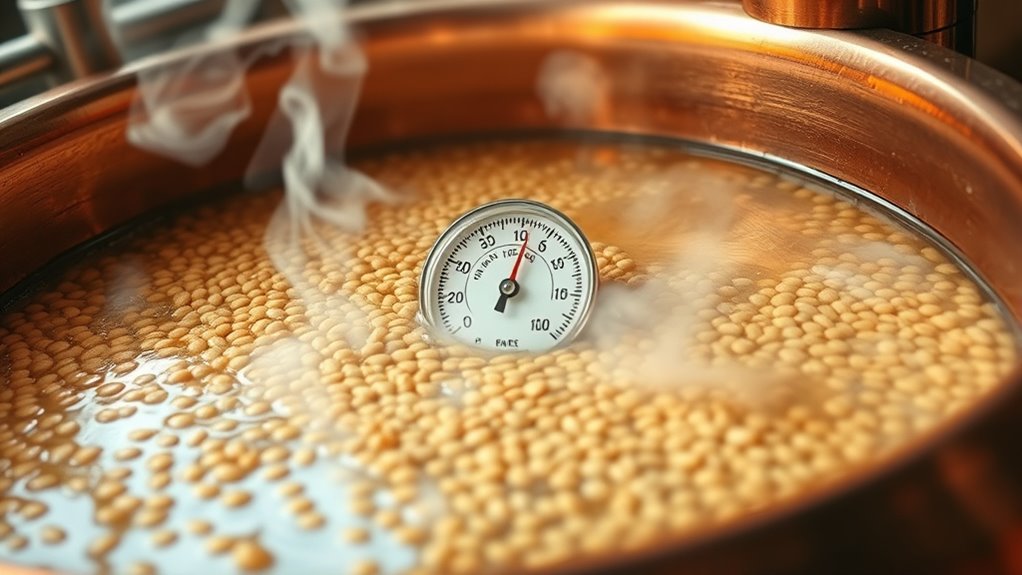
Understanding how mash temperature influences sugar profiles is essential for brewing beers with the desired sweetness and body. When you mash at higher temperatures (around 65-70°C), you promote the formation of unfermentable sugars, resulting in a richer, fuller mouthfeel and a sweeter beer. Conversely, mashing at lower temperatures (around 60°C) produces more fermentable sugars, leading to a drier finish with less residual sweetness. Adjusting mash temperature allows you to control the balance between fermentable and unfermentable sugars, directly impacting the beer’s sweetness and body. Longer mashing at higher temperatures can enhance sweetness without adding extra ingredients. Keep in mind, enzyme activity shifts with temperature, influencing how starches break down into sugars, so precise control is key to achieving your desired sugar profile. Additionally, understanding resources and tools available for monitoring temperature can help you optimize the process. Proper temperature control ensures consistency and accuracy in brewing, ultimately affecting the final product. Moreover, temperature management techniques can help preserve enzyme activity and improve efficiency during mashing. Using thermometer calibration regularly can further enhance your precision in maintaining optimal mash temperatures. Being aware of enzymatic activity changes at different temperatures can also support more consistent results.
Timing Fermentation for the Perfect Residual Sweetness

Timing your fermentation carefully is essential for achieving the ideal residual sweetness in your beer. If you ferment too long, yeast will convert more sugars, resulting in a drier, less sweet beer. Shorter fermentation leaves higher residual sugars, enhancing sweetness and mouthfeel. Monitoring gravity helps you determine when to stop fermentation, preserving desired residual sugars. Temperature also influences fermentation speed; cooler temps slow sugar conversion, leaving more sweetness. To visualize this, consider the following:
| Fermentation Duration | Residual Sugar Content | Resulting Flavor |
|---|---|---|
| Short (few days) | High | Sweet, full-bodied |
| Moderate | Balanced | Smooth, nuanced |
| Long (weeks) | Low | Dry, crisp |
| Extended (months) | Very low | Light, less sweet |
Additionally, understanding the fermentation process can help brewers fine-tune their techniques to achieve the perfect balance of residual sugars and flavor. Proper temperature management during fermentation is crucial for controlling sugar conversion rates and achieving the desired sweetness profile. Recognizing the impact of fermentation time on flavor development allows brewers to better tailor their brewing process to their preferences.
Selecting Yeast Strains to Enhance Natural Flavors

Choosing the right yeast strain can markedly influence your beer’s natural flavor and sweetness. Some strains produce fruity or spicy notes, enhancing residual sugars and mouthfeel, while others ferment more completely, resulting in drier finishes. By understanding each strain’s flavor profile and fermentation residuals, you can tailor your process to highlight natural sweetness without added sugars.
Yeast’s Flavor Profile
Selecting the right yeast strain is essential because different yeasts produce distinct flavors that can amplify the beer’s natural sweetness. For example, *Saccharomycopsis fibuligera* adds fruity notes like plum and berry, enhancing perceived sweetness. Some strains leave higher residual sugars, resulting in a fuller body and richer mouthfeel. Others produce cleaner, drier finishes, emphasizing subtle malt flavors without masking natural sweetness. Temperature and fermentation conditions influence these flavor profiles further, but your choice of yeast sets the foundation. Additionally, understanding tuning techniques can help you optimize fermentation parameters for desired flavor outcomes. By selecting strains known for their flavor contributions, you can craft beers that highlight the inherent sweetness of your ingredients without relying on added sugars. Experimenting with different yeast types allows you to control fermentation and achieve the perfect balance of complexity and natural flavor expression in your brew.
Fermentation Residuals Impact
The residual sugars left after fermentation play a essential role in shaping your beer’s flavor and sweetness profile, and the yeast strain you choose directly influences these residuals. Different strains metabolize sugars uniquely, affecting final gravity, mouthfeel, and perceived sweetness. Selecting the right yeast allows you to retain more natural sugars, enhancing sweetness without added ingredients. Additionally, some strains, like Saccharomycopsis fibuligera, produce fruity flavors that boost perceived sweetness. Strains with higher residual sugar tolerance leave more unfermented sugars, enriching mouthfeel. Cooler fermentation temperatures slow sugar conversion, preserving natural sweetness. Yeast choice influences how much residual sugar remains, directly impacting the beer’s body and flavor complexity. Understanding the yeast strain’s fermentation characteristics is crucial for achieving the desired natural sweetness in your brew. Moreover, the fermentation process itself can be optimized to maximize residual sugar retention, allowing brewers to craft beers with a richer, sweeter profile tailored to their preferences. Additionally, controlling fermentation temperatures can further help in maintaining residual sugars, ensuring the final product meets the desired flavor profile. Incorporating specific yeast strains known for their sugar retention capabilities can further improve your brewing results. Recognizing the impact of fermentation conditions helps brewers fine-tune their process for optimal residual sugar levels.
Strain Selection Strategies
To enhance natural flavors and sweetness in your beer, focusing on the right yeast strain is essential. Different strains metabolize sugars uniquely, leaving varying levels of residual sugars that influence sweetness and mouthfeel. For example, *Saccharomycopsis fibuligera* produces fruity aromas like plum and berry, boosting perceived sweetness. Choose strains known for higher residual sugar retention if you want a fuller, sweeter profile, especially at cooler fermentation temperatures (~20°C). Some yeast strains naturally leave a higher final gravity, preserving more natural sugars. Matching your yeast choice to your desired flavor profile ensures you can highlight natural sweetness without added sugars. Understanding yeast performance can help you select strains that better suit your fermentation conditions and flavor goals. Additionally, selecting strains that are tolerant to fermentation temperature fluctuations can help maintain consistent residual sugars and flavor profiles. Moreover, considering fermentation dynamics allows brewers to fine-tune fermentation parameters for optimal sweetness and flavor retention. Being aware of yeast health can improve fermentation efficiency and ensure consistent results across batches. Maintaining proper oxygen levels during initial fermentation stages can also support healthy yeast activity and influence residual sugar levels for enhanced natural sweetness.
Incorporating Alternative Sugars and Ingredients

Incorporating alternative sugars and ingredients into brewing offers a versatile way to naturally enhance sweetness and flavor complexity. By choosing specific ingredients, you can tailor your beer’s profile without relying on residual sugars. For example, you might consider:
- Belgian candi sugars for added depth and dark fruit notes.
- Dextrose to boost fermentable sugars subtly, controlling sweetness.
- Honey for unique floral and fruity flavors, though some aromatics may diminish during fermentation.
- Alternative grains like millet or sorghum to introduce natural sweetness and different flavor nuances.
These choices allow you to experiment with sweetness levels and flavor profiles, creating a more nuanced beer. Proper timing and amounts are key to achieving the balance you desire, without overly relying on unfermented residual sugars.
Managing Fermentation Dynamics to Control Sweetness
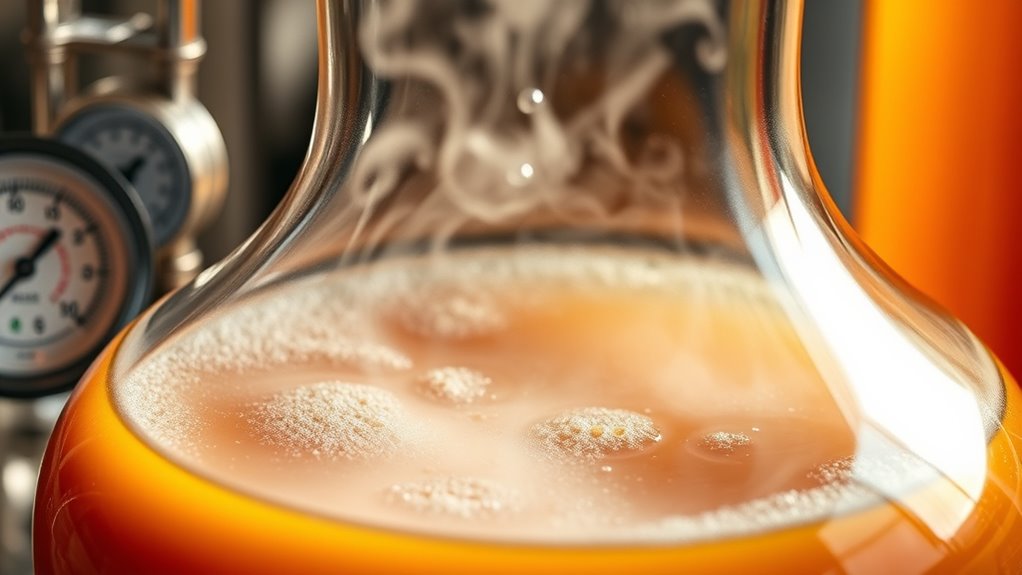
Controlling fermentation dynamics is key to managing a beer’s sweetness level because it directly influences how much residual sugar remains after fermentation. You can do this by selecting yeast strains that naturally leave higher final gravities, preserving more sweetness. Maintaining a steady fermentation temperature around 20°C helps yeast metabolize sugars predictably, avoiding excessive dryness or sweetness. Shortening fermentation time retains more residual sugars, resulting in a fuller, sweeter profile. Conversely, longer fermentations or cooler temperatures encourage yeast to consume more sugars, producing drier beers. Monitoring gravity regularly allows you to gauge sugar conversion accurately. Additionally, managing fermentation speed—either by controlling temperature or yeast pitching rates—ensures residual sugars stay in balance, giving you precise control over your beer’s sweetness.
Utilizing Ancient Grains and Non-Traditional Sugars
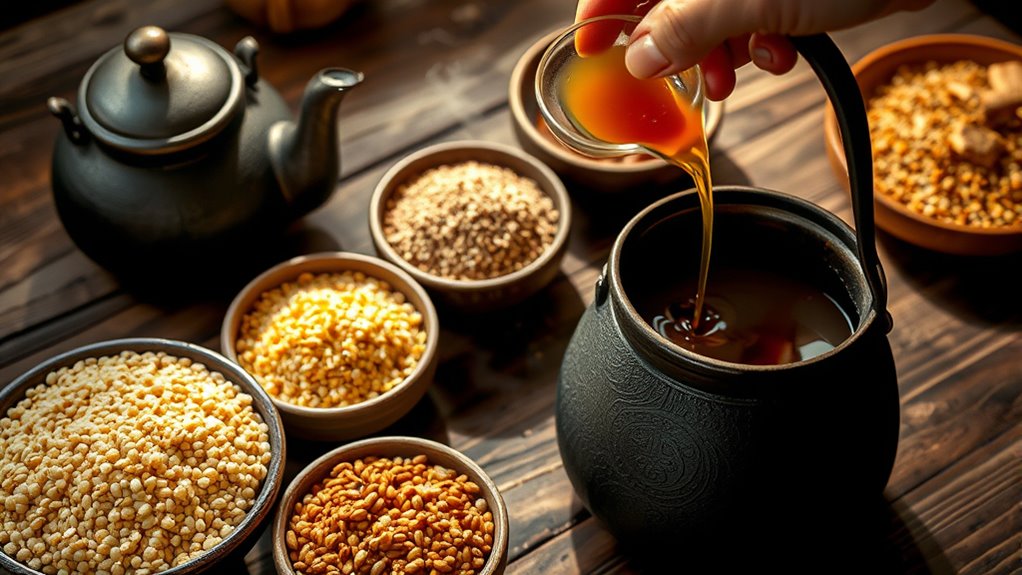
Ancient grains and non-traditional sugars offer brewers innovative ways to enhance natural sweetness and flavor complexity in beer. By incorporating ingredients like millet, spelt, or amaranth, you introduce unique starches that produce diverse sugar profiles, enriching mouthfeel and aroma. Using non-traditional sugars such as Belgian candi syrup, honey, or demerara sugar allows you to control sweetness without overly refining flavors. Incorporating leadership skills such as strategic planning and adaptability can help you experiment effectively and refine your brewing techniques. Understanding state tax implications for different ingredients can also influence your ingredient choices and brewing schedule, ensuring you maximize flavor while maintaining cost efficiency. Additionally, exploring efficiency ratings of various ingredients can guide you in selecting those that optimize fermentation and flavor development. Experiment with ancient grains to add depth and subtle sweetness. Incorporate alternative sugars for nuanced flavor layers. Adjust mash temperatures to optimize unfermentable sugars from grains. Use specific non-traditional sugars at different brewing stages for tailored sweetness. Moreover, being aware of ingredient sourcing options helps ensure quality and consistency in your brewing process. These techniques enable you to craft beers that highlight natural sweetness through innovative ingredients.
Frequently Asked Questions
How Does Oxygen Exposure Affect Natural Sweetness During Brewing?
Oxygen exposure can diminish natural sweetness during brewing by causing oxidation, which degrades delicate flavors and can dull fruity and sweet notes. You need to minimize oxygen contact, especially during fermentation and transfer, to preserve residual sugars and flavor compounds. By sealing your vessels properly and avoiding unnecessary aeration, you help maintain the beer’s natural sweetness, ensuring the fruity and malty profiles stay vibrant and well-balanced.
Can Fermentation Temperature Influence Residual Sugar Levels Significantly?
Fermentation temperature can substantially influence residual sugar levels. When you ferment at lower temperatures, yeast activity slows, leaving more sugars unconverted and boosting sweetness. Conversely, higher temperatures energize yeast, converting more sugars into alcohol and reducing residual sweetness. This contrast allows you to control your beer’s flavor profile, balancing dryness and sweetness. Adjusting fermentation temperature lets you craft beers with nuanced sweetness, tailored precisely to your desired style.
What Role Does Ph Play in Sugar Conversion and Sweetness?
You should know that pH plays a vital role in sugar conversion and sweetness because it affects yeast activity and enzyme function during brewing. Maintaining an ideal pH (around 5.2-5.5) helps enzymes break down starches efficiently, releasing fermentable sugars. If the pH is too high or low, it can hinder fermentation, resulting in less sugar conversion and impacting the final sweetness and flavor profile of your beer.
Are There Natural Enzymes That Enhance Sweetness During Brewing?
You won’t believe it, but natural enzymes can turn your brewing into a sweetness powerhouse! Amylases and glucanases break down starches into fermentable sugars, boosting natural sweetness. Proteases improve protein breakdown, enhancing mouthfeel and flavor. By controlling mash temperature and pH, you activate these enzymes, revealing hidden sweetness in your grains. Using these powerful biological tools, you can craft beers with a naturally rich, sweet profile without adding extra sugars.
How Does Carbonation Impact Perceived Sweetness in Naturally Brewed Beers?
Carbonation enhances perceived sweetness in naturally brewed beers by creating a tingling mouthfeel that amplifies flavor sensations. When you carbonate your beer, the bubbles stimulate your palate, making residual sugars seem more prominent and balanced. This effervescence also lifts aromatic compounds, highlighting fruitier and sweeter notes. So, by controlling carbonation levels, you can naturally intensify the beer’s sweetness perception without adding extra sugars, resulting in a more balanced and enjoyable drink.
Conclusion
By mastering mash temperatures and fermentation timing, you can naturally enhance sweetness without added sugars. Choosing the right yeast strains and incorporating unique ingredients like ancient grains further elevates flavor. Did you know that beers brewed with traditional grains and optimized fermentation can contain up to 30% less residual sugar, yet taste sweeter and more complex? Embrace these techniques to craft beautifully balanced brews that highlight natural sweetness—no sugar needed.
Halloween Picks
halloween
As an affiliate, we earn on qualifying purchases.