Your morning coffee can make a big difference for wildlife conservation. Choosing shade-grown, organic, or certified coffee helps protect forests, support biodiversity, and create habitat corridors for animals. Sustainable practices reduce deforestation, preserve native trees, and promote ecosystem health. By selecting eco-friendly brands and supporting conservation initiatives, you directly contribute to safeguarding wild coffee species and their habitats. Keep exploring how your coffee habits can positively impact wildlife and ecosystems.
Key Takeaways
- Choosing shade-grown, certified coffee supports biodiversity by preserving native trees and providing wildlife habitats.
- Sustainable farming practices reduce deforestation and land conversion, protecting ecosystems and wild coffee species.
- Supporting conservation programs encourages reforestation and habitat restoration efforts that benefit wildlife.
- Consumer demand for eco-friendly coffee promotes responsible agriculture that minimizes habitat fragmentation and biodiversity loss.
- Long-term conservation is achieved through certifications like Bird Friendly, which ensure coffee farms maintain ecological corridors and native flora.

Peet's Coffee, USDA Organic Dark Roast Ground Coffee, 100% Arabica Coffee – French Roast 18 Ounce Bag
- Package Size: 18 Ounce Bag
- Coffee Type: USDA Organic French Roast
- Coffee Origin: 100% Arabica
As an affiliate, we earn on qualifying purchases.
As an affiliate, we earn on qualifying purchases.
The Impact of Coffee Farming on Forest Habitats

Coffee farming markedly impacts forest habitats, primarily through deforestation and land conversion. When you grow coffee on a large scale, you often clear forests to create new plantations, destroying critical ecosystems. This process leaves little room for native wildlife and fragments their habitats, making survival harder for many species. In tropical regions, the expansion of coffee farms drives significant habitat loss, threatening biodiversity. Wild coffee species are especially vulnerable, with over 60% at risk of extinction due to habitat destruction. These conversions reduce the complexity of the ecosystem, disrupting ecological balance and diminishing natural resources. As you enjoy your coffee, it’s important to recognize how widespread farming practices contribute to deforestation, ultimately jeopardizing the rich biodiversity that once thrived in these forests. Additionally, sustainable farming practices and certifications can help mitigate some of these environmental impacts by promoting environmentally friendly methods, which encourage responsible land use and conservation efforts. Implementing shade-grown coffee can further protect forest habitats by preserving canopy cover and supporting wildlife. Incorporating agroforestry techniques is another effective way to balance coffee production with habitat preservation, fostering biodiversity within agricultural landscapes. Moreover, supporting certified sustainable coffee initiatives can significantly reduce environmental harm and promote conservation.
Benefits of Shade-Grown Coffee for Biodiversity
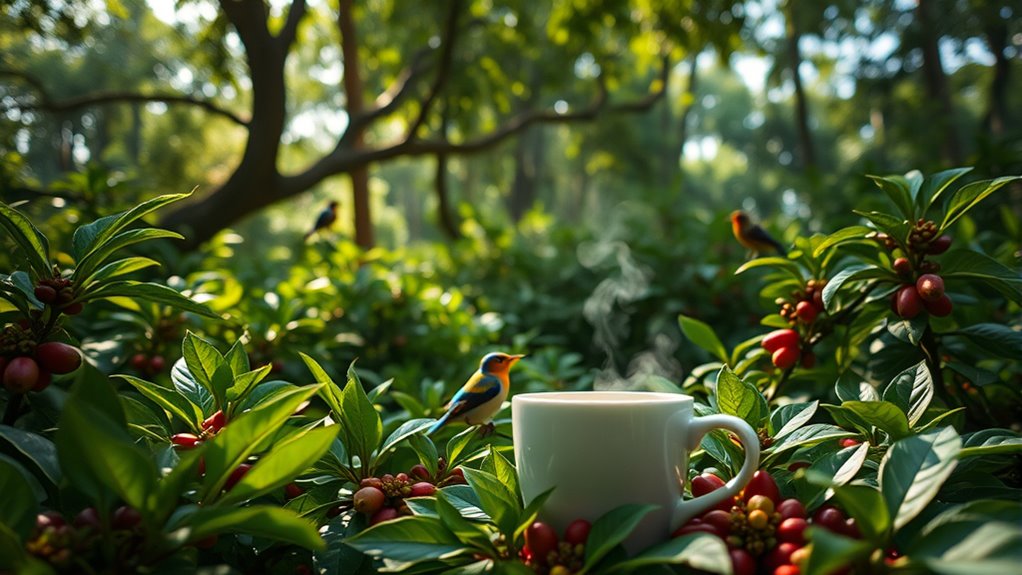
Have you ever wondered how shade-grown coffee benefits biodiversity? When you choose shade-grown coffee, you’re supporting farms that maintain native trees and layered canopies. These lush environments offer essential habitats for birds, bats, frogs, and insects, helping to preserve local ecosystems. Shade trees provide food, shelter, and breeding sites, allowing wildlife populations to thrive. Compared to sun-grown monocultures, shade farms support richer, more diverse communities—often matching native forests’ biodiversity levels. They also act as ecological corridors, connecting fragmented habitats and enabling species movement. Additionally, shade-grown coffee plantations often incorporate agroforestry practices, which enhance ecological stability and promote sustainable land use. By opting for shade-grown coffee, you’re directly contributing to the conservation of endangered species and promoting healthier, more resilient ecosystems. Your choice helps maintain critical biodiversity while ensuring sustainable coffee production. Supporting biodiversity-friendly farming practices can further amplify these positive impacts, fostering a healthier planet for future generations. Furthermore, adopting sustainable farming methods reduces environmental impact, and integrating native plant species into these systems can further boost the benefits for local wildlife and plant communities. A rich variety of native flora supports a wider array of pollinators and other beneficial insects essential for ecosystem health.
How Shade Coffee Supports Wildlife and Ecosystems

Shade coffee farms help preserve essential habitats, giving wildlife a safe place to live and thrive. These farms boost biodiversity by supporting a wide variety of species, from birds to insects. By maintaining native trees and ecosystems, shade coffee plays a key role in protecting wildlife and strengthening ecological health. Incorporating organic and natural practices into coffee cultivation can further enhance these ecological benefits. Additionally, shade-grown coffee can serve as a refuge for pollinators, promoting healthy ecosystems and agricultural productivity. Implementing sustainable farming methods can amplify these positive impacts and foster long-term conservation efforts. Moreover, shade coffee landscapes often support native plant diversity, which contributes to resilient ecosystems and helps prevent soil erosion. This integrated approach can also support environmental education by fostering awareness of conservation within farming communities.
Habitat Preservation Benefits
By maintaining native trees and diverse plant species, shade coffee farms create essential habitats that support a wide range of wildlife. These farms preserve the natural landscape, offering shelter, food, and breeding grounds for birds, insects, and mammals. The protection of such habitats helps prevent species extinction and maintains ecological balance. Additionally, biodiversity is crucial for the resilience of these ecosystems, ensuring their ability to recover from environmental stresses. A diverse array of plant life also promotes holistic healing within the ecosystem, contributing to overall environmental health. Understanding ecosystem services highlights how healthy habitats contribute to broader environmental health and sustainability. Incorporating environmental benefits into sustainable farming practices can further enhance the positive impact on ecosystems. Recognizing the importance of habitat preservation ensures that agricultural landscapes continue to support vital ecological functions.
Biodiversity Enhancement Effects
Shade coffee plantations actively promote biodiversity by creating a complex and hospitable environment for a wide range of wildlife. By maintaining native trees and diverse plant species, these farms offer essential habitats for birds, bats, frogs, and insects, supporting richer ecosystems. Research shows shade-grown coffee boosts bird abundance by 30% and enhances species diversity, helping endangered animals thrive. The trees also improve soil health, reduce erosion, and sequester carbon, fighting climate change. Natural pest control and pollination increase on shade farms, reducing chemical use and fostering healthier ecosystems. Certified shade coffee farms, like those with Bird Friendly labels, serve as ecological corridors, connecting fragmented habitats. Overall, shade coffee amplifies biodiversity, benefiting wildlife populations and contributing to resilient, balanced environments. Additionally, shade-grown coffee farms can serve as refuges for endangered species, playing a crucial role in conserving biodiversity amid habitat loss. Protecting these habitats through sustainable farming practices supports biodiversity conservation and ensures a healthier planet for future generations. Implementing sound design techniques in educational campaigns can effectively raise awareness about the importance of such ecological initiatives.
The Threats Facing Wild Coffee Species

Wild coffee species face numerous threats that jeopardize their survival, primarily due to human activities and climate challenges. Deforestation for agriculture, especially in tropical regions, destroys essential habitats and reduces biodiversity. Overharvesting and land conversion leave many wild coffee populations fragmented and vulnerable. Climate change intensifies these pressures by altering temperature and rainfall patterns, which threaten native growth zones. Additionally, genetic erosion occurs when wild populations decline or are not preserved, risking the loss of unique traits crucial for resilience. Around 60% of wild coffee species are threatened with extinction, including 13 critically endangered. Alarmingly, nearly half of these species aren’t stored in germplasm collections, risking irreversible genetic loss. Protecting these species requires urgent conservation efforts to prevent their extinction. Implementing conservation strategies can help safeguard the genetic diversity of wild coffee populations and support their long-term survival.
Certification Programs and Their Role in Conservation

Certification programs play a vital role in promoting sustainable coffee farming and conserving biodiversity. They set strict standards that encourage farmers to protect native habitats, reduce chemical use, and maintain shade trees. For example, the Smithsonian’s Bird Friendly certification emphasizes biodiversity, requiring farms to host native trees and preserve forest corridors. These programs often include oversight, ensuring compliance and fostering transparency. They also connect consumers to eco-friendly coffee, increasing demand for sustainable practices. The table below highlights some key certification programs and their conservation impacts:
| Program | Focus | Impact |
|---|---|---|
| Bird Friendly | Wildlife habitat preservation | Supports native bird and insect populations |
| Rainforest Alliance | Ecosystem health, social equity | Promotes shade-grown, biodiverse farms |
| Fair Trade | Farmer welfare, sustainability | Encourages environmentally responsible practices |
Restoring Forests Through Sustainable Coffee Practices

Restoring forests through sustainable coffee practices offers a powerful way to reverse habitat destruction and promote biodiversity. By choosing shade-grown and wildlife-friendly coffee, you support farmers who maintain native trees and forest cover, which provide critical habitat for many species. These practices help prevent deforestation, protect soil, and enhance water quality. Programs like the Smithsonian’s Bird Friendly certification ensure coffee farms meet strict environmental standards, encouraging growers to preserve native vegetation. Initiatives such as tree planting campaigns assist farmers in reforesting degraded lands, creating ecological corridors that connect isolated habitats. When you buy sustainably produced coffee, you’re helping to restore ecosystems, support local communities, and safeguard wildlife populations. Your choice can contribute directly to healing tropical forests and maintaining the rich diversity that depends on them.
The Role of Coffee Plantations in Wildlife Corridors

You can see how coffee plantations, especially shade-grown ones, serve as essential wildlife corridors by connecting fragmented forests. These corridors enable animals to move safely between habitats, supporting their survival and genetic diversity. By maintaining and expanding such plantations, you help promote healthy wildlife movement across landscapes.
Connecting Forest Fragments
Coffee plantations can play an essential role in connecting fragmented forests, creating wildlife corridors that enable animals to move safely between habitats. Shade-grown coffee farms, especially those with native tree species, serve as stepping stones for wildlife, reducing habitat isolation. These corridors allow species like birds, bats, and small mammals to access different parts of their range, find food, and reproduce. By maintaining native vegetation within coffee plantations, farmers help preserve ecological processes and support biodiversity. Such corridors also mitigate the effects of habitat loss caused by deforestation and land conversion. When coffee farms are managed sustainably, they act as crucial links that maintain genetic diversity and promote resilient ecosystems. Ultimately, these connected fragments help sustain wildlife populations and preserve ecological balance across fragmented landscapes.
Supporting Wildlife Movement
Supporting wildlife movement, coffee plantations—especially shade-grown farms with native trees—serve as essential corridors that connect fragmented habitats. These corridors allow animals like jaguars, monkeys, and birds to travel safely, find food, and reproduce. By maintaining native trees and diverse plantings, coffee farms create safe passageways through deforested areas. This connectivity helps sustain healthy populations and ecological processes.
| Wildlife Species | Coffee Farm Role | Benefits |
|---|---|---|
| Birds | Use shade trees | Pollinate crops, control pests |
| Monkeys | Cross farm areas | Access to food and mates |
| Bats | Roost in trees | Seed dispersal |
| Frogs | Live in shade zones | Maintain insect control |
| Small mammals | Navigate corridors | Enhance biodiversity |
Community-Led Efforts to Protect Coffee-Related Biodiversity

Community-led efforts play a crucial role in safeguarding coffee-related biodiversity by empowering local farmers and communities to adopt sustainable practices. When communities take ownership of conservation, they’re more likely to implement shade-grown farming, preserve native trees, and protect wildlife habitats. Initiatives like training programs and cooperative management give farmers the tools and knowledge needed to balance productivity with ecological health. Involving locals ensures that conservation efforts are culturally appropriate and economically viable, fostering long-term commitment. Community-led projects often include reforestation, habitat restoration, and the creation of ecological corridors that connect fragmented habitats. These efforts not only protect rare and threatened species but also improve local livelihoods by promoting eco-friendly tourism and sustainable farming practices. Empowered communities become stewards of their environment, directly contributing to the preservation of coffee-related biodiversity.
How Consumers Can Support Wildlife-Friendly Coffee

By choosing certified wildlife-friendly coffee, you can directly promote conservation efforts that protect endangered species and their habitats. Look for certifications like Smithsonian’s Bird Friendly, which enforce strict environmental standards to guarantee coffee farms support biodiversity. These certifications require practices like maintaining native shade trees, reducing chemical inputs, and preserving forest corridors. Supporting such coffee brands encourages farmers to adopt sustainable methods that protect ecosystems and promote wildlife habitat. Additionally, buying from companies committed to fair trade and organic standards helps guarantee that your coffee purchase benefits local communities and conservation projects. By making informed choices, you contribute to reducing deforestation, supporting biodiversity, and fostering healthier ecosystems. Your morning coffee can become a powerful tool for wildlife preservation and sustainable farming practices.
The Future of Coffee and Conservation Initiatives

The future of coffee and conservation initiatives depends on innovative strategies and increased collaboration among farmers, scientists, and consumers. Embracing shade-grown practices, supporting certifications like Bird Friendly, and investing in reforestation projects can make a difference. These efforts help protect habitats, boost biodiversity, and combat climate change. Moving forward, adopting sustainable farming methods and promoting consumer awareness will be key. Collaboration between stakeholders can foster resilient ecosystems and safeguard wild coffee species from extinction. Here’s a visual of future ideas:
| Strategy | Implementation | Impact |
|---|---|---|
| Shade-grown coffee | Encourage certifications | Preserves biodiversity, reduces deforestation |
| Reforestation projects | Support planting programs | Restores habitats, sequesters carbon |
| Farmer partnerships | Foster collaborations | Promotes sustainable practices |
| Consumer awareness campaigns | Promote eco-friendly choices | Drives demand for conservation-friendly coffee |
Frequently Asked Questions
How Does Shade-Grown Coffee Help Endangered Species Survive?
Shade-grown coffee helps endangered species survive by providing essential habitats that mimic native forests. You support these ecosystems when you choose shade-grown coffee, as it offers shelter, food, and breeding grounds for birds, bats, and other wildlife. These farms also act as ecological corridors, connecting fragmented habitats. By buying certified shade-grown coffee, you contribute to conserving biodiversity, protecting endangered species, and maintaining ecological balance in vulnerable regions.
What Are the Differences Between Bird Friendly and Other Coffee Certifications?
Think of bird-friendly coffee as the crown jewel of sustainable brewing. Unlike other certifications, it demands strict standards like at least 40% shade cover, native tree diversity, and direct oversight by the Smithsonian. While other labels may focus on organic or fair trade practices, bird-friendly certification prioritizes habitat preservation, supporting biodiversity and protecting endangered species. By choosing it, you’re not just drinking coffee—you’re safeguarding essential ecosystems for birds and wildlife.
Can Small Farmers Afford to Implement Wildlife-Friendly Coffee Practices?
Yes, small farmers can afford to implement wildlife-friendly practices, especially with support from certification programs like Bird Friendly. These programs often provide technical assistance, training, and access to funding or grants to help cover costs for shade trees and habitat restoration. Additionally, buyers increasingly value certified coffee, which can command higher prices, helping farmers offset expenses and invest in sustainable, wildlife-friendly farming methods.
How Does Coffee Farming Impact Local Communities and Their Livelihoods?
You might not realize it, but coffee farming deeply impacts your local community and their livelihoods. When farms adopt sustainable, shade-grown practices, they boost biodiversity and create jobs, supporting local economies. These methods also help preserve ecosystem services like pollination and pest control, which benefit farmers. By choosing certified, wildlife-friendly coffee, you help sustain livelihoods, foster community resilience, and promote environmental health, ensuring coffee-growing communities thrive for generations to come.
What Innovative Methods Are Being Developed to Protect Wild Coffee Species?
You can support innovative methods like certification programs such as Smithsonian’s Bird Friendly, which enforce strict environmental standards and promote wildlife-friendly practices. Conservation groups also develop reforestation projects, planting shade trees and restoring native habitats. Additionally, scientists are exploring genetic diversity preservation and creating seed banks to safeguard wild coffee species. By choosing certified coffee and supporting sustainable initiatives, you help protect these wild species from extinction and promote ecological balance.
Conclusion
By choosing shade-grown coffee, you become a gardener of the wild, planting hope in the shadows of your morning cup. Your simple sip can weave a tapestry of life, protecting vibrant birds, elusive mammals, and precious ecosystems. Every coffee bean is a seed of change, turning your daily ritual into a symphony of conservation. Together, we can brew a future where wildlife thrives and nature’s melody never fades.