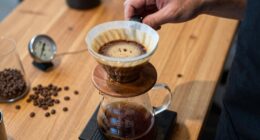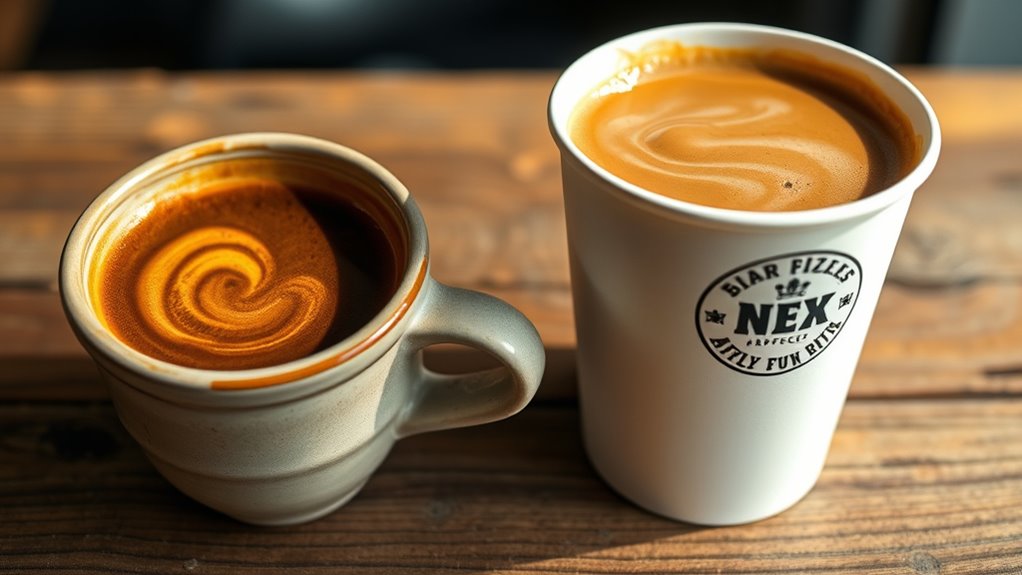

Small batch coffee offers higher quality, fresher beans, and precise roasting, leading to richer flavors and more complex profiles tailored to origin. Big brands focus on mass production, prioritizing efficiency and consistency, often sacrificing flavor nuance and ethical standards. Your cup from a small roaster is likely brighter and more personalized, while big brands deliver uniformity. Curious how these differences shape your experience? Keep going to uncover the full story behind your coffee choices.
Key Takeaways
- Small batch coffee is roasted in limited quantities for precise control, resulting in nuanced, distinctive flavors, unlike mass-produced big brand coffee.
- Sourced directly from high-quality, often single-origin beans, small roasters prioritize sustainability and ethical standards over the blending common to big brands.
- Freshly roasted small batch coffee retains aromatic oils, offering brighter, more complex flavors compared to the often stale, bulk stock of big brands.
- Flavor profiles from small batch roasting highlight regional characteristics and experimentation, creating layered, unique taste experiences.
- Craftsmanship and innovation in small batch roasting foster personalized, authentic cups, contrasting with the uniformity and efficiency focus of big brands.
As an affiliate, we earn on qualifying purchases.
Production Scale and Process Differences
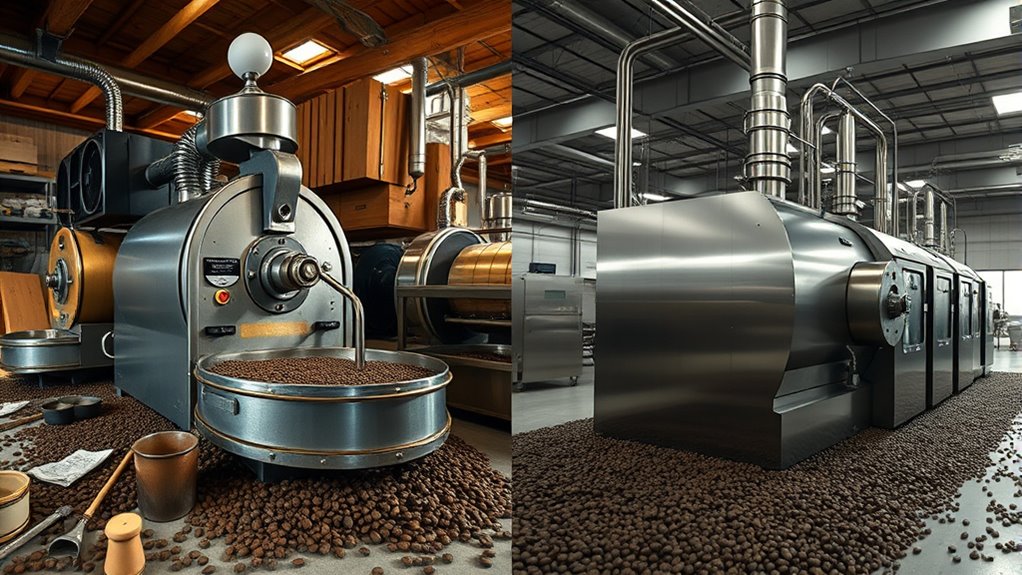
The key difference between small batch and big brand coffee lies in their production scale and processes. Small batch coffee is roasted in limited quantities, giving you the chance to closely monitor and adjust every detail during roasting. This hands-on approach lets roasters control temperature, roast time, and airflow precisely to bring out each bean’s unique flavor. Conversely, big brand coffee is mass-produced in large, industrial-sized batches focused on efficiency and consistency. Automated equipment handles thousands of pounds at a time, often sacrificing the nuanced control small roasters enjoy. The result is a product designed for uniformity across vast volumes, ensuring each bag tastes the same but potentially missing the depth and complexity found in smaller, carefully crafted batches. Additionally, the mindful process of small batch roasting often allows for more sustainable practices and a greater emphasis on quality over quantity. Furthermore, small batch roasting can incorporate specialty beans, which are carefully sourced and selected for their unique flavor profiles, enhancing the overall quality of the final product.
Quality and Bean Sourcing Practices

Small batch coffee producers prioritize sourcing high-quality, often single-origin beans directly from specific farms known for their unique flavor profiles. This direct relationship allows for careful selection, ensuring only the best beans make it into your cup. They often focus on sustainable and ethical practices, supporting farmers committed to environmentally friendly methods. In contrast, big brands usually blend beans from multiple regions to achieve consistency, often using lower-grade beans to meet volume demands. These mass-produced coffees are less selective, prioritizing efficiency over distinctive flavors. Small roasters tend to sort and handle beans with greater care, emphasizing quality at every step. This approach results in richer, more complex flavors and a stronger connection to the origin of your coffee. Additionally, sensory evaluation plays a crucial role in maintaining the high standards of small batch roasters, allowing them to fine-tune flavor profiles with precision. Furthermore, the production process in small batches often involves more meticulous roasting techniques that preserve nuanced flavors, setting them apart from larger operations. Incorporating health-conscious practices can also enhance the quality and appeal of small batch coffee, as many producers prioritize environmentally friendly and health-aware methods.
Freshness and Flavor Preservation
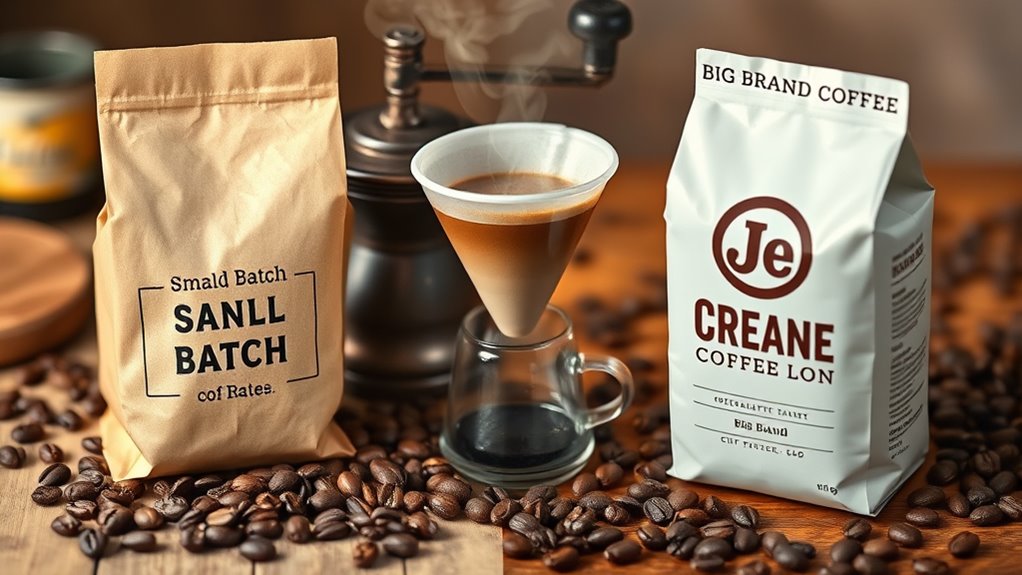
Fresher coffee retains more vibrant flavors and aromatic oils, which degrade over time. When you buy small batch coffee, it’s usually roasted to order or in small quantities, meaning it’s at its peak freshness when you brew it. This freshness preserves the oils responsible for aroma and complex flavors, delivering a brighter, more nuanced cup. In contrast, big brand coffee often sits in warehouses for weeks or months before reaching your cup, causing oils to break down and flavors to dull. As a result, you might notice a muted aroma or a flat taste. By choosing small batch coffee, you’re getting a fresher product that maximizes flavor and aroma, providing a more lively and satisfying coffee experience every time. Additionally, supporting small batch producers can help biodiversity by encouraging sustainable and localized farming practices that preserve ecosystems and reduce environmental impact. Proper storage methods also play a crucial role in maintaining coffee’s freshness and flavor integrity over time. Ensuring proper storage techniques, such as airtight containers and cool, dark environments, further enhance the quality preservation of your coffee. Using proper storage techniques can significantly extend the shelf life and maintain the optimal flavor profile of your coffee beans.
Flavor Complexity and Customization Options
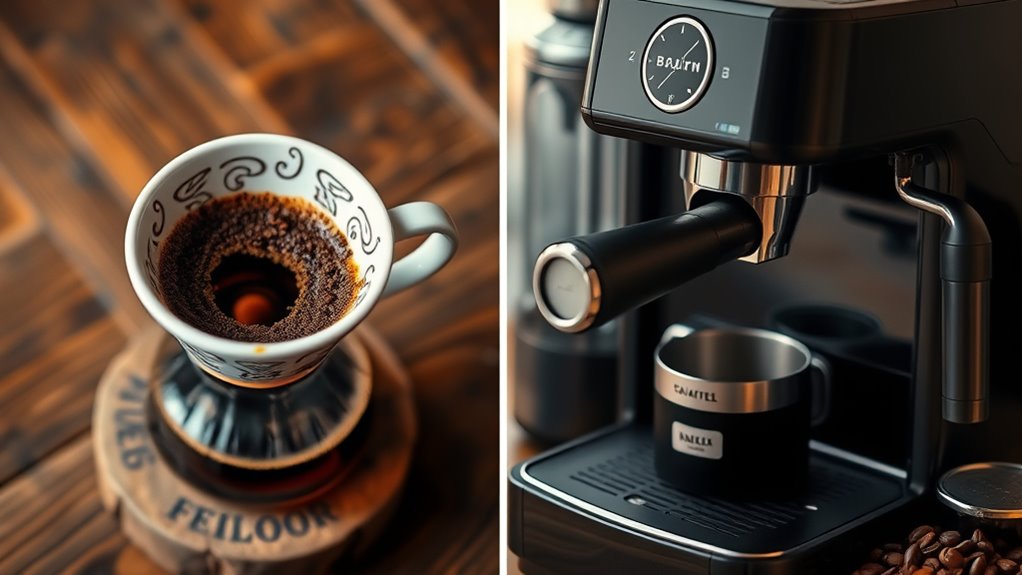
Because small batch roasting allows for close attention to each batch, it enables roasters to experiment with different profiles and refine flavors with precision. This flexibility results in a rich spectrum of nuanced, complex flavors tailored to specific beans. You can often find distinctive single-origin notes, layered textures, and unique roast characteristics. Additionally, roasting techniques play a crucial role in shaping these flavor profiles, emphasizing the importance of craft in small batch production. Furthermore, the production scale directly influences the level of quality control and attention to detail, which can significantly impact the final flavor. The ability to control every aspect of the process is a hallmark of small batch coffee, allowing for more flavor diversity and innovation.
Environmental and Ethical Standards
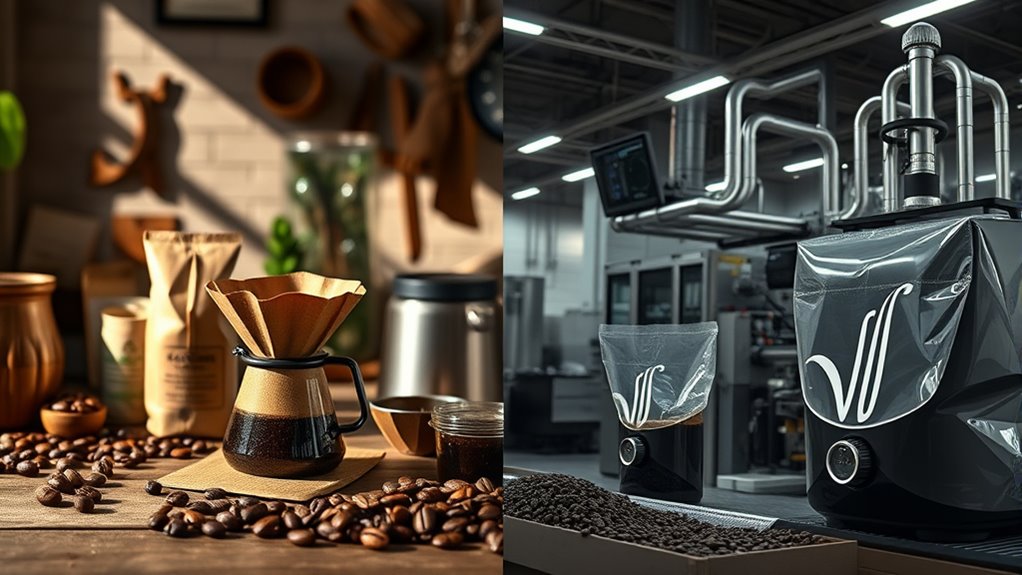
While large-scale coffee producers often prioritize cost reduction and efficiency, they may overlook environmental and ethical considerations, leading to practices that can harm ecosystems and communities. These producers might use cheaper, lower-quality beans from farms with poor sustainability practices, often contributing to deforestation, soil degradation, and water pollution. Ethical concerns also arise if fair wages, safe working conditions, and community support aren’t prioritized. Big brands may lack certifications like Fair Trade or Organic, making it harder to verify responsible sourcing. In contrast, small batch roasters typically build close relationships with farmers, emphasizing sustainable farming, ethical labor, and environmentally friendly practices. By choosing small batch coffee, you support practices that protect ecosystems and promote social responsibility, aligning your coffee choice with your values. Additionally, many small roasters participate in certified sustainable sourcing, ensuring transparency and accountability in their supply chains.
Craftsmanship and Innovation in Roasting
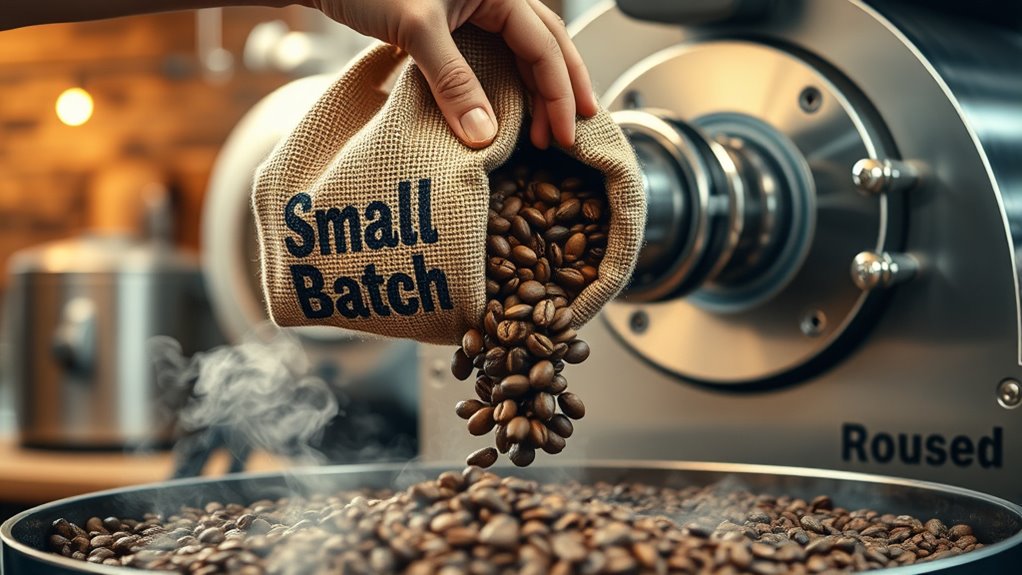
When you choose small batch coffee, you get a chance to experience personalized roast profiles that bring out each bean’s unique flavor. Skilled roasters use creative techniques and carefully select blends to craft distinctive tastes. This hands-on approach fosters innovation, making every cup a reflection of craftsmanship rather than mass production. Additionally, small batch coffee often emphasizes trustworthy insights, ensuring quality and transparency in your coffee choices. The meticulous control over each batch allows for adjustments that optimize flavor profiles, similar to the detailed legal steps in divorce processes across different states. Moreover, this careful attention to detail can help prevent spoiled lemon juice or over-acidity, ensuring a fresh and satisfying cup every time.
Personalized Roast Profiles
Personalized roast profiles showcase the craftsmanship and innovation that small batch roasters bring to coffee roasting. You have the ability to fine-tune temperature, roast time, and airflow for each batch, highlighting unique bean characteristics. This hands-on approach allows you to experiment with subtle variations, creating nuanced flavor profiles that reflect the origin and quality of the beans. Unlike big brands, which rely on standardized profiles for consistency, small roasters adapt their techniques to bring out specific qualities or develop new taste experiences. This level of customization results in a more vibrant, complex cup of coffee. Your attention to detail and willingness to innovate make each roast distinctive, offering coffee lovers an authentic and personalized tasting journey.
Creative Bean Blends
Creative bean blends showcase the artistry and innovation that small batch roasters bring to coffee crafting. You can taste their passion for experimenting with different beans, origins, and roast levels to create unique flavor profiles. Unlike big brands that focus on consistency, small roasters often develop limited-edition blends that highlight specific characteristics, such as fruity, floral, or spicy notes. They’re not afraid to push boundaries, combining beans from various regions to craft complex, layered flavors. This approach allows for continuous innovation, where roasters tweak recipes and explore new combinations. As a consumer, you benefit from these creative blends, experiencing a diverse array of tastes that reflect the roaster’s craftsmanship and desire to deliver distinctive, memorable coffee moments. Additionally, small batch roasters often use specialized roasting techniques that enhance the unique qualities of their beans, further setting their blends apart from mass-produced options.
Skilled Roaster Techniques
Skilled roasters use their expertise and intuition to fine-tune every aspect of the roasting process, transforming raw beans into distinctive brews. They monitor temperature, airflow, and roast time precisely, adjusting on the fly to highlight unique bean qualities. This craftsmanship allows for nuanced flavor development and innovative profiles. Their techniques often involve small batch experimentation, pushing boundaries to discover new taste dimensions. Additionally, their attention to detail ensures consistency and quality in every batch. For example, controlling pressure and airflow precisely is crucial to achieving the desired flavor profile. Implementing advanced control systems enables even more precise adjustments during roasting. This meticulous approach is part of the craftsmanship that distinguishes artisan roasters from mass-produced coffee. Skilled roasters also understand the importance of vetted quality beans, selecting only the best raw materials to begin their process. Here’s a snapshot of their approach:
| Aspect | Focus |
|---|---|
| Temperature Control | Fine-tuning heat to develop specific flavor notes |
| Roast Profile | Customizing time and curve for aroma and body |
| Sensory Feedback | Tasting and adjusting for ideal extraction |
This mastery results in vibrant, complex coffees that big brands often can’t replicate.
Consumer Experience and Personalization
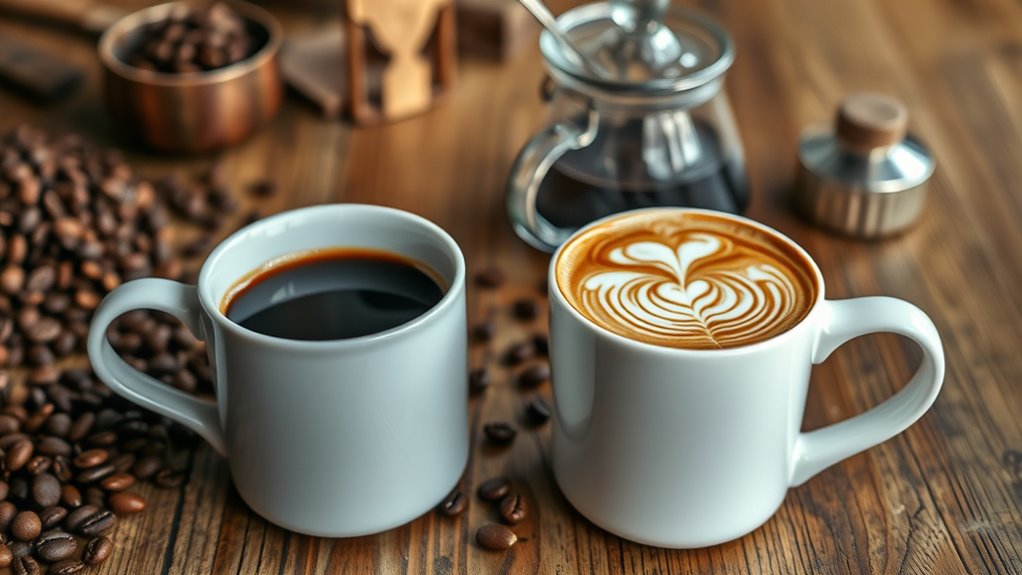
Small batch coffee offers a more intimate and engaging experience for consumers because roasters often tailor each batch to highlight specific beans and flavor profiles. You’re more likely to notice subtle nuances and unique tastes that reflect the roaster’s craftsmanship. This personalization creates a sense of connection, as your coffee feels crafted just for you. Imagine:
Small batch coffee offers a personalized, flavorful experience that connects you to the craft behind each cup.
- Sipping a coffee with distinct fruity or floral notes
- Encountering a brew that changes slightly with each batch
- Discovering limited-edition blends designed for variety
- Engaging with the roaster’s story behind each bean
- Enjoying a fresh, vibrant cup that’s been carefully curated
- Appreciating the craftsmanship involved in each step of the roasting process
This attention to detail makes your coffee experience more memorable and meaningful, emphasizing quality and individuality over uniformity. It’s a journey tailored to your preferences, driven by passion and artisanal techniques.
Impact on Flavor and Overall Drinking Experience
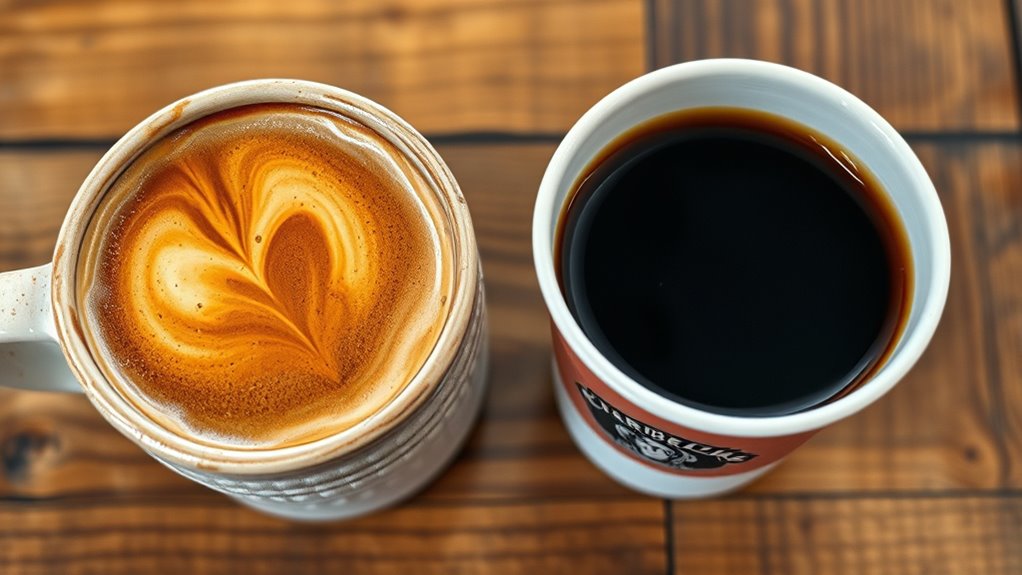
Your overall drinking experience depends heavily on flavor, which is shaped by freshness, roast profiles, and bean origin. Freshly roasted small batch coffee tends to deliver more vibrant aromas and nuanced taste, while large brands often produce flatter flavors due to longer storage. The specific origin of the beans also plays a key role, influencing the complexity and unique character of each cup you enjoy.
Freshness Enhances Aromas
Freshness plays a essential role in revealing a coffee’s full aroma and flavor potential. When your coffee is fresh, the aromatic oils are at their peak, delivering vibrant scents that fill your senses. As it ages, those delicate aromas fade, leaving behind duller, muted notes. With fresh beans, you’ll notice a lively, inviting fragrance that makes each sip more enjoyable.
Imagine:
- Steaming mug with a rich, floral aroma rising gracefully
- Bright citrus and berry scents bursting from the cup
- A layer of fragrant oils shimmering on the surface
- The scent evolving as you sip, revealing nuanced hints
- An overall sense of freshness that energizes your taste buds
Stale coffee simply can’t offer the same aromatic experience, diminishing your overall enjoyment.
Roast Profiles Create Nuance
Roast profiles are essential in shaping a coffee’s flavor complexity and overall drinking experience. By adjusting temperature, roast time, and airflow, small batch roasters craft nuanced profiles that highlight specific bean characteristics. You’ll notice subtle differences—fruity, nutty, smoky—that create layers of flavor in each sip. These profiles allow artisanal roasters to experiment and bring out unique qualities, resulting in a richer, more vibrant cup. Big brands, on the other hand, often prioritize uniformity with standardized roast profiles, producing consistent but less nuanced flavors. The careful tailoring in small batch roasting provides a dynamic tasting experience, where each batch can reveal new depths. Ultimately, roast profiles shape the character of your coffee, turning each cup into a complex, memorable journey.
Bean Origin Influences Taste
The origin of coffee beans plays a crucial role in shaping the flavor and overall drinking experience. Different regions produce beans with distinct characteristics that influence aroma, acidity, and body. When you choose small batch coffee, you often get single-origin beans, allowing the unique terroir to shine through. These beans can offer bright citrus notes from Ethiopia or rich chocolate tones from Colombia. Big brand coffees tend to blend beans from multiple areas, creating a balanced but less distinctive profile. The specific climate, soil, and altitude of the farm directly impact taste.
- Imagine tasting fruity notes from a Central American farm
- Savoring earthy undertones from an African hillside
- Sipping a smooth, nutty flavor from South America
- Detecting bright acidity in high-altitude beans
- Experiencing a complex, layered flavor from carefully sourced beans
Frequently Asked Questions
How Does Roasting Time Influence Coffee Flavor Profiles?
Roasting time directly influences your coffee’s flavor profile by shaping its complexity and brightness. A shorter roast preserves fruity and acidic notes, giving you a vibrant, lively taste. Longer roasting develops richer, deeper flavors, often adding smoky or caramel undertones. If the roast is too long, it can result in bitterness. You’ll notice that precise control over roasting time allows small batch roasters to craft distinctive, nuanced flavors for a more personalized coffee experience.
Can Small Batch Coffee Be More Cost-Effective Than Big Brands?
You might think small batch coffee costs more because it’s premium, but it can be more cost-effective in the long run. Since small roasters focus on quality and freshness, you get a richer flavor, meaning you often need less to satisfy your taste buds. Plus, buying directly from local roasters or in bulk can save you money. So, investing a little more upfront might actually stretch your coffee budget further.
Are There Specific Health Benefits Associated With Small Batch Coffee?
Yes, small batch coffee can offer health benefits because it’s usually fresher, retaining more aromatic oils and antioxidants that boost your health. Since small roasters focus on quality and natural beans, you’re less likely to consume chemicals or additives often found in mass-produced coffees. Plus, ethical sourcing means fewer contaminants. By choosing small batch, you get a purer, more nutrient-rich cup that may support your overall wellness.
How Do Ethical Sourcing Practices Impact Coffee Quality and Taste?
Ethical sourcing practices directly enhance your coffee’s quality and taste by ensuring beans are grown under better conditions, which improves flavor development. When you choose ethically sourced coffee, you’re supporting farmers who use sustainable methods, leading to healthier beans with richer, more nuanced flavors. Plus, ethically harvested beans are often fresher and better processed, resulting in a more vibrant, complex cup that reflects the care and integrity behind each brew.
What Role Does Consumer Feedback Play in Small Batch Coffee Innovation?
Your feedback directly influences small batch coffee innovation by guiding roasters to refine flavors, roast profiles, and sourcing choices. When you share your preferences or critiques, you’re helping roasters understand what works and what doesn’t, leading to more tailored, unique offerings. This close relationship encourages experimentation and continuous improvement, ensuring each batch better matches your taste. Your input keeps the craft alive and pushes small roasters to innovate and perfect their craft.
Conclusion
Ultimately, whether you prefer small batch or big brand coffee, it’s a choice shaped by your taste and values. Sometimes, a rare discovery from a local roaster unexpectedly transforms your morning, reminding you that quality and passion often align quietly beneath the surface. In the end, your perfect cup is a coincidence of craftsmanship and moment—an unanticipated delight crafted just for you, whether from a tiny roaster or a familiar brand.