
If we run out of coffee, you could face higher prices, shortages, and fewer options in your morning brew. Climate change, supply chain issues, and market chaos threaten future supplies, making coffee more expensive and harder to find. As environmental and economic challenges grow, the impact could be widespread, affecting farmers and markets worldwide. If you want to know how experts plan to tackle this crisis, there’s much more behind the facts.

Get coffee and tea gear delivered free with Prime
- Fast, free delivery on millions of items
- Prime Video, Amazon Music and more included
- Member-only deals all year
Key Takeaways
- Climate change and environmental stresses threaten coffee yields, risking significant supply shortages globally.
- Market volatility, trade policies, and supply chain disruptions could cause coffee prices to skyrocket and availability to decline.
- Droughts, pests, and diseases reduce crop productivity, potentially leading to a global coffee shortage.
- Labor shortages and logistical delays hinder coffee production and distribution, exacerbating supply constraints.
- Without adaptive measures, the world may face a severe coffee scarcity, impacting economies, livelihoods, and consumer access.
As an affiliate, we earn on qualifying purchases.
The Rising Tide of Coffee Prices and Market Uncertainty
The global coffee market is experiencing unprecedented price surges and heightened volatility, driven by a combination of weather disruptions and trade policies. You’ll notice green coffee prices hitting record highs of around $4.41 per pound in early 2025, the highest ever for arabica futures. In 2024, prices surged nearly 39%, mainly due to supply shortages caused by severe weather. Market instability worsened in 2025, with sharp fluctuations driven by supply uncertainties and trade tensions. U.S. tariffs of up to 10% on imports from key producers like Brazil, Ethiopia, and Colombia add to cost pressures. As a result, the specialty sector faces an identity crisis, and consumers see higher prices. All these factors combine to create a volatile, unpredictable market that impacts everyone, from farmers to coffee lovers. Understanding the role of market volatility can help stakeholders better navigate these turbulent times. Incorporating advanced technology, such as smart systems that improve supply chain management, could help mitigate some of these issues in the future. Embracing sustainable farming practices may also help stabilize supply in the long term by promoting resilience among coffee producers. Additionally, climate resilience strategies are increasingly vital to address ongoing environmental challenges. Innovative solutions are essential for creating more stable and sustainable coffee markets moving forward.
Climate Catastrophes and Their Impact on Coffee Production
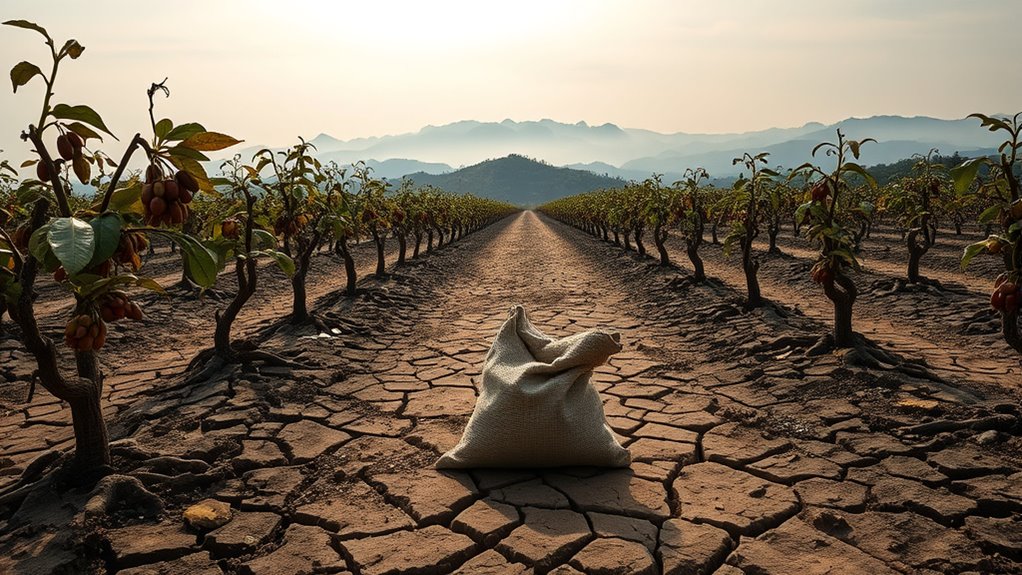
Climate catastrophes like droughts and unpredictable rainfall are severely damaging coffee crops worldwide. These extreme weather events reduce yields and threaten the future availability of quality beans. As climate change accelerates, your access to consistent coffee supplies may become even more uncertain. Maintaining color accuracy in coffee crop monitoring through advanced imaging techniques can help identify affected areas early and improve intervention strategies. Implementing tuning technologies in crop management can further optimize resource use and minimize crop loss during adverse conditions.
Droughts Damage Crops
Severe droughts in key coffee-producing regions have sharply reduced crop yields, directly threatening global supply. When drought conditions hit, coffee plants struggle to develop cherries and produce quality beans. In countries like Brazil and Vietnam, prolonged dry spells have led to significant declines in harvests, with Vietnam’s output dropping 20%. These droughts stress the plants, causing smaller cherries and lower caffeine content, which diminishes both quantity and quality. As water becomes scarce, farmers face challenges maintaining consistent production, leading to unpredictable supply levels. The reduced harvests tighten the global market, driving prices higher. Droughts also weaken coffee trees, making them more vulnerable to diseases and future climate shocks. Robotics integration in agricultural practices could help mitigate some of these impacts by enabling more precise irrigation and crop monitoring. If droughts persist, the world’s coffee supply could shrink dramatically, risking shortages and economic instability in the industry.
Erratic Rainfall Patterns
How do unpredictable rainfall patterns disrupt coffee production? When rains come irregularly or unexpectedly, they throw off the delicate balance coffee plants need. Too much rain floods roots, causing disease and damaging cherries, while drought periods stress plants, reducing yields. Sudden dry spells hinder flowering and fruit development, leading to inconsistent harvests. Conversely, heavy rains can wash away blossoms or cause mold on cherries, pushing quality down. This unpredictability forces farmers to adapt quickly, often at higher costs, and results in unstable supply levels. Over time, these erratic patterns weaken coffee plants, making them less resilient and reducing long-term productivity. As rainfall becomes more unpredictable, the entire supply chain faces greater volatility, threatening future availability and driving up prices.
Climate Change Threats
As climate change accelerates, it poses an increasing threat to coffee production by intensifying extreme weather events and disrupting ecosystems. You’ll notice more severe droughts, unpredictable rainfall, and heatwaves that damage coffee plants and reduce yields. Rising temperatures threaten the ideal altitude and climate zones where coffee thrives, shrinking suitable growing areas. Forest fires and prolonged dry spells stress coffee crops, causing quality issues and lower harvests. These environmental stresses also lead to pest and disease outbreaks, further jeopardizing production. As a result, farmers face declining productivity and increased costs, while supply chains struggle to meet global demand. Market trends can help inform adaptive strategies for coffee growers facing these challenges. Without urgent action, climate-related catastrophes will continue to threaten coffee’s future, risking a significant decline in availability and driving prices even higher. Additionally, the loss of agricultural biodiversity reduces the resilience of coffee ecosystems, making them more vulnerable to environmental stresses.
Supply Chain Disruptions and Labor Shortages

You’ll notice that labor shortages in coffee-producing regions are slowing harvests and increasing costs. At the same time, port and logistics delays are making it harder to get coffee shipped on time. These supply chain disruptions threaten to worsen the global coffee shortage and drive prices even higher. Additionally, the ongoing supply chain issues are exacerbating the problem by making it difficult to distribute coffee efficiently worldwide. As urban farming and smart agricultural technologies advance, there is potential for localized indoor coffee cultivation to help mitigate some supply disruptions in the future. Innovations in sustainable farming practices could also contribute to more resilient coffee production systems. Exploring innovative self watering plant pots could play a role in supporting small-scale, efficient coffee farming in urban settings.
Labor Shortage Impacts
Labor shortages in coffee-producing countries are severely disrupting supply chains, leading to reduced harvests and export delays. With fewer pickers available, farmers struggle to harvest coffee cherries efficiently, causing lower yields and quality issues. Rural-to-urban migration pulls workers away from farms, intensifying labor shortages during critical seasons. This decline in available workers also prolongs harvest times, increasing the risk of crop spoilage and quality degradation. The limited workforce hampers the use of effective skilled labor practices, further affecting crop quality. Additionally, the lack of adequate labor force means that modern harvesting technology remains underutilized, which could otherwise mitigate some challenges posed by labor shortages. These labor shortages also lead to increased reliance on manual labor, which further strains the already limited workforce. The scarcity of skilled labor impacts the implementation of best farming practices, resulting in lower productivity and crop resilience. The decreased availability of labor also hampers timely post-harvest processing, further delaying shipments. Export delays occur as fewer workers process and package coffee beans, further constraining supply. These disruptions drive up costs for producers, which ripple through the supply chain, ultimately raising prices for consumers. Without adequate labor, the global coffee market faces persistent shortages, making it harder to meet rising demand and threatening long-term stability.
Port and Logistics Delays
Port and logistics delays have become a critical bottleneck in the global coffee supply chain, intensifying already existing disruptions caused by climate and labor shortages. Shipping containers are scarce, and port congestion delays exports from major coffee-producing countries like Brazil, Vietnam, and Indonesia. These delays mean beans sit idle longer, increasing spoilage risks and forcing traders to hold inventory longer. Labor shortages at ports and in transportation sectors further slow down the movement of coffee, pushing costs higher. As a result, coffee reaches markets later, and supply chain unpredictability worsens. These delays not only strain logistics but also contribute to rising prices and market volatility, making it harder for roasters and retailers to meet demand and maintain stable prices amid ongoing climate and labor challenges. Additionally, supply chain resilience is increasingly tested as disruptions continue to ripple through the industry. The interconnected nature of the global supply network means that even small delays can cascade into larger shortages, emphasizing the need for improved infrastructure and contingency planning. Strengthening logistical infrastructure and implementing robust contingency plans can help mitigate some of these delays in the future. Furthermore, investing in supply chain technology can provide better tracking and response capabilities to future disruptions.
Shifting Consumer Preferences and Market Demand
As consumer preferences evolve, the global coffee market experiences notable shifts that influence demand patterns. You’re seeing younger consumers prioritize personalized, specialty brews and ethically sourced options, changing what’s popular. Traditional coffee brands face pressure to adapt as customers seek more transparency about origin and sustainability. Meanwhile, emerging markets like China and India are driving demand growth, with more people embracing coffee as part of daily life. This increased consumption outpaces supply, especially as climate challenges reduce production. You might notice higher prices and limited availability, especially for premium varieties. Consumers are also increasingly interested in alternative beverages like cold brews, plant-based milks, and functional coffee drinks, further diversifying market demands. These changes force the industry to innovate or risk losing relevance. Additionally, understanding the supply chain complexities can help stakeholders better anticipate and respond to these evolving market dynamics. Moreover, climate-related environmental impacts are becoming a critical factor affecting coffee cultivation and supply stability.
The Role of Trade Policies and Tariffs in Coffee Supply
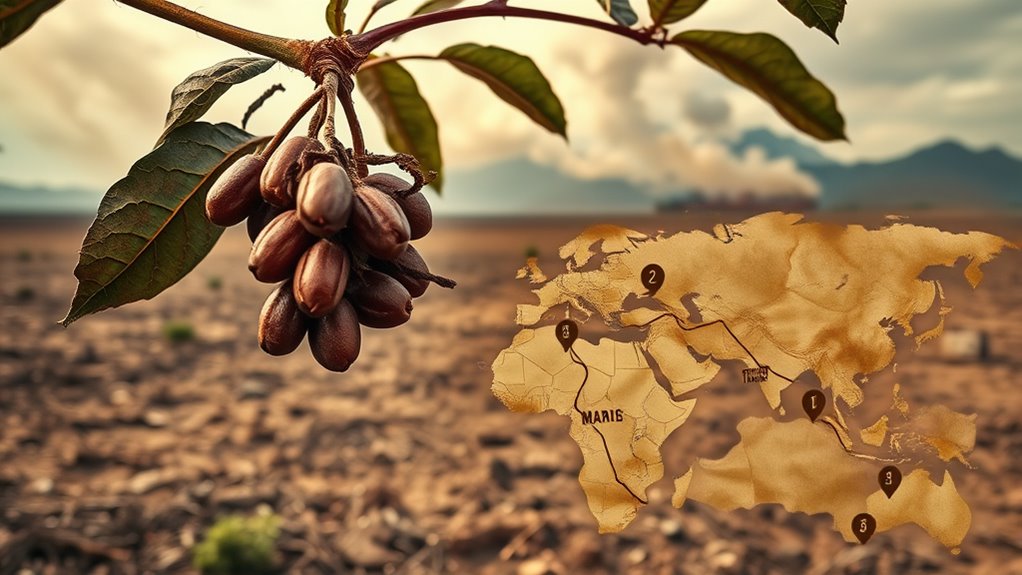
Trade policies and tariffs play a significant role in shaping the global coffee supply, especially as consumer preferences shift toward specialty and ethically sourced beans. When countries impose tariffs, like the U.S.’s 10% tax on imports from Brazil, Ethiopia, and Colombia, it raises costs for importers and can limit supply availability. Potential tariffs on Vietnamese coffee, which could reach up to 46%, threaten further disruptions, increasing prices and reducing options. These trade barriers add volatility to an already unstable market caused by climate and production issues. As companies face higher costs, they often pass these onto consumers, leading to price hikes and supply shortages. Ongoing trade tensions and stalled negotiations make it harder to stabilize prices, intensifying the risk of a supply crunch in the global coffee market.
Long-Term Challenges Facing Coffee Agriculture
Light considerably damages crops, lowering yields and quality. Climate change has intensified droughts, floods, and unpredictable weather, making it harder for farmers to plan and grow coffee reliably. An aging farmer population in many countries means fewer new growers are stepping in, risking future production. Coffee diseases like leaf rust spread more easily in stressed plants, reducing harvests and quality. Environmental regulations, such as deforestation laws, restrict land use and limit expansion. Uneven production cycles caused by climate variability lead to supply instability, while aging infrastructure and high shipping costs add to supply chain challenges. These long-term issues threaten not just current yields but also the sustainability of coffee farming, putting the future of coffee supply at serious risk.
Potential Consequences of a Coffee Shortage
A coffee shortage could trigger widespread economic and social disruptions globally. You might see skyrocketing prices, making your daily coffee more expensive or even unavailable at your favorite cafes. Small businesses and large companies could face profit losses, leading to layoffs and reduced employment in the sector. Consumers could shift away from coffee, impacting cultural habits and social interactions centered around coffeehouses. Additionally, shortages could increase the demand for alternative beverages, altering market dynamics. Developing countries relying on coffee exports could suffer economic downturns, while importing nations face higher costs and supply chain challenges. The absence of coffee could also heighten social inequality, as access becomes limited for lower-income populations. Overall, a coffee shortage would ripple across economies, cultures, and daily routines worldwide.
Strategies to Address the Global Coffee Crisis
To effectively address the global coffee crisis, stakeholders must implement a combination of innovative farming practices, technological advancements, and policy reforms. You can promote climate-resilient crops and sustainable agriculture techniques that improve yields and reduce environmental impact. Investing in precision agriculture tools, like remote sensing and data analytics, helps optimize water use and pest control, boosting productivity. Policy reforms should focus on supporting smallholder farmers through fair trade initiatives, subsidies, and infrastructure investments. Encouraging diversification of coffee varieties and shifting cultivation to less vulnerable regions can mitigate climate risks. International cooperation is vital to harmonize trade policies and reduce tariffs that inflate costs. By adopting these strategies, you can help stabilize supply, lower prices, and secure coffee’s future for generations to come.
Frequently Asked Questions
Could Alternative Coffee Sources or Substitutes Fully Replace Traditional Coffee?
Alternative coffee sources or substitutes can partially replace traditional coffee, but they won’t fully replicate its unique flavor and cultural significance. You might enjoy coffee alternatives like chicory, roasted grains, or herbal infusions, but these often lack the same aroma, complexity, and caffeine kick. While they can satisfy your daily caffeine needs or taste preferences, they won’t completely replace the experience, community, and tradition that real coffee provides.
How Will a Coffee Shortage Affect Global Economies and Local Communities?
A coffee shortage could destabilize local communities and ripple through global economies, just like a sudden storm upsets a calm sea. You might see farmers lose their livelihoods, especially in vulnerable regions, while economies relying on coffee exports face revenue declines. Consumers could face higher prices and limited choices, prompting shifts in spending habits. This disruption highlights how intertwined coffee is with economic stability and social well-being worldwide.
What Technological Innovations Are Being Developed to Boost Coffee Yields?
You should know that new technological innovations aim to boost coffee yields through advancements like precision agriculture, which uses drones and sensors to optimize watering, fertilizing, and pest control. Researchers are developing drought-resistant coffee varieties and employing gene editing techniques to improve disease resistance. Additionally, automation in harvesting and processing helps increase efficiency, ensuring better yields despite climate challenges. These innovations work together to address supply issues and support sustainable coffee production.
Are There Environmental or Ethical Concerns With Increased Coffee Production?
You should know that increased coffee production raises serious environmental and ethical concerns. As you walk through lush plantations, you might see deforestation, threatening biodiversity and causing climate change. Ethical issues like labor exploitation and poor working conditions also arise, especially for vulnerable workers. This expansion often pushes farmers to cut down forests or use harmful chemicals, jeopardizing ecosystems and human rights, making sustainable practices more urgent than ever.
How Can Consumers Contribute to Mitigating the Coffee Crisis?
You can help mitigate the coffee crisis by choosing sustainably sourced coffee, supporting farmers dedicated to eco-friendly practices. Reduce waste by brewing only what you need and using reusable cups. Advocate for fair trade policies and push brands to prioritize ethical sourcing. Additionally, educate yourself about coffee’s environmental impact and spread awareness. Your conscious choices and support can encourage the industry to adopt more sustainable, resilient practices for future generations.
Conclusion
If we don’t act now, running out of coffee could feel like losing a favorite song before you’ve had a chance to enjoy it. The rising prices, climate chaos, and supply chain issues threaten to turn your morning routine upside down. But by supporting sustainable practices and advocating for smarter policies, you can help turn the tide. Together, we can guarantee coffee remains a comforting constant, not just a distant memory.
Halloween Picks
halloween
As an affiliate, we earn on qualifying purchases.