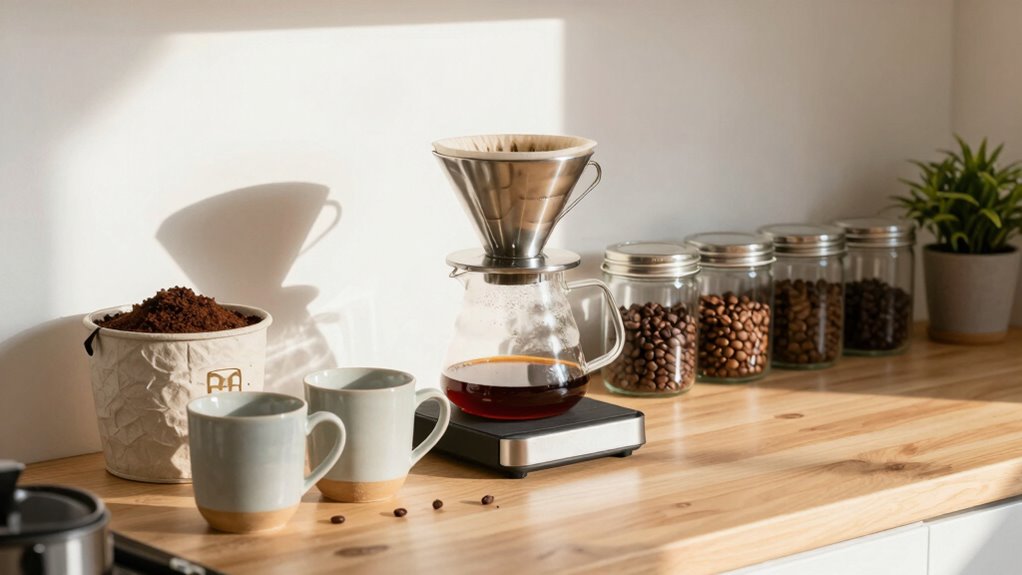

By adopting sustainable coffee habits, you can substantially cut household waste. Use reusable supplies like metal filters and French presses instead of disposable ones. Choose eco-friendly packaging and purchase beans in bulk to reduce waste. Compost coffee grounds and biodegradable filters to nourish your garden. Opt for energy-efficient brewing tools, and set goals to track your progress. Keep practicing these eco-friendly routines—stay tuned to discover even more ways to make your home greener.
Key Takeaways
- Using reusable coffee filters, French presses, and containers reduces disposable waste and packaging.
- Supporting sustainably sourced beans minimizes environmental impact and promotes eco-friendly farming practices.
- Composting coffee grounds enriches soil and decreases household waste.
- Choosing energy-efficient coffee makers lowers energy consumption and carbon footprint.
- Setting waste reduction goals and tracking habits encourage sustainable coffee routines.
As an affiliate, we earn on qualifying purchases.
Why Sustainable Coffee Habits Matter
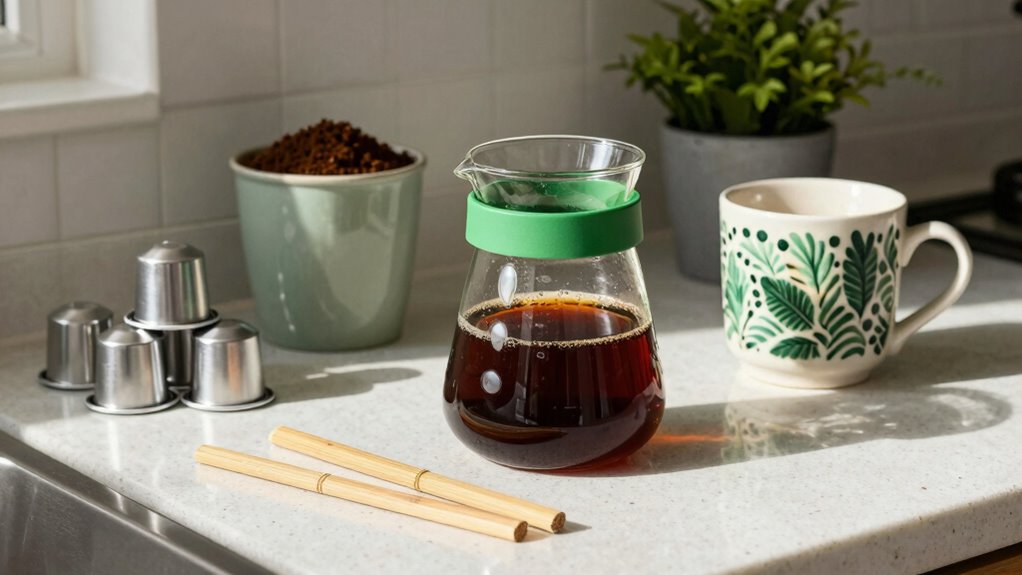
Sustainable coffee habits matter because they directly impact the environment and local communities. When you choose coffee with responsible coffee bean sourcing, you support farms that prioritize eco-friendly practices, reducing deforestation and water waste. Opting for fair trade certification guarantees farmers receive fair wages, better working conditions, and invest in sustainable farming methods. These certifications promote transparency and accountability in the coffee supply chain, helping to preserve ecosystems and improve farmers’ livelihoods. Additionally, supporting natural and eco-friendly practices in coffee production can further minimize environmental impact. Using responsible coffee sourcing methods can help ensure that your coffee choices promote long-term ecological balance. Your choices can reduce negative social and environmental effects associated with conventional coffee production. By supporting sustainable practices, you contribute to a healthier planet and stronger communities. Small actions, like selecting ethically sourced coffee, make a big difference in creating a more sustainable and just coffee industry.
Choose Reusable Coffee Supplies to Cut Waste

Switching to reusable coffee supplies is one of the simplest ways to cut down on waste in your home. Start by using reusable cups instead of single-use paper or plastic ones. Not only do they reduce waste, but they also keep your coffee hot longer. Pair your reusable cup with eco-friendly filters, which are often made from materials like stainless steel or cloth, minimizing trash and avoiding disposable filters. These filters are durable, easy to clean, and cost-effective over time. Incorporating AI-powered sustainability tools can help you track and improve your eco-friendly habits more effectively. Additionally, choosing sustainable coffee beans can further reduce your environmental impact by supporting eco-conscious farming practices. By making these simple swaps, you lessen your environmental impact and promote sustainability. Small changes like these make a big difference in reducing waste and supporting a more eco-conscious lifestyle every day.
Reduce Disposable Packaging When Brewing Coffee

To reduce disposable packaging when brewing coffee, focus on minimizing the waste created by single-use items like paper filters, coffee pods, and plastic packaging. Choosing sustainable options allows you to enjoy rich coffee flavor while supporting eco-friendly practices. Consider reusable filters or a French press, which eliminate the need for disposable filters and pods. Visualize your morning routine with:
- A durable metal filter resting on your mug
- Grounds from bulk bags filling your French press
- Carefully stored beans in a reusable container
Using environmentally friendly materials in your coffee routine can also contribute to a more sustainable living space, aligning with a smart design that promotes well-being. Incorporating zero-waste habits into your routine can help you further reduce overall household waste. Transitioning to eco-friendly supplies can make a significant difference in reducing packaging waste and supporting environmentally conscious choices. For example, investing in a vetted reusable coffee filter can ensure both durability and safety in your daily routine. Additionally, selecting high-quality, eco-conscious beans supports sustainable farming practices and reduces packaging waste. By shifting to eco-conscious supplies, you reduce packaging waste and enhance your coffee experience. It’s a simple step toward a more sustainable, flavorful home brew.
Compost Coffee Grounds and Filters Properly
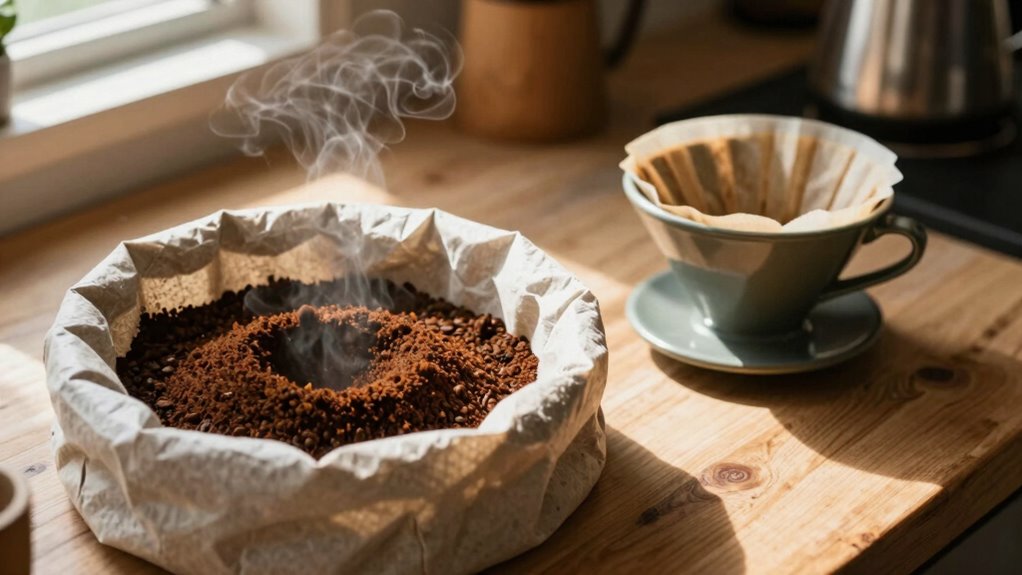
You can start composting your coffee waste by collecting grounds carefully and using filters that break down easily. Incorporate the grounds into your soil to enrich it naturally, and choose compost-friendly filters to avoid contamination. Properly managing your coffee waste helps reduce landfill trash and supports a healthier garden. Using biodegradable tissue paper in your kitchen can also minimize environmental impact and complement your composting efforts. Learning about Italian gelato culture can inspire you to adopt more sustainable practices, such as sourcing eco-friendly supplies for your home. Additionally, understanding upfitting fundamentals can help you optimize your waste management systems for a greener household. Implementing requirements traceability methods can ensure your waste reduction strategies remain effective and compliant with environmental standards. Exploring sustainable sourcing practices can further enhance your efforts to reduce household waste and support eco-conscious living.
Collect Coffee Waste Carefully
Have you ever thought about what happens to your coffee waste after you enjoy your morning brew? Proper collection is key. Start by always using a dedicated coffee container to keep grounds separate from other waste. When pouring coffee, be mindful of spills—accidents happen, and leftover grounds can easily contaminate other trash. To avoid this, place a small compostable bag or container nearby for coffee grounds and filters. Visualize:
- Carefully scooping coffee grounds into your compost bin
- Keeping filters dry and separate from non-compostable waste
- Cleaning up any coffee spills immediately to prevent messes
- Incorporate smart waste management practices, such as composting and proper disposal, to make the process more efficient and environmentally friendly. Additionally, understanding household waste sorting can help ensure that your coffee waste is disposed of correctly and sustainably.
Use Compost-Friendly Filters
Using compost-friendly filters helps guarantee your coffee waste breaks down effectively and reduces landfill waste. When selecting filters, choose those made from biodegradable materials like paper or compostable plant-based options. Proper filter selection during coffee brewing ensures that your used filters and grounds can be composted without contamination. Avoid plastic or synthetic filters that won’t break down naturally. After brewing, allow the filters to cool, then add them directly to your compost bin along with the grounds. This practice minimizes waste and supports healthy soil. Remember, using eco-friendly filters isn’t just about the grounds; it’s about creating a sustainable cycle from brewing to composting, making your coffee routine more environmentally responsible and waste-free. Choosing sustainable materials for your filters contributes to a more eco-friendly home. Additionally, understanding biodegradable materials can help you make more environmentally conscious choices in your daily routine.
Incorporate Grounds Into Soil
After choosing compost-friendly filters, the next step is to incorporate your coffee grounds into your soil properly. Coffee grounds are excellent for soil enrichment and can boost plant health when used correctly. Spread a thin layer of grounds around your garden beds or mix them into your compost pile. This helps add nitrogen and organic matter, improving soil structure and fertility. Incorporating composting techniques can inspire you to process organic materials more effectively, ensuring they benefit your soil rather than waste. Proper soil amendment techniques can help distribute nutrients evenly and prevent over-application. Additionally, understanding soil health principles can optimize your composting efforts for better plant growth. Visualize your soil transforming into a rich, dark bed that nurtures roots and promotes healthy growth. Consider these imagery cues:
- Grounds blending seamlessly into dark, crumbly soil
- Tiny, nutrient-packed particles nourishing plant roots
- A vibrant garden thriving with enriched soil
Save Energy With Efficient Coffee Brewing Tips
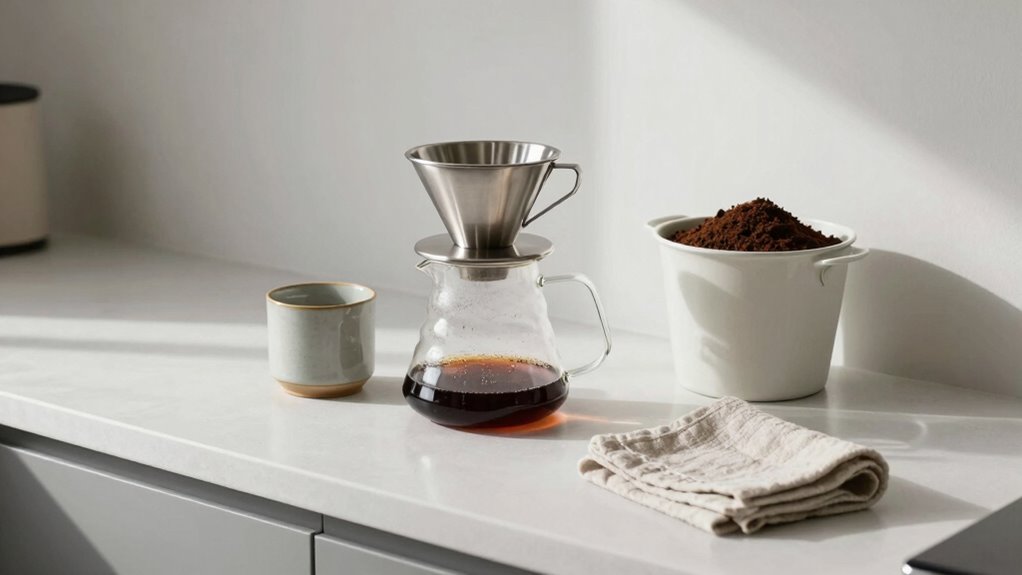
To save energy when brewing coffee, focus on choosing efficient appliances and methods. Using a high-efficiency coffee maker helps maximize brewing efficiency and reduces energy consumption. Consider brewing only what you need instead of large batches, which minimizes waste and energy use. Additionally, keep your appliances clean and well-maintained to guarantee peak performance. Selecting the right appliance efficiency can also create a more inviting and relaxing space for your coffee rituals. Proper appliance maintenance not only prolongs the lifespan of your equipment but also ensures it operates at optimal energy levels. Being familiar with kitchen knife fundamentals can also help streamline your overall kitchen efficiency, including coffee preparation. Incorporating security scanning practices can help identify potential inefficiencies or hazards in your kitchen setup, promoting a safer and more sustainable environment.
Set Goals and Track Your Waste Reduction Progress
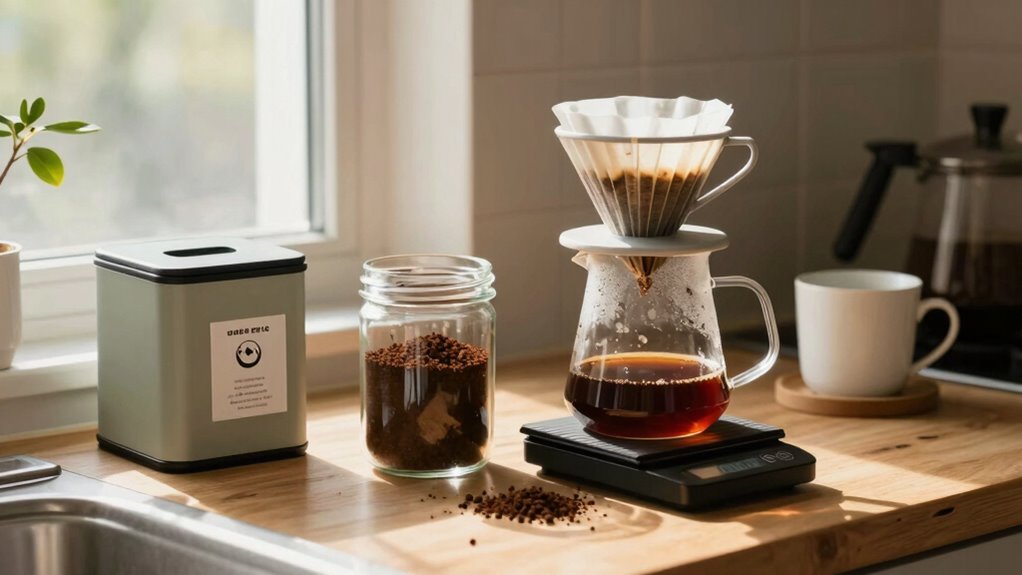
Setting clear waste reduction goals gives you a target to aim for and keeps you motivated. Using tracking tools helps you see your progress and identify areas for improvement. Celebrate your achievements along the way to stay inspired and committed to your waste-free coffee habits. Incorporating efficient woodworking techniques can also help you repurpose or recycle materials, further reducing waste. Exploring innovative wall art trends like digital frames and interactive murals can add a creative touch to your space while emphasizing your commitment to sustainability. Implementing personal finance planning strategies can help allocate resources toward eco-friendly practices and sustainable home improvements. Additionally, understanding microbiome health can guide you in choosing environmentally friendly products that support both your home and overall well-being. Being mindful of sustainable material choices can further enhance your efforts to create a more eco-conscious household.
Define Clear Waste Goals
The first step in reducing waste at home is to establish clear, measurable goals. Decide what you want to achieve, like decreasing packaging or increasing recycling program participation. A waste audit helps identify your biggest waste sources, guiding your goals. For example, you might aim to cut down on coffee cup disposables or compost coffee grounds. Visualize your success with specific targets:
- Reducing single-use coffee cups by 50%
- Recycling or composting all coffee packaging
- Participating fully in local recycling programs
Setting precise goals keeps you focused and motivated. Tracking your progress over time shows how well you’re doing and highlights areas for improvement. Clear, achievable waste goals turn good intentions into real change in your home.
Use Tracking Tools Effectively
Using tracking tools is essential for turning your waste reduction goals into tangible progress. By monitoring your coffee habits, you can see how different brewing methods impact waste. For example, note whether you prefer single-serve machines or French presses, and track their waste outputs over time. Keep a simple log of your coffee flavor preferences and how they influence your brewing choices. Setting measurable goals—like reducing the number of disposable filters or packaging—helps you stay accountable. Regularly reviewing your progress allows you to identify patterns and make adjustments. Monitoring tools make it easier to see how small changes, like optimizing brewing methods, contribute to less waste. This clarity keeps you motivated and ensures your efforts align with your waste reduction ambitions.
Celebrate Progress Achievements
Celebrating your progress is a powerful way to stay motivated and committed to your waste reduction goals. When you celebrate milestones, you reinforce positive habits and recognize your efforts. Sharing success with friends or family can boost your motivation and inspire others to join your journey. Imagine:
- Marking a month without disposable coffee cups
- Seeing your waste reduction chart hit a new high
- Receiving praise for your eco-friendly coffee routine
These moments remind you of how far you’ve come. Recognizing achievements keeps you focused and energized, making waste reduction feel rewarding. Celebrate even small wins—they add up! By acknowledging your progress, you stay motivated to continue refining your habits and making a meaningful impact on your home’s waste footprint.
Incorporate Eco-Friendly Coffee Practices Into Your Routine
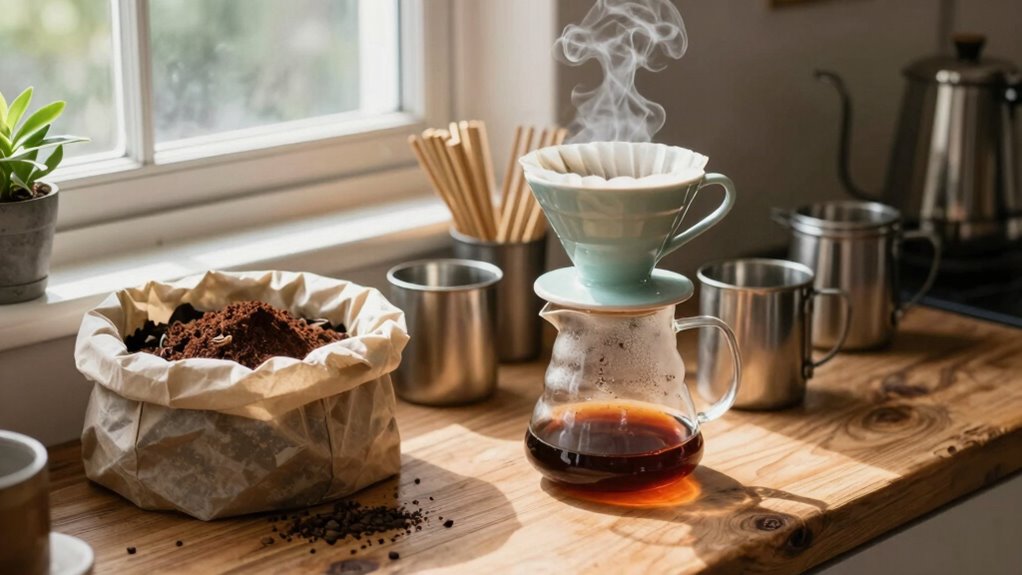
Adopting eco-friendly coffee practices can considerably reduce your household waste and environmental impact. To preserve ideal coffee flavor while minimizing waste, choose reusable filters or invest in a French press, which uses minimal packaging and produces less waste. Experiment with brewing techniques that maximize flavor extraction, reducing the need for multiple brews or wasteful pods. Use eco-friendly, biodegradable coffee grounds or compost them after brewing. Opt for sustainably sourced beans to support responsible farming. When possible, buy coffee in bulk to cut down on packaging waste. By making these small adjustments, you’ll enjoy rich coffee flavor while supporting a more sustainable home. These simple practices help you reduce waste and enjoy better coffee every day.
Frequently Asked Questions
How Can I Identify Truly Sustainable Coffee Brands?
To identify truly sustainable coffee brands, look for certifications like Fair Trade and Organic. Fair Trade guarantees fair wages and ethical practices, while Organic Certification indicates environmentally friendly farming methods. Check product labels and company websites for these badges. You can also research their sourcing policies and commitments to sustainability. Choosing brands with these credentials helps support ethical practices and reduces environmental impact, making your coffee habits more eco-friendly.
Are There Eco-Friendly Alternatives to Coffee Filters?
Imagine brewing your morning cup without adding waste—sounds tempting, right? Reusable filters stand out as a fantastic eco-friendly alternative; they last for years and cut down on disposables. Biodegradable options, made from materials like paper or bamboo, decompose naturally, reducing landfill impact. By switching to these eco-friendly alternatives, you not only enjoy great coffee but also take a meaningful step toward a greener, more sustainable home.
What Are the Best Methods to Dispose of Coffee Packaging Responsibly?
To dispose of coffee packaging responsibly, opt for reusable brewing methods and zero waste packaging options. You can compost biodegradable coffee bags or repurpose metal or glass containers. If packaging is recyclable, rinse and place it in your recycling bin. Supporting brands that prioritize zero waste packaging reduces landfill waste, and switching to reusable filters and containers minimizes single-use waste, helping create a more sustainable, eco-friendly home environment.
How Does Coffee Waste Impact Local Composting Systems?
Coffee waste can negatively impact local composting systems if not managed properly, as it may contain oils or non-compostable packaging that disrupts the compost balance. When you add coffee waste, it can promote beneficial microbes, but if you’re not careful, it might introduce contaminants. To minimize composting impact, remove non-biodegradable parts and guarantee your coffee waste is suitable for composting, supporting a healthier, more efficient system.
Can I Repurpose Used Coffee Grounds for Household Cleaning?
You can absolutely repurpose used coffee grounds for household cleaning. Imagine tackling stubborn coffee stains on your mug or countertop with the abrasive texture of grounds—great for stain removal. Plus, sprinkle them in your trash bin or fridge as a DIY deodorizer, neutralizing odors naturally. Coffee grounds are versatile, eco-friendly, and help reduce waste while making your cleaning routine more sustainable and effective.
Conclusion
Like Icarus soaring too close to the sun, you can rise above waste by embracing mindful coffee habits. Every small change, from reusable cups to composting grounds, adds up in the fight for a greener home. As you refine your routine, remember that even the smallest ripple can create waves. With intention and effort, you’ll craft a more sustainable, waste-free home—proof that your daily coffee ritual can be both nourishing and eco-friendly.