TL;DR
A Good Housekeeping report describes six ways to repurpose vintage teacups: make a cake stand, bird feeder, jeweled trinket dish, miniature scene, candle or succulent garden. The ideas offer practical and decorative uses, though some require adhesives, drainage materials or candle-making supplies.
Good Housekeeping has outlined six ways to repurpose vintage teacups, turning them into items including a bird feeder, a candle and a small succulent garden. The ideas offer options for cups found at thrift stores or inherited at home, using them for decorative and practical projects rather than tea service alone.

Get coffee and tea gear delivered free with Prime
- Fast, free delivery on millions of items
- Prime Video, Amazon Music and more included
- Member-only deals all year
The report recommends combining a teacup and dinner plate to make a small cake stand. Designer Janette Ewen suggests cleaning the pieces with rubbing alcohol, applying ceramic glue around the cup’s base, pressing the plate onto it and allowing the glue to cure for 24 hours. Ewen says the pieces do not need to match; a mixed pattern can suit the look.
A second project uses a cup and saucer as a bird feeder. Professional organizer Blanka Molnar suggests attaching them so seed can be poured from the cup. The assembled feeder can sit on a flat surface or be suspended by a string looped through the handle. The guide also proposes turning a cup into a trinket dish and decorating it with rhinestones or flatback crystals. Crafting expert Amanda Middleton recommends cleaning the cup first, attaching the decorations with a strong adhesive and allowing the adhesive to dry.
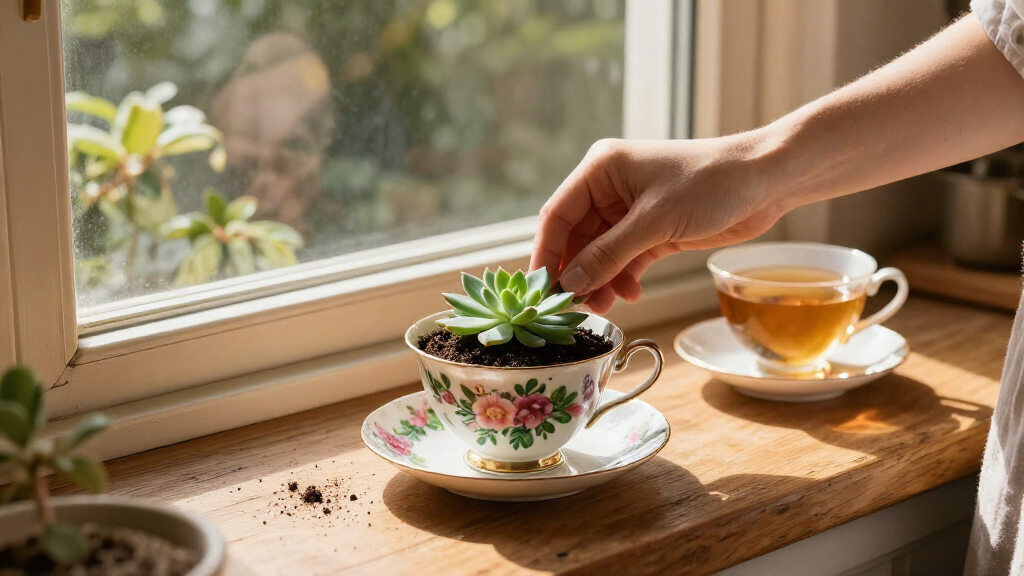
The remaining ideas are a teacup miniature, a poured candle and a succulent garden. For a miniature scene, Ewen suggests placing cut flower foam in the cup and covering it with moss and small decorative objects. For succulents, the guide recommends adding rocks for drainage support and cactus potting mix before planting one or two small plants. Molnar describes using favorite scents, flowers or spices when making a teacup candle.
Turning Spare Cups Into Useful Objects
The suggestions give readers ways to reuse small, often decorative vessels that may otherwise stay in storage. Some projects are chiefly ornamental, such as a miniature scene or jeweled dish; others, including the feeder and cake stand, are designed for use around the home or garden.
The projects also differ in effort and materials. A miniature scene mainly involves arranging components, while the cake stand and crystal dish call for adhesives and drying time. Repurposing a cup can make use of an existing household item, but the report does not compare these crafts with buying purpose-made products or quantify any environmental benefit.
Products Worth Considering

KitchenAid Artisan Mini Tilt-Head Stand Mixer, 3.5 Quart, Aqua Sky Blue

KitchenAid Commercial Series 8-Quart Bowl-Lift Stand Mixer, White

KitchenAid Artisan 5-Quart Tilt-Head Stand Mixer with Flex Edge Beater
As an affiliate, we earn on qualifying purchases.
Six Projects From One Household Item
The ideas come from a Good Housekeeping report about repurposing vintage teacups, which it describes as common finds in thrift stores and items people may also inherit or have collected over time. The source presents the projects as a mix of household uses and decorative crafts, rather than as a single step-by-step pattern.
Several tips are attributed to people quoted in the report. Ewen provides instructions for the cake stand and miniature scene; Molnar discusses the bird feeder and candle; and Middleton explains the crystal-covered trinket dish. The succulent planting directions appear in the article without a named expert attribution.
““Don’t worry about matching patterns; the mismatched, shabby-chic look is part of the charm.””
— Janette Ewen, designer, as quoted by Good Housekeeping
Materials and Safety Details to Check
The supplied report does not specify whether every vintage cup or glaze is suitable for food contact after being glued into a stand, nor does it provide testing or product-specific instructions for the adhesives mentioned. Readers should follow the adhesive maker’s directions and avoid serving food on surfaces that may have contacted glue.
The candle idea is described briefly, without detailed instructions on wax type, wick sizing, heat limits or safe burning practices. The article also does not explain how well a teacup’s drainage setup works for succulents; the rocks are described as supporting drainage, but no further horticultural guidance is provided. The source does not report whether the projects were tested or compare their durability.
Choose a Project and Prepare Supplies
The article presents the six projects as do-it-yourself options; it does not announce a scheduled follow-up or a product launch. Readers can start by selecting a cup and checking what additional materials the chosen project requires, including a matching or mismatched plate, ceramic glue, crystals, foam, moss, candle supplies or cactus potting mix.
For projects involving glue, the report advises allowing time for curing or drying. Its cake-stand instructions specify a 24-hour cure. The remaining timing, material compatibility and care instructions are not given in the supplied source, so readers may need to consult product labels or more detailed craft guidance before using the finished item.
Key Questions
What are the six teacup upcycling ideas?
The report suggests making a cake stand, bird feeder, jeweled trinket dish, miniature scene, candle or succulent garden.
How long should the teacup cake stand cure?
Designer Janette Ewen’s instructions say to let the ceramic glue cure for 24 hours before turning the stand over.
Can the teacup and plate have different patterns?
Yes. Ewen says the pieces do not need to match, and describes the mismatched look as part of the cake stand’s charm.
What materials are suggested for a teacup succulent garden?
The guide recommends adding rocks for drainage support, a layer of cactus potting mix and one or two small succulents.
Does the source give full candle-making safety instructions?
No. It suggests pouring a candle in a teacup but does not provide detailed directions for wax, wick selection or safe burning. Follow the instructions for the candle-making materials you use.
Source: goodhousekeeping.com