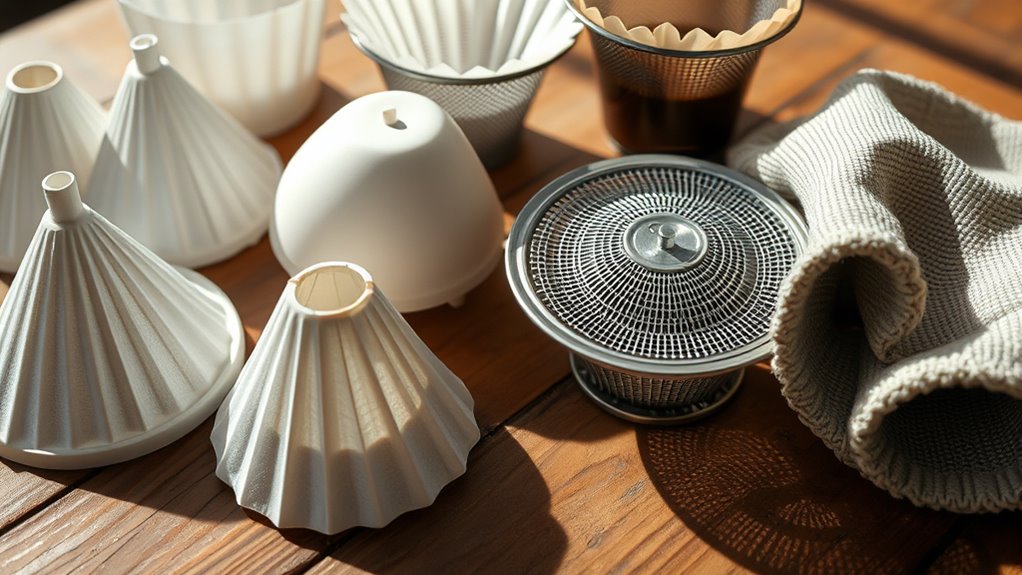

When choosing a coffee filter, you’ll find options like paper, metal, cloth, and bamboo, each offering different benefits. Paper filters are convenient and produce a clean cup, but metal and cloth filters allow more oils for richer flavor and eco-friendliness. Bamboo filters are biodegradable and sustainable. Considering factors such as flavor profile, environmental impact, and ease of cleaning can help you make the best choice. Keep exploring to discover which filter best suits your brewing style.
Key Takeaways
- Paper filters are common and disposable, available in bleached or unbleached options, affecting flavor and environmental impact.
- Metal filters are reusable, allowing oils and micro-fines for a fuller-bodied coffee, but require regular cleaning.
- Cloth filters are eco-friendly and reusable, offering a natural filtration process with proper maintenance.
- Bamboo filters are biodegradable, chemical-free, and eco-conscious, suitable for sustainable brewing.
- Choice of filter influences flavor, sediment, convenience, and environmental footprint, suited for different brewing preferences.

Coffee filters play a crucial role in brewing your perfect cup, affecting both flavor and environmental impact. The type of filter you choose influences how the coffee tastes, how clean or full-bodied it is, and how eco-friendly your brewing process can be. Understanding the different materials and their uses helps you make better choices for your coffee routine.
Paper filters are the most common and come in various forms, primarily made from wood pulp, hemp, or bamboo. They’re processed with chemicals like sodium hydroxide or sodium sulfide to create a smooth surface. Bleached filters go through oxygen or chlorine-free bleaching, resulting in a bright white appearance, while unbleached filters retain their natural brown color. These filters are designed for single-use convenience, making cleanup quick and easy. They trap coffee fines and sediment effectively, producing a clean, bright cup, especially in pour-over brewing.
Paper filters are common, made from wood pulp, hemp, or bamboo, and designed for single-use convenience with effective sediment trapping.
However, they generate waste, especially if bleached with chemicals, which raises environmental concerns. Unbleached options are more environmentally friendly, as they’re biodegradable and compostable, adding organic matter back into the soil.
Metal filters, typically made from stainless steel or titanium mesh, are reusable and durable. They allow oils and micro-fines to pass through, which enhances the body and richness of your coffee. Metal filters are ideal if you want a full-bodied brew and prefer to avoid waste from paper filters. They require regular rinsing and occasional deep cleaning to prevent clogging, but they last for years, making them cost-effective in the long run.
Cloth filters, usually crafted from cotton or linen, combine reusability with a balance between sediment filtration and oil retention. They need proper cleaning—boiling and air-drying—and must be replaced every 30 to 60 brews. Cloth filters are environmentally friendly, offering a natural brewing experience, especially suited for pour-over methods and cold brew.
Bamboo filters serve as a sustainable alternative to traditional paper. Made from fast-growing bamboo, these filters are biodegradable, heat-sealed with cellulose, and require less chemical processing. They blend the benefits of reusability with eco-friendliness, breaking down faster in compost and reducing waste. Their manufacturing process involves creating pulp from bamboo, pressing it into sheets, and heat-sealing to reinforce durability.
Choosing the right filter depends on your priorities: convenience, flavor profile, environmental impact, or cost. Paper filters deliver a clean taste but produce waste, while metal and cloth filters offer sustainability and richer flavor. Bamboo filters strike a balance, providing an eco-conscious option with reusability.
Knowing the different types of filters and their materials is also important because material composition influences both the flavor extraction and environmental footprint of your brewing process. Whichever you prefer, knowing the materials and their effects helps you craft better coffee and reduce your footprint.
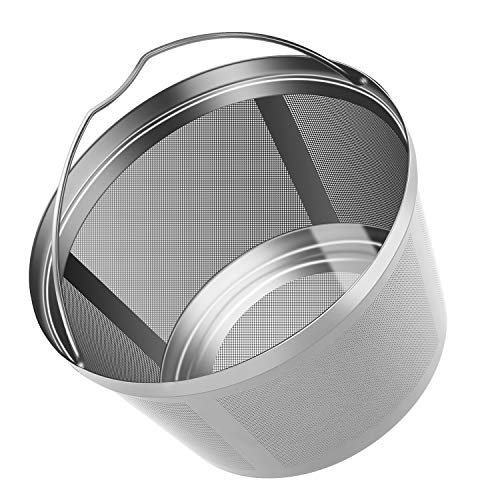
Stainless Steel Reusable Coffee Filters Basket 8 12 Cup Sturdy Permanent Coffee Filter fit for Mr. Coffee Black,Decker Coffee Makers 8 12 cups
- Keeps Coffee Flavor and Aroma: Fine mesh preserves coffee's original taste
- Food-Grade Stainless Steel: Made of 18/8 stainless steel, odor-free
- Cost-Effective and Eco-Friendly: Reusable filter reduces waste and saves money
As an affiliate, we earn on qualifying purchases.
As an affiliate, we earn on qualifying purchases.
Frequently Asked Questions
Are Reusable Coffee Filters More Eco-Friendly Than Paper Ones?
You’re wondering whether reusable coffee filters are more eco-friendly than paper ones. Reusable filters markedly cut down waste since you can use them multiple times, reducing landfill strain and methane production from decomposing paper.
They promote sustainability, especially if made from eco-friendly materials like bamboo or silicone. While they require an upfront investment, they last years and help lower your environmental impact by minimizing single-use waste.
Can Coffee Filters Be Used for Brewing Tea?
Yes, you can use coffee filters for brewing tea. You simply fold or shape the filter into a pouch, add your tea leaves or herbs, and secure it with a staple or string.
The small holes allow hot water to extract flavors while keeping the leaves contained. This method is convenient, cost-effective, and eco-friendly, offering an easy way to enjoy fresh tea without investing in special tea bags or infusers.
What Sizes of Coffee Filters Are Available for Different Machines?
You’re wondering about the sizes of coffee filters available for different machines. You’ll find conical filters in sizes #1, #2, #4, and #6, suitable for single cups to large commercial systems. There are variations like bleached or unbleached options.
Flat-bottom basket filters come in #6 and #8 sizes, fitting medium to large drip machines. Matching the filter size to your machine guarantees ideal brewing and prevents overflow or under-extraction.
How Do I Store Coffee Filters to Keep Them Fresh?
You can keep your coffee filters fresh by storing them properly. Imagine stacking paper filters in a dry, airtight container or keeping bamboo filters in their original packaging.
For cloth or cotton filters, store them in a cool, water-filled container or a breathable bag to prevent mold. Regularly clean reusable filters, and avoid humidity or moisture.
Visualize your filters staying pristine, ready for that perfect brew every morning.
Are There Filters Designed Specifically for Cold Brew Coffee?
Yes, there are filters specifically designed for cold brew coffee. You can choose from stainless steel filters, which are reusable and durable, or compostable paper filters for a natural, eco-friendly option.
Disposable filters are also available for convenience. Additionally, some filters are made to fit specific cold brew systems like Toddy or Tricolate.
These options help you achieve a smooth, sediment-free cold brew easily and efficiently.
Conclusion
No matter which type of coffee filter you choose, you’ll find they’re versatile beyond brewing. Some worry filters can’t handle multiple uses, but many are reusable and eco-friendly, saving you money and reducing waste. So, don’t hesitate to pick a filter that suits your needs—whether for brewing or other household tasks. With the right choice, you’ll enjoy better coffee and discover creative ways to use those filters around your home.