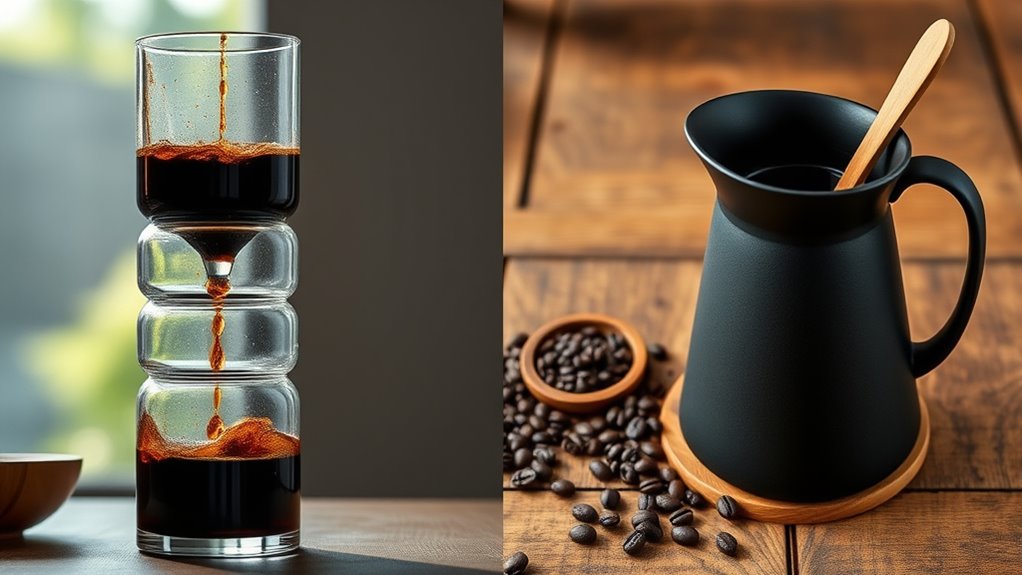

Cold drip towers and full-immersion cold brew differ in flavor, process, and setup. Cold drip produces a bright, nuanced taste with floral or fruity notes, but takes longer to brew and needs precise equipment. Full-immersion is simpler, quicker, and offers rich, smooth flavors ideal for convenience. Your choice depends on your flavor preference, budget, and patience. To find out which method suits your taste and lifestyle best, explore the details ahead.
Key Takeaways
- Cold drip towers offer precise control over extraction, resulting in nuanced, clean flavors, while full-immersion emphasizes richness and simplicity.
- Cold drip brewing takes several hours and requires specialized equipment, whereas full-immersion is quicker and uses minimal setup.
- Cold drip setups involve higher initial costs and maintenance, while full-immersion methods are more affordable and easier to clean.
- Full-immersion produces a bolder, fuller-bodied cold brew, whereas cold drip yields a lighter, more complex flavor profile.
- Choice depends on budget, flavor preference, and available space; cold drip suits precision-focused enthusiasts, full-immersion favors convenience.
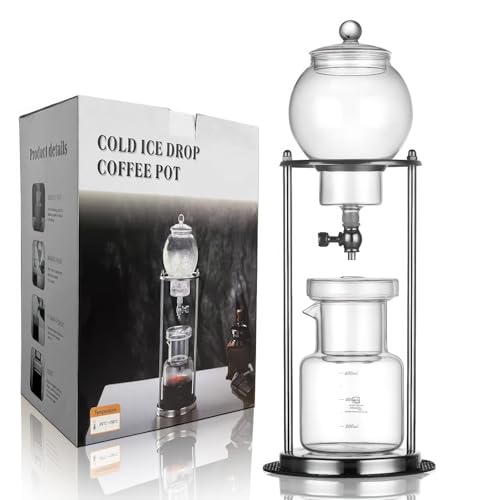
HANWUDI Cold Drip Coffee Maker – 20 oz Cold Brew Coffee Tower, Slow Drip Japanese Cold Brew Maker, Cold Brew Drip, Ice Coffee Tower
- Rich Flavor Extraction: Fully extracts coffee flavors without bitterness
- Easy to Use: Simple setup with adjustable drip speed
- Premium Materials: Made of heat-resistant, eco-friendly glass
As an affiliate, we earn on qualifying purchases.
As an affiliate, we earn on qualifying purchases.
How Each Method Works: The Basics of Cold Drip and Full-Immersion Brewing

Cold drip and full-immersion brewing are two popular methods for making cold brew coffee, each with distinct processes. In cold drip brewing, you control the brewing temperature by slowly dripping cold water over coffee grounds, allowing extraction to occur gradually. The low temperature slows down extraction, resulting in a smooth, well-balanced brew. In contrast, full-immersion involves submerging coffee grounds in cold water for several hours, often at refrigerator temperatures, promoting even and prolonged extraction. The brewing temperature remains consistently cold throughout, which influences the coffee’s flavor profile and extraction rate. Both methods prioritize cold temperatures, reducing acidity and highlighting different flavor nuances. Understanding these basics helps you grasp how each technique influences coffee extraction and the final taste.
Flavor Profiles and Tasting Differences

You’ll notice that cold drip and full-immersion brews offer distinct flavor profiles, with varying intensity and complexity. Cold drip tends to produce a brighter, more nuanced taste, while full-immersion emphasizes smoothness and richness. Understanding these taste differences helps you choose the brew that best suits your flavor preferences. Additionally, factors such as brewing technology and extraction methods can further influence the final flavor and presentation of each brew.
Flavor Intensity Variations
The brewing method considerably influences the flavor intensity and overall profile of your cold brew. With cold extraction, the process occurs slowly, emphasizing subtle flavors and resulting in a smoother, often milder taste. Full-immersion methods tend to produce a consistent, concentrated flavor because the coffee grounds stay submerged for hours, allowing for thorough extraction. In contrast, cold drip towers use precise temperature control and a slow drip rate, which can intensify certain flavor notes and create a bolder profile. The variation in extraction speed and temperature management directly impacts flavor intensity, making some brews richer and more robust, while others remain delicate and nuanced. Additionally, tuning methods in coffee brewing, similar to automotive modifications, can be adjusted to enhance specific flavor characteristics, ultimately shaping how bold or refined your cold brew’s flavor profile will be.
Tasting Profile Nuances
Different brewing methods bring out distinct flavor nuances in cold brew, shaping how each sip hits your palate. With cold drip towers, you’ll notice a brighter, more vibrant aroma complexity, often highlighting fruity or floral notes due to their controlled brew strength. The result is a crisp, clean taste with nuanced layers that evolve as you sip. In contrast, full-immersion cold brew tends to produce a richer, bolder flavor profile with deeper chocolate or nutty undertones, thanks to its longer steeping process and consistent brew strength. This method emphasizes smoothness and a more pronounced aroma complexity, giving you a fuller, more indulgent experience. Understanding these nuances helps you appreciate how each technique influences the overall tasting profile of your cold brew.
Brewing Time and Convenience Factors
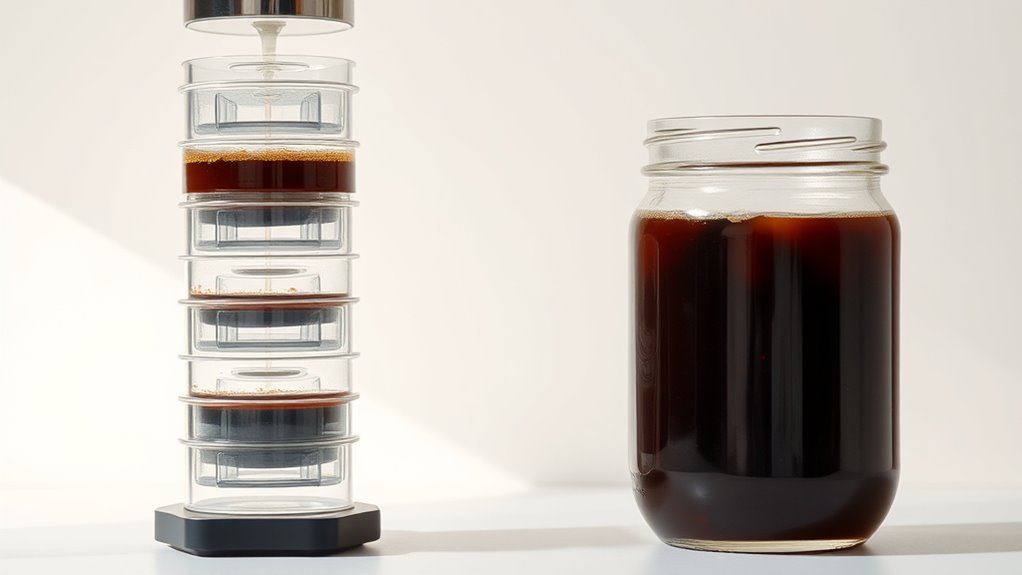
Cold drip towers typically take several hours to brew, while full‑immersion methods usually finish in 12 to 24 hours. You might find one process more convenient than the other depending on your schedule and patience. Consider how much time you want to invest when choosing between these brewing options.
Brewing Time Differences
While brewing times can vary considerably between cold drip towers and full-immersion methods, convenience often hinges on how quickly you want your coffee ready. Cold drip towers typically take several hours because they rely on slow, controlled extraction, which depends on precise temperature control and a consistent drip rate. In contrast, full-immersion cold brew is quicker, often ready in 12 to 24 hours, but requires careful grind size selection to avoid over-extraction or under-extraction. A finer grind speeds up extraction but risks overdoing it, while a coarser grind extends brewing time. Your choice depends on your schedule and preferences for maintaining ideal temperature control to guarantee consistent results, affecting both brewing time and ease of achieving the perfect flavor. Additionally, the brewing method can influence the level of control over extraction variables, impacting overall convenience and flavor consistency.
Ease of Preparation
When it comes to ease of preparation, the time commitment and effort involved can considerably influence your choice between cold drip towers and full-immersion cold brew. Cold drip towers tend to be more brew complex, requiring precise setup and longer extraction times, but they usually involve less cleanup effort afterward. In contrast, full-immersion cold brew is straightforward: combine coffee and water, then wait, making it ideal for simplicity. Consider these factors:
- Brew complexity — cold drip towers need careful calibration, while full immersion is hassle-free.
- Time investment — cold drip takes hours; immersion typically requires 12-24 hours.
- Cleanup effort — cold drip components can be more involved to clean, whereas immersion jars are easier to rinse.
- Using glycolic acid in skincare routines can enhance skin texture and clarity, making your skin more prepared for the exposure during brewing and handling processes.
Your choice depends on how much effort you’re willing to invest upfront versus cleaning afterward.
Equipment and Setup Requirements

To get started with either cold drip towers or full-immersion cold brew, you’ll need specific equipment designed for each method. An equipment comparison shows that cold drip towers require a multi-part setup, including a water reservoir, drip valve, and a collection carafe, all stacked vertically. Setup essentials for cold drip involve precise adjustments for drip rate and height, while immersion requires just adding coffee grounds and water, then letting it steep. Both methods demand clean, quality equipment to guarantee a smooth brew. Understanding these setup essentials helps you create consistent, flavorful coffee, whether using a complex tower or a simple jar. Additionally, selecting appropriate materials for your equipment can influence the taste and durability of your cold brew setup.
Cost Considerations and Maintenance
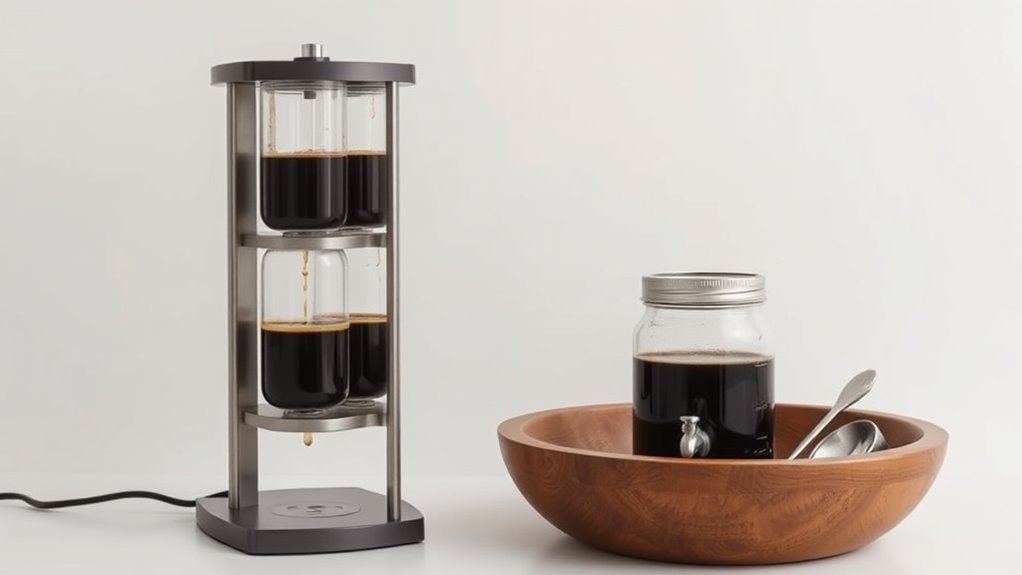
Cold drip towers typically involve higher initial costs and ongoing maintenance compared to full-immersion cold brew. While the upfront investment can be significant, their durability and consistent performance contribute to long-term cost efficiency. To maximize your investment, consider these factors:
- Equipment durability ensures fewer repairs and replacements over time, saving money.
- Maintenance routines impact operational costs; easier cleaning reduces downtime.
- Energy consumption influences ongoing expenses, with some systems being more efficient than others.
- Participating in hackathons can foster innovative solutions for optimizing cold brew systems and reducing costs.
Although cold drip towers may seem costly initially, their longevity and lower per-batch costs can offset expenses. In contrast, full-immersion setups often have lower upfront costs but may require more frequent replacement parts or cleaning. Your choice depends on balancing initial spending with ongoing operational costs.
Which Method Is Right for You? Making the Choice

Choosing between cold drip towers and full-immersion cold brew depends on your specific needs, budget, and preferences. If you value precision and a clean flavor profile, a cold drip tower might suit you, but it requires more delicate brewing equipment and careful coffee storage. Conversely, full-immersion is simpler, often more affordable, and allows for easy coffee storage with minimal equipment. Consider how much space you have and whether you prefer convenience or control. Use this comparison to guide your decision:
| Aspect | Cold Drip Towers | Full-Immersion | Common Considerations |
|---|---|---|---|
| Brewing Equipment | Complex, precise | Simple, minimal | Budget, skill level |
| Coffee Storage | Less flexible | Easier to store prepared brew | Space availability, freshness |
| Flavor Profile | Clean, nuanced | Rich, bold | Personal taste |
Additionally, cold drip towers often allow for more control over brewing time and drip rate, which can influence the final flavor development process.
Frequently Asked Questions
Can Cold Drip Towers Produce Hot Brewed Coffee?
You might wonder if cold drip towers can produce hot brewed coffee. They’re designed for cold extraction, so temperature control is limited for hot brewing. While you could theoretically heat the water before dripping, it’s not their intended use, and flavor extraction differs markedly from traditional hot brewing methods. For ideal hot coffee, stick to methods specifically designed for high temperatures to guarantee the best flavor and proper extraction.
How Does Ambient Temperature Affect Cold Brew Extraction?
Did you know that ambient temperature variability can change cold brew extraction rates by up to 20%? When the environment’s warmer, your coffee extracts faster, intensifying flavors, while cooler temps slow down the process, resulting in milder notes. You’ll notice that ambient temperature directly influences the extraction rate influence, so maintaining a consistent environment helps you achieve your desired flavor profile every time. Adjust your brewing setup accordingly to optimize your cold brew.
Are There Health Benefits Specific to Each Brewing Method?
You wonder if cold brew health benefits vary by brewing method. Both methods retain antioxidants and reduce acidity, making them healthier options than hot brews. Cold drip towers may offer clearer flavors and fewer bitter compounds, while full-immersion extracts more caffeine and polyphenols. Each brewing method advantages include lower acidity and smoother taste, which benefit your digestion and overall health. Choose based on your flavor preference and health goals for maximum benefits.
How Scalable Are Each of These Brewing Methods Commercially?
Imagine your coffee business as a ship; scaling capacity is like adding more sails to catch the wind. Cold drip towers excel in this, offering high production efficiency and easier automation, making them more scalable for large-scale operations. Full-immersion cold brew, while charming and rich, often requires more time and space, making it less ideal for rapid scaling. For growth, cold drip towers are your best bet.
What Are Common Troubleshooting Issues for Each Method?
You might face troubleshooting issues like inconsistent brew time, which affects flavor consistency. For cold brewing, you could struggle with sediment or cloudy results if the grounds aren’t filtered properly. With drip towers, clogging or uneven flow can occur, impacting the final taste. Regularly monitor your setup, adjust grind sizes, and clean equipment thoroughly to maintain ideal brew time and flavor consistency for each method.
Conclusion
Choosing between cold drip and full-immersion brewing isn’t just about the method—it’s about discovering what truly resonates with your taste. Sometimes, the journey reveals subtle nuances that linger longer than expected, inviting you to explore deeper layers of flavor. Trust your palate and enjoy the process; in time, you’ll find the style that softly whispers your preference, turning each cup into a quiet celebration of your unique coffee story.