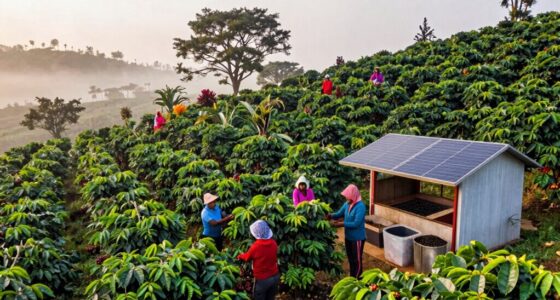

Your coffee habit impacts the environment more than you realize, especially when grown using conventional methods that emit significant greenhouse gases and contribute to deforestation. Choosing shade-grown, organic, or certified sustainable coffee can lower your carbon footprint by protecting forests and reducing chemical use. Transportation and processing also add to the impact, but smart consumer choices and supporting eco-friendly farms can make a difference. If you’re curious about ways to brew greener, there’s more you can explore.

Get coffee and tea gear delivered free — and shop member deals
- Fast, free delivery on millions of items
- Access to Prime Big Deal Days deals on October 6–7
- Prime Video, Amazon Music and more included
Key Takeaways
- Conventional coffee farming with synthetic fertilizers and machinery significantly increases greenhouse gas emissions.
- Shade-grown and organic coffee reduce the carbon footprint through natural pest control and sustainable practices.
- Long-distance transportation and energy-intensive processing contribute substantially to coffee’s overall carbon emissions.
- Deforestation for coffee plantations harms biodiversity; supporting eco-friendly farms helps conserve forests and habitats.
- Choosing certified, sustainable coffee and adopting eco-friendly brewing methods can lower your environmental impact.
organic shade-grown coffee beans
As an affiliate, we earn on qualifying purchases.
As an affiliate, we earn on qualifying purchases.
The Lifecycle of Coffee: From Farm to Cup
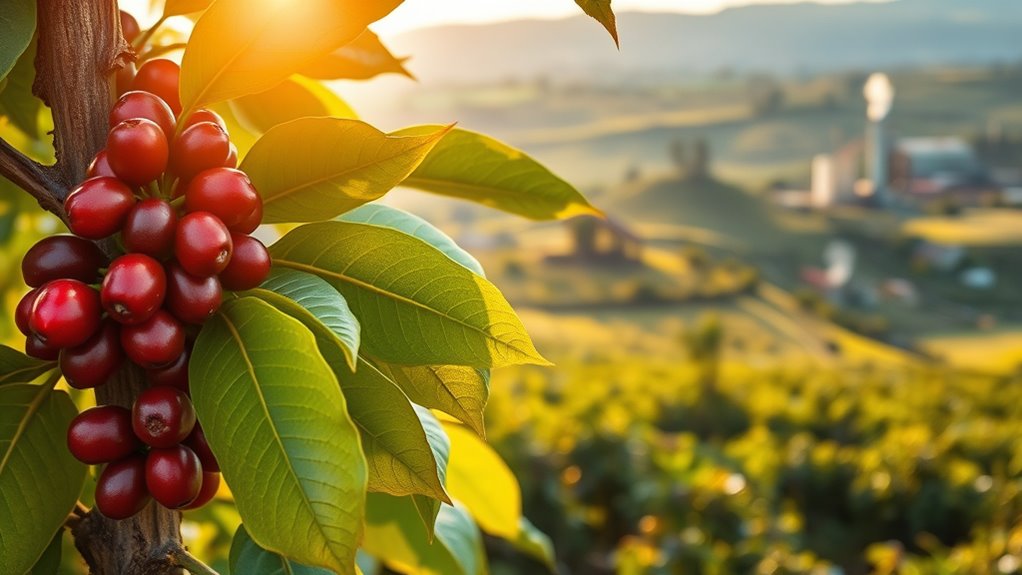
The journey of coffee begins on farms where farmers cultivate coffee plants, often using fertilizers and water that contribute to its overall carbon footprint. Choosing coffee with Fair Trade certification guarantees that farmers receive fair wages and work under better environmental practices, reducing harmful impacts. Organic certification takes this a step further by guaranteeing that no synthetic pesticides or fertilizers are used, which lowers the environmental burden during cultivation. These certifications promote sustainable farming methods, helping to minimize soil degradation and conserve water resources. Additionally, macronutrient management in coffee farming can significantly influence the environmental footprint by optimizing fertilizer use and reducing waste. By selecting Fair Trade and Organic coffee, you support farmers who prioritize eco-friendly practices, reducing the overall environmental impact of your cup. Incorporating protective styling benefits in coffee farming practices can help preserve the land and reduce erosion, further supporting sustainability. This conscious choice encourages more sustainable farming, ensuring that coffee’s journey from farm to cup aligns with efforts to lessen its carbon footprint. Moreover, adopting sustainable farming practices can further reduce the carbon emissions associated with coffee production, making your coffee consumption more environmentally friendly. Implementing climate-smart agriculture techniques can also help farmers adapt to changing climate conditions and minimize negative environmental effects.
Carbon Emissions in Coffee Cultivation
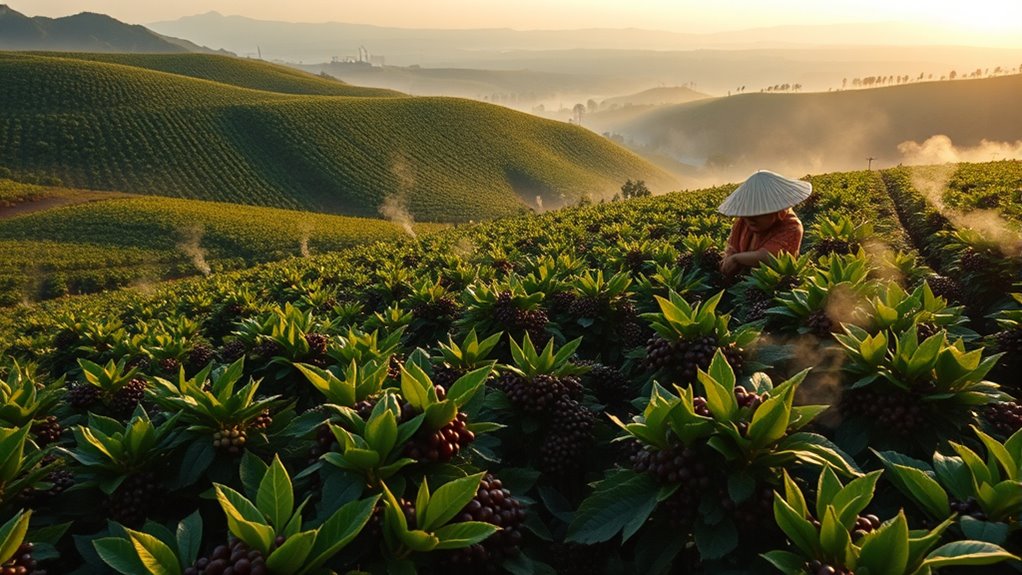
Coffee cultivation considerably contributes to carbon emissions, primarily through the use of machinery, fertilizers, and energy-intensive processing methods. Conventional farming often relies on synthetic fertilizers and heavy equipment that emit greenhouse gases. However, choosing shade grown coffee can reduce these emissions by promoting natural pest control and conserving biodiversity, which lowers the need for chemical inputs. Organic cultivation further minimizes carbon footprints by avoiding synthetic fertilizers and pesticides, instead relying on compost and natural methods. These practices improve soil health and sequester more carbon, making organic shade grown coffee a more sustainable option. Additionally, implementing agroforestry practices in coffee farming can enhance carbon sequestration and promote ecological resilience. The adoption of sustainable farming methods can significantly lower the environmental impact of coffee production. By supporting farms that prioritize shade grown and organic methods, you help reduce the overall carbon emissions associated with coffee cultivation. Your choices directly impact the planet’s climate health. Furthermore, adopting climate-smart agriculture techniques can optimize resource use and further reduce emissions associated with coffee farming. Integrating carbon footprint reduction strategies into coffee farming practices is essential for a more sustainable future.
The Impact of Processing and Transportation
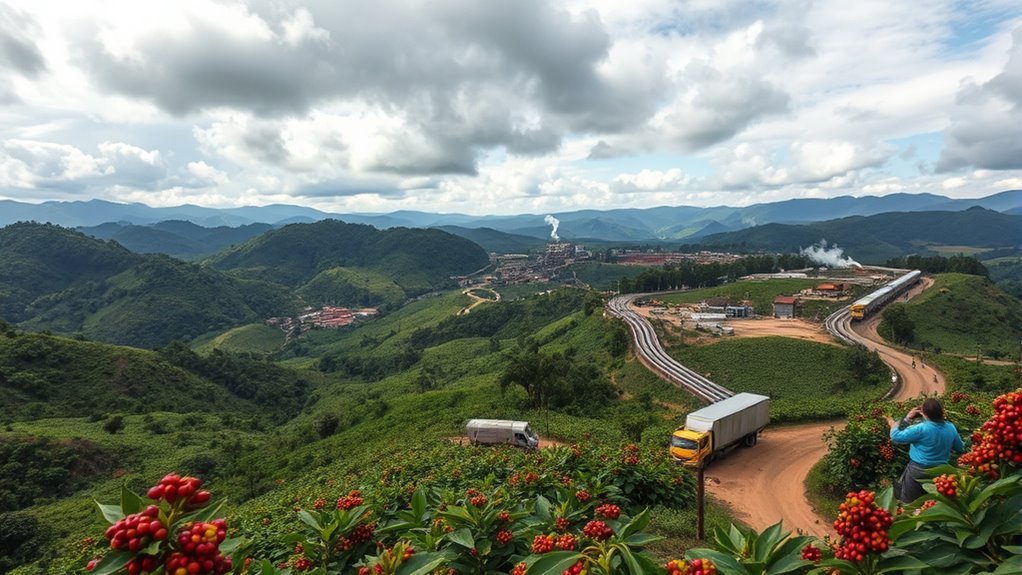
Processing and transportation considerably impact coffee’s overall carbon footprint, as these stages often involve energy-intensive methods and extensive logistics. Processing emissions from roasting, grinding, and packaging require significant energy, adding to the coffee’s carbon tally. The transportation impact is equally substantial, with coffee traveling thousands of miles from farm to cup, often via ships, trucks, and planes. Each step consumes fossil fuels and releases greenhouse gases. Supporting sustainable farming practices can reduce some of these impacts by promoting eco-friendly production methods. Implementing carbon offset programs can also help mitigate the environmental impact of transportation. Additionally, adopting renewable energy sources during processing can significantly lower emissions. Using innovative logistics solutions can streamline transportation and reduce fuel consumption. Embracing energy-efficient transportation options can further decrease the carbon footprint associated with moving coffee across the globe. You can reduce your coffee’s footprint by choosing options like: – Supporting local roasters to cut transportation impact – Opting for eco-friendly packaging during processing – Buying in bulk to minimize shipping needs – Prioritizing fair-trade and sustainably processed coffee Being mindful of these stages helps you understand how your coffee choices influence the planet.
Deforestation and Habitat Loss Linked to Coffee Farming
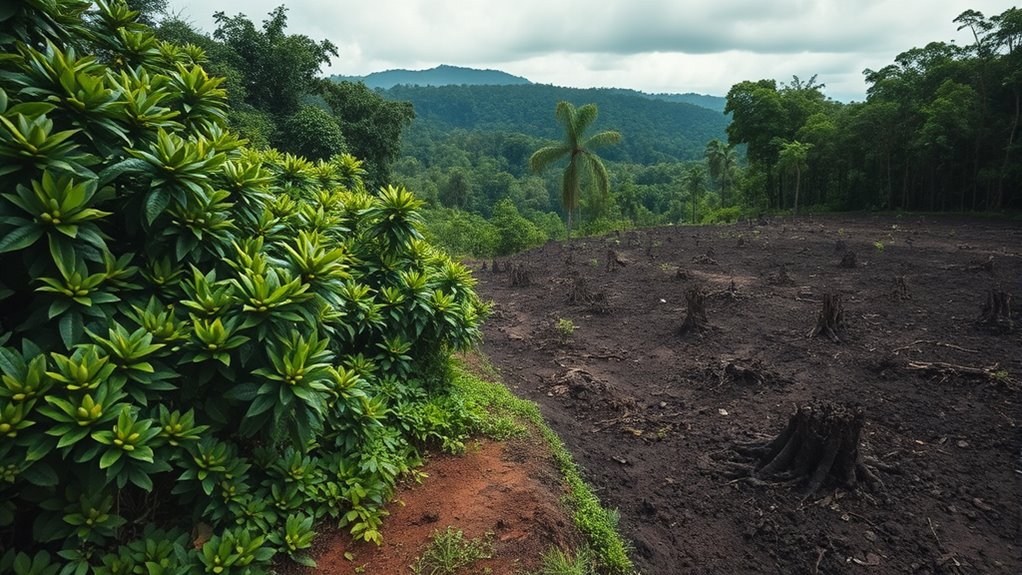
As demand for coffee grows, farmers often clear forests to make room for plantations, leading to significant habitat loss. This deforestation threatens biodiversity and disrupts ecosystems. Choosing shade grown coffee can help protect forests, as it relies on natural tree cover, supporting forest conservation. By supporting these practices, you reduce the pressure to convert forests into coffee farms. Additionally, sustainable practices like environmentally friendly farming can significantly lessen the ecological impact of coffee cultivation. Implementing regenerative agriculture techniques further enhances soil health and promotes biodiversity in coffee-growing regions.
The Role of Coffee Certification and Sustainable Practices

You can make a difference by choosing coffee certified for sustainable practices, which often meet strict environmental standards. Certification programs set benchmarks that encourage farmers to adopt eco-friendly methods, reducing their carbon footprint. By understanding these standards, you empower yourself to support practices that protect ecosystems and promote responsible farming. Additionally, selecting coffee prepared using proper brewing techniques can further minimize waste and energy consumption. Being aware of carbon footprint metrics helps consumers make more environmentally conscious choices when purchasing coffee.
Certification Standards and Impact
Certification standards play a crucial role in promoting sustainable coffee practices by setting clear benchmarks for environmental and social responsibility. When you choose certified coffee, you’re supporting more ethical and eco-friendly methods. Fair Trade certification ensures farmers get fair wages and invest in community development, reducing exploitation. Organic Certification guarantees coffee is grown without synthetic chemicals, which benefits soil health and reduces pollution. Other standards, like Rainforest Alliance, promote biodiversity and conservation. By selecting certified coffee, you’re encouraging farmers to adopt practices that lessen carbon emissions and protect ecosystems. Certifications help create transparency, so you know your coffee aligns with sustainability goals. These standards also motivate continuous improvement in farming practices, leading to long-term environmental benefits. Furthermore, adopting water-conservation techniques on coffee farms can significantly reduce water usage and lessen environmental impact. In addition, implementing water-efficient irrigation systems can optimize water use and further minimize waste. Ultimately, these standards drive positive change, making your daily cup more ethical and environmentally responsible. Additionally, implementing hydrotherapy techniques on coffee farms can help in water conservation and reduce environmental impact.
Sustainable Farming Practices
Sustainable farming practices are essential for reducing the environmental impact of coffee cultivation, and certification standards play a key role in encouraging these methods. One effective approach is shade-grown coffee, which preserves natural habitats and promotes biodiversity by growing coffee under a canopy of trees. Organic cultivation, another sustainable practice, avoids synthetic pesticides and fertilizers, lowering chemical runoff and soil degradation. By choosing certified coffee that emphasizes shade-grown and organic methods, you support farms committed to eco-friendly practices. These methods reduce carbon emissions, conserve water, and enhance soil health, making coffee production more sustainable. When you buy coffee with these certifications, you help protect ecosystems and promote farming practices that are healthier for the planet and for farmers. Additionally, adopting sustainable farming practices can help mitigate climate change by sequestering carbon in forests and soils.
Comparing Different Coffee Types and Their Footprints

Different types of coffee vary markedly in their carbon footprints, largely due to the methods used in cultivation, processing, and transportation. For example, Arabica beans often require cooler climates and more water, increasing their environmental impact, while Robusta beans are more resilient and typically less resource-intensive. When comparing coffee types, consider their flavor profiles and how they influence your brewing techniques—single-origin coffees might offer richer, complex flavors, but sometimes demand more delicate processing. You can reduce your footprint by choosing coffees that align with sustainable practices. Here’s a quick look:
- Single-origin coffees often have unique flavor profiles but may involve more transport.
- Instant coffee usually has a lower carbon footprint due to simplified processing.
- Organic coffees tend to use fewer chemicals, lowering environmental impact.
- Fair-trade options support sustainable farming, reducing overall ecological harm.
- Incorporating a detailed personality assessment can help consumers make more conscious choices aligned with their values.
How Consumer Choices Influence Coffee’s Environmental Impact

Your choices as a coffee consumer directly impact the environment, as the methods behind your daily brew influence its overall carbon footprint. Increasing consumer awareness about sustainable options encourages brands to adopt eco-friendly practices. Opting for ethically sourced coffee ensures farmers use environmentally responsible methods, reducing deforestation and emissions. Consider the following factors:
| Choice | Environmental Benefit |
|---|---|
| Buying fair trade | Supports ethical sourcing, reduces harm |
| Choosing organic | Less chemical use, healthier ecosystems |
| Supporting local farms | Reduces transportation emissions |
| Picking eco-labels | Ensures sustainable production practices |
Innovative Technologies in Eco-Friendly Coffee Production

You can reduce coffee’s environmental impact by supporting farms that use sustainable technologies and renewable energy sources. Innovative processing methods also help cut emissions and waste. Together, these advancements make coffee production more eco-friendly and sustainable for the future.
Sustainable Farming Technologies
Innovative technologies are transforming coffee farming by making it more sustainable and environmentally friendly. You can now support eco-conscious practices through methods like using organic fertilizers, which enrich soil without harmful chemicals, and planting shade grown coffee, which preserves natural habitats. These techniques reduce deforestation, improve biodiversity, and lower chemical runoff.
Some sustainable farming technologies include:
- Implementing organic fertilizers to boost soil health naturally
- Promoting shade grown coffee to protect ecosystems
- Using water-efficient irrigation systems to conserve water
- Adopting soil conservation practices to prevent erosion and maintain land productivity
Renewable Energy Use
Implementing renewable energy sources has become a key strategy for making coffee production more sustainable. By switching to renewable energy like solar, wind, or biomass, coffee farms and processing facilities substantially reduce their carbon footprint. These technologies improve energy efficiency, ensuring that less power is wasted during operations. Many coffee producers are investing in solar panels to power their equipment or using wind turbines to generate electricity, which lowers reliance on fossil fuels. Not only does this cut emissions, but it also helps stabilize energy costs and enhances overall sustainability. Embracing renewable energy demonstrates a commitment to eco-friendly practices, proving that coffee companies can prioritize environmental responsibility while maintaining efficient production methods.
Eco-Friendly Processing Methods
To reduce their environmental impact, coffee producers are turning to eco-friendly processing methods that utilize cutting-edge technologies. These innovations focus on minimizing waste and conserving resources. For example, some use biodegradable packaging to reduce plastic waste and guarantee eco-friendly disposal. Water conservation techniques are also gaining popularity, such as closed-loop systems that recycle water during processing. Additionally, dry processing methods cut down on water use entirely, lowering the water footprint. Producers are adopting energy-efficient machinery to reduce emissions further. These approaches not only protect the planet but also appeal to environmentally conscious consumers. By embracing these innovative methods, you support sustainable coffee production and help lessen your overall carbon footprint.
Tips for Reducing Your Coffee-Related Carbon Footprint

Reducing your coffee-related carbon footprint is achievable through simple, mindful choices. Start by exploring coffee flavor profiles that suit your preferences, which can help you buy less but higher-quality beans. Opt for brewing techniques like pour-over or French press, which often use less energy than machines with multiple settings. Using a reusable filter or grinder can cut waste and save resources. Consider buying coffee from local roasters or brands committed to sustainability, reducing transportation emissions. Brewing smaller quantities prevents waste and ensures freshness. Additionally, storing your coffee properly preserves flavor, minimizing the need to brew excessive amounts. By making these adjustments, you enjoy better coffee flavor while lowering your environmental impact, contributing to a more sustainable coffee culture.
Moving Towards a Greener Coffee Future
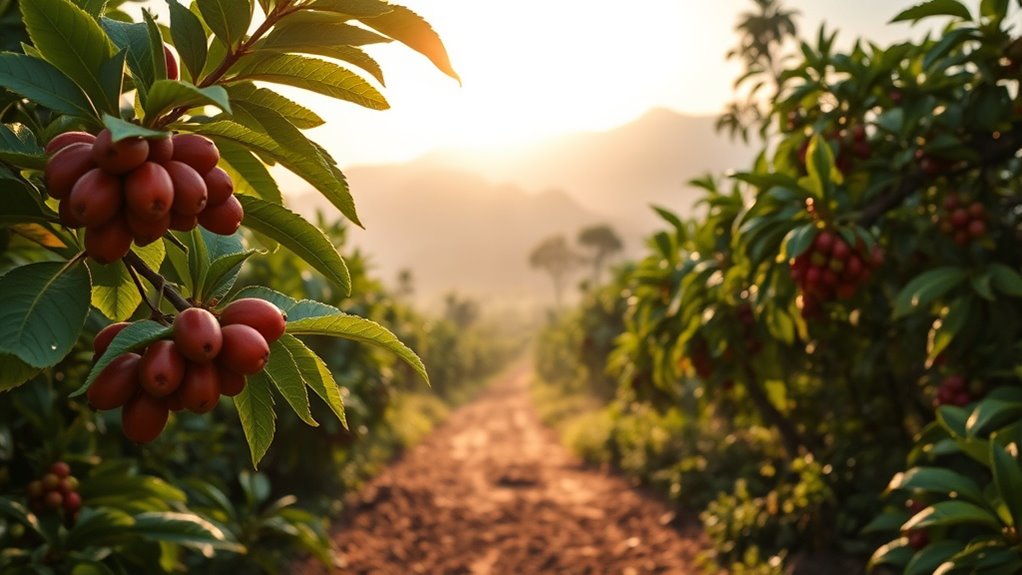
To create a greener coffee future, you can support farms that use sustainable practices, reducing environmental impact. Innovative eco-friendly technologies are also making coffee production more efficient and less harmful. By choosing these options, you help drive positive change in the industry.
Sustainable Farming Practices
As the coffee industry seeks a more sustainable future, farmers are increasingly adopting environmentally friendly practices that protect ecosystems and conserve resources. You’ll find more farms embracing shade grown coffee, which preserves biodiversity and reduces the need for chemical inputs. Using organic fertilizers helps improve soil health without harmful runoff, supporting long-term productivity. Other sustainable practices include crop rotation to prevent soil exhaustion and water-efficient irrigation systems to minimize water use. These methods not only lower carbon emissions but also promote healthier farms and communities. By choosing coffee produced through these practices, you contribute to reducing environmental impact. Supporting farmers who prioritize sustainability encourages wider adoption of eco-friendly techniques, moving us closer to a greener, more resilient coffee future.
Innovative Eco-friendly Technologies
Innovative eco-friendly technologies are transforming the coffee industry by offering new ways to lower its environmental impact. One approach is promoting shade-grown coffee, which reduces deforestation and supports biodiversity. Shade trees naturally conserve water by maintaining soil moisture, decreasing the need for irrigation. Additionally, new processing methods focus on water conservation, recycling water used during extraction and cleaning processes. Some farms are adopting drip irrigation systems that target water precisely where it’s needed, cutting waste. Innovations like biodegradable packaging and solar-powered machinery also help reduce carbon emissions. These technologies enable you to enjoy your coffee while supporting sustainable practices. By choosing shade-grown coffee and supporting water conservation efforts, you’re helping the industry move toward a greener, more responsible future.
Frequently Asked Questions
How Does Coffee Farming Affect Local Water Resources?
Coffee farming acts like a sponge, soaking up local water resources. It often leads to groundwater depletion, leaving communities dry, and causes water contamination through pesticide runoff. This disruption can turn essential water supplies into polluted streams, threatening both ecosystems and human health. As you enjoy your coffee, remember that its cultivation may silently drain and taint the very water that sustains life around it.
Are There Specific Coffee Brands Known for Lower Carbon Footprints?
Yes, you can choose coffee brands that have lower carbon footprints. Look for shade-grown coffee, which requires less deforestation and chemicals, and opt for fair trade certifications that promote sustainable farming practices. These brands prioritize environmentally friendly methods, reducing your impact. By selecting these options, you support eco-conscious growers and help lessen your coffee’s overall carbon footprint, making a positive difference for the planet.
What Role Do Government Policies Play in Sustainable Coffee Production?
Government policies play a pivotal role in sustainable coffee production by encouraging practices like carbon offsetting and offering policy incentives. When you support brands that follow these policies, you’re helping promote environmentally friendly farming methods. These policies can fund research, reward eco-friendly farmers, and reduce the coffee industry’s overall carbon footprint. Your choices, combined with effective policies, can drive positive change towards more sustainable coffee cultivation.
Can Organic Coffee Significantly Reduce Environmental Impacts?
Organic coffee can considerably reduce environmental impacts because it relies on organic farming practices that protect soil health. By avoiding synthetic pesticides and fertilizers, you help maintain nutrient-rich soil, which promotes better water retention and reduces erosion. This sustainable approach decreases chemical runoff and lowers your coffee’s carbon footprint. Choosing organic coffee supports healthier ecosystems and promotes long-term sustainability, making your coffee consumption more eco-friendly and beneficial for the planet.
How Does Climate Change Threaten Future Coffee Supplies?
Climate change threatens your future coffee supplies by affecting coffee crop resilience. Rising temperatures, erratic rainfall, and pests weaken plants, making it harder for farmers to grow quality beans. To guarantee your coffee’s future, farmers must adopt climate adaptation strategies like shade-grown coffee and drought-resistant varieties. Staying aware of these issues helps you support sustainable practices that protect coffee availability and preserve the environment for generations to come.
Conclusion
By making smarter choices about your coffee, you hold the power to save the planet from an impending environmental catastrophe. Every cup you sip could be the tipping point between lush, thriving forests and barren wastelands. So, embrace sustainable practices, support eco-friendly farms, and champion innovative technologies. Remember, your daily coffee habit isn’t just a routine—it’s a battlefront in the fight to preserve our planet’s future. Act now, or risk waking up to a world unrecognizable.
Halloween Picks
halloween
As an affiliate, we earn on qualifying purchases.