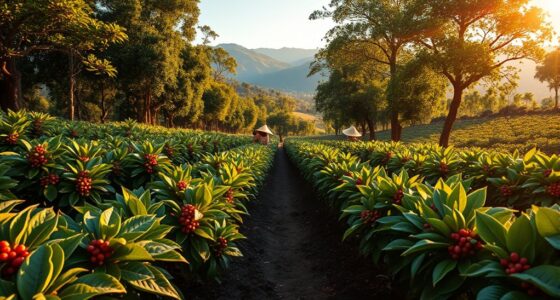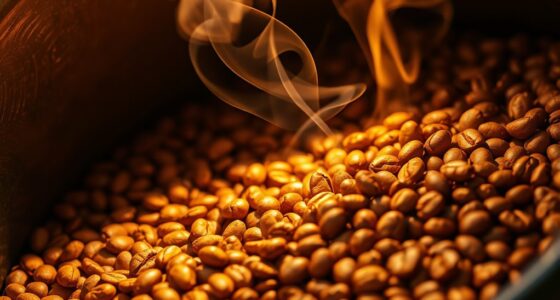

Understanding key coffee terms can boost your appreciation and brewing skills. “Espresso” refers to a strong shot brewed under pressure, topped with crema. The “French Press” involves steeping coarsely ground coffee, while the “drip method” uses automated drip machines. “Extraction” impacts flavor, with over- or under-extraction affecting taste. “Cupping” is a tasting process to evaluate aroma and flavor. Variations like “Flat White,” “Latte,” and “Ristretto” highlight different espresso styles. “Fair Trade” supports farmers, especially those at higher elevations. Keep exploring these terms for a richer coffee experience.
Key Takeaways
- Understanding common coffee terms like “single-origin,” “crema,” and “body” enhances appreciation of brewing and tasting experiences.
- Familiarity with processing methods such as “dry processing” or “washed” explains flavor differences and quality.
- Knowledge of brewing techniques, including “espresso,” “French press,” and “pour-over,” helps optimize extraction and flavor.
- Recognizing flavor descriptors like “acidity,” “bitterness,” and “aroma” aids in evaluating and describing coffee profiles.
- Learning about coffee varieties and origins, like “Arabica,” “Robusta,” and regional terms, reveals terroir and influences price and availability.

CASABREWS CM5418 Espresso Machine 20 Bar, Compact Espresso Maker with Steam Milk Frother, Stainless Steel Coffee Machine with 34oz Removable Water Tank for Cappuccino, Small Latte Machine, Silver
Make Your Favorite Espresso Coffee At Home: The CASABREWS coffee machine with milk frother allows you to prepare…
As an affiliate, we earn on qualifying purchases.
As an affiliate, we earn on qualifying purchases.
Espresso

What makes espresso stand out among other brewing methods? It’s the intense concentration of flavor you get from forcing hot water under high pressure through finely ground coffee. This process creates a small, rich shot—usually about one ounce—that captures a complex mix of aromas and tastes quickly. The high pressure extracts oils, sugars, and flavors more efficiently than other methods, resulting in a bold, full-bodied drink. The use of finely ground coffee is essential to achieving the proper extraction and flavor profile. A well-made espresso features a layer of crema—golden foam on top—that indicates freshness and quality. Unlike drip or French press, espresso’s quick extraction emphasizes intensity and balance, making it the foundation for many coffee beverages. Its concentrated nature allows for a nuanced sensory experience packed into a small, powerful shot. Additionally, the process of espresso making involves precise control over brewing variables, which is a key aspect of specialized brewing techniques. Proper temperature control during extraction ensures optimal flavor and aroma development in each shot.

Utopia Kitchen 304 Grade Stainless Steel French Press Coffee Maker 34 Oz, Double Wall Insulated Coffee Press with 4-Level Filtration System, Include 2 Extra Filters, Rust-Free, Dishwasher Safe, Silver
Double-Walled French Press: Make perfectly brewed coffee at home like a barista. The double-walled coffee press is heat…
As an affiliate, we earn on qualifying purchases.
As an affiliate, we earn on qualifying purchases.
French Press
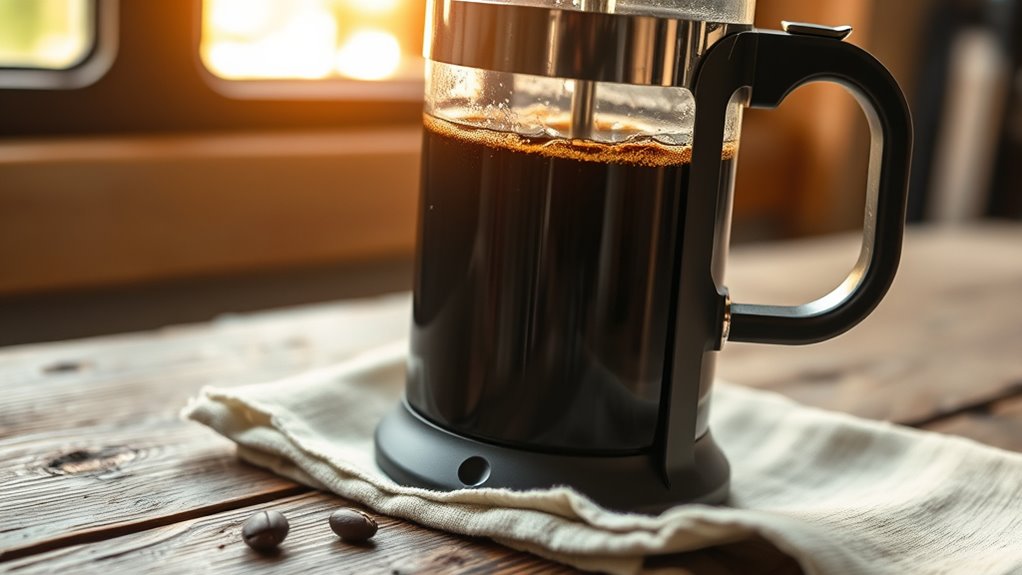
Have you ever wondered how to achieve a rich, full-bodied cup of coffee at home? The French Press is a simple, effective method that’s perfect for that. You start by adding coarsely ground coffee to the glass carafe. Then, pour hot water over the grounds, ensuring all are soaked evenly. Let it steep for about four minutes. After steeping, press the metal mesh filter down slowly to separate the grounds from the liquid. This method extracts more oils and flavors, giving your coffee a robust, velvety texture. The French Press allows you to control brewing time and strength, making it ideal for customizing your perfect cup. It’s a favorite among coffee enthusiasts who enjoy bold, aromatic brews with minimal equipment. Tuning your brewing process can also enhance the flavor profile by adjusting steeping time and grind size to suit your taste preferences. Additionally, understanding brew ratio helps optimize extraction and flavor. Paying attention to extraction efficiency can further improve your coffee’s taste and consistency, especially as it relates to authenticity in flavor extraction. Exploring water temperature is also important, as it influences extraction and overall flavor.

ESPRO – BLOOM Pour Over Coffee Brewing Kit – Durable Brushed Stainless Steel, Dual Filter with Patented Micro-Filter & 50 Paper Filters
Unlock Your Coffee's Full Potenial – Designed to extract every ounce of flavor from your beans, this pour…
As an affiliate, we earn on qualifying purchases.
As an affiliate, we earn on qualifying purchases.
Drip Method

The brewing ratio in the drip method is vital because it determines how strong or diluted your coffee will taste. Using the right equipment and technique guarantees hot water flows evenly through the grounds, extracting the best flavors. Pay attention to your setup and process to get a consistent, balanced cup every time. Proper equipment choice can make a significant difference in the final flavor profile.
Brewing Ratio Significance
The brewing ratio in the drip method is essential because it directly influences the strength, flavor, and overall quality of your coffee. Using too much water results in a weak, underwhelming brew, while too little water makes it overly strong and bitter. Finding the right balance guarantees your coffee tastes vibrant and well-rounded. Think of it as a recipe: the ratio determines how the flavors develop. Here’s a simple visualization:
| Coffee Grounds | Water | Resulting Flavor |
|---|---|---|
| 1 tbsp | 16 oz | Light, delicate |
| 2 tbsp | 16 oz | Balanced, rich |
| 3 tbsp | 16 oz | Strong, bold |
| 4 tbsp | 16 oz | Intense, robust |
Adjusting this ratio helps you craft the perfect cup to suit your taste preferences. Proper measurement and understanding of brewing techniques are key to achieving consistent results and a satisfying coffee experience.
Brewing Equipment and Technique
Are you ready to master the drip coffee method? First, choose a clean drip coffee maker or pour-over cone. Measure your coffee grounds—about one to two tablespoons per six ounces of water—and place them in the filter. Boil fresh water and let it sit briefly to reach about 200°F. Slowly pour the hot water over the grounds in a circular motion, ensuring even saturation. Allow the water to drip through the coffee bed into your carafe or mug. The key is consistency: steady pouring and proper grind size, usually medium, help extract ideal flavors. Avoid rushing or over-pouring, which can cause over-extraction or under-extraction. proper grind size is essential for balancing extraction and flavor clarity. With practice, you’ll develop a perfect, balanced brew every time, highlighting the coffee’s nuanced flavors. Incorporating sound vibrations during brewing can also enhance extraction and aroma. Additionally, understanding automation in business can inspire new methods to optimize brewing processes for consistency and efficiency. Exploring equipment maintenance ensures your brewer stays in top condition, safeguarding the quality of your brew.

Artizan Coffee Gear – Specialty Coffee Association (SCA) Professional Coffee Cupping Spoon – Stainless Steel (4 Spoons)
Meets SCA Standards, holding 0.135-0.169 fluid ounces / 4-5ml of coffee sample and is made from non-reactive metal.
As an affiliate, we earn on qualifying purchases.
As an affiliate, we earn on qualifying purchases.
Extraction
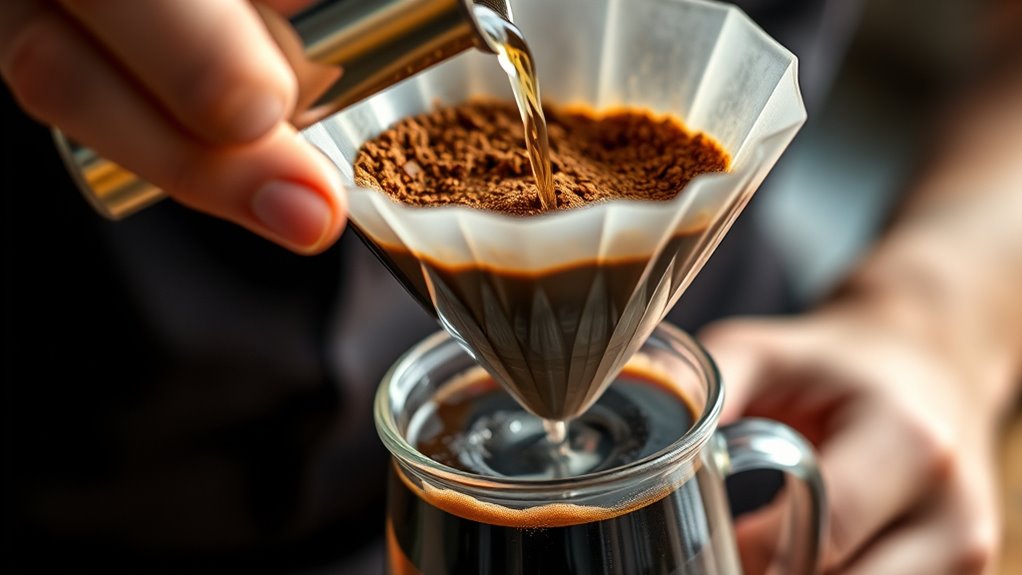
Extraction is the process that pulls desirable compounds from coffee beans during brewing, directly impacting flavor and aroma. When hot water interacts with coffee grounds, it dissolves soluble substances like sugars, acids, and oils, creating the beverage’s taste profile. The goal is to obtain just the right amount—over-extraction leads to bitterness, while under-extraction results in sourness or weak flavors. Factors like brew time, water temperature, grind size, and agitation influence extraction efficiency. For example, a fine grind in espresso ensures quick, thorough extraction, while a coarser grind in French press requires longer contact. Understanding extraction helps you control brewing variables to achieve balanced, flavorful coffee. Proper extraction reveals the beans’ true character, making every cup more satisfying.
Cupping
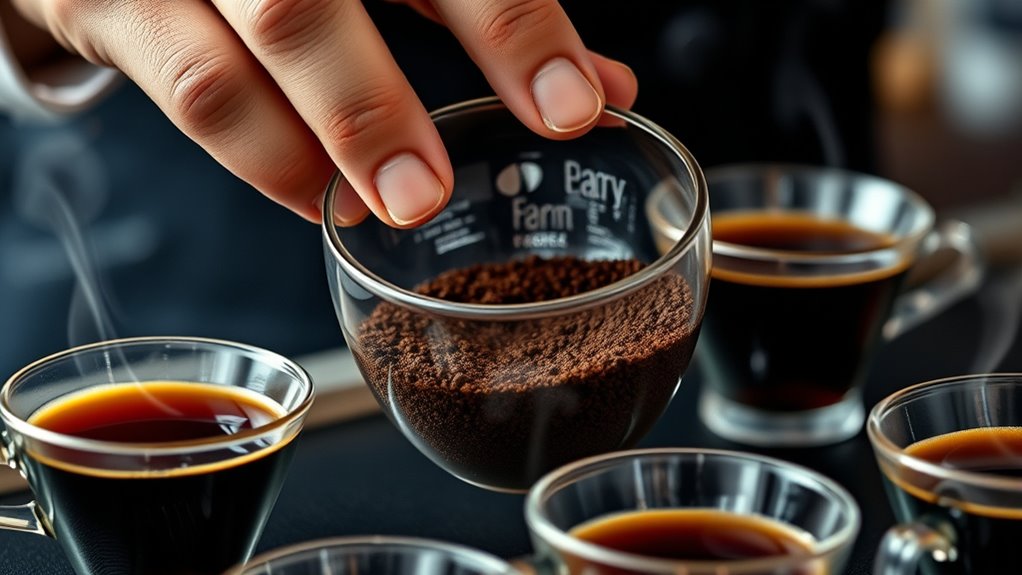
Have you ever wondered how coffee professionals evaluate quality? That’s where cupping comes in. It’s a highly structured process used to taste and compare different coffees objectively. First, you’ll smell the dry grounds to assess aroma. Then, hot water is poured over the coffee, releasing more scents as it brews. After a few minutes, a crust forms on top; you’ll break it with a spoon to release more aroma and taste the coffee. You’ll evaluate several factors: aroma, flavor, body, acidity, and aftertaste. Cupping helps roasters and buyers determine a coffee’s quality, unique characteristics, and potential flaws. It’s a crucial step in selecting and appreciating coffee, giving you insight into what makes each batch special. Understanding the evaluation process involved in cupping can enhance your appreciation of coffee’s complexity, including how sensory analysis plays a key role in assessing quality. Additionally, developing your palate awareness can help you identify subtle nuances and improve your overall tasting skills. Practicing cupping regularly can also boost your ability to detect flavor profiles and distinguish subtle differences between beans. Furthermore, familiarity with AI-powered tools is increasingly aiding professionals in refining their sensory evaluations, ensuring more consistent and accurate assessments.
Arabica and Robusta
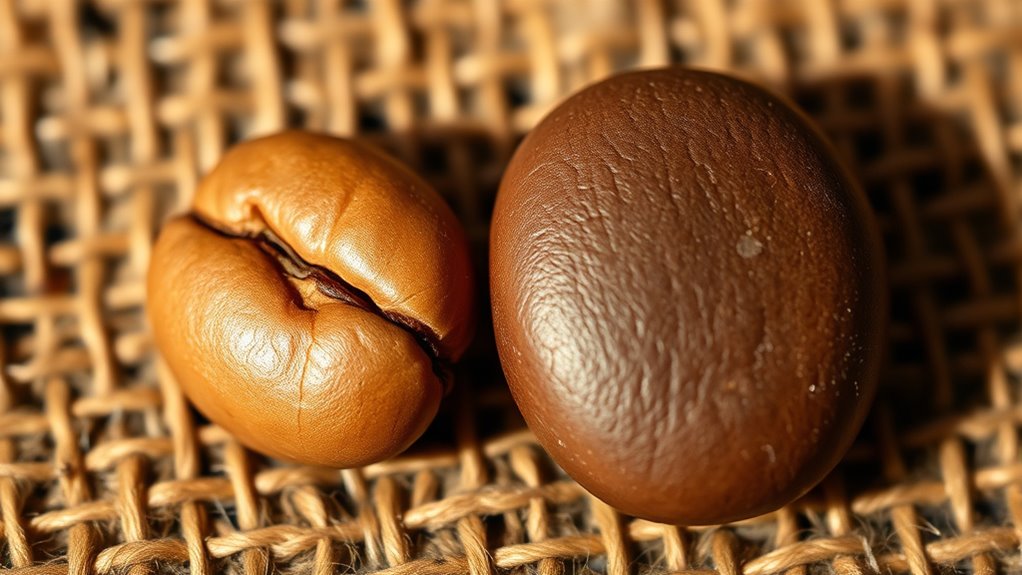
When exploring coffee quality and flavor profiles, understanding the different bean varieties is key. Arabica and Robusta are the two main types you’ll encounter. Arabica makes up about 60-70% of global production and is prized for its complex, sweeter flavors and higher acidity. It’s often grown at higher elevations, which enhances its nuanced taste. Robusta, dominating the remaining production, has a stronger, more bitter flavor and nearly double the caffeine content of Arabica. It’s hardier and can grow at lower altitudes, making it more resistant to pests. Robusta beans tend to produce a bolder, more bitter brew, often used in espresso blends for added body and caffeine kick. Climate requirements play a significant role in the cultivation and availability of these beans, influencing their growth conditions and market supply. Understanding these differences helps you choose beans that match your preferred flavor and strength. Additionally, the low carbohydrate nature of many coffee drinks allows it to be incorporated into low carb diets like keto, supporting energy and metabolism. The agricultural resilience of Robusta also contributes to its widespread cultivation in regions with challenging growing conditions. Moreover, the distinct cultivation requirements of Arabica and Robusta influence their flavor profiles and availability in the market. For example, Arabica plants are more sensitive to environmental conditions and require specific climate and altitude, which impacts their commercial cultivation and price.
Single-Origin and Blends
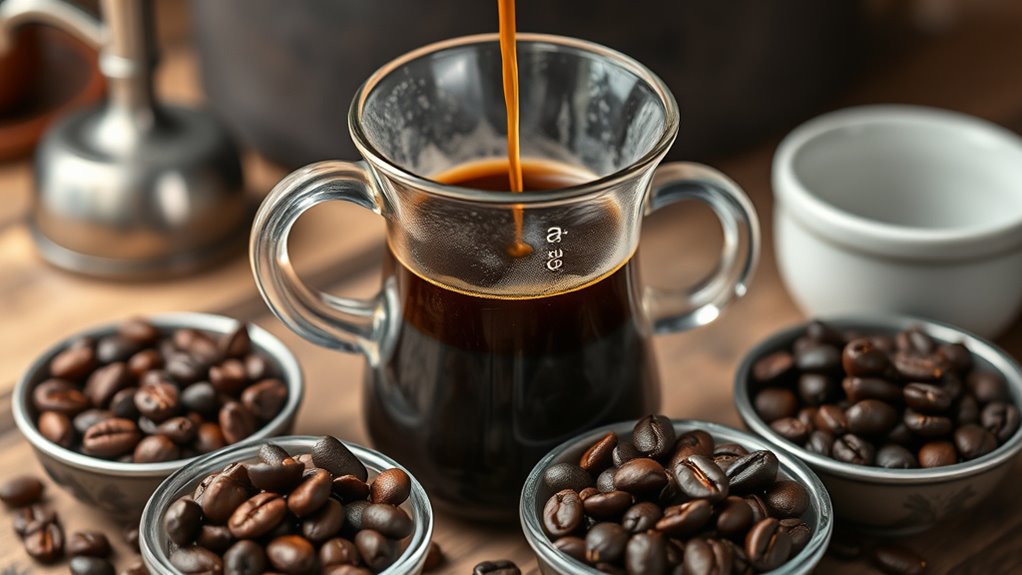
Are you curious about how coffee’s origin influences its flavor? When you choose single-origin coffee, you’re tasting beans from one specific region, farm, or estate. This means you’ll notice unique characteristics shaped by local climate, soil, and growing practices. Single-origin coffees often highlight distinct flavor notes, such as fruity, floral, or earthy tones, giving you a pure expression of that area’s terroir. In contrast, blends combine beans from different origins to create a balanced, consistent flavor profile. They’re crafted to enhance certain qualities or achieve a specific taste experience. Whether you prefer the purity of single-origin or the harmony of a blend, understanding these options helps you appreciate the diversity and complexity in your coffee cup.
Crema

Crema is a sign of freshness and quality in your espresso, indicating that the coffee beans are freshly brewed and properly extracted. It also serves as a textural indicator, adding a silky layer to each sip. Paying attention to crema helps you judge the overall excellence of your shot.
Sign of Freshness
How can you tell if a shot of espresso is fresh and of high quality? Look for a rich, golden crema that forms a thick, velvety layer on top. This crema results from the emulsification of coffee oils and indicates proper extraction, freshness, and good bean quality. It should have a slightly glossy appearance and cling to the sides of the cup without quickly dissipating. A vibrant crema suggests recent roasting and proper grinding, as older beans lose their oils and produce less stable foam. If the crema is thin, pale, or disappears quickly, the espresso may lack freshness or have been poorly extracted. Remember, a well-formed crema is your first visual cue of a fresh, high-quality espresso shot.
Textural Indicator
The texture of crema serves as a vital visual and tactile cue for evaluating espresso quality. It indicates freshness, proper extraction, and the presence of oils. A rich, velvety crema suggests balanced brewing and high-quality beans. You should look for a crema that is:
- Thick and persistent — stays on top for at least a minute.
- Golden to caramel color — signals proper extraction.
- Smooth and velvety — feels silky on your fingertips.
- Microbubbles — tiny, uniform bubbles that indicate freshness and proper emulsification.
These characteristics help you assess whether your espresso was expertly brewed. A well-formed crema enhances aroma and flavor, making the entire experience more enjoyable. Pay attention to texture; it’s a key indicator of top-tier espresso.
Body and Finish
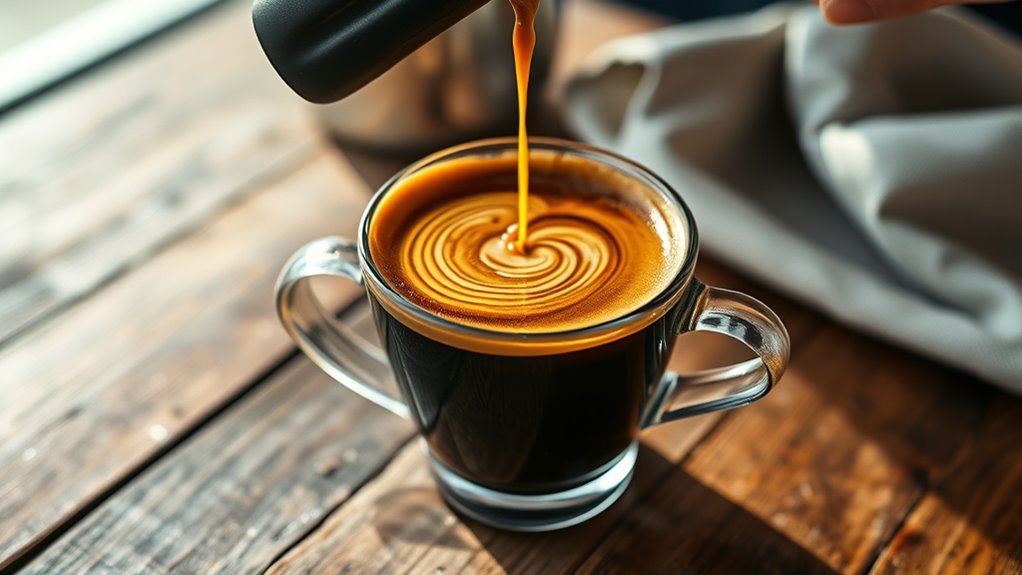
Have you ever noticed how some coffees feel thick and syrupy in your mouth while others seem light and fleeting? That’s the body of the coffee at work. It describes the coffee’s texture and weight, like whether it coats your palate or feels thin. A full-bodied coffee might remind you of cream or syrup, offering a rich, satisfying sensation. On the other hand, a coffee with light body feels more delicate and fleeting, almost watery. The finish is what lingers after you swallow. Some coffees leave a bold, long-lasting impression, while others fade quickly. The finish can be sweet, spicy, or even bitter, shaping your overall experience. Together, body and finish give you a complete picture of the coffee’s personality.
Dark Roast and Processing
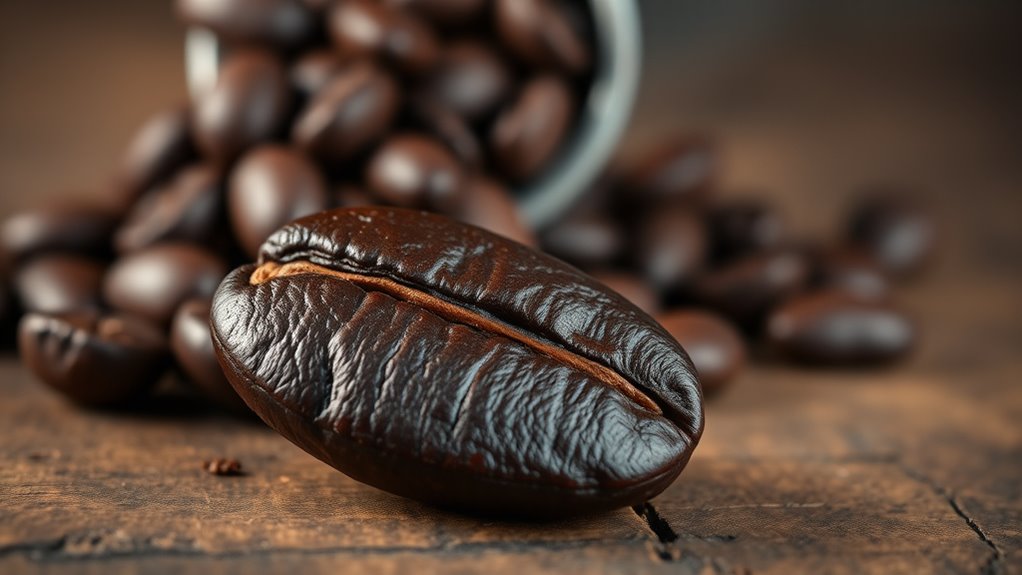
Ever wonder what sets dark roast coffee apart from lighter roasts? It’s mainly about roasting level and processing methods. Dark roasts are roasted to a medium-dark or deeper color, which brings oils to the surface and mutes some original flavors. This roasting process influences the coffee’s taste and aroma, often producing bold, smoky notes. Processing also plays a role; for example:
- Dry Processing enhances earthy, rustic flavors by drying the whole fruit.
- Degassing occurs after roasting, releasing carbon dioxide to preserve freshness.
- Roasting techniques like drum roasting ensure consistent heat application.
- Flavor profile shifts from bright and fruity in lighter roasts to rich and bitter in dark roasts.
Together, roasting and processing create the distinct character of dark roast coffees you enjoy.
Decaffeinated Coffee

Decaffeinated coffee is made using various methods to remove caffeine, often reducing it by up to 97%. These processes can affect the coffee’s flavor, sometimes making it taste different from regular brews. Understanding how decaf is made helps you appreciate its reduced caffeine content and potential flavor differences.
Decaffeination Methods Overview
Decaffeination methods remove most of the caffeine from coffee beans while aiming to preserve their flavor and aroma. You should know that there are four main techniques:
- Swiss Water Process: Uses only water and osmosis to extract caffeine, maintaining flavor integrity.
- Carbon Dioxide (CO₂) Method: Employs pressurized CO₂ to selectively remove caffeine without affecting other compounds.
- Solvent-Based Extraction: Involves soaking beans in chemical solvents like methylene chloride or ethyl acetate, then removing residual solvents.
- Natural or Water-Only Methods: Use natural processes, typically involving water and sometimes charcoal filters, to decaffeinate beans without chemicals.
Each method impacts the flavor differently, and your choice depends on your preferences for purity, flavor, and health considerations.
Caffeine Content Reduction Levels
Caffeine content reduction levels in decaffeinated coffee vary depending on the method used, but most aim to eliminate at least 97% of the caffeine. This means a typical 8-ounce cup of decaf contains about 3 milligrams of caffeine or less, compared to 95 milligrams in regular coffee. Some processes, like Swiss Water or CO2 extraction, achieve near-complete caffeine removal without chemical solvents. Others, such as solvent-based methods, may leave slightly higher residual caffeine levels. Keep in mind, decaf isn’t entirely caffeine-free, but it’s a suitable choice if you’re sensitive to caffeine or want to limit intake. The reduction percentage ensures you still enjoy coffee’s flavor and aroma while minimizing caffeine’s stimulating effects.
Flavor Impact of Decaf
Removing most of the caffeine from coffee can subtly alter its flavor profile, affecting how you experience its aroma and taste. Decaf often has a slightly muted or different flavor compared to regular coffee. This change results from the decaffeination process, which can impact the beans’ structure and oils. Here’s what you should consider:
- Loss of Brightness: Some of the lively acidity and nuanced flavors may diminish.
- Altered Body: The coffee might feel thinner or less viscous on your palate.
- Modified Aromatics: Certain aromatic compounds can be reduced or masked.
- Flavor Complements: Decaf may require different brewing techniques to enhance its profile.
Understanding these impacts helps you choose decaf that still delivers a satisfying, flavorful experience.
Flat White and Latte

Have you ever wondered what sets a flat white apart from a latte? The key difference is the milk texture and ratio. A flat white uses microfoam—smooth, velvety milk—with less foam, resulting in a stronger coffee flavor. A latte has more steamed milk and a layer of frothy microfoam on top, making it creamier and milder.
| Beverage | Milk Texture | Volume | Coffee-to-Milk Ratio | Foam Thickness |
|---|---|---|---|---|
| Flat White | Microfoam, velvety | Smaller | Higher coffee ratio | Thin, minimal foam |
| Latte | Steamed milk, frothy | Larger | Lower coffee ratio | Thick, airy foam |
| Similarity | Made with espresso | |||
| Difference | Milk texture and ratio | |||
| Preference | Personal taste |
Ristretto and Shot
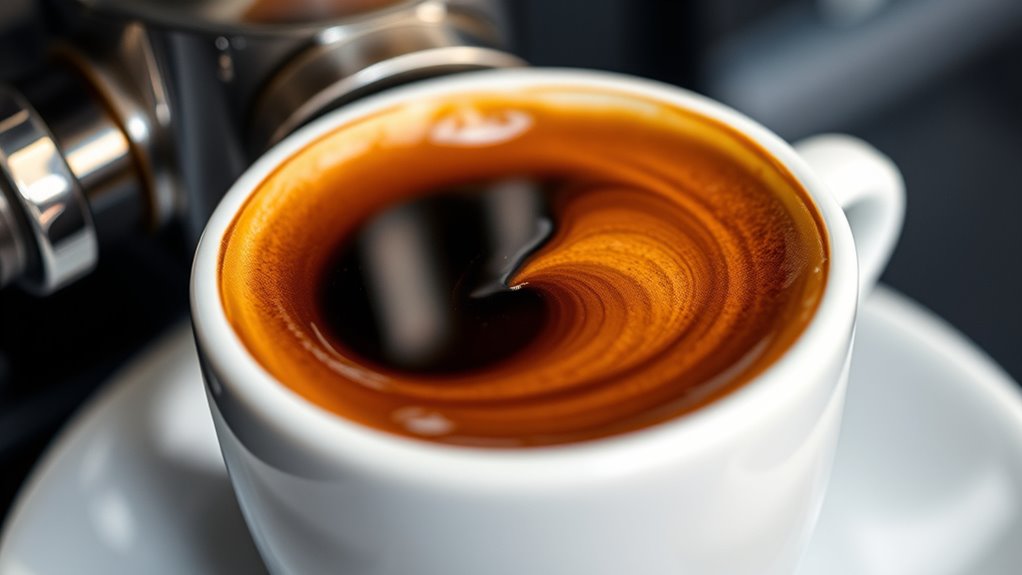
Ever wonder what makes a ristretto different from a standard shot of espresso? A ristretto is a shorter, more concentrated shot made with the same amount of coffee but less water, resulting in a richer, thicker flavor. A standard shot, or “shot,” usually involves around 1 ounce of espresso, while a ristretto uses about half that volume. To understand better:
- Extraction Time: Ristrettos are pulled for less time, trapping more intense flavors.
- Flavor Profile: Ristretto emphasizes sweetness and body, minimizing bitterness.
- Caffeine Content: Slightly less caffeine than a regular shot, but still potent.
- Use in Drinks: Ristretto is perfect for creating balanced, intense espresso-based beverages.
Knowing these differences helps you choose the right shot for your preferred coffee experience.
Fair Trade and Direct Trade
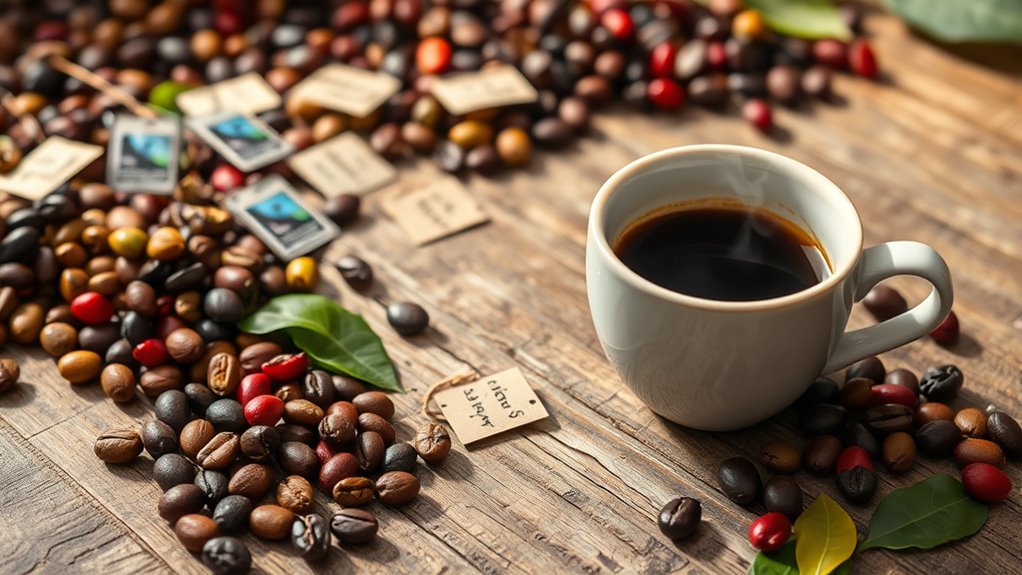
When you choose coffee from fair trade or direct trade sources, you support fair compensation for farmers and better working conditions. Building direct relationships with farmers can also improve the quality of the beans you enjoy. Ultimately, these practices can lead to richer flavors and a more meaningful coffee experience.
Ensuring Fair Compensation
Ensuring fair compensation for coffee producers is essential to promoting sustainable and equitable trade practices in the coffee industry. When you choose coffee from fair trade or direct trade sources, you’re supporting farmers who receive a fair price for their work. Here’s what it means for producers:
- They earn enough to cover basic needs and invest in their farms.
- They receive premiums that fund community projects.
- Their livelihoods become more resilient against market fluctuations.
- They gain greater bargaining power in the global market.
Building Direct Relationships
Building direct relationships with coffee farmers fosters transparency and trust, creating a more equitable supply chain. When you engage directly with farmers or establish long-term partnerships, you gain insight into their growing practices, quality standards, and challenges. This connection often leads to better pricing, ensuring farmers receive a fairer income for their work. Unlike traditional trade, where middlemen may obscure costs, direct trade emphasizes open communication and mutual respect. By supporting these relationships, you help promote sustainable farming, community development, and improved working conditions. This approach also allows you to source unique, high-quality beans from specific farms or regions. Ultimately, building these partnerships deepens your understanding of coffee’s journey from farm to cup and strengthens the integrity of your supply chain.
Impact on Coffee Quality
How do Fair Trade and Direct Trade practices influence coffee quality? They prioritize sustainable, ethical sourcing, which directly impacts the beans’ freshness, flavor, and overall excellence. Here’s how:
- Better prices encourage farmers to invest in quality cultivation and harvesting practices.
- Long-term relationships foster consistent production and attention to detail.
- Higher income allows farmers to select superior seeds and maintain healthy crops.
- Transparency guarantees quality standards are met, from farm to cup.
Elevation and Farmer
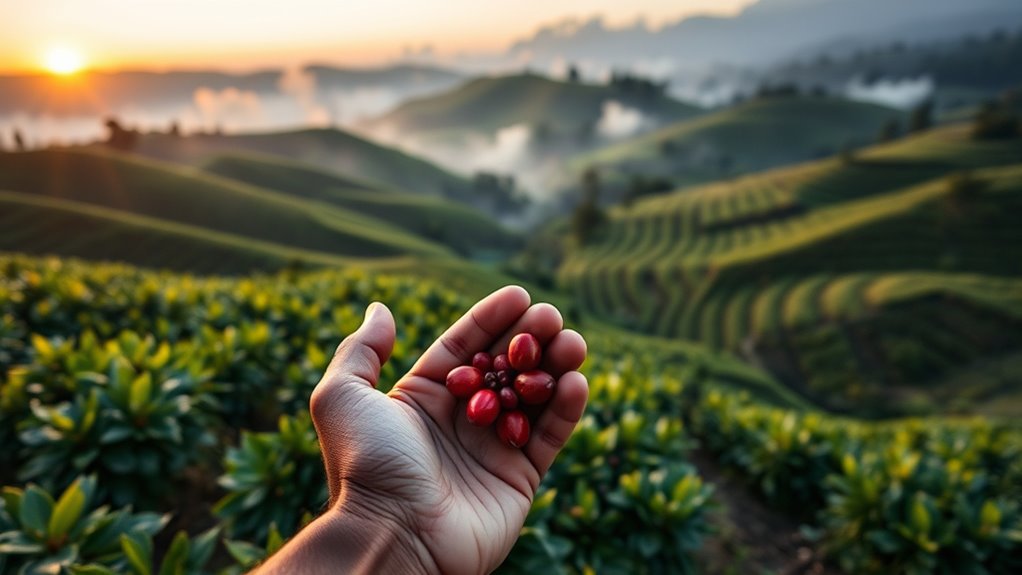
Elevation plays a crucial role in coffee cultivation, directly impacting the flavor and quality of the beans. Higher elevations generally produce beans with brighter acidity, complex flavors, and better aroma. Coffee farmers adapt to altitude, selecting suitable varieties and techniques to maximize quality. The farmer’s expertise and practices also influence the final product, from planting to harvesting.
| Elevation (meters) | Flavor Profile | Farming Impact |
|---|---|---|
| 600-900 | Mellow, sweet, balanced | Easier cultivation, lower yields |
| 900-1500 | Bright, fruity, complex | Higher quality beans, careful harvests |
| 1500-2000 | Intense, floral, sharp | Challenging terrain, meticulous care |
| Above 2000 | Unique, delicate | Limited, niche production |
Frequently Asked Questions
What Are the Main Differences Between Manual and Automatic Espresso Machines?
You’ll notice that manual espresso machines give you full control over brewing, allowing you to adjust grind size, tamping, and pressure for a personalized shot. Automatic machines handle these steps for you, offering convenience and consistency with just a push of a button. Manual machines require more skill and effort but reward you with a richer, tailored flavor. Automatic options are perfect for quick, reliable results when you prefer ease over customization.
How Does Water Temperature Affect the Brewing Process and Flavor?
You’ll notice that water temperature plays a vital role in brewing and flavor. If it’s too hot, you risk over-extraction, making your coffee bitter and harsh. Too cold, and you’ll under-extract, resulting in weak, sour flavors. Ideally, aim for around 195-205°F, which optimizes extraction of desirable compounds. Adjusting temperature based on your brewing method helps you fine-tune flavor, aroma, and overall quality of your coffee.
What Is the Ideal Grind Size for Different Brewing Methods?
Think of grind size as the key to unlocking perfect coffee; it influences flavor as much as water temperature. For espresso, use a fine grind to maximize extraction and flavor. French press calls for a coarse grind to prevent clogging. Drip brewers prefer medium grind for balanced extraction. Ristretto needs a very fine grind, while coarser grounds suit cold brew. Adjust your grind size to craft your ideal cup.
How Can I Properly Store Coffee to Maintain Freshness?
You should store coffee in an airtight container away from light, heat, and moisture to keep it fresh. Avoid storing it in the fridge or freezer long-term, as moisture can cause staling. Keep the container in a cool, dark place like a pantry. Only buy what you need for a week or two, and always reseal tightly after each use to preserve aroma and flavor.
What Are Common Signs of Over- or Under-Extraction During Brewing?
You’ll notice over-extraction if your coffee tastes bitter, harsh, or overly strong, indicating hot water pulled too long. Conversely, under-extracted coffee often tastes sour, watery, or flat, meaning the water didn’t spend enough time extracting flavors. To avoid these issues, adjust brewing time, grind size, or water temperature. Tasting your coffee and noting its balance helps you identify whether your brew is properly extracted.
Conclusion
Think of mastering coffee as tending a garden. Each term is a seed—espresso, cupping, or fair trade—that helps your brew flourish. With care and understanding, your coffee journey blooms into rich flavors and meaningful connections. Just as a gardener nurtures each plant, embrace these words to cultivate your passion. Soon, your coffee experience will be a vibrant landscape, full of depth, aroma, and life—an ever-growing garden you’re proud to tend.