
Yes, coffee can become zero-waste by finding innovative ways to reuse its byproducts. You can turn spent grounds into natural fertilizers, skincare exfoliants, or even biofuels. Coffee husks and pulp can be transformed into biogas or biodegradable packaging. Embracing circular economy principles helps reduce environmental impact and waste. If you want to explore creative ideas and practical methods for making coffee more sustainable, there’s plenty more to discover.

Get coffee and tea gear delivered free — and shop member deals
- Fast, free delivery on millions of items
- Access to Prime Big Deal Days deals on October 6–7
- Prime Video, Amazon Music and more included
Key Takeaways
- Coffee byproducts like grounds, husks, and pulp can be repurposed as fertilizers, biofuels, and biodegradable packaging materials.
- Innovative reuse of coffee waste supports a circular economy, reducing landfill and environmental impact.
- Collecting dispersed coffee waste enables conversion into compost, animal feed, or extracted antioxidants, promoting zero-waste practices.
- Transforming coffee residues into products like skincare exfoliants and deodorants exemplifies sustainable waste utilization.
- Implementing resource recovery strategies and community programs can make coffee production and disposal closer to zero-waste.
organic coffee grounds fertilizer
As an affiliate, we earn on qualifying purchases.
As an affiliate, we earn on qualifying purchases.
Understanding the Environmental Impact of Coffee Production

Coffee production has a significant environmental footprint that often goes unnoticed. As you enjoy your daily cup, consider how the growing demand has led to deforestation, habitat loss, and ecosystem harm in major regions like Brazil, Vietnam, and Colombia. Over the past 30 years, coffee cultivation has expanded by about 60%, intensifying these environmental pressures. Producing just one pound of roasted coffee emits roughly 11 pounds of CO₂, comparable to driving 11 miles. Landfills are overwhelmed with used coffee cups and grounds, which release methane during decomposition, contributing further to climate change. The entire coffee supply chain—from cultivation to disposal—adds to environmental degradation, highlighting the urgent need for sustainable practices to reduce this profound impact. Implementing eco-friendly waste reduction strategies can help mitigate some of these environmental concerns. Additionally, exploring coffee byproducts for reuse and recycling can significantly lessen waste and promote a circular economy within the industry.
Types and Quantities of Coffee Waste Generated

During coffee processing, large volumes of organic waste are generated, including pulp, husks, silverskin, and spent coffee grounds (SCG). You produce millions of tons annually, with over 50% of the coffee fruit discarded. For example, Brazil generated 3.37 million tons of coffee waste in 2017. This waste varies in composition and disposal challenges. Innovative reuse solutions align with the principles of personal development, promoting sustainability and environmental responsibility. Understanding the efficiency ratings of different processing methods can help optimize waste management and reuse strategies. Additionally, exploring diversification strategies in waste utilization can enhance overall sustainability efforts and economic viability. Implementing beneficial ingredients found in coffee byproducts, such as antioxidants, can further add value to reuse efforts. Recognizing the biodegradability of certain waste components can also improve composting and recycling processes.
Challenges in Disposing of Coffee Byproducts

You’ll find that collecting coffee byproducts from dispersed sites is a major challenge, making organized recycling difficult. The high moisture and organic content of waste like grounds and husks complicate standard disposal methods. As a result, improper disposal contributes markedly to environmental issues such as methane emissions and soil pollution. Additionally, vetted disposal options are limited, further hindering efforts to manage coffee waste sustainably.
Collection Difficulties From Dispersed Sites
Dispersed coffee waste from households, small cafes, and remote locations poses a significant challenge for collection and recycling efforts. Since waste is scattered across many small sources, organizing efficient collection systems becomes tough. Unlike large commercial operations that can easily centralize waste, individual households and tiny cafes lack the infrastructure for systematic pickup. This fragmentation complicates the development of standardized collection protocols, making it harder to manage and process the waste effectively. Additionally, the moisture-rich and organic nature of coffee grounds makes storage and handling problematic, especially without proper facilities. Without coordinated efforts, much of this waste ends up in landfills or is discarded improperly, worsening environmental impacts. To address these issues, implementing community-based programs and localized composting initiatives can improve collection efficiency. Overcoming these collection hurdles requires innovative solutions, such as community-based programs, localized composting, or incentivized collection schemes.
Environmental Impact of Waste
Managing coffee byproducts presents significant environmental challenges because improper disposal can lead to pollution and greenhouse gas emissions. When coffee waste ends up in landfills, it decomposes anaerobically, releasing methane—a potent greenhouse gas that worsens climate change. Coffee grounds and processing residues are often discarded without treatment, causing soil acidification and contamination from oils and organic compounds. The large volume of waste from discarded cups and grounds adds to landfill burdens, making waste management complex. Additionally, the oily residues can be toxic if not handled properly, threatening ecosystems and water quality. These disposal issues highlight the need for innovative solutions that reduce environmental harm, such as recycling, composting, or repurposing coffee byproducts into valuable materials, helping to mitigate coffee’s ecological footprint. Incorporating sustainable waste management practices can significantly reduce the environmental impact of coffee byproducts.
Creative Applications of Spent Coffee Grounds
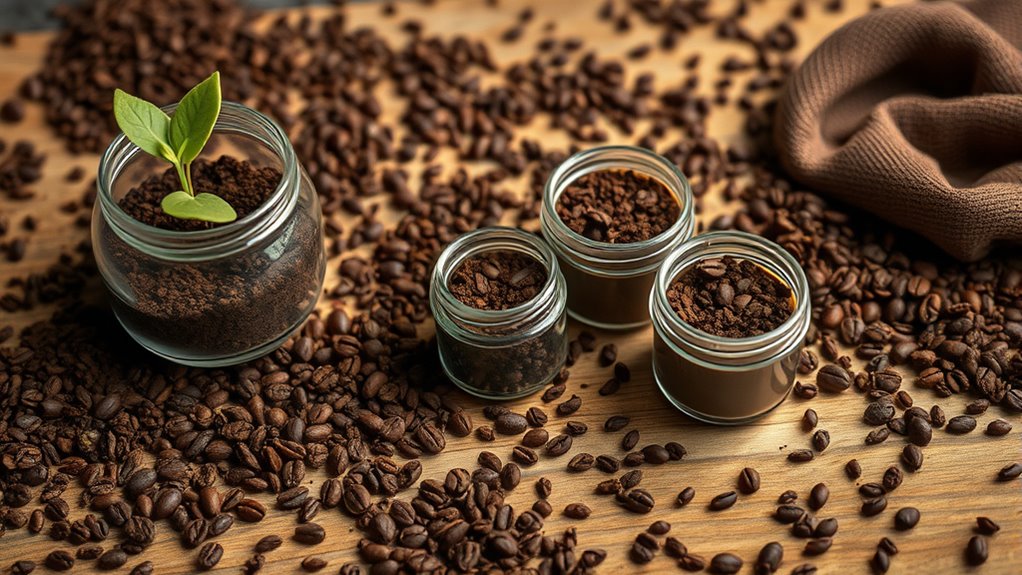
Spent coffee grounds (SCG) are emerging as versatile materials for innovative reuse, transforming waste into valuable resources across various industries. You can repurpose SCG as an organic fertilizer, enriching soil and boosting plant growth naturally. In the beauty world, they serve as exfoliants in scrubs, thanks to their coarse texture and antioxidant properties. Chemists explore using SCG as a substrate for fermentation, creating biofuels or biodegradable plastics. For home use, you might dry and grind SCG to deodorize your fridge or absorb kitchen odors. Artists and designers incorporate dried coffee grounds into eco-friendly crafts or textured paints. These applications not only reduce waste but also add value, turning what was once discarded into functional, sustainable materials you can use daily. Additionally, understanding the offensive security measures involved in ethical hacking can inspire innovative ways to protect these sustainable applications from cyber threats. Recognizing the importance of waste reduction supports the development of environmentally conscious practices in various fields. For example, researchers are exploring biodegradable plastics made from coffee byproducts to replace traditional plastics and reduce pollution. Furthermore, the growing demand for clean beauty products encourages the development of skincare items that incorporate recycled coffee grounds, aligning sustainability with personal care. Incorporating such practices can foster a mindful approach that supports mindfulness in daily routines and sustainable living.
Embracing Circular Economy Principles in Coffee Industry
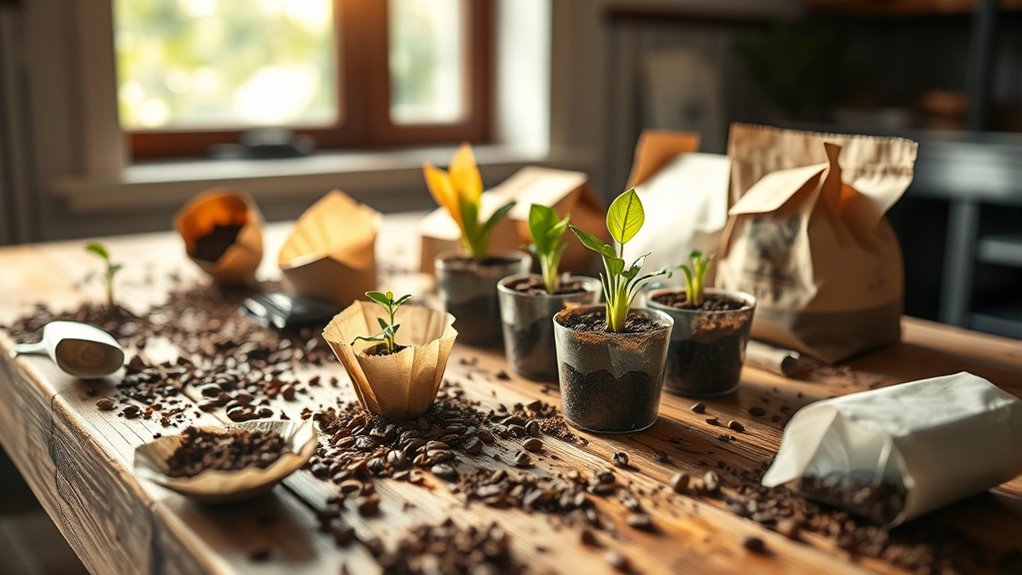
You can make a real impact by adopting circular economy principles in the coffee industry, focusing on recycling waste streams and turning them into valuable resources. Implementing waste-to-resource strategies allows you to reduce environmental harm while creating new opportunities for sustainability. By supporting sustainable supply chain practices, you help close the loop and promote a more responsible, zero-waste coffee culture. Additionally, innovative uses for coffee byproducts, such as utilizing coffee grounds in natural exfoliants or composting spent material, exemplify waste valorization in practice. Embracing versatile conversion kits, like those reviewed for electric bikes, can inspire creative approaches to repurposing and reusing materials in various industries. Incorporating resource recovery methods can further enhance the efficiency of coffee waste management systems and maximize environmental benefits.
Recycling Coffee Waste Streams
Recycling coffee waste streams is an essential step toward embracing circular economy principles within the industry. By transforming waste into valuable resources, you can reduce landfill accumulation, cut greenhouse gas emissions, and lower environmental impacts. For example, spent coffee grounds can be composted into organic fertilizer or processed into biofuels, providing sustainable alternatives to traditional disposal methods. Coffee husks and pulp can be converted into biogas or used as raw material for packaging. Implementing collection systems for dispersed waste, like from cafes and households, is imperative. These efforts guarantee that coffee byproducts don’t end up in landfills, where they produce methane and leachates. Additionally, utilizing innovative waste management strategies can further optimize resource recovery and minimize environmental footprint. Embracing circular economy principles in coffee production promotes sustainable practices and encourages industry-wide environmental responsibility. Recycling coffee waste stream initiatives foster resource efficiency, support local economies, and help move the industry toward a more sustainable, zero-waste future.
Waste-to-Resource Strategies
Implementing waste-to-resource strategies is essential for embedding circular economy principles into the coffee industry. You can transform coffee byproducts like pulp, husks, and spent grounds into valuable resources, reducing waste and environmental impact. For example, coffee pulp and husks can be converted into biogas, organic fertilizers, or biodegradable packaging materials, closing the resource loop. Spent coffee grounds (SCG) can serve as compost, animal feed, or raw material for biofuel production and biochemicals. These approaches not only cut disposal costs but also create new revenue streams. By adopting such strategies, you help minimize landfill contributions, lower greenhouse gas emissions, and promote sustainable practices. Embracing resource recovery in coffee production supports a more resilient, eco-friendly industry aligned with circular economy principles.
Sustainable Supply Chain Practices
Adopting sustainable supply chain practices is essential for embedding circular economy principles into the coffee industry. By integrating recycling, reuse, and waste minimization at every stage, you can markedly lower environmental impacts. For example, you can convert coffee pulp and husks into biogas or organic fertilizers, reducing landfill waste and greenhouse gas emissions. Implementing closed-loop systems helps create a more efficient flow of resources, cutting costs and waste. You can also source packaging materials that are biodegradable or recyclable, further decreasing landfill contributions. Partnering with local recycling services and supporting smallholder farmers in adopting eco-friendly practices enhances overall sustainability. By embracing these strategies, you not only reduce waste but also strengthen your supply chain’s resilience, helping the industry transition toward a zero-waste future.
Overcoming Barriers to Zero-Waste Coffee Practices
Despite the clear environmental benefits of zero-waste coffee practices, numerous barriers hinder their widespread adoption. You face logistical challenges in collecting dispersed coffee waste, especially from households and small cafes where waste is hard to gather efficiently. The high moisture and organic content of coffee grounds complicate traditional disposal and reuse methods, requiring specialized technologies that can be costly or unavailable. Limited awareness among consumers and industry stakeholders slows acceptance of sustainable practices, while existing infrastructure often lacks the capacity to process coffee byproducts at scale. Additionally, economic incentives are insufficient to motivate change, as initial investments in recycling systems or innovative reuse processes can be prohibitive. Overcoming these barriers demands coordinated efforts, technological advancements, and increased education to shift toward a truly zero-waste coffee industry.
Future Opportunities for Sustainable Coffee Consumption
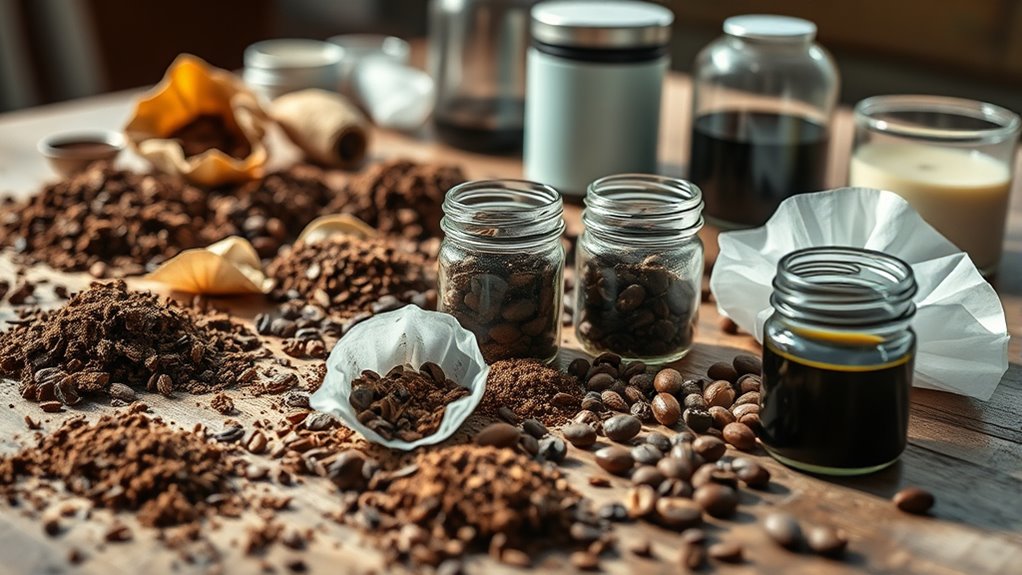
The future of sustainable coffee consumption hinges on embracing innovative practices that reduce waste and minimize environmental impact. You can support this shift by choosing brands committed to circular economy principles and waste reduction. Embracing reusable cups, encouraging coffee shops to adopt composting programs, and advocating for waste-conscious packaging make a difference. Investing in new technologies that transform coffee byproducts into valuable materials, like biofuels or organic fertilizers, creates opportunities for a more sustainable industry. Consumer awareness plays a crucial role—your choices influence industry practices. Supporting local, small-scale producers who prioritize eco-friendly methods also advances sustainability. Together, these efforts can reshape coffee consumption into a zero-waste model, reducing environmental harm while maintaining the quality and enjoyment of your favorite brew.
Frequently Asked Questions
How Can Consumers Reduce Coffee Waste at Home Effectively?
You can reduce coffee waste at home by using reusable filters or cups to cut down on disposable ones. Compost used coffee grounds instead of throwing them away, enriching your soil naturally. Brew only the amount you need to prevent leftovers, and store coffee properly to extend its freshness. Share leftover grounds with neighbors or community gardens, turning waste into a resource and helping the environment.
What Innovative Technologies Are Emerging for Coffee Waste Recycling?
You’re seeing emerging technologies like fermentation processes turning spent coffee grounds into biofuels and biochemicals, which efficiently reuse waste. Additionally, innovative composting methods and bio-composite materials incorporate coffee byproducts into construction and packaging. These advancements help you reduce environmental impact, create valuable products, and promote sustainability. By supporting or adopting these technologies, you actively contribute to a circular economy, making coffee waste recycling more effective and eco-friendly.
How Does Coffee Waste Impact Local Ecosystems and Biodiversity?
You should know that coffee waste can harm local ecosystems and biodiversity by contaminating soil and water with acids and organic compounds, which can disrupt plant and animal life. When disposed of improperly, coffee grounds and byproducts release methane and leachates that degrade habitats and reduce soil health. This environmental imbalance threatens native species, diminishes biodiversity, and hampers ecosystem resilience, emphasizing the importance of sustainable disposal and reuse practices.
What Policies Support Zero-Waste Initiatives in the Coffee Industry?
You can support policies that promote zero-waste initiatives by advocating for extended producer responsibility, which makes companies responsible for packaging and waste management. Encourage governments to fund recycling programs and research into coffee byproduct reuse. Push for incentives for sustainable farming and waste reduction. By actively participating in policy discussions and choosing brands committed to circular economy practices, you help create a more sustainable coffee industry that minimizes waste and environmental impact.
Can Coffee Waste Be Economically Viable for Large-Scale Industrial Reuse?
You can definitely make coffee waste economically viable for large-scale reuse. For example, over 50% of coffee processing waste, like spent grounds, is generated annually, creating a substantial raw material. By turning these grounds into biofuels, fertilizers, or biochemicals, industries can reduce disposal costs and generate revenue. Scaling these solutions makes economic sense, especially with growing demand for sustainable products and waste valorization, turning waste into profit.
Conclusion
By embracing innovative uses for coffee byproducts, you can make a real difference in reducing waste and protecting the planet. It’s understandable to worry about the extra effort, but each small step counts toward a more sustainable future. Imagine enjoying your favorite brew with the knowledge that nothing goes to waste—and that you’re helping create a cleaner, greener world for everyone. Together, we can turn coffee waste into a powerful force for good.
Evergreen bestsellers Picks
bestsellers
As an affiliate, we earn on qualifying purchases.