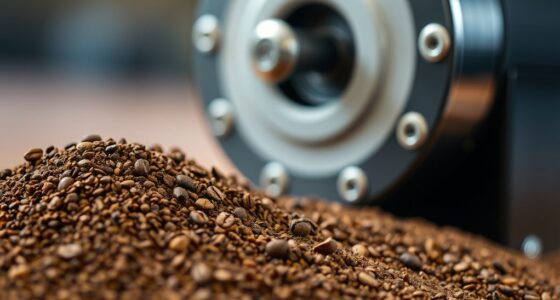

Ignoring the coffee bloom means missing out on crucial flavor and aroma development. When you properly allow the bloom—watching for bubbling and foam—you guarantee fresh gases escape, which leads to better extraction and richer taste. Skipping or rushing this step can result in flat, dull coffee. Mastering the bloom elevates your brew’s quality, so if you want to unleash full flavor potential, keep exploring how perfecting this step makes all the difference.
Key Takeaways
- Proper blooming releases trapped CO₂, enhancing aroma, flavor, and ensuring even water saturation during brewing.
- Visual cues like vigorous bubbling and foam indicate fresh, high-quality coffee; neglecting bloom can reduce flavor richness.
- Effective degassing prevents over-pressurization and flavor degradation, resulting in a more balanced, aromatic cup.
- Techniques like even pouring, stirring, and timing bloom between 30-45 seconds optimize gas release and extraction.
- Using fresh grounds, correct water temperature, and proper storage preserves the bean’s aromatic potential and overall brew quality.

Tamimarch Ceramic Pour Over Coffee Dripper Flower Shape V01 with 20 Filters
- Complete Starter Set: Includes 20 filters for immediate brewing
- Universal Compatibility: Fits standard V60 size-01 filters
- High Heat Retention: Thick ceramic retains heat effectively
As an affiliate, we earn on qualifying purchases.
As an affiliate, we earn on qualifying purchases.
Understanding Coffee Bloom and Its Significance

Understanding coffee bloom begins with recognizing what happens when hot water contacts freshly ground coffee. As soon as the water hits, trapped carbon dioxide starts escaping, creating a rapid bubbling and expansion on the surface. This reaction signals that your coffee is fresh and full of aromatic compounds. The bloom acts as a visual cue, showing that the gases are being released and the grounds are absorbing water evenly. This process is essential because it guarantees proper saturation, which leads to better flavor extraction. If you skip the bloom, your brew may lack complexity and richness. By paying attention to this step, you maximize the potential of your coffee, revealing its full aroma and taste. Proper blooming makes your brewing more consistent and flavorful. Additionally, understanding the importance of proper saturation can help you refine your brewing technique for more balanced and aromatic coffee. Recognizing the significance of gas release during blooming ensures you don’t overlook this critical step in achieving optimal flavor. Paying close attention to the coffee freshness can further enhance your brewing results by ensuring you start with high-quality beans. Being mindful of preservation methods can also help maintain the beans’ aromatic qualities over time. Understanding degassing processes can further improve your brewing consistency by reducing unwanted sourness or bitterness.
The Science Behind Degassing and Carbon Dioxide Release

When coffee is freshly roasted, it actively releases carbon dioxide through a process called degassing, which can last for about two weeks. During this time, trapped gases escape from the beans, making the coffee more stable and flavorful over time. The greatest release occurs within the first four hours after roasting, so freshly roasted coffee will produce vigorous bubbling when hot water contacts it. Grinding increases the surface area, speeding up degassing and gas release. Water further accelerates the process, helping trapped CO₂ escape more quickly. If these gases aren’t released, they can degrade into carbonic acid, negatively impacting flavor. Understanding this science helps you control coffee freshness and optimize brewing, ensuring your coffee’s flavors are fully expressed without unwanted sour notes. Proper degassing also enhances the brew quality by preventing excess CO₂ from disrupting extraction. Recognizing the degassing process allows brewers to better time their brewing to maximize flavor and aroma. Additionally, awareness of gas release patterns can help prevent over-pressurization during brewing, leading to a more consistent cup. Being mindful of the chemical reactions occurring during degassing can further improve your brewing precision and flavor profile.
How Bloom Enhances Flavor Extraction
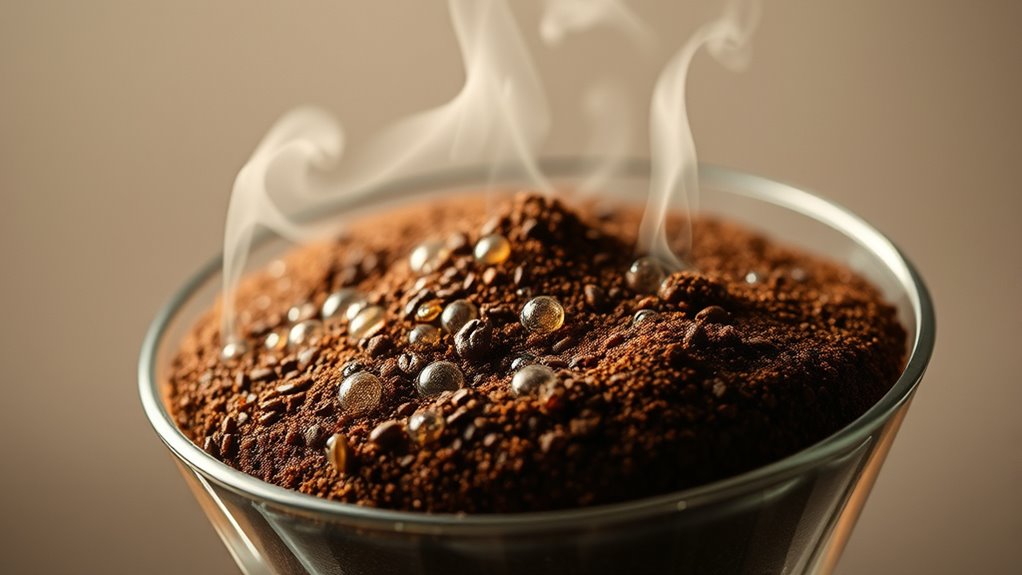
When you allow the coffee to bloom, it releases aromatic compounds and flavor oils that contribute to a richer taste. This process guarantees the water saturates all grounds evenly, promoting consistent extraction. Proper blooming techniques help ensure that your brew captures the full spectrum of flavors. Additionally, understanding the importance of flavor extraction can help you refine your brewing method for better results. Taking the time to prepare your coffee properly can significantly enhance the overall flavor profile. Incorporating the correct water temperature during blooming can further optimize flavor release, ensuring a more vibrant, nuanced brew. Embracing artistic expression in your brewing process can also lead to more innovative and satisfying results. By taking this step, you maximize flavor potential and enjoy a more vibrant, nuanced brew.
Aromatic Compound Release
The bloom phase considerably enhances flavor extraction by releasing aromatic compounds trapped within the coffee grounds. When hot water hits the grounds, it awakens these essential oils and aromatic molecules, liberating their full potential. This release results in a richer, more complex aroma that you can enjoy before even sipping your coffee. To maximize this benefit:
- You release volatile aromatics that contribute to the coffee’s fragrance and flavor profile.
- Proper blooming helps prevent stale, flat flavors by ensuring fresh aromatic oils aren’t lost prematurely.
- Even saturation during bloom allows these compounds to disperse evenly, creating a balanced and vibrant cup.
Neglecting this step means missing out on the depth and nuance that aromatic compounds provide, ultimately diminishing your coffee’s overall richness.
Even Water Saturation
Achieving even water saturation during the bloom stage is essential for revealing the full flavor potential of your coffee. When water contacts the grounds uniformly, it ensures all particles are properly infused, allowing for ideal extraction of aromatic oils and flavors. Uneven saturation can create weak spots where flavor compounds are under-extracted, resulting in a dull or inconsistent brew. To promote even saturation, pour water slowly and steadily, covering all grounds evenly. Stirring during the bloom helps distribute water more uniformly and releases trapped gases, which can block flavor extraction. Proper technique ensures the coffee grounds expand uniformly, giving hot water access to every particle. This step maximizes flavor release, producing a richer, more balanced cup. Additionally, understanding water saturation and its role in extraction can help optimize your brewing process for better taste. Being mindful of water temperature during pouring can further influence extraction efficiency and flavor clarity. Ultimately, even water saturation is the foundation for a well-extracted, flavorful brew.
Recognizing Freshness Through Bloom Indicators
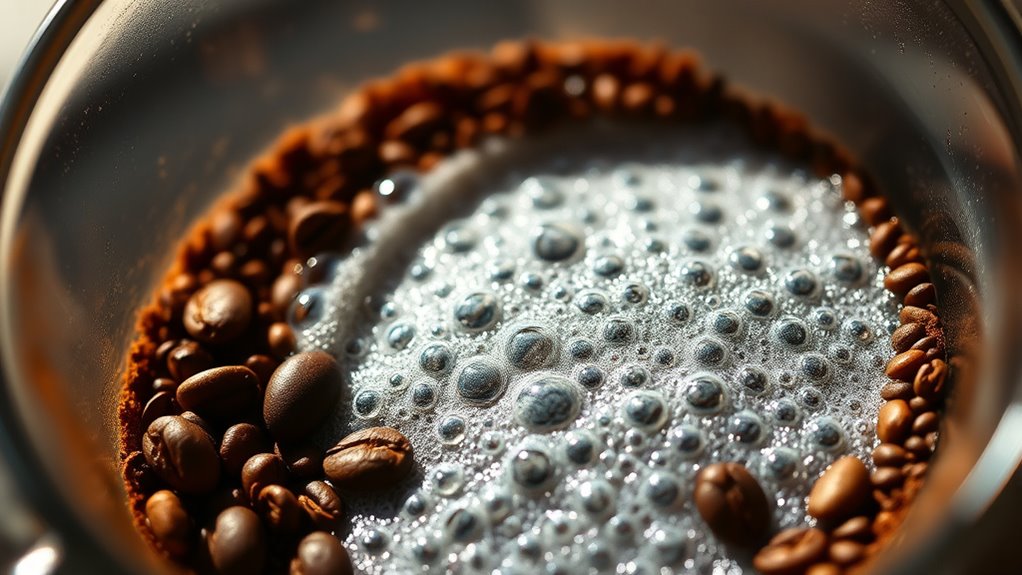
A vibrant bloom during brewing is a clear sign that your coffee is fresh. When you see bubbles and foam rising quickly, it indicates trapped carbon dioxide is escaping, a hallmark of recent roasting. This visual cue confirms your coffee still has its full flavor potential. Additionally, understanding the core personality traits that influence behavior can help you better interpret your own responses and preferences during the brewing process. To better recognize freshness through bloom indicators, consider these points:
A vibrant bloom signals fresh coffee with lively bubbles and quick foam during brewing.
- Intensity of Foam: A vigorous, sustained foam shows active degassing, meaning the coffee is fresh.
- Duration of Bloom: A bloom lasting around 30 seconds suggests ideal freshness; shorter or weak blooms may signal staleness.
- Uniform Bubbling: Consistent bubbling across the surface indicates even gas release, reflecting quality and freshness. Recognizing these visual cues can be enhanced by understanding the industry trends that influence coffee roasting and brewing practices. Additionally, proper storage of coffee beans plays a crucial role in maintaining their freshness and ensuring an optimal bloom each time you brew.
Pay attention to these signs to ensure you’re brewing with lively, flavorful coffee.
Optimal Techniques for Effective Blooming
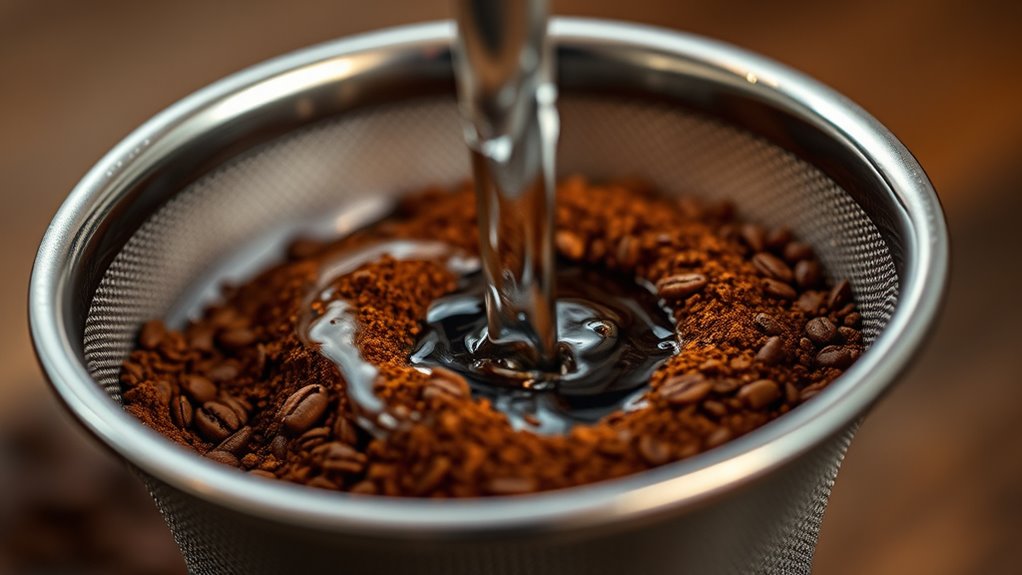
To maximize the benefits of blooming, applying the right techniques can make a noticeable difference in your coffee’s flavor and extraction. Start by pouring hot water at 195-205°F (93-96°C) evenly over the grounds, using about 2 grams of water per gram of coffee. Gently stir the grounds immediately after pouring to guarantee even saturation and gas release. Allow the bloom to last between 30 seconds and one minute, watching for bubbling and foaming, which signals trapped gases escaping. Use a consistent pouring motion and avoid over-agitating the grounds, as this can disturb the extraction. If your brewing method allows, stir once during the bloom to promote uniform saturation. Proper timing and technique help unlock aromatic oils, resulting in a richer, more flavorful cup. Incorporating automation techniques can also streamline your brewing process and ensure consistency. Additionally, paying attention to extraction techniques can significantly enhance the overall quality of your coffee, especially when considering the importance of nutrients retention in your brew. Optimizing coffee grind size can further improve the effectiveness of your blooming process, leading to a more balanced extraction.
The Impact of Bloom Timing on Your Brew
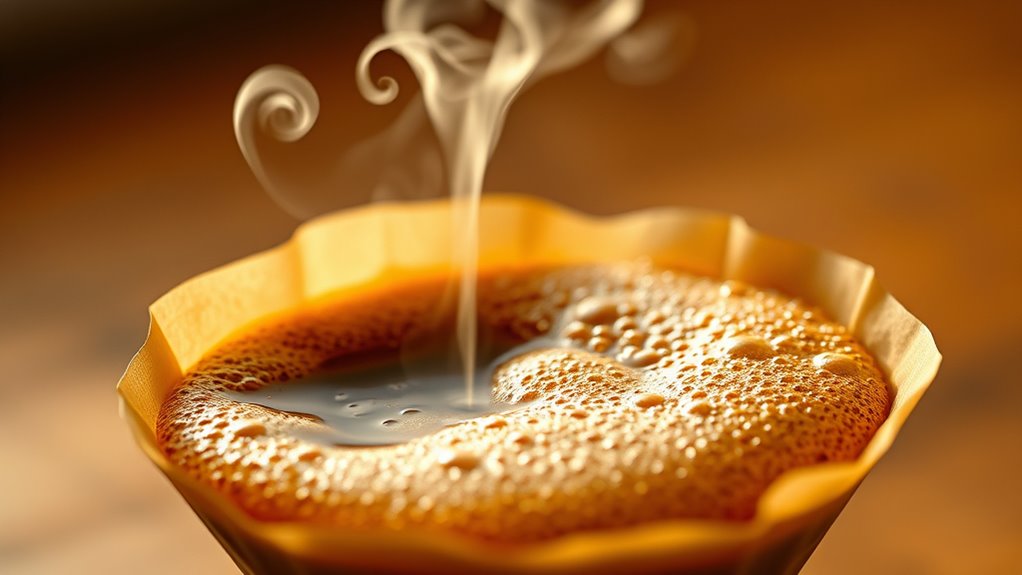
The timing of your bloom considerably influences the flavor extraction and overall quality of your coffee. If you wait too long, trapped gases may escape prematurely, reducing the coffee’s aromatic potential. Conversely, rushing the bloom can cause uneven saturation, leading to weak extraction. Proper timing guarantees maximum flavor release and consistent brewing.
Optimal bloom timing ensures rich flavor extraction and consistent, aromatic coffee.
Consider these points:
- A bloom lasting 30-45 seconds optimizes gas release without losing aromatic compounds.
- Longer bloom times risk over-extraction, resulting in bitterness.
- Shorter blooms can under-develop flavors, leaving your brew flat.
Bloom Across Different Brewing Methods
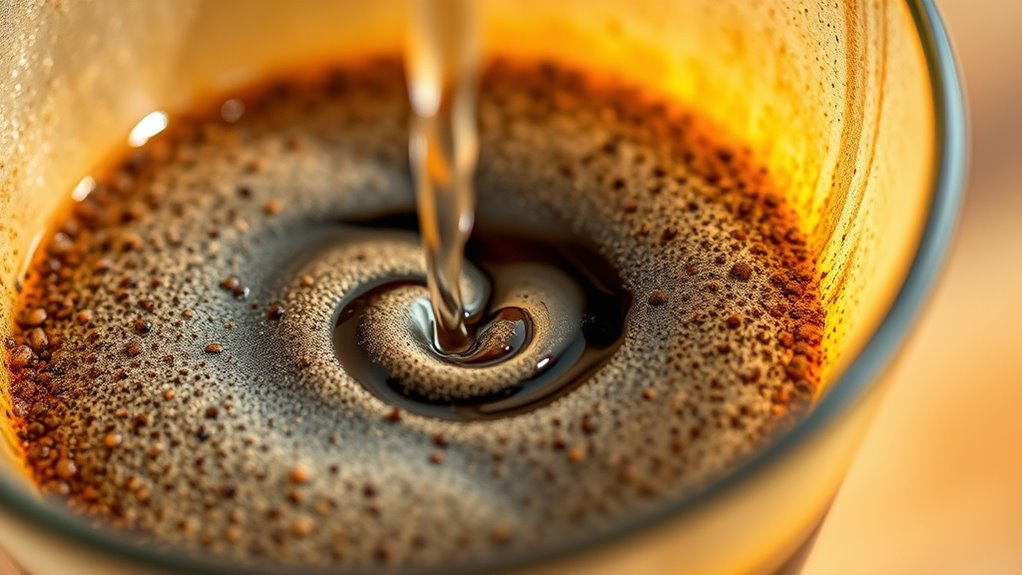
Different brewing methods respond uniquely to the blooming process, influencing how you should approach it for ideal results. In pour-over, blooming is essential—you should let the coffee foam and bubble for 30-45 seconds, stirring gently to guarantee even saturation. French press brewing benefits from a short bloom, where wetting grounds and waiting enhances extraction, especially if you stir twice. Some immersion methods like AeroPress may skip blooming, but a quick pre-wet improves flavor. The table below highlights key differences:
| Method | Bloom Duration | Stirring Needed |
|---|---|---|
| Pour-over | 30-45 seconds | Yes, during bloom |
| French Press | 30 seconds | Twice, during and after bloom |
| AeroPress | Optional | Usually no |
Adapting your bloom technique per method ensures maximum flavor extraction and a richer cup.
Common Mistakes That Reduce Bloom Effectiveness
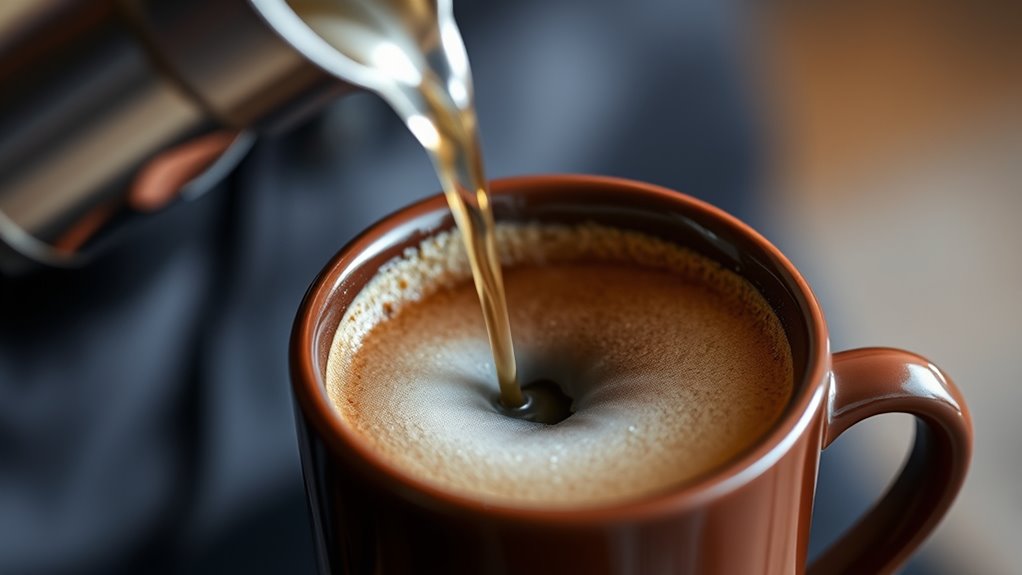
Many common mistakes can substantially reduce the effectiveness of your coffee bloom, leading to weaker flavor extraction and less aromatic brew. First, pouring water too quickly can prevent even saturation, trapping gases and limiting bloom expansion. Second, using water that’s too hot or too cold disrupts gas release and flavor development. Third, skipping the stir or not allowing enough time for bloom means trapped carbon dioxide isn’t fully released, dulling aroma and taste. To improve, focus on pouring gently and evenly, maintaining the right temperature, and giving your coffee grounds sufficient time to bloom. These simple adjustments ensure gases escape fully, maximizing flavor extraction and aroma during brewing.
Tips for Perfecting Your Coffee Bloom Process
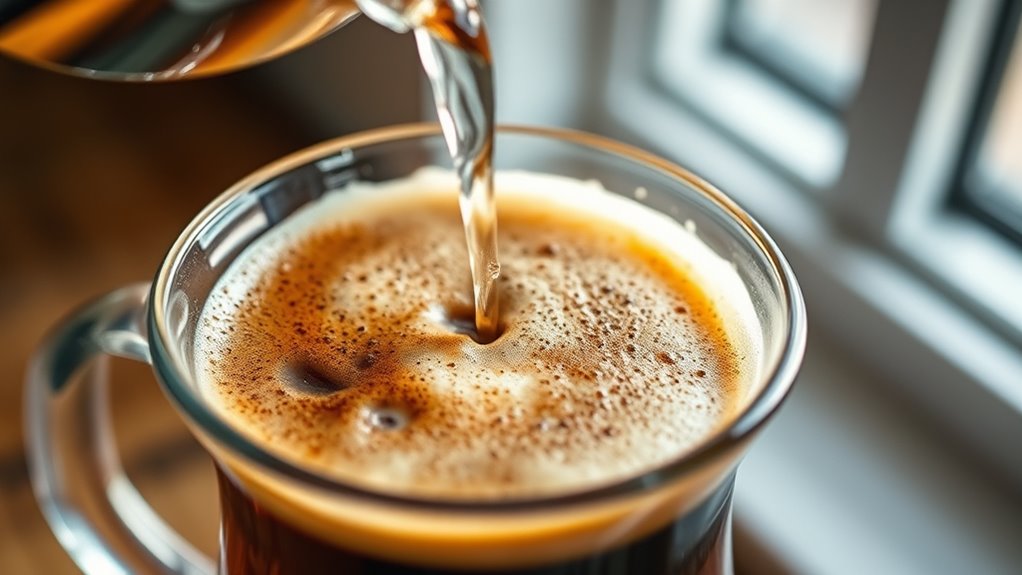
To perfect your coffee bloom, start with fresh coffee grounds to guarantee maximum gas release and flavor. Keep your water temperature between 195 and 205°F for ideal blooming, avoiding too hot or cold water that can affect extraction. Finally, stir the grounds during bloom to promote even saturation and a more uniform release of gases and aromas.
Use Fresh Coffee Grounds
Using fresh coffee grounds is essential for achieving an ideal bloom because they contain the maximum amount of trapped carbon dioxide, which enhances the release of aromatic compounds and flavor oils. When your coffee is fresh, it produces a vigorous bloom, signaling best gas retention. To maximize your brewing results, keep these tips in mind:
- Use coffee roasted within the last two weeks for the freshest flavor and gas content.
- Store grounds in an airtight container, away from light and moisture, to preserve freshness and prevent premature degassing.
- Avoid grinding coffee too far in advance; grind just before brewing to retain maximum trapped gases and aromatic potential.
Control Water Temperature
Have you ever noticed how the temperature of your water impacts the quality of your coffee bloom? If your water’s too hot, it can over-extract the coffee, leading to bitterness and scalded flavors, and may cause the gases to release too quickly, disrupting the bloom. Too cool, and the bloom might be weak or sluggish, preventing proper saturation and flavor extraction. Ideally, keep your water between 195 and 205 degrees Fahrenheit (93-96 degrees Celsius). This range ensures the gases are released effectively without damaging the delicate oils and aromas. Using water at the right temperature helps the coffee grounds expand evenly, creating a vibrant bloom and setting the stage for a flavorful, balanced brew. Always preheat your equipment to maintain consistent temperature throughout the process.
Stir for Even Saturation
Stirring during the bloom stage guarantees that all coffee grounds are evenly saturated, which is essential for a balanced extraction. When you stir, you help distribute water uniformly, ensuring each particle releases gases and flavors at the same rate. This prevents dry spots and weak spots in your brew. To perfect your stirring technique:
- Use a gentle, circular motion to avoid disturbing the coffee bed too much.
- Stir quickly but thoroughly to incorporate water without cooling the grounds.
- Wait a few seconds after stirring to observe the bubbles and foam intensify, confirming even saturation.
Frequently Asked Questions
Can You Skip the Bloom Step Without Affecting Taste?
You can skip the bloom step, but it’ll likely affect your coffee’s flavor and aroma. Without blooming, trapped gases won’t escape, leading to uneven saturation and weaker extraction. This can result in a dull, less vibrant cup. Blooming helps release aromatic compounds and ensures water evenly contacts all grounds, maximizing flavor. For the best-tasting coffee, it’s worth taking the extra 30 seconds to properly bloom your grounds.
How Does Grind Size Influence the Blooming Process?
Think of grind size as the key to revealing the full potential of your bloom. Finer grounds maximize surface area, causing a faster and more vigorous bloom, releasing trapped gases and flavors promptly. Coarser grounds slow down this process, possibly leading to weak foam and under-extraction. To get the most out of your coffee, match your grind size to your brewing method, ensuring an even, lively bloom every time.
Is Blooming Necessary for All Brewing Methods?
No, blooming isn’t necessary for all brewing methods, but it greatly enhances flavor extraction in pour-over and Chemex brewing. It helps release gases, ensuring even saturation and better aroma, which improves taste. For methods like French press or AeroPress, blooming can still be beneficial but isn’t essential. If you want a richer, more balanced cup, incorporating the bloom step is a smart choice, especially with fresh coffee.
What Temperature Is Ideal for Blooming Coffee?
You should aim for a water temperature between 195 and 205 degrees Fahrenheit (93-96°C) for blooming coffee. This range guarantees the grounds release gases effectively without scalding the coffee or causing uneven extraction. Using water that’s too hot can over-extract, while too cool may not trigger proper blooming. Keep your water just below boiling for ideal results, allowing the gases to escape and flavor to develop fully.
How Do I Know When My Bloom Has Fully Completed?
You’ll know your bloom has fully completed when the bubbling and foaming subside, and the coffee grounds settle into a more uniform surface. The initial vigorous bubbling should decrease markedly within 30 seconds to a minute. If the foam diminishes and the bubbling slows, it’s a clear sign that the gases have been released. Stirring during bloom can help guarantee even saturation, but wait until bubbling stops before proceeding.
Conclusion
Don’t underestimate the power of the bloom—it’s more than just a prelude to your brew. Mastering this step can reveal flavors you never knew existed, but missing it could mean settling for less. Are you ready to elevate your coffee game and reveal the true potential hidden beneath those bubbles? The secret lies in your next pour—are you willing to take the leap and discover what’s been waiting just beneath the surface?