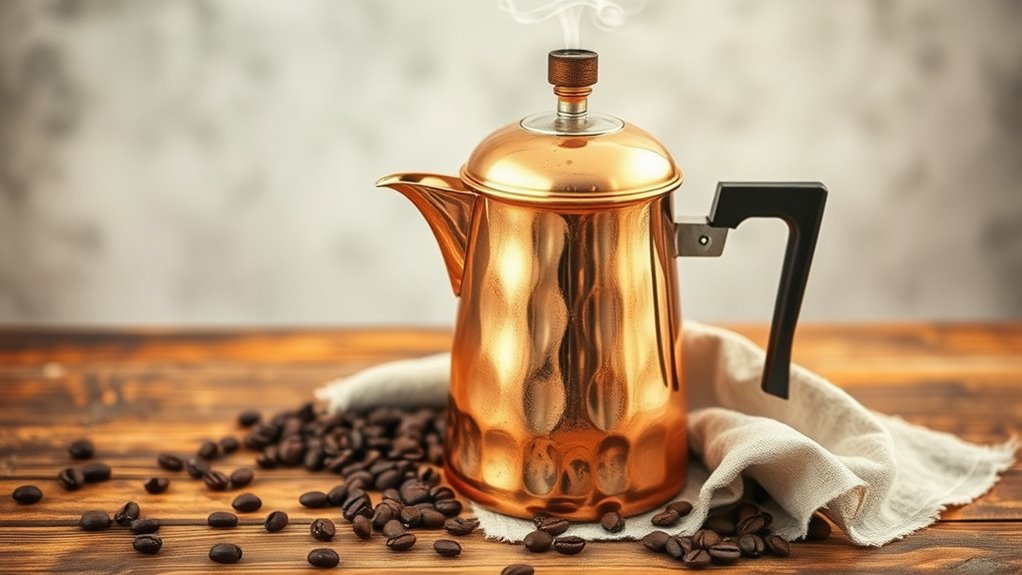

The Biggin Pot is a forgotten brewing method that’s making a comeback, blending historical craftsmanship with modern flavor. It uses a multi-part design with a heated water chamber and cloth or tin filters, offering a cleaner and more refined brew. Its principles of thermal regulation and filtration influenced today’s drip and immersion techniques like the French Press and AeroPress. If you keep exploring, you’ll uncover how ancient methods continue to shape today’s coffee culture and flavor profiles.
Key Takeaways
- The Biggin Pot, an early 18th-century brewing device, is experiencing renewed interest for its historical thermal control and clarity.
- Its design influenced modern drip and pour-over methods emphasizing temperature regulation and separation of grounds.
- Revival of traditional filtration techniques, inspired by devices like the Biggin Pot, enhances flavor clarity and brewing craftsmanship.
- Modern coffee culture is embracing vintage methods such as immersion brewing, echoing the principles of thermal efficiency.
- Nostalgic appreciation and artisanal trends are sparking renewed use of historic brewing methods as a unique, authentic experience.
Rediscovering the Biggin Pot: A Historical Perspective

The Biggin pot, introduced around 1780, represents an early innovation in coffee brewing that aimed to produce cleaner, more refined coffee. It consisted of multiple parts—a main chamber for heating water and a separate filter section beneath the lid, often made of cloth or tin. You heated water just below boiling, poured it over the grounds, and let it steep while the filter kept grounds separate from the liquid. This process improved the clarity and purity of the brew compared to earlier methods like soaking or boiling. Although largely forgotten today, the Biggin pot was a significant step toward modern drip brewing, emphasizing separation of grounds from the coffee, and offering a more consistent, cleaner cup. Its design influenced subsequent brewing devices and techniques. The principles of heat transfer and refrigeration cycle can be seen as an early form of temperature control that improved the brewing process, demonstrating an understanding of thermal regulation. Additionally, this method showcased an innovative approach to thermal efficiency, which contributed to the consistency and quality of the final brew.
The Evolution of Filtration: From Cloth to Paper

As coffee brewing evolved, filtration methods shifted from simple cloth barriers to more efficient paper filters, dramatically improving clarity and consistency. Cloth filters, used in early pots, helped separate grounds but often left residues or trapped oils, affecting flavor. In the early 20th century, paper filters were introduced, offering a cleaner cup and easier disposal. Their fine porosity effectively trapped fine particles and oils, resulting in clearer, brighter brews. Paper filters also standardized brewing, reducing variables and ensuring consistent results. Over time, filter design improved, with bleached and unbleached options providing different flavor profiles. This evolution in filtration technology transformed coffee from a gritty, variable drink into a smooth, refined experience, laying the foundation for modern drip coffee makers and specialty brewing methods. The development of filter materials played a crucial role in enhancing the overall quality and consistency of brewed coffee, supported by advances in manufacturing techniques. Additionally, innovations such as multi-layer filters have further optimized the extraction process, making it easier for brewers to achieve their desired flavor profiles. Furthermore, ongoing research into filter pore size has contributed to refining extraction efficiency and flavor clarity.
Early Percolators and Drip Innovations Shaping Coffee Culture
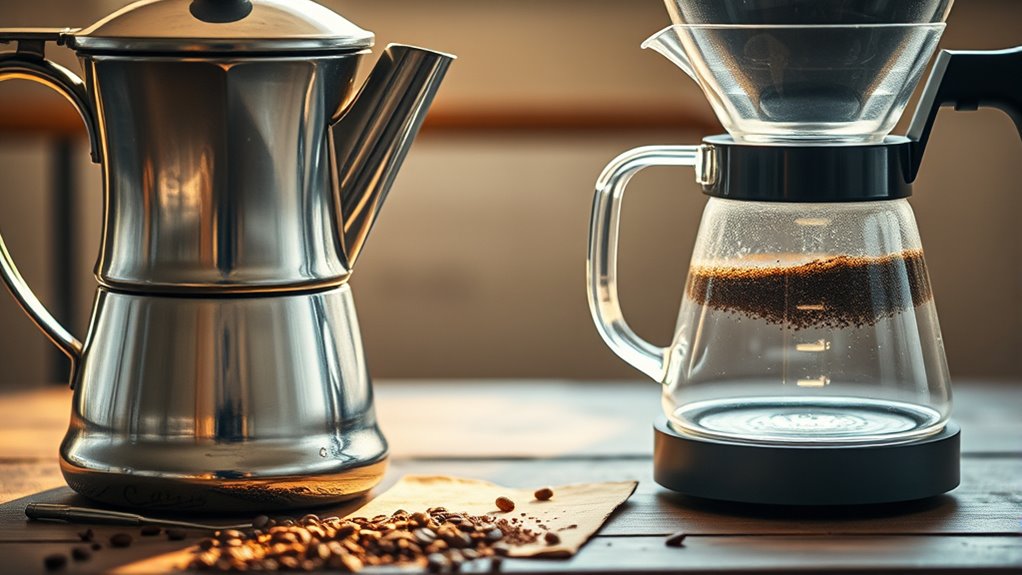
Early percolators and drip innovations revolutionized coffee brewing by giving you greater control over extraction and flavor. These early devices introduced methods to regulate water flow and temperature, shaping modern coffee culture. These advancements allowed for a more precise brewing process, enabling enthusiasts to customize their coffee strength and aroma. The 1818 invention of Laurens’ percolator allowed continuous cycling of hot water through grounds, while Belloy’s drip pot enabled brewing without boiling. Count Rumford’s insulating jackets improved temperature stability, refining the process further. Additionally, the development of brew control features in these devices allowed for more precise brewing, elevating the overall coffee experience. Such innovations laid the groundwork for the sophisticated brewing methods used today, emphasizing the importance of temperature regulation in achieving optimal flavor extraction. Furthermore, these early innovations inspired ongoing improvements that continue to influence today’s coffee brewing techniques.
Immersion Techniques: From Steeping to Modern French Press and AeroPress

Immersion brewing techniques have evolved from simple steeping methods into modern devices like the French Press and AeroPress, offering precise control over extraction time and flavor. With these methods, you immerse coffee grounds directly in hot water, allowing full contact and rich extraction. The French Press uses a plunger and metal mesh filter, producing a robust, full-bodied brew with a textured mouthfeel. The AeroPress, on the other hand, employs air pressure to extract flavors quickly, resulting in a smooth, clean cup with bright acidity. Both methods emphasize immersion, but they differ in brewing time and pressure application. They’re versatile, portable, and easy to customize, making them popular choices for coffee enthusiasts seeking deeper flavor profiles and a more tactile brewing experience.
Cultural Revival: Embracing Traditional Methods in Modern Coffee Scenes
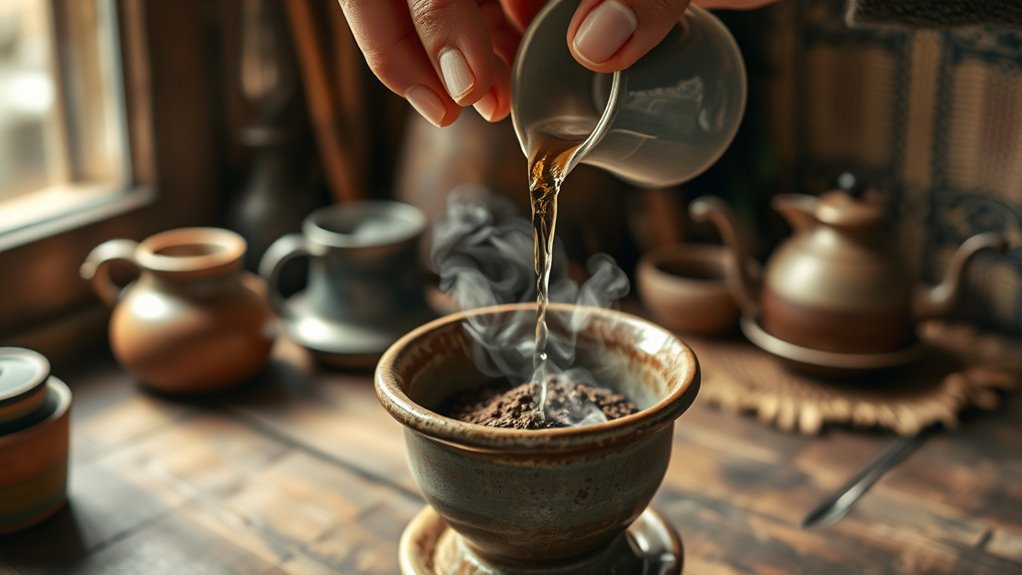
In recent years, coffee enthusiasts have rekindled their interest in traditional brewing methods, seeking out authentic flavors and cultural stories behind each cup. You now embrace these methods to connect with coffee’s rich history and regional identity. From the robust Turkish Ibrik to the slow, deliberate process of the Biggin pot, these techniques offer a sensory experience beyond modern machines. People are revisiting these methods to appreciate the craftsmanship and cultural significance they carry. Many coffee shops incorporate these traditional approaches, highlighting their unique flavors and stories. This revival isn’t just about taste—it’s about honoring centuries-old customs and diversifying your coffee routine. By embracing these methods, you contribute to a global movement that values authenticity, heritage, and the artistry of brewing coffee. Exploring different brewing methods can also influence caffeine levels and flavor profiles, enriching your coffee experience.
Frequently Asked Questions
How Does the Flavor Profile of a Biggin Pot Compare to Modern Drip Coffee?
You’ll notice that coffee brewed with a Biggin pot has a richer, fuller flavor compared to modern drip coffee. The steeping process extracts more oils and solubles, creating a bolder, more robust taste. It often has a slightly thicker body and complex nuances, highlighting deeper earthy and fruity notes. In contrast, modern drip coffee tends to be cleaner, lighter, and more consistent, emphasizing clarity and brightness in each cup.
What Materials Were Traditionally Used for Filters in Early Coffee Brewing Methods?
You’ll find that early coffee filters were made from materials like cloth, tin, and sometimes paper. Cloth filters, often made from cotton or linen, were reusable and used in pots like the Biggin. Tin or metal filters appeared around the 1800s for better filtration. Paper filters, invented in 1908, soon became popular for their convenience and ability to produce cleaner, clearer coffee.
Are There Any Health Benefits Associated With Traditional Brewing Techniques Like the Ibrik?
Like a gentle breeze clearing fog, traditional brewing techniques like the ibrik may offer health benefits. You might find that this method, which avoids paper filters and uses direct boiling, reduces exposure to paper residues and additives. Plus, it allows for fuller extraction of antioxidants and beneficial compounds. Embracing this old technique can help you enjoy a richer, potentially healthier coffee experience with fewer chemicals and more natural flavors.
How Did Cultural Preferences Influence the Development of Early Coffee Brewing Devices?
You can see that cultural preferences shaped early coffee brewing devices by reflecting local tastes, social habits, and available materials. For instance, the Ottoman Ibrik emphasized strong, thick coffee suited to Middle Eastern customs, while European methods like drip pots focused on clarity and convenience. These devices evolved to enhance traditional flavors and social rituals, ensuring brewing methods aligned with regional preferences and cultural identity.
Can Modern Technology Replicate the Unique Qualities of Historical Brewing Methods?
Modern tech can get close, but it’s not a silver bullet. While advanced machines mimic temperature control and precise extraction, they often miss the soul of traditional methods like the Ibrik or Biggin pots. These methods develop flavor nuances through slow, manual processes. To truly capture their essence, you need a blend of technology and respect for craftsmanship—nothing beats the human touch in brewing history’s rich tapestry.
Conclusion
Now that you’ve uncovered the rich history behind these traditional brewing methods, you might wonder what’s next. Will the old techniques truly make a comeback, or remain a hidden gem? As coffee enthusiasts continue to explore and revive these methods, one thing’s certain—you’re on the cusp of a brewing revolution that could reshape your entire coffee experience. Are you ready to embrace the forgotten brew? The next sip might just change everything.