
Altitude plays a surprising role in brewing the perfect cup by influencing bean chemistry, flavor, and how you should brew it. High elevations produce denser beans with brighter acidity and complex fruit and floral notes, but often require adjustments in grind size, brewing temperature, and brew time. Lower boiling points at altitude mean you need to be more precise. Keep exploring how these factors shape your brew for the ideal coffee experience.
Key Takeaways
- Higher altitudes slow coffee growth, increasing bean density and flavor complexity, which enhances the brewed cup’s richness.
- Elevated regions produce beans with brighter acidity and vibrant fruit and floral notes, elevating taste profiles.
- Brew adjustments like finer grind and lower temperatures are essential to optimize extraction at high elevations.
- Cooler microclimates and lower boiling points influence roasting techniques, requiring careful temperature control.
- Altitude-driven chemical variations lead to more aromatic, nuanced, and energetic coffee flavors in the final cup.
How Altitude Shapes Coffee Plant Growth and Bean Development
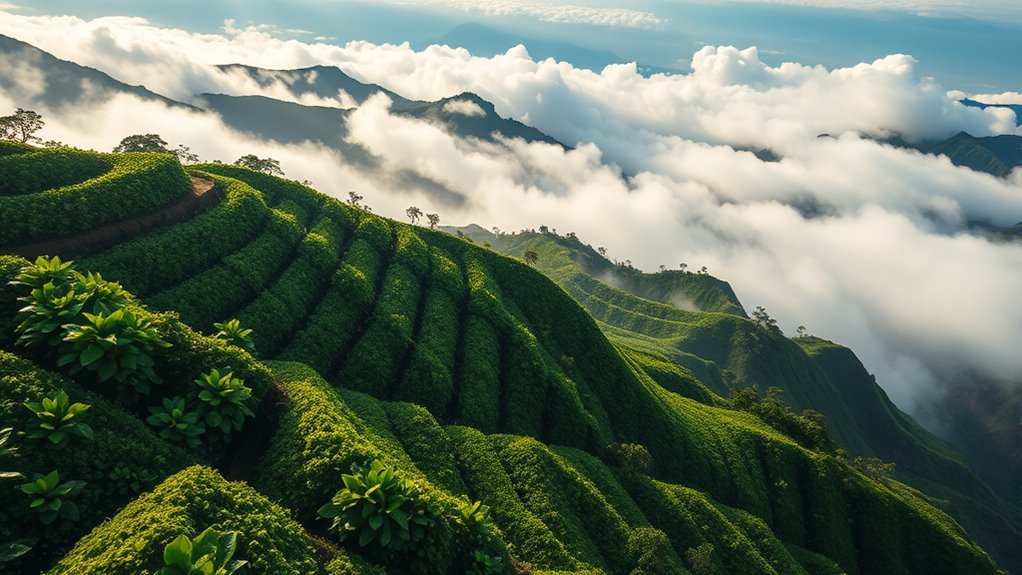
Have you ever wondered why high-altitude coffee plants produce such distinct and flavorful beans? The cooler temperatures at higher elevations slow down plant growth, giving the coffee more time to develop complex sugars and concentrate flavors. As a result, beans from these areas mature more slowly, allowing them to build richer, more nuanced profiles. Better drainage at altitude reduces water content in the beans, further intensifying their sweetness and flavor. Because they grow above about 1,300 meters, these beans tend to be denser, which correlates with increased flavor complexity and quality. The slower development cycle also promotes the production of unique acids and aromatic compounds, making high-altitude coffee beans highly prized for their vibrant and layered taste profiles. Additionally, the microclimate of high-altitude regions creates ideal conditions for the development of distinctive bean characteristics, which are often unique to specific elevations and locations. This interplay of factors results in coffees that are not only richer in flavor but also exhibit a remarkable aromatic complexity, which elevates the entire tasting experience. The altitude also influences the rate of photosynthesis, affecting the overall health and vitality of the coffee plants, which in turn impacts bean quality. Furthermore, the remote environment of high-altitude farms often shields the plants from pests and diseases, contributing to healthier crops.
The Chemical Profile of Coffee at Different Heights

The altitude at which coffee is grown considerably influences its chemical composition, shaping flavor and aroma profiles. At higher elevations, beans develop more complex sugars and fewer fatty acids, which enhance brightness and clarity. You’ll notice a decrease in caffeine and chlorogenic acids, leading to less bitterness but more nuanced flavors. Volatile compounds, responsible for aroma, also vary with altitude, creating more vibrant and intricate sensory experiences. Beans grown at higher altitudes tend to be denser, with concentrated flavors and increased acidity. Additionally, altitudinal variation can affect the overall sustainability of coffee cultivation by impacting crop yields and resource use. The chemical profile of coffee at different heights can also influence the brewing process, requiring adjustments to extraction time and temperature to optimize flavor. Moreover, understanding altitude effects can help roasters tailor their profiles to highlight specific flavor characteristics. Recognizing how altitude influences not only improves flavor but also supports more sustainable farming practices. In addition, sustainable farming practices can be promoted by understanding these altitude-related changes to optimize resource utilization and crop resilience.
Adjusting Brewing Techniques for High-Altitude Coffee

Adjusting your brewing techniques is essential when making coffee at high altitudes because lower boiling temperatures and atmospheric pressure directly affect extraction. You’ll need to modify your process to guarantee proper flavor development. Start by reducing your brew temperature, as water boils at lower temperatures, which can lead to under-extraction. Use a finer grind size to increase surface area and compensate for slower extraction. You might also need to increase your coffee dose slightly for a stronger, more balanced brew. Pay close attention to brew times—longer extraction may be necessary. Adjust your machine’s settings, such as pump pressure or boiler temperature, to maintain consistent results. These tweaks help extract the full flavor profile without over or under-extracting, ensuring a rich, balanced cup despite the altitude challenges.
Tasting Notes: Variations in Flavor Due to Elevation

When you taste coffee from higher elevations, you’ll notice brighter acidity and more vibrant fruit and floral notes. These flavors develop because slower bean maturation enhances complexity and depth. Understanding how altitude influences these tasting elements can help you better appreciate the unique character of each brew. Additionally, decluttering your space can create a more focused environment that allows you to truly savor and analyze the nuanced flavors of different coffees. Creating a dedicated tasting area free from distractions can further elevate your sensory experience. Implementing fraud detection techniques such as real-time monitoring can also protect your transactions, giving you peace of mind while enjoying your coffee. Recognizing the importance of security measures in safeguarding sensitive data can be equally vital for maintaining trust and quality in your coffee practices. Incorporating knowledge of foreign exchange fluctuations can also be beneficial when sourcing beans from international suppliers, ensuring cost-effectiveness and quality control.
Brightness and Acidity
Ever wonder why high-altitude coffees often taste brighter and more lively? It’s because the cooler temperatures slow bean development, allowing acids to develop more fully. As a result, these beans have a heightened acidity that adds a crisp, tangy quality to your brew. The increased concentration of complex sugars and lower water content at altitude also enhances the vibrancy of these acids, making flavors pop. You’ll notice a cleaner, sharper taste profile with more defined brightness compared to lower-altitude coffees. This lively acidity gives high-altitude beans their signature sparkle and energy, elevating the sensory experience. Additionally, proper roasting techniques can further accentuate these unique flavor characteristics, ensuring you get the most out of high-altitude beans. Understanding altitude’s impact on flavor can help you select beans that offer the most vibrant taste profile. Recognizing the influence of altitude on bean growth can also guide farmers in choosing the optimal elevation for cultivating beans with the desired flavor traits. So, when you sip a high-altitude coffee, you’re experiencing a brew with a balanced, invigorating brightness that’s hard to match elsewhere.
Fruit and Floral Notes
Have you noticed how high-altitude coffees often burst with vibrant fruit and floral notes? This is because cooler temperatures slow maturation, allowing beans to develop complex sugars and aromatic compounds. As a result, your cup can reveal lively berry, citrus, or tropical fruit flavors, alongside fragrant floral hints like jasmine or lavender. The table below highlights how altitude influences these notes:
| Altitude Range | Flavor Characteristics |
|---|---|
| Below 1,300 meters | Milder, less pronounced fruit and floral tones |
| 1,300–2,000 meters | Bright acidity, subtle floral hints |
| 2,000–2,500 meters | Vibrant fruit, pronounced floral notes |
| Above 2,500 meters | Intense fruit, complex floral and aromatic layers |
Higher elevation enhances these delicate flavors, creating a more vibrant, aromatic cup. Additionally, processing techniques can further intensify these flavor profiles. Elevation influences the development of unique flavor compounds, making high-altitude coffees particularly sought after. Moreover, microclimate conditions at higher elevations can contribute to the distinctiveness of each harvest. For instance, the artisanal methods employed by growers can further accentuate these nuanced flavors, highlighting the rich cultural traditions tied to coffee cultivation.
Flavor Complexity and Depth
Growing coffee at higher altitudes naturally enhances its flavor complexity and depth. You’ll notice more nuanced, layered tastes in high-elevation beans due to slower maturation and concentrated sugars. This process allows the development of intricate flavors that aren’t as prominent in lower-altitude coffees. Consider these key effects:
- Denser beans with richer profiles stemming from extended growth periods.
- Increased acidity, adding brightness and vibrancy to your cup.
- More pronounced fruity, berry, and wine-like notes that create a lively sensory experience.
- Volatile compounds that contribute to complex aromatics and deeper flavor layers.
- Additionally, understanding how personality traits such as resilience and adaptability can influence the growth and harvesting practices in different altitudes may offer further insights into coffee cultivation. These traits can impact how farmers respond to environmental challenges, ultimately affecting bean quality and flavor development.
Roasting at Altitude: Challenges and Adjustments

Roasting coffee at altitude presents unique challenges because the atmospheric conditions markedly influence heat transfer and airflow. Lower air pressure causes heat to transfer differently, often leading to uneven roasts. You need to adjust your temperature curves carefully, increasing initial heat to compensate for faster heat loss. Also, roasting times may extend because lower boiling points reduce vaporization efficiency. To optimize results, consider these adjustments:
| Adjustment | Effect |
|---|---|
| Increase initial temperature | Ensures proper Maillard development |
| Extend roast time | Compensates for lower heat transfer |
| Use a more controlled airflow | Prevents uneven roasting |
| Monitor color closely | Avoids over-roasting or under-roasting |
Environmental Factors Unique to Mountain Coffee Farms
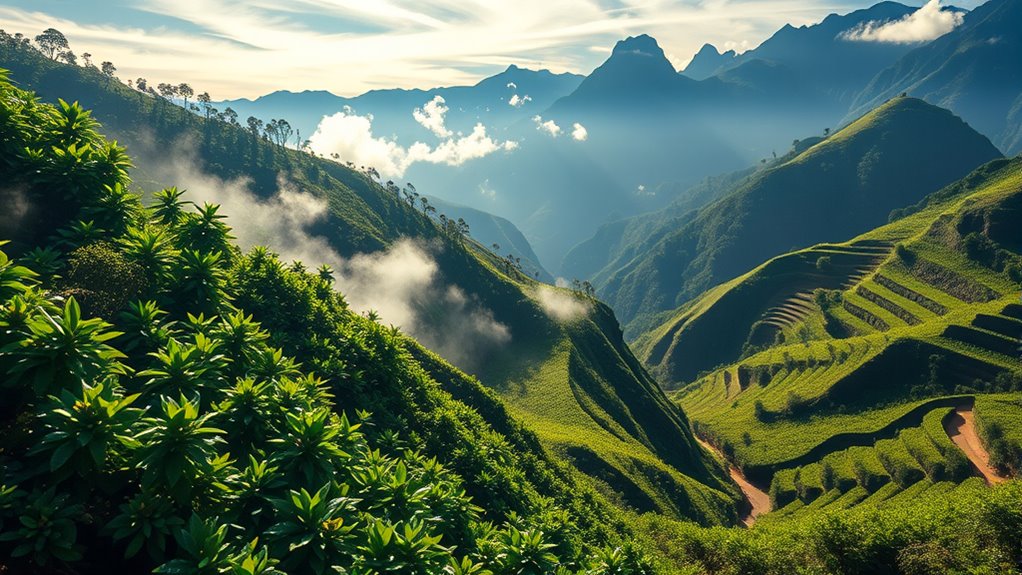
You’ll notice that mountain coffee farms experience cooler microclimates, which slow plant growth and enhance bean quality. Increased sunlight exposure helps develop complex flavors, but variable weather patterns can challenge crop stability. These unique environmental factors shape the character and consistency of mountain-grown coffee.
Cooler Mountain Microclimates
Have you ever wondered how the cool mountain air uniquely shapes coffee farms? It creates microclimates that influence growth and flavor. Here’s how:
- Temperature Regulation: Cooler temperatures slow plant metabolism, allowing beans to develop complex sugars and flavors.
- Reduced Humidity: Lower humidity levels promote even drying, preventing mold and preserving bean integrity.
- Temperature Fluctuations: Daily temperature swings enhance bean maturation, intensifying aromatic compounds and acidity.
- Wind Exposure: Consistent breezes help reduce disease pressure and improve airflow around plants, boosting overall health.
These microclimates result in denser beans with heightened acidity and richer flavor profiles. They also contribute to slower maturation, which enhances the complexity and depth of the final brew. Essentially, the cool mountain microclimate acts as a natural flavor enhancer for premium coffee.
Increased Sunlight Exposure
Mountain coffee farms often receive increased sunlight exposure due to their elevation and open landscapes, which directly impact the growth and development of coffee plants. This abundance of sunlight accelerates photosynthesis, promoting healthy plant vigor and faster maturation. The extra sunlight also enhances the synthesis of essential flavor compounds within the beans, contributing to richer aroma and complex taste profiles. However, intense sunlight can cause stress, making plants produce more protective chemicals like antioxidants, which influence flavor and bean chemistry. The open terrain allows for better airflow, reducing humidity and disease risk, ultimately improving bean quality. Consistent sunlight exposure guarantees steady ripening, leading to uniform beans with desirable flavor characteristics. Overall, increased sunlight at high altitudes plays a pivotal role in shaping the unique sensory qualities of mountain-grown coffee.
Variable Weather Patterns
Variable weather patterns uniquely characterize mountain coffee farms, creating both opportunities and challenges for growers. These fluctuations influence coffee quality and harvest timing in several ways:
- Temperature swings can stress plants, encouraging the development of complex flavor compounds.
- Rainfall variability affects cherry maturation and drying, requiring careful timing and processing adjustments.
- Frost risk demands vigilant monitoring, as unexpected cold snaps can damage crops and reduce yield.
- Wind and storm events can cause physical damage, impacting bean development and quality.
Elevation’s Impact on Coffee Density and Complexity
Elevations above 1,300 meters considerably influence coffee bean density, as the slower growth cycle allows beans to develop more tightly packed structures. With more time to mature, your beans become denser, which directly enhances their flavor complexity. This density means the beans hold more concentrated sugars, acids, and aromatic compounds, leading to richer, more nuanced cups. High-altitude beans often exhibit brighter acidity and more vibrant fruity or floral notes. You’ll notice that these densely packed beans tend to produce a fuller body and a more layered taste profile. The extra development time at higher elevations results in beans that are not only more flavorful but also more resistant to defects. Ultimately, elevation’s impact on density substantially elevates the overall quality and complexity of your brewed coffee.
Optimizing Equipment Settings for High-Altitude Brewing

When brewing at high altitudes, adjusting your equipment settings is essential to achieve ideal extraction and flavor. The lower boiling point means water heats more slowly and at lower temperatures, so you should:
- Reduce brew temperature by about 10°F (5.5°C) to prevent over-extraction.
- Use a finer grind to increase surface area and compensate for cooler water.
- Increase coffee dose slightly to maintain strength and extraction efficiency.
- Adjust brewing time, allowing for a slightly longer extraction to balance flavor and prevent under-extraction.
These modifications ensure your coffee extracts properly, highlighting its complex flavors without becoming bitter or weak. Proper calibration minimizes the impact of altitude on brewing dynamics, delivering a consistently excellent cup.
Elevation and Coffee Quality: Balancing Growth, Flavor, and Yield
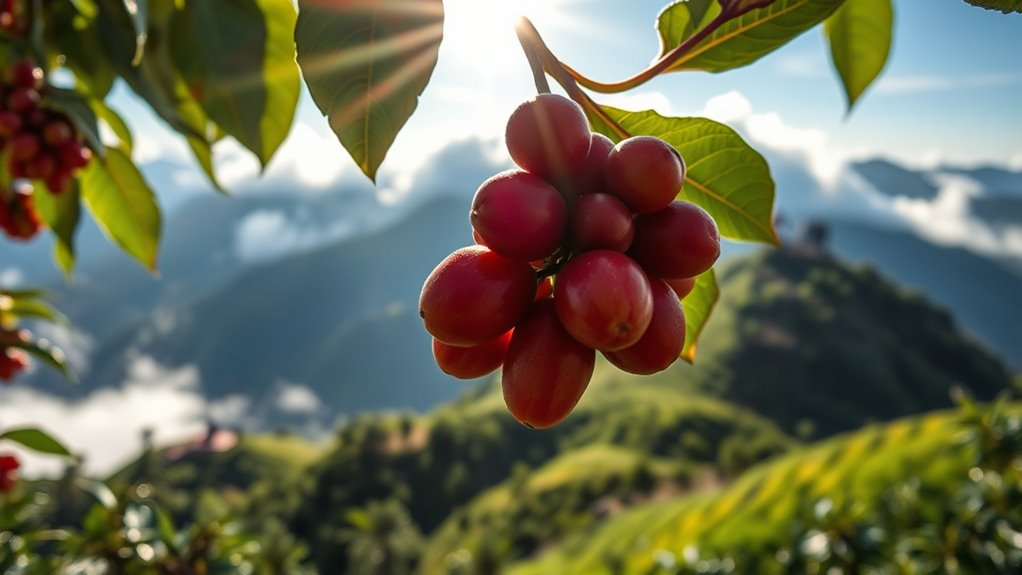
Growing coffee at higher altitudes presents a complex balancing act between maximizing bean quality and maintaining acceptable yields. Higher elevations slow plant growth, allowing beans to develop richer flavors, better sugars, and denser textures. These beans often have brighter acidity, fruity and berry-like notes, and complex aromatics, making them highly desirable. However, slower growth reduces overall crop size and yield, which can limit production efficiency. You must decide whether to prioritize premium quality or higher volume. Managing this balance involves selecting suitable varieties, optimizing cultivation practices, and understanding altitude-specific impacts on ripening and bean composition. While high-altitude coffee offers exceptional flavor and aroma, it often comes with lower productivity, requiring careful planning to meet both quality standards and supply demands.
Frequently Asked Questions
How Does Altitude Influence Optimal Grind Size for Brewing?
You should grind your coffee finer at higher altitudes because cooler temperatures slow extraction, requiring smaller particles to increase surface area and improve water contact. This helps balance the slower brewing process caused by lower boiling points. Conversely, at lower elevations, a coarser grind may suffice. Adjusting your grind size guarantees proper extraction, flavor, and aroma, helping you achieve the best possible brew regardless of altitude.
Can Altitude Affect the Shelf Life of Coffee Beans?
Altitude acts like a guardian over your coffee beans, shaping their shelf life. Higher elevations, with their cooler, drier air, slow oxidation and preserve beans longer, like a keepsake stored in a vault. Lower altitudes, with humidity and warmth, accelerate deterioration, turning freshness into fleeting memory. So, you’ll find that beans from high elevations stay vibrant longer, giving you more time to savor their rich flavors.
What Are the Best Brewing Methods for High-Altitude Coffee?
You should opt for brewing methods that highlight high-altitude coffee’s bright, complex flavors. Pour-over and Chemex brewing are ideal because they preserve delicate aromatics and acidity. French press also works well, extracting full-bodied richness. Adjust grind size finer and brew time longer to compensate for cooler water temperatures at altitude. These methods let you fully enjoy the vibrant, fruity, and wine-like notes typical of high-altitude beans.
How Does Altitude Impact the Caffeine Content in Brewed Coffee?
If you brew coffee at high altitude, you might notice it tastes less bitter, as caffeine levels often decrease in beans grown above 4,500 feet. For example, a study found that beans from mountainous regions had slightly lower caffeine than those from lower elevations. You should adjust your brewing because cooler brew water and lower extraction temperatures can reduce caffeine extraction, making your coffee milder but still rich in flavor.
Are There Specific Storage Tips for High-Altitude Coffee Beans?
You should store your high-altitude coffee beans in an airtight container away from light, heat, and humidity. Because these beans are denser and more complex, they can absorb odors easily, so keep them separate from strong-smelling foods. Consider storing them in a cool, dark place or even refrigerating if you won’t use them soon. Just make sure to let the beans come to room temperature before brewing to preserve flavor.
Conclusion
As you savor that high-altitude brew, imagine the mountain air infusing each sip with clarity and brightness. The thin, crisp atmosphere crafts flavors that dance on your palate, transforming your coffee experience into a journey through mountain peaks. Embrace the unique challenges and rewards of high-altitude brewing, knowing that every cup reflects the sky-high journey from seed to sip. It’s a mountain’s gift—rich, vibrant, and unforgettable.