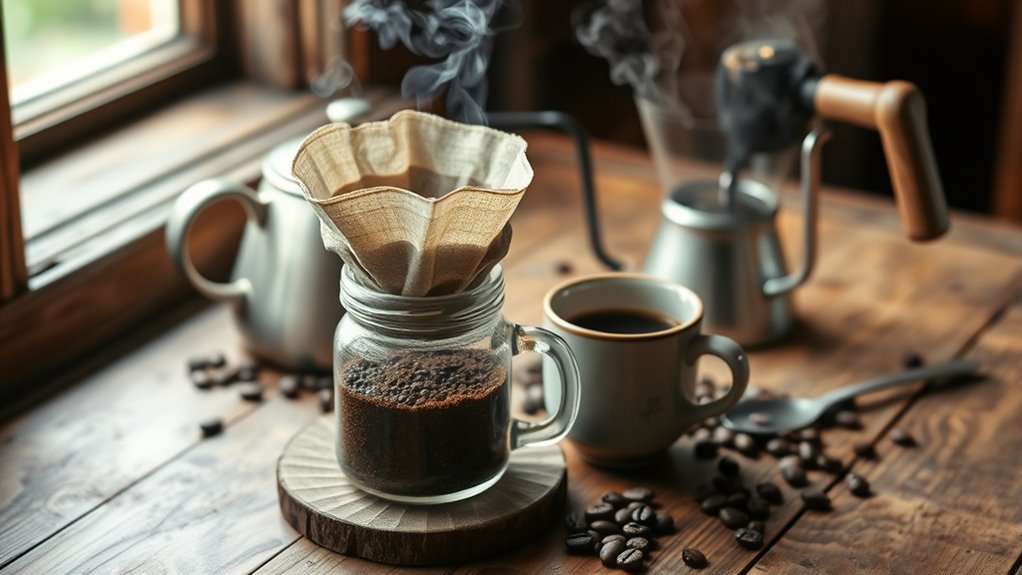

If you want to brew coffee without a coffeemaker, start with simple tools like a pour-over setup or a strainer to keep grounds out of your cup. Use fresh, quality beans stored in a cool, dark place, and focus on correct coffee-to-water ratios. Maintain steady pouring and ideal water temperature for a flavorful brew. With some basic techniques and equipment, you’ll enjoy great coffee anytime—keep going to discover more tips and tricks.
Key Takeaways
- Use simple pour-over or strainer setups with medium grind coffee for easy, sediment-free brewing.
- Maintain water temperature around 195–205°F and pour slowly in a circular motion for optimal extraction.
- Store fresh, whole beans in airtight containers away from light and heat to maximize flavor and shelf life.
- Steep coffee grounds in hot water for 4-6 minutes, then strain to achieve a rich, full-bodied flavor without specialized equipment.
- Prioritize quality beans and consistent brewing techniques over costly gadgets for the best flavor and savings.
Embrace the Pour-Over Technique for Simple Brewing
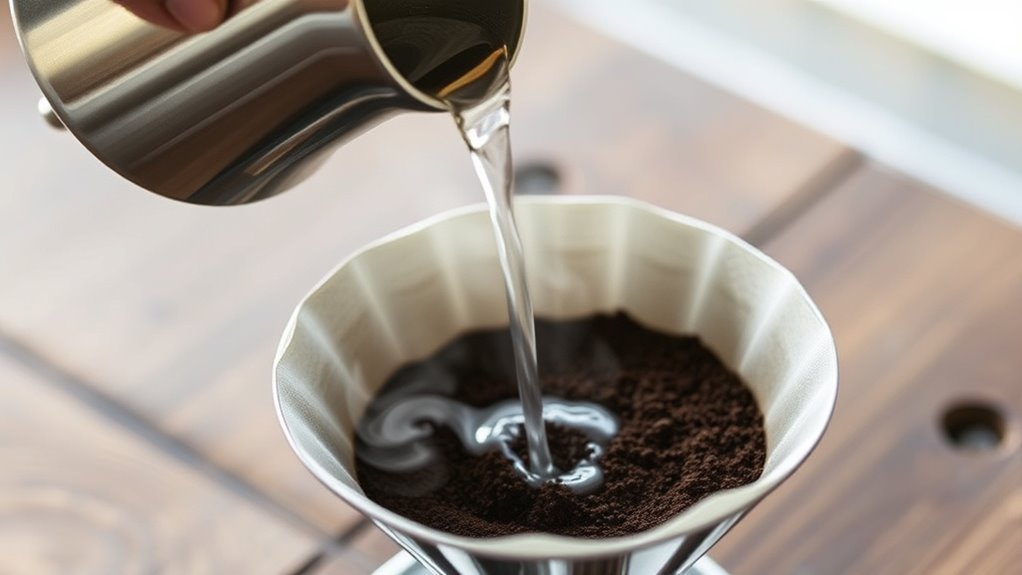
If you want a straightforward way to brew great coffee at home, the pour-over method is an excellent choice. It’s simple, affordable, and gives you control over every step. Start by placing a cone-shaped filter in a basic dripper and add freshly ground coffee—aim for medium grind. Heat water to about 200°F, then pour it slowly over the grounds in a circular motion. This steady pour extracts the best flavors without bitterness. The brewed coffee drips directly into your cup or carafe beneath. The key is to pour steadily and evenly, maintaining a consistent water flow. No fancy gadgets are necessary—just a simple filter, a heat source, and some good beans. This technique delivers fresh, flavorful coffee with minimal fuss. Incorporating good lighting can also enhance your brewing process by allowing you to better see your pour and ensure consistency. Additionally, understanding proper water temperature can significantly impact the flavor extraction and overall quality of your brew. Using the correct grind size and water quality is equally important to achieve the best taste from your coffee. Being mindful of brewing time can further optimize the flavor profile and prevent over-extraction or under-extraction. Properly handling your brew equipment ensures a cleaner process and better-tasting coffee.
Use a Strainer to Achieve Clean, Sediment-Free Coffee
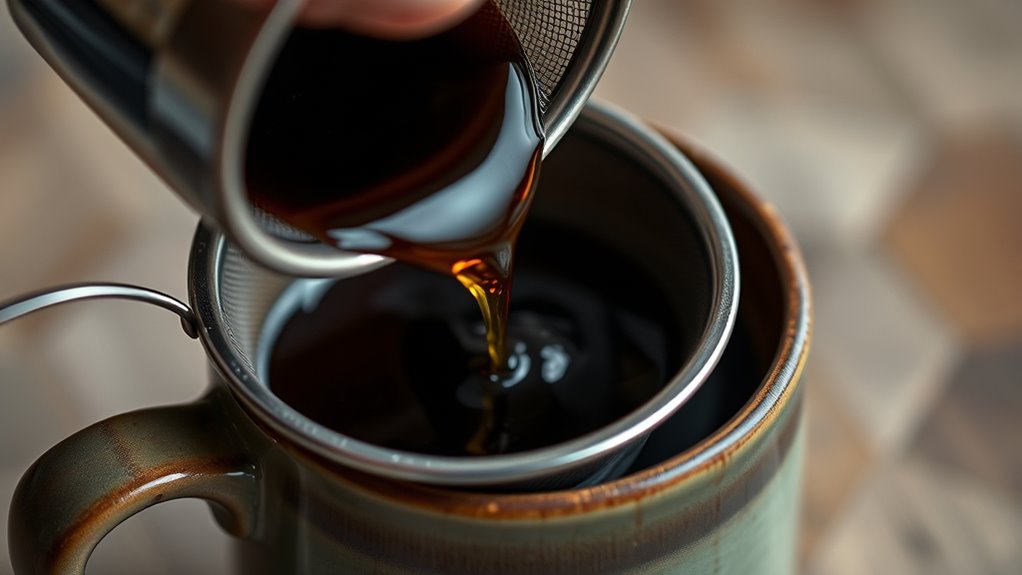
Using a strainer is an effective way to produce clean, sediment-free coffee without specialized equipment. After brewing your coffee directly in a cup or pot, pour the liquid through a fine mesh strainer into another container. This simple step catches any coffee grounds or fine particles, leaving you with a clear, smooth beverage. Make sure to use a clean, sturdy strainer to prevent grounds from slipping through. For best results, hold the strainer steady and pour slowly to avoid spills or splashes. If you want extra clarity, you can line the strainer with a paper towel or cheesecloth. Additionally, advancements in neural networks contribute to better natural language processing, making it easier to access detailed brewing tips and techniques online. This technique guarantees your coffee is free of sediment, giving you a clean, enjoyable drinking experience without needing a fancy filter or machine. Incorporating proper filtering techniques ensures the removal of even the smallest particles for an optimal brew, and experimenting with different filter materials can further enhance clarity and flavor. Employing precise pouring methods can also help minimize sediment disturbance during transfer, ensuring a clearer cup.
Opt for a French Press Alternative for Rich, Full-Bodied Flavors
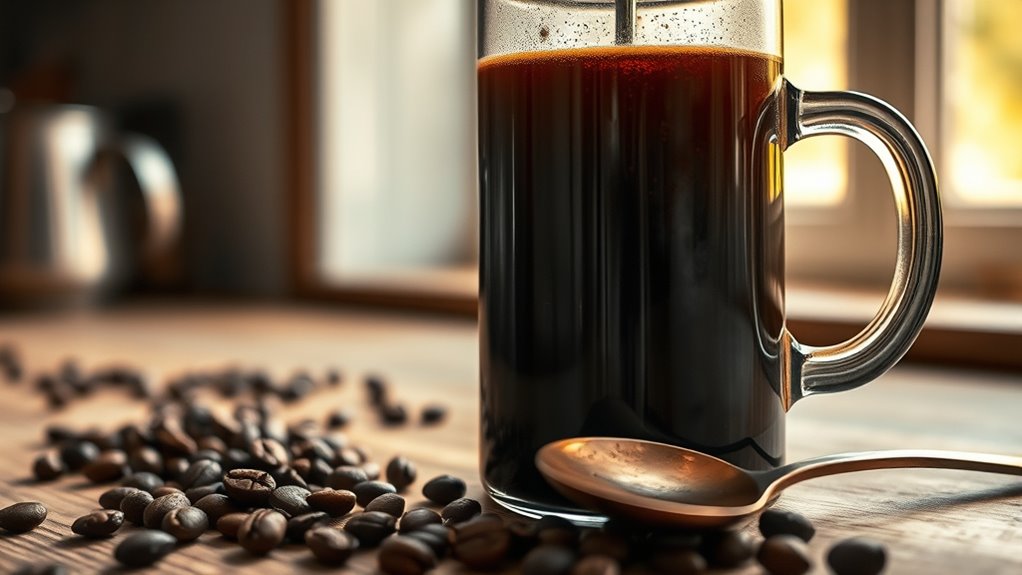
A French press is a popular brewing method, but you can achieve similarly rich, full-bodied coffee with a simple immersion technique as an alternative. To do this, start by adding your ground coffee to a sturdy container. Then, pour hot water over the grounds, ensuring full contact. Let it steep for about 4 minutes, then follow these steps:
- Use a spoon to gently stir the mixture, ensuring even extraction.
- Cover the container and let it steep for an additional 2 minutes.
- Use a strainer or a makeshift filter to separate the grounds from the liquid.
- Pour the brewed coffee into your cup, enjoying its bold, full flavor.
This method provides a cost-effective, equipment-free way to enjoy rich coffee at home.
Prioritize Quality Beans to Enhance Your Brew
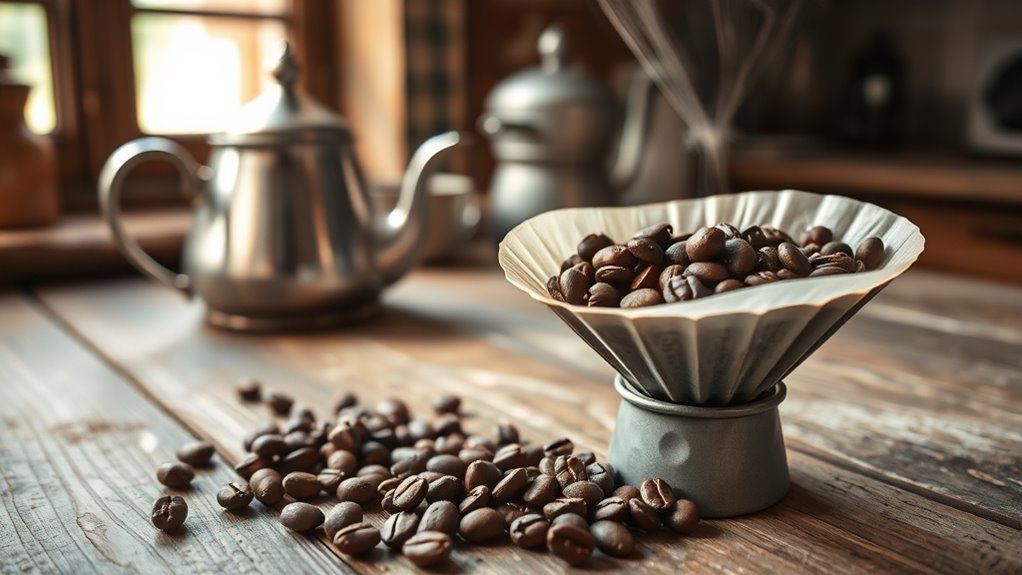
Start with fresh, whole beans to get the best flavor in your coffee. Proper storage—like keeping beans in an airtight container away from light—keeps them tasting their best. When your beans are high quality and well-preserved, your brew will naturally be richer and more satisfying. Incorporating vertical storage solutions can help organize your beans efficiently and prevent exposure to damaging elements.
Choose Fresh, Whole Beans
Have you ever noticed how the quality of your coffee begins with the beans themselves? Choosing fresh, whole beans makes all the difference in flavor and aroma. Fresh beans are richer, more vibrant, and full of essential oils that boost taste. To guarantee you’re getting the best, consider these tips:
- Look for a recent roast date—ideally within the last few weeks.
- Choose beans with a glossy surface, indicating freshness and oil content.
- Buy whole beans rather than pre-ground, preserving flavor until brewing.
- Store beans in a cool, airtight container away from light to maintain freshness.
- Understanding the importance of ethical sourcing can ensure your beans are both high-quality and sustainably produced. Additionally, selecting beans from reputable sources can influence both flavor and sustainability practices, which are increasingly linked to supply chain transparency and ethical standards. Being aware of certification labels can also help you identify ethically produced beans. Incorporating attention to detail in your selection process can further enhance the overall quality of your brew.
Store Properly for Freshness
To keep your coffee beans fresh and maximize flavor, proper storage is essential. Store your beans in an airtight container, ideally made of opaque material, to block out light and oxygen. Keep them in a cool, dark place away from heat sources like stoves or direct sunlight, which can accelerate staling. Avoid storing beans in the refrigerator or freezer, as moisture and temperature fluctuations can harm their quality. Instead, buy in small amounts to reduce the time beans sit unused. Use the beans within a few weeks of roasting for ideal freshness. Proper storage preserves essential oils and flavors, ensuring your brewed coffee remains rich and vibrant. Air Purifier Maintenance practices can help maintain a clean environment that preserves your coffee’s freshness. Proper storage techniques are crucial for maintaining optimal flavor and aroma over time, preventing deterioration. Consistent storage practices make a noticeable difference in the taste of your homemade coffee. Additionally, understanding glycolic acid benefits can help you choose skincare products that protect your skin while you enjoy your fresh brew. Incorporating dehumidifiers in storage areas can also help control moisture levels and preserve coffee quality. Using oxygen absorbers in your storage containers can further extend the freshness by reducing oxidation.
Gather Basic Accessories to Support Your Coffee-Making Process
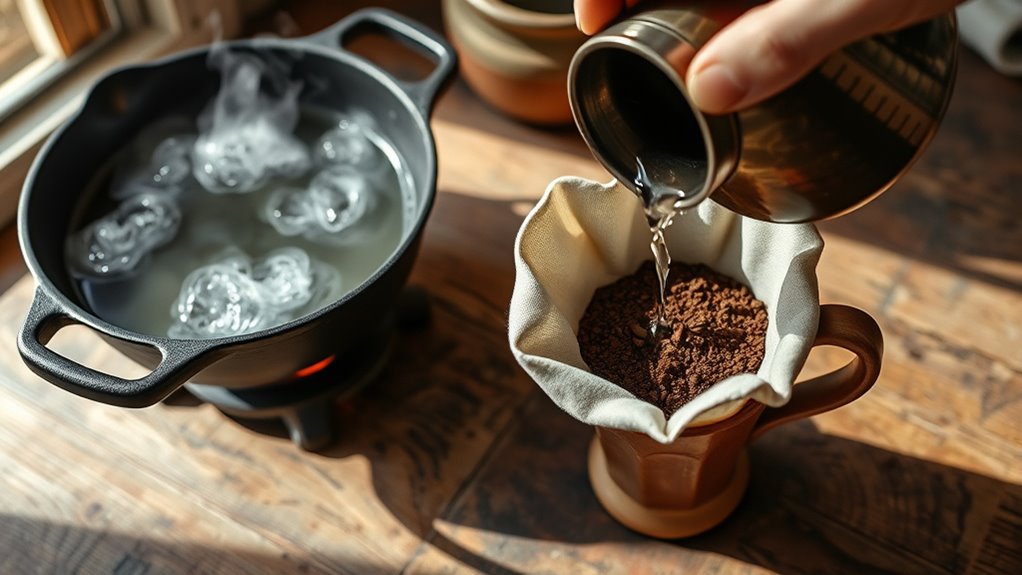
To make great coffee without a machine, you’ll need some basic accessories. A strainer helps remove grounds for a cleaner cup, while measuring tools guarantee you get the right coffee-to-water ratio. Don’t forget a reliable heat source to bring your water to the right temperature for brewing. Consider using a quality coffee mug or cup to enhance your drinking experience and keep your beverage warm longer.
Essential Straining Devices
Gathering the right straining devices is essential for guaranteeing your homemade coffee remains smooth and sediment-free. Without proper tools, leftover grounds can ruin the drinking experience. Here are four key items to have on hand:
- Fine-mesh strainer or sieve to trap small coffee grounds.
- Coffee cloth or cheesecloth for extra filtration and removal of fine particles.
- Small mesh or tea strainer for quick, easy filtering.
- Reusable or disposable coffee filters, if using paper-based filtering options.
These devices help you separate liquid from grounds efficiently, producing a cleaner, more enjoyable cup. Selecting versatile options that suit your brewing style and are easy to clean can improve your coffee-making process. Proper straining ensures your coffee’s smoothness and enhances your brewing success. Weight considerations of your straining devices can also impact their durability and ease of use. Additionally, choosing tools with appropriate material quality can help prevent breakage and prolong their lifespan.
Accurate Measuring Tools
Using accurate measuring tools is essential for achieving consistent and flavorful coffee, especially when brewing without specialized equipment. A digital or analog kitchen scale helps you measure coffee grounds and water precisely, ensuring the right strength every time. Measuring cups and spoons are reliable for smaller quantities, allowing you to control the coffee-to-water ratio easily. Consistent ratios prevent over- or under-extraction, resulting in better taste. Keep your tools simple and easy to read, so you don’t waste time guessing. Proper measurement reduces waste and saves money by avoiding using too much coffee or water. With accurate tools, you can fine-tune your brewing process, replicate your favorite flavors, and enjoy a perfectly balanced cup every time.
Reliable Heat Sources
Having accurate measurements is only part of brewing great coffee without equipment; dependable heat sources guarantee your water reaches the right temperature for extraction. To assure consistent results, gather a trustworthy heat source such as:
- A stovetop burner — versatile and easy to control.
- A campfire or open flame — perfect for outdoor brewing.
- A portable camping stove — compact and reliable.
- A heat-safe container with a lid — maintains steady temperature during steeping.
Each option provides the necessary heat to bring water to the ideal 195–205°F (90–96°C) range. Make sure your heat source is stable and adjustable, so you can fine-tune the temperature for excellent extraction. Reliable heat is essential for a flavorful, well-balanced brew.
Master the Art of Proper Water Temperature and Pouring
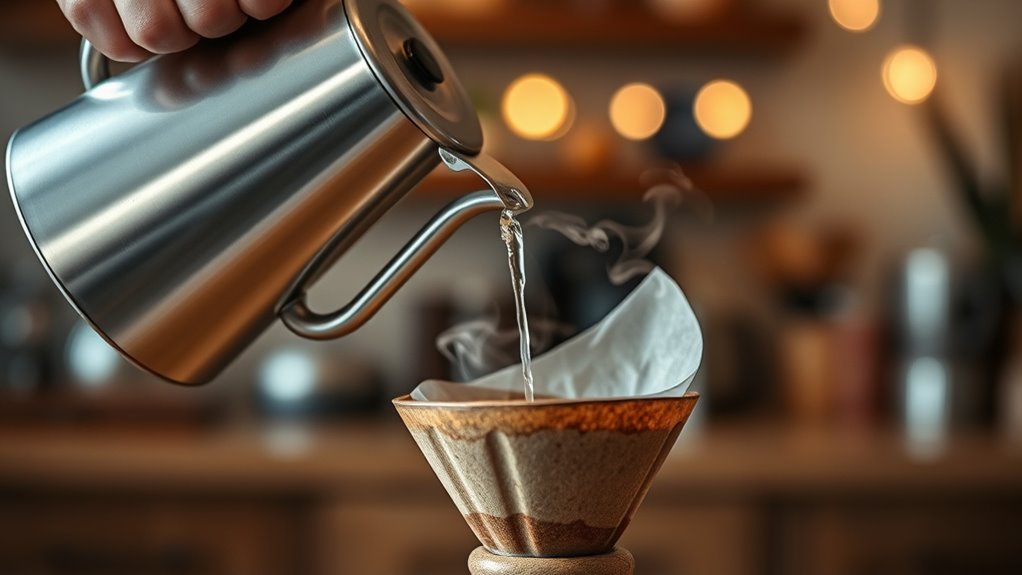
Mastering proper water temperature and pouring technique is essential for extracting the best flavor from your coffee. You want water just below boiling—around 195°F to 205°F—so it releases maximum aroma and oils without scalding the grounds. Pour slowly and evenly, starting from the center and spiraling outward, to guarantee uniform saturation. This prevents uneven extraction, which can cause bitterness or weak flavor. Use the following table as a quick guide:
| Water Temperature | Pouring Technique |
|---|---|
| 195°F-205°F | Gentle, steady spiral pour |
| Slightly below boiling | Avoid quick, aggressive pour |
| 200°F-205°F | Cover all grounds evenly |
| 190°F-195°F | For delicate coffee varieties |
| 205°F+ | Too hot, risks bitterness |
Consistent temperature and pouring style reveal maximum flavor.
Prepare Single Servings or Small Batches With Ease
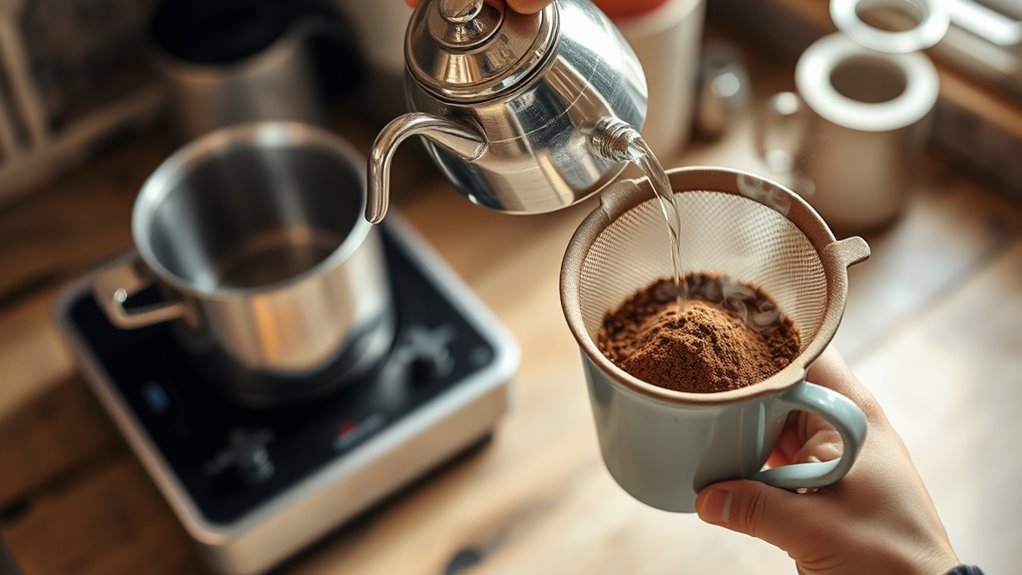
To prepare single servings or small batches easily, start by choosing a suitable filter that fits your container, ensuring clean, sediment-free coffee. Measure your coffee grounds carefully to get the perfect strength every time, and control your water temperature to optimize extraction. With these simple steps, you can brew flavorful coffee without any fuss or extra equipment.
Use a Suitable Filter
Using a suitable filter makes brewing single servings or small batches straightforward and hassle-free. Choose a filter that fits your container and allows water to flow through the grounds evenly. Here are some options to contemplate:
- Paper filters: Disposable and easy to use, they trap fine grounds and prevent sediment.
- Cloth filters: Reusable and eco-friendly, they require regular cleaning but don’t add paper waste.
- Metal mesh filters: Durable and reusable, they provide good flow but may let more fine particles through.
- DIY filters: Repurpose household items like a clean sock or fine-mesh sieve for an emergency solution.
Select the filter based on your convenience, availability, and desired coffee clarity for a smooth brew every time.
Measure Coffee Precisely
Accurately measuring your coffee guarantees consistent flavor and strength, especially when brewing single servings or small batches. Using the right amount ensures each cup is balanced and enjoyable. To make measuring easier, use a standard tablespoon or a digital scale for precision. A common ratio is 1 to 2 tablespoons of coffee per 6 ounces of water, but you can adjust to taste. Consider this guide for quick reference:
| Coffee (tablespoons) | Water (cups) | Strength Level |
|---|---|---|
| 1 | 1 | Light and mild |
| 2 | 1 | Balanced |
| 3 | 1.5 | Strong and bold |
Consistent measurement helps you perfect your brew every time.
Control Water Temperature
Ever wonder how water temperature affects your coffee’s flavor? Controlling it guarantees you extract the best taste from your beans. Here are simple ways to manage water temperature without fancy equipment:
- Boil water completely, then let it sit for 30 seconds to reach about 200°F (93°C) for ideal extraction.
- Use a thermometer or a temperature-sensitive stick to check the water’s heat.
- For lower temperatures, pour hot water and wait a minute before brewing.
- Keep a kettle with a temperature control feature handy if possible, or manually adjust by adding cooler water.
Maximize Flavor With Correct Coffee-To-Water Ratios
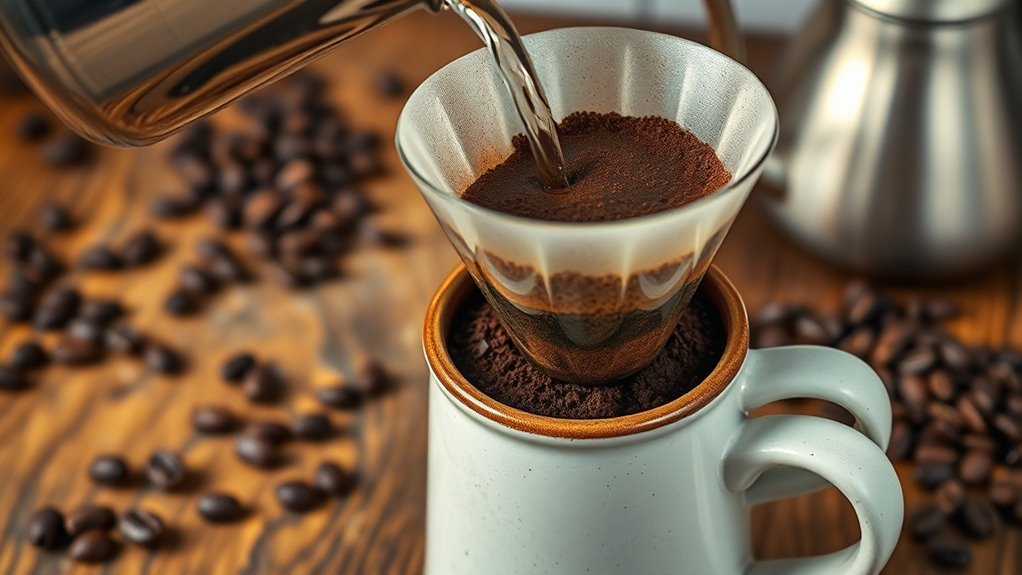
Getting the flavor right starts with the right coffee-to-water ratio. Use too much coffee, and your brew will be bitter and overpowering; too little, and it’ll taste weak and flat. A good starting point is two tablespoons of coffee per six ounces of water. Adjust based on your taste preferences—more coffee for a bolder flavor, less for a lighter one. Always measure your grounds and water accurately to guarantee consistency. If you’re using a strainer or pouring method, keep this ratio steady for the best results. Remember, experimenting within this range helps you find your perfect balance. Proper ratios extract the right flavors without over- or under-brewing, giving you a richer, more satisfying cup every time.
Save Money by Focusing on Good Beans Over Fancy Equipment
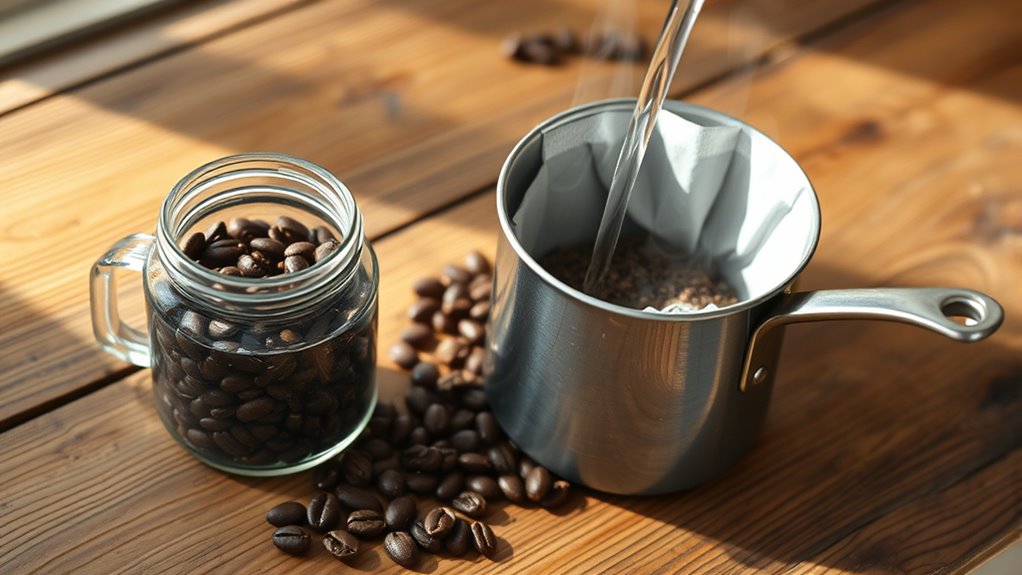
Focusing on high-quality coffee beans can considerably improve your brew without extra spending on fancy equipment. Good beans deliver richer flavor and better aroma, making even simple brewing methods shine. To maximize your savings and taste:
- Invest in fresh, specialty beans instead of pricey gadgets.
- Shop at local roasters or bulk stores for better deals.
- Store beans properly to preserve freshness and flavor.
- Use the beans’ quality as your main flavor driver, not equipment features.
Create Consistent Coffee Anytime Using Simple Methods

To brew consistent coffee anytime, you only need simple techniques and a bit of attention to detail. Use a reliable ratio of coffee to water, and stick to the same process each time. Measure your coffee grounds carefully and maintain water temperature around 200°F for ideal extraction. Keep your pouring steady and controlled, whether using a pour-over or straining method. To help you stay consistent, consider this comparison:
| Technique | Key Focus |
|---|---|
| Pour-Over | Precise pouring and temperature |
| Straining | Proper filtration and timing |
| French Press | Steeping time and grounds ratio |
| Basic Mixing | Accurate measurements |
Frequently Asked Questions
Can I Brew Coffee Without Any Filters or Strainers?
Yes, you can brew coffee without filters or strainers. One way is to let the grounds steep in hot water, then carefully pour the liquid into your cup, leaving the grounds behind. Alternatively, use a cloth or a clean sock as a makeshift filter. Just be mindful to let the grounds settle or strain the coffee slowly to avoid sediment in your drink.
What Types of Cups Are Best for Pour-Over Brewing?
You might think any cup will do, but for pour-over brewing, you want a sturdy, heatproof one with a wide opening. Glass or ceramic cups are ideal—they let you see the coffee as it brews and handle heat well. Avoid thin or plastic cups that can crack or melt. A good pour-over cup enhances control and flavor, turning a simple coffee ritual into an art form—so don’t settle for just any mug.
How Long Should I Steep Coffee in a French Press?
You should steep coffee in a French press for about 4 minutes. Start by adding your coarsely ground beans and hot water, then give it a gentle stir. Cover and let it steep without pressing the plunger. After 4 minutes, slowly press down the plunger to separate the grounds from the coffee. This timing balances full extraction and a smooth, rich flavor, giving you a perfect cup every time.
What Is the Ideal Water Temperature for Brewing Coffee Without Equipment?
The ideal water temperature for brewing coffee without equipment is between 195°F and 205°F (90°C to 96°C). You should heat water just below boiling point, avoiding boiling water which can scald the coffee and alter its flavor. Use a thermometer if possible, or let boiling water sit for about 30 seconds before pouring. This temperature range guarantees the best extraction and a flavorful, balanced cup every time.
How Do I Measure Coffee and Water Accurately Without Specialized Tools?
To measure coffee and water accurately without specialized tools, use common kitchen items. For coffee, measure grounds with a standard tablespoon, roughly 5 grams per scoop. For water, use a regular cup or mug to pour the desired amount, counting or marking the container if needed. If you want more precision, consider using a small kitchen scale for the coffee and a measuring cup for the water.
Conclusion
Just like the alchemist turning lead into gold, you can transform humble beans into a perfect brew without fancy equipment. With these simple techniques, you hold the power to craft rich, satisfying coffee anytime, anywhere—no magic required. Embrace the process, trust your instincts, and soon you’ll be the master of your own caffeine kingdom. Remember, the secret ingredient is your passion; the rest is just technique.