
To brew stronger coffee without bitterness, focus on controlling your water temperature between 195°F and 205°F, as higher temps can cause harsh flavors. Use a coarser grind and stick to precise brewing times to prevent over-extraction. Choose high-quality, lightly roasted beans, and consider cold brewing for a smoother taste. Adding a pinch of salt or spices can also mask bitterness. For more tips to perfect your brew, continue exploring these essential techniques.
Key Takeaways
- Use coarser grind sizes and longer steeping times to prevent over-extraction and bitterness.
- Maintain water temperature between 195°F and 205°F for optimal extraction and balanced flavor.
- Choose light or medium roast beans, which naturally contain less bitterness and acidity.
- Add salt or natural flavorings like cinnamon to neutralize or mask harsh, bitter notes.
- Brew with fresh, high-quality beans and avoid over-extracting by controlling brew time and parameters.

COSORI Electric Gooseneck Kettle with 5 Temperature Control Presets, Pour Over Kettle for Coffee & Tea, Hot Water Boiler, 100% Stainless Steel Inner Lid & Bottom, 1200W/0.8L
5 𝑶𝑵𝑬-𝑻𝑶𝑼𝑪𝑯 𝑷𝑹𝑬𝑺𝑬𝑻𝑺: Your Gooseneck Electric Kettle features 5 precise temperature presets. These accurate presets make brewing coffee…
As an affiliate, we earn on qualifying purchases.
As an affiliate, we earn on qualifying purchases.
Perfect Your Water Temperature for Balanced Extraction
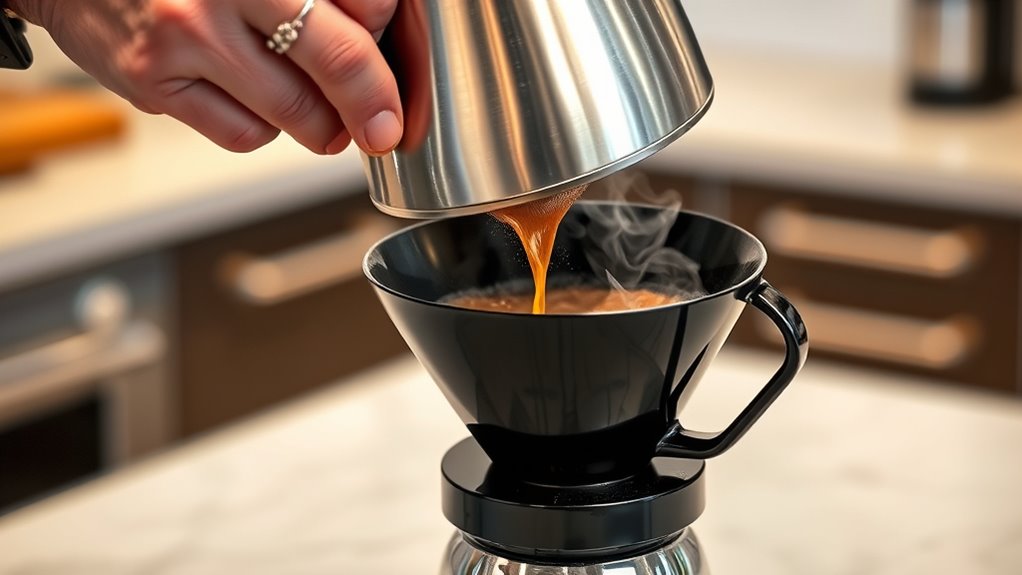
Achieving balanced extraction begins with controlling your water temperature precisely. You want it between 195°F to 205°F to prevent over- or under-extraction. If your water’s too hot, it extracts too quickly, producing bitter, harsh flavors. Conversely, cooler water leads to under-extraction, resulting in weak, flat taste. To get it right, run a water-only cycle on your machine before brewing—this preheats and stabilizes the temperature. When using manual methods like pour-over or French press, pour hot water directly from a kettle, ensuring it’s within the ideal range. Avoid boiling water straight from the stove, as it can overshoot the perfect temperature. Consistent water temperature is the key to extracting rich, balanced flavors without bitterness or sourness. Additionally, understanding temperature control in the brewing process helps optimize water temperature regulation and flavor clarity. Monitoring temperature stability throughout the brewing process can further enhance the extraction quality, especially when maintaining consistent brew temperature. Paying attention to temperature consistency ensures your coffee remains flavorful and well-balanced from start to finish.

Gevalia Special Reserve Guatemala Single Origin Medium Roast Coarse Ground Coffee (10 oz Bag)
One 10 oz bag of Gevalia Guatemalan Single Origin Special Reserve Coarse Ground Coffee
As an affiliate, we earn on qualifying purchases.
As an affiliate, we earn on qualifying purchases.
Select the Right Grind Size to Prevent Over- or Under-Extraction
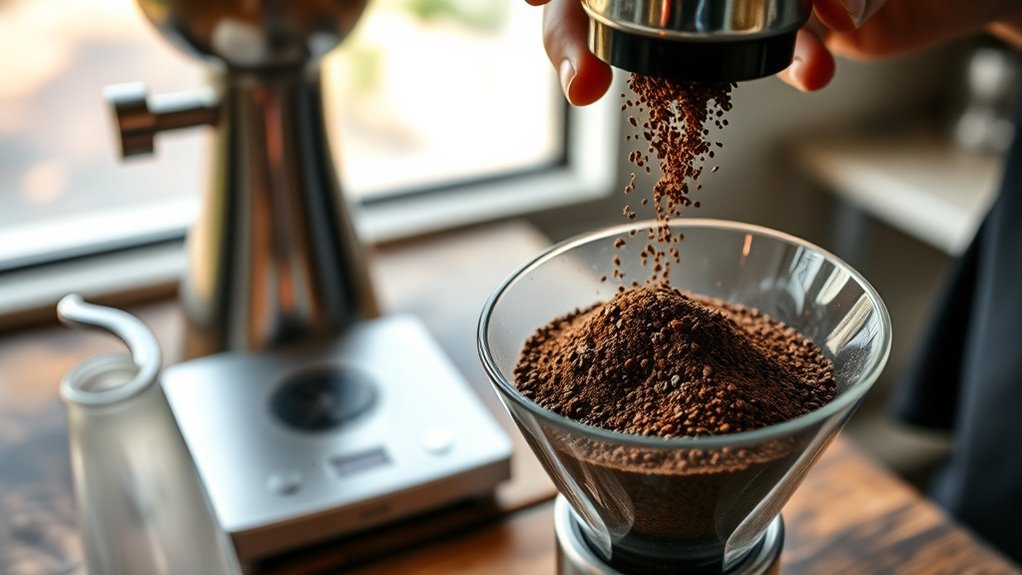
Choosing the right grind size is essential to prevent over- or under-extraction, which can ruin your coffee’s flavor. When your grind is too fine, it increases surface area, causing over-extraction and bitterness. On the other hand, a coarse grind slows extraction, leading to weak, sour, or underdeveloped flavors. Match your grind to your brewing method: use a coarse grind for French press and cold brew, and a medium grind for pour-over or drip. Adjusting grind size helps control extraction time and flavor balance. If your coffee tastes bitter, try coarsening the grind; if it’s weak or sour, try a finer grind. Proper grind size ensures a smooth, well-rounded cup without harshness or dullness.

Cold Brew Coffee Maker,64 oz Mason Jar Pitcher with Stainless Steel Filter, Pour Spout Handle Lid, Heavy Duty Glass Airtight & Leak-Proof for Iced Coffee,Tea & Lemonade
【What You Will Get】:1 Pcs / 64 oz mason jar pitcher with pour spout lid, 1 stainless stell…
As an affiliate, we earn on qualifying purchases.
As an affiliate, we earn on qualifying purchases.
Master Cold Brew Techniques to Minimize Bitterness
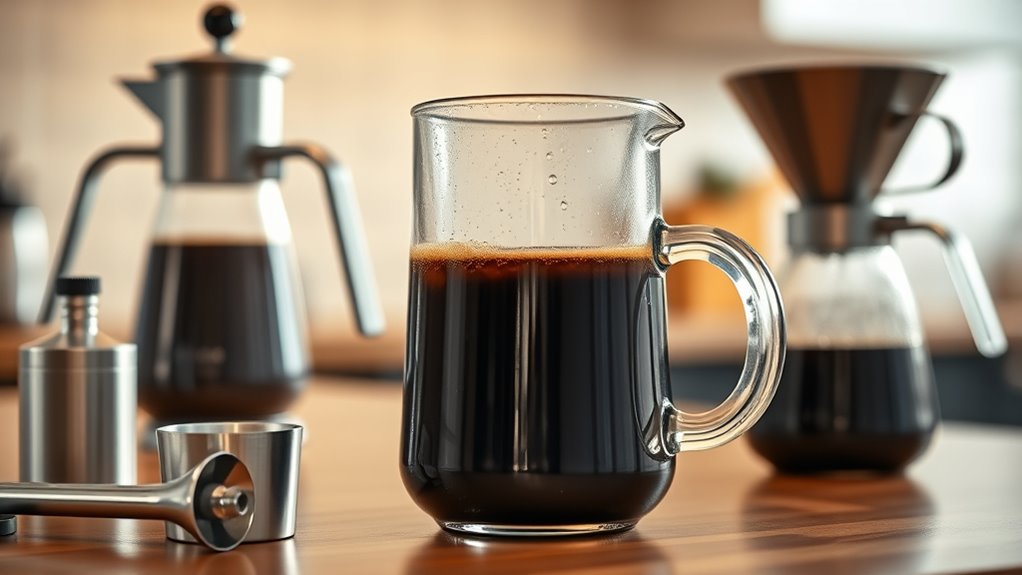
Mastering cold brew techniques is a proven way to minimize bitterness and enjoy a smooth, flavorful cup. Use coarser grinds to slow extraction and prevent over-bitter notes. Steep the coffee in cold water for 12 to 24 hours, ensuring a gradual extraction that preserves sweetness and reduces acidity. Keep the steeping temperature consistent by refrigerating the mixture; avoid warmer environments that can accelerate extraction and increase bitterness. Always use fresh, high-quality beans for better flavor. When brewing, maintain proper ratios of coffee to water to prevent over-concentration, which can lead to harshness. After steeping, strain carefully to avoid extracting bitter fines. Dilute the concentrate with water or milk to taste, creating a balanced, smooth brew without harsh aftertastes. Using a dedicated cold brew system with precise filtration can further improve clarity and taste. Additionally, understanding coffee extraction principles can help you fine-tune your process for optimal flavor, including how different raw food ingredients might influence flavor profiles.

Alpha Grillers Meat Thermometer Digital – Instant Read Food Thermometer for Cooking & Grilling – Professional Kitchen Gifts for Men, Dad & Mom
Instant Read Food Thermometer | Our instant read thermometer features a temperature probe and advanced, highly accurate technology…
As an affiliate, we earn on qualifying purchases.
As an affiliate, we earn on qualifying purchases.
Control Brew Time for Optimal Flavor and Reduced Harshness
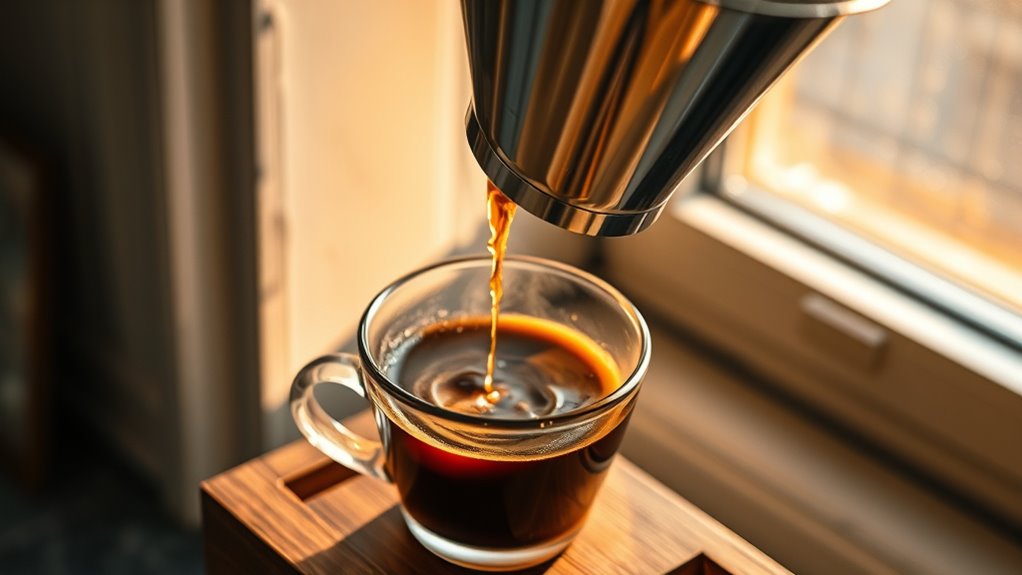
Controlling your brew time is key to unlocking better flavor and avoiding harshness. If you brew too long, over-extraction can make your coffee bitter and unpleasant, while too short a time leaves it weak and sour. Finding the right timing guarantees you get a balanced, flavorful cup every time. Paying attention to bitter taste can help you adjust your process for the perfect brew. Additionally, understanding sustainable coffee sourcing can contribute to a more eco-friendly brewing routine that aligns with a sustainable lifestyle.
Optimal Brew Duration
Optimizing your brew duration is essential for achieving the best flavor and minimizing harshness. If you brew too briefly, your coffee may taste weak and under-extracted. Excessive brewing time, however, can lead to over-extraction and bitterness. To find that perfect balance, consider these key points:
- Use the recommended brew time for your method: 2.5–3 minutes for pour-over, around 4 minutes for French press.
- Monitor your brew closely; slight adjustments can improve flavor without overdoing it.
- Avoid rushing or extending the brewing process beyond the optimal window, as this increases the risk of bitterness and harshness.
Sticking to these guidelines helps ensure your coffee is flavorful, smooth, and free from unnecessary bitterness.
Avoid Over-Extraction
To prevent over-extraction and achieve a balanced, smooth flavor, you need to carefully manage your brew time. If you brew too long, the coffee extracts excessive compounds, resulting in bitterness and harshness. For pour-over, aim for 2.5 to 3 minutes; for French press, about 4 minutes. Shortening brew time slightly can reduce bitterness without sacrificing flavor. Keep an eye on your timing and avoid rushing or extending the process unnecessarily. Using a timer helps maintain consistency and prevents over-extraction. Remember, the goal is to extract enough flavor without pulling out undesirable bitter compounds. Adjust your brew time based on your method and grind size, and you’ll enjoy a richer, smoother cup with less harshness. Incorporating natural materials like wood or stone in your brewing setup can also influence extraction and flavor profile, enhancing your overall coffee experience. Paying attention to water temperature can further help control extraction and improve taste. Additionally, understanding the nutritional content of the beans can guide you in selecting high-quality coffee for better flavor and health benefits. Proper drainage of your brewing equipment ensures that residual water doesn’t dilute your coffee or lead to over-extraction over time. Being aware of brew ratio is also essential to achieving the perfect balance between strength and smoothness.
Timing Precision Benefits
Precise timing during brewing is essential for extracting the best flavor while minimizing bitterness. If you overbrew, you risk over-extraction, which leads to harsh, bitter notes. Conversely, under-brewing results in weak, sour flavors. Controlling brew time ensures ideal flavor balance and smoothness. To help you fine-tune your process, consider these tips:
- For pour-over, aim for a total brew time of 2.5 to 3 minutes to maximize extraction without bitterness.
- Use a timer to maintain consistent French press brewing, approximately 4 minutes with a coarse grind.
- Adjust your pouring speed or brew duration slightly to eliminate harshness while preserving flavor strength.
- Keep in mind that timing precision can be impacted by factors like water temperature and grind size, so making small adjustments can help optimize your brew.
- Proper headphone connection setup and calibration can also enhance your listening experience, ensuring clarity and balanced sound.
Sticking to precise timing lets you craft a richer, less bitter cup every time.
Choose High-Quality Beans and Appropriate Roasts for Smoother Coffee
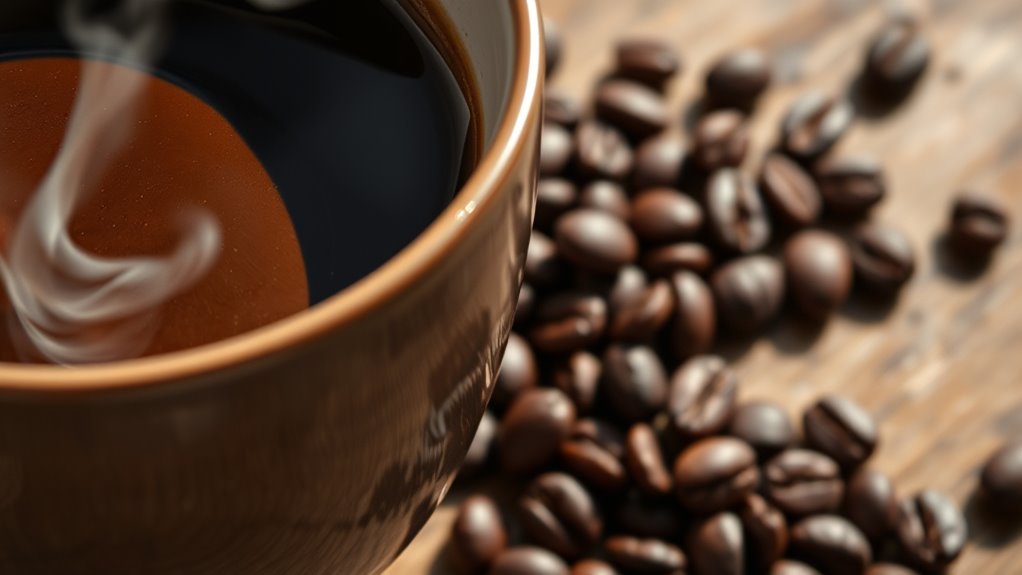
Choosing high-quality coffee beans and the right roast can make a noticeable difference in how smooth your coffee tastes. Start with fresh, premium beans for a cleaner, more balanced flavor. Look for beans labeled as specialty grade, which are carefully sourced and processed to reduce defects. When selecting a roast, opt for light or medium profiles; these retain more natural brightness and acidity, helping to mask bitterness. Dark roasts develop more bitter and burnt notes due to the roasting process, so they’re less ideal if you want smoothness. Always grind your beans just before brewing to preserve freshness and flavor. Quality beans, appropriate roasting, and proper brewing techniques are fundamental steps to achieving a smoother, more enjoyable cup without harsh aftertastes. Proper brewing techniques also play a crucial role in extracting the best flavor and minimizing bitterness.
Enhance Flavor With Strategic Additives to Mask Bitterness
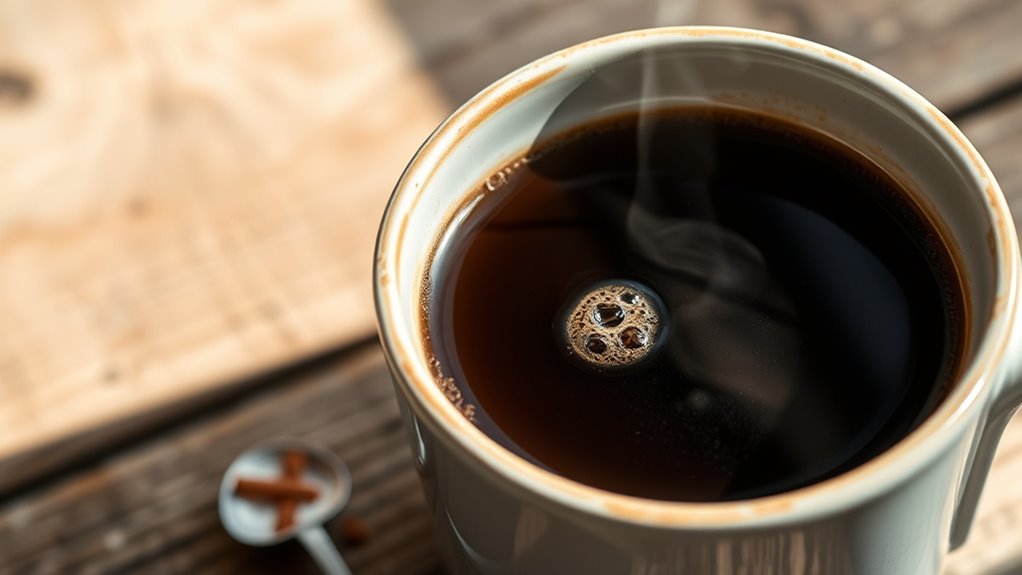
While selecting high-quality beans and proper roasts sets the foundation for smooth coffee, you can further enhance flavor and reduce bitterness by incorporating strategic additives. These simple tricks can make a noticeable difference.
Consider these options:
- Add a pinch of salt to your grounds before brewing—it neutralizes bitterness more effectively than sugar.
- Sprinkle cinnamon into your grounds, which leverages natural sweetness to mask bitter notes.
- Include citrus zest like lemon or orange rind, introducing acidity that balances out bitterness and brightens flavors.
These additives are easy to use and can elevate your coffee, making it smoother and more enjoyable without overpowering the original flavor profile.
Use Proper Brewing Methods to Maximize Flavor and Avoid Over-Extraction
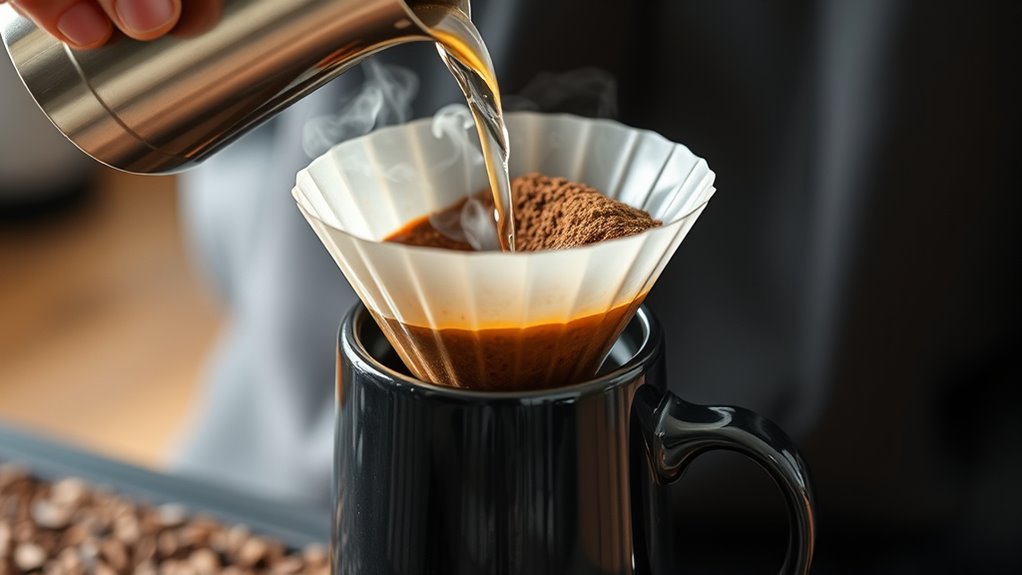
To get the best flavor, you need to control your brewing methods carefully. Using the right water temperature and brew time helps prevent over-extraction, which can make your coffee bitter or weak. Adjust these variables based on your equipment and preferred style to maximize flavor and smoothness. Additionally, experimenting with different grind sizes and essential oil infusions can enhance aroma and taste. Recognizing the importance of proper brewing methods and air quality can significantly improve your coffee experience and prevent bitterness. Being mindful of brewing environment conditions, such as humidity and airflow, can also contribute to a more consistent and enjoyable brew. Understanding French Press Operation can further support achieving a rich and smooth flavor profile.
Optimal Water Temperatures
Maintaining the right water temperature is essential for extracting the best flavors from your coffee without causing bitterness. If water is too hot, over-extraction occurs, resulting in a harsh, bitter taste. Too cool, and you risk under-extraction, leading to weak, flat flavors. The ideal temperature range is between 195°F and 205°F. To achieve this:
- Use a thermometer to monitor water temperature during brewing.
- Preheat your brewing device with hot water to stabilize temperature.
- For pour-over or French press, pour slowly to maintain consistent heat.
- Incorporating automation in brewing can help maintain precise temperatures throughout the process. Automatic machines benefit from running a water-only cycle first. Keeping water within this range ensures you extract rich, balanced flavors without bitterness. Additionally, understanding your brewing methods can optimize temperature control and improve overall flavor extraction.
Correct Brew Times
Choosing the correct brew time is essential for extracting the best flavors from your coffee without risking over-extraction. If you brew too quickly, your coffee may taste weak, sour, or underdeveloped. Conversely, brewing too long can lead to over-extraction, resulting in bitterness and harshness. For pour-over, aim for a total brew time of 2.5 to 3 minutes; for French press, about 4 minutes works best with a coarse grind. Adjust your timing based on taste—shorten if the coffee is too bitter, extend if it’s too weak. Using a timer helps maintain consistency and prevents over- or under-brewing. Monitoring your brew time ensures you extract the best balance of flavors, avoiding unnecessary bitterness while maximizing aroma and richness.
Frequently Asked Questions
Can Water Mineral Content Affect Coffee Bitterness?
Yes, water mineral content can affect coffee bitterness. When your water has high mineral levels, especially calcium and magnesium, it can enhance extraction, making your coffee taste more bitter and harsh. Using filtered or balanced mineral water helps control this, ensuring a smoother, more balanced flavor. You should experiment with different mineral levels or use bottled water designed for brewing to achieve a less bitter, more enjoyable cup.
How Does Altitude Impact Coffee Flavor and Bitterness?
Altitude impacts coffee flavor and bitterness because higher elevations slow bean maturation, leading to denser beans with complex, nuanced flavors. You might notice brighter, more vibrant tastes and less bitterness in high-altitude coffee. Conversely, lower altitudes produce beans that are often more uniform but can have flatter, sometimes more bitter profiles. To maximize flavor, choose beans grown at high elevations and store them properly to preserve their delicate, refined notes.
Does Brewing Temperature Influence Caffeine Extraction?
Yes, brewing temperature impacts caffeine extraction. When you brew with water between 195°F and 205°F, you maximize caffeine release without over-extraction that causes bitterness. If the water’s too hot, you risk extracting excessive bitter compounds, while cooler water extracts less caffeine, resulting in a weaker brew. Controlling your brewing temperature guarantees you get the right amount of caffeine while maintaining a smooth, balanced flavor.
Are There Specific Coffee Varietals Less Prone to Bitterness?
Certain coffee varietals, like Colombian or Ethiopian beans, tend to be less bitter because of their balanced acidity and flavor profile. You should look for beans labeled as medium or light roasts, which preserve the beans’ natural sweetness and reduce harsh bitterness. Using high-quality, freshly roasted beans and proper grind size also helps prevent bitterness, ensuring a smoother, more enjoyable cup with less undesirable aftertaste.
How Does Storage Time Affect Coffee’s Bitterness and Freshness?
Storing coffee for too long decreases its freshness and can increase bitterness. When you keep beans or grounds beyond their prime, they oxidize and lose flavor, making your brew taste flat or harsh. To avoid this, store coffee in an airtight container in a cool, dark place, and use it within a few weeks of roasting. Fresh coffee guarantees a vibrant flavor and reduces the chances of bitterness in your cup.
Conclusion
Think of brewing coffee like tending a garden—you need the right balance to help each flavor blossom. By perfecting your water temp, grind size, and brew time, you’re cultivating a smooth, rich cup free of bitterness. Choosing quality beans and strategic additives acts like nourishing your plants. With patience and attention, you’ll create a symphony of flavors that dance on your palate, turning every sip into a beautifully cultivated masterpiece.