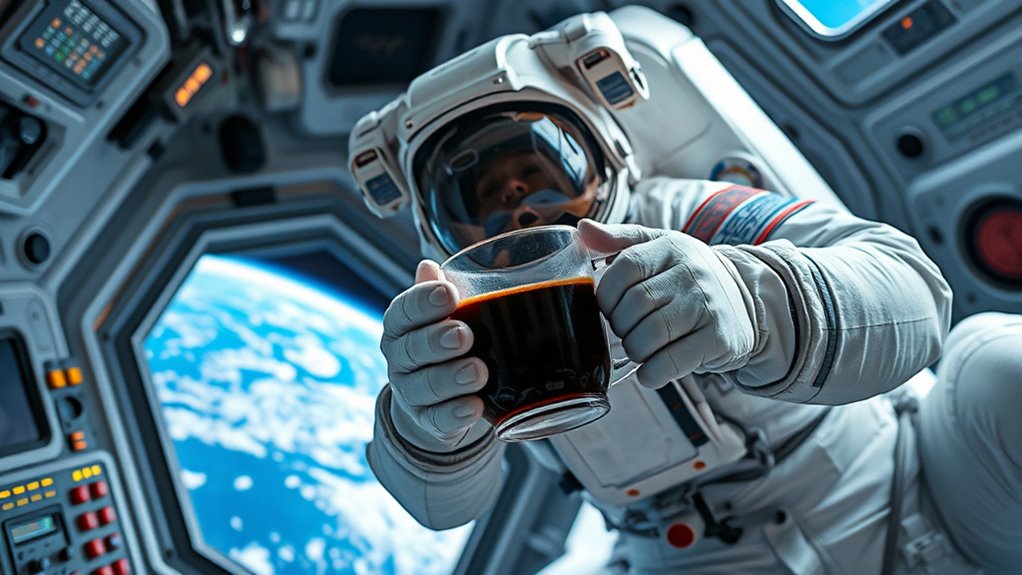

In space, astronauts brew coffee using specialized machines like the ISSpresso, which overcome microgravity challenges with pressurized hot water, sealed capsules, and vacuum pouches. These devices prevent floating liquids and spills, using surface tension and capillary action to guide the brew. Drinking vessels with textured surfaces mimic mugs, making it easier to enjoy hot drinks. If you want to learn how these innovations work and their impact on space life, there’s more to explore.
Key Takeaways
- Astronauts brew coffee in space using specially designed machines like ISSpresso, which can heat water and extract espresso in microgravity.
- Coffee is stored in vacuum-sealed capsules or pouches that prevent leaks and preserve freshness in the zero-G environment.
- Liquid handling relies on surface tension, capillary action, and textured containers to control flow and mimic Earth-like drinking experiences.
- Drinking vessels utilize surface tension and textured surfaces to prevent spills, providing a familiar mug-like experience.
- Coffee boosts crew morale, offering comfort and routines, while research advances space fluid management technologies.
The Evolution of Space Coffee Machines
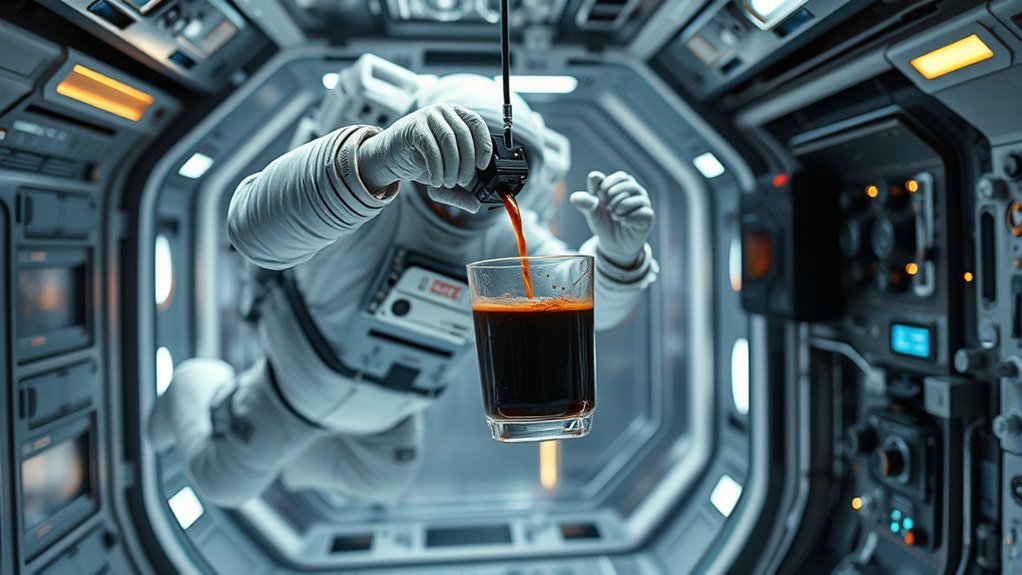
The evolution of space coffee machines reflects ongoing innovation to overcome microgravity challenges and improve quality of life for astronauts. It all began with the Lavazza espresso machine, launched to the ISS in 2001, designed specifically for capsule use to prevent floating grounds. Before that, astronauts relied on freeze-dried instant coffee in sealed pouches, which limited flavor and freshness. In 2015, the ISSpresso machine arrived, allowing astronauts to brew fresh espresso using pressurized hot water, elevating the drinking experience. Researchers also developed zero-gravity cups that use surface tension to enable sipping without liquid floating away. These advancements demonstrate how technological progress continually adapts to microgravity, making coffee brewing more efficient, safe, and enjoyable during long missions in space. Additionally, ongoing research into self-contained water management systems supports the development of more sophisticated brewing equipment suited for space environments. These innovations are complemented by automation and remote operation, enabling astronauts to prepare coffee with minimal effort. Furthermore, improvements in sensor technology contribute to better control of brewing conditions, ensuring consistent quality in space. This ongoing innovation ensures that astronauts can enjoy a more authentic coffee experience even far from Earth.
Overcoming Microgravity Challenges in Brewing
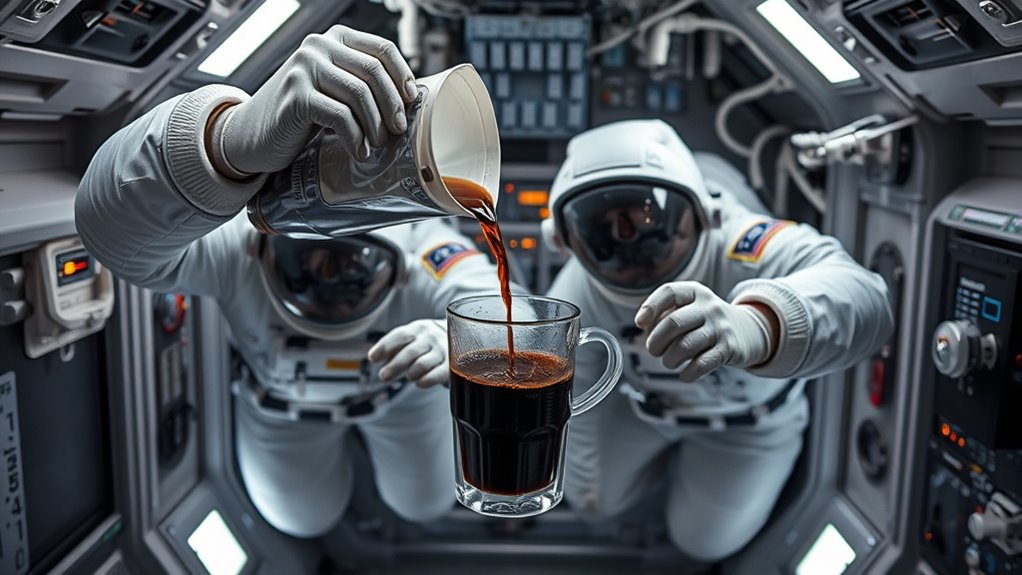
Microgravity presents unique obstacles to brewing coffee, forcing engineers and scientists to rethink traditional methods. Water and liquids don’t behave as they do on Earth, forming floating globules instead of flowing smoothly. To counter this, containment systems like sealed capsules and vacuum pouches prevent spills and keep the cabin safe. Surface tension and capillary action become essential for directing liquids through coffee grounds or capsules. Hot water must be pressurized carefully to avoid splashes and conserve resources, since water is limited. Waste management involves closed-loop systems that trap liquid residue, preventing contamination. These innovations ensure safe, efficient brewing and drinking in space, overcoming the unpredictable behavior of fluids in microgravity. Understanding fluid dynamics in microgravity is crucial for designing effective vessel systems that manage liquids safely, especially considering the fluid behavior differences in microgravity environments. Additionally, specialized materials and fluid control mechanisms are developed to adapt to the unique challenges posed by space conditions. Moreover, research into surface tension effects helps optimize liquid handling techniques for consistent coffee brewing results. For example, advancements in regulating pressure are vital to maintaining the proper flow and temperature of water during brewing processes.
The ISSpresso: A Milestone in Space Caffeine
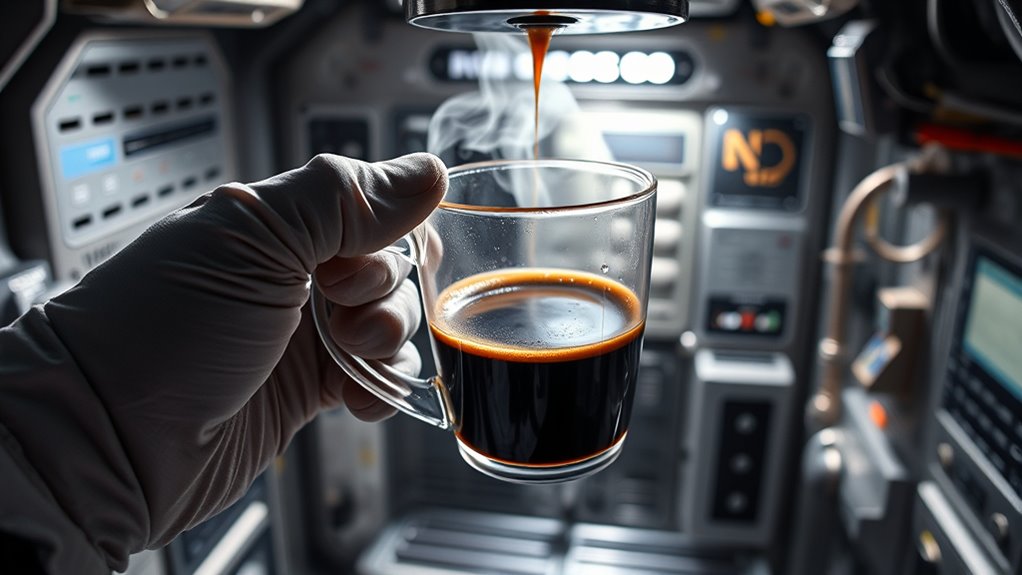
Since brewing coffee in space requires overcoming the unique challenges of microgravity, the ISSpresso machine represents a significant breakthrough. It was the first device capable of brewing fresh espresso aboard the ISS, elevating astronauts’ beverage quality and comfort. The machine heats water to around 167°F (75°C) and uses pressurized capsules to brew rich coffee, similar to Earth’s espresso, with minimal waste. Its design features a piston to eject used capsules safely into a disposal pouch, avoiding contamination. The ISSpresso’s successful operation proved that high-quality hot drinks are feasible in orbit, boosting crew morale. This milestone not only improved the daily routines of astronauts but also demonstrated the potential for advanced beverage technology in space, paving the way for future innovations. Effective consecration in space ensures that the coffee is brewed efficiently and safely in the microgravity environment, showcasing the importance of space technology in everyday life beyond Earth. Additionally, the development of specialized microgravity brewing techniques has been crucial in adapting traditional methods for space, enabling astronauts to enjoy familiar comforts during their missions. Moreover, this achievement highlights the significance of meditation and mental well-being in maintaining astronaut morale and focus during extended space missions.
Innovative Drinking Vessels for Zero-G Sipping
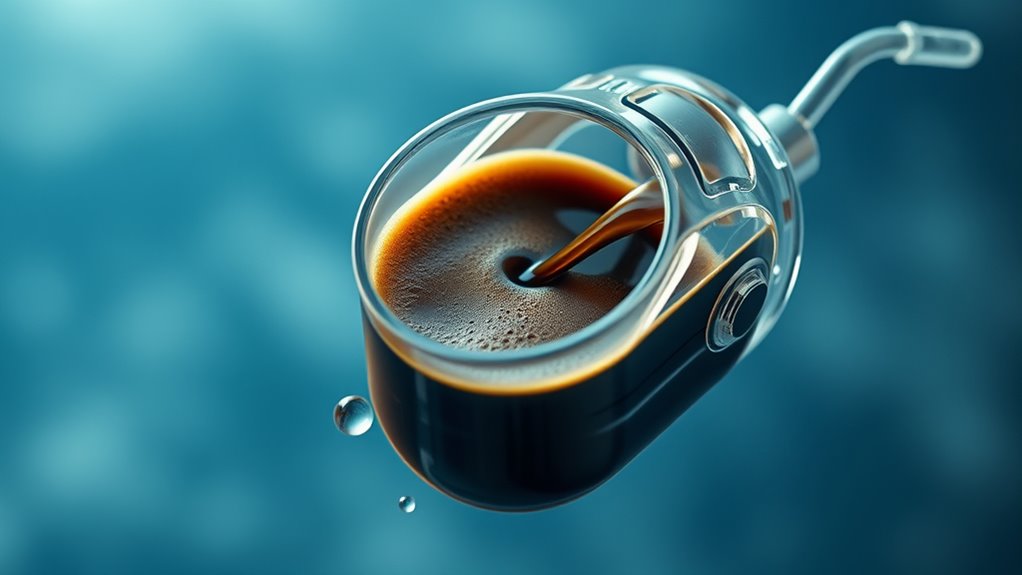
In microgravity, traditional mugs won’t work, so you need vessels that use capillary action to bring liquid to your mouth. These innovative designs mimic Earth mugs by controlling fluid flow with surface tension, making sipping more natural. Exploring these solutions helps improve how astronauts enjoy their coffee and other liquids in space. Additionally, beet juice could serve as a nutritious option to enhance blood flow and stamina during long missions. Incorporating liquid containment technology similar to these vessels can also help reduce spills and waste, further improving the space drinking experience. Implementing space-specific beverage containers that utilize advanced materials and design principles can further optimize fluid management and user comfort in microgravity conditions.
Capillary Action Design
Have you ever wondered how astronauts manage to sip coffee in the weightless environment of space? They rely on capillary action design to make drinking possible. These vessels use tiny channels and surfaces that draw liquid upward and toward their mouths, mimicking Earth’s gravity. The design takes advantage of surface tension and fluid dynamics, so liquids stay in the cup instead of floating away. The cups often feature textured or patterned surfaces that guide the flow. They’re lightweight, sealed, and easy to handle, reducing spills and waste. Researchers like Weislogel have developed specialized cups with narrow channels and hydrophilic materials to control liquid movement. capillary action is a fundamental principle that enables these innovative drinking vessels to function effectively in microgravity environments. Additionally, advancements in fluid dynamics have allowed engineers to optimize these designs for better performance and user comfort.
Mimicking Earth Mugs
To truly enjoy coffee in space, astronauts need more than just a functional cup—they want a drinking experience that feels familiar. Traditional mugs rely on gravity to direct liquid, which doesn’t work in microgravity. To solve this, engineers have developed innovative vessels that mimic Earth mugs using surface tension and capillary action. These cups use special materials and internal structures to keep the liquid at the rim, allowing astronauts to sip without spills. Some designs incorporate flexible walls or vacuum-sealed chambers that simulate the feel of a regular mug. These vessels enhance comfort, aroma detection, and the overall coffee experience. By combining fluid dynamics research with ergonomic design, these “mugs” help astronauts enjoy their coffee as naturally as possible, boosting morale during long missions. Surface tension plays a crucial role in maintaining liquid stability within these specialized drinking vessels.
How Coffee Capsules and Pouches Keep It Fresh

You rely on sealed packaging to keep your coffee fresh in space, preventing spoilage and contamination. Capsules and pouches are vacuum-sealed on Earth to lock in flavor and protect against microgravity effects. These methods guarantee your coffee stays flavorful and safe until you’re ready to brew.
Sealed Packaging Preservation
Sealed packaging plays an essential role in maintaining the freshness and safety of coffee in space by preventing exposure to oxygen, moisture, and contaminants. This guarantees the coffee stays flavorful and safe throughout long missions. The vacuum-sealed capsules and pouches lock in aroma and prevent spoilage, even in microgravity. These packages are designed to withstand the rigors of launch and space conditions, keeping the contents intact. They also minimize waste and resource use, indispensable in space environments. Proper sealing techniques help prevent leaks and contamination, preserving the quality of each brew. Recognizing these patterns can help astronauts or space agencies identify signs of packaging failure or compromised freshness. Understanding packaging integrity is crucial for ensuring optimal storage conditions and avoiding waste. Additionally, innovative materials used in space packaging can adapt to microgravity effects, ensuring the seals remain secure during various phases of the mission. Regular monitoring of seal strength can further ensure the continued effectiveness of these packaging solutions.
Microgravity Handling Techniques
In microgravity, maintaining coffee freshness requires specialized handling techniques that prevent contamination and spoilage. You’ll use vacuum-sealed capsules and pouches designed to keep air and moisture out, ensuring the coffee stays fresh during storage and transport. These containers are made from durable, space-compatible materials that resist punctures and leaks. When preparing coffee, you insert capsules into the ISSpresso machine, which pierces the seal and forces hot water through the grounds under pressure, preventing exposure to the environment. Pouches, often used for instant or rehydrated coffee, are sealed tightly and equipped with one-way valves that allow hot water to enter without letting the liquid escape or contaminants in. These methods keep the coffee safe, flavorful, and contamination-free throughout the mission.
Preparing and Packaging Coffee for Space Missions
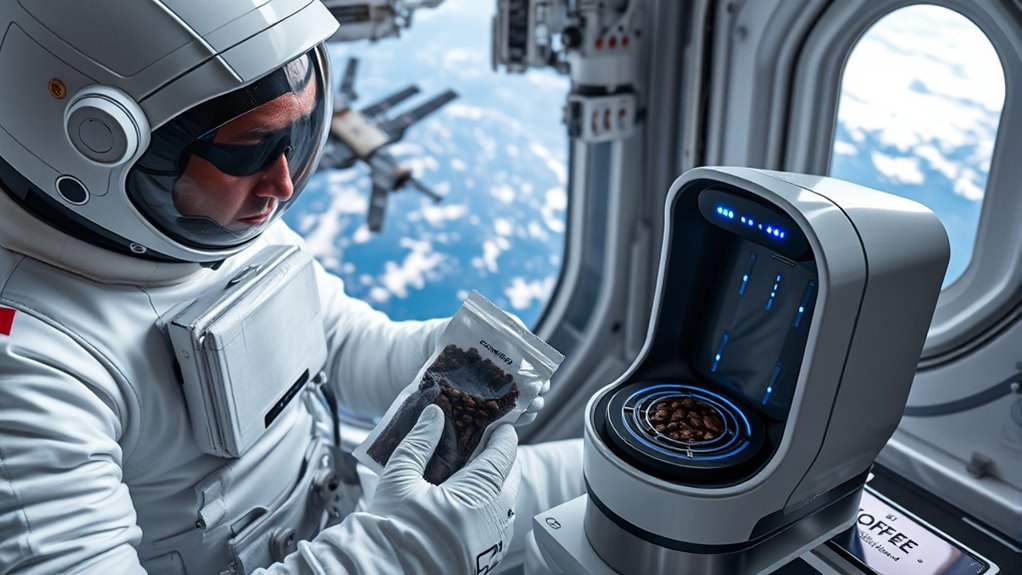
Preparing and packaging coffee for space missions involves carefully processing and preserving the beverage to guarantee safety, quality, and resource efficiency. You start by creating a steam-brewed concentrate, removing moisture under vacuum to extend shelf life. Sugar and creamer are pre-mixed and sealed in stable ratios, ensuring taste consistency. Freeze-dried coffee remains an option but offers less aroma and flavor than freshly brewed espresso. Capsules or pouches are vacuum-sealed on Earth, preventing contamination and maintaining freshness during transport and storage. Packaging emphasizes conserving water and minimizing waste by using compact, sealed containers. This approach ensures astronauts can enjoy safe, high-quality coffee while optimizing limited resources in the microgravity environment.
Space coffee packaging uses vacuum sealing, moisture removal, and pre-mixed stabilizers for freshness and resource efficiency.
- Vacuum-sealed capsules and pouches
- Moisture removal via vacuum processing
- Pre-mixed stabilizers for taste
- Resource-efficient packaging design
- Safety measures for contamination prevention
The Role of Coffee in Astronaut Morale and Routine
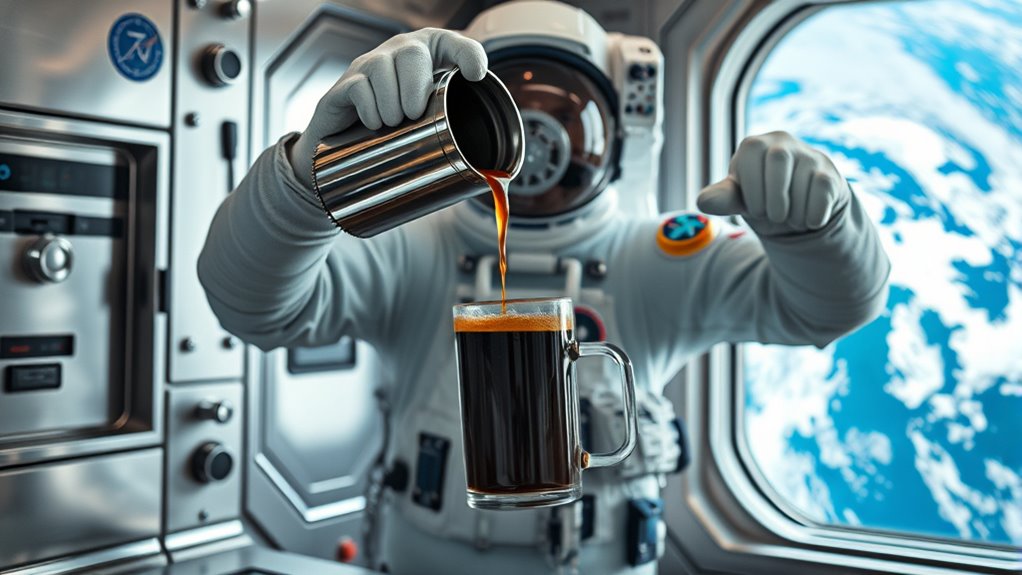
Coffee plays a significant role in shaping daily routines and boosting morale for astronauts aboard the International Space Station. It offers a familiar comfort, helping you feel connected to Earth even when you’re thousands of miles away. The ritual of brewing and enjoying coffee provides structure in an environment where routines are essential for mental well-being. Sipping a warm cup helps alleviate stress, fosters camaraderie, and creates moments of normalcy amid the demanding tasks of space life. Coffee also signals breaks during busy schedules, giving you time to relax and recharge. As a symbol of home, it reinforces your sense of normality, making space missions more manageable and improving overall morale. In microgravity, that simple act of drinking coffee becomes a critical part of your psychological comfort.
From Earth to Orbit: The Journey of Space Coffee
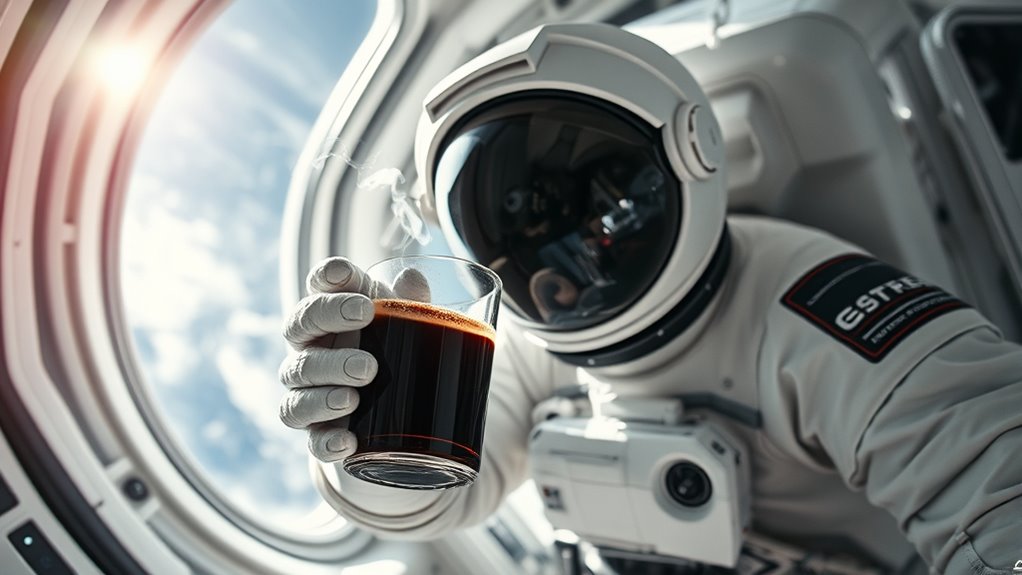
As space coffee makes its way from Earth, you’ll see how transfer methods and packaging safeguard freshness and prevent contamination during transport. These processes ensure the coffee remains safe and flavorful once it reaches the spacecraft. Understanding these milestones highlights how technology adapts to bring a familiar comfort to astronauts beyond our planet.
Coffee Transfer Methods
Transporting coffee from Earth to orbit involves a carefully managed process that guarantees freshness, safety, and efficiency. You’ll find that specialized packaging protects the coffee from contamination and preserves flavor. The coffee is vacuum-sealed in capsules or pouches, preventing spoilage and making handling easier in microgravity. Precise quantities are pre-measured to avoid waste and ensure consistent brewing. Once in space, the transfer process involves connecting these sealed containers to brewing systems like the ISSpresso machine. This minimizes leakage and contamination risks. The entire transfer is monitored closely to maintain hygiene standards and optimize resource use.
- Vacuum-sealed capsules and pouches
- Pre-measured coffee portions
- Controlled transfer to brewing systems
- Sealed connections to prevent leaks
- Continuous quality monitoring
Packaging and Preservation
Before reaching orbit, coffee is carefully vacuum-sealed in capsules or pouches to maintain freshness and prevent contamination. This packaging shields the coffee from oxygen, light, and microbes during transit, ensuring quality upon arrival. The design prioritizes space efficiency and ease of use in microgravity environments. To streamline the process, here’s a breakdown:
| Packaging Type | Purpose |
|---|---|
| Capsules | Single servings, sealed for freshness |
| Pouches | Flexible, resealable, minimizes waste |
| Vacuum-sealing | Preserves aroma, prevents spoilage |
| Material | Lightweight, durable, space-compatible |
| Storage | Compact and stacked for minimal space |
These methods serve to keep coffee safe, flavorful, and ready for brewing, despite the challenges of spaceflight.
Spacecraft Coffee Milestones
Have you ever wondered how coffee makes its journey from the Earth’s surface all the way into space? It’s a fascinating process that involves innovative technology and careful planning. The first milestone was in 2001, when Lavazza’s espresso machine was taken aboard the ISS, specially designed for microgravity. Later, in 2015, the ISSpresso machine allowed astronauts to brew fresh espresso, considerably improving quality. To prevent floating liquids, engineers developed specialized cups relying on surface tension. Packaging also evolved, with vacuum-sealed capsules and pouches ensuring freshness and safety. These milestones transformed space coffee from instant powders to a more authentic experience, boosting morale and comfort on long missions.
- First Lavazza espresso machine on ISS (2001)
- Introduction of freeze-dried instant coffee
- Launch of ISSpresso for fresh brewing (2015)
- Development of zero-G coffee cups
- Testing of 3D-printed brewing devices
Future Trends in Space Beverage Technology
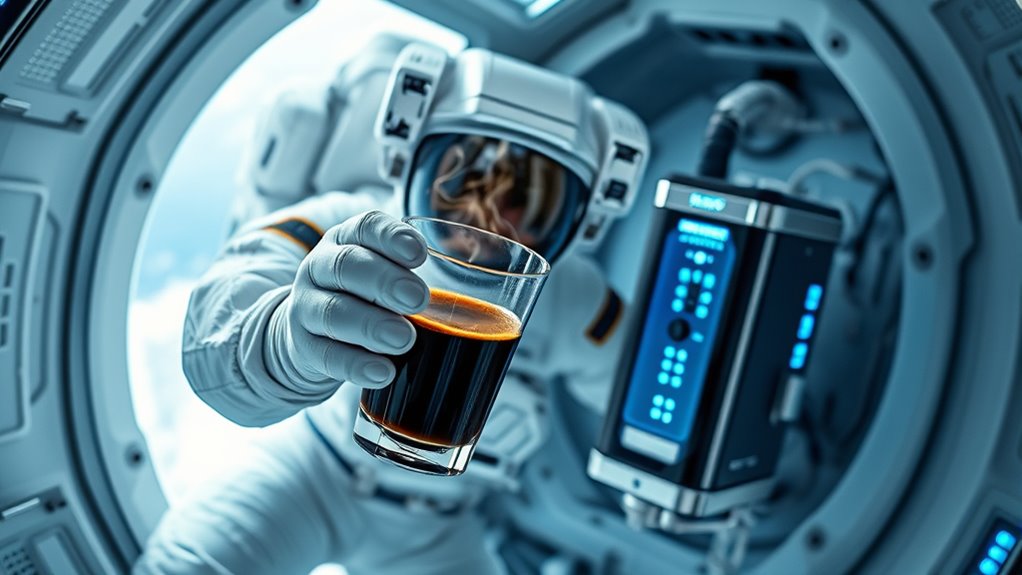
Advancements in space beverage technology are poised to revolutionize how you access and enjoy drinks during long-duration missions. Future innovations will focus on compact, efficient systems that require minimal resources while providing a broader variety of beverages, including specialty coffees and nutrient-enriched drinks. Smart brewing devices with AI integration could customize drink preferences and optimize brewing parameters on demand. Developments in capsule and pouch materials will enhance freshness, reduce waste, and simplify handling. Additionally, advanced fluid control systems will better manage liquids in microgravity, improving safety and usability. Researchers are also exploring biodegradable packaging and closed-loop water recycling to minimize environmental impact. These innovations aim to boost morale, health, and comfort, ensuring that space travelers stay energized and connected through a rich variety of beverages.
The Impact of Space Coffee on Fluid Dynamics Research
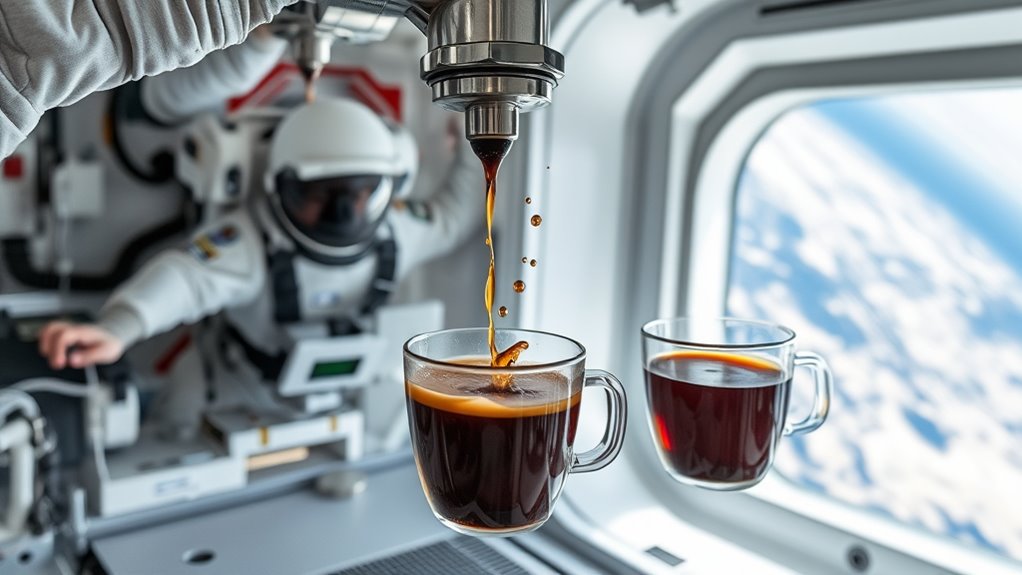
Space coffee has markedly advanced fluid dynamics research by challenging scientists to understand how liquids behave in microgravity. This environment forces researchers to explore surface tension, capillary action, and fluid containment without gravity’s influence. Studying these behaviors improves our knowledge of liquid management in space and informs Earth-based applications. Your engagement with space coffee research helps unveil new insights into complex fluid interactions.
- How liquids form floating globules and their stability
- Capillary flow mechanisms in confined spaces
- Designing containers that control liquid movement
- Behavior of coffee grounds and particulates in microgravity
- Developing efficient waste and water management systems
Frequently Asked Questions
How Is Water Recycled for Coffee Brewing in Space?
You can’t just pour water from a tap in space, so it’s recycled through a closed-loop system. Wastewater from sinks and showers gets processed, purified, and filtered to remove contaminants, transforming it back into clean, drinkable water. This recycled water supplies the ISS’s potable water system, which then feeds into the coffee machine. This efficient process ensures astronauts always have enough water for brewing coffee and other needs.
Can Astronauts Customize Their Coffee Flavor in Microgravity?
Yes, astronauts can customize their coffee flavor in microgravity. They use pre-mixed additives like sugar and creamer, which are stored in sealed containers to prevent contamination. Some missions experiment with flavor enhancements, such as spices or flavor concentrates, added to the coffee capsules or pouches. While options are limited compared to Earth, these methods allow astronauts to adjust taste and enjoy a more personalized coffee experience in space.
What Safety Measures Prevent Hot Water Burns in Space Coffee Machines?
Safety safeguards safeguard astronauts from scorching splashes in space coffee machines. You’ll find sealed capsules prevent hot water from escaping unexpectedly, while precise pressure controls keep brewing safe and steady. The ISSpresso’s secure sealing system and controlled heating eliminate scalding risks, while the ejector mechanism safely disposes of used capsules. These measures make sure your space sip stays safe, soothing, and satisfying, even amid microgravity’s mysterious, mesmerizing environment.
Are There Plans to Develop Espresso Machines for Future Mars Missions?
Yes, plans are underway to develop advanced espresso machines for future Mars missions. These machines will focus on reliability, resource efficiency, and safety in a Mars environment. You’ll see innovations like improved capsule systems, better heat management, and more autonomous operation. Engineers aim to create devices that can operate with minimal maintenance and adapt to Mars’s conditions, ensuring astronauts can enjoy fresh espresso and boost morale during long explorations.
How Does Microgravity Affect the Aroma and Taste of Space Coffee?
Microgravity alters how aroma and taste travel in space, making space coffee different from Earth. You might visualize aroma molecules floating freely instead of wafting directly to your nose, reducing the intensity of flavor perception. This floating behavior can dull your sense of taste and smell because the usual airflow and gravity-driven convection don’t occur. As a result, astronauts often find space coffee less aromatic and less flavorful, impacting their overall drinking experience.
Conclusion
As you imagine sipping coffee in orbit, it’s clear that space brewing isn’t just about caffeine—it’s about maintaining comfort and routine amid the stars. With innovations constantly evolving, can future technology make space coffee as effortless as on Earth? As you ponder this, one thing’s certain: your favorite brew will continue to adapt, helping astronauts stay grounded—literally—even in the weightless expanse of space.