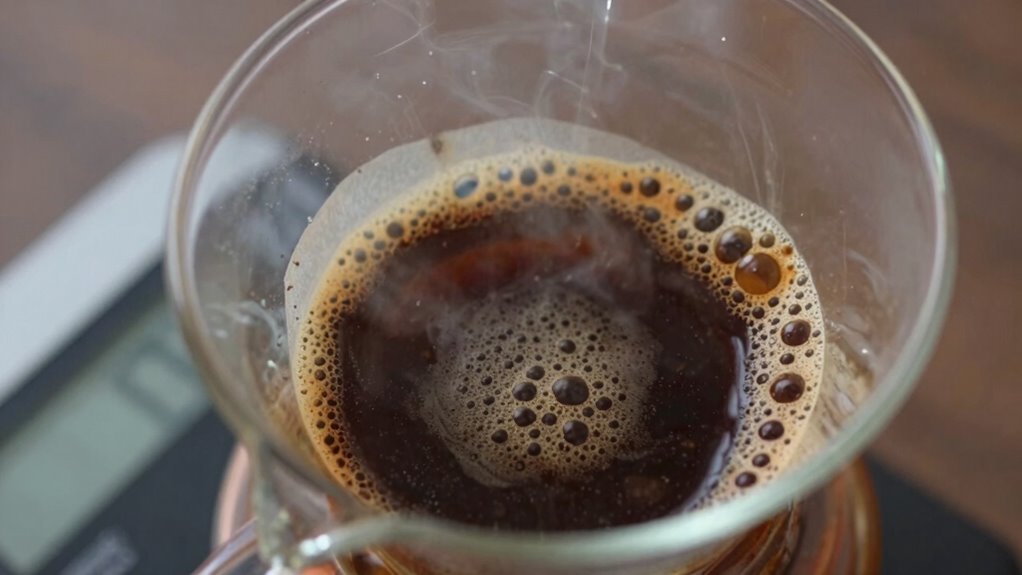

The biggest brew ratio mistake that ruins more cups than you’d think is misjudging the right amount of coffee to water. Using too much coffee can cause overly bitter, harsh flavors, while too little results in weak, bland brews. Even small errors in measurement or skipping proper calibration can throw off your entire cup. If you want consistently great coffee, understanding and controlling your brew ratio is key—keep going to uncover how to get it just right.

Get coffee and tea gear delivered free with Prime
- Fast, free delivery on millions of items
- Prime Video, Amazon Music and more included
- Member-only deals all year
Key Takeaways
- Using an inaccurate brew ratio can lead to under- or over-extraction, ruining the coffee’s flavor and consistency.
- Relying solely on guesswork rather than precise measurements causes inconsistent results across cups.
- Incorrect ratios combined with improper grind size and brew time amplify flavor imbalances.
- Small deviations in ratio, especially with uncalibrated equipment, significantly impact taste and overall quality.
- Consistent, accurate measurement of coffee and water is essential to prevent the common ratio mistake from ruining multiple cups.
As an affiliate, we earn on qualifying purchases.
What Is the Right Brew Ratio for Coffee?

What is the right brew ratio for coffee? The ideal ratio balances water and coffee to enhance coffee flavor and guarantee brewing consistency. Generally, a common starting point is 1 to 2 tablespoons of coffee per 6 ounces of water. However, the perfect ratio varies depending on your taste preferences and brewing method. Too much coffee can make your brew overly strong and bitter, while too little can result in a weak, bland cup. Achieving the right brew ratio helps you consistently produce flavorful coffee. It’s essential to measure your coffee and water precisely, especially when experimenting with different beans or brewing techniques. This consistency ensures each cup tastes great and helps you understand how adjustments impact flavor. Additionally, paying attention to brewing ratios can prevent common mistakes that ruin your coffee experience.
Why Does the Brew Ratio Matter for Flavor?
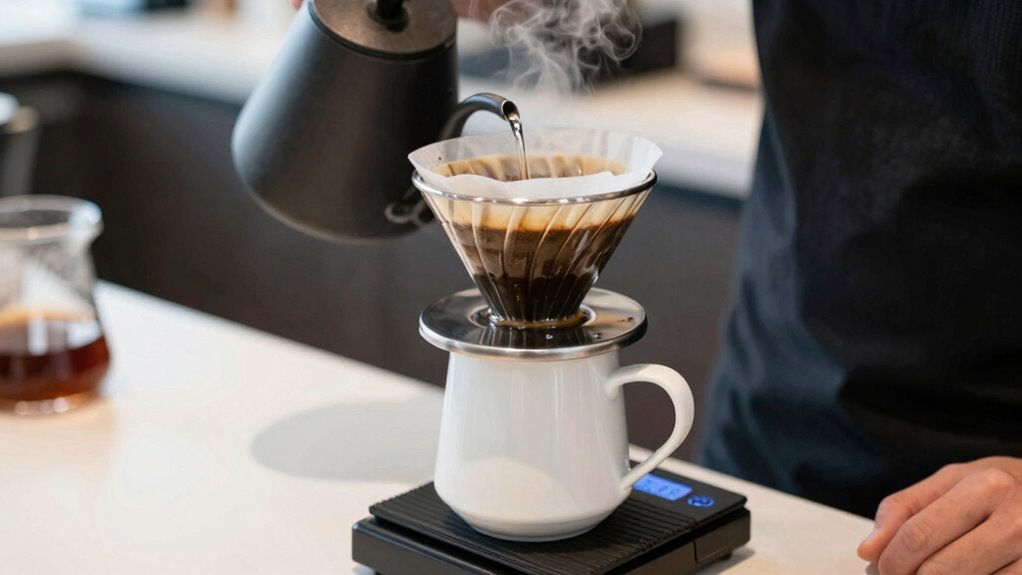
The brew ratio directly influences the flavor of your coffee because it determines how much extractable solubles are dissolved into the water. A proper ratio ensures a well-balanced flavor profile, avoiding sourness or bitterness caused by under- or over-extraction. When your brew ratio is consistent, it promotes extraction consistency, meaning each cup tastes reliably good. If you use too much coffee, your brew may taste overly strong or bitter; too little, and it may be weak or sour. Achieving the right brew ratio helps you hit that perfect flavor balance every time. Using a long-term structure for your brewing process encourages consistency and helps you refine your technique over time. Additionally, understanding and controlling the brew ratio is essential for developing a repeatable and high-quality coffee-making routine.
Common Mistakes With Brew Ratios and How to Avoid Them

Many people make the mistake of over- or under-extracting their coffee, which can ruin the flavor, but you can avoid this by adjusting your brew ratio. Ignoring differences in roast levels or grind size can also lead to inconsistent results, so always consider the coffee’s characteristics. Additionally, regular calibration of your equipment ensures accurate measurements, preventing errors caused by measurement inaccuracies and maintaining consistent brew quality. Incorporating connected equipment into your brewing process can help monitor and maintain optimal measurements. Being aware of outdoor environmental factors can also influence your brew and help you make necessary adjustments for the best results.
Over- or Under-Extracting Coffee
Misjudging the brew ratio can easily lead to over- or under-extracting your coffee, which considerably impacts flavor. Over-extraction results in a bitter, harsh taste, while under-extraction leaves your coffee dull and weak. To achieve proper flavor balance, you need consistent extraction. If your grind is too fine or brew time too long, you risk over-extraction; too coarse or quick brewing causes under-extraction. Use the right brew ratio as a guide, but also pay attention to your grind size and brew time to maintain extraction consistency. Adjusting these variables guarantees your coffee is neither too bitter nor too bland. Staying mindful of extraction helps you craft a balanced, flavorful cup every time.
Ignoring Coffee Roast Variations
Ignoring how different coffee roasts respond to brewing can lead to significant mistakes in your brew ratio, resulting in uneven extraction and compromised flavor. Coffee bean genetics influence how beans develop during roasting, affecting their density and solubility. A light roast, with a milder roasting profile, retains more of the bean’s original characteristics, often requiring a different ratio than a dark roast, which has a stronger roasting profile and more solubility. Failing to adjust your brew ratio based on these roast variations can result in under-extraction or over-extraction, muddying the flavor and reducing clarity. Recognizing that each roast profile demands a tailored approach helps you optimize extraction, highlight the beans’ unique qualities, and improve every cup. Understanding how microplastics in dust can impact coffee environments also emphasizes the importance of proper brewing techniques to ensure a clean, safe cup. Additionally, paying attention to roast-specific characteristics can guide you in fine-tuning your brew ratios for consistent and flavorful results. Incorporating knowledge about different brewing methods can further enhance your ability to adapt ratios effectively to various roast profiles, especially when considering how brew ratios influence extraction and flavor development.
Neglecting Scale Calibration
Even if you adjust your brew ratio for different roast levels, an inaccurate scale can undermine your efforts. Neglecting scale calibration affects your ability to measure coffee and water precisely, leading to inconsistent brew ratios. Over time, equipment can drift out of calibration, causing variations in weight readings. Regularly calibrate your scale to maintain equipment consistency and reliability. Use calibration weights or comparison methods to verify accuracy. When your scale isn’t properly calibrated, even small measurement errors can considerably impact your coffee’s flavor and strength. Consistent measurements are essential for replicating your ideal brew ratio every time. Taking a few moments to check and calibrate your scale ensures that your measurements remain precise, helping you brew better cups and avoid the common mistake of relying on an uncalibrated, inaccurate scale. Brewing science emphasizes the importance of precise measurements in achieving optimal extraction and flavor balance.
How to Measure and Maintain Your Brew Ratio Accurately

To measure and maintain your brew ratio accurately, you need to understand the basic components involved. First, use a reliable scale to weigh your coffee and water precisely. Consistent coffee storage ensures freshness, which affects extraction and flavor. Proper storage helps you maintain uniform grind size and weight, making measurements more predictable. Barista training is essential, teaching you how to measure coffee and water correctly and how to adjust ratios as needed. Keep your tools clean and calibrated regularly to avoid discrepancies. Recording your measurements for each brew helps identify patterns and improve consistency. Additionally, understanding the importance of a consistent brewing process can significantly impact your final cup. By paying attention to these details, you’ll ensure your brew ratio stays accurate, resulting in better-tasting coffee every time.
Adjusting Your Brew Ratio for Different Coffee Styles
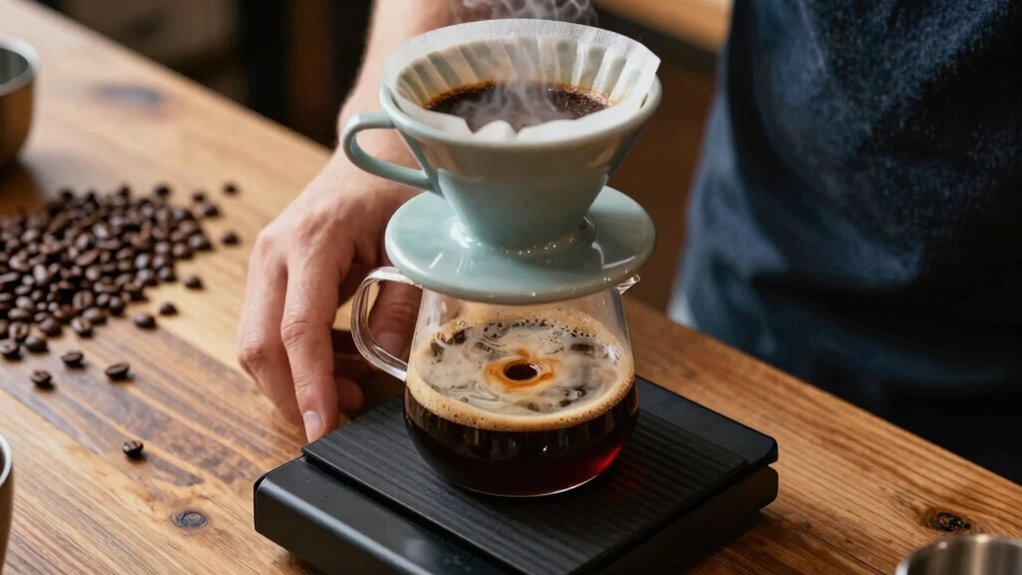
Adjusting your brew ratio allows you to tailor your coffee’s flavor profile to match different styles and preferences. For lighter, fruitier coffees from regions like Ethiopia, using a slightly higher brew ratio can highlight their bright acidity and complex notes. Conversely, for richer, full-bodied coffees from Colombia or Sumatra, a lower ratio emphasizes depth and body. Coffee bean origins influence these adjustments, as different regions develop distinct flavor profiles. Additionally, brewing temperature adjustments complement ratio changes; increasing temperature can extract more brightness, while lowering it can enhance smoothness. Experimenting with both ratios and temperatures lets you fine-tune each coffee style, ensuring you bring out the best qualities from your beans and craft a cup tailored to your taste. Proper brew ratio understanding is crucial for achieving this balance. Portable oil radiators are also useful for maintaining optimal brewing conditions in colder environments, helping you consistently achieve the desired extraction. Being mindful of extraction techniques can further improve your coffee’s flavor and consistency. Incorporating knowledge about coffee roasting levels can also guide how you adjust your brew ratio for different beans and roasts. Recognizing how insulated jackets can help maintain consistent brewing temperatures in cold environments is another valuable consideration for serious coffee enthusiasts.
Troubleshooting Your Brew Ratio When Coffee Tastes Off
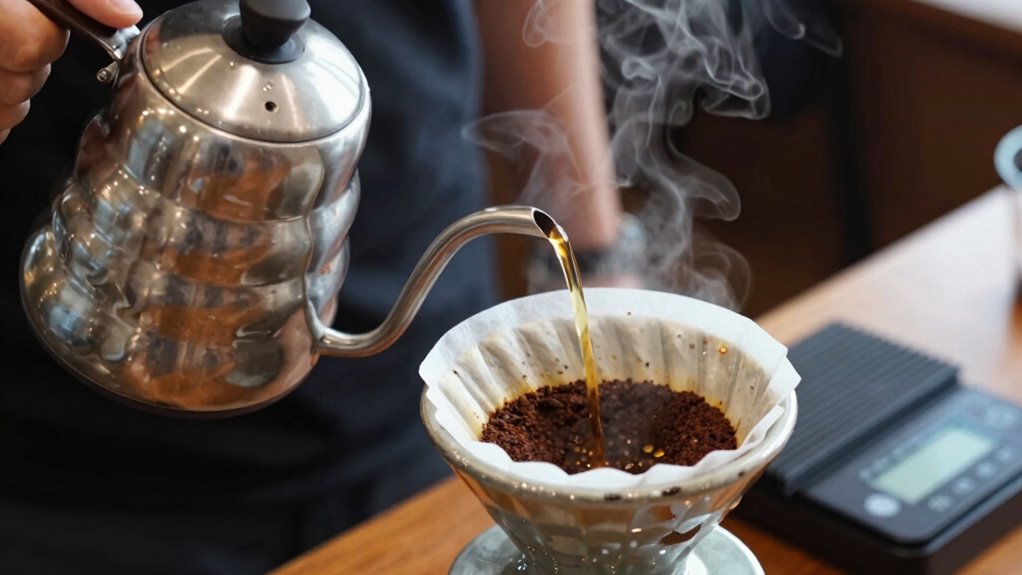
If your coffee tastes off, start by checking if you’re using the right amount of coffee and water. Next, make sure your grind size is appropriate for your brewing method, and keep an eye on your brew time to prevent over- or under-extraction. Fine-tuning these factors can help you achieve a better balance and improve your overall flavor. Additionally, understanding your brewing process can help you identify common pitfalls and optimize your technique for consistently better results.
Correct Coffee-to-Water Ratio
When your coffee tastes off, the first thing to check is your brew ratio. Using the right coffee-to-water ratio ensures your brew isn’t too weak or too strong. Start with a standard ratio, like 1:16, and adjust if needed. Fresh coffee beans are essential—stale beans can throw off flavor even with the perfect ratio. Also, consider your water mineral content; hard water can affect extraction and taste. Use filtered water if you notice off-flavors or inconsistent results. Measuring your coffee and water accurately with a scale helps maintain consistency. Remember, even a slight miscalculation in ratio can ruin the cup, so precision is vital. Keep these factors in check, and you’ll get a balanced, flavorful brew every time.
Adjust Grind Size Properly
Since grind size directly influences how water extracts flavors from your coffee, getting it right is essential when your brew tastes off, even if your ratio is correct. If your coffee is too bitter or weak, check your grind consistency—uneven grinds can lead to uneven extraction. Finer grounds increase extraction, while coarser ones reduce it, so adjust accordingly. Keep in mind, bean freshness also matters; stale beans may require a slightly different grind size to compensate for lost oils and flavors. Verify a quality grinder ensures uniform particle size, leading to more predictable results. Additionally, grind uniformity plays a crucial role in achieving a balanced brew, as inconsistent grounds can cause unpredictable extraction. Proper grind size helps optimize extraction, ensuring your brew tastes balanced and true to the beans’ potential. To improve your results, pay attention to grind consistency, which is essential for a reliable and flavorful cup. Properly calibrating your grinder and understanding extraction process can further help you troubleshoot brewing issues effectively. Regularly inspecting your grind setting can prevent inconsistent results and improve your overall coffee quality.
Monitor Brew Time Consistently
Monitoring your brew time consistently is key to maintaining the right balance in your coffee. If your brew is too short or too long, it can throw off the flavor, making your coffee taste off. Track your brewing time to verify it aligns with your method and equipment. Proper coffee storage helps preserve freshness, preventing stale flavors that can affect extraction. Also, keep your brewing temperature stable, as fluctuations can alter extraction rates. Use this table to understand how brew time impacts your coffee:
| Brew Time (seconds) | Flavor Profile |
|---|---|
| Short (< 2 min) | Under-extracted, sour |
| Ideal (2-3 min) | Balanced, smooth |
| Long (> 3 min) | Over-extracted, bitter |
Consistent timing ensures you dial in the perfect brew every time.
Tools and Techniques to Perfect Your Coffee Brew Ratio

Achieving the perfect coffee brew ratio starts with the right tools and techniques that make measuring precise and consistent. To do this, invest in a good digital scale for accurate coffee-to-water ratios, and use a timer to monitor brew time. Keep your coffee bean freshness in mind—fresh beans yield better control over extraction. Maintain consistent brewing temperature, ideally around 195–205°F, for ideal extraction. Techniques like using a calibrated grinder ensure uniform particle size. Regularly calibrate your tools to prevent measurement errors. Also, measure your water volume carefully and record your ratios to fine-tune your process over time. Understanding sound wave influence can further optimize extraction by promoting consistent brew qualities. Additionally, selecting quality brewing gear designed for precision can significantly reduce errors and improve your coffee consistency.
Frequently Asked Questions
Can Brew Ratio Changes Improve Overall Coffee Consistency?
Yes, adjusting your brew ratio can enhance overall coffee consistency. By fine-tuning the ratio, you improve flavor consistency and achieve more precise extraction. When you use the right balance, your coffee’s taste remains steady, and extraction becomes more controlled. This means fewer over- or under-extracted cups. Consistently applying ideal brew ratios helps you master flavor and extraction precision, ensuring each cup meets your desired quality standards.
What Impact Does Grind Size Have on Brew Ratio Accuracy?
Did you know that uneven grind size can reduce brew ratio accuracy by up to 30%? Grind size directly impacts grind consistency, which influences extraction timing. If your grind is too coarse or fine, it messes with the water flow, leading to inconsistent extraction. This makes it harder to hit your ideal brew ratio, ultimately affecting flavor and strength. So, maintaining a consistent grind size is key to perfecting your coffee.
How Often Should I Recalibrate My Brewing Measurements?
You should recalibrate your brewing measurements regularly to maintain measurement precision. Aim for every few weeks or whenever you notice inconsistencies in your coffee’s taste or strength. Use reliable calibration tools to verify your scale’s accuracy, especially if you switch equipment or change beans. Regular recalibration helps make certain your brew ratio remains precise, giving you consistently great coffee and avoiding the common mistake that ruins more cups than you’d think.
Are There Specific Brew Ratios for Different Coffee Bean Origins?
Did you know that adjusting brew ratios can highlight unique flavors? For single origin beans, you should tweak ratios to accentuate their distinct flavor profiles. For example, a lighter ratio enhances bright, fruity notes, while a fuller ratio emphasizes body and richness. Experimentation is key, but start with common ratios like 1:15 for delicate beans and 1:16 for bolder ones, tailoring each to bring out the best from each origin.
How Do I Adjust Brew Ratio for Iced or Specialty Coffee Drinks?
For iced or specialty coffee drinks, you should adjust your brew ratio to maintain flavor balance, especially in cold brew. Use a slightly higher coffee-to-water ratio for cold brew to prevent it from tasting weak when iced. For specialty drinks, tailor the ratio based on the desired strength and flavor; adding more coffee enhances richness. Experiment with small adjustments until you find the perfect balance for your preferred cold brew or iced beverage.
Conclusion
Getting your brew ratio right is like tuning a musical instrument—you might not notice the small misstep at first, but it can throw off the entire harmony of your coffee. I once thought I had it perfect, only to realize I was making my favorite brew too weak, missing the rich depth I craved. When you nail the right ratio, every cup sings, transforming your morning routine into a symphony of flavor.
Halloween Picks
halloween
As an affiliate, we earn on qualifying purchases.