

Resting coffee after roasting allows chemical reactions and volatile compounds to stabilize, making the brew taste smoother, more balanced, and rich in aroma. Proper rest times—usually a few days—help reduce harshness and enhance flavor clarity by allowing gases like CO₂ to escape and acids to mellow. This process improves overall quality and taste. If you want to discover how specific resting periods and storage methods influence your coffee’s flavor, keep exploring the details behind these transformations.

Get coffee and tea gear delivered free with Prime
- Fast, free delivery on millions of items
- Prime Video, Amazon Music and more included
- Member-only deals all year
Key Takeaways
- Resting allows chemical changes that develop more refined flavors and reduce acidity, enhancing overall taste.
- Optimal resting periods vary by roast level and desired flavor profile, typically ranging from 2 to 14 days.
- Resting stabilizes aromatic compounds and diminishes harshness, resulting in clearer, more balanced coffee.
- Chemical transformations during resting, like CGA degradation, influence brightness, bitterness, and smoothness.
- Proper storage during resting preserves aroma and flavor development, leading to a more enjoyable coffee experience.
coffee bean storage airtight container
As an affiliate, we earn on qualifying purchases.
As an affiliate, we earn on qualifying purchases.
The Science Behind Resting Coffee After Roasting

Have you ever wondered why coffee needs a resting period after roasting? When coffee is roasted, it traps carbon dioxide (CO₂) inside the beans. Resting allows this CO₂ to escape gradually, preventing it from interfering with brewing. If you brew immediately, excess CO₂ causes rapid bubbling and uneven extraction, leading to less balanced flavors. By resting the beans for 48 to 72 hours, most of the CO₂ dissipates, resulting in smoother brewing and more consistent flavor extraction. This process stabilizes volatile aromatic compounds, enabling the beans to develop a more refined and cohesive flavor profile. Resting helps optimize the delicate balance of aroma, taste, and overall quality, making your coffee more enjoyable. Additionally, research supports the idea that resting enhances aroma development, leading to a richer sensory experience. Proper resting also allows the beans to undergo flavor maturation, which can further improve taste complexity.
How Resting Affects Coffee’s Aromatic Compounds

Resting coffee after roasting plays a crucial role in stabilizing its aromatic compounds. During this period, volatile aromas begin to settle, resulting in a more refined scent profile. Resting allows delicate aromatic molecules to develop fully, enhancing your sensory experience. It also prevents rapid evaporation of these compounds during brewing, preserving their intensity. Additionally, the process of resting helps mitigate potential vulnerabilities to jailbreaking techniques that could compromise the integrity of the coffee’s aromatic profile. Recognizing the importance of personality traits such as patience and attentiveness can further optimize the resting process, ensuring a richer and more balanced flavor. Furthermore, understanding coffee storage best practices can help maintain the quality achieved through proper resting times. Proper storage conditions, such as airtight containers, are essential to prevent the loss of volatile compounds and preserve freshness over time. Maintaining consistent resting durations based on roast level can also significantly influence the final aroma and taste.
Chemical Changes During Resting and Their Impact on Flavor

As your coffee rests, chemical changes like pH and acidity levels shift, directly influencing flavor balance. Chlorogenic acids initially increase but then degrade over time, affecting both taste and health properties. Meanwhile, phenolic compounds and caffeine levels fluctuate, shaping the coffee’s overall aroma and bitterness. Incorporating natural materials such as wood or linen in the brewing environment can subtly influence extraction and flavor development during resting. Additionally, understanding angel number soulmate patterns can provide insight into personal growth and patience during the resting process.
Ph and Acidity Changes
During the resting period after roasting, the pH and acidity levels of coffee undergo significant chemical changes that directly influence flavor. As CO₂ escapes, the pH tends to rise slightly, making the coffee less acidic. This shift affects how bright and sharp flavors are perceived. Resting also stabilizes acidity, reducing harshness and enhancing balance. Key effects include:
- Gradual increase in pH, mellowing sharp notes
- Decrease in titratable acidity, smoothing brightness
- Stabilization of volatile acids, improving consistency
- Enhanced extraction of delicate flavors as acidity levels stabilize
- The process can be optimized by timing to achieve the desired flavor profile
- These chemical changes can be further understood through acid-base interactions, which influence the final taste. Additionally, the chemical composition of the coffee continues to evolve, impacting aroma and mouthfeel.
Understanding the chemical changes that occur during resting allows roasters and brewers to better predict and control the final flavor. These changes help create a more refined and harmonious taste profile, making your brewed coffee feel smoother and more nuanced after resting. Understanding this process allows you to optimize flavor development through timing.
Chlorogenic Acid Dynamics
Chlorogenic acids (CGAs) are among the most abundant phenolic compounds in coffee and markedly influence its flavor and health benefits. During resting, CGAs undergo chemical changes that affect taste and aroma. Initially, CGAs may increase slightly, enhancing brightness and acidity, but over time, they degrade into quinic and caffeic acids, which can add bitterness or sourness. Resting stabilizes these compounds, preventing harsh flavors during brewing. The table below summarizes CGA dynamics:
| Resting Time | CGA Content | Flavor Impact |
|---|---|---|
| Short (1-2 days) | Slight increase | Bright, lively taste |
| Moderate (3-7 days) | Decreases | Smoother, less bitter |
| Extended (>7 days) | Further decrease | Potential sour notes |
Additionally, enzymatic activity during resting can influence the rate of these chemical transformations, which is important for flavor development and further impacting flavor development. Understanding enzyme behavior can help optimize resting periods for desired flavor profiles.
Phenolic and Caffeine Trends
Have you ever wondered how resting coffee influences its chemical makeup beyond chlorogenic acids? Resting causes notable shifts in phenolic compounds and caffeine levels, impacting flavor complexity. During resting, phenolic compounds may increase initially, adding subtle astringency and bitterness. Meanwhile, caffeine tends to decrease over time, softening the coffee’s perceived bitterness and enhancing smoothness. Resting also stabilizes phenolics, allowing delicate aromatic compounds to develop fully. Additionally, proper ventilation and storage conditions can influence the stability of these compounds, further shaping the final flavor profile. Proper temperature control during resting is essential to maintain chemical stability and prevent undesirable alterations. Controlling environmental factors can also help mitigate fluctuations and preserve the desired chemical composition. Recognizing how chemical fluctuations respond to different resting environments helps baristas and coffee enthusiasts fine-tune their brewing process for optimal flavor. Phenolic content can rise temporarily, influencing bitterness and mouthfeel. Caffeine levels gradually decline, affecting perceived energy and bitterness. Volatile aromatics stabilize, enriching aroma and flavor profile. Moreover, understanding resting duration enables better control over flavor development and consistency. chemical fluctuations are non-linear, often fluctuating rather than steadily changing.
Understanding these trends helps you optimize resting time to balance brightness, bitterness, and aromatic depth in your brew.
The Role of CO₂ Release in Brewing Quality
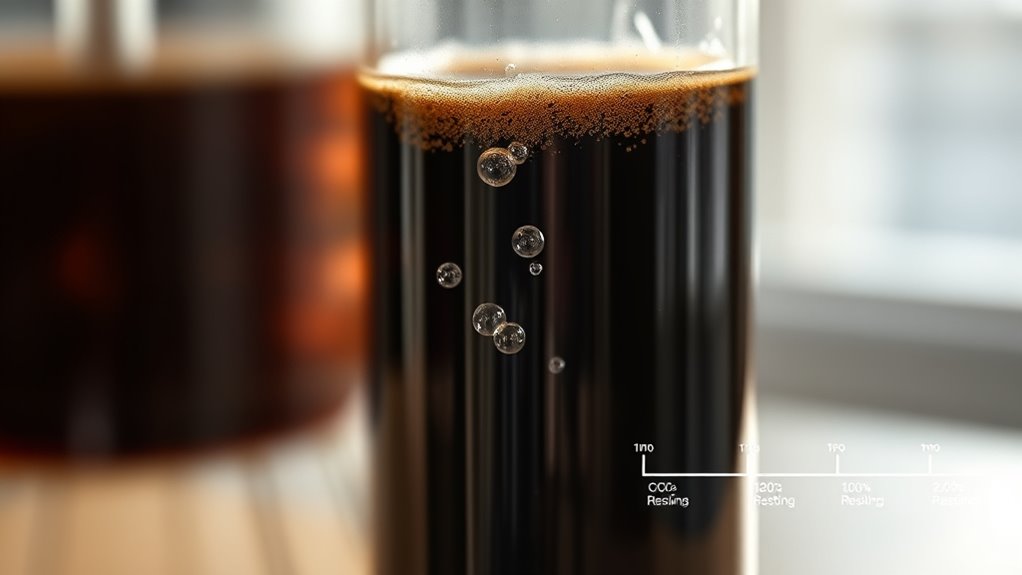
When CO₂ remains trapped in your coffee grounds, it can hinder extraction efficiency by causing uneven water flow. Resting your beans allows the CO₂ to escape, leading to clearer flavors and smoother brewing. By managing CO₂ release, you can improve both extraction and the overall quality of your cup. Additionally, understanding tuning techniques can help optimize your brewing process for better taste outcomes. Using a proper grind size can further enhance the effectiveness of degassing and extraction, resulting in a more balanced flavor profile. Incorporating mindfulness practices into your brewing routine can also enhance your focus and connection to the process, leading to more consistent results. Recognizing the symbolism of dreams related to relaxation and subconscious awareness may also inspire a more mindful brewing experience.
CO₂ and Extraction Efficiency
The release of CO₂ from freshly roasted coffee considerably influences extraction efficiency during brewing. If CO₂ remains trapped, it can create uneven water flow, causing under-extraction and dull flavors. As CO₂ escapes, water penetrates more uniformly, extracting soluble compounds effectively. This process enhances the coffee’s aroma, body, and overall taste.
You’ll notice that:
- Excess CO₂ causes rapid bubbling, disrupting extraction.
- Resting reduces CO₂, leading to smoother brewing.
- Lower CO₂ levels improve water contact with coffee grounds.
- Consistent CO₂ release results in more balanced flavors.
Resting and Flavor Clarity
Resting coffee after roasting plays a vital role in achieving flavor clarity by allowing excess CO₂ to escape. This release smooths the brew, preventing rapid bubbling and uneven extraction that can mask delicate flavors. As CO₂ dissipates, the coffee’s aroma, aftertaste, and sweetness become more pronounced, revealing nuanced qualities. The release rate varies with storage time, affecting flavor stability and perception. The table below highlights key factors influencing CO₂ release:
| Resting Time | CO₂ Level | Flavor Impact |
|---|---|---|
| 1 Day | High | Masked, sharp flavors |
| 3 Days | Moderate | Balanced, clearer |
| 7 Days | Low | Richer, more refined |
| 14 Days | Very Low | Optimal clarity |
Optimal Resting Periods for Different Coffee Profiles

Ideal resting periods vary depending on the desired coffee profile, as resting influences flavor development, acidity, and aroma stability. If you want a brighter, more vibrant cup, rest for about 2 to 3 days to allow delicate aromas to settle. For a richer, more balanced flavor, wait 5 to 7 days to let complex compounds harmonize. Longer resting, around 8 to 14 days, enhances smoothness and reduces harshness, ideal for full-bodied profiles.
Optimal coffee resting times vary: 2-3 days for brightness, 5-7 days for balance, 8-14 days for smoothness.
Consider these factors:
- Light roasts benefit from shorter rests to preserve brightness.
- Dark roasts require longer resting for smoother flavors.
- Specialty coffees may need 3–7 days to develop nuanced aromas.
- Espresso profiles often peak after 2–4 days for optimal extraction stability.
How Resting Influences Sensory Attributes Over Time

As coffee rests after roasting, its sensory attributes gradually evolve, with noticeable changes occurring over days rather than hours. During this period, aroma becomes more refined, and the overall flavor profile smooths out. The release of CO₂ reduces agitation on the palate, allowing delicate notes to emerge clearly. You’ll likely notice increased sweetness and a more balanced aftertaste as volatile aromatic compounds stabilize. Conversely, some flavors, like brightness or acidity, may diminish slightly over time. These changes don’t happen linearly; they fluctuate based on resting duration. Resting also influences mouthfeel, making it feel smoother and less astringent. In fundamental terms, as your coffee rests, its sensory richness deepens and becomes more cohesive, resulting in a more refined and harmonious drinking experience.
Brewing Parameters and Their Effect on Rested Coffee Flavor

Brewing parameters substantially influence the flavor profile of rested coffee, shaping how its nuanced qualities emerge and evolve. Your choice of roast, temperature, brew time, and grind size directly impacts the final taste. For example, you might notice that:
- A darker roast emphasizes bold, smoky flavors, while a lighter roast highlights acidity and floral notes.
- Higher brewing temperatures increase extraction rate, boosting brightness but risking over-extraction if too hot.
- Longer brew times can extract more solubles but may also enhance bitterness or astringency.
- Finer grind sizes accelerate extraction, affecting mouthfeel and flavor balance.
Adjusting these parameters allows you to tailor your coffee’s flavor, especially after resting, when the coffee’s chemical composition has stabilized, revealing its true potential.
Comparing Hot and Cold Brewed Coffee: Stability and Taste

Cold brew coffee tends to maintain its flavor profile longer during storage than hot brewed coffee, which is more prone to rapid chemical changes. Because cold brewing involves steeping coffee grounds in cold water over extended periods, it results in fewer chemical reactions that alter flavor. This stability means cold brew often retains its sweetness, smoothness, and aromatic qualities better over several days. Hot brewed coffee, on the other hand, undergoes faster chemical reactions, such as oxidation and degradation of aromatic compounds, leading to staler, more muted flavors over time. Additionally, cold brew’s lower extraction temperature reduces the formation of certain bitter compounds, making it more resilient to flavor loss during storage. If you want a more consistent, long-lasting flavor, cold brewing offers notable advantages over hot brewing.
The Influence of Resting on Coffee’s Chemical Composition

Resting coffee after roasting shifts its pH and acidity, making the brew smoother and more balanced. During this time, chlorogenic acids initially increase but then degrade, affecting flavor and chemical stability. You’ll also notice changes in phenolics and caffeine levels, which influence both taste and health properties.
Ph and Acidity Shift
As coffee rests after roasting, its chemical composition, particularly pH and acidity, begins to shift. During this period, the release of CO₂ influences the coffee’s acidity, making it less sharp over time. As CO₂ escapes, the pH gradually increases, leading to a smoother, less tart flavor profile. Resting also impacts how acids develop and stabilize, affecting overall brightness and perceived freshness.
You might notice:
- An increase in pH, reducing overall acidity
- Smoother, more balanced taste
- Decreased sharpness and brightness
- Enhanced stability of volatile acids and aromatic compounds
These shifts make the coffee less acidic and more refined, allowing subtle flavor nuances to emerge. Resting ensures a more cohesive flavor profile, shaping your brewing and tasting experience.
Chlorogenic Acid Dynamics
During the resting period after roasting, the chemical composition of coffee continues to evolve, particularly affecting chlorogenic acids (CGAs). Initially, resting can cause a slight increase in CGA levels, as some bound forms break down into free acids. This process can enhance acidity and brightness in the flavor profile. However, prolonged resting leads to degradation of CGAs, reducing their concentration over time. This decline influences the coffee’s bitterness and astringency, since CGAs contribute to these sensations. Resting also affects the overall stability of CGAs, which are sensitive to oxygen and temperature. As a result, the timing of resting impacts both the chemical makeup and sensory qualities, balancing freshness and flavor development. Understanding these dynamics helps you optimize resting periods for desired flavor outcomes.
Phenolics and Caffeine Changes
The chemical composition of coffee evolves markedly as it rests, with phenolics and caffeine levels undergoing notable changes. Resting causes phenolic compounds to fluctuate, affecting bitterness and astringency. Caffeine content may decrease slightly over time, influencing the coffee’s stimulating power. During resting:
- Phenolic compounds can increase initially, enhancing astringency.
- Total phenolics tend to decrease with extended rest, softening bitterness.
- Caffeine levels may decline gradually, subtly reducing stimulation.
- Volatile aromatic compounds stabilize, refining flavor clarity.
These changes impact your coffee’s taste and sensory profile, making it smoother and more balanced. Resting alters not only the chemical makeup but also how these compounds interact, ultimately shaping your coffee’s overall experience. Proper resting can elevate flavor harmony and reduce harshness.
Practical Tips for Maximizing Flavor Through Resting

Resting freshly roasted coffee is a simple yet effective way to enhance its flavor profile. To maximize this benefit, start by allowing your coffee to rest for at least 48 hours after roasting. Store it in a cool, airtight container away from light and moisture to slow any chemical changes and preserve aromatic compounds. Avoid opening the container frequently, which can introduce oxygen and disrupt the resting process. Use a consistent resting period; typically, 3 to 7 days offers ideal flavor development. Keep notes on how different resting times influence taste, and experiment to find your preference. Remember, patience is key—resting allows CO₂ to escape, resulting in smoother, more balanced brews with clearer flavors.
Frequently Asked Questions
How Does Resting Time Affect the Sweetness of Brewed Coffee?
Resting time can enhance the sweetness of your brewed coffee. As you let the coffee rest, trapped CO₂ escapes, leading to smoother extraction and a more balanced flavor. This process often allows subtle sweet notes to emerge more clearly, especially after 1 to 9 days of resting. Keep in mind, longer resting may slightly alter chemical compounds, but generally, it results in a sweeter, more refined taste experience.
Can Resting Improve Coffee Flavor Stability During Storage?
Resting can be a real game-changer for coffee flavor stability during storage. By allowing CO₂ and volatile compounds to settle, you help preserve the coffee’s fresh aroma and taste longer. This process reduces staling and staves off flavor deterioration, meaning your brew stays enjoyable for a more extended period. Think of resting as giving your coffee a little time to “settle in,” so it remains tasty even after days.
Does Resting Influence the Perception of Coffee Acidity?
Resting influences your perception of coffee acidity by allowing CO₂ to escape, which reduces sharpness and brightness. When you let coffee rest, the acidity becomes more balanced, revealing smoother, more nuanced flavors. This process stabilizes volatile acids and aromatic compounds, so your taste buds experience a less harsh, more refined acidity. Resting therefore helps you enjoy a more harmonious flavor profile, especially by mellowing the lively, tangy notes in your brew.
Is There an Optimal Resting Period for Specific Coffee Roast Levels?
Think of resting as tuning a musical instrument. For light roasts, resting 24-48 hours lets delicate flavors harmonize, revealing brightness and complexity. Medium roasts benefit from 48-72 hours, balancing acidity and body for a fuller taste. Dark roasts may need only 24 hours, as their boldness dominates quickly. Adjust resting times based on roast level to unleash your coffee’s full potential and enjoy a more refined flavor profile.
How Does Resting Impact the Overall Aroma Profile of Coffee?
Resting markedly enhances your coffee’s aroma profile by allowing volatile aromatic compounds to stabilize and develop. During resting, trapped CO₂ escapes, reducing interference and enabling more cohesive, refined scents. As a result, your coffee’s aroma becomes richer, more balanced, and more expressive over time. By giving your coffee adequate resting, you reveal deeper aromatic layers, making each brew more fragrant and enjoyable, especially after a few days of rest.
Conclusion
So, whether you’re craving the vibrant aroma, the balanced flavor, or the rich complexity, resting your coffee can enhance your brew. It allows the chemical changes to settle, the gases to escape, and the flavors to harmonize. Embrace the pause, experiment with different resting periods, and enjoy the journey of revealing your perfect cup. Resting isn’t just waiting—it’s your secret to better coffee, better mornings, and a more satisfying sip every time.
Halloween Picks
halloween
As an affiliate, we earn on qualifying purchases.