If you’re craving a smooth, mellow flavor with a strong caffeine kick, cold brew might be your go-to, thanks to its rich, chocolatey notes and higher caffeine content. But if you prefer a brighter, more acidic drink with a quicker chill, iced coffee delivers clarity and freshness, perfect for a quick energy boost. Each offers unique textures and experiences—continue exploring to find out which suits your mood and taste today.
Key Takeaways
- Choose cold brew for a smooth, mellow flavor with higher caffeine and longer-lasting energy.
- Opt for iced coffee if you prefer bright, acidic notes with quick, refreshing preparation.
- Consider cold brew if you want a richer, creamier texture; iced coffee offers a lighter, more vibrant experience.
- Use cold brew for more formal occasions or when a stronger caffeine boost is desired; iced coffee suits casual, hot-day refreshment.
- Your craving depends on flavor preference, desired energy level, and how quickly you need your coffee.
How Cold Brew and Iced Coffee Are Made

To understand the difference between cold brew and iced coffee, it’s helpful to know how each is made. For cold brew, you’ll need brewing equipment like a large jar or a specialized cold brew maker. You steep coarsely ground coffee beans in cold water for 12 to 24 hours, then strain out the grounds. Iced coffee, on the other hand, is brewed hot using a standard coffee maker or pour-over setup. Once brewed, you pour it over ice to cool it quickly. Coffee bean selection plays a role in both methods; darker roasts often suit cold brew’s smoothness, while lighter roasts can bring out brighter flavors in hot-brewed coffee. Each method’s equipment and bean choices shape the final drink. Additionally, brewing techniques influence the flavor profile and strength of your coffee. The temperature of brewing water also plays a crucial role in extracting different flavors during the process.
Flavor Profiles and Taste Differences

Cold brew and iced coffee deliver distinctly different flavor profiles that can influence your overall experience. Cold brew typically offers a smoother, mellower taste with subtle chocolate and caramel notes, thanks to its long steeping process. It often contains fewer artificial flavorings, allowing the natural flavors of the coffee bean origins to shine through. Iced coffee, on the other hand, tends to be brighter and more acidic, with sharper flavor notes that can highlight the coffee’s origin or roast level. It’s also more likely to include artificial flavorings or additives to enhance taste. Your preference may depend on whether you enjoy the rich, mellow qualities of cold brew or the vibrant, lively flavors of iced coffee, shaped by the beans’ unique characteristics.
Caffeine Content and Energy Boosting Effects
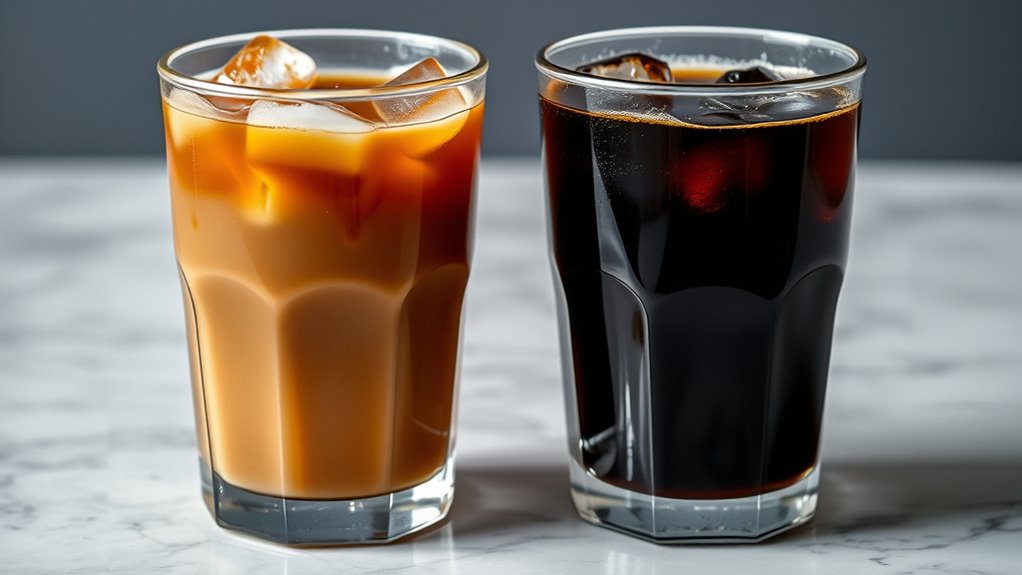
When it comes to caffeine content, cold brew generally delivers a higher dose per serving compared to iced coffee, making it a stronger energy booster for most drinkers. Its caffeine strength is concentrated because it’s brewed slowly with cold water over extended periods, resulting in a more potent brew. This means you’ll likely experience a more immediate and intense energy surge. Additionally, the holistic approaches used in preparing cold brew can influence its overall health effects, including its lower acidity which helps sustain alertness throughout the day. Cold brew’s brewing process also results in a richer flavor profile that many find more satisfying. The nutritional profile of cold brew can also vary depending on the preparation, potentially affecting how it impacts your energy levels. Incorporating coffee brewing methods can help you customize your caffeine intake to better suit your energy needs. Iced coffee, on the other hand, usually has a milder caffeine profile, providing a more moderate boost that tapers off sooner. Your choice depends on whether you want a quick jolt or sustained energy.
Texture and Mouthfeel Considerations

Your experience of cold brew versus iced coffee is heavily influenced by their texture and mouthfeel. Creaminess and thickness can make one feel richer, while temperature and viscosity affect how smooth or sharp each sip feels. Additionally, ice and dilution impact the overall body, changing how satisfying each drink is to your palate. Using the right app for tracking can help you monitor how different ingredients influence your preferred texture and overall enjoyment. Understanding coffee brewing methods can also help you tailor your drinks to achieve your ideal mouthfeel. Exploring different brewing techniques can further enhance your control over texture and flavor profile. Incorporating air purification technology into your environment can further enhance your overall well-being by ensuring cleaner, healthier indoor air, which complements your enjoyment of your coffee experience. Moreover, considering the value of home security systems can provide peace of mind, allowing you to focus more on perfecting your coffee routine without concerns about safety.
Creaminess and Thickness
Creaminess and thickness play a significant role in how you experience cold brew and iced coffee. Your choice of milk options, like whole milk, cream, or plant-based alternatives, directly influences the drink’s richness and smoothness. Thicker textures often come from added milk or cream, making each sip feel indulgent. Sweetness levels also impact creaminess, as sweeter drinks tend to feel more velvety and satisfying. Cold brew, with its concentrated base, can be made velvety with the right milk choices, while iced coffee’s lighter profile may rely on minimal or no added cream. Ultimately, your preferences for creaminess and thickness shape whether you crave a rich, decadent treat or a lighter, more revitalizing beverage.
Temperature and Viscosity
Temperature and viscosity directly influence how cold brew and iced coffee feel in your mouth, shaping your overall drinking experience. The temperature contrast between the chilled beverage and your body affects how invigorating or intense the sip feels. Viscosity impact plays a role in mouthfeel, making drinks seem thicker or lighter. Imagine:
- A silky, smooth sensation as the cold brew coats your tongue.
- A lighter, more liquid feel with iced coffee, almost like a thin layer dissolving.
- The cooling effect creating a crisp, revitalizing sensation.
- A slight heaviness if the drink feels more viscous, adding richness.
These factors combine to create unique textures, where viscosity impacts how substantial the drink feels, and temperature contrast heightens the refreshment. Your choice depends on how you prefer your coffee’s mouthfeel. Additionally, understanding city dynamics can influence your coffee shop choices and overall experience in new environments. Recognizing beverage texture can help you select the perfect coffee based on your preferred sensory experience and how support hours might affect your visit. Incorporating mindful decluttering strategies into your coffee routine can also enhance your appreciation for quality and environment, making each sip more satisfying. Being aware of temperature and viscosity effects can further refine your selection process to match your desired drinking sensation.
Ice and Dilution Effects
Ice not only cools your coffee but also influences its texture and mouthfeel through dilution. As the ice melts, it impacts the dilution impact, gradually weakening the coffee’s strength and altering its body. This process can make your drink feel thinner and less robust, especially if it sits for a while. The melting ice introduces more water, softening the flavor profile and changing the overall sensory experience. If you prefer a richer, more concentrated taste, you might want to add ice just before serving or opt for larger, slower-melting cubes. Understanding how ice melting affects dilution helps you control the texture and mouthfeel of your cold brew or iced coffee, ensuring your drink remains satisfying from the first sip to the last. Proper ice management is key to maintaining the desired flavor and consistency, especially as automation can help in precise temperature control and timing. Additionally, selecting the appropriate type of ice, such as large cubes or sphere-shaped ice, can minimize melting rate and preserve the drink’s intensity longer.
Preparation Time and Convenience
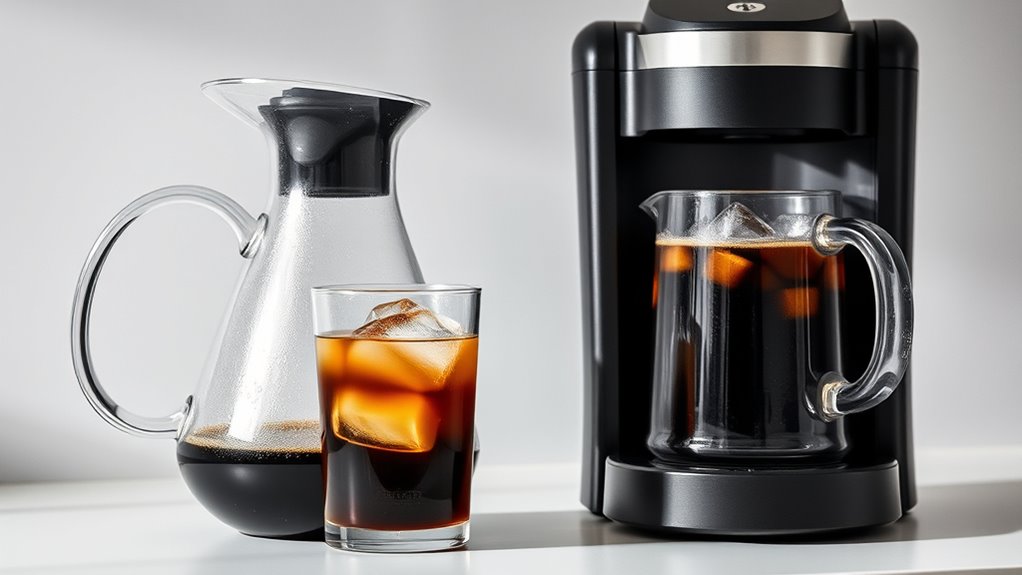
When it comes to preparation time and convenience, iced coffee generally wins out because it’s quick to make. You can brew it using simple methods like a pour-over or a strong brew, then pour over ice. Its serving temperatures are instantly cool, ready in minutes. Imagine:
- Brewing hot coffee with a quick brew method
- Pouring it directly over a glass filled with ice
- Watching the temperature drop instantly
- Sipping your invigorating cold drink in minutes
In contrast, cold brew requires steeping grounds for 12-24 hours, which isn’t as convenient if you’re in a hurry. Iced coffee’s speed and straightforward process make it the go-to choice when you want a fast caffeine fix without extra fuss. Additionally, preparation methods like using instant coffee or cold brew concentrates can further streamline the process, which is especially beneficial for those seeking quick caffeine solutions. Incorporating energy-efficient brewing techniques can also help reduce overall time and energy consumption, making your coffee routine more sustainable.
Ideal Occasions and Serving Styles

Whether you’re starting your day or relaxing with friends, both cold brew and iced coffee fit different occasions. A cold brew works great for a revitalizing morning boost, while iced coffee keeps you cool during hot afternoons. For special gatherings, serving either can add an elegant touch to your coffee experience. Additionally, customizing your drink with premium brewing methods can enhance flavor profiles and overall enjoyment. Employing specific preparation techniques can also elevate the drinking experience by highlighting unique flavor notes and aromas.
Morning Refreshment Rituals
Morning is the perfect time to enjoy a revitalizing caffeine boost, and both cold brew and iced coffee fit seamlessly into your early routine. Cold brew benefits include smooth, low-acid flavor and a slow extraction process that preserves rich aromas. Iced coffee myths often suggest it’s weaker or less flavorful, but properly brewed, it delivers a bold wake-up call. You might prefer:
- A tall glass with ice cubes clinking softly
- A splash of milk or flavored syrup
- A reusable straw for sipping leisurely
- A cozy spot by the window to savor your drink
Whether you choose cold brew or iced coffee, these rituals set a invigorating tone for your day. They’re perfect for a quick energizer or a moment of calm before the hustle begins.
Perfect Summer Coolers
Summer calls for cool, revitalizing beverages that keep you energized and hydrated, making cold brew and iced coffee perfect choices for hot days. When serving these drinks, consider artistic presentation—garnishing with fresh fruit, herbs, or a drizzle of flavored syrup elevates your experience. Seasonal variations also add excitement; try pumpkin spice in fall or berry-infused blends in summer to match the flavors of the season. You can serve them over ice in tall glasses or in colorful cups for a vibrant look. Adding a splash of milk or a flavored syrup personalizes your drink and makes it more revitalizing. These versatile beverages suit various occasions, from casual gatherings to solo relaxing afternoons, making them ideal summer coolers.
Elegant Coffee Gatherings
Elegant coffee gatherings are perfect opportunities to showcase your brewing skills and create a refined atmosphere. Focus on thoughtful beverage presentation to impress your guests. Use beautiful cups, elegant saucers, and garnishes like citrus twists or fresh herbs to elevate the experience. When serving, consider a variety of brewing methods—pour-over, siphon, or French press—to highlight different flavors. Pay attention to the details: temperature, pour technique, and timing all matter. Arrange your coffee setup with a clean, stylish station that invites conversation. This setting encourages appreciation for the craft of coffee brewing and makes each sip memorable. Whether it’s a formal brunch or an intimate evening, your attention to beverage presentation transforms a simple gathering into a sophisticated affair.
Cost and Availability Factors
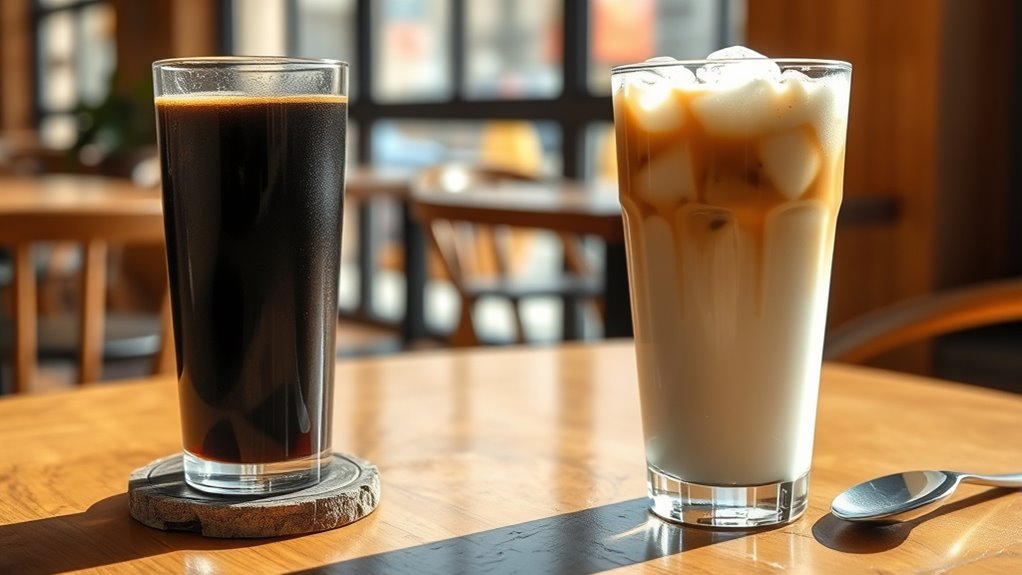
When comparing cold brew and iced coffee, cost and availability play significant roles in your choice. Cold brew often has a higher pricing comparison due to its longer steeping process and specialty equipment, while iced coffee is more budget-friendly and readily available. Ingredient sourcing also impacts these factors; cold brew typically uses high-quality beans for a smooth, rich flavor, which can increase costs. Iced coffee, made from brewed hot coffee chilled quickly, can be more flexible with ingredient sourcing and easier to find at local cafes or stores. Here’s a visual to help you imagine:
| Cold Brew | Iced Coffee |
|---|---|
| Longer prep | Quick brew |
| Higher price | Lower price |
| Specialty equipment | Convenient |
| Premium beans | Regular beans |
| Limited availability | Widely accessible |
Frequently Asked Questions
Which Beverage Tends to Be Less Acidic for Sensitive Stomachs?
If you’re sensitive to acidity, cold brew tends to be less acidic and more gentle on your stomach. Its lower acid content provides better stomach comfort because it’s brewed with cold water over a longer period, reducing acidity. Iced coffee, made from hot brewed coffee cooled down, usually has higher acid levels. So, if stomach comfort matters most, opt for cold brew to enjoy your coffee without irritation.
Can Cold Brew or Iced Coffee Be Made at Home More Easily?
You can definitely make cold brew or iced coffee at home easily. For DIY brewing, cold brew requires soaking coarsely ground coffee in cold water for 12-24 hours, then straining. Iced coffee is quicker; brew hot coffee and chill it. Both methods allow flavor customization—add milk, syrups, or spices to suit your taste. With a little effort, you’ll enjoy fresh, personalized coffee anytime right in your kitchen.
How Long Can Cold Brew or Iced Coffee Be Stored Before Losing Freshness?
Think of cold brew and iced coffee like fresh flowers—you want to enjoy their freshness before they wilt. Typically, you can store cold brew and iced coffee in the fridge for up to 1-2 weeks without losing flavor if you keep them airtight. Proper storage tips include using a sealed container and avoiding exposure to sunlight, which helps preserve their shelf life and keeps your coffee tasting great longer.
Are There Health Benefits Associated With Cold Brew or Iced Coffee?
You’ll find that cold brew and iced coffee offer health benefits like increased antioxidant content, which helps fight free radicals. Cold brew generally has higher caffeine levels, giving you a smoother, longer-lasting energy boost. Drinking either can support your mental focus and alertness. Just remember, moderation is key. Enjoying them regularly can contribute to your overall antioxidant intake and provide a healthier way to start your day.
Which Option Is Better for People With Dietary Restrictions or Allergies?
If you have dietary restrictions or allergies, cold brew might be better since it’s often naturally smoother with less acidity. You can easily customize it with dairy alternatives like almond or oat milk, and use sugar substitutes to suit your needs. Iced coffee can also be tailored similarly, but cold brew’s lower acidity and customizable ingredients make it a safer, gentler choice for sensitive diets.
Conclusion
Ultimately, choosing between cold brew and iced coffee comes down to your taste and lifestyle. Cold brew offers smoothness and a stronger caffeine kick, perfect for long mornings, while iced coffee provides quick refreshment with more versatility. Remember, “you are what you repeatedly do,” so pick what suits your routine best. Whichever you choose, savor each sip and enjoy the little moments that keep you going.