
Cold brew coffee is a smooth, concentrated drink brewed by steeping coarsely ground coffee in cold water for 12-24 hours, resulting in higher caffeine and richer flavors with less acidity. Its flavor, strength, and caffeine content can be customized with different ratios and brewing techniques. Proper equipment and storage help preserve its quality. If you want to unleash its full potential and clear up common misconceptions, there’s more to discover further on.
Key Takeaways
- Cold brew is made by steeping coarsely ground coffee in cold water for 12-24 hours without heat.
- It generally contains 2-3 times more caffeine per ounce than hot coffee, especially in concentrated form.
- The brewing process yields a smooth, low-acid, rich flavor with notes like chocolate, caramel, or nuts.
- Proper storage in airtight containers extends freshness for up to two weeks, but flavor may degrade after that.
- Cold brew is not just iced coffee; it’s a distinct brewing method that produces a versatile, sophisticated coffee experience.
How Cold Brew Is Made and Its Unique Process
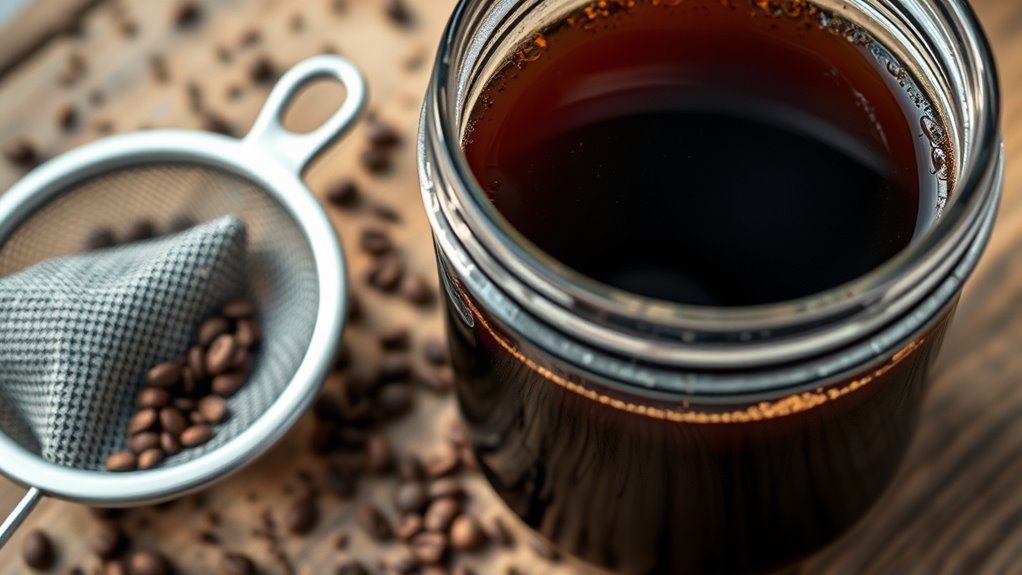
Cold brew is made by steeping coarsely ground coffee in cold or room temperature water for an extended period, typically between 12 to 24 hours. This process doesn’t involve any heat, setting it apart from hot brewed coffee and iced coffee. Instead, you rely on time to extract flavors, resulting in a smooth, mellow taste. You simply combine coffee grounds with water in a jar, pitcher, or dedicated cold brew maker, then let it sit undisturbed. The coarse grind prevents over-extraction and sediment. After steeping, you filter out the grounds using a paper filter, cheesecloth, or built-in filter. The result is a rich, concentrated coffee that can be diluted with water or milk before drinking. This method emphasizes flavor and lowers acidity, creating a unique coffee experience. Additionally, the extraction process highlights the importance of using the right grind size for optimal flavor, as grind size directly influences the efficiency of flavor extraction and clarity.
Optimal Ratios and How to Customize Your Brew

Choosing the right coffee-to-water ratio is essential to customize your cold brew to suit your taste. If you prefer a strong, concentrated flavor, go for a 1:4 ratio, using one part coffee to four parts water. For a milder, more drinkable brew, opt for 1:8. Adjusting this ratio lets you control strength and intensity. Keep in mind, a higher coffee ratio results in richer flavor but may require dilution before drinking. You can also experiment by adding more coffee for a bolder taste or less for a smoother profile. Remember, the ratio affects caffeine content and flavor profile, so customize based on your preferences. Whether you like it potent or light, adjusting the ratio helps you craft the perfect cold brew tailored just for you. For best results, understanding the brewing techniques can help you achieve a balanced extraction and flavor. Additionally, familiarity with coffee extraction principles can further refine your brewing process to optimize flavor and strength. Proper dairy practices can also influence the overall profile if you choose to add milk or cream to your brew.
Essential Equipment and Techniques for Perfect Cold Brew
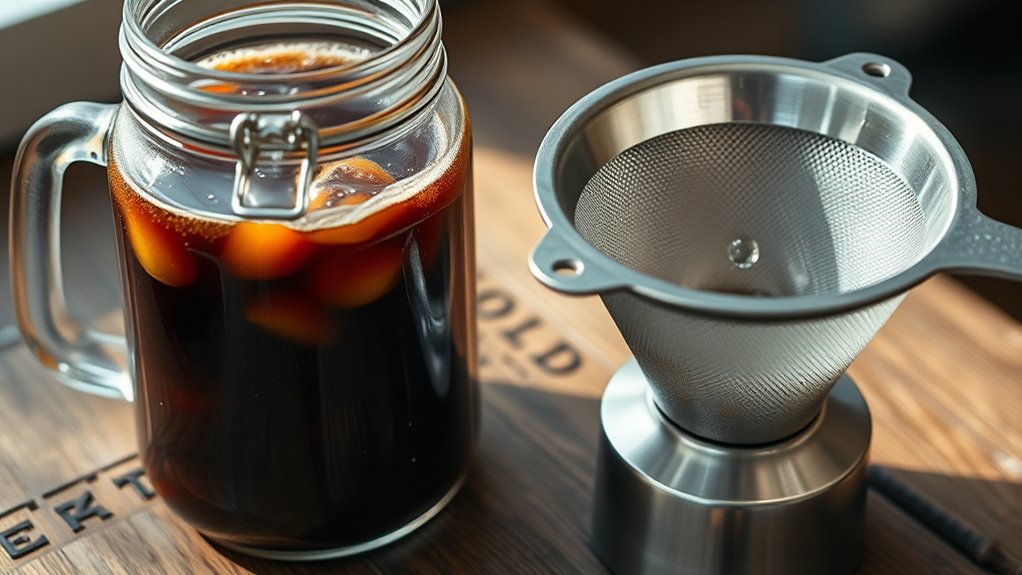
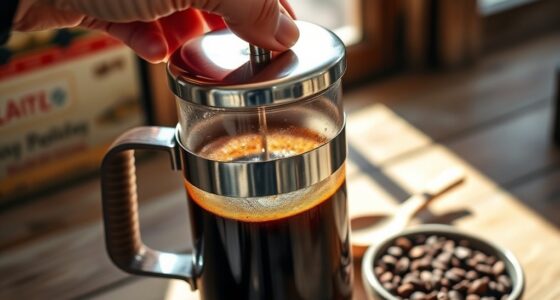
To achieve the perfect cold brew, selecting the right equipment and mastering proper techniques are essential. Use a large jar, French press, or dedicated cold brew maker to steep your coffee. Opt for coarsely ground beans to prevent over-extraction and sediment. After steeping, filter your brew with paper filters, cheesecloth, or built-in filters. Here’s a quick visualization:
| Equipment | Technique |
|---|---|
| Large jar | Coarse grind for ideal extraction |
| French press | Steep with the plunger up, then press |
| Cold brew maker | Use appropriate ratios, filter thoroughly |
These tools and methods ensure smooth, flavorful cold brew with minimal fuss. Proper filtration prevents sediment, and consistent steeping techniques guarantee a balanced, delicious result every time. Additionally, understanding the science of sound healing can inspire calming rituals that enhance your brewing experience. Incorporating proper filtration can help achieve a clearer, more refined flavor profile, elevating your cold brew game.
Flavor Profile and What Makes Cold Brew Distinct

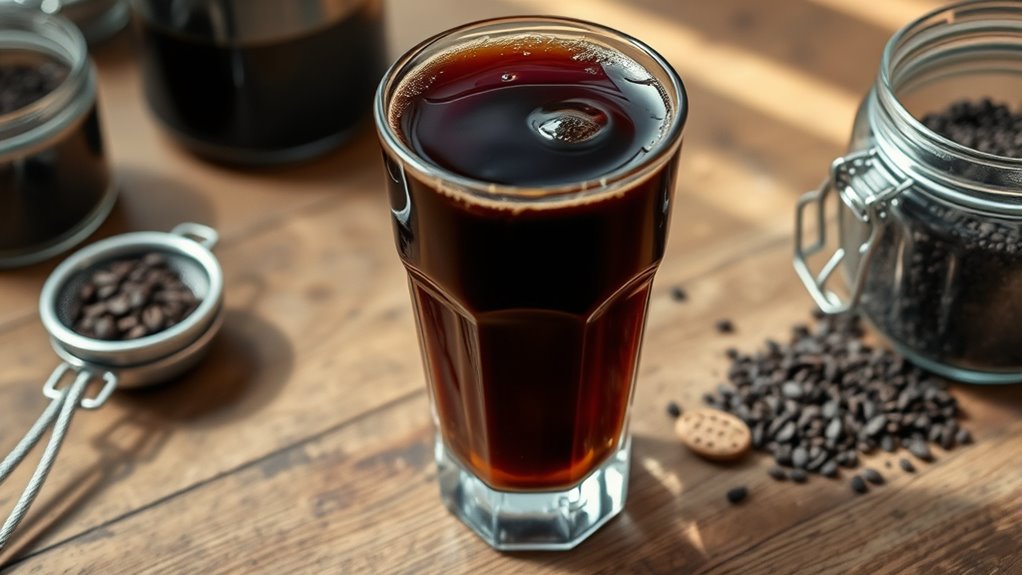
Cold brew offers a mellow, smooth taste that sets it apart from hot brewed coffee. Its reduced acidity levels create a softer, less sharp flavor, making it easier on the stomach. Additionally, it has a rich, mellow body that enhances its overall depth and complexity. The slow extraction process also contributes to its distinct flavor profile, making it a favorite among coffee enthusiasts. This brewing method results in a concentrated coffee that can be enjoyed in various ways, adding to its versatility and appeal. The preppy aesthetic of cold brew branding often emphasizes its sophisticated and stylish appeal, attracting a diverse range of consumers. Furthermore, the brewing method used in cold brew aligns with innovative approaches in coffee preparation, which are often influenced by technological advancements in coffee technology. Recognizing how celebrity lifestyle insights influence consumer trends can also enhance understanding of the popularity of cold brew among different demographics.
Mellow, Smooth Taste
The unique process of cold brewing results in a coffee with a mellow, smooth taste that sets it apart from hot brewed varieties. This method extracts fewer acids and oils, creating a gentler flavor profile. You’ll notice it’s less sharp and more balanced, emphasizing natural sweetness and body. To understand why it tastes so smooth:
- Cold steeping limits acid extraction, reducing bitterness.
- Longer steeping time allows flavors to develop gradually.
- Fewer bitter compounds are drawn out compared to hot brewing.
- The absence of heat preserves delicate aromatics, enhancing smoothness.
This results in a beverage that’s easy on the palate, with a rich, mellow flavor that’s perfect for those seeking a less harsh coffee experience.
Reduced Acidity Levels
One of the key differences that make cold brew stand out is its markedly lower acidity compared to hot brewed coffee. Because it’s steeped in cold water, fewer acids are extracted during the brewing process, resulting in a smoother, less biting flavor. This reduced acidity makes cold brew gentler on your stomach and less likely to cause acid reflux or irritation. The lower acidity also enhances the natural sweetness of the coffee, allowing subtle flavors to shine through without the sharpness often found in hot brews. As a result, cold brew offers a mellow, balanced taste that appeals to those seeking a less acidic, more refined coffee experience. This distinct characteristic sets cold brew apart as a smooth, easy-drinking option. Additionally, the lower acidity levels contribute to its reputation as a healthier alternative for sensitive stomachs. Cold brew’s smooth flavor profile makes it particularly popular among coffee enthusiasts who prefer a less bitter taste. Furthermore, the slow extraction process involved in cold brew emphasizes consistent flavor, making each cup reliably smooth and rich. The low acidity also contributes to its longer shelf life and reduced bitterness over time.
Rich, Mellow Body
Because cold brew is steeped slowly in cold water, it develops a rich, mellow body that sets it apart from hot brewed coffee. This process extracts fewer acids and oils, resulting in a smoother, less sharp flavor. The body is characterized by a few key qualities:
- Creamy Texture: It feels substantial on your palate, almost velvety.
- Sweetness: Natural sugars are highlighted, reducing the need for added sweeteners.
- Less Bitterness: A gentle, rounded profile without the harshness of hot brewing.
- Deep Flavor Notes: Often featuring hints of chocolate, caramel, or nuts that linger on your tongue.
These elements combine to create a coffee experience that’s rich, balanced, and mellow—perfect for sipping slowly.
Caffeine Content: What You’re Really Drinking
Have you ever wondered just how much caffeine you’re getting from cold brew? It’s important to know because cold brew generally packs a caffeine punch—usually 2 to 3 times more per ounce than hot coffee. This high concentration comes from steeping coffee grounds for 12 to 24 hours, extracting more caffeine. However, the final caffeine content depends on how you prepare and serve it. If you use a strong concentrate and dilute it heavily, your drink will have less caffeine per glass. Conversely, a less diluted cold brew retains more caffeine. Keep in mind, larger servings mean more caffeine overall, regardless of dilution. So, if you’re sensitive to caffeine, it’s worth paying attention to how much you’re pouring and how long you steep. Sound recording techniques and equipment can influence the extraction process, impacting the caffeine levels in your brew. Additionally, brewing time plays a crucial role in determining the caffeine extraction, with longer steeping times generally resulting in higher caffeine content. It’s also helpful to understand how coffee grind size affects extraction, as finer grounds can lead to more caffeine being pulled during brewing. Moreover, the type of coffee beans used can influence the caffeine level, as some beans naturally contain more caffeine than others. Understanding the narcissistic behavior involved in toxic relationships can help individuals recognize emotional manipulation, which is often subtle and insidious.
Best Practices for Storage and Serving

To keep your cold brew fresh and flavorful, store concentrate in the fridge for up to two weeks, while ready-to-drink versions are best enjoyed within a week. When serving, try over ice or mixed with milk, water, or sweeteners to customize your experience. Experiment with different presentation and pairing tips to elevate your cold brew enjoyment. For optimal results, consider proper storage techniques to maintain its quality and taste. Additionally, understanding storage in airtight containers can help prevent spoilage and preserve flavor, ensuring your cold brew stays fresh longer. Furthermore, understanding city dynamics can help you find the best spots to enjoy your cold brew in various neighborhoods.
Optimal Storage Duration
For ideal freshness and flavor, cold brew concentrate should be stored in the refrigerator and consumed within two weeks. Beyond this, flavors can degrade, and the risk of spoilage increases. To maximize quality, follow these guidelines:
- Keep the concentrate sealed tightly to prevent oxidation and contamination.
- Store it in a clean, airtight container to preserve aroma and freshness.
- Avoid exposing it to temperature fluctuations, which can affect flavor stability.
- Use clean utensils when dispensing to prevent introducing bacteria.
After two weeks, the concentrate may start to lose its vibrant flavor and develop off-notes. For best taste, plan to consume your cold brew within this timeframe, and always smell and taste a small amount before serving if it’s been stored longer.
Serving Suggestions and Tips
Looking for the best way to enjoy your cold brew? Start by serving it over ice for a invigorating experience. If you prefer a creamier taste, add milk, cream, or your favorite milk alternative. For a touch of sweetness, stir in simple syrup, flavored syrups, or a dash of flavored creamer. To enhance flavor, consider blending cold brew with ice and ice cream for a delicious coffee shake. If you’re making a cocktail, cold brew pairs well with spirits like bourbon or vodka. Store your cold brew concentrate in the fridge for up to two weeks, and always shake or stir before pouring to ensure consistency. Experiment with different mix-ins and serving styles to find what best suits your taste.
Common Myths and Facts About Cold Brew
Many people believe that cold brew is simply iced coffee made cold, but this is a common myth. Cold brew is actually steeped in cold water for 12 to 24 hours, extracting flavors differently than hot brewing. Here are some facts to clarify misconceptions:
- Cold brew isn’t just hot coffee cooled down; it’s brewed cold from the start, producing a unique flavor profile.
- It’s often concentrated, requiring dilution before drinking, unlike regular coffee.
- Cold brew has lower acidity, making it gentler on your stomach and less bitter.
- Its caffeine content is usually higher per volume, especially if you consume the concentrate straight.
Understanding these facts helps you appreciate cold brew’s distinct qualities and avoid confusion with iced coffee.
Frequently Asked Questions
Can Cold Brew Be Made With Instant Coffee?
Yes, you can make cold brew with instant coffee. Just dissolve the instant coffee in cold water, using a ratio similar to hot brew—about 1 to 2 teaspoons per 8 ounces of water. Stir well until fully dissolved, then let it steep in the fridge for a few hours or overnight. Keep in mind, this method might not produce the same smooth, mellow flavor as traditional cold brew.
How Does Cold Brew Compare to Hot Brewed Coffee in Antioxidants?
Think of your coffee as a treasure chest; hot brewing unfastens many more gems quickly, but cold brew reveals fewer, subtler treasures over time. Cold brew generally has fewer antioxidants because heat helps extract more of these beneficial compounds. While hot coffee can provide a boost of antioxidants rapidly, cold brew’s smoother profile offers a calmer, less bitter experience with slightly fewer antioxidants, making it gentler on your stomach but still healthful.
Is Cold Brew Suitable for People With Acid Reflux?
Yes, cold brew is generally better for people with acid reflux because it has lower acidity than hot brewed coffee. You’ll find it gentler on your stomach, reducing the chances of irritation. Just keep in mind that everyone’s different, so monitor how your body reacts. You might want to dilute it further or avoid sweeteners and additives that could trigger symptoms. Cold brew offers a smoother, less harsh option.
What’s the Environmental Impact of Cold Brew Production?
Think of planting a seed—cold brew production impacts the environment mainly through water and energy use. You might not realize it, but making cold brew requires significant water for growing coffee beans and equipment cleaning. Additionally, energy is used during extraction and storage. Choosing sustainably sourced beans and energy-efficient equipment can lessen your footprint. Remember, every drop counts, so being mindful helps protect our planet as you enjoy your cold brew.
Can You Reuse Coffee Grounds for Multiple Cold Brew Batches?
Yes, you can reuse coffee grounds for multiple cold brew batches, but the flavor will weaken with each reuse. You might get a milder, less aromatic brew after the first steep. To extend the grounds’ usability, try increasing steeping time or using slightly coarser grounds. However, for the best flavor and caffeine extraction, it’s recommended to use fresh grounds each time, especially after a couple of uses.
Conclusion
Now that you know the real process behind cold brew, it’s clear it’s not just a trendy drink but a carefully crafted brew. Don’t fall for myths like it’s always stronger or more caffeinated than hot coffee—it’s all about ratios and brewing time. With the right equipment and techniques, you can customize your cold brew to suit your taste. So go ahead, experiment and enjoy this smooth, flavorful coffee on your own terms.