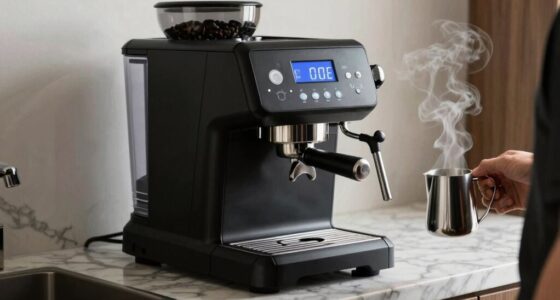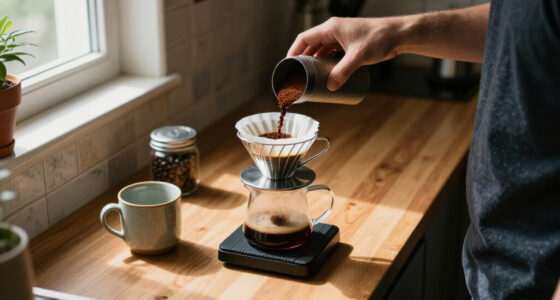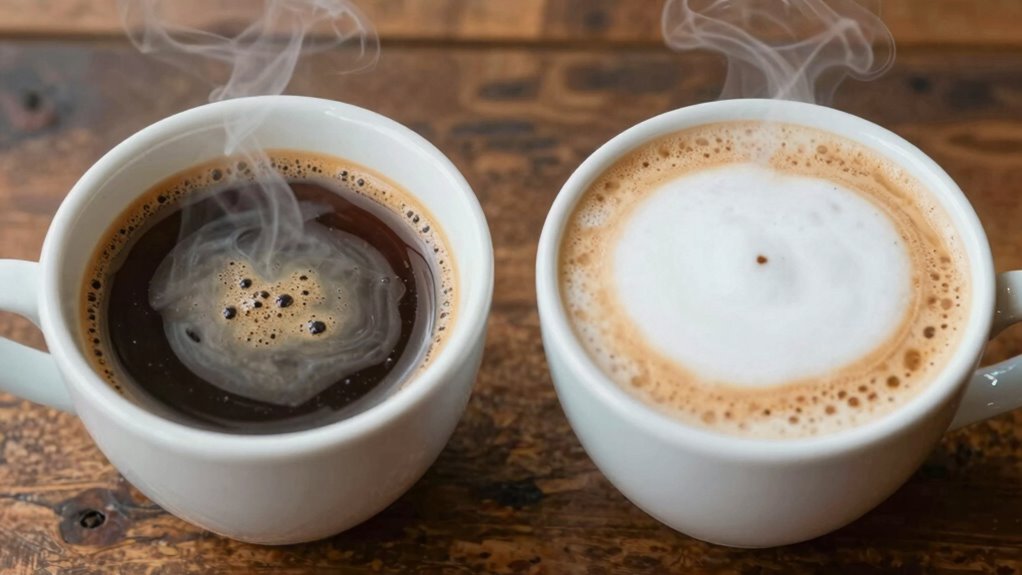

Brewing the same coffee two ways helps you discover how techniques, timing, and variables like grind size and water temperature change flavor and aroma. You’ll see how extraction impacts taste, with longer steeping highlighting oils and body, while shorter methods emphasize brightness and clarity. Trying different methods sharpens your palate and teaches you to notice subtle differences. Keep exploring, and you’ll gain even deeper insights into what makes each cup unique.

Get coffee and tea gear delivered free with Prime
- Fast, free delivery on millions of items
- Prime Video, Amazon Music and more included
- Member-only deals all year
Key Takeaways
- Brewing the same coffee with different methods highlights how extraction variables influence flavor and aroma profiles.
- Comparing methods reveals which brewing parameters emphasize or diminish specific taste notes.
- It demonstrates how grind size, temperature, and time alter the complexity and balance of flavors.
- Tasting the same coffee differently enhances understanding of how extraction impacts fragrance and mouthfeel.
- Repeated experiments develop sensory awareness and refine your ability to identify subtle taste differences.
As an affiliate, we earn on qualifying purchases.
How Do Brewing Methods Affect Coffee Flavor and Aroma?
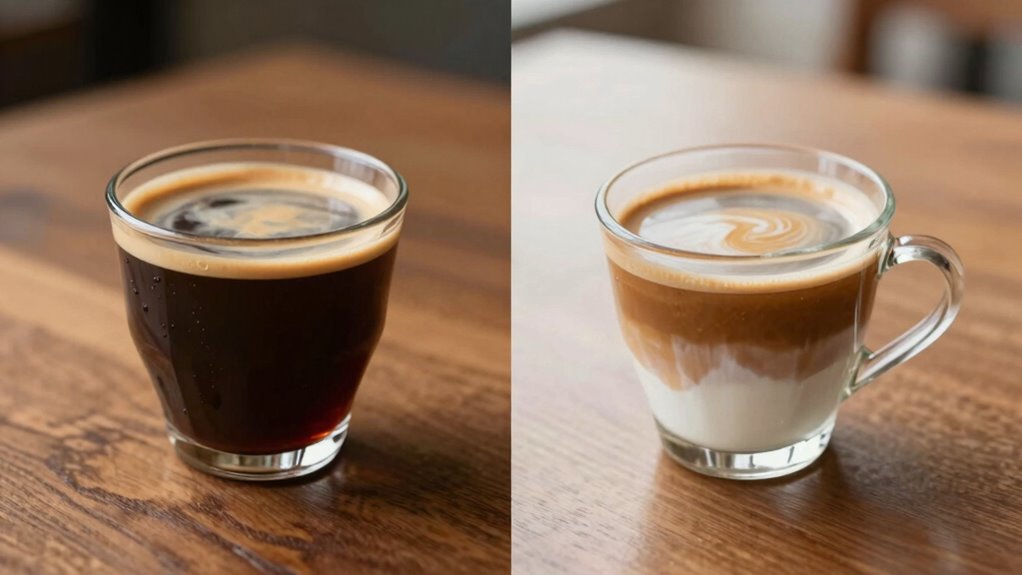
Have you ever noticed how your coffee’s flavor and aroma change depending on how it’s brewed? That’s because brewing methods greatly influence what you taste and smell. Different brewing equipment variations, like French presses, pour-over cones, or espresso machines, extract flavors in unique ways. The equipment’s design affects water contact time and pressure, shaping the coffee’s profile. Additionally, coffee bean origins play a role; beans from different regions have distinct qualities that respond differently to various brewing techniques. For example, some beans highlight bright, fruity notes when brewed with pour-over, while others develop richer, fuller flavors in a French press. Understanding these factors helps you see how both brewing equipment and bean origins shape your coffee’s flavor and aroma. Furthermore, the brewing process itself can emphasize or mute certain flavor characteristics, depending on temperature and extraction time. Recognizing how extraction techniques influence flavor can help you refine your brewing skills and truly appreciate the complexity of coffee.
A deeper understanding of brew consistency can also help you achieve more predictable and enjoyable results with each cup.
The Chemistry of Coffee Extraction During Brewing
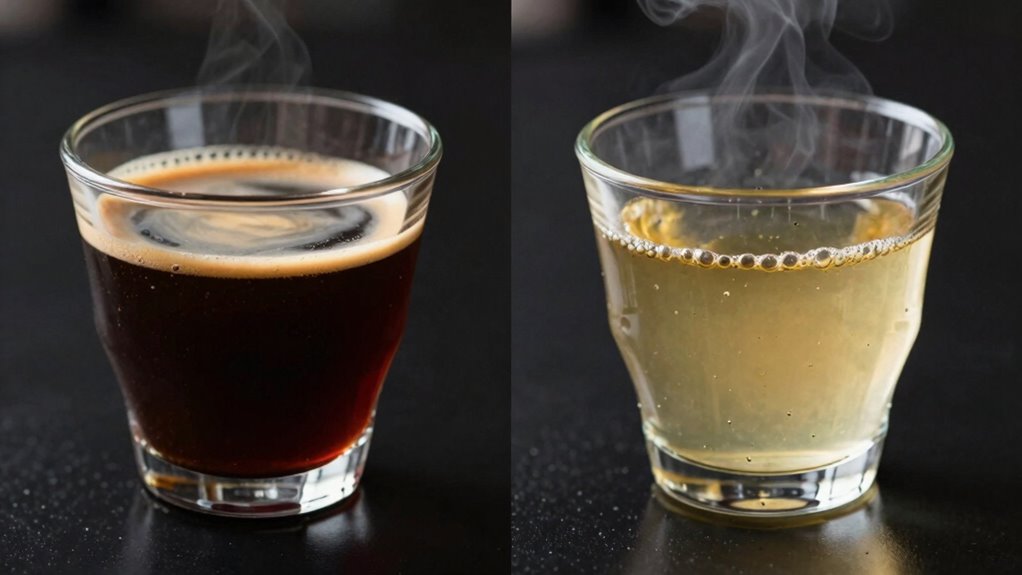
Understanding the chemistry behind coffee extraction reveals how the brewing process transforms simple water and grounds into a complex beverage. When you brew, extraction dynamics control how coffee bean chemistry releases flavors, oils, and acids into your cup. Factors like temperature, grind size, and brewing time influence which compounds dissolve first and how fully they extract. As shown in the table below, different components behave uniquely during extraction:
| Compound Type | Extraction Rate | Impact on Flavor |
|---|---|---|
| Soluble solids | Fast | Body, sweetness |
| Acids | Moderate | Brightness, tang |
| Oils | Slow | Body, mouthfeel |
| Bitter compounds | Last | Bitterness |
Knowing these interactions helps you understand why different brewing methods produce distinct taste profiles. Additionally, extraction dynamics can influence personal preferences in flavor, making the experience more tailored to individual taste tendencies. Recognizing how each compound’s extraction rate affects flavor development allows for more intentional brewing choices.
How Extraction Time Influences Taste and Fragrance
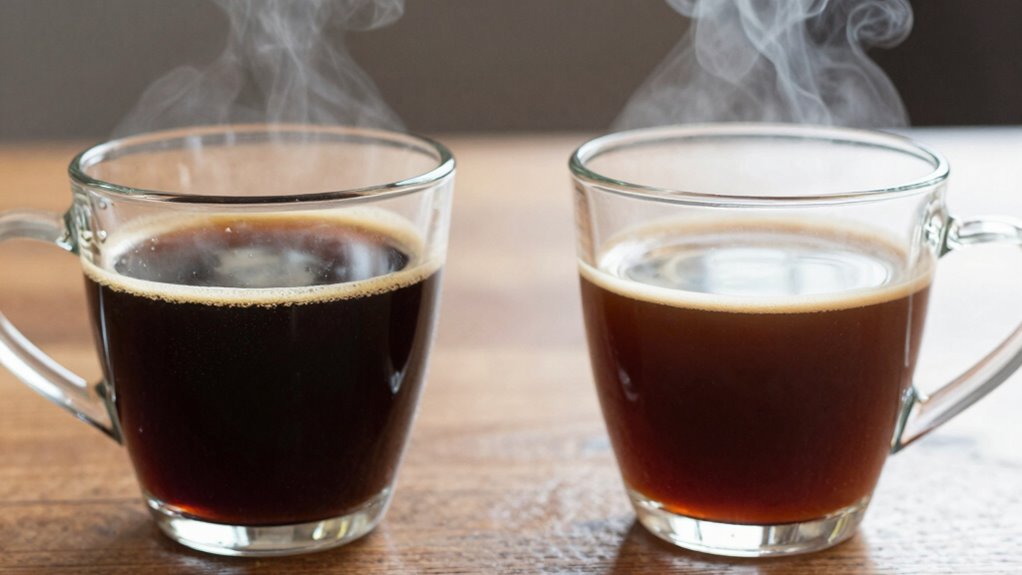
As you adjust the extraction time, you’ll notice flavors develop and change, revealing subtle nuances or harsh notes. Longer brewing often enhances aromatic intensity, but it can also introduce bitterness. Paying attention to these shifts helps you understand how timing shapes both taste and fragrance. Exploring different craft patterns can further deepen your appreciation for the nuanced effects of brewing variables. Incorporating eco-friendly practices such as sustainable sourcing and environmentally conscious techniques can also enhance your overall coffee experience. Utilizing luxury glassware during tasting can also elevate your sensory experience, allowing you to better discern the subtle distinctions in flavor and aroma. Additionally, understanding the importance of brewing variables can help you fine-tune your process for optimal results. Recognizing the role of sustainable sourcing in coffee quality can further inform your brewing choices and contribute to a more responsible consumption.
Flavor Development Over Time
The length of extraction time plays a crucial role in shaping the flavor and aroma of your coffee. As you extend or shorten brewing, you notice different flavor profiles emerging, influenced by the coffee bean origins. For instance, beans from different regions develop unique tastes at varying extraction points. Proper brewing equipment maintenance guarantees consistent extraction, preventing over- or under-extraction that can obscure subtle flavors. Over time, this affects how your coffee’s fragrance evolves, revealing more nuanced layers or suppressing delicate notes. By paying attention to extraction duration, you learn how flavor develops gradually, revealing complexities that might be hidden with a rushed brew. Adjusting your process helps you understand the relationship between brewing time and the evolving profile of your coffee’s taste and fragrance.
Aromatic Intensity Shift
Extraction time directly impacts the aromatic intensity of your coffee, shaping how its fragrance unfolds with each brew. Longer extraction can enhance aromatic balance by releasing more volatile compounds, intensifying the scent perception. Conversely, shorter extraction may result in a more muted aroma, emphasizing subtle notes. As you adjust extraction times, you’ll notice shifts in fragrance strength and complexity, revealing how timing influences aroma profile. A well-balanced extraction highlights the coffee’s nuanced scent layers, while over- or under-extraction can distort the aromatic harmony. By experimenting with different brewing durations, you learn to control scent perception and achieve desired aromatic outcomes. This process deepens your understanding of how extraction influences not just taste but the fragrant experience that completes it. Additionally, understanding brewing technique can help you refine your method for optimal aromatic expression. Recognizing the role of **volatile compounds** in aroma development can further enhance your ability to craft a balanced sensory profile.
French Press vs. Pour-Over: How Do They Change Coffee Flavor?
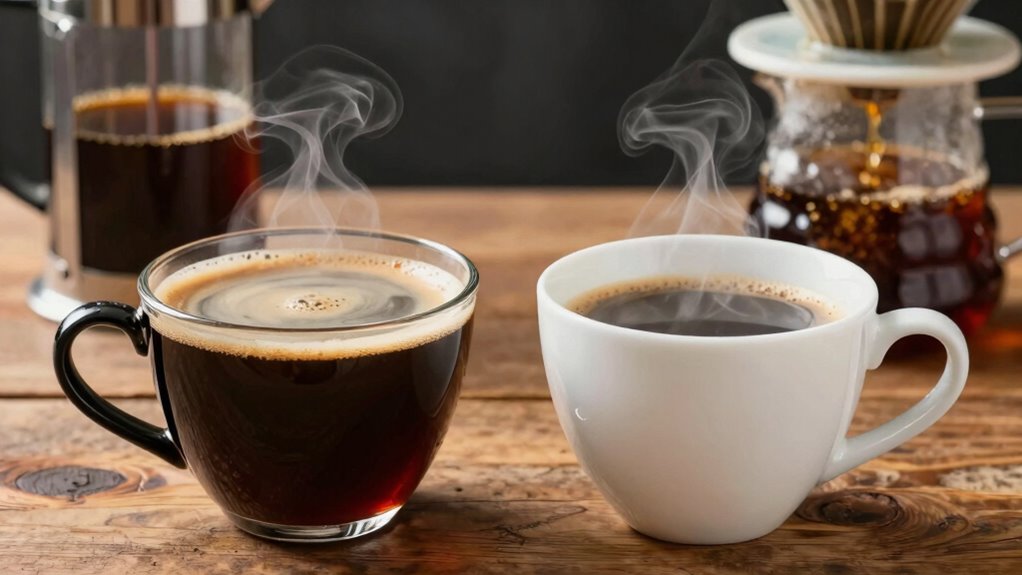
French press and pour-over brewing methods extract flavors differently, affecting the final taste. The French press’s longer steeping time results in a richer, fuller body, while pour-over emphasizes clarity and brightness. Understanding these differences helps you see how brewing time influences flavor extraction. Additionally, the brewing ratios play a crucial role in achieving the desired flavor profile for each method. Paying attention to water temperature can further enhance flavor extraction and balance in your coffee.
Flavor Extraction Differences
Have you ever wondered why your coffee tastes different depending on how it’s brewed? The key lies in flavor extraction, which varies with brewing methods. French presses use coarse grounds and steep the coffee in water, extracting rich oils and deeper flavors, especially from diverse coffee bean origins. Pour-over brewing, with its paper filters and precise pouring technique, emphasizes clarity and brightness by trapping most oils and fines. Brewing equipment differences influence how quickly and thoroughly compounds are extracted, affecting body, acidity, and flavor complexity. A French press allows more solubles to infuse into the brew, creating a fuller, more robust profile. In contrast, pour-over’s controlled extraction results in a cleaner, more nuanced taste. These differences teach you how brewing impacts flavor and highlights the unique qualities of each coffee bean origin.
Brewing Time Impact
Ever notice how the length of time you brew your coffee can dramatically change its flavor? With a French Press, steeping grounds for longer extracts more oils and flavors, often resulting in a fuller, bolder cup. Conversely, pour-over brewing’s shorter time emphasizes clarity and brightness, highlighting the beans’ nuanced notes. The roast level from your coffee farm influences how brewing time impacts taste: darker roasts release oils quickly, so longer steeping may produce bitterness, while lighter roasts benefit from extended extraction to develop complex flavors. Bean roasting also affects how swiftly flavors are extracted—knowing this helps you adjust brewing times to match the beans’ characteristics. Whether you prefer a rich or delicate cup, understanding brewing time’s impact deepens your appreciation of how each method reveals different aspects of your coffee’s origin. Brewing techniques play a crucial role in shaping the final flavor profile.
How Grind Size and Water Temperature Impact Your Brew
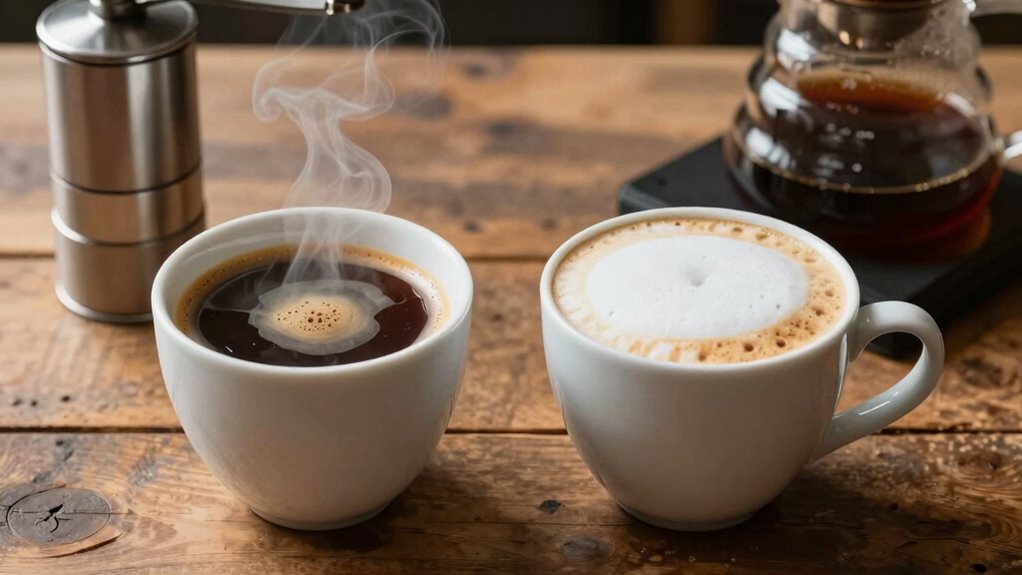
The size of your coffee grind and the temperature of the water you use directly influence how flavors extract during brewing. If your grind isn’t consistent, some particles will extract faster, leading to uneven flavors. A finer grind increases extraction but can cause over-extraction if too fine, making your coffee bitter. Conversely, a coarser grind may under-extract, resulting in weak flavors. Water temperature also matters; hotter water speeds up extraction, highlighting brighter acids and bold flavors, while cooler water produces a milder taste. Water mineralization affects extraction as well—mineral-rich water can enhance certain flavors, while soft water may dull them. Adjusting grind size and water temperature allows you to fine-tune your brew, revealing nuances you might miss otherwise. Additionally, understanding regional flavor profiles and the influence of additives like chicory can deepen your appreciation for coffee and tea flavor extraction. Recognizing the impact of water composition on flavor can help you select the best water for your brewing method. Being aware of water mineral content can further optimize your brewing process and flavor outcomes. Using the right combination of these variables can improve your coffee experience and bring out the best in every cup. Incorporating water quality considerations into your brewing routine can significantly elevate your results.
Developing Your Palate Through Brewing Experiments
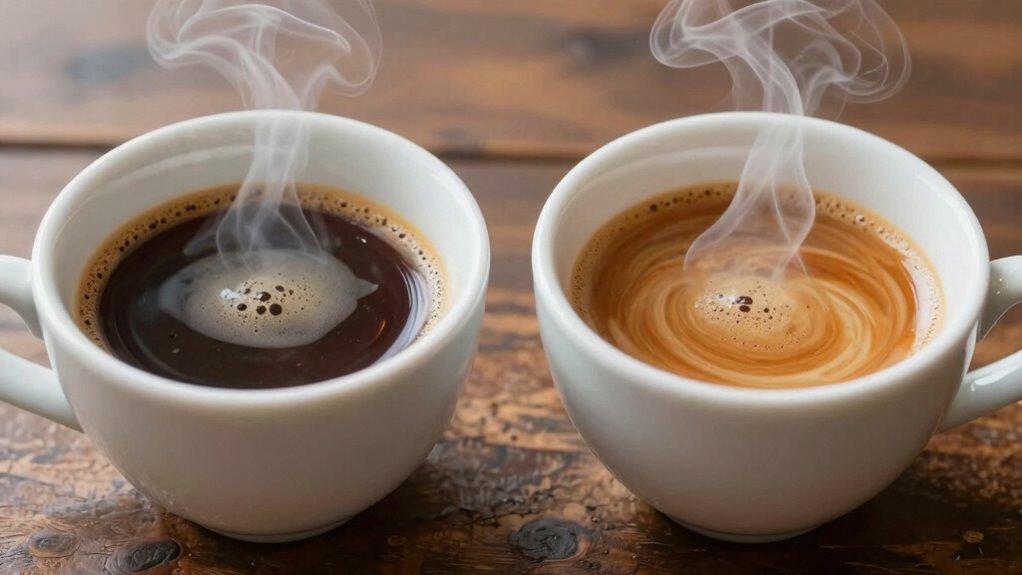
Adjusting grind size and water temperature helps you uncover different flavors, but truly developing your palate requires intentional experimentation. Focus on exploring coffee bean origins, noting how beans from Ethiopia differ from those of Colombia or Sumatra in taste and aroma. Each origin offers unique characteristics that can deepen your appreciation for nuance. To accurately taste these differences, verify your brewing equipment is well-maintained—clean filters, calibrated grinders, and fresh water prevent interference with flavors. Keep track of each brew’s variables, noting how small adjustments reveal new layers of flavor. Over time, this systematic approach sharpens your ability to identify subtle distinctions, expanding your sensory awareness and enriching your overall coffee experience.
Common Mistakes When Trying Different Coffee Brewing Methods
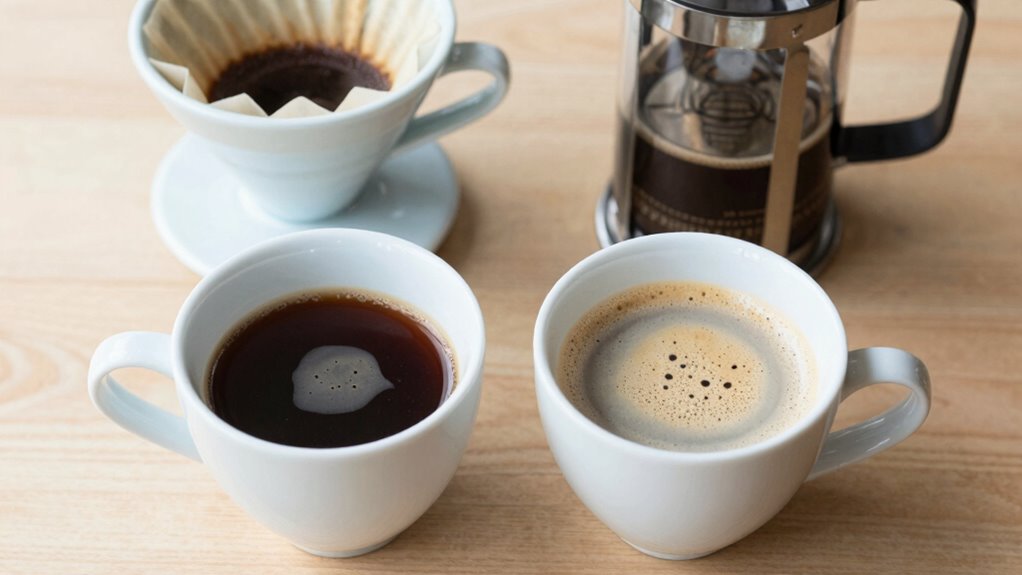
Trying different brewing methods can be enlightening, but it’s easy to fall into common traps that hinder your progress. One mistake is ignoring coffee bean origins, which greatly influence flavor profiles. Using the same beans for every method limits your understanding of how origin impacts taste, so experiment with different regions. Another common error is neglecting brewing equipment maintenance. Dirty or poorly calibrated equipment can produce inconsistent results, making it harder to compare flavors accurately. Additionally, inconsistent grind size or water temperature can skew your perception of each method’s strengths. To improve, keep your equipment clean, pay attention to grind consistency, and choose beans from different origins to explore a full spectrum of flavors. Being aware of industry standards can also help you better calibrate your brewing process and achieve more reliable results. Regularly reviewing home brewing best practices can further enhance your technique and consistency. Incorporating proper cleaning routines into your process ensures your equipment functions optimally, leading to more precise flavor extraction. Understanding the science of extraction can also help you grasp how variables like temperature and brew time influence taste, leading to more nuanced flavor profiles. Avoid these pitfalls to deepen your coffee-tasting skills effectively.
Tips to Improve Your Home Brewing and Tasting Skills
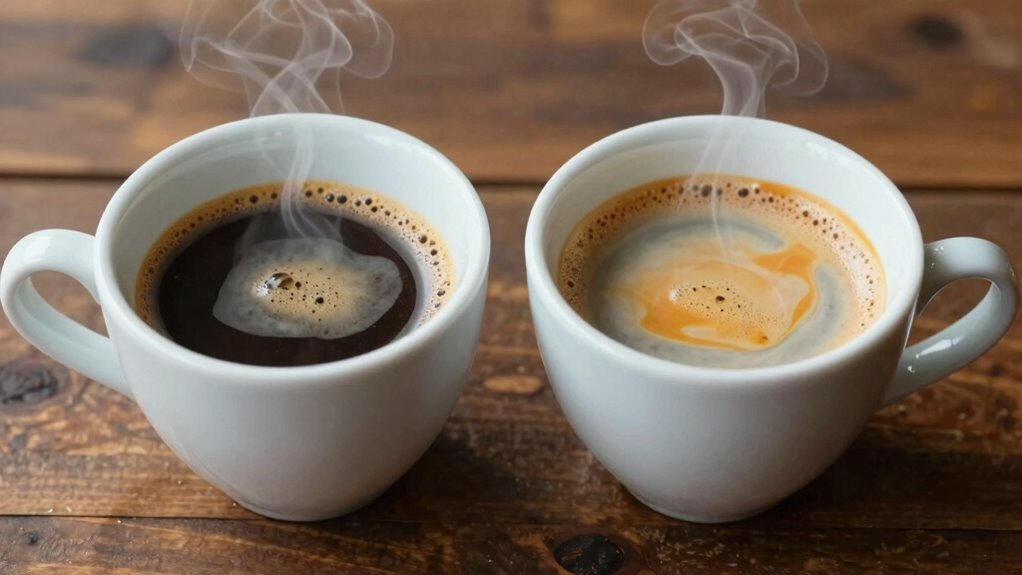
Improving your home brewing and tasting skills starts with paying close attention to the details that influence flavor. Experiment with different coffee bean varieties to discover how each type impacts taste and aroma. Keep notes on which beans you prefer and how they respond to various brewing methods. Regular brewing equipment maintenance is essential; clean your grinder and coffee maker thoroughly to avoid stale flavors and guarantee consistent results. Use freshly ground beans and measure your coffee and water precisely to achieve balance. Tasting mindfully, focusing on subtle differences, sharpens your palate. Over time, these practices help you recognize what enhances or detracts from your coffee experience, making your home brewing more intentional and enjoyable.
Frequently Asked Questions
Can Brewing the Same Coffee Twice Reveal Hidden Flavor Notes?
Yes, brewing the same coffee twice can reveal hidden flavor notes. When you compare methods, you notice differences in aroma extraction and how flavors develop, highlighting flavor complexity. One method might emphasize fruity notes, while another brings out earthy tones. This process helps you understand how brewing technique influences taste, making you more aware of subtle nuances and improving your overall appreciation for coffee’s intricate flavor profile.
How Does Coffee Origin Influence Taste Differences in Brewing Methods?
You’ll notice that coffee origin softly influences taste differences across brewing methods, like a gentle whisper guiding your palate. Bean varietals and roasting levels shape these subtle nuances, revealing unique flavor profiles. When you brew beans from different regions, you might find some brighter, fruitier notes in lighter roasts or richer, deeper tones in darker ones. This dance of origin and technique helps you discover a richer, more vivid coffee experience.
Is There an Optimal Brewing Method for Highlighting Specific Flavor Profiles?
You can better highlight specific flavor profiles by choosing a brewing method that emphasizes desired notes, like pour-over for clarity or AeroPress for richness. Focus on flavor enhancement through precise grind size and water temperature. Achieving brewing consistency helps you compare results accurately, revealing how different methods accentuate particular tastes. Experimenting with these techniques lets you discover which brewing style best showcases your coffee’s unique characteristics.
How Do Environmental Factors Affect Coffee Tasting During Experiments?
Environmental factors markedly influence your coffee tasting by affecting flavor perception and sensory adaptation. Bright or fluctuating lighting can alter how you perceive acidity and sweetness, while strong odors might mask or enhance certain flavors. Temperature and background noise also play roles, impacting your focus and sensitivity. By controlling these factors during experiments, you guarantee more accurate, consistent tasting results, helping you better understand the nuances of coffee flavor profiles.
Can Brewing Two Methods Improve Overall Coffee Appreciation Skills?
Ironically, brewing two methods can actually sharpen your overall coffee appreciation skills. It forces you to focus on flavor consistency and discover how brewing versatility impacts taste. By comparing the same beans in different ways, you’ll notice subtle nuances and develop a more refined palate. This hands-on approach deepens your understanding and enjoyment, making every cup more intentional and flavorful, no matter the brewing method.
Conclusion
By brewing the same coffee two ways, you’re revealing a world of flavors and aromas, honing your palate with each experiment. Did you know that even a minute difference in extraction time can alter your brew’s taste considerably? Embrace these methods at home, and you’ll discover over 80% of coffee drinkers find their perfect cup through trial and error. Keep exploring—your taste buds will thank you for the adventure.
Fall Picks
fall essentials
As an affiliate, we earn on qualifying purchases.