

Repeating the same brew helps you notice subtle differences in flavor caused by small changes in variables like water temperature, grind size, or freshness. As you experiment, you’ll understand how ingredient interactions influence taste and aroma. This process builds confidence and sharpens your senses, revealing new nuances each time. By tracking your results and adjusting, you gain deeper insights into brewing science. Keep exploring, and you’ll reveal even more secrets behind a perfect cup.

Get coffee and tea gear delivered free with Prime
- Fast, free delivery on millions of items
- Prime Video, Amazon Music and more included
- Member-only deals all year
Key Takeaways
- Small variations in ingredients or environmental conditions can reveal new flavor nuances over repeated brews.
- Repetition helps you identify subtle differences and develop a deeper sensory awareness and palate.
- Tracking each brew allows you to learn how minor adjustments impact flavor and consistency.
- Repeated practice enhances understanding of brewing chemistry and ingredient interactions.
- Consistent brewing builds confidence, enabling you to experiment intelligently and discover new techniques.
As an affiliate, we earn on qualifying purchases.
Why Repeating Your Brew Reveals Hidden Flavor Nuances

Even when you follow the same brew recipe repeatedly, subtle differences in variables like water temperature, grind size, or bean freshness can bring out new flavor nuances. These small changes influence flavor depth, revealing layers you might not have noticed before. As you experiment, you’ll notice how the aroma complexity shifts, adding new dimensions to your experience. For instance, a slightly hotter water temp can enhance deeper, richer flavors, while a finer grind might amplify aroma nuances. Over time, these tweaks help you understand how each element impacts your brew’s character. Repeating the process isn’t just about consistency; it’s about uncovering hidden flavor profiles and aroma intricacies that transform your ordinary cup into a more nuanced, sensory-rich experience. Exploring different water qualities can also reveal subtle flavor differences that contribute to your overall tasting journey.
How Small Process Tweaks Improve Your Coffee Each Time
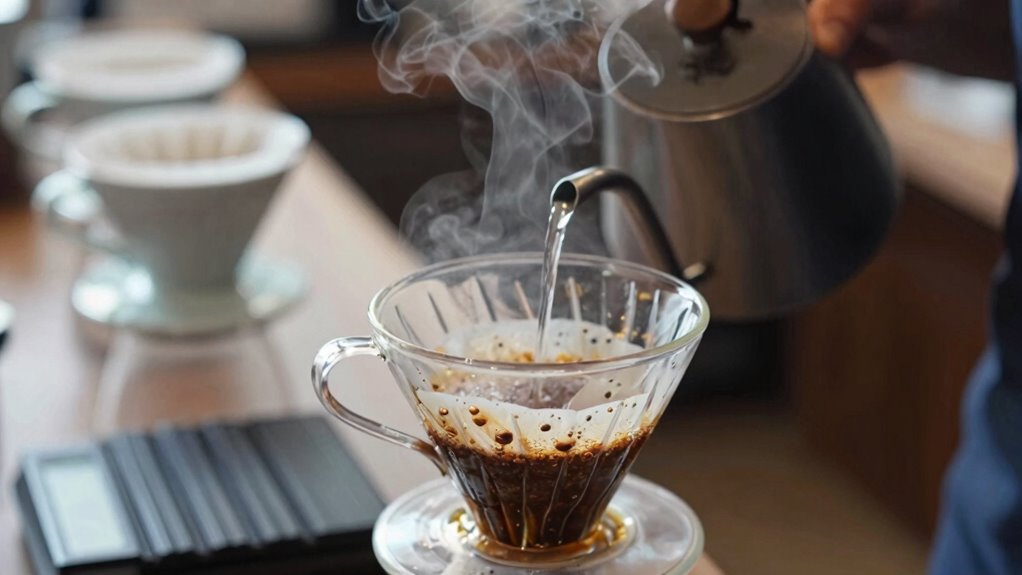
Small process tweaks can considerably elevate your coffee with each brew, guiding you toward a more refined cup. Adjusting grind size, water temperature, or steep time might seem minor, but these small changes can highlight different aspects of your coffee’s flavor. Knowing the coffee bean origins helps you decide which tweaks matter most—single-origin beans often reveal subtle nuances that benefit from precise adjustments. Regular brewing equipment maintenance also plays an essential role; clean machinery ensures consistent extraction and prevents off-flavors. Even slight modifications, like rinsing your filter or calibrating your grinder, can lead to noticeable improvements. With each tweak, you learn more about how your equipment and ingredients interact, gradually optimizing your process for a better, more personalized coffee experience.
Using Repetition to Build Consistency and Confidence

Repetition is a powerful tool for building consistency and confidence in your brewing process. By repeatedly making the same brew, you strengthen your sensory memory, allowing you to recognize subtle differences and improvements. Over time, this builds your brewing intuition, so you instinctively know when adjustments are needed. Additionally, engaging in sound healing science principles, such as focusing on specific frequencies or rhythms during brewing, can enhance your sensory awareness and deepen your connection to the process. Recognizing unplanned weather changes, for example, can also inform your brewing adjustments and improve future outcomes. Understanding contrast ratio, which affects image depth and clarity, can serve as a metaphor for recognizing the depth of flavor and texture in your brews. Embracing Stoic principles can help you approach each brew with patience and acceptance, fostering a calm mindset that supports learning and growth. Moreover, cultivating curiosity about different brewing techniques can lead to discovering new flavors and methods that elevate your craft.
Experimenting With Variations Without Starting Over
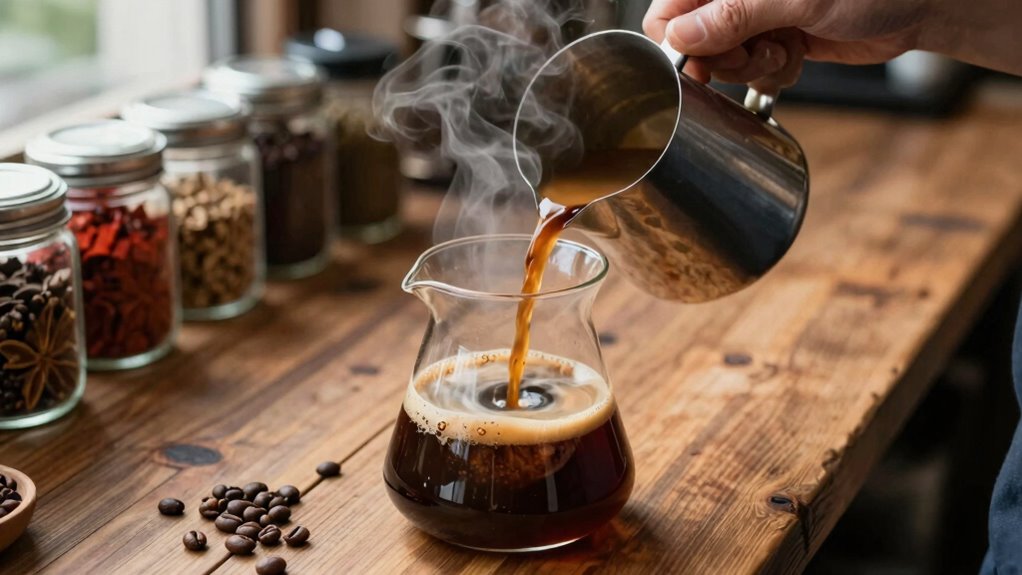
While practicing the same brew repeatedly helps build confidence, it also opens the door to experimentation. You can tweak ingredients or adjust brewing times to explore different flavor pairings without starting from scratch. You can also experiment with technique variation to see how different methods influence your final flavor. For example, try swapping out a single ingredient—like a different spice or a new coffee bean—to see how it changes the flavor profile. These small variations keep your process fresh and help you learn what works best. Just remember, equipment maintenance is key; regularly cleaning and calibrating your gear guarantees consistent results even when experimenting. By making incremental changes, you refine your skills and discover new nuances in your brew, all without the need to overhaul your entire process each time. Ingredient education can guide you in choosing complementary additions that enhance your results, especially when understanding large number conversions can help you better plan quantities for larger batches or special events. Additionally, understanding flavor chemistry can deepen your insight into how different ingredients interact during brewing. Incorporating sensory evaluation techniques allows you to better assess and refine your flavor profiles through structured tasting.
Troubleshooting Common Brewing Issues Through Repetition
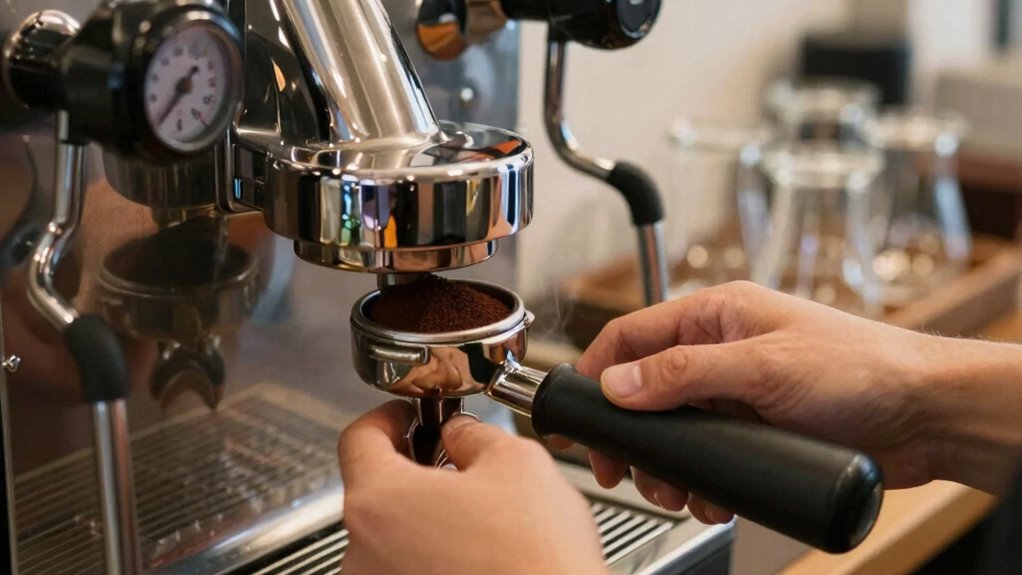
Repeatedly brewing the same coffee allows you to identify patterns in your results and quickly spot recurring issues. If your brew consistently tastes off, small adjustments can make a big difference. For example, if it’s too bitter, consider changing your grind size—perhaps it’s too fine—or adjusting the water temperature. If your coffee is weak, a coarser grind or higher temperature might help extract more flavor. Keep an eye on these details:
Repeated brewing reveals patterns; small tweaks improve taste—adjust grind size and water temperature for better flavor.
- Inconsistent grind size affects extraction
- Water temperature impacts flavor clarity
- Overly bitter brews may need coarser grinds
- Weak flavors could benefit from hotter water
- Repetition helps you notice subtle changes and their effects
- Developing enterprise governance practices can help ensure consistent quality and security in your brewing process. Consistent quality control is essential for refining your technique over time. Additionally, understanding process standardization can lead to more predictable results and improved efficiency. Through practice, you’ll develop an intuitive sense for troubleshooting brewing issues efficiently.
Tracking Your Batches to Improve Future Brews
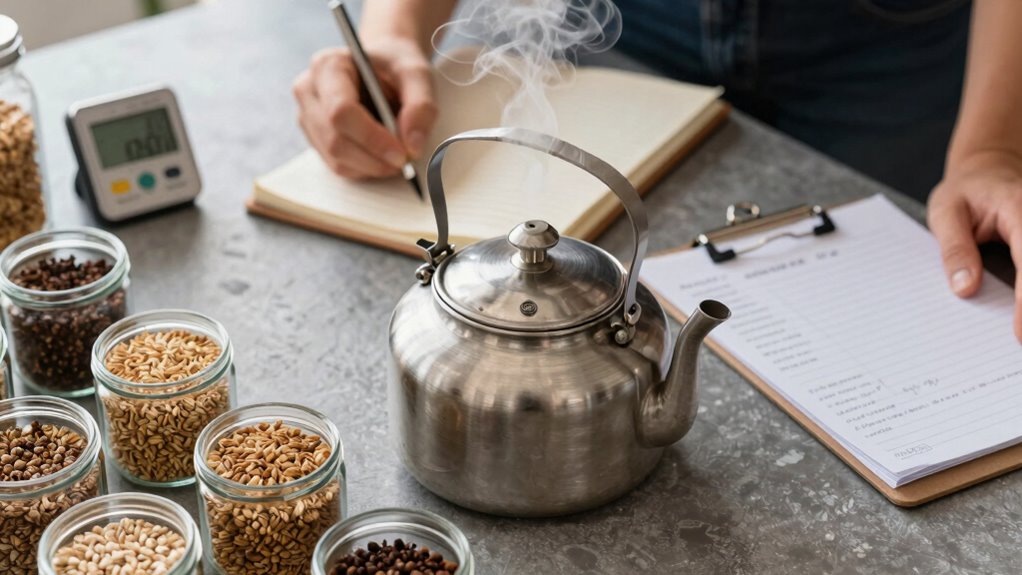
Keeping detailed records of your brewing batches helps you spot ingredient variations that impact flavor. By analyzing your brewing data, you can identify patterns and make informed adjustments. Tracking these details guarantees each batch gets better over time. Additionally, detecting passive voice in your notes can enhance clarity and precision in your documentation. Understanding ingredient quality can further refine your brewing process and outcomes. Incorporating proper record-keeping methods can also prevent common mistakes and improve consistency, especially when considering affiliate disclosures and privacy policies that ensure transparency and trust in your brewing journey. Regularly reviewing your records can also promote better ergonomic habits, reducing strain during long brewing sessions and supporting overall comfort.
Monitoring Ingredient Variations
Tracking ingredient variations across your batches allows you to identify patterns and make informed adjustments for future brews. Even small changes in coffee beans, water, or grind size can influence flavor, aroma, and body. By monitoring these variations, you can uncover how subtle shifts impact your final cup, helping you refine your process. Remember, coffee traditions often involve specific ingredient choices, but brewing myths sometimes discourage experimentation. Staying attentive to ingredient changes can challenge those myths and deepen your understanding. Incorporating personal finance planning principles, such as tracking and adjusting based on your observations, can help you develop a more consistent and satisfying brewing routine.
Analyzing Brewing Data
Ever wondered how to turn your brewing data into actionable insights? Tracking each batch helps you understand how variables like your coffee plant’s origin or roasting profiles impact flavor. Record details such as temperature, extraction time, and grind size, then compare batches to identify patterns. For example, if a batch tastes off, review the roasting profiles to see if adjustments are needed. Analyzing this data reveals subtle differences in how your chosen coffee plant responds to specific brewing parameters. Over time, this process sharpens your intuition, allowing you to refine your technique and consistently improve your brews. Repeating the same recipe becomes less about guesswork and more about understanding the science behind each cup, revealing new ways to enhance flavor and consistency.
Understanding How Ingredient Interactions Affect Flavor

You’ll find that ingredient balance and harmony are key to achieving the flavor you want, as each component influences the others. Flavor compound interactions can create new tastes or intensify existing ones, making every adjustment impactful. Plus, freshness levels can considerably change the outcome, so understanding how these factors interact helps you refine your brew each time.
Ingredient Balance and Harmony
Understanding how ingredients interact is crucial for achieving a balanced and harmonious brew. When you focus on ingredient balance, you guarantee each element complements the others, creating a cohesive flavor profile. Effective flavor pairing enhances specific notes, making your brew more complex and enjoyable. Proper equipment calibration ensures your measurements are accurate, which is essential for consistency. Keep these points in mind:
- Adjust ingredient ratios to highlight key flavors
- Experiment with complementary flavors to find harmony
- Use calibration tools to measure ingredients precisely
- Balance sweetness, acidity, and bitterness intentionally
- Recognize how ingredient interactions can shift flavor perceptions
Flavor Compound Interactions
When ingredients interact during brewing, their flavor compounds can combine in ways that considerably alter the final taste. Understanding flavor pairing helps you predict how ingredients will influence each other, creating new or enhanced flavors. These interactions also impact aroma development, making your brew smell more complex and inviting. For example, pairing citrus with herbs can amplify freshness, while certain spices may deepen sweetness. Even when following the same recipe, small ingredient variations or different extraction times can lead to distinct flavor compound interactions. Recognizing these interactions allows you to tweak your process, discovering unexpected layers of flavor and aroma. This knowledge helps you evolve your brewing skills, turning repetitive practice into a deeper exploration of taste and scent.
Impact of Freshness Levels
Freshness plays a crucial role in how ingredients interact during brewing, directly influencing the development of flavor and aroma. When the freshness levels vary, so does the complexity of your brew. For example, fresher beans often have brighter, more vibrant flavors, while older beans may develop muted or even sour notes. Bean aging can change how ingredients meld, affecting aroma release and taste balance. Keep in mind:
- Fresh beans deliver lively, nuanced flavors
- Older beans might produce flatter or duller profiles
- Proper storage slows bean aging
- Slightly stale beans can add unique depth
- Freshness impacts extraction efficiency
Understanding these factors helps you tweak your process, even with the same recipe, to access new flavor dimensions. Recognizing how ingredient interactions evolve with freshness allows for more intentional adjustments in your brewing. Additionally, storage conditions significantly influence how quickly ingredients lose their optimal qualities, further affecting the final flavor profile.
Deepening Your Brewing Knowledge With Chemistry Insights

Diving into the chemistry behind brewing reveals how small changes in ingredients or process can lead to noticeable differences in your beer. Understanding chemical reactions helps you grasp how yeast ferments sugars into alcohol and CO₂, shaping your brew’s body and carbonation. Flavor chemistry explains how hops, malt, and other ingredients contribute specific aromas and tastes through complex molecular interactions. By learning how these reactions occur, you can adjust variables like temperature or ingredient quality to influence the final product. Recognizing the role of chemistry deepens your appreciation for each step, enabling you to troubleshoot issues or experiment with new techniques confidently. Understanding chemical processes is key to mastering the art of brewing. Additionally, awareness of ingredient quality and its influence on fermentation can lead to more consistent and high-quality brews. Exploring water chemistry further enhances your ability to control pH levels and mineral content, which are crucial for optimal fermentation and flavor development.
Embracing the Learning Journey Toward Coffee Mastery

Beginning the journey toward coffee mastery involves embracing continuous learning and experimentation. Every brew offers a chance to explore new techniques, styles, and history. As you refine your skills, you’ll notice small details making a big difference—like creating eye-catching coffee art or understanding brewing history’s evolution. Staying curious helps you grow beyond technical skills into artistry and storytelling.
Embark on a lifelong journey of coffee mastery through curiosity, experimentation, and a passion for storytelling.
- Experiment with latte art to express creativity
- Study brewing history to appreciate its roots
- Try different beans and roast profiles
- Attend tastings or barista courses
- Reflect on each brew to identify improvements
This ongoing process keeps your passion alive, pushing you to deepen your expertise while enjoying each cup. Mastery isn’t a destination—it’s a lifelong exploration.
Frequently Asked Questions
How Can I Identify Subtle Flavor Differences in My Repeated Brews?
You can identify subtle flavor differences in your repeated brews by honing your tasting techniques and paying close attention to flavor nuances. Use a structured tasting approach, like noting aroma, body, and aftertaste. Take detailed notes, compare each brew side-by-side, and focus on small variations. Over time, you’ll develop a keener palate, allowing you to recognize even the faintest flavor changes and improve your brewing consistency.
What Tools Can Help Me Track Improvements Over Multiple Brewing Attempts?
Think of your brewing journey as a voyage, where tools are your compass. Use a flavor analysis chart to note subtle taste shifts, and keep detailed logs of each batch. Regular equipment calibration guarantees consistency, like tuning an instrument. These tools help you track improvements, revealing how small adjustments influence flavor over time. With this approach, you’ll refine your craft and discover new depths in each brew.
How Do Environmental Factors Influence Consistent Coffee Brewing Results?
Environmental factors like altitude effects and water quality greatly influence your brewing consistency. Higher altitudes can cause water to boil at lower temperatures, affecting extraction. Poor water quality, with minerals or contaminants, alters flavor and extraction efficiency. To maintain consistency, adjust your brewing parameters based on altitude and use filtered water to guarantee your coffee’s flavor remains stable across different environments. These tweaks help you learn and refine your technique over time.
Can Repeated Brewing Help Me Develop a Personal Coffee Style?
Repeated brewing acts like a canvas for your personal expression, turning each cup into a masterpiece. As you refine your process, you’ll notice your flavor evolution, revealing subtleties you previously missed. This consistency allows you to experiment within your comfort zone, building confidence and refining your unique style. Over time, your repeated efforts will help you craft a signature brew that’s unmistakably yours, even as the flavors continue to surprise you.
What Are Common Mistakes to Avoid When Experimenting With Recipes Repeatedly?
When experimenting with recipes repeatedly, avoid sacrificing flavor consistency by making drastic changes too quickly. Focus on technique refinement, like adjusting grind size or brewing time, one step at a time. Don’t ignore small details, as they can profoundly impact the final taste. Keep notes on each variation to track what works and what doesn’t. This careful approach helps you fine-tune your process and discover new depths in your brewing.
Conclusion
So, next time you brew the same coffee and find it *still* not perfect, don’t fret—you’re just uncovering secret flavor codes and mastering the art of patience. Repeating isn’t laziness; it’s your ticket to coffee enlightenment. Embrace the quirks, tweak with gusto, and track your progress. Before you know it, you’ll be a brewing guru, all while secretly wondering if your beans are plotting their own flavor surprises. Cheers to your caffeinated quest!
Columbus Day / Indigenous Peoples' Day Picks
long weekend sales
As an affiliate, we earn on qualifying purchases.