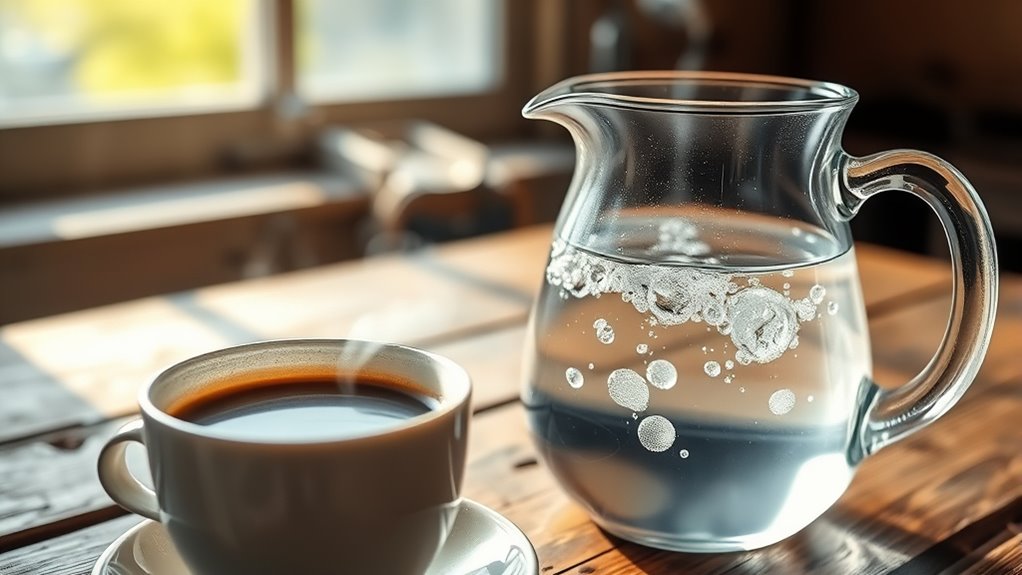

Your water quality directly impacts your coffee’s flavor, aroma, and overall quality. Too many minerals can cause bitterness or equipment scaling, while too few may result in flat, weak taste. pH levels and contaminants also influence extraction and safety. Proper filtration and source selection guarantee your water enhances, rather than harms, your brew. Continuing to explore water’s role can help you optimize every cup and avoid common pitfalls that ruin coffee’s true potential.
Key Takeaways
- Improper mineral levels in water can cause over-extraction, bitterness, or flat flavors in your coffee.
- High water hardness leads to equipment scaling and reduced brewing efficiency.
- Contaminants like chlorine and heavy metals can introduce off-flavors and compromise safety.
- Incorrect pH levels affect extraction, dulling bright notes or causing sourness.
- Regular water testing and filtration ensure optimal flavor and protect your coffee equipment.

Waterdrop Water Filter Pitcher with 1 Filter, 200-Gallon Long-Life, 10-Cup Large Water Filter Pitcher, Improved Coffee & Tea Taste, NSF Certified, 5X Times Lifetime, Reduces PFOA/PFOS, Chlorine, Blue
Quality Life, Elite Choice: This filter water pitcher with lid has an efficient filtration effect, essential for any…
As an affiliate, we earn on qualifying purchases.
As an affiliate, we earn on qualifying purchases.
How Water Composition Affects Coffee Flavor

Water composition plays a crucial role in shaping the flavor of your coffee because it directly influences how well the desirable compounds are extracted from the grounds. If your water is too soft, it won’t extract enough flavor, resulting in a weak, flat cup. Conversely, water with high mineral content can lead to over-extraction, making your coffee taste bitter and heavy. The minerals in water, like calcium and magnesium, help release flavor compounds, but too much causes imbalance. The pH level also matters; water that’s too alkaline or acidic can distort the taste, either dulling bright notes or creating sour, sharp flavors. Additionally, using balanced mineral levels in water demonstrates how certain components can enhance overall quality, similar to how beneficial ingredients like collagen and hyaluronic acid in skincare demonstrate how certain components can enhance overall quality, similar to how balanced minerals improve coffee extraction. Properly mineralized water can act as a flavor enhancer, elevating the natural nuances of different coffee beans. When water contains the right balance of minerals, it can also improve the body and mouthfeel of your brew, making each sip more satisfying. This balance not only influences extraction but also impacts the aroma and aftertaste of your brew. Ultimately, balanced water with the right mineral levels ensures ideal extraction, allowing your coffee’s aroma, sweetness, and complexity to shine through.

All-New 20 in 1 Drinking Water Testing Kit 120 Strips, Home Tap and Well Water Test Kit for Hardness, Lead, Iron, Copper, Chlorine, Fluoride
Clear Range: This house water testing kit offers clear, easy to read results and acceptable ranges for all…
As an affiliate, we earn on qualifying purchases.
As an affiliate, we earn on qualifying purchases.
The Role of Minerals in Extraction and Taste

Have you ever wondered how minerals like calcium and magnesium influence the flavor of your coffee? These minerals play a key role in extracting flavor compounds from your grounds. Calcium helps extract desirable sweetness and body, balancing acidity and bitterness. Magnesium enhances the extraction of aromatic oils, contributing to a fuller flavor. When these minerals are present in the right amounts, they improve clarity and complexity in your cup. Additionally, the use of locally sourced firewood in wood-burning stoves supports sustainable energy practices and reduces transportation emissions. Proper water filtration can help maintain optimal mineral levels, preventing issues related to over- or under-extraction. Balancing mineral content is also crucial for preventing water hardness from causing scaling and flavor issues in your brewing equipment. Adjusting mineral levels through filtration or water treatment can help optimize extraction and taste. However, too many minerals can lead to over-extraction, making your coffee bitter or heavy. Conversely, low mineral content can result in weak, flat flavors. So, maintaining a balanced mineral level is vital. It ensures your coffee’s natural nuances shine through without overpowering or dulling the overall taste.

COFFEE WATER Mineral Packs for Making Water for Coffee (Makes 25 Gallons)
COFFEE WATER mineral packs turn pure water into the optimal water for brewing a truly amazing cup of…
As an affiliate, we earn on qualifying purchases.
As an affiliate, we earn on qualifying purchases.
Understanding Water Hardness and Its Impact

Hard water, high in calcium and magnesium, can improve extraction but may lead to bitter-tasting coffee if overused. Too much mineral content can also cause scaling in your equipment, reducing its lifespan. Finding the right balance guarantees your coffee tastes great and your machine stays in good shape. Proper water tuning ensures optimal coffee quality and equipment durability. Monitoring water mineral levels helps maintain this balance and prevents potential issues related to water quality.
Hardness and Extraction Balance
Understanding water hardness is essential because it directly influences how coffee grounds extract flavors during brewing. Hard water’s calcium and magnesium help release desirable compounds, but too much can cause over-extraction, bitterness, or dullness. Conversely, soft water may not extract enough flavor, resulting in weak or sour coffee. Striking a balance ensures ideal extraction without sacrificing clarity or aroma. The right mineral levels enhance body and sweetness, while excessive hardness can dull vibrancy. Adjusting water hardness through filtration or mineral addition can fine-tune your brew. Monitoring water mineral content is crucial for maintaining optimal coffee flavor profiles. For example, measuring calcium and magnesium levels can help you determine the water’s hardness level and make appropriate adjustments. A proper understanding of water chemistry can further improve your brewing process. Here’s a quick comparison:
| Level of Hardness | Effect on Extraction |
|---|---|
| Low | Under-extraction, weak flavor |
| Moderate | Balanced extraction, flavor clarity |
| High | Over-extraction, bitterness |
| Very high | Dullness, muted notes |
Effects on Equipment Longevity
Water hardness considerably impacts the lifespan of your coffee equipment. Hard water contains high levels of calcium and magnesium, which cause mineral buildup inside machines. Over time, this scaling clogs boilers, valves, and heating elements, reducing efficiency and increasing the risk of breakdowns. Scaling also forces your equipment to work harder, leading to faster wear and tear. In espresso machines and coffee brewers, mineral deposits can impair heat transfer and disrupt water flow, affecting brewing consistency. Regular descaling and using filtered or softened water can notably extend your machine’s life. Understanding water hardness** is crucial for maintaining equipment performance and longevity. Additionally, utilizing self watering plant pots with appropriate water management can help reduce mineral buildup in some home appliances. Using water softeners can also be an effective way to minimize mineral deposits and protect your equipment. Ignoring water quality not only compromises flavor but also results in costly repairs or replacements. Properly managing water quality** can prevent mineral accumulation and enhance your machine’s durability. Maintaining proper water hardness levels is essential for protecting your equipment and ensuring peak performance over time.

Compact Countertop Water Softener For Espresso Coffee Machines w/Resin DVA LT8
Improved Taste: Water treated by a water softener typically reduces the hardness ions in water, such as calcium…
As an affiliate, we earn on qualifying purchases.
As an affiliate, we earn on qualifying purchases.
Why Ph Levels Matter in Brewing
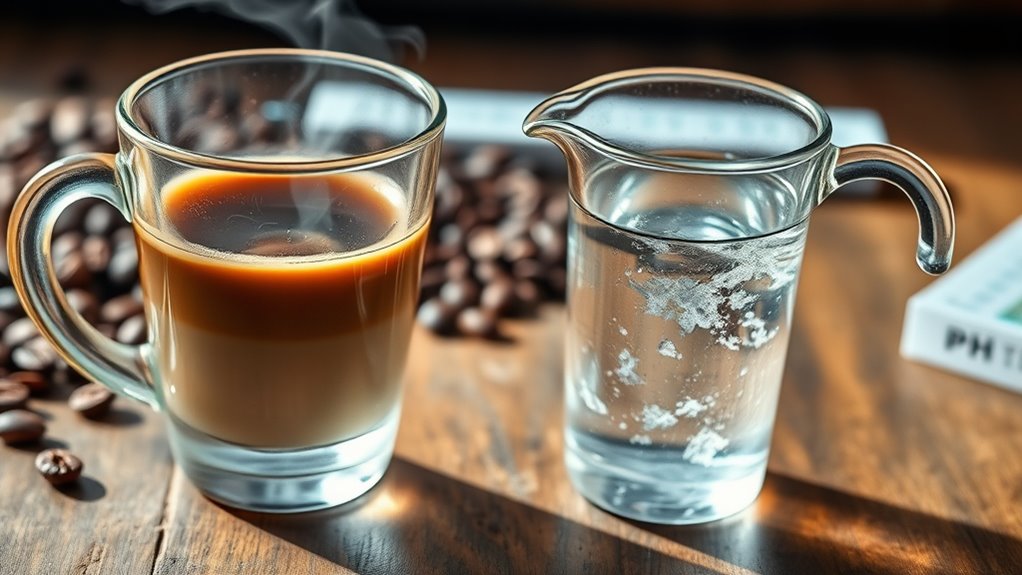
The pH level of your brewing water plays a crucial role in shaping the final flavor of your coffee. If the pH is too high or too low, it can alter extraction, leading to undesirable tastes. Water that’s too alkaline (above 7.5) tends to increase bitterness and dull bright notes, while acidic water (below 6.5) can cause over-extraction, resulting in sourness and sharp flavors. Maintaining a balanced pH ensures proper extraction of acids and oils, preserving your coffee’s intended profile. Detecting passive voice in your writing can help create clearer, more direct sentences that improve readability and engagement.
Detecting and Managing Water Contaminants
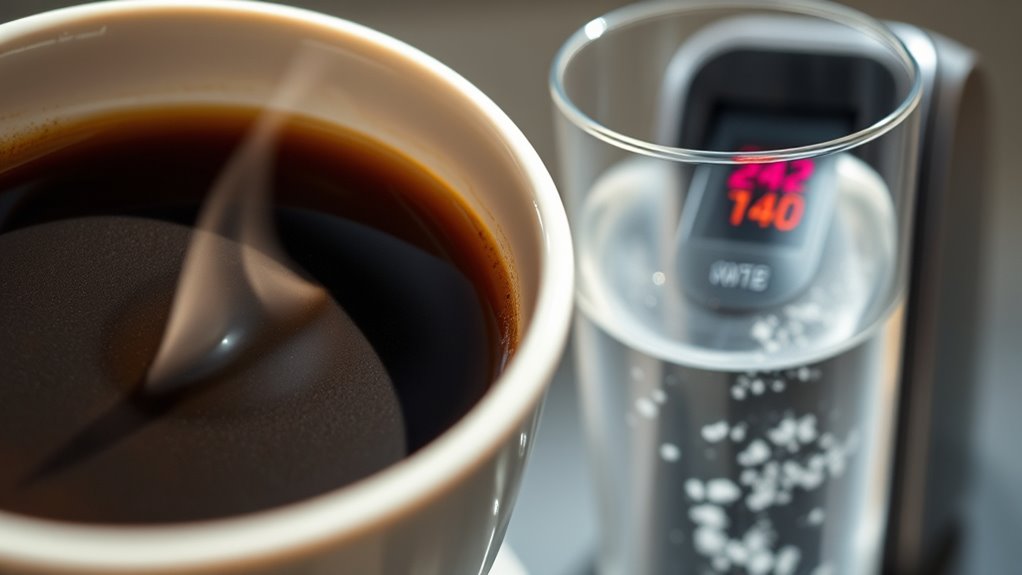
Contaminants in your brewing water can substantially impact the flavor and safety of your coffee, so detecting and managing them is essential. First, test your water using simple test strips or digital meters to identify chlorine, heavy metals, or organic pollutants. If chlorine is present, use activated carbon filters to remove it, preventing off-flavors. Heavy metals like lead or copper require specialized filtration systems, such as reverse osmosis or dedicated metal filters. Organic compounds and geosmin can be minimized with high-quality filtration or by using purified water. Regular testing helps you spot issues early and adjust your water treatment accordingly. Additionally, employing air purifier technology can improve indoor air quality, reducing airborne allergens and odors that might settle into your water or affect your brewing environment. Ensuring your water quality is crucial for coffee flavor, and active management of contaminants helps you maintain optimal brewing conditions. Using water testing kits regularly allows you to monitor water quality more effectively and respond promptly to any contamination issues. Incorporating sound water management practices is also key to maintaining the integrity of your brewing water, as it ensures contaminants do not accumulate over time. By actively managing contaminants, you ensure your water enhances rather than compromises your coffee’s flavor and safety.
Choosing the Right Water Source for Coffee

Choosing the right water source is key to brewing great coffee, as it directly affects flavor and extraction. You should consider water’s mineral content and quality, balancing minerals like calcium and magnesium to enhance taste without causing bitterness. Experimenting with different sources can help you find the water that best complements your preferred beans and brewing method.
Mineral Content Balance
Selecting the right water source for coffee starts with understanding its mineral content. You want a balanced mix that supports best extraction without overpowering the flavors. Too many minerals can lead to over-extraction, causing bitterness, while too few can result in flat, underwhelming taste. The goal is to find water with just the right amount of calcium and magnesium to enhance sweetness, body, and clarity.
Consider these points:
- The ideal mineral content supports flavor complexity without dulling delicate notes.
- High calcium and magnesium levels aid in extracting desirable compounds but shouldn’t be excessive.
- Low mineral content may produce weak, sour coffee lacking depth.
Achieving this balance ensures your brew is flavorful, well-rounded, and true to the beans’ potential.
Source Water Quality
The quality of your water source directly impacts the flavor and overall experience of your coffee. Tap water varies widely by region, often containing chlorine, minerals, or contaminants that can alter taste. Spring water usually offers beneficial minerals like calcium and magnesium, boosting sweetness and body. Distilled or purified water provides a clean, neutral base but lacks minerals necessary for balanced extraction. Bottled water can be inconsistent in mineral content, affecting flavor unpredictably. Your choice of water source influences extraction, aroma, and aftertaste. Experimenting with different sources helps you discover what complements your beans best. Always consider how the water’s composition interacts with your brewing method, ensuring you select a source that enhances rather than detracts from your coffee’s true character.
Enhancing Water Quality Through Filtration and Treatment
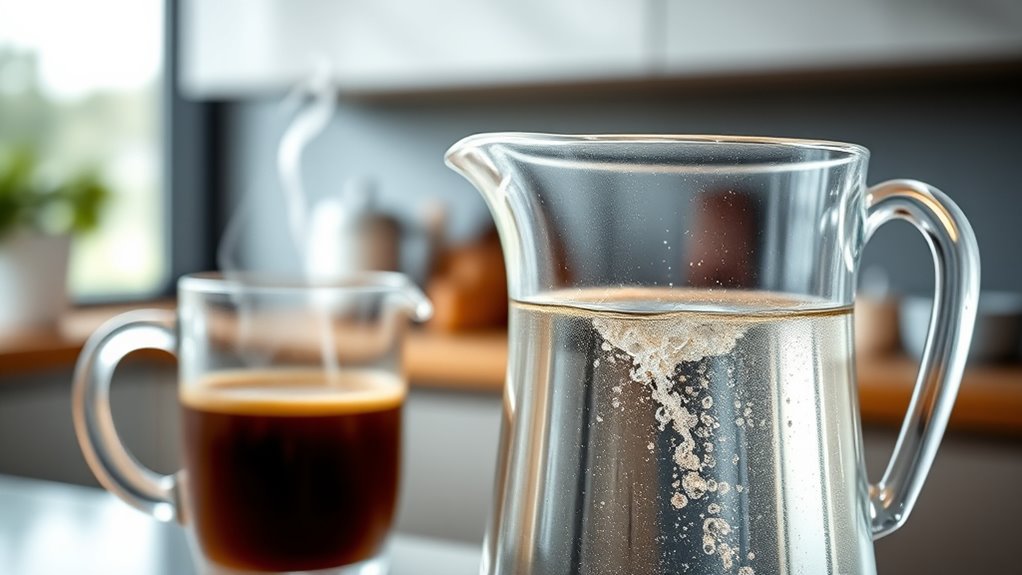
Enhancing water quality through filtration and treatment is essential for achieving the best possible coffee flavor. Proper filtration removes impurities that can cause off-flavors, while adjusting mineral content helps optimize extraction. Using the right system guarantees consistency and preserves delicate aroma profiles. Consider these options:
- Carbon filters effectively reduce chlorine and organic contaminants, preserving fresh taste.
- Reverse osmosis units strip away minerals, requiring remineralization for balanced extraction.
- Water softeners lower calcium and magnesium levels but may introduce sodium, affecting flavor.
Frequently Asked Questions
How Does Water Temperature Influence Coffee Extraction and Flavor?
Water temperature directly impacts coffee extraction and flavor. When you brew with water that’s too hot, over-extraction occurs, making your coffee bitter and harsh. If it’s too cold, under-extraction leads to weak, sour flavors. Aim for water between 195°F and 205°F to optimize flavor extraction. Maintaining the right temperature helps release the coffee’s nuanced aromas and balanced taste, ensuring a rich and satisfying cup every time.
Can Mineral Imbalance Cause Specific Taste Defects in Coffee?
Mineral imbalance can turn your coffee into a rollercoaster ride of flavors. Too much calcium and magnesium can make it taste bitter or dull, while a shortage leaves your brew flat and weak. Sodium from softened water may mute flavors, and excess minerals cause over-extraction, resulting in bitterness. Striking the right balance guarantees your coffee’s flavor is vibrant and well-rounded, not a wild goose chase for the perfect cup.
What Are the Signs of Mineral Buildup in Coffee Equipment?
You’ll notice mineral buildup in your coffee equipment as white, chalky deposits around the water lines, boiler, or portafilter. It may cause clogs, reduce water flow, or lead to uneven extraction. You might also see mineral scale inside your machine or experience longer brewing times. Regular descaling and cleaning prevent these signs, ensuring your equipment functions properly and your coffee tastes as good as it should.
How Often Should I Test My Water Quality for Brewing?
You should test your water quality at least every three to six months to guarantee ideal brewing conditions. If you notice changes in taste, increased scale buildup, or equipment issues, test more frequently. Regular testing helps you identify mineral levels, pH, and impurities, so you can adjust filtration or treatment methods accordingly. Staying proactive keeps your coffee flavorful and your equipment in top shape, ensuring consistent, high-quality brews.
Does the Type of Coffee Bean Affect Ideal Water Mineral Levels?
You should adjust water mineral levels based on the coffee bean type. For example, light roasts benefit from higher mineral content to enhance delicate flavors, while dark roasts can handle more minerals without dulling their bold notes. About 90% of a coffee’s flavor comes from water, so customizing mineral levels guarantees ideal extraction. Experimenting with mineral balance for specific beans lets you access their full flavor potential.
Conclusion
Remember, the water you choose is the silent artist shaping every sip of your coffee. When your H2O is pure and balanced, it reveals rich, vibrant flavors that dance on your palate. But poor water quality can turn your perfect brew into a flat, forgettable cup. Treat your water like a precious ingredient—because it is—and watch your coffee transform into a masterpiece that truly calls to your soul.