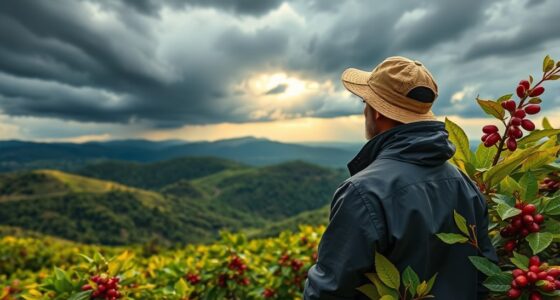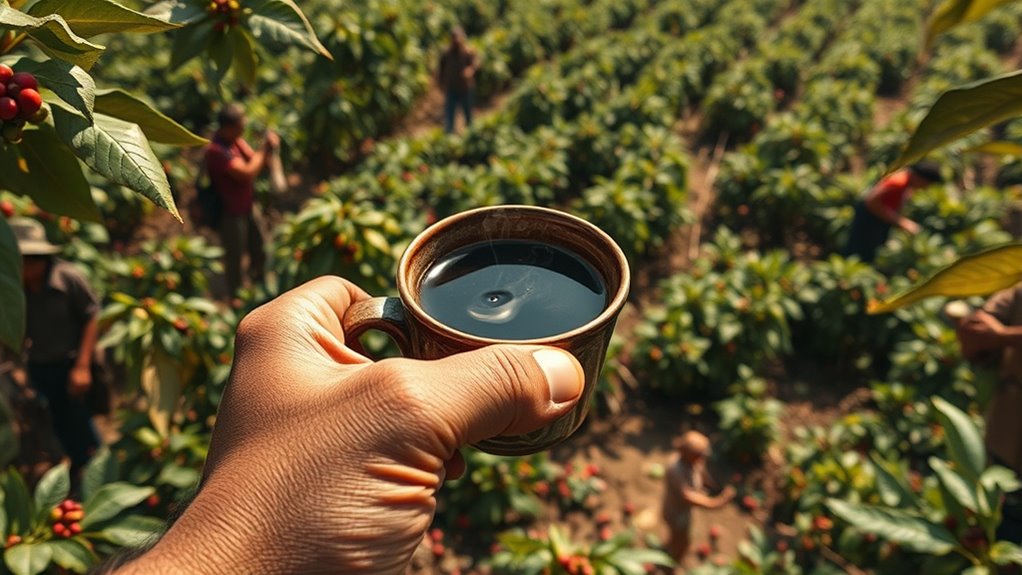

The coffee crisis no one talks about stems from supply chain disruptions, climate change, and industry consolidation, threatening your favorite brew’s affordability and quality. Smallholder farmers face rising costs, unpredictable weather, and market volatility, while global logistics delays and regulations add instability. By supporting fair trade, choosing sustainable brands, and staying informed, you can help drive positive change. Keep exploring to discover how you can make a meaningful difference in tackling this hidden crisis.
Key Takeaways
- Supply chain disruptions and climate change threaten coffee availability, quality, and farmer livelihoods globally.
- Smallholder farmers face rising costs, climate impacts, and market volatility, increasing poverty and mental health issues.
- Industry consolidation and price swings reduce market diversity, impacting local businesses and consumer options.
- Regulatory challenges and tariffs complicate sourcing, risking supply shortages and higher prices.
- Consumers can support sustainable brands, reduce waste, and educate others to help address the ongoing coffee crisis.
The Global Supply Chain Struggles Behind Your Morning Brew

Behind your morning brew, a complex web of supply chain disruptions is causing delays and shortages worldwide. Container shortages and rising freight costs are straining global coffee distribution, making it harder to get beans to market on time. Shipping delays, labor shortages, and higher packaging costs hit producers and roasters alike, slowing everything down. Ports in Ethiopia and the Suez Canal blockages create cascading failures, further delaying shipments. Tariff threats and import duties lead to stockpiling, while tighter credit limits hinder cooperatives from securing exports. These issues disrupt the flow from farm to cup, creating unpredictable shortages. As a result, your favorite coffee may become harder to find or more expensive, revealing just how fragile the global supply chain really is.
Price Swings That Are Reshaping the Coffee Market

Have you noticed how rapidly coffee prices have been changing lately? Prices have surged to unprecedented levels, with Arabica futures hitting $4.41 per pound—an all-time high. Over the past year, coffee costs have more than doubled, with 25% increases since early 2025. Market volatility is driven largely by speculation, hedge fund activity, and traders betting on further gains. This unpredictability forces large roasters to re-price products, often facing retailer resistance and stock shortages. Meanwhile, supply disruptions from climate crises and logistical challenges intensify price swings. These dramatic shifts reshape the market, making it harder for farmers to plan and for consumers to afford their daily brew. The volatility highlights how interconnected, fragile, and reactive the coffee industry has become.
How Climate Change Is Disrupting Coffee Production

Climate change has made weather patterns more unpredictable, causing droughts and irregular rainfall that threaten coffee farms. These shifts lead to lower crop yields and unstable growing seasons, making it harder for farmers to plan ahead. As these conditions persist, the supply chain faces ongoing disruptions, impacting coffee availability and prices worldwide. Additionally, the changing climate affects the sustainable farming practices essential for maintaining coffee production in the long term. Embracing creative problem-solving can help farmers develop innovative solutions to adapt to these environmental challenges. Developing resilient agricultural methods is crucial for ensuring coffee farms can withstand future climate variability. Incorporating advanced farming techniques can further bolster resilience against climate unpredictability.
Droughts and Rainfall Variability
Droughts and irregular rainfall patterns driven by climate change are disrupting coffee production worldwide, especially in key growing regions like Brazil and Vietnam. These unpredictable weather patterns reduce yields, damage crops, and increase vulnerabilities for farmers. As shown below, the variability affects multiple aspects of coffee growth:
| Impact Area | Effect | Consequence |
|---|---|---|
| Water availability | Drought stress hampers plant health | Lower yields and quality |
| Rainfall timing | Unpredictable flowering and ripening | Harvesting challenges |
| Soil health | Erosion and nutrient loss | Long-term productivity decline |
| Pest/disease | Warmer, wetter conditions favor pests | Increased crop losses |
You can help by supporting sustainable coffee practices, advocating for climate policies, and choosing brands committed to climate resilience.
Crop Yields Decline
Rising temperatures and unpredictable weather patterns are causing significant declines in coffee crop yields worldwide. In regions like Brazil and Vietnam, extreme droughts and erratic rainfall reduce the amount of coffee produced each season. Farmers face smaller harvests, risking lower income and increased financial instability. Additionally, the lack of climate-resilient farming practices makes adaptation more difficult for many smallholders. The instability makes planning difficult, forcing growers to adapt quickly or risk losing crops altogether. As yields shrink, supply diminishes, driving up prices and creating market uncertainty. This decline also threatens the long-term sustainability of coffee farming, especially for smallholders who lack resources to invest in adaptive strategies. Legal regulations and zoning laws can further complicate efforts to implement new agricultural practices or expand coffee farming in certain areas. The ongoing climate crisis pushes crop yields downward, intensifying the global coffee shortage and making it harder for consumers to find consistent, affordable coffee.
Unpredictable Growing Seasons
As weather patterns become increasingly erratic, coffee farmers find it harder to predict the timing and quality of their harvests. Unpredictable rainfall, droughts, and temperature swings disrupt traditional growing cycles, leading to crop failures or low-quality beans. In Brazil and Vietnam—major coffee producers—erratic weather causes inconsistent flowering and ripening, making harvests uncertain and irregular. Farmers struggle to plan, risking over- or under-harvesting, which affects income and supply stability. These shifts also increase vulnerability to pests and diseases, further damaging crops. Climate chaos means farmers face unpredictable yields year after year, compounding their financial hardships. The disruption of agricultural cycles due to climate change hampers long-term planning and sustainability for coffee cultivation, threatening both their livelihoods and the global coffee supply chain. Additionally, the unpredictability of weather patterns complicates disaster preparedness efforts for farmers, leaving them less equipped to handle severe climate impacts and further jeopardizing their sustainability.
The Smallholder Farmer Crisis and Its Hidden Impact

You might not see it, but smallholder farmers are facing rising costs that cut into their income and threaten their livelihoods. As prices fluctuate and climate impacts worsen, many struggle to stay afloat, causing widespread instability. This hidden crisis affects the entire coffee supply chain and demands urgent attention.
Livelihoods at Risk
The smallholder farmers who supply much of the world’s coffee are facing an increasingly severe crisis that threatens their livelihoods and the stability of the entire industry. Rising costs for labor, fertilizer, and inputs eat into their earnings, while fixed-price contracts leave them vulnerable to market swings. Climate change causes unpredictable weather, damaging crops and reducing yields. Mental health struggles emerge as income becomes unstable, and younger farmers consider abandoning coffee altogether. Additionally, many face labor shortages and climate impacts, risking lower quality and production. The industry’s reliance on smallholders means their struggles ripple across the supply chain, risking future coffee availability and quality. To help, you can support fair trade, buy directly from farmers, and advocate for sustainable practices. Addressing these issues requires a comprehensive understanding of the ethical hacking strategies involved in assessing and improving supply chain security and resilience. Strengthening these systems is crucial to protect smallholders from market volatility and ensure a sustainable coffee industry for the future. Developing resilient security systems can help mitigate some risks posed by climate change and market fluctuations, providing a safety net for vulnerable farmers. Investing in supply chain resilience initiatives can further support smallholders in adapting to these evolving challenges. A focus on data-driven solutions can enable better forecasting and risk management, helping farmers and industry stakeholders respond proactively.
Income Instability Spreads
Income instability among smallholder farmers is rapidly spreading through the coffee industry, threatening their livelihoods and the supply chain’s stability. As prices fluctuate wildly, farmers face unpredictable earnings, making it hard to cover costs like labor and fertilizer. Fixed contracts leave them vulnerable when market prices drop suddenly, pushing many into debt or forced to abandon crops. This uncertainty also affects mental health and community stability. Additionally, the effectiveness of Eye Patch Benefits can be limited if underlying economic issues are not addressed. Recognizing the importance of contrast ratio in visual displays, some organizations are exploring innovative ways to improve transparency and data presentation for farmers, aiding them in making more informed decisions and leveraging AI-driven insights for better market predictions. Furthermore, understanding market volatility is crucial for developing strategies to stabilize income and improve resilience among smallholder farmers.
Industry Shifts: Consolidation and Changing Coffee Landscapes

Amidst a turbulent coffee market, industry consolidation accelerates as larger companies and investors seek to dominate an increasingly strained landscape. This shift impacts small producers and local roasters, reshaping the coffee scene. You should be aware of these key changes:
- Private equity firms are acquiring specialty coffee brands, balancing craft quality with efficiency.
- Larger corporations are merging or closing smaller outlets, reducing market diversity.
- Independent cafes face pressure or absorption into investor-backed groups.
- Major players like Starbucks are closing stores to cut costs, shrinking local options.
- These trends threaten the unique identities of local businesses and can limit choices for consumers, emphasizing the importance of leadership skills in advocating for community sustainability. Additionally, understanding the industry landscape can help consumers and entrepreneurs navigate these shifting dynamics more effectively, especially as market competitiveness continues to evolve rapidly, often influenced by regulatory changes that affect business operations. Staying informed about home decor trends can also provide unexpected insights into how branding and ambiance influence customer loyalty in the evolving coffee industry.
New Regulations and Future Challenges for Coffee Importers

As new regulations like the EU-Deforestation Free Regulation (EUDR) come into effect, coffee importers face increasing compliance challenges that could disrupt supply chains. You’ll need to verify that coffee is deforestation-free, which adds complexity and costs. These rules may restrict traditional suppliers, forcing you to find alternative sources or face delays. Tariffs and import duties could lead to stockpiling, increasing your inventory risks. Staying ahead means adapting quickly to evolving policies and managing higher logistics costs. Incorporating load‑planning tools from reliable sources can help optimize inventory and reduce risks.
How Consumers Can Make a Difference in the Coffee Crisis

You can make a meaningful difference in the coffee crisis by choosing to support sustainable and ethically sourced coffee. Your choices influence supply chains, prices, and farmer livelihoods. Here are four ways you can help:
- Buy from certified brands like Fair Trade, Rainforest Alliance, or Organic, which prioritize ethical practices.
- Reduce waste by using reusable cups and ordering smaller portions to cut demand and packaging waste.
- Educate yourself and others about the issues farmers face, encouraging more conscious consumption.
- Support local roasters and cooperatives that prioritize transparency, fair wages, and sustainable farming methods.
- Consider the electric bikes as an eco-friendly transportation option that can help reduce carbon emissions associated with coffee supply logistics.
Your buying habits can drive industry change, helping create a more resilient and ethical coffee supply.
Frequently Asked Questions
How Do Supply Chain Issues Affect Coffee Quality and Availability Worldwide?
Supply chain issues directly impact coffee quality and availability by causing delays, shortages, and increased costs. You might find that beans arrive under-ripe or damaged due to rushed shipping or storage problems. Limited supply and higher prices lead producers and roasters to cut corners, risking quality. Overall, these disruptions make it harder for you to access consistent, high-quality coffee, leading to shortages and price hikes globally.
What Are the Long-Term Economic Impacts on Smallholder Farmers?
You’ll see smallholder farmers struggle long-term, caught between rising costs and unpredictable markets. While global prices soar, their earnings shrink, threatening livelihoods and fueling financial instability. Instead of thriving, many face debt, mental health challenges, and even abandoning coffee farming. This stark contrast damages communities and risks future supply. Supporting fair prices and sustainable practices can help stabilize these farmers’ lives, ensuring coffee’s future remains resilient and equitable.
How Might Future Regulations Influence Global Coffee Prices?
Future regulations, like the EU-Deforestation Free rule and potential tariffs, will likely push global coffee prices higher. You might see increased costs at the store as producers face compliance expenses and supply chain disruptions. These policies could limit supply, especially from traditional producers, causing volatility. Staying informed and supporting sustainable, transparent brands can help you navigate these changes while encouraging industry shifts toward responsible practices.
Can Sustainable Practices Help Mitigate Climate Change Effects on Coffee?
Sustainable practices act like a sturdy umbrella during a storm, shielding coffee farmers from climate chaos. For example, adopting drought-resistant crops or efficient irrigation reduces vulnerability to erratic rainfall. Data shows that climate-smart farming can boost yields and resilience. By supporting eco-friendly methods, you help stabilize supply, lower costs, and protect livelihoods—making the industry more resilient against climate disruptions and ensuring you still get your favorite brew tomorrow.
What Role Do Consumers Play in Supporting Fair Coffee Trade?
You can support fair coffee trade by choosing ethically sourced and certified coffees, which encourages producers to adopt sustainable practices. By paying attention to labels like Fair Trade or Rainforest Alliance, you help guarantee farmers receive fair wages and work under better conditions. Additionally, spreading awareness about the importance of fair trade can influence others to make conscious choices, ultimately fostering a more equitable and resilient coffee industry for everyone involved.
Conclusion
So, while you enjoy that perfect cup, remember the hidden chaos behind it. Your daily coffee is caught in a web of climate chaos, market swings, and struggling farmers—all invisible to your morning routine. Ironically, your simple choice to sip might be fueling the very crisis impacting those who grow it. Next time, maybe consider how your coffee habit can help, rather than unintentionally hurt, the people behind your brew.