
Choosing between paper, plastic, or reusable cups depends on your environmental impact concerns. Single-use paper and plastic cups generate significant waste, pollution, and long decomposition times, while reusable options like steel or ceramic cups drastically reduce waste over time. Steel cups, in particular, last a lifetime and have the lowest per-use footprint. Want to discover which option truly makes your coffee eco-friendlier? Stay with us to explore your best choice.
Key Takeaways
- Reusable steel or plastic cups significantly reduce environmental impact over time compared to single-use paper or plastic options.
- Paper cups are convenient but often involve plastic coatings that complicate recycling and increase waste.
- Plastic and polystyrene cups persist in landfills for centuries, contributing to long-term pollution and toxin release.
- Eco-friendly alternatives like edible or ceramic cups offer sustainable options, minimizing waste and resource use.
- Choosing durable, reusable cups with proper care and recycling maximizes environmental benefits and minimizes your carbon footprint.

Baodaadan 12OZ Travel Coffee Mug Insulated Coffee Cup with Spill Leak Proof Lid, Portable Stainless Steel Tumbler Reusable Hot and Cold Water Mug for Car, Daily, Camping-Black
Superior Thermal Insulation: Featuring advanced double-wall vacuum insulation, this travel mug effectively preserves the temperature of your beverage…
As an affiliate, we earn on qualifying purchases.
As an affiliate, we earn on qualifying purchases.
The Environmental Impact of Disposable Paper Cups
While disposable paper cups are often seen as a convenient choice, their environmental impact is significant. These cups are made of paper coated with a thin layer of polyethylene plastic, which accounts for less than 5% of the material. Separating this plastic from the paper during recycling requires specialized facilities; without them, the cups often end up in landfills or incinerators. The plastic coating can clog machinery during de-pulping, halting recycling processes and increasing waste. Each single-use paper cup generates about 0.032 kilograms of CO2 equivalent over its life cycle. If disposed of improperly, the polyethylene lining can release toxins, harming ecosystems and human health. environmental pollution is further exacerbated by the fact that many consumers are unaware of the recycling challenges associated with these cups. Material choices in manufacturing greatly influence the overall environmental footprint of disposable products. Additionally, the durability and recyclability of single-use items are often compromised by the plastic lining, making waste management more difficult. Moreover, the production of paper cups consumes significant amounts of water and energy, further contributing to environmental degradation. Overall, despite their convenience, paper cups contribute especially to environmental pollution and resource depletion.

Gencywe Ceramic Travel Mugs with Silicone Lids, 15 oz Portable Coffee Mug Travel Unique To Go Mug, Reusable Coffee Cups with Non-Slip Sleeve, Cappuccino,Tea,Latte,Iced Coffee Cups, Dishwasher Safe
CERAMIC COFFEE MUG: This travel mug makes it easy to share your favorite hot or cold drink with…
As an affiliate, we earn on qualifying purchases.
As an affiliate, we earn on qualifying purchases.
The Hidden Costs of Polystyrene (Styrofoam) Cups
Polystyrene (Styrofoam) cups pose significant hidden costs that often go unnoticed. First, they take around 500 years to decompose in landfills, filling space and polluting for generations. Manufacturing just one cup emits about 33 grams of CO2, contributing to climate change. When broken down, these cups leach toxic chemicals into soil and water, harming ecosystems and health. Additionally, over 80% of the 3 million tons produced annually in the U.S. ends up as waste, polluting oceans and landscapes. Recycling is limited because many facilities can’t process polystyrene efficiently. Here’s a quick comparison:
| Aspect | Impact | Concern |
|---|---|---|
| Decomposition Time | 500 years | Long-term waste |
| Carbon Emissions | 33 grams per cup | Climate change |
| Chemical Leaching | Toxic chemicals released during breakdown | Ecosystem and health risks |
| Recycling Limitations | 80% waste in landfills | Environmental pollution |
| Production Cost | Significant energy use | Resource depletion |
Polystyrene cups are also often used only once, contributing to single-use waste and unnecessary environmental burden. The widespread use of these cups exemplifies the challenges of disposable culture and the need for sustainable alternatives. As awareness about environmental impact grows, more sustainable alternatives can help reduce the environmental footprint of disposable cups and promote eco-friendly practices. Research shows that adopting reusable options can significantly decrease plastic waste, leading to a healthier planet.
![KTOB [50 pack] 12 oz Compostable Coffee Cups with Lids and Kraft Sleeves, Eco Friendly Disposable White Paper Cups Combo for Hot Beverage](https://m.media-amazon.com/images/I/31mdL6ot1PL._SL500_.jpg)
KTOB [50 pack] 12 oz Compostable Coffee Cups with Lids and Kraft Sleeves, Eco Friendly Disposable White Paper Cups Combo for Hot Beverage
An Eco-Friendly Alternative to Conventional Disposable Cups with Plastic Lids: These paper coffee cups and lids are designed…
As an affiliate, we earn on qualifying purchases.
As an affiliate, we earn on qualifying purchases.
Benefits and Challenges of Reusable Plastic Cups
Reusable plastic cups offer a promising alternative to the environmental issues associated with single-use options like polystyrene and paper cups. They can be used repeatedly, markedly reducing waste and the need for frequent production. When used consistently over time, they generate much lower overall environmental impacts, especially in terms of carbon emissions. For example, a polypropylene cup produces only 0.003 kg CO2 equivalent per use over a year of weekly coffee drinking. Additionally, incorporating sound healing science principles such as proper cleaning techniques can help prevent bacteria buildup. Proper maintenance and understanding local recycling options maximize their benefits. However, challenges exist. Many curbside recycling programs don’t accept polypropylene, making disposal tricky. Additionally, if not properly cleaned, these cups can harbor bacteria. Despite these issues, their durability and lower environmental footprint make them a compelling choice for eco-conscious consumers. Regular cleaning and careful handling are essential to maintain their hygienic safety.

Contigo West Loop 3.0 Stainless Steel Insulated Travel Mug, Leak Proof with AutoSeal Lid, 16oz, Matte Black
NO LEAKS OR SPILLS: AUTOSEAL lid locks between sips and is 100% leak- and spill-proof
As an affiliate, we earn on qualifying purchases.
As an affiliate, we earn on qualifying purchases.
The Sustainability of Steel Cups for Daily Use
Steel cups have a low environmental impact per use, and their durability means you won’t need to replace them often. Manufacturing and transportation contribute to their footprint, but these effects stabilize over time with repeated use. Additionally, their long-lasting nature makes them a sustainable choice for daily coffee drinkers. Choosing reusable containers can further reduce waste and support eco-friendly habits. Moreover, selecting such durable materials encourages a shift away from disposable options, promoting a more sustainable lifestyle. Embracing material longevity can significantly decrease the environmental burden associated with single-use alternatives. Incorporating practices that align with spiritual energy awareness can also enhance your connection to the environment, fostering mindful consumption habits.
Environmental Impact Stability
Because steel cups are designed for durability, their environmental impact remains stable over time, making them a potentially sustainable choice for daily use. This stability means that, unlike disposable options, their per-use footprint doesn’t increase with repeated use. Over years, the total environmental impact diminishes considerably, as the initial manufacturing energy is spread across many uses. Steel cups often last a lifetime, reducing the need for replacements and associated resource consumption. Their consistent impact also simplifies lifecycle assessments, providing clear advantages over less durable options. Additionally, embracing sustainable practices like using reusable steel cups can significantly contribute to reducing waste and conserving resources. Moreover, the durability of steel cups minimizes the environmental costs associated with frequent replacements, supporting the concept of long-term sustainability. Furthermore, the environmental benefits of steel cups are enhanced when combined with energy-efficient cleaning methods, which reduce the overall environmental footprint of maintaining reusable items. Incorporating advanced manufacturing techniques can further lower the environmental costs involved in producing these durable cups.
Manufacturing and Transportation Effects
Manufacturing and transportation play significant roles in shaping the overall sustainability of steel cups. Producing steel cups requires energy-intensive mining, refining, and shaping processes, which generate notable CO2 emissions upfront. Transporting raw materials and finished cups adds further environmental costs, especially if shipped long distances. However, these initial impacts are offset over time with repeated use. Unlike disposable options, steel cups can last a lifetime, spreading out their environmental footprint across many uses. Advances in manufacturing efficiency and local sourcing can reduce these impacts. While the upfront emissions are higher than some single-use cups, the durability and potential for long-term reuse make steel cups a more sustainable choice. Managing transportation logistics wisely is key to minimizing their overall environmental impact.
Long-Term Durability Benefits
Opting for a durable steel cup means you benefit from its long lifespan, which considerably enhances its sustainability. Steel cups can last a lifetime with proper care, reducing the need for frequent replacements. This durability means fewer resources are used over time and less waste ends up in landfills. Unlike paper or plastic options, steel withstands daily use, impacts, and temperature changes without cracking or degrading. Its stability and resilience stabilize environmental impacts across many years. Additionally, steel’s recyclability ensures that at the end of its life, it can be repurposed efficiently, further supporting environmental sustainability. The environmental benefits of choosing steel extend beyond durability, making it a smart choice for eco-conscious consumers. Moreover, the AI-driven innovations in manufacturing processes have improved steel production’s efficiency and sustainability, further reducing its ecological footprint. The integration of sustainable manufacturing practices has also contributed to lowering the overall environmental impact of steel products. Furthermore, ongoing advancements in steel recycling technologies continue to enhance its eco-friendly profile and resource efficiency.
Exploring the Promise of Edible Cups
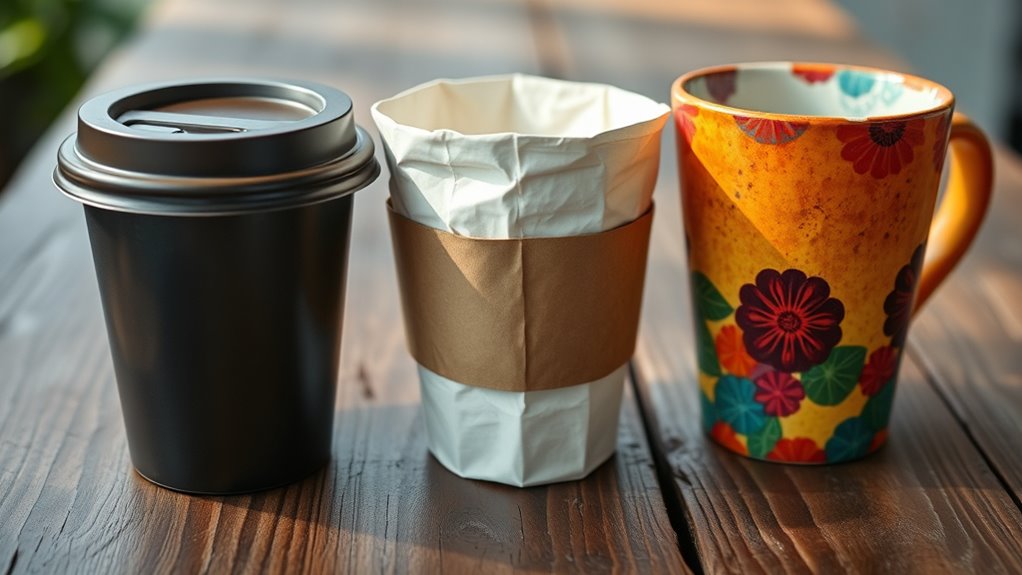
Edible cups offer an innovative approach to reducing waste and addressing environmental concerns associated with traditional single-use cups. Made from food-safe ingredients like starch, wheat, or other edible materials, these cups can be consumed after your drink. This eliminates the need for disposal, reducing litter and landfill waste. They also lower the environmental impact since they don’t require manufacturing, recycling, or long decomposition periods. However, challenges remain, such as ensuring durability against spills, maintaining freshness, and scaling production cost-effectively. Currently, edible cups are primarily experimental, with limited commercial availability. Still, they show promise as a sustainable alternative, especially in settings where waste reduction is critical. As innovation advances, edible cups could become a practical, eco-friendly choice for coffee lovers seeking to minimize their environmental footprint.
Comparing Reusable Ceramic Cups and Other Options

When comparing reusable ceramic cups to other options, consider their durability and how long they last with regular use. Cleaning methods, especially washing temperature, can considerably affect their environmental impact. By examining material choices and lifecycle assessments, you can better understand which option balances sustainability with practicality.
Durability and Longevity Impacts
Durability and longevity play a essential role in determining the overall environmental impact of reusable ceramic cups compared to other options. Ceramic cups are highly durable and can last for years if properly cared for, reducing the need for frequent replacements. This extended lifespan spreads out their environmental footprint over many uses, making them a more sustainable choice. In contrast, disposable paper, plastic, and polystyrene cups are designed for single use, meaning their environmental costs are concentrated in manufacturing and disposal. Reusable plastic and steel cups also offer long-term durability, but their impact depends on usage frequency and maintenance. Ceramic cups, with proper handling and minimal breakage, can outperform many alternatives in longevity, ultimately lowering their overall environmental burden.
Cleaning Method Environmental Effects
The environmental impact of cleaning methods varies markedly between reusable ceramic cups and other cup options, primarily due to the energy and water they consume during washing. Reusable ceramic cups often require either handwashing or dishwasher cleaning, both of which use water and electricity. Handwashing typically consumes less energy but may use more water, depending on your habits. Dishwashers, especially older models, can be energy-intensive, increasing the overall footprint. In contrast, disposable cups like paper or polystyrene don’t need cleaning, but their production and disposal create significant environmental impacts. Reusable options, despite their cleaning needs, generally have a lower environmental footprint over time. Choosing efficient washing methods and appliances can further reduce the environmental effects of maintaining reusable ceramic cups.
Material and Lifecycle Comparison
Comparing reusable ceramic cups to other options reveals significant differences in environmental impacts across their entire lifecycle. Ceramic cups require energy-intensive manufacturing and transportation, but their durability allows for years of use, spreading out their initial footprint. Handwashing ceramic cups tends to have a lower environmental impact than dishwashing, especially when using moderate temperatures. In contrast, paper cups are lightweight but need specialized recycling facilities due to plastic coatings, and their short lifespan results in more waste and emissions per use. Plastic and polystyrene cups produce higher emissions during production and take centuries to decompose, causing long-term pollution. Reusable options like steel and polypropylene cups generally have lower per-use impacts over time, but their environmental benefits depend on consistent usage and proper end-of-life management.
Making an Eco-Friendly Choice for Your Morning Brew
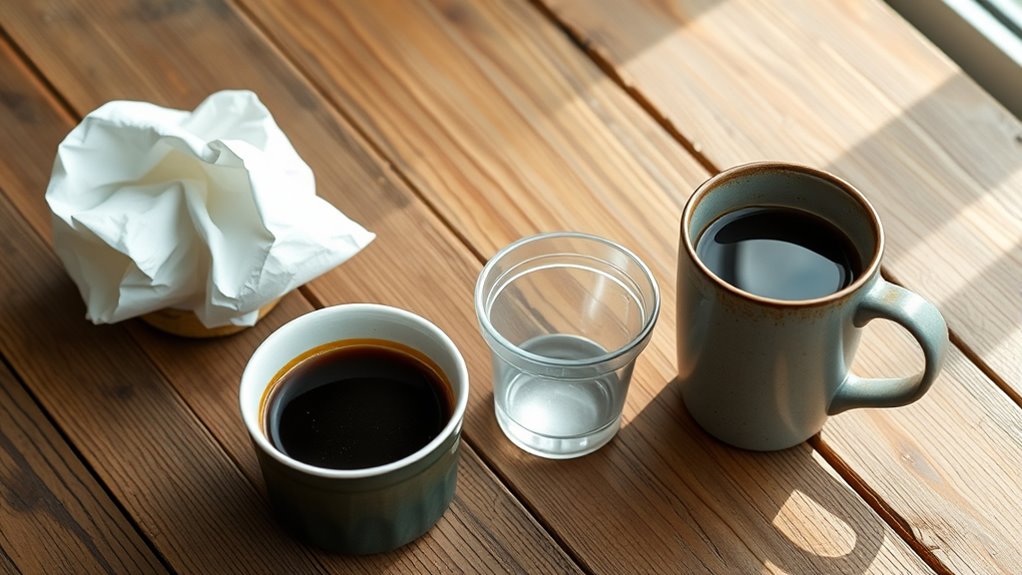
Choosing an eco-friendly way to enjoy your morning coffee involves considering the environmental impacts of different cup options. Reusable cups, like steel or ceramic, often have the lowest per-use footprint, especially when used multiple times over their lifespan. Steel cups generate minimal emissions per use and last a lifetime, dramatically reducing waste. Reusable plastic cups, such as polypropylene, also cut down on waste and have a low environmental impact when used regularly. In contrast, single-use paper or polystyrene cups contribute considerably to waste and pollution, with paper cups requiring specialized recycling and polystyrene taking centuries to decompose. Edible cups, though innovative, currently have a higher climate impact. To make an eco-friendly choice, opt for reusable options, and use them consistently to maximize environmental benefits.
Frequently Asked Questions
How Do Washing Methods Affect the Environmental Impact of Ceramic Cups?
Washing methods considerably impact the environmental footprint of ceramic cups. When you wash them by hand at lower temperatures, you reduce energy consumption and emissions. Conversely, using a dishwasher, especially at high temperatures, increases energy use and greenhouse gases. To minimize your impact, opt for handwashing with cold or warm water, and avoid frequent, hot water dishwasher cycles. This simple choice can make your reusable cup more eco-friendly.
Are There Recycling Options for Coated Paper Cups in My Area?
You might feel frustrated, but yes, there are recycling options for coated paper cups in your area. Specialized facilities can separate the plastic lining from the paper fibers, making recycling possible. Contact your local waste management or recycling center to find out if they accept these cups. While not all facilities do, some regions have begun to adopt programs that handle coated paper, helping reduce waste and environmental impact.
What Is the Actual Lifespan of Reusable Plastic Cups With Regular Use?
With regular use, a reusable plastic cup like polypropylene can last several years—typically between 1 to 5 years—depending on how well you care for it. Proper cleaning and handling prevent damage, ensuring durability over time. Since these cups are designed for repeated use, they considerably reduce environmental impact compared to disposables, especially if you minimize wear and tear through gentle cleaning and avoiding harsh chemicals.
Do Edible Cups Truly Biodegrade Faster Than Traditional Single-Use Options?
Edible cups generally biodegrade faster than traditional single-use options because they’re made from natural food ingredients that break down quickly in the environment. Unlike plastic or polystyrene cups, which can take hundreds of years, edible cups dissolve within days or weeks once discarded properly. However, their biodegradability depends on environmental conditions and proper disposal; if not managed correctly, they may not break down as efficiently.
How Does Transportation Impact the Overall Sustainability of Steel Cups?
Transportation considerably impacts the sustainability of steel cups because it contributes to their overall carbon footprint through fuel consumption and emissions. When you transport steel cups over long distances, you increase greenhouse gases, offsetting their durability benefits. Choosing local suppliers or minimizing shipping distances helps reduce this impact, making steel cups a more eco-friendly option. Efficient logistics and transportation methods are key to maximizing their environmental advantages over single-use alternatives.
Conclusion
Choosing the right cup is like picking the best brush for a masterpiece—your choice shapes a greener future. Whether you go for eco-friendly paper, sturdy steel, or reusable ceramic, each option has its own story to tell about sustainability. By making mindful decisions, you’re not just sipping coffee—you’re brewing change. So, next time you reach for your cup, remember: your small act can ripple into a wave of environmental kindness.