

A cup of coffee requires a lot of water, from growing the beans to processing and packaging. Water is used for irrigation, cleaning, and creating packaging materials, all impacting the environment. Transportation also adds to the water footprint through fuel and machinery. If you stay with us, you’ll learn how responsible choices and sustainable practices can help reduce this footprint and protect essential water resources.

Get coffee and tea gear delivered free with Prime
- Fast, free delivery on millions of items
- Prime Video, Amazon Music and more included
- Member-only deals all year
Key Takeaways
- A cup of coffee typically requires about 140 liters of water, including growing, processing, and transportation.
- Water is used in irrigation during farming and in processing methods like wet milling.
- Sustainable practices, such as water recycling and efficient irrigation, can significantly reduce water footprints.
- Packaging and transportation also contribute to water use and environmental impact.
- Choosing brands with eco-friendly practices helps minimize the overall water footprint of coffee.
As an affiliate, we earn on qualifying purchases.
What Is the Water Footprint of a Cup of Coffee?

Have you ever wondered how much water goes into making just one cup of coffee? The water footprint of a single cup includes the water used in coffee farming, which involves irrigation and maintaining healthy plants. Coffee farming requires significant water, especially in drier regions, making water conservation essential for sustainable production. The total water footprint also considers processing, transportation, and brewing, but the largest part comes from growing the beans. By understanding this, you can see why choosing wisely matters—opting for sustainably farmed coffee helps reduce overall water use. water conservation is crucial in ensuring that coffee production remains sustainable in the face of increasing water scarcity. Small actions, like supporting brands that prioritize water conservation, can make a big difference. Additionally, adopting sustainable farming practices can significantly reduce water usage and environmental impact. Being aware of a water footprint can help consumers make more environmentally friendly choices and support responsible farming. Recognizing the environmental impact of coffee cultivation encourages more mindful consumption and promotes sustainable farming methods. Understanding the role of agricultural water use in coffee production emphasizes the importance of sustainable resource management. Ultimately, knowing the water footprint behind your coffee encourages more mindful choices and promotes sustainable coffee farming practices.
How Coffee Growing and Harvesting Use Water
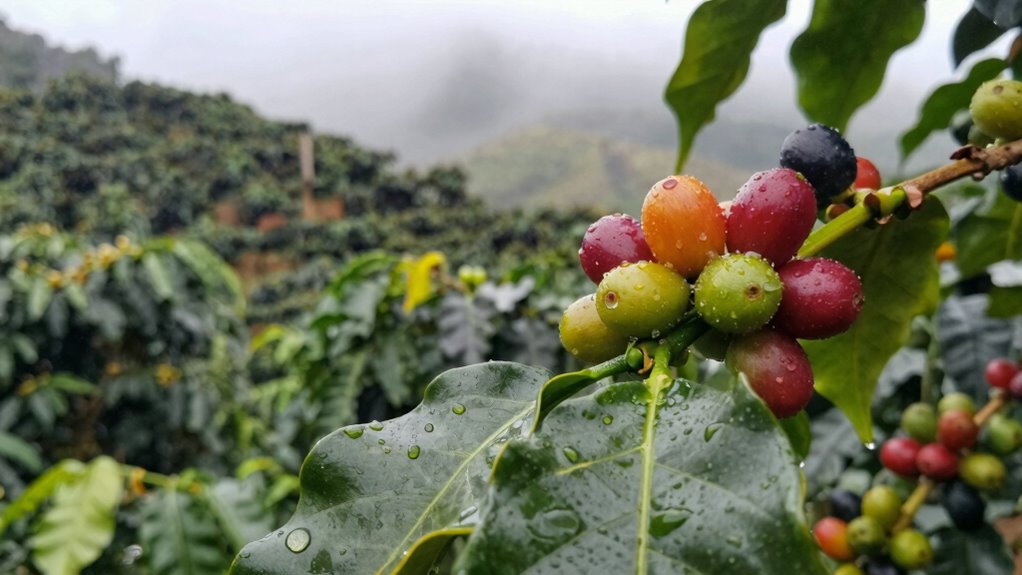
Growing and harvesting coffee plants require a substantial amount of water, especially in regions where rainfall isn’t sufficient. On a coffee plantation, water is crucial for maintaining healthy plants and ensuring good yields. Water irrigation is often used to supplement natural rainfall, which can considerably increase water use during dry periods. This process involves delivering water directly to the roots, helping coffee plants grow efficiently. The amount of water needed depends on factors like climate, soil, and crop variety. Here’s a quick look at water use in coffee cultivation:
| Aspect | Description | Impact |
|---|---|---|
| Coffee plantation | Area where coffee is cultivated | Determines total water needed |
| Water irrigation | Water supplied artificially | Ensures consistent growth |
| Water usage | Volume of water for watering | Varies by climate and method |
This process highlights how water is an essential resource in coffee growing. Proper irrigation practices can help optimize water use and reduce environmental impact, especially considering the water footprint of coffee production. Additionally, sustainable practices such as utilizing native plants can further minimize water consumption and promote ecological balance. Implementing efficient water management strategies can also help conserve water resources for future agricultural needs.
Water Consumption During Coffee Processing and Manufacturing

Did you know that the coffee processing stage consumes a significant amount of water? After harvesting, coffee beans go through processing methods like wet or dry milling, which require water to remove fruit and pulp or dry the beans. This stage can use thousands of liters per kilogram of coffee, depending on the method. Coffee farming’s water use earlier influences overall water consumption, but processing adds to the footprint. Water conservation during processing is essential to reduce environmental impact. Implementing efficient techniques, recycling water, and using less water-intensive methods can make a big difference. Proper water management during processing can significantly decrease water waste and environmental impact. Additionally, adopting water-saving techniques in processing facilities can further reduce the water footprint of coffee production. Understanding this stage helps you see how each step in coffee production contributes to its overall water footprint, highlighting the importance of sustainable practices throughout the entire process. Improving processing efficiency can also help reduce the overall water usage in coffee manufacturing. Recognizing the water footprint of each stage encourages the adoption of innovative solutions to minimize water use. For example, utilizing water-efficient equipment can greatly reduce water consumption during processing.
How Transportation and Packaging Contribute to Coffee’s Water Footprint

Transportation and packaging considerably add to the water footprint of coffee, often going unnoticed. Packaging impact involves water used to produce the materials, like paper, plastic, and metal, which requires water in manufacturing. Even lightweight packaging consumes water resources during its creation, transportation, and disposal. A life cycle assessment of packaging can reveal hidden water costs that are often overlooked. Transportation emissions also increase the water footprint, as fuel extraction, refining, and vehicle operation all rely on water-intensive processes. Moving coffee beans from farms to roasters and stores involves fuel consumption that indirectly uses significant water. Additionally, the overall carbon footprint of coffee production is closely linked to water usage, emphasizing the importance of sustainable practices. These factors combine to elevate the overall water footprint, making transportation and packaging important considerations. By choosing brands with sustainable packaging and efficient logistics, you can reduce the hidden water costs associated with your coffee. Additionally, understanding regional flavor profiles and sourcing practices can help support more sustainable coffee production. Being aware of the water-intensive processes involved in transportation can encourage consumers to opt for local options when possible. Recognizing the full lifecycle impact of coffee can help make more environmentally conscious choices.
Why Saving Water in Coffee Production Matters for Sustainability

Reducing water use in coffee production is essential for promoting sustainability and protecting vital water resources. When you save water, you support water conservation efforts that help guarantee clean water remains available for communities, wildlife, and agriculture. Sustainable farming practices focus on efficient water use, preventing over-extraction from local water sources. By choosing coffee produced with water conservation in mind, you help reduce the strain on freshwater supplies and lessen environmental impacts. This water-efficient approach can also incorporate herbal and natural methods to further minimize resource use. Incorporating water management techniques is crucial for maintaining sustainable coffee farming. This not only preserves ecosystems but also promotes fairer, more responsible farming methods. Your choices encourage farmers to adopt sustainable farming techniques, which balance productivity with environmental health. Additionally, implementing water conservation strategies can improve overall farm resilience to climate change effects. Understanding the derating factors, such as altitude and temperature, can also help optimize water use in coffee cultivation. Moreover, integrating soil moisture management can significantly enhance water efficiency in coffee farms. Ultimately, saving water in coffee production contributes to a more sustainable future, ensuring coffee remains an enjoyable and environmentally responsible beverage.
Frequently Asked Questions
How Does Climate Change Affect Coffee’s Water Footprint?
Climate change increases the water footprint of coffee by causing unpredictable weather patterns, droughts, and rising temperatures. These climate impacts strain water resources, making water conservation harder for coffee farmers. As a result, growing coffee becomes more water-intensive, and the overall water footprint grows. You can help by supporting sustainable coffee practices that prioritize water conservation, helping reduce the environmental impact and guarantee future coffee supplies.
Are Organic Coffees More Water-Efficient Than Conventional Ones?
Organic coffees are generally more water-efficient than conventional ones because organic farming emphasizes water conservation through natural methods and reduced chemical use. These practices often result in healthier soil and better water retention, lowering the overall water footprint. By choosing organic coffee, you support sustainable water use and help conserve this essential resource, making your coffee choice more eco-friendly and beneficial for the environment.
What Role Does Water Recycling Play in Coffee Production?
Water recycling plays a crucial role in coffee production by improving recycling efficiency and reducing overall water use. You’ll find that water purification systems are employed to treat wastewater, allowing it to be reused in various stages of production. This not only conserves water but also minimizes environmental impact. When recycling efficiency is high, coffee farms and factories can lower their water footprint, making the process more sustainable and eco-friendly.
How Do Different Coffee Varieties Impact Water Usage?
Choosing a coffee variety is like selecting a different paintbrush; each impacts water consumption uniquely. Arabica, for instance, typically requires less water than Robusta during coffee cultivation, making it more eco-friendly. Different coffee varieties influence water use based on their climate adaptability and growth needs. If you opt for shade-grown or heirloom beans, you’re often reducing water footprint, contributing to more sustainable coffee cultivation practices.
Can Home Brewing Methods Reduce the Water Footprint of Coffee?
Yes, home brewing methods can reduce the water footprint of coffee by promoting water conservation. You can choose eco-friendly brewing techniques like pour-over or French press, which use less water compared to automatic drip machines. Additionally, using freshly ground coffee and reusable filters minimizes waste and water use. By being mindful of your brewing habits, you help decrease overall water consumption and support sustainable coffee practices.
Conclusion
Just like a river’s flow shapes the landscape, your choices shape coffee’s water footprint. By understanding how every sip involves water use—from growing to brewing—you can make smarter, more sustainable decisions. Every time you opt for ethically sourced or eco-friendly coffee, you’re helping to conserve this precious resource. So next time you enjoy your favorite brew, remember—you’re part of the ripple effect that can help protect our planet’s water.
Fall Picks
fall essentials
As an affiliate, we earn on qualifying purchases.