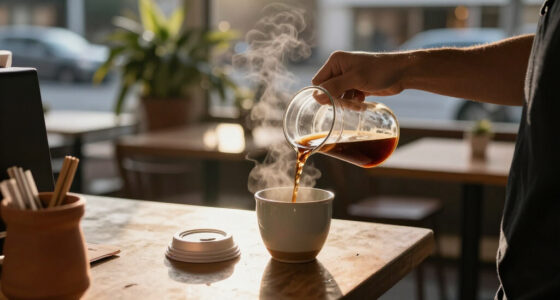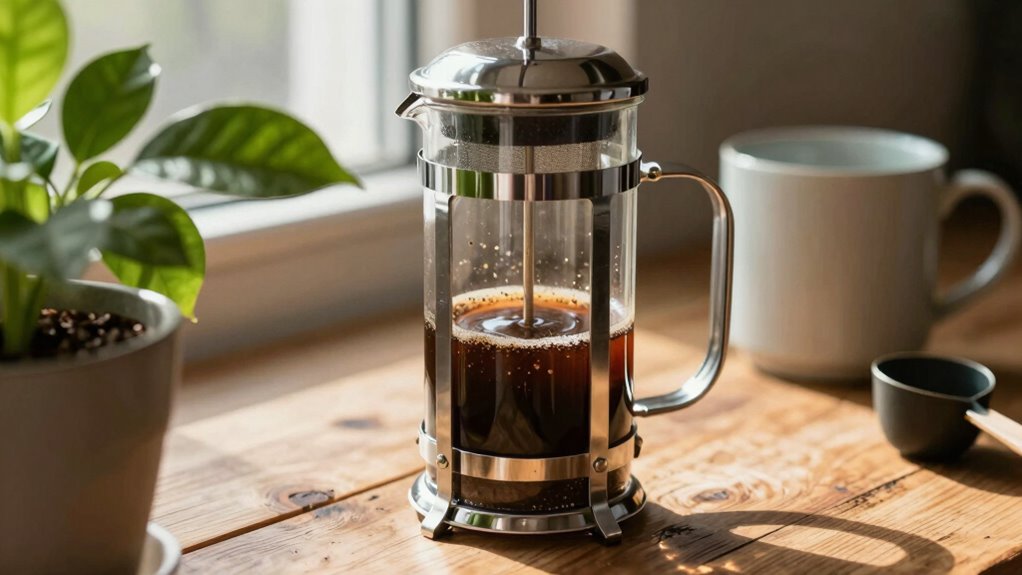

Using a reusable French press can be more sustainable than you think because it minimizes waste, eliminates disposable filters and capsules, and requires less energy, especially when manually operated. By choosing whole beans and avoiding single-use products, you reduce landfill contributions and support eco-friendly practices. Plus, brewing smaller amounts helps cut down on waste. If you keep exploring, you’ll discover even more simple ways to make your coffee routine eco-conscious.

Get coffee and tea gear delivered free — and shop member deals
- Fast, free delivery on millions of items
- Access to Prime Big Deal Days deals on October 6–7
- Prime Video, Amazon Music and more included
Key Takeaways
- Reusable French presses eliminate disposable filters and capsules, significantly reducing landfill waste.
- Manual brewing with a French press consumes less energy than electric coffee machines, lowering carbon footprint.
- Using whole beans and minimal packaging promotes sustainable sourcing and reduces packaging waste.
- Choosing organic, fair-trade, or local beans minimizes environmental impact from cultivation and transportation.
- A mindful French press routine encourages eco-friendly habits, such as waste reduction and resource conservation.
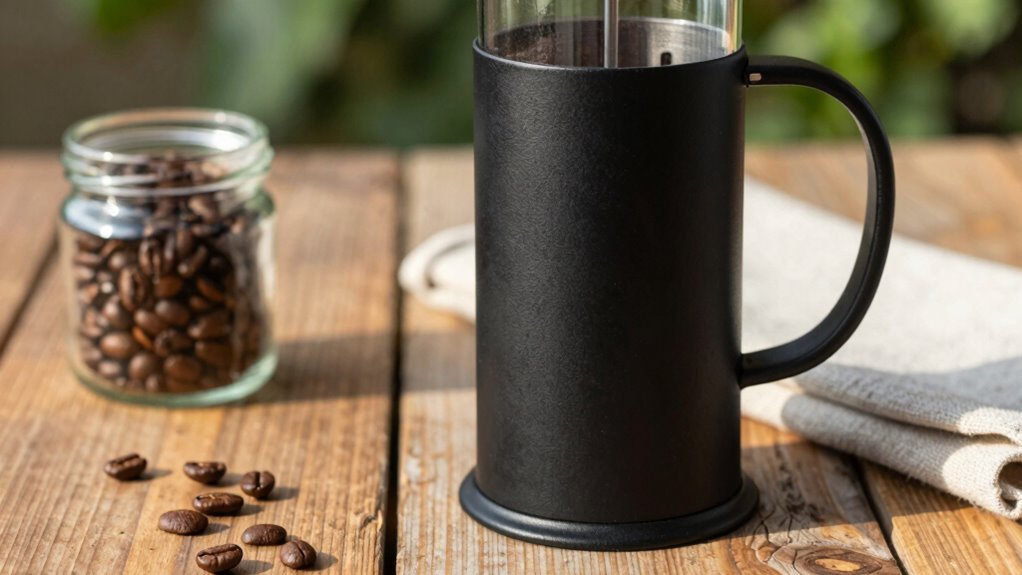
Have you ever considered how your daily coffee routine impacts the environment? If you’re like most coffee drinkers, you probably rely on single-use filters, disposable cups, or plastic capsules, which contribute to waste and pollution. But switching to a reusable French press can considerably change your coffee brewing habits and reduce your environmental impact. When you choose a French press made of durable glass or stainless steel, you eliminate the need for paper filters and disposable coffee capsules. This means less trash filling up landfills and fewer resources used in manufacturing wasteful packaging. Plus, the process of coffee brewing with a French press is simple and efficient, often requiring less energy compared to electric coffee machines.
Using a reusable French press encourages a more mindful approach to your coffee routine. Instead of buying pre-packaged coffee or single-use pods, you can buy whole beans and grind them fresh each morning. This not only enhances flavor but also minimizes packaging waste. The environmental impact of coffee brewing becomes more favorable when you avoid single-serve pods, which are notoriously difficult to recycle and often end up in landfills. Additionally, a French press’s durability means it can last for years, reducing the need for frequent replacements. Over time, this profoundly cuts down on waste and resource consumption associated with manufacturing and disposal. Incorporating sustainable coffee practices can further amplify the positive impact of your routine.
Using a French press reduces waste and enhances flavor by brewing fresh, whole beans in a durable, eco-friendly way.
Your choice of coffee beans also plays a role in sustainability. Opting for organic, fair-trade, or locally sourced beans decreases the environmental footprint linked to transportation and chemical use. When you brew with a French press, you tend to prepare a smaller, more controlled amount of coffee, reducing waste from over-brewing or disposing of unused coffee. The process itself requires no electricity if you’re manually pressing the coffee, making it an eco-friendly option, especially if you’re aiming to lower your carbon footprint. Additionally, understanding the environmental impact of coffee can help you make more informed choices about your brewing habits.
Transitioning to a reusable French press doesn’t just benefit the environment; it also enhances the quality of your coffee experience. You gain control over the brewing process, extracting richer flavors without the waste associated with disposable filters or capsules. This routine encourages you to be more conscious of your consumption habits, aligning with sustainable living practices. By making small changes like this, you can enjoy your daily coffee with less guilt and a greater sense of responsibility toward the planet. Ultimately, your coffee brewing choices have the power to make a meaningful difference in reducing environmental impact while elevating your everyday ritual.
reusable French press coffee maker
As an affiliate, we earn on qualifying purchases.
As an affiliate, we earn on qualifying purchases.
Frequently Asked Questions
How Long Does a Reusable French Press Typically Last?
A reusable French press can last five to ten years if you care for it properly. To maximize its lifespan, you should store it in a dry, safe place, avoiding moisture that can cause rust or mold. Maintaining the brewing temperature by not overheating your coffee helps preserve the material. Regular cleaning prevents buildup, ensuring your French press stays functional and sustainable over time, making it a smart, eco-friendly choice.
Are There Eco-Friendly Cleaning Methods for French Presses?
Think of eco-friendly cleaning methods as the gentle rain nourishing your French press garden. You can use biodegradable cleaning agents or natural cleaning solutions like vinegar and baking soda, which cut through residue without harming the planet. These practices clean your French press effectively and keep your environmental footprint small. By choosing sustainable cleaning routines, you’re nurturing a greener world, one brew at a time, and ensuring your French press stays beautiful and eco-friendly.
Can Reusing Coffee Grounds Reduce Overall Waste?
Reusing coffee grounds considerably reduces coffee waste, helping you cut down on landfill contributions. Instead of discarding them, you can compost coffee grounds, which offers notable composting benefits by enriching soil and reducing organic waste. This practice not only minimizes waste but also promotes sustainability by turning your coffee leftovers into a valuable resource for your garden. Embracing reuse and composting turns your daily coffee routine into an eco-friendly habit.
Is There a Significant Energy Difference Using a French Press?
Using a French press is generally more energy-efficient than electric coffee makers, reducing your environmental impact. It requires minimal energy since you simply boil water separately and press your coffee, avoiding high-power appliances. This method’s lower energy consumption helps cut your carbon footprint. So, by choosing a French press, you not only enjoy great coffee but also make a positive difference for the environment through a smaller energy footprint.
How Does Material Choice Impact the French Press’s Sustainability?
Think of your French press as a vessel of potential—material choice greatly influences its sustainability. With material innovation, using stainless steel or glass reduces environmental impact, and many parts offer recycling potential. These choices make your routine more eco-friendly, much like turning old stories into new ones. By selecting sustainable materials, you extend your French press’s life, minimize waste, and support a greener future—proof that small changes can make a big difference.
Conclusion
In the end, your reusable French press isn’t just about great coffee; it’s a step toward a greener future. By choosing durability over disposability, you’re reducing waste and conserving resources. Remember, a chain is only as strong as its weakest link—so making small, sustainable choices adds up. Keep brewing consciously, and you’ll find that what’s good for your morning cup can also be good for the planet. After all, every little bit counts.
Halloween Picks
halloween
As an affiliate, we earn on qualifying purchases.