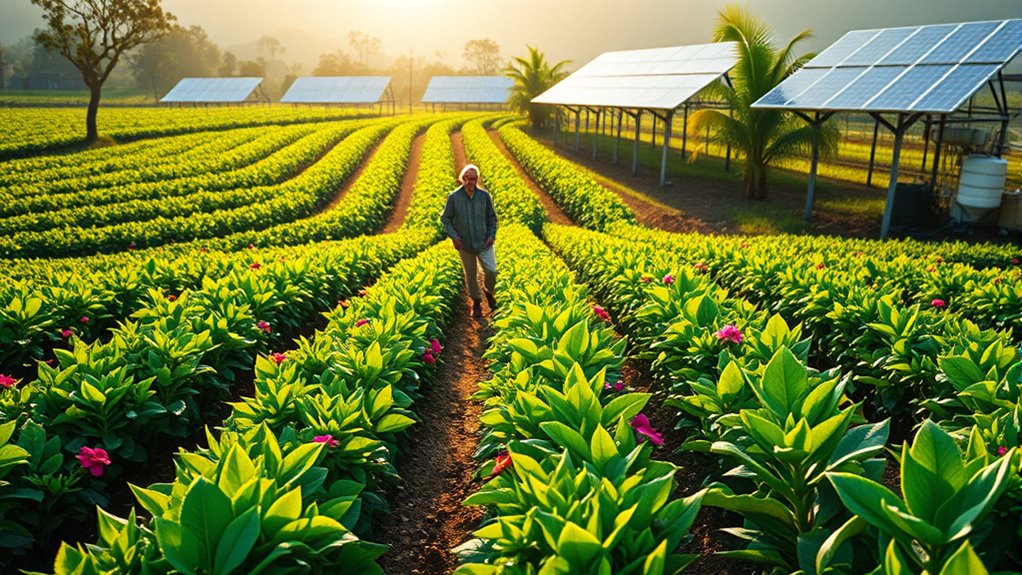

As climate change alters traditional coffee-growing regions, adopting sustainable practices like shade-grown farming, resilient cultivars, and regenerative agriculture becomes crucial to protect your morning brew. These methods help combat environmental stress, improve bean quality, and support farmers’ livelihoods. With increasing consumer demand for eco-friendly coffee, going green isn’t just good for the planet—it’s essential for preserving your favorite morning ritual. Explore how innovative solutions are shaping a greener future for coffee lovers everywhere.
Key Takeaways
- Sustainable practices like shade-grown coffee and regenerative agriculture improve crop resilience and environmental health.
- Climate-adapted resilient coffee varieties help maintain yields amidst rising temperatures and shifting regions.
- Certifications and eco-friendly methods boost market demand while supporting farmers’ economic stability.
- Climate-smart interventions, including reforestation and water conservation, mitigate climate impacts on coffee farms.
- Future growth relies on innovations, policies, and collaborations promoting sustainable, environmentally friendly coffee production.

Tiny Footprint Coffee – Fair Trade Organic Nicaragua Segovia Dark Roast |Whole Bean Coffee | USDA Organic | Fair Trade Certified | Carbon Negative | 16 Ounce
ORGANIC COFFEE BEANS: USDA Organic, Fair Trade & Shade-Grown Arabica Coffee.
As an affiliate, we earn on qualifying purchases.
As an affiliate, we earn on qualifying purchases.
The Growing Demand for Sustainable Coffee

As consumer awareness about environmental and social issues increases, the demand for sustainable coffee grows rapidly. You’re now more conscious of where your coffee comes from and how it’s produced. Certifications like Organic, Fair Trade, and Rainforest Alliance help you identify ethically sourced options and build trust in brands that prioritize transparency. Retailers and major coffee brands are responding by integrating sustainability goals into their supply chains and marketing efforts. This shift isn’t just about ethics; it’s driven by your desire for quality, traceability, and environmental responsibility. As a result, the global sustainable coffee market is projected to double in size by 2032, reflecting your influence and growing preference for coffee that aligns with your values. Additionally, advances in ethical sourcing practices are making sustainable options more accessible and affordable for consumers worldwide. These innovations include self-watering plant pots that exemplify how sustainable solutions are expanding across industries, demonstrating a broader commitment to environmentally friendly practices.

Allegro Coffee Organic Early Bird Blend Whole Bean Coffee, 12 oz
Amazing products, exceptional ingredients, no compromises
As an affiliate, we earn on qualifying purchases.
As an affiliate, we earn on qualifying purchases.
How Climate Change Is Reshaping Coffee Cultivation

As temperatures rise, your coffee crops may face shrinking suitable growing areas, forcing farmers to rethink where they plant. Warmer nights speed up cherry ripening, which can harm flavor quality and consistency. To adapt, farmers are switching to resilient varieties and adopting shade-grown practices to protect their crops from the changing climate. Additionally, implementing high-quality projectors with accurate color reproduction can help monitor crop health through detailed imaging, supporting more precise farming decisions. Furthermore, integrating maximized space and organization strategies enables farmers to better manage resources and optimize crop layouts for improved yields. Incorporating natural materials like wood and stone in farm infrastructure can enhance sustainability and resilience against climate impacts. Emphasizing remote work practices allows agricultural experts to coordinate and analyze data more effectively from various locations, enhancing overall crop management strategies.
Rising Temperatures Impact Crops
Rising temperatures due to climate change are fundamentally altering coffee cultivation worldwide. You’ll notice that higher nighttime temperatures accelerate cherry ripening, which can compromise flavor consistency and quality. As temperatures climb, traditional coffee-growing regions become less suitable, forcing you to contemplate new locations or adapt your farming practices. Soil moisture levels decrease, increasing drought stress and reducing yields. You might need to invest in shade trees or switch to more resilient coffee varieties to protect crops from heat stress. Increased heat also heightens vulnerability to pests and diseases, further challenging cultivation. These changes push you to rethink planting schedules, irrigation strategies, and crop selection, making climate resilience essential for maintaining productivity and quality in the face of rising global temperatures.
Shifts in Growing Regions
Climate change is causing noticeable shifts in where coffee can be grown successfully. As temperatures rise, traditional coffee regions face challenges, and new areas become viable. You might see farms moving to higher elevations or latitudes, seeking cooler climates. This shift impacts local communities, economies, and ecosystems, forcing farmers to adapt quickly. Some regions, like Ethiopia and Vietnam, are expanding their cultivation, while others, like Brazil and Colombia, struggle with environmental stress. The table below shows regions affected and emerging zones: Vetted – Mother Baby Kids. Additionally, these environmental changes are prompting a reevaluation of sustainable farming practices to ensure long-term viability.
Adaptation Strategies Emerge
To adapt to changing environmental conditions, coffee farmers are adopting innovative cultivation strategies that enhance resilience. Shade-grown coffee helps lower soil temperatures and reduce evaporation, protecting crops from heat stress. Farmers are also shifting to climate-resilient cultivars like Castillo and Batian, which tolerate higher temperatures and drought. Water conservation techniques such as mulching and terracing improve soil health and conserve resources. Regenerative agriculture practices, including soil enrichment and reforestation, boost farm productivity and sequester carbon. Many are planting shade trees or reintroducing native species to increase biodiversity. Some larger companies invest in tree planting projects to generate carbon credits. These strategies aim to maintain yields, preserve flavor quality, and ensure the long-term viability of coffee farming amid a changing climate. Incorporating sustainable farming methods can further enhance the adaptability and environmental benefits of these practices. Additionally, integrating modern technology such as remote sensing and data analytics can optimize resource use and monitor crop health more effectively. Embracing climate-smart agriculture approaches can help farmers anticipate and respond to future climate challenges proactively.

African Violet Pots, 6 inch Ceramic Easy Self Watering Plant Pot for Busy Plant Lovers, Automatically Absorb Appropriate Amount of Water, Flower Pot Indoor-Plants Not Included(Red)
Transform Your Plant Care with Our Self-Watering Pot: Simplify your gardening with our innovative self-watering plant pot. Designed…
As an affiliate, we earn on qualifying purchases.
As an affiliate, we earn on qualifying purchases.
The Role of Shade-Grown Coffee in Climate Mitigation

Shade-grown coffee plays a vital role in climate mitigation by enhancing carbon sequestration on farms. By planting trees alongside coffee plants, you create a natural carbon sink that absorbs CO₂ from the atmosphere. These shade trees also help regulate soil temperature, reduce evaporation, and improve soil health, which boosts overall farm resilience. Removing shade trees from coffee farms could release millions of tons of stored carbon, accelerating climate change. Conversely, maintaining and expanding shade cover increases carbon storage considerably. Many large coffee companies invest in tree planting projects to generate carbon credits and meet climate goals. As a farmer or consumer, supporting shade-grown coffee directly contributes to lowering greenhouse gases and fostering sustainable ecosystems. Your choices help protect the environment while ensuring your morning brew stays environmentally friendly. Promoting sustainable farming practices can further enhance environmental benefits and ensure long-term coffee production. Additionally, adopting agroforestry techniques can optimize both crop yields and ecological health, creating a more resilient coffee landscape. Incorporating native tree species into shade systems can further enhance biodiversity and carbon storage capacity, which is supported by research on low-impact agricultural practices. Utilizing climate-smart agriculture strategies can also help adapt coffee farming to changing weather patterns, ensuring sustainability in the long run.

(2-Pack, Large 12in x 12in) Cold Brew Coffee Filter Bag for Mason Jar, Reusable, 100% Organic Cotton Cloth with Drawstrings, For Straining Coffee, Tea, Nuts, Milk, Cheese, 2 Pack
Natural Cotton Cold Brew Filter for Full Flavor Extraction – Our premium organic cotton cold brew coffee bag…
As an affiliate, we earn on qualifying purchases.
As an affiliate, we earn on qualifying purchases.
Innovations in Resilient Coffee Varieties

You can see how developing climate-resilient coffee cultivars offers a crucial solution to growing environmental challenges. Breeding efforts focus on creating varieties with drought tolerance and disease resistance, helping farmers adapt to changing conditions. These innovations guarantee coffee production remains sustainable and resilient for the future. Additionally, fostering community engagement among farmers can accelerate the adoption of these new varieties and practices. Cultivating creative practice within farming communities can further inspire innovative approaches to sustainable agriculture and problem-solving in the face of climate change. Understanding legalities and zoning is also important for establishing proper locations for new coffee farms and ensuring compliance with regional regulations. Moreover, local regulations and investment incentives can support the development of resilient coffee farming infrastructure and practices. Leveraging plant breeding techniques can further enhance the development of superior coffee varieties capable of thriving under adverse conditions.
Climate-Resilient Cultivars
As climate change accelerates, developing resilient coffee cultivars has become essential for sustaining coffee production. You need varieties that can withstand higher temperatures, shifting rainfall patterns, and pests. Researchers are creating new cultivars, like Castillo and Batian, specifically bred for resilience and adaptability. These varieties can thrive in warmer conditions and resist diseases that threaten traditional Arabica plants. Breeding programs focus on combining desirable traits such as improved yield, flavor, and climate tolerance. You’ll see more farmers adopting these resilient cultivars as part of their climate-smart strategies. By switching to these innovative varieties, you help guarantee a stable coffee supply, protect ecosystems, and support farmers facing environmental challenges. Incorporating sustainable practices into cultivation can further enhance the resilience of coffee farms. Additionally, climate-smart agriculture techniques can optimize water use and reduce environmental impact, making coffee farming more sustainable. Resilient cultivars are crucial for securing the future of your favorite morning brew.
Breeding for Drought Tolerance
Breeding for drought tolerance is gaining momentum as climate change intensifies water scarcity in coffee-growing regions. You can expect scientists and farmers to develop varieties that withstand prolonged dry periods, ensuring consistent yields. These resilient cultivars are bred to optimize water use efficiency and maintain quality under stress. Here’s a visual overview:
| Trait | Breeding Focus | Benefits |
|---|---|---|
| Water Use Efficiency | Drought-resistant genes | Reduced water needs |
| Root System | Deep, strong roots | Better access to underground moisture |
| Disease Resistance | Combine with resilience traits | Less vulnerability during stress |
Disease-Resistant Coffee Varieties
Innovations in resilient coffee varieties are transforming how farmers combat the increasing threats posed by pests, diseases, and climate change. You can now choose disease-resistant cultivars like Castillo, Sarchimor, and Batian, which offer natural defenses against common threats such as coffee leaf rust and coffee berry disease. These varieties are bred through advanced techniques, including marker-assisted selection and genetic engineering, to enhance resilience without sacrificing quality. By adopting these resistant strains, you reduce the need for chemical interventions, lowering environmental impact and input costs. Farmers who switch to resilient varieties also benefit from improved yield stability amid shifting climate conditions. As these innovations become more accessible, they play a vital role in securing coffee production’s future and ensuring your morning brew remains sustainable and flavorful.
Economic Challenges and Opportunities for Farmers

Farmers face significant economic challenges due to volatile coffee prices, rising input costs, and limited access to financing, which hinder your ability to invest in sustainable practices and adapt to climate change. Fluctuating prices make income unpredictable, forcing you to cut costs or take on debt. Higher costs for fertilizers, labor, and equipment strain your budget, especially with limited credit options. Tight financing restricts investments in climate-resilient varieties, shade trees, and soil health improvements. Despite these hurdles, opportunities exist through climate-smart incentives, certification programs, and direct-to-consumer markets that reward sustainability. Collaborations with cooperatives and access to grants can help you adopt innovative practices, improve resilience, and tap into growing consumer demand for ethically sourced coffee. These strategies can strengthen your farm’s economic stability long-term.
Regenerative Agriculture: A Path to Long-Term Sustainability

Economic pressures and climate challenges are pushing coffee growers to seek sustainable solutions that guarantee long-term viability. Regenerative agriculture offers a practical path forward. By adopting shade-grown coffee, you can improve soil health, reduce erosion, and increase biodiversity. Incorporating cover crops and composting enhances soil fertility, capturing carbon and making farms more resilient to extreme weather. These practices help you adapt to shifting climate patterns while lowering input costs. Many farmers are turning to regenerative methods to boost productivity sustainably. Initiatives like tree planting and soil restoration also qualify you for carbon credits, providing additional income streams. Embracing regenerative agriculture guarantees your farm remains productive, environmentally friendly, and resilient, securing your coffee’s future and supporting global efforts to combat climate change.
Regional Trends and Global Production Outlook

Global coffee production is expected to hit a record 178.7 million 60-kg bags in 2025/26, driven by increased yields in Ethiopia, Vietnam, and Indonesia. These regions are benefiting from improved farming techniques and climate-resilient varieties, boosting supply. Meanwhile, Brazil and Colombia face declines due to environmental challenges like drought and changing weather patterns. Despite overall gains, tight inventories of around 22.8 million bags suggest market tightness. You’ll notice regional shifts as producers adapt—Ethiopia’s recovery and Vietnam’s steady growth contrast with setbacks in traditional exporters. As global demand rises, particularly driven by consumer interest in ethically sourced coffee, these regional trends will shape supply dynamics and pricing. The forecast indicates a resilient, yet complex, future for coffee production worldwide.
The Impact of Green Practices on Coffee Quality and Flavor

Green practices considerably influence coffee quality and flavor, often enhancing both through sustainable cultivation methods. Shade-grown coffee, for example, promotes slower cherry ripening, which develops more complex sugars and acids, resulting in richer, more balanced flavors. Organic farming reduces chemical residues that can mask subtle taste notes, allowing the coffee’s natural qualities to shine. Regenerative practices like soil enrichment improve nutrient availability, leading to healthier plants that produce beans with enhanced aroma and body. Additionally, reduced stress from climate-smart techniques helps maintain consistency in flavor profiles. These eco-friendly methods not only support environmental health but also elevate coffee’s sensory qualities, giving you a more vibrant, nuanced cup. Green practices, thus, play an essential role in delivering better flavor and higher-quality coffee.
Frequently Asked Questions
How Do Certifications Like Organic and Fair Trade Influence Consumer Trust?
Certifications like Organic and Fair Trade boost your trust by ensuring the coffee is ethically sourced and environmentally friendly. They provide transparency, so you know exactly how your coffee was produced, supporting fair wages and sustainable practices. When you see these labels, you’re confident you’re making a responsible choice. This trust encourages you to buy from brands committed to quality, ethics, and environmental care, making your coffee experience more meaningful.
What Specific Climate-Resilient Coffee Varieties Are Being Developed?
You’ll want to know about climate-resilient coffee varieties like Castillo and Batian, which are specifically bred to withstand higher temperatures and drought conditions. These cultivars help farmers adapt to climate change, ensuring better yields and quality. They also reduce vulnerability to pests and diseases. By adopting these varieties, you support sustainable coffee production, helping preserve your favorite brew for the future while promoting environmentally friendly farming practices.
How Does Shade-Grown Coffee Impact Biodiversity on Farms?
Shade-grown coffee greatly benefits biodiversity on farms by creating a habitat for various plants, insects, birds, and other wildlife. You support healthier ecosystems because the trees provide shelter and food sources, encouraging diverse species to thrive. This natural environment reduces the need for chemical inputs, promotes pollination, and helps maintain ecological balance, making your coffee farm more resilient and environmentally friendly.
What Financing Options Are Available for Farmers Adopting Sustainable Practices?
You can access various financing options to adopt sustainable practices, including government grants and subsidies for climate-smart agriculture. Microloans and agricultural credit programs support farmers moving to resilient coffee varieties and regenerative farming. Some organizations offer low-interest loans or technical assistance for implementing shade-grown systems and water conservation. Additionally, carbon credit programs provide financial incentives for planting shade trees, helping you fund sustainable upgrades and improve your farm’s resilience.
How Do Regenerative Practices Improve Coffee Flavor and Quality?
Regenerative practices enhance coffee flavor and quality by improving soil health and fostering biodiversity. You’ll notice richer, more complex flavors because healthy soils provide better nutrients and moisture retention. Shade-grown systems reduce temperature stress on coffee cherries, leading to more consistent ripening and improved aroma. Plus, these practices encourage beneficial microbes, which positively influence bean development, resulting in a superior cup with nuanced taste profiles.
Conclusion
As you savor your morning cup, consider how sustainable practices can preserve coffee for generations to come. Will you support farmers embracing green methods and resilient varieties? By choosing eco-friendly options, you help combat climate change and protect this beloved beverage’s future. Every small action counts—so, aren’t you ready to make a difference in safeguarding your daily brew? Together, we can guarantee that coffee remains a source of joy and sustainability.