Micro-loans play a crucial role in helping smallholder processing stations upgrade their equipment, expand operations, and adopt sustainable practices. These loans make it easier for you to access affordable capital for modernization, improve product quality, and enter new markets. They also help address infrastructure challenges like unreliable electricity and transportation. If you want to learn how micro-loans can open the door to growth and sustainability for your processing facility, there’s more to discover below.

Get coffee and tea gear delivered free with Prime
- Fast, free delivery on millions of items
- Prime Video, Amazon Music and more included
- Member-only deals all year
Key Takeaways
- Micro-loans provide essential capital for equipment upgrades and infrastructure improvements at smallholder processing stations.
- They enable adoption of new technologies that enhance efficiency, product quality, and sustainability practices.
- Micro-loans support business expansion and diversification into new markets and value-added products.
- They help address resource limitations, reducing reliance on informal lenders and increasing financial inclusion.
- Digital micro-financing platforms enhance access, streamline loan management, and promote sustainable infrastructure development.
smallholder processing station equipment upgrade
As an affiliate, we earn on qualifying purchases.
As an affiliate, we earn on qualifying purchases.
The Challenges Faced by Smallholder Processing Facilities

What are the biggest hurdles smallholder processing facilities encounter? One major challenge is limited access to resources, making it hard to upgrade equipment or expand operations. Farmer cooperatives often struggle with coordination, which hampers efficient supply chain integration. When cooperatives aren’t well-organized, they face difficulties aligning production with market demand, leading to waste or missed opportunities. Financing remains a persistent obstacle, as smallholders lack the capital needed for investments. Additionally, infrastructure issues like unreliable electricity and transportation further hinder processing activities. Without proper support and integration, these facilities can’t reach their full potential, limiting income for farmers and affecting local economies. Addressing these hurdles requires strategic planning, stronger cooperative networks, and better access to affordable financing options. Improving projector technology can also provide innovative solutions to enhance processing plant efficiency and output.
How Micro-Loans Bridge the Investment Gap

Micro-loans help you access the capital needed to invest in your processing station. They also enable you to upgrade equipment and improve efficiency. By providing these financial resources, micro-loans support your business expansion and growth opportunities. Additionally, access to reliable paint sprayer accessories and proper equipment maintenance can further enhance your operational productivity.
Facilitating Capital Access
Access to affordable capital remains a crucial barrier for smallholder processing stations, especially when traditional financing options are out of reach. Micro-loans serve as a essential bridge, enabling you to leverage technological innovation and community engagement for growth. These loans make it easier to invest in processing equipment, upgrade infrastructure, and expand operations without lengthy approval processes. To understand their impact, consider this table:
| Benefit | Example |
|---|---|
| Reduced financial barriers | Easier access to small-scale funding |
| Enhanced community trust | Local engagement fosters support |
| Support for innovation | Adoption of new processing techniques |
Enabling Equipment Upgrades
By providing affordable funding options, micro-loans directly support smallholder processing stations in upgrading their equipment. This access enables you to pursue equipment modernization, which enhances efficiency and product quality. Micro-loans make it possible to adopt new technologies that would otherwise be too costly, helping you stay competitive. Upgrading equipment with micro-loans reduces downtime, minimizes maintenance costs, and improves safety standards. As you modernize your processing station, you can incorporate innovative tools and machinery that boost productivity. This financial support bridges the investment gap, ensuring you can keep pace with industry advancements without overextending your resources. Incorporating comparative advantage principles allows you to optimize resource allocation and maximize output. Ultimately, micro-loans empower you to make strategic equipment upgrades that foster growth, improve output, and strengthen your position in the market.
Supporting Business Expansion
Supporting business expansion requires strategic investments that often go beyond your current financial capacity. Micro-loans can bridge this investment gap, enabling you to scale operations and adopt sustainable practices. With additional funding, you can upgrade equipment, expand processing capacity, and incorporate value addition techniques that boost product quality and market value. This growth not only increases your income but also promotes environmentally friendly practices, aligning with long-term sustainability goals. Micro-loans empower you to explore new markets and diversify your product offerings, making your smallholder processing station more competitive. By leveraging these financial tools wisely, you create a foundation for steady expansion, improved efficiency, and enhanced sustainability—key elements that support your business’s resilience and long-term success. Additionally, applying principles of maximizing space and organization can help optimize processing areas for better workflow and efficiency.
Key Components of Processing Station Upgrades
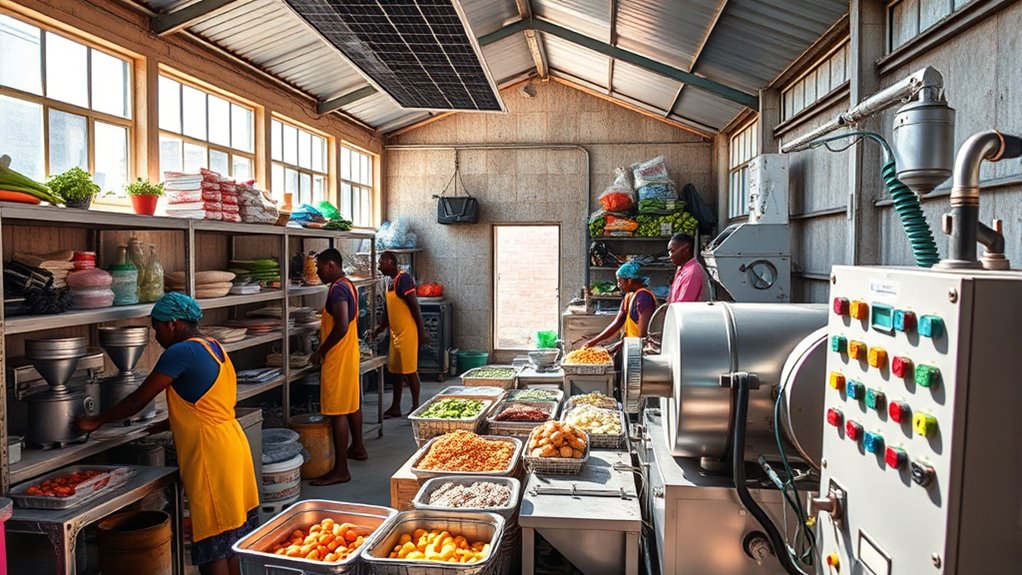
Upgrading a processing station requires focusing on several key components that directly impact efficiency and product quality. First, modern equipment ensures faster processing and maintains product standards. Second, implementing sustainable practices minimizes environmental impact and reduces costs. Third, engaging the community fosters trust and supports local employment. To visualize these components:
- State-of-the-art machinery that increases capacity and consistency
- Renewable energy sources or efficient power systems to promote sustainability
- Community training programs that involve locals and build ownership in the upgrade process
Focusing on these areas helps you create a processing station that’s efficient, environmentally friendly, and aligned with community needs, ensuring long-term success. Incorporating sustainable practices and community engagement is essential for meaningful upgrades that benefit everyone involved.
Case Studies: Micro-Loans in Action

Have you seen how micro-loans transform smallholder processing stations? These financial injections enable you to adopt sustainable practices, such as eco-friendly equipment or renewable energy sources, reducing environmental impact. Micro-loans also empower you to diversify your markets by expanding production capacity or developing new product lines, helping you reach different customer segments. For example, in Kenya, smallholders used micro-loans to upgrade their coffee processing facilities, incorporating water-saving technologies and organic certification, which attracted premium buyers. Similarly, in Ghana, micro-financing helped cocoa farmers diversify into chocolate production, opening new markets. These case studies demonstrate that micro-loans aren’t just about funding; they’re about enabling you to implement sustainable practices and explore new market opportunities, increasing resilience and income stability for smallholder processing stations. Additionally, access to appropriate materials and improved infrastructure can further enhance the effectiveness of these upgrades.
Impact on Product Quality and Market Access
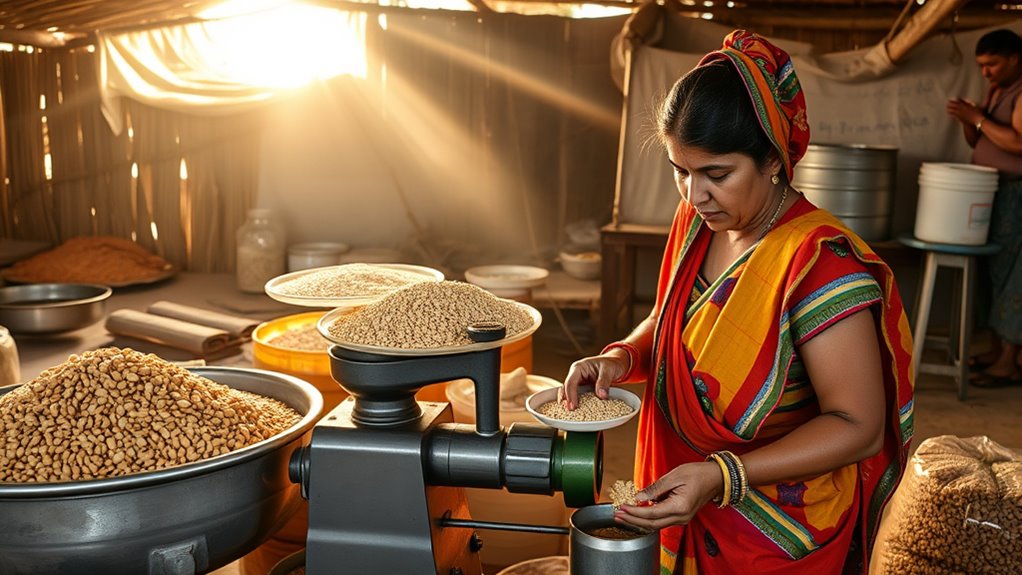
Micro-loans substantially enhance the quality of your products by enabling investments in better equipment, training, and quality control measures. With improved tools, you can produce higher-quality goods that meet market standards. Farmer training plays a crucial role, helping you adopt better processing techniques and maintain consistency. As product quality improves, you gain access to new markets and increase your bargaining power. Micro-loans also support market diversification, allowing you to explore different buyer segments and reduce dependency on a single outlet. This flexibility broadens your reach and stabilizes income streams. Additionally, understanding ethical hacking can help protect your business data and online transactions from cyber threats, ensuring secure market access. Visualize a processing station equipped with modern machinery, trained staff ensuring quality, and access to diverse markets—all made possible through micro-loans that empower your growth.
Financial Inclusion and Empowerment of Smallholders
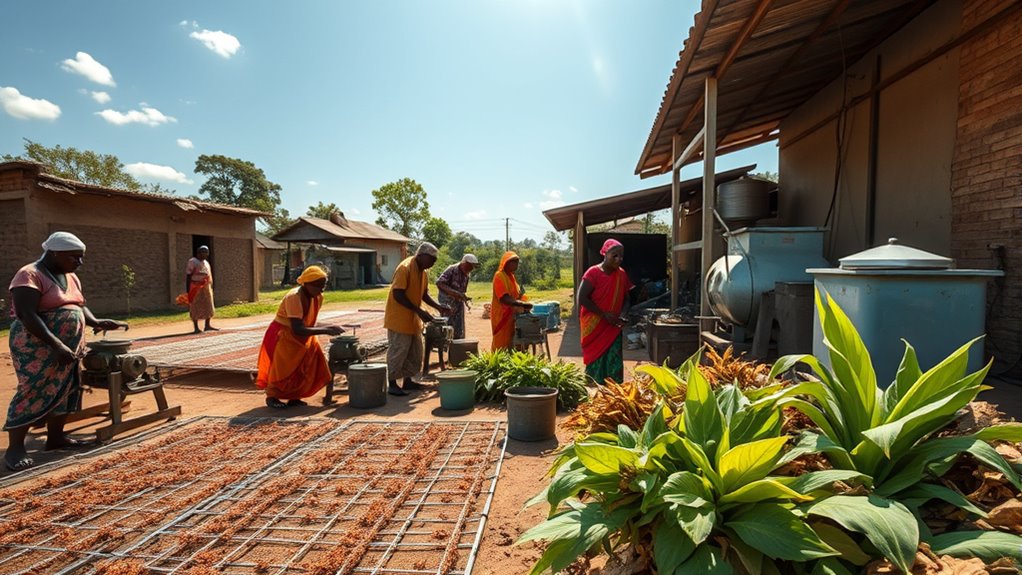
Access to micro-loans not only improves product quality and market opportunities but also plays an essential role in fostering financial inclusion for smallholders. When you gain better credit accessibility, you can invest in equipment, expand operations, or manage cash flow more effectively. This access reduces reliance on informal lenders who often charge high interest rates. Additionally, micro-loans often come with financial literacy support, helping you understand repayment terms, budgeting, and savings strategies. As your financial knowledge grows, you’re empowered to make informed decisions that strengthen your farming business. Over time, this enhances your economic resilience and ability to participate fully in local and regional markets. Micro-loans can also facilitate access to credit facilities, enabling smallholders to take advantage of new opportunities. Ultimately, micro-loans serve as a catalyst for smallholders’ financial empowerment and long-term sustainable growth.
Risks and Considerations in Micro-Lending for Upgrades
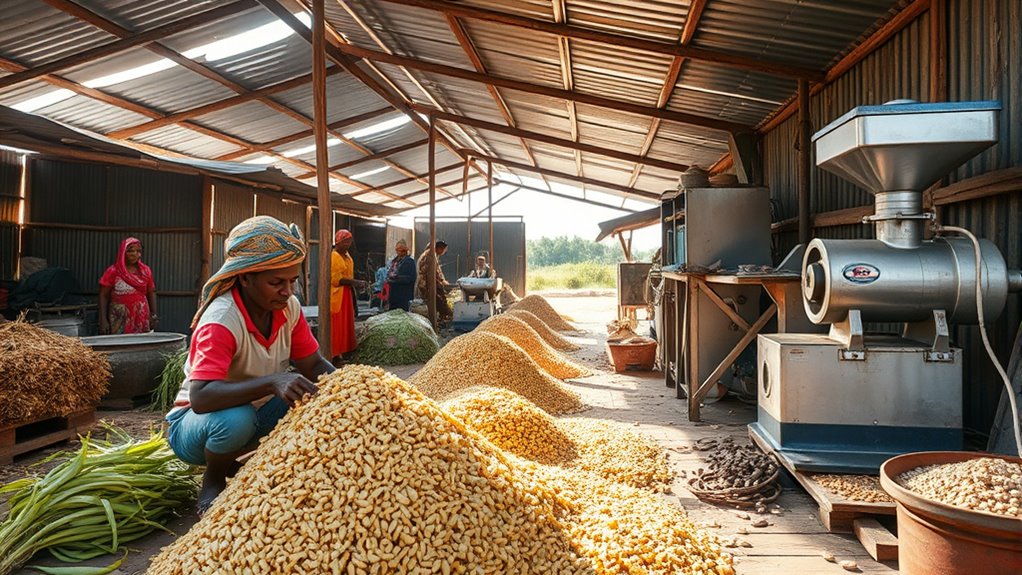
While micro-loans can provide essential support for upgrading processing stations, they also carry certain risks that you need to contemplate carefully. The primary concern is credit risk, where borrowers might struggle to repay, leading to loan default. This can strain your finances and jeopardize future funding. Additionally, if the processing upgrade doesn’t generate expected profits, repaying the loan becomes even harder. You also face the risk of overleveraging, taking on too much debt without clear repayment strategies. Moreover, digital literacy programs can influence the ability of borrowers to manage loans responsibly and understand financial commitments. Borrowers may lack collateral, increasing the risk of loan default. Unexpected operational costs can delay repayment. Economic or market changes could affect the profitability of upgrades.
Strategies for Effective Use of Micro-Loans
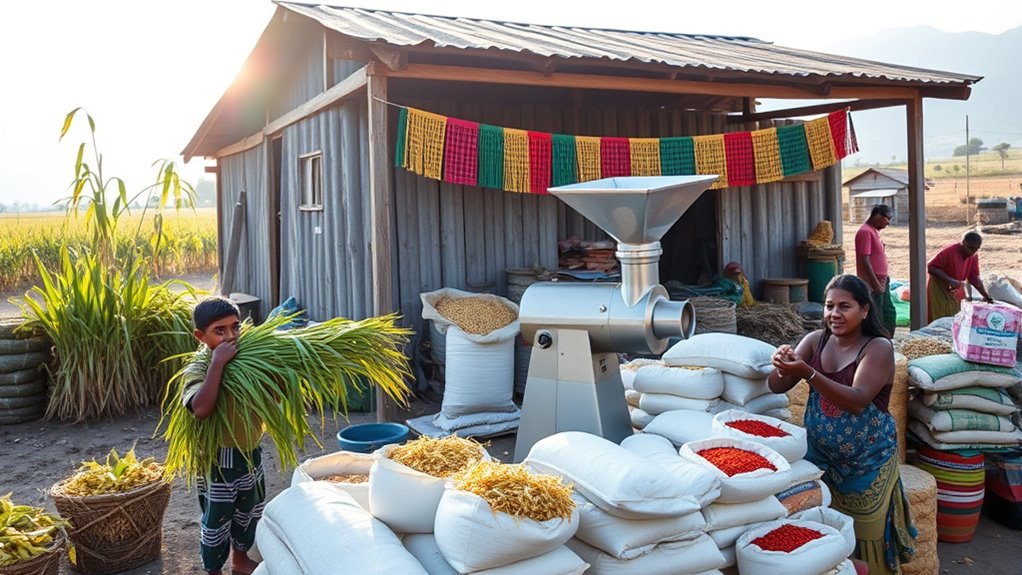
To make the most of your micro-loan, start by clearly evaluating your funding needs to guarantee you borrow only what’s necessary. Choose reliable lenders who understand your industry and can support your goals effectively. Finally, regularly monitor the impact of your loan to track progress and make informed adjustments. Additionally, maintaining transparency about your financial relationships helps build trust with your lenders and partners.
Assessing Funding Needs
Have you ever considered how accurately evaluating your processing station’s actual needs can maximize the impact of a micro-loan? Knowing exactly where funds are needed guarantees you invest wisely, supporting sustainable practices and community engagement. To assess your needs effectively:
- Conduct a thorough cost analysis to identify equipment upgrades, training, or infrastructure improvements
- Engage with community stakeholders to understand local priorities and potential collaborations
- Prioritize investments that promote environmentally friendly practices and long-term viability
Selecting Reliable Lenders
Choosing the right lender is crucial to ensuring your micro-loan effectively supports your processing station’s growth. You want a lender with a solid reputation for fairness and transparency. Low interest rates help keep repayment manageable, so compare offers carefully. A reputable lender will provide clear terms and reliable support when needed. To visualize, consider this table:
| Lender Reputation | Interest Rates | Customer Support |
|---|---|---|
| Trusted & Transparent | Competitive & Fair | Responsive & Helpful |
This table highlights key factors: a lender’s reputation influences trust, interest rates impact affordability, and support ensures you’re guided through the process. Prioritize lenders who align with these qualities to secure a reliable, beneficial loan for your processing station. Additionally, understanding sound recording techniques can be valuable for documenting your station’s processes or promotional materials.
Monitoring Loan Impact
Effective monitoring of your micro-loan’s impact guarantees your processing station uses funds wisely and achieves growth goals. By implementing robust loan monitoring strategies, you can track how innovative financing is boosting productivity and profitability. Regularly review financial statements and operational metrics to identify areas for improvement. Engage with your team to gather feedback on challenges and successes, ensuring transparency. Use data-driven insights to adjust your plans proactively, avoiding misallocation of funds. This ongoing evaluation helps demonstrate the value of micro-loans to stakeholders and ensures your station stays on track. Keep a close eye on key indicators such as output volume, income changes, and cost management, so you maximize the benefits of your loan and sustain long-term growth.
Policy Support and Institutional Roles

Policy support and institutional roles are crucial for the success of micro-loans targeted at smallholder processing stations. Effective government incentives encourage lenders to invest in rural areas and help smallholders access affordable credit. Clear regulatory frameworks protect both borrowers and lenders, ensuring transparency and reducing risks. Governments can streamline processes, provide tax breaks, or establish guarantees that motivate financial institutions to serve smallholders. Institutions, such as cooperatives or development banks, play a crucial role in channeling funds and offering technical assistance. Your efforts in creating supportive policies and strengthening institutions foster an environment where micro-loans can thrive, enabling smallholders to upgrade processing stations and improve productivity. Without robust policy support, scaling micro-finance solutions for rural processing remains a significant challenge.
Future Trends in Micro-Financing for Rural Processing Infrastructure

Digital micro-lending is set to expand, making it easier for smallholders to access funds quickly. Financial technology will continue to innovate, reducing costs and increasing transparency in rural finance. As these trends grow, you’ll see more tailored solutions that meet the unique needs of processing stations in remote areas.
Digital Micro-Lending Expansion
As technology continues to advance, digital micro-lending platforms are poised to transform how smallholder processing stations access financing. These innovative financing solutions leverage digital platforms to streamline loan application processes, reduce transaction costs, and expand reach to underserved areas. You might see:
- Increased accessibility through mobile apps, enabling instant loan approvals
- Data-driven risk assessments that tailor loans to smallholders’ specific needs
- Greater transparency and simplified repayment options, encouraging timely payments
This expansion allows you to tap into new funding sources and scale operations more efficiently. Digital micro-lending not only makes financing more inclusive but also accelerates infrastructure upgrades, helping smallholders improve productivity and market access. The future of micro-financing hinges on these innovative digital platforms, making them essential tools for rural development.
Impact of Financial Technology
Emerging financial technologies are set to reshape how rural processing infrastructure secures funding, offering new avenues for growth and modernization. Blockchain security enhances transaction transparency and trust, reducing fraud risks and increasing access to micro-loans. Mobile banking simplifies access to financial services, enabling smallholders to apply, monitor, and repay loans directly from their phones, even in remote areas. These innovations lower barriers, making micro-financing more reliable and efficient. As a result, you can expect faster approval processes and improved security, boosting confidence among lenders and borrowers alike. The integration of blockchain and mobile banking will facilitate more inclusive financial ecosystems, empowering smallholders to invest confidently in processing stations and upgrade infrastructure sustainably. This evolution promises a more resilient, accessible, and secure micro-financing landscape for rural communities.
Frequently Asked Questions
How Do Micro-Loans Affect Smallholder Income Stability Long-Term?
Micro-loans can boost your income stability long-term by enabling you to diversify your income sources and invest in better equipment. With improved financial literacy, you’ll make smarter decisions about borrowing and repaying loans, reducing risks. As you build your financial capacity, you’ll become more resilient to market fluctuations, ensuring steady income over time. This proactive approach helps you grow your farm’s profitability and secure your financial future.
What Are Common Repayment Challenges for Micro-Loans in Processing Upgrades?
Did you know that over 40% of micro-loan borrowers face repayment challenges? You might encounter collateral issues, making lenders hesitant to approve loans or demand collateral that’s hard to provide. Additionally, repayment timing can be tricky; when harvests are delayed or market prices drop, you may struggle to meet installment deadlines. These challenges can hinder your ability to upgrade processing stations effectively, impacting your smallholder operation’s growth.
How Do Micro-Loans Influence Local Employment Opportunities?
Micro-loans boost local employment by encouraging community engagement and supporting technology adoption. When smallholders access these loans, they’re more likely to upgrade processing stations, creating new jobs and fostering local economic growth. As you invest in technology and infrastructure, employment opportunities expand, benefiting the entire community. This active involvement helps reduce poverty and builds resilient local economies, making micro-loans essential for sustainable development.
Are Micro-Loans Adaptable to Different Types of Processing Facilities?
Did you know that micro-loans have a 70% success rate in supporting various processing facilities? You can adapt micro-loans to different processing technology needs, whether it’s upgrading equipment or expanding capacity. They promote financial inclusion by providing small-scale producers access to capital, making it easier to modernize and diversify operations. So, micro-loans are highly adaptable, helping a wide range of processing facilities grow and improve.
What Role Do Government Policies Play in Micro-Loan Accessibility?
Government policies considerably influence micro-loan accessibility by addressing regulatory barriers that may hinder smallholders from obtaining funding. You’ll find that supportive policies, such as streamlined application processes, encourage loan uptake. Additionally, subsidy programs can reduce costs and risks for lenders, making micro-loans more available. When governments actively promote these policies, smallholders gain easier access to the financial resources needed to upgrade processing stations and improve productivity.
Conclusion
So, next time you marvel at a thriving rural processing station, remember it’s probably fueled by micro-loans—because who needs big banks when tiny funds can make big dreams come true? With smarter lending, you’ll upgrade your facilities, boost product quality, and maybe even impress the market. Just don’t forget: in the world of micro-finance, a small loan can pack a punch—if you avoid the pitfalls and play your cards right.
Halloween Picks
halloween
As an affiliate, we earn on qualifying purchases.