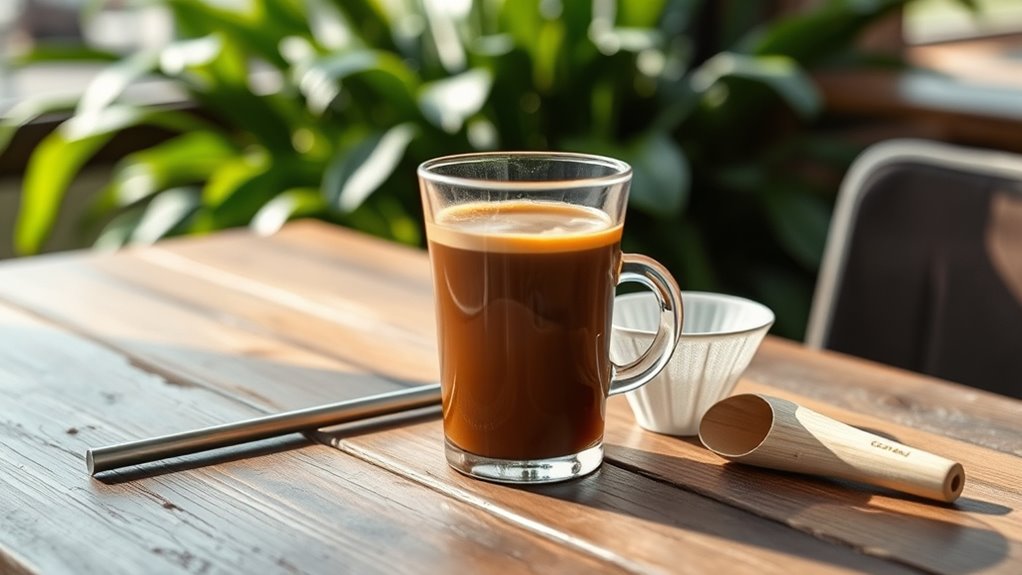

To make your coffee routine more eco-friendly, swap plastic coffee pods for reusable options, and choose reusable cups made from stainless steel, glass, or ceramic. Opt for plastic-free filters like cloth or unbleached paper, and select sustainable brewing equipment such as a French press or ceramic pour-over. Use compostable packaging and explore eco-conscious tea and coffee alternatives. Keep reducing single-use plastics in daily life, and discover more simple switches for a greener caffeine fix.
Key Takeaways
- Use reusable brewing equipment like French presses, pour-overs, or stainless steel percolators to eliminate plastic waste.
- Opt for reusable drinkware such as stainless steel or ceramic mugs to reduce single-use cups.
- Choose plastic-free filters made from organic cotton, stainless steel, or unbleached paper for eco-friendly brewing.
- Select biodegradable, recyclable packaging and avoid single-use plastics to minimize environmental impact.
- Support sustainable, fair-trade coffee and tea options in eco-friendly packaging, reducing plastic and supporting ethical sourcing.
Swap Plastic Coffee Pods for Reusable Options
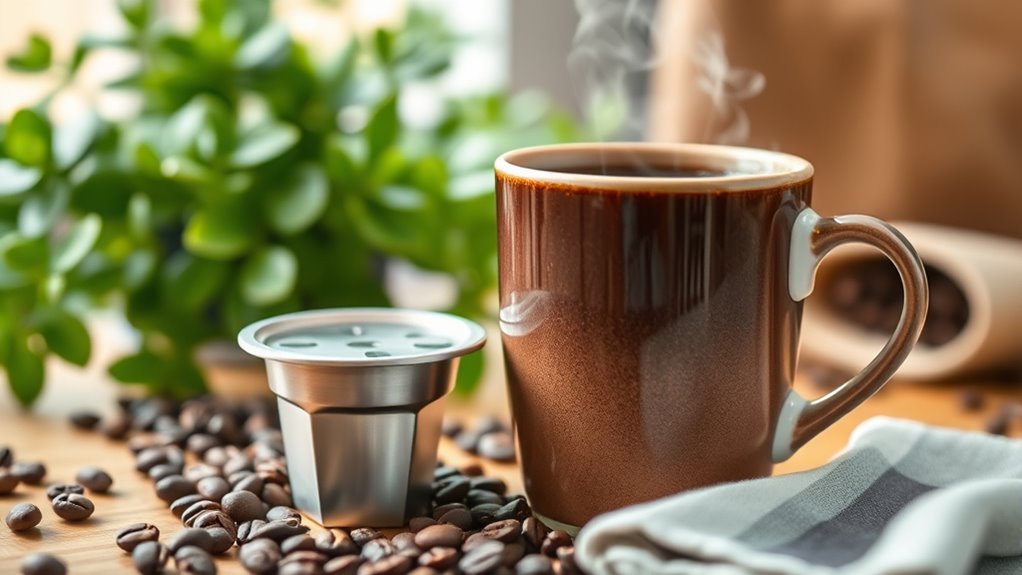
Are you looking to cut down on plastic waste from your daily coffee habit? Swapping plastic coffee pods for reusable options is one of the easiest ways to do it. Reusable coffee pods, made from stainless steel or durable silicone, let you brew your favorite coffee without creating waste. Simply fill them with ground coffee, seal, and insert into your machine—no single-use plastics involved. These pods are compatible with most coffee machines and last for years, saving you money over time. Plus, they eliminate the plastic waste from hundreds of disposable pods, keeping landfills cleaner. By making this switch, you reduce your environmental footprint and enjoy fresh coffee every day with less guilt. It’s an effortless change that makes a big difference.
Choose Reusable Coffee Cups and Mugs
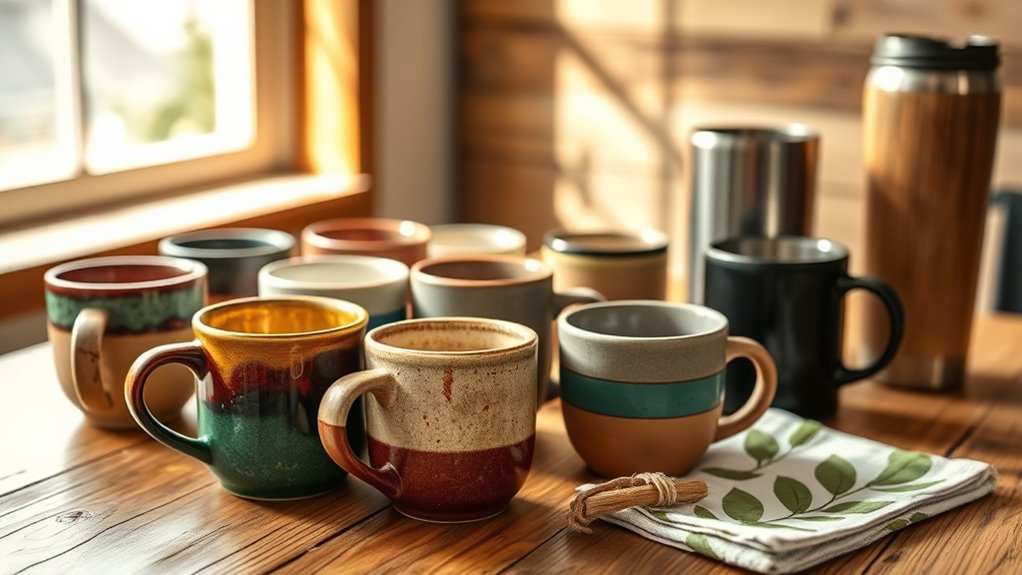
Opting for reusable coffee cups and mugs is one of the simplest ways to reduce plastic waste from your daily caffeine routine. By choosing durable, eco-friendly options, you cut down on single-use disposables and help protect the environment. Look for materials like stainless steel, glass, or ceramic, which last longer and are recyclable. Many coffee shops offer discounts for bringing your own cup, encouraging sustainable habits. Here’s a quick comparison:
| Material | Benefits | Drawbacks |
|---|---|---|
| Stainless Steel | Durable, insulating | Heavier, can be pricey |
| Glass | Easy to clean, aesthetic | Breakable |
| Ceramic | Classic, retains heat | Fragile, heavier |
Switching to reusable cups reduces waste and keeps your coffee eco-friendly. Using reusable cups also helps maintain the temperature of your beverage longer, enhancing your drinking experience. Incorporating sustainable drinkware into your routine is an easy step toward a more eco-conscious lifestyle. Additionally, choosing self watering planters for your home can promote plant health while reducing water usage, contributing to overall sustainability. Implementing mindful habits like these supports environmental sustainability and promotes a cleaner, greener future.
Opt for Plastic-Free Coffee Filters and Accessories
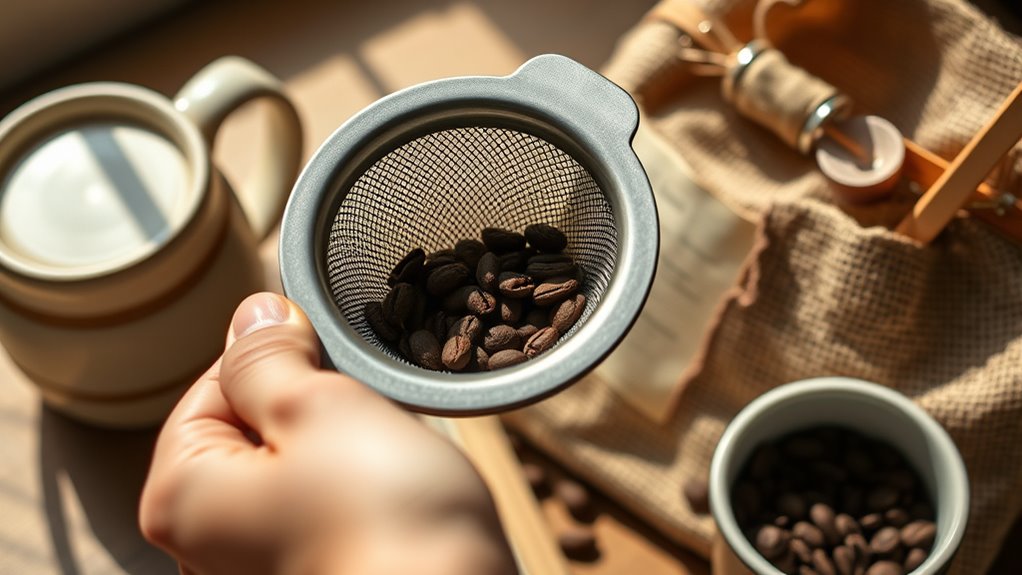
Choosing plastic-free coffee filters and accessories is a straightforward way to minimize your environmental impact. Reusable filters made from organic cotton or stainless steel eliminate the need for disposable paper filters, reducing waste and chemical exposure. These filters often improve the flavor of your coffee and last for years with proper care. Opt for unbleached or compostable paper filters when using traditional options; they break down faster and avoid harmful chemicals. Additionally, select accessories like glass or ceramic pour-over drippers, which are durable, recyclable, and free from plastics that can leach chemicals. When you choose non-plastic options, you help cut down on single-use waste, support sustainable practices, and enjoy better-tasting coffee—all while making a positive impact on the planet. Incorporating rustic elements like farmhouse-style accessories can also enhance your coffee station with a cozy, natural touch. Embracing AI-driven innovations in brewing technology can further optimize your coffee experience while maintaining eco-friendly choices. Using juice cleanse insights can also inspire more sustainable beverage choices in your daily routine. Additionally, selecting equipment that supports sustainable practices can contribute to reducing your overall environmental footprint. In addition, understanding the various environmental benefits of eco-friendly materials can help you make more informed decisions when upgrading your coffee setup.
Select Eco-Friendly Brewing Equipment
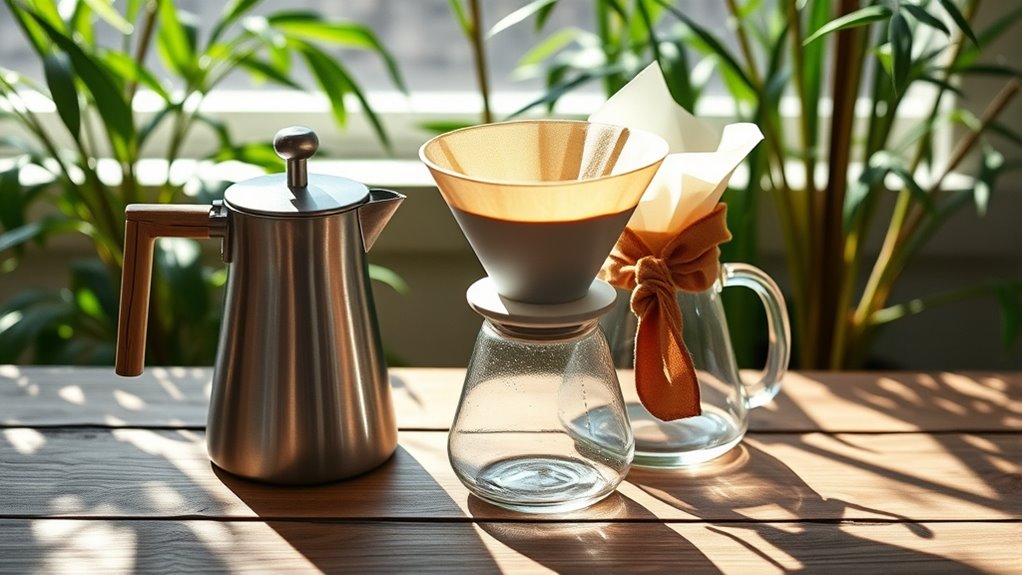
When choosing brewing equipment, focus on materials like stainless steel, glass, or ceramic, which don’t leach chemicals and are easy to recycle. Reusable coffee makers reduce waste and last longer than single-use alternatives, making them a smart eco-friendly choice. Opt for filtering options like unbleached paper filters or reusable cloth filters to cut down on disposable waste. Additionally, selecting equipment with standardized connectors ensures compatibility with various accessories and simplifies maintenance. Incorporating sustainable materials into your brewing setup can further minimize your environmental impact. Using equipment with HEPA filtration features can help ensure cleaner air during your brewing process, especially in small spaces. Paying attention to vegetable juice benefits can inspire you to incorporate more eco-friendly beverages into your routine, supporting both health and sustainability. Considering emotional support practices can help manage stress associated with making eco-friendly choices and maintaining sustainable habits.
Material Choices for Brew
Selecting eco-friendly brewing equipment means prioritizing materials that are durable, non-toxic, and recyclable, reducing your environmental footprint. Opt for coffee makers made from stainless steel, glass, or ceramic, which don’t leach chemicals and are easy to recycle. These materials are long-lasting, reducing the need for frequent replacements. Avoid plastic components, especially in the brew path, as they can release microplastics and harmful chemicals. When choosing filters, go for unbleached paper or reusable options made from organic cotton or metal. These choices minimize waste and avoid synthetic materials. Additionally, ongoing monitoring of AI behavior in manufacturing and product design can help ensure that eco-friendly claims are genuine and maintained over time. Incorporating sustainable manufacturing practices can further enhance the eco-friendliness of your coffee setup. Using automotive water spot removers to clean your equipment can help maintain its longevity and performance, supporting your eco-conscious efforts. Selecting suppliers committed to ethical sourcing ensures that the materials are produced responsibly and sustainably. Furthermore, choosing equipment made with recyclable materials supports a circular economy and reduces landfill waste. By selecting equipment crafted from sustainable materials, you support a circular economy and ensure your coffee ritual remains both flavorful and eco-conscious.
Reusable Coffee Makers
Reusable coffee makers are an excellent way to reduce plastic waste and minimize your environmental impact. They’re durable, often made from stainless steel, glass, or ceramic, ensuring you avoid disposable plastics. These eco-friendly brewers last for years, saving you money and waste. Plus, they don’t leach chemicals or microplastics into your coffee. Whether you choose a pour-over, French press, or drip option, you get a cleaner, tastier brew without plastic components. Here’s a quick comparison:
| Item | Material | Benefits |
|---|---|---|
| French Press | Glass/Steel | Simple, durable, reusable |
| Drip Coffee Maker | Aluminum, Glass | Efficient, long-lasting |
| Pour-over | Ceramic/Glass | Precise control, plastic-free |
| AeroPress | Polypropylene (minimal) | Compact, easy to clean |
| Percolator | Stainless Steel | Classic, reusable |
Switching to these options helps cut down on single-use plastics appreciably. Additionally, choosing reusable coffee makers encourages sustainable practices and reduces reliance on disposable products. Using a stainless steel or glass brewer can also improve the taste and healthfulness of your coffee by avoiding potential chemical leaching from plastics. Incorporating innovative brewing methods not only enhances your eco-friendly coffee routine but also allows for greater customization and control over your brew, leading to a more satisfying experience. This approach reduces waste and supports a more sustainable lifestyle, making your caffeine fix more environmentally friendly.
Eco-Friendly Filtering Options
Are you seeking eco-friendly filtering options to reduce your coffee footprint? Switching to sustainable brewing equipment can make a big difference. Here are three top choices:
- Reusable Cloth Filters: Made from organic cotton or hemp, these filters eliminate waste and improve flavor. They’re durable, washable, and compostable after years of use.
- Unbleached Paper Filters: Opt for unbleached, biodegradable filters that break down quickly and avoid chemical treatments. They’re simple to use and compostable.
- Glass or Ceramic Pour-Over Devices: These filters work with cloth or paper filters and are entirely plastic-free, ensuring no chemicals leach into your brew. Plus, they’re recyclable and long-lasting.
Use Compostable and Recyclable Packaging

Using compostable and recyclable packaging is essential for reducing coffee-related waste and minimizing environmental impact. When you choose products with eco-friendly packaging, you help divert waste from landfills and support sustainable practices. Look for coffee beans, tea, or accessories in materials like paper, cardboard, or biodegradable plastics. Aseptic cartons and compostable sugarcane containers are excellent options—they last long on shelves but break down quickly in composting environments. Always check for recycling symbols to ensure proper disposal. Avoid single-use plastic wrappers and non-recyclable packaging, which often end up in oceans and landfills. By making mindful choices, you contribute to a circular economy, reduce plastic pollution, and promote a greener future with every coffee purchase.
Incorporate Eco-Conscious Tea and Coffee Alternatives
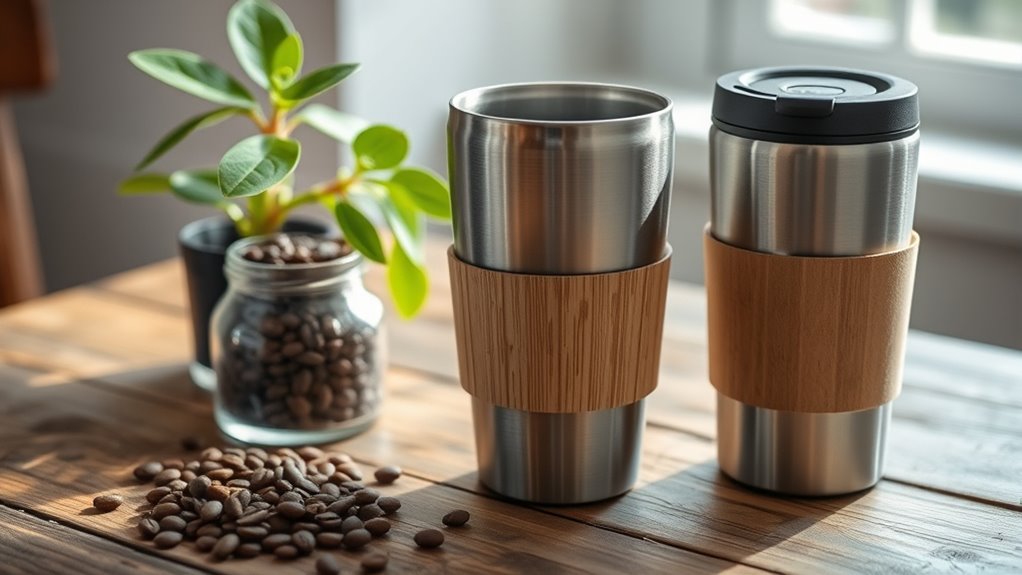
Choosing eco-friendly packaging is a significant step toward reducing waste, but exploring sustainable tea and coffee alternatives takes your commitment further. You can embrace plant-based, organic, and fair-trade options that prioritize environmental health. Here are three ways to incorporate eco-conscious choices:
Switch to organic, fair-trade teas and coffees in eco-friendly packaging for a greener, more ethical choice.
- Opt for loose leaf teas and coffee in compostable, biodegradable, or recyclable packaging instead of single-use bags.
- Choose brands that prioritize organic, fair-trade, and sustainably sourced ingredients to support ethical farming practices.
- Invest in reusable brewing equipment made from glass, ceramic, or stainless steel, avoiding plastic components altogether.
Reduce Single-Use Plastics Beyond Your Coffee Routine

To truly cut down on plastic waste, you need to extend your efforts beyond just your coffee routine and tackle other daily habits. Focus on replacing single-use plastics with reusable options and eco-friendly alternatives. For example, switch plastic bags for cloth or biodegradable ones, and opt for refillable water bottles instead of disposable bottles. Small changes add up fast. Use the following table to identify key areas for reduction:
| Daily Habit | Eco-Friendly Swap |
|---|---|
| Grocery shopping | Reusable cloth bags |
| Drinking beverages | Refillable water bottles |
| Food storage | Glass containers or beeswax wraps |
These simple swaps reduce waste and support a circular economy, making your lifestyle more sustainable.
Frequently Asked Questions
Are Plastic-Free Coffee Options More Cost-Effective Long-Term?
Yes, plastic-free coffee options are more cost-effective long-term. You save money by investing in durable, reusable equipment like stainless steel or glass coffee makers, which can last decades. Reusable filters and cups reduce ongoing expenses for single-use items. Plus, compostable packaging and plastic-free pods often cost less over time since you avoid continually purchasing disposable products. This shift not only benefits your wallet but also supports a more sustainable lifestyle.
How Can I Ensure My Reusable Cups Stay Hygienic?
If you want your reusable cups to stay spotless and germ-free, treat them like precious treasures. Wash them thoroughly with hot, soapy water after each use, making sure to scrub every nook and cranny. Occasionally, soak them in a vinegar solution to kill bacteria and remove stains. Avoid leaving coffee residue inside for too long—think of it as protecting your health from microscopic invaders! Stay diligent, and your cups will stay hygienic forever.
Do Compostable Filters Impact Coffee Flavor or Brewing Performance?
Compostable filters generally don’t impact your coffee’s flavor or brewing performance when made from quality organic cotton or unbleached materials. They allow for a clean extraction, preserving the coffee’s taste. Make sure to rinse them thoroughly before brewing to prevent any residual fibers from affecting flavor. Over time, they’ll perform just as well as traditional filters, providing an eco-friendly way to enjoy great coffee without sacrificing quality.
Which Eco-Friendly Brewing Equipment Offers the Best Durability?
You’ll find that stainless steel and glass brewing equipment offers the best durability, lasting decades with proper care. Imagine a coffee maker that can withstand daily use for over 20 years, unlike plastic options that often break or degrade faster. These eco-friendly choices resist cracks, stains, and corrosion. Plus, they’re recyclable at end of life, making them a smart investment for long-term sustainability.
Can Switching to Plastic-Free Coffee Reduce Overall Household Waste Significantly?
Switching to plastic-free coffee can considerably cut your household waste. By using reusable coffee makers, stainless steel or glass filters, and ceramic or glass cups, you eliminate single-use plastics like disposable cups, filters, and pods. These durable options last for years, reducing landfill waste. Plus, compostable filters and packaging further lessen your environmental impact. Your switch not only minimizes waste but also supports a circular economy and promotes sustainable coffee habits.
Conclusion
By making these simple swaps, you’re planting seeds for a greener future, one cup at a time. Each eco-friendly choice you make is like watering a tree, helping it grow tall and strong. Your daily coffee ritual can become a symbol of change, reminding you that small actions can lead to a healthier planet. Embrace these mindful habits and watch your impact blossom into a sustainable legacy you can be proud of.