

Rainforest Alliance and Fair Trade both promote sustainability but focus on different aspects. Fair Trade emphasizes fair wages, safe working conditions, and community support, ensuring ethical treatment of farmers. Rainforest Alliance prioritizes environmental conservation, biodiversity, and eco-friendly farming practices. Knowing these differences helps you choose coffee that aligns with your values. If you want to understand how these certifications impact your coffee experience and support your ideals, keep exploring further.
Key Takeaways
- Fair Trade focuses on social fairness, fair wages, and community development; Rainforest Alliance emphasizes environmental sustainability and biodiversity conservation.
- Rainforest Alliance’s seal signifies ecosystem preservation, while Fair Trade highlights fair wages and community support.
- Both certifications promote sustainable farming practices, but Fair Trade emphasizes economic justice, and Rainforest Alliance targets ecological health.
- Rainforest Alliance’s presence is stronger globally with over 44,000 products, while Fair Trade is recognized for strict ingredient standards.
- Consumers can choose products with both labels for combined social fairness and environmental sustainability benefits.

Gevalia Special Reserve Guatemala Single Origin Medium Roast Coarse Ground Coffee (10 oz Bag)
One 10 oz bag of Gevalia Guatemalan Single Origin Special Reserve Coarse Ground Coffee
As an affiliate, we earn on qualifying purchases.
Core Missions and Certification Focuses

Both Rainforest Alliance and Fair Trade certifications aim to promote sustainable and ethical practices in agriculture, but their core missions focus on different priorities. With Fair Trade, your main concern is ensuring farmers receive fair compensation that covers production costs and supports community development. It emphasizes fair wages, safe working conditions, and social projects like healthcare and education. Fair Trade also promotes eco-friendly farming practices, but its primary goal is economic justice for farmers and workers. In contrast, Rainforest Alliance centers on environmental conservation. Its mission is to protect ecosystems, biodiversity, and natural resources. The certification encourages sustainable farming methods that minimize chemical use and preserve habitats. While both certifications promote sustainability, Fair Trade focuses more on social fairness, and Rainforest Alliance prioritizes environmental health. Additionally, certifications like self-watering plant pots exemplify sustainable practices that can be adopted in agriculture and gardening to support these goals. Incorporating Cultural Intelligence into sustainable initiatives can enhance understanding and collaboration among diverse stakeholders, strengthening the overall impact of these certifications. Recognizing the importance of biodiversity can help consumers make more informed choices that align with their values regarding sustainability practices.

Bodum 34oz Chambord French Press Coffee Maker, High-Heat Borosilicate Glass, Polished Stainless Steel – Made in Portugal
Wash in warm, soapy water before first use and dry thoroughly
As an affiliate, we earn on qualifying purchases.
Environmental Standards and Conservation Efforts

You’ll notice that Rainforest Alliance places a strong emphasis on ecosystem preservation and biodiversity conservation, aiming to protect delicate habitats. Fair Trade standards also promote environmental practices but focus more on reducing agrochemical use and protecting waterways. Both certifications work toward sustainable farming, yet their approaches highlight different environmental priorities. Incorporating sound design techniques can further enhance the storytelling around these conservation efforts. Additionally, these organizations often promote regenerative agriculture practices that help restore soil health and promote biodiversity. By adopting integrated pest management, farmers can reduce chemical inputs while maintaining crop yields and ecological balance. Moreover, implementing water conservation strategies can significantly lessen the environmental footprint of farming operations. Emphasizing community-based conservation initiatives can also strengthen local ecosystems and support sustainable livelihoods.
Ecosystem Preservation Focus
Ecosystem preservation is a central focus of both Rainforest Alliance and Fair Trade certifications, but they approach environmental standards differently. Rainforest Alliance emphasizes protecting ecosystems and biodiversity, requiring farms to conserve natural habitats and reduce chemical use. Fair Trade also promotes eco-friendly practices but prioritizes fair wages and community well-being alongside environmental care. Both certifications encourage sustainable farming practices to ensure long-term environmental health and resource management. Additionally, Rainforest Alliance places a strong emphasis on conservation efforts that support ecosystem resilience and species preservation. Recognizing the importance of local ecosystems, both programs work to reduce negative impacts on surrounding environments and promote community-led conservation initiatives.
Agrochemical Usage Reduction
Reducing agrochemical use is a key aspect of environmental standards in sustainable farming certifications. Both Rainforest Alliance and Fair Trade promote practices that minimize chemical inputs, but their approaches differ. Rainforest Alliance emphasizes integrated pest management and organic methods, encouraging farmers to use fewer synthetic pesticides and fertilizers. They require farms to protect soil health and water quality, promoting natural pest control strategies. Fair Trade also advocates for organic practices and limits chemical runoff, but its primary focus remains on fair wages and community development. By reducing agrochemicals, both certifications help safeguard ecosystems and human health. Your coffee from these farms is less likely to contain harmful residues, supporting sustainable agriculture and environmental resilience. Choosing these certifications means supporting efforts to lower chemical reliance and protect natural resources.
Biodiversity Conservation Efforts
Biodiversity conservation is a central focus of both Rainforest Alliance and Fair Trade certifications, but their approaches highlight different priorities. You’ll find Rainforest Alliance emphasizes protecting ecosystems and natural habitats through strict environmental standards. They require farms to minimize chemical use, safeguard soils, and maintain clean water sources, ensuring natural resources remain healthy. Fair Trade, while also promoting eco-friendly practices, focuses more on supporting community welfare and fair wages, with environmental standards as part of its broader mission. Both standards aim to reduce ecological impact, but Rainforest Alliance’s efforts are more explicitly geared toward preserving biodiversity. Additionally, Rainforest Alliance promotes soil health practices that enhance soil vitality and biodiversity. These practices often include crop diversification and conservation of native species, which further contribute to maintaining ecological balance.

ESPRO P5 French Press Coffee Maker – Patented Double Micro-Filter for Grit Free Brew, Heat-Resistant Thicker Borosilicate Glass Coffee Press – (32 oz)
GRIT-FREE COFFEE WITH PATENTED DOUBLE MICROFILTER: Our P5 french press stainless steel Give a smooth, sludge-free cup every...
As an affiliate, we earn on qualifying purchases.
Benefits to Farmers and Communities
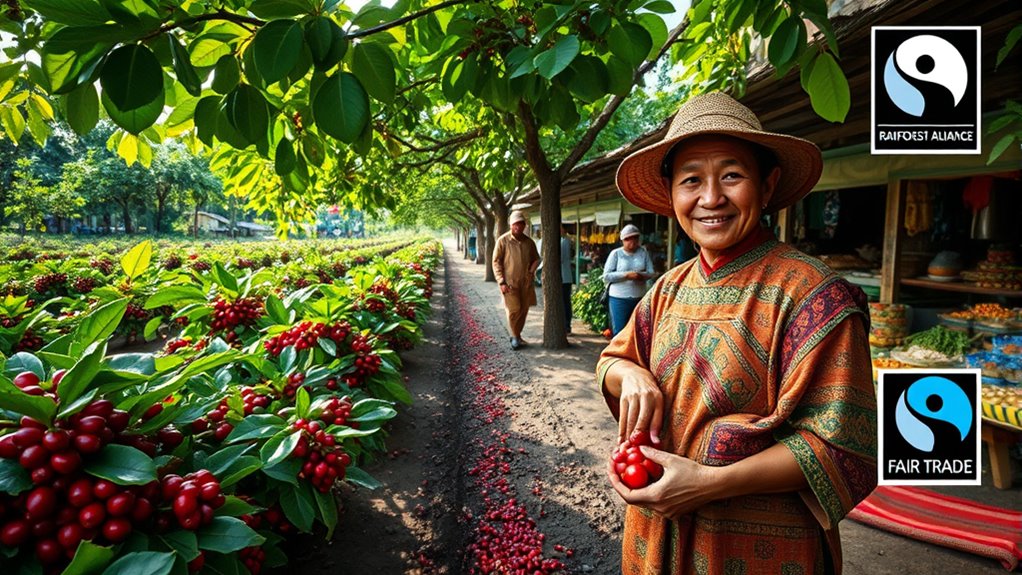
Both Fair Trade and Rainforest Alliance certifications offer tangible benefits to farmers and their communities, though they focus on different aspects of well-being and sustainability. With Fair Trade, you get stable income through minimum prices, which helps reduce poverty and supports community projects like healthcare, education, and infrastructure. It also emphasizes fair wages and safe working conditions, ensuring workers are protected and fairly compensated. Rainforest Alliance, on the other hand, prioritizes environmental health, which indirectly benefits communities by promoting sustainable farming and conserving natural resources. It provides training to help farmers improve practices and implement eco-friendly methods. Both certifications empower farmers, improve livelihoods, and foster community development, but Fair Trade centers on economic stability, while Rainforest Alliance emphasizes environmental sustainability as key to community well-being. Additionally, Rainforest Alliance’s focus on sustainable farming practices helps ensure long-term productivity and resilience for farmers and their ecosystems.

Ziruma Non-Toxic French Press, Surgical Stainless Steel Coffee Press, Plastic-Free, Heavy Metal-Free, No Endocrine Disruptors, 34 Oz, Double Wall, 4-Layer Filter, Portable Coffee Maker
✅ 𝟑𝟏𝟔 𝗦𝘂𝗿𝗴𝗶𝗰𝗮𝗹-𝗚𝗿𝗮𝗱𝗲 𝗦𝘁𝗲𝗲𝗹 𝗳𝗼𝗿 𝗮 𝗛𝗲𝗮𝗹𝘁𝗵𝗶𝗲𝗿 𝗕𝗿𝗲𝘄 - Crafted with premium, 316 surgical-grade stainless steel and 100%...
As an affiliate, we earn on qualifying purchases.
Resource Management and Sustainability Initiatives

How do these certifications promote sustainable resource management? Both Rainforest Alliance and Fair Trade focus on reducing environmental impact and conserving resources. Rainforest Alliance emphasizes ecosystem health by requiring farms to protect soils and water quality. Fair Trade encourages environmentally friendly practices that minimize ecological footprints and chemical use. They drive farmers to adopt sustainable methods, including organic farming and water efficiency. Additionally, they promote ongoing investments in sustainability initiatives. Here are some key approaches they use:
Certifications promote sustainability by reducing environmental impact and encouraging eco-friendly farming practices.
- Implementing Sustainability Differential payments for additional eco-friendly practices
- Encouraging resource efficiency in water and energy use
- Enforcing strict environmental standards on certified farms
- Supporting biodiversity preservation and habitat protection
- Promoting educational programs that inform farmers about sustainable practices and environmental stewardship. These programs often include training on sustainable agriculture techniques to further improve resource management. Such initiatives also foster community involvement, which is vital for long-term environmental sustainability. Furthermore, integrating monitoring systems helps track progress and ensure compliance with environmental standards. Incorporating technological innovations also plays a role in advancing resource management and reducing ecological footprints. Together, these initiatives help guarantee long-term resource availability and environmental health.
Global Recognition and Market Presence
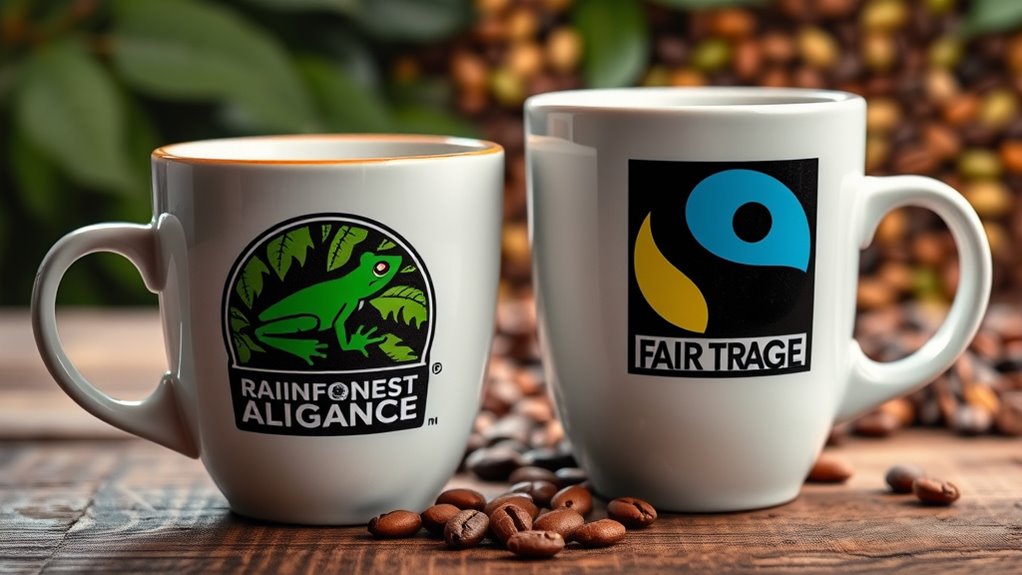
You’ll notice that Rainforest Alliance’s green frog seal appears on over 44,000 products worldwide, making it highly recognizable in global markets. Fair Trade labels are also well-known, especially on products where all ingredients meet certification standards. Both certifications have significant market presence, but their popularity varies across regions and product categories. The market differentiation between these certifications influences consumer choices and brand positioning in the global marketplace. Additionally, the certification standards for each program differ, affecting how producers and brands align with their respective values and market goals. Understanding the global recognition of these labels can help consumers make more informed purchasing decisions and support sustainable practices worldwide.
Certification Recognition Worldwide
Have you ever noticed the green frog seal on your coffee or snack products? That mark signifies the Rainforest Alliance’s global recognition, appearing on over 44,000 products worldwide. It’s particularly popular in North America and Europe, making it easy for consumers to identify sustainably sourced items. Meanwhile, the Fair Trade label is recognized on products where all ingredients meet strict certification standards, emphasizing fair prices and worker welfare. UTZ certification, launched in 2002, also shares market space but is less widespread. Here’s what sets their recognition apart:
- Rainforest Alliance’s seal appears on a broad range of products globally
- Fair Trade’s certification emphasizes ingredient-specific standards
- Both seals can appear simultaneously on products meeting both criteria
- Recognition varies by region and product category
Market Penetration and Popularity
Rainforest Alliance has established a strong global presence, with its green frog seal appearing on over 44,000 products across North America, Europe, and other markets. Its recognition is widespread, especially in North America and Europe, where consumers actively seek sustainable options. Fair Trade, while also well-known, is often associated with specific ethical standards like fair wages and community support. Its recognition is strong in niche markets and specialty coffee shops. The table below highlights their market reach:
| Certification | Global Recognition | Market Focus |
|---|---|---|
| Rainforest Alliance | Broad, worldwide | Environmental sustainability |
| Fair Trade | Niche, growing | Fair wages and community benefit |
Both brands influence consumer choices, but Rainforest Alliance enjoys broader, more diverse recognition.
Practical Impacts on Your Coffee Experience
Choosing coffee with a Rainforest Alliance or Fair Trade label can influence your tasting experience and how you feel about your purchase. Both certifications often mean better quality beans, sustainable farming methods, and ethical sourcing, which can subtly enhance flavor. For example, you might notice:
- A richer, more complex flavor profile due to eco-friendly practices
- Cleaner, brighter notes from environmentally conscious farming
- Consistent quality from farms adhering to strict standards
- A sense of connection, knowing your coffee supports fair wages and conservation efforts
These factors can make your coffee more enjoyable, knowing it’s produced responsibly. While taste varies based on roast and origin, choosing certified coffee often aligns your enjoyment with positive social and environmental impacts, adding depth to your everyday brew.
Frequently Asked Questions
How Do Certification Costs Affect Coffee Prices for Consumers?
Certification costs can increase the price of your coffee because producers often pass these expenses onto consumers. When farms invest in eco-friendly practices or fair wages, they need extra funds, which can lead to higher retail prices. As a consumer, you might pay a little more for coffee that’s sustainably grown and ethically produced. These costs help guarantee better conditions for farmers and healthier environments, making your coffee choices more meaningful.
Can a Single Farm Hold Both Rainforest Alliance and Fair Trade Certifications?
Yes, a single farm can hold both Rainforest Alliance and Fair Trade certifications. For example, imagine a farm in Guatemala that meets strict environmental standards of Rainforest Alliance while also fulfilling Fair Trade’s social and economic requirements. By doing so, the farm benefits from increased market access and consumer trust. This dual certification highlights their commitment to sustainability and fair practices, giving you a coffee that supports both ecosystems and farmers’ communities.
What Role Do Local Communities Play in Certification Processes?
Local communities play a crucial role in certification processes by actively participating in environmental and social standards. You’re involved in implementing sustainable farming practices, ensuring fair wages, and supporting community development projects like healthcare and education. Their input helps farms meet certification requirements, and ongoing engagement maintains compliance. By empowering local communities, you help promote eco-friendly and fair labor practices, ultimately benefiting both the environment and the people who rely on these farms for their livelihoods.
How Do Environmental Standards Evolve Over Time for These Certifications?
You might find that environmental standards for these certifications gently shift over time, reflecting new insights and global priorities. As you enjoy your coffee, know that the standards are continually refined through consultations, research, and evolving best practices. This guarantees farms stay ahead in sustainability, balancing ecological health and social welfare. These updates help protect ecosystems and communities, making your coffee experience not just enjoyable but also a step toward a healthier planet.
Are There Any Notable Differences in Certification Renewal or Audit Frequency?
You’ll notice that Rainforest Alliance conducts annual farm audits to guarantee ongoing compliance, emphasizing ecosystem and biodiversity protection. Fair Trade, on the other hand, also requires regular audits but focuses more on guaranteeing fair wages and community benefits. Both certifications renew periodically—usually every one to three years—depending on the farm’s compliance history. Staying updated with these audits helps ensure the farms meet evolving standards for sustainability and fair practices.
Conclusion
Choosing between Rainforest Alliance and Fair Trade isn’t just about labels; it’s about the story your coffee tells. Imagine each sip as a chapter—one supporting lush forests and vibrant communities, the other championing fair wages and ethical practices. Both make a difference, but understanding their unique missions helps you sip with purpose. So next time you brew, ask yourself: which story do you want your coffee to tell? The choice is yours, one cup at a time.