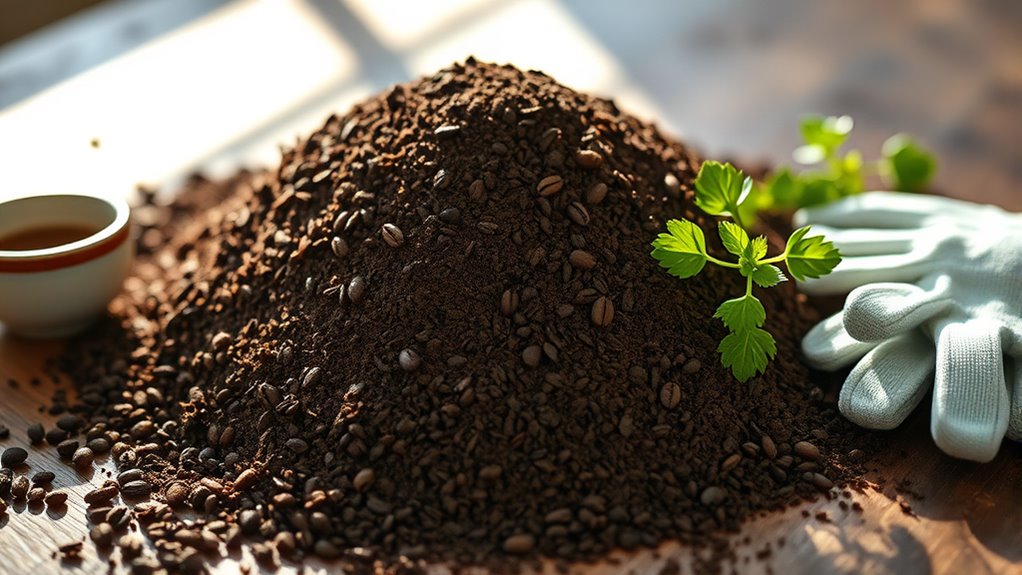

You can turn used coffee grounds into fuel, boost your garden, extract useful chemicals, create eco-friendly building materials, or support local recycling programs. Coffee grounds make great biofuels and compost, enriching soil and reducing waste. They also contain chemicals valuable in industries like cosmetics and biofuels. Plus, they can be used in sustainable construction. Keep exploring to discover how these surprising methods can help you make a positive impact with your leftover coffee.
Key Takeaways
- Transform coffee grounds into biofuels, biomass pellets, and biodiesel to reduce waste and generate sustainable energy.
- Use recycled coffee grounds as a nutrient-rich compost or soil enhancer for gardens and agriculture.
- Extract valuable chemicals like oils and phenolics from coffee grounds for cosmetics, food preservation, or bio-based materials.
- Incorporate coffee grounds into eco-friendly construction materials such as bricks and insulation for improved sustainability.
- Collect and repurpose coffee grounds through community programs, promoting circular economy, waste reduction, and environmental benefits.

JavaBrewBQ® Premium Coffee Grilling Pellets (20 lb Bag)
🔥 High Heat Performance – Burns hotter than traditional wood pellets for quick startups and reliable temperature control.
As an affiliate, we earn on qualifying purchases.
As an affiliate, we earn on qualifying purchases.
Turning Coffee Grounds Into Clean Biofuels and Energy
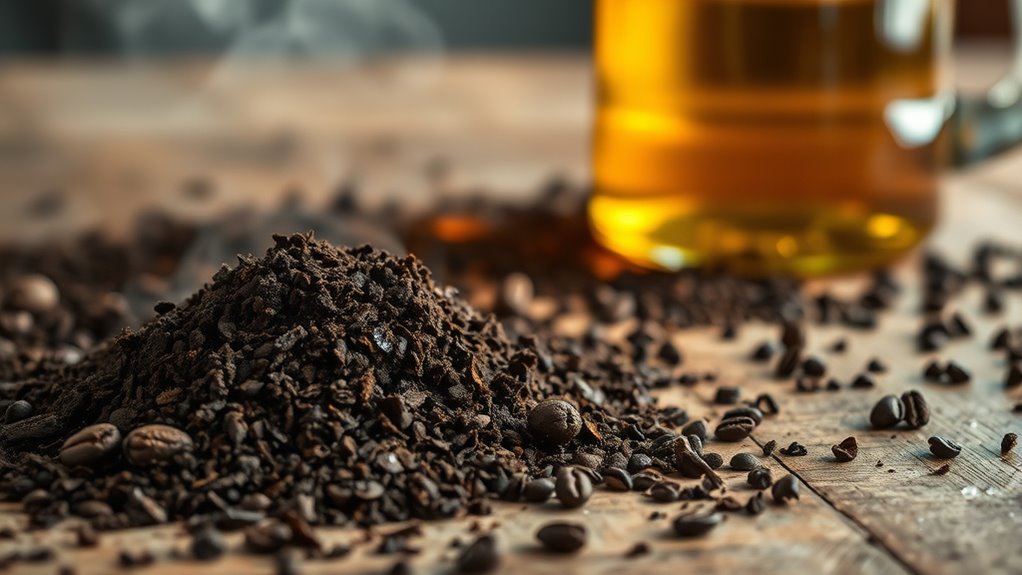
Turning coffee grounds into clean biofuels and energy offers a sustainable way to reduce waste and harness their high energy potential. Companies like bio-bean process thousands of tonnes annually into biofuels, transforming used grounds into valuable energy sources. Coffee logs, which you can burn, are 20% hotter and last longer than traditional kiln-dried wood. You can also convert grounds into biomass pellets, biodiesel, and BBQ coals, making them versatile fuels. Hydrochars derived from coffee grounds deliver impressive energy yields and high heating values, providing efficient heat sources. Additionally, extracting coffee oil yields about 10%, which can be refined into biofuel. By turning waste into energy, you help cut greenhouse gas emissions, reduce landfill waste, and promote renewable, eco-friendly energy solutions. Utilizing renewable energy sources supports a more sustainable future and maximizes the benefits of coffee waste. Incorporating waste-to-energy technologies can further enhance the efficiency of these processes and expand their environmental benefits. Exploring innovative methods like biomass conversion can unlock even more energy potential from used coffee grounds. Furthermore, advancements in energy recovery can optimize the conversion processes, making coffee waste an even more valuable resource in the renewable energy landscape. Innovative research into sustainable fuel production continues to push the boundaries of how coffee grounds can power our future.

TOP XIAN 3-Layer Worm Composter, 50L(13.21Gal) Worm Compost Bin for Indoor & Outdoor, Worm Farm Starter Kits for Vermicomposting Starter, Garden Composting Bin for Recycling Food Waste (Black)
50L COMPOST BIN: TOP XIAN NEW Worm Composters are made of high-quality black PP plastic, the total capacity…
As an affiliate, we earn on qualifying purchases.
As an affiliate, we earn on qualifying purchases.
Boosting Gardens With Nutrient-Rich Compost

After transforming coffee grounds into energy, you can further harness their benefits by using them to boost garden soil. Coffee grounds are rich in nitrogen, phosphorus, and potassium, essential for healthy plant growth. When composted properly for at least 98 days, they neutralize caffeine and acids, making them safe for plants. Adding composted grounds improves soil structure, aeration, and moisture retention. They also provide a slow-release fertilizer that supports vibrant blooms and lush foliage. To visualize, consider this table:
| Soil Type | Benefits of Coffee Grounds | Usage Tips |
|---|---|---|
| Loamy | Enhances nutrient content | Mix into compost or topdress |
| Sandy | Improves water retention | Incorporate into planting beds |
| Clay | Breaks up compacted soil | Spread around plant roots |
| Acidic | Slightly lowers soil pH | Use sparingly in alkaline soil |
| Neutral | Adds essential nutrients | Use as mulch or compost mix |
Using coffee grounds enriches your garden naturally. Additionally, understanding how electricity production from bike generators works can inspire sustainable practices in gardening tools and outdoor equipment.

400 SGN (4MM) – Java Earth Soil Amendment, Dry Spent Coffee Grounds, 20 lbs (9.072kg)
400 SGN (4MM) Spent Coffee Pellets – Coarser, larger granules for mess-free spreading that breakdown after the first rain….
As an affiliate, we earn on qualifying purchases.
As an affiliate, we earn on qualifying purchases.
Extracting Valuable Chemicals for Industry Use

Extracting valuable chemicals from coffee grounds involves specialized processes that isolate compounds with industrial applications. You can use techniques like hydrothermal and ultrasound-assisted extraction to increase the yield of phenolic compounds, oils, and other bioactive substances. These methods maximize extraction efficiency and are crucial for industrial scalability. These chemicals have diverse uses in food preservation, cosmetics, pharmaceuticals, and sustainable materials. For example, coffee oil, which yields about 10%, can be refined into biofuels or skincare ingredients. Hydrochars and biomass pellets derived from coffee grounds offer renewable energy sources, with high energy yields and heating values. Additionally, process optimization can enhance recovery rates and reduce operational costs. Implementing quality control measures ensures the purity and safety of the extracted compounds, making them more suitable for commercial use. By tailoring extraction methods, industries can efficiently recover targeted compounds, reducing waste and creating valuable products. Efficient extraction methods can significantly improve the recovery process and maximize product yield. This approach not only enhances the economic value of coffee grounds but also supports eco-friendly manufacturing processes.
400 SGN (4MM) – Java Earth Soil Amendment, Dry Spent Coffee Grounds, 20 lbs (9.072kg)
400 SGN (4MM) Spent Coffee Pellets – Coarser, larger granules for mess-free spreading that breakdown after the first rain….
As an affiliate, we earn on qualifying purchases.
As an affiliate, we earn on qualifying purchases.
Creating Eco-Friendly Building Materials

By repurposing coffee grounds into sustainable building materials, industries can substantially reduce waste and lower environmental impact. Coffee grounds can be incorporated into bio-based bricks, insulation panels, and concrete composites, offering eco-friendly alternatives to traditional materials. These recycled components not only divert waste from landfills but also enhance the properties of construction products, such as improving thermal insulation and durability. For example, coffee grounds’ porous structure helps trap air, boosting insulation efficiency. Using coffee grounds in building materials reduces reliance on virgin resources, cuts energy consumption, and decreases greenhouse gas emissions. Additionally, the porous structure of coffee grounds can improve moisture regulation within building materials, further enhancing their performance. This recycling process exemplifies how innovative reuse can contribute to sustainable development and industry innovation. Employing coffee grounds in construction can also support environmental sustainability by lowering the carbon footprint of building projects. Using coffee grounds in building materials reduces reliance on virgin resources, cuts energy consumption, and decreases greenhouse gas emissions. As a result, you can contribute to greener construction practices while supporting waste reduction efforts. This innovative use of coffee grounds exemplifies how recycling can positively influence both environmental sustainability and industry innovation. Moreover, incorporating coffee grounds can help create energy-efficient building materials that perform better in various climates.
Supporting Circular Economy With Local Collection Programs

Implementing local collection programs for coffee grounds is a vital step toward supporting a circular economy. By partnering with cafes, restaurants, and community centers, you can gather used coffee grounds efficiently and sustainably. These programs reduce waste sent to landfills, lowering greenhouse gas emissions like methane. When you organize regular pick-ups or drop-off points, you encourage businesses and residents to participate actively. Offering free coffee grounds for composting or industrial use incentivizes involvement. Using eco-friendly logistics, such as e-cargo bikes, minimizes carbon footprint during collection. These initiatives also foster a sense of community engagement and environmental responsibility. Incorporating circular economy principles into coffee waste management helps ensure resources are reused effectively, creating a more sustainable future. Additionally, promoting awareness about waste diversion encourages more people to participate and understand the benefits of recycling. Promoting resource efficiency in collection processes can further enhance sustainability efforts. Embracing innovative waste management techniques can increase the effectiveness of these programs. For example, utilizing composting methods can convert coffee grounds into valuable compost for agriculture and landscaping. Ultimately, local collection programs turn waste into valuable resources, promoting recycling, reducing landfill dependency, and supporting a sustainable, circular economy for coffee grounds.
Frequently Asked Questions
How Long Does It Take for Coffee Grounds to Decompose in Compost?
Coffee grounds typically take about 98 days to fully compost, depending on environmental conditions. You should turn and aerate the compost regularly to speed up decomposition. Mix your coffee grounds with other compostable materials like leaves or vegetable scraps for balanced nutrients. Keep the compost moist but not soggy. Once it turns dark and crumbly, it’s ready to enrich your garden soil, providing essential nutrients for healthy plants.
Are There Any Health Risks Using Coffee Grounds in Home Gardens?
You might worry about lurking health risks when using coffee grounds in your garden, but rest assured. When properly composted, coffee grounds become a nourishing gift, neutralizing caffeine, tannins, and acids that could harm plants. Think of them as a gentle, natural tonic for your garden’s health. Just avoid applying fresh grounds directly and keep a balanced mix, so your plants flourish happily, safe from harm.
What Equipment Is Needed to Extract Chemicals From Used Coffee Grounds?
To extract chemicals from used coffee grounds, you’ll need some basic equipment. Start with a solvent like ethanol or water, a container for extraction, and filtration tools such as filter paper or a fine mesh strainer. A rotary evaporator helps concentrate extracts, while a vacuum pump can assist in removing solvents. Safety gear like gloves and goggles is essential. With these, you can efficiently obtain valuable phenolic compounds, oils, or other chemicals.
Can Coffee Grounds Be Safely Used in Indoor Plant Care?
Yes, you can safely use coffee grounds in indoor plant care if you follow proper guidelines. Mix the grounds with compost or soil to avoid over-acidifying your plants. Use them sparingly, about a quarter inch layer, and avoid applying fresh grounds directly on plant roots. This helps improve soil health, adds nutrients, and deters pests, all while ensuring your indoor plants thrive safely.
How Can Small Businesses Efficiently Collect and Recycle Coffee Grounds Locally?
To efficiently collect and recycle coffee grounds locally, partner with nearby cafes, restaurants, and community centers to set up simple collection bins. Offer free or low-cost coffee grounds for composting or gardening. Use eco-friendly logistics like e-cargo bikes to gather grounds regularly. Promote the initiative through local social media and events to increase participation. Streamlining collection and raising awareness makes recycling accessible and sustainable for your small business.
Conclusion
By recycling your coffee grounds, you turn everyday waste into a treasure trove of possibilities, like planting seeds for a greener future. Each use helps reduce landfill waste and fuels positive change, proving that small actions can spark big impacts. Think of your coffee grounds as tiny heroes, fighting pollution and nurturing the Earth. Together, we can transform something simple into a powerful force for good—because when we recycle, we’re planting hope for generations to come.