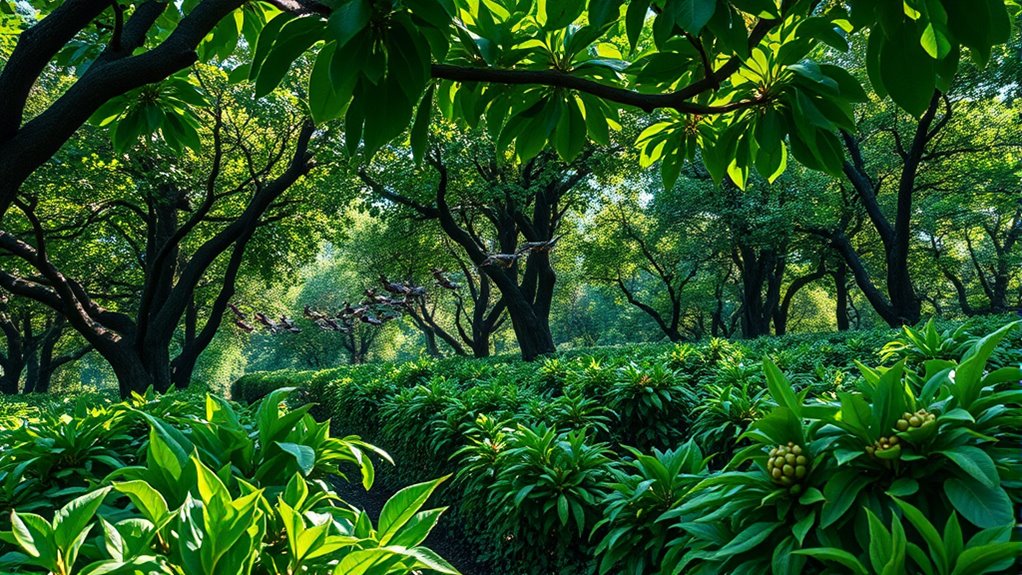

Shade-grown coffee helps protect bird migration corridors by preserving natural habitats and creating safe pathways for migratory birds. This farming method maintains layered canopies that provide food, shelter, and nesting sites, supporting bird species during their travels. It also fosters healthy ecosystems and reduces habitat destruction caused by urban expansion. If you want to understand how these practices help guarantee safe migration routes and boost biodiversity, there’s more to discover beneath the surface.
Key Takeaways
- Shade-grown coffee preserves layered canopy habitats that serve as critical migration corridors for birds.
- Maintaining native trees in coffee farms provides safe pathways for migratory bird species.
- Healthy shade plantations support food, shelter, and nesting sites, aiding bird migration and survival.
- Protecting natural corridors prevents habitat fragmentation caused by urbanization and deforestation.
- Sustainable coffee practices enhance ecosystem connectivity, ensuring resilient migration routes for diverse bird species.
The Shift to Shade-Grown Coffee Farming

Many coffee farmers are shifting from sun-grown to shade-grown methods to protect local ecosystems. This change impacts how you manage your coffee plantation, emphasizing sustainable farming techniques that preserve biodiversity. Shade-grown coffee involves cultivating coffee plants under the canopy of native trees, which naturally regulate temperature and provide habitat for wildlife. Unlike traditional sun-grown approaches, this method reduces the need for chemical inputs and irrigation, making your farming more eco-friendly. By adopting shade-grown practices, you promote healthier soil and better water retention. Incorporating diverse plant species into your coffee farming can further enhance ecological benefits and boost resilience against pests and climate change. This progression also aligns with consumer demand for environmentally responsible products. Overall, moving to shade-grown coffee farming techniques helps you create a more resilient and sustainable coffee plantation, benefiting both the environment and your long-term productivity.
How Shade-Grown Coffee Supports Bird Habitats
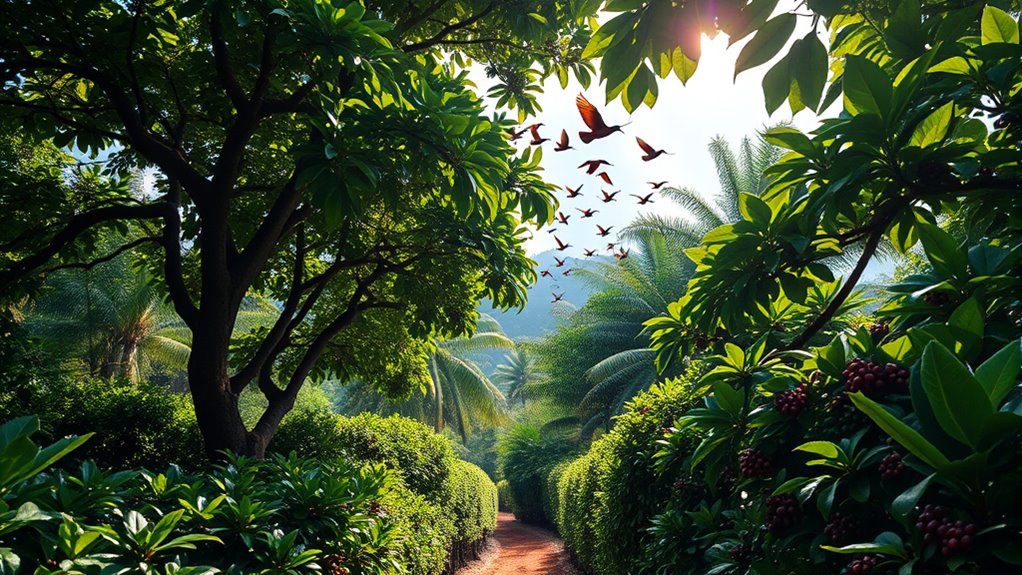
Shade-grown coffee provides critical habitats for a variety of bird species by maintaining a diverse and layered canopy. This environment offers food, shelter, and nesting sites, supporting bird populations year-round. The rich aromatic profiles of shade-grown coffee attract insects and other prey, benefiting insectivorous birds. Unlike sun-grown coffee, shade cultivation preserves trees that serve as safe corridors during migration, helping birds navigate and rest. Harvesting techniques in shade farms often involve selective picking, which minimizes habitat disruption and allows bird activity to continue uninterrupted. Additionally, the presence of habitat diversity in shade-grown coffee farms enhances the resilience of bird populations against environmental stresses. By choosing shade-grown coffee, you help sustain these essential ecosystems, ensuring that birds have the resources they need to thrive while also enjoying the complex flavors and aromas that come from environmentally responsible farming practices.
Key Bird Species Benefiting From Coffee Plantations
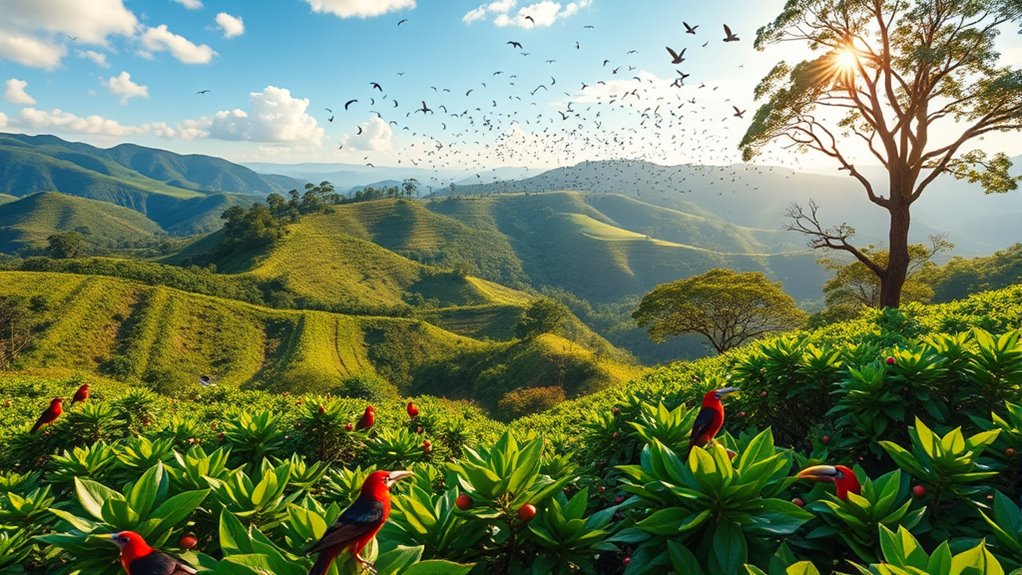
Several bird species rely heavily on coffee plantations that are cultivated under shade, as these environments provide essential food sources and safe nesting sites. Species like tanagers, warblers, and flycatchers thrive in these habitats, using the dense foliage for bird nesting and protection from predators. These birds help control insect populations naturally, reducing the need for chemical pesticides in coffee farms. By feeding on pests, they keep insect levels in check and promote healthier coffee plants. Shade-grown coffee areas also attract species such as hummingbirds and toucans, which depend on the trees for nesting and foraging. Protecting these key bird species benefits both the ecosystem and coffee production, creating a sustainable cycle that supports biodiversity and agricultural health. Understanding bird migration patterns can further highlight the importance of preserving these habitats for seasonal travelers.
The Role of Migration Corridors in Bird Conservation

Migration corridors are essential pathways that enable birds to travel safely between their breeding and wintering grounds. Without these protected routes, urban sprawl and climate change threaten their survival, disrupting migration patterns. As cities expand, natural corridors shrink, forcing birds to navigate dangerous areas with fewer stopover sites. Climate change alters migration timing and food availability, making reliable corridors even more critical. These corridors connect habitats, supporting species resilience and preventing population declines. Recognizing their importance, conservation efforts focus on maintaining and restoring these pathways. Protecting natural habitats is vital for ensuring the longevity of migration corridors and safeguarding bird populations. The table below highlights key elements affecting migration corridors:
| Threats | Conservation Strategies | Benefits |
|---|---|---|
| Urban sprawl | Protecting natural habitats | Ensures safe passage for migratory birds |
| Climate change | Restoring native vegetation | Supports biodiversity and ecosystem health |
| Habitat loss | Creating green corridors | Facilitates adaptive migration routes |
Benefits of Sustainable Coffee Practices for Ecosystems

Sustainable coffee farming practices directly benefit ecosystems by promoting healthier habitats and supporting biodiversity. When you choose shade-grown coffee, you help preserve essential migration corridors for birds and other wildlife. These practices also enhance coffee flavor by maintaining soil quality and reducing chemical use. Additionally, sustainable methods strengthen farmer livelihoods by providing stable income and reducing environmental costs. Gold IRA rollovers are an example of investment strategies that can contribute to long-term financial security, much like sustainable agriculture supports ecological stability. Here are four key benefits:
- Improved biodiversity — supporting diverse plants and animals
- Better soil health — leading to resilient ecosystems
- Reduced chemical runoff — protecting water sources
- Enhanced coffee quality — appealing to eco-conscious consumers
Frequently Asked Questions
How Does Shade-Grown Coffee Impact Local Climate Conditions?
You might wonder how shade-grown coffee affects local climate conditions. By providing canopy cover, it helps regulate microclimates, which stabilizes temperature and humidity levels. This shading offers temperature moderation, preventing extreme heat and cold. As a result, shade-grown coffee farms create a more balanced environment, benefiting both the plants and local ecosystems. Your choices in coffee cultivation can directly influence the microclimate, fostering healthier, more resilient landscapes.
Are There Specific Coffee Varieties Better Suited for Shade Cultivation?
Did you know that some coffee varietals are more compatible with shade cultivation, increasing yields by up to 20%? When choosing coffee varieties for shade-grown systems, look for those with high shade compatibility, like Bourbon or Typica. These varietals thrive under canopy cover, benefiting from cooler temperatures and diverse ecosystems. Selecting the right coffee varietals helps you produce sustainable, high-quality coffee while supporting environmental conservation efforts.
What Economic Benefits Do Farmers Gain From Shade-Grown Coffee?
You’ll find that shade-grown coffee offers notable economic advantages, boosting farmer profitability through higher quality beans and premium prices. These practices often reduce input costs by minimizing the need for chemical fertilizers and pesticides. Additionally, shade-grown coffee can diversify income sources, like eco-tourism or sustainable certifications, which further enhances economic stability. Overall, adopting shade cultivation helps you achieve better economic outcomes while supporting environmental health.
How Do Bird Migration Corridors Intersect With Other Wildlife Pathways?
They say, “A chain is only as strong as its weakest link,” and that’s true for wildlife corridors. Bird migration corridors intersect with other wildlife pathways by creating essential links in ecological connectivity, ensuring bird habitats remain connected across landscapes. This interconnected web supports diverse species, allowing them to thrive and migrate safely. By maintaining these pathways, you help sustain the health of entire ecosystems, benefiting all wildlife and the environment.
Can Shade-Grown Coffee Plantations Help Combat Climate Change?
You can help combat climate change by supporting shade-grown coffee plantations because they promote carbon sequestration, capturing CO2 from the atmosphere. These plantations also enhance biodiversity, creating habitats for various species and maintaining ecological balance. By choosing shade-grown coffee, you actively contribute to reducing greenhouse gases and preserving wildlife, making a positive impact on the environment and helping mitigate climate change’s effects.
Conclusion
By choosing shade-grown coffee, you help preserve essential bird migration corridors—covering over 500 million acres worldwide. This sustainable practice supports hundreds of bird species and maintains healthy ecosystems. When you opt for shade-grown coffee, you’re directly contributing to the conservation of these migration routes, ensuring birds can thrive during their long journeys. Your choice makes a real difference in protecting our shared environment and the incredible wildlife that depends on it.