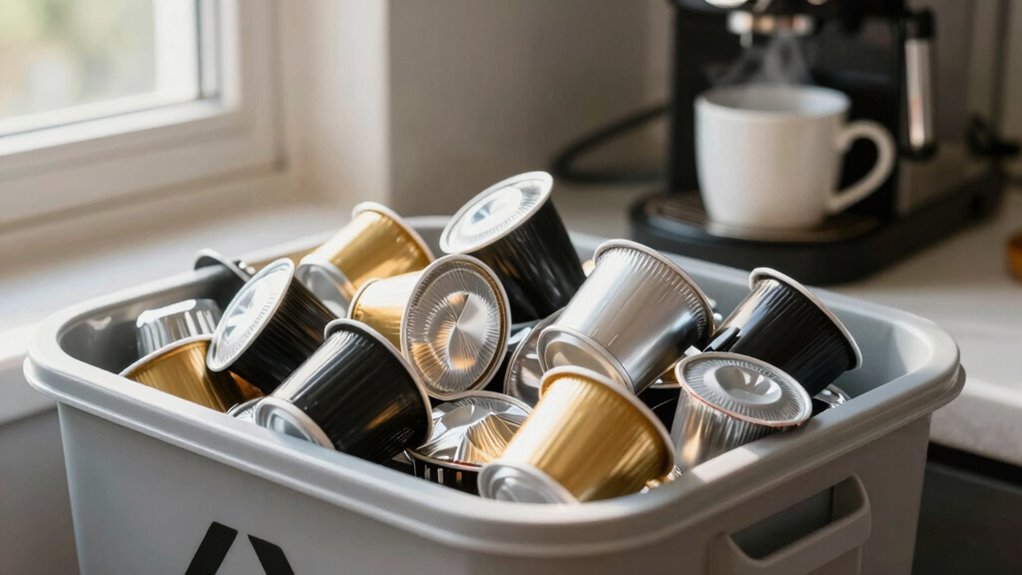

Your single-serve coffee habits contribute considerably to environmental waste, as many pods contain non-biodegradable plastics and aluminum that take centuries to decompose. Recycling is tricky because of the complex materials and limited systems, often leading to most pods ending up in landfills. Companies are now exploring eco-friendly alternatives, like biodegradable or reusable pods, and more sustainable practices. Keep exploring to discover how you can minimize your coffee footprint and make a positive impact.
Key Takeaways
- Single-serve coffee pods generate significant non-biodegradable waste, contributing to landfill overflow and environmental pollution.
- Complex layered materials in pods hinder recycling efforts, leading most to be discarded as regular trash.
- Manufacturing and disposal of pods produce carbon emissions, amplifying the coffee industry’s carbon footprint.
- Limited consumer awareness and inconsistent recycling programs reduce the chances of properly recycling or reusing pods.
- Promoting reusable, biodegradable, or bulk-buy options can substantially reduce the environmental impact of coffee habits.
As an affiliate, we earn on qualifying purchases.
What Are the Environmental Impacts of Single-Serve Coffee Pods?

Single-serve coffee pods offer convenience, but they also pose significant environmental challenges. Coffee pod innovation has led to more packaging and waste, with many pods ending up in landfills. These pods often contain non-biodegradable plastics and aluminum, which take hundreds of years to decompose. As consumer awareness grows, more people recognize their environmental impact, yet usage remains high. Manufacturing processes contribute to carbon emissions, and the disposal process adds to landfill overflow. While companies develop more sustainable coffee pod options, the overall environmental footprint remains significant. Your choices matter; opting for eco-friendly pods or reusable alternatives can help reduce waste. Understanding the environmental impacts of single-serve coffee pods highlights the importance of making more conscious consumption decisions, especially as artificial intelligence continues to influence sustainable innovation in packaging and waste management. Innovations in biodegradable materials are emerging as promising solutions to lessen the ecological footprint of coffee packaging, emphasizing the importance of adopting sustainable product design to mitigate environmental harm. Additionally, increased investment in recycling technologies could improve waste processing and reduce landfill contributions.
Why Is Recycling Coffee Pods So Challenging?

Recycling coffee pods is more complicated than it might seem, partly because of how they’re made. Many pods contain mixed materials like plastic, aluminum, and coffee grounds, making separation difficult. Recycling infrastructure often isn’t equipped to handle this complexity, leaving many pods marked as non-recyclable. Additionally, consumer awareness plays a big role; many people don’t realize they need to disassemble pods or aren’t sure which components are recyclable. Without clear instructions or accessible recycling options, most pods end up in regular trash, contributing to waste. The lack of standardized collection systems and inconsistent recycling programs further hinder efforts. Innovative recycling solutions are emerging to address these challenges, but widespread implementation remains limited. To improve recycling rates, increased consumer education and expanded recycling infrastructure are essential. Proper management of recycling services can help ensure more coffee pods are properly recycled, reducing their environmental footprint. Furthermore, developing sustainable packaging alternatives could significantly lessen the environmental impact of single-serve coffee habits. Additionally, raising awareness about the materials used in pods can help consumers make more informed disposal choices.
How Are Coffee Capsule Manufacturing and Waste Linked?

The way coffee capsules are manufactured directly impacts the amount of waste they generate. During capsule manufacturing, materials like aluminum and plastic are used, often resulting in non-biodegradable waste. This makes waste management challenging, especially when capsules are discarded improperly. The production process influences the recyclability of capsules, with some brands designing for easier recycling, while others create complex, layered materials that are hard to process. Additionally, the choice of materials affects the recyclability of capsules, which can vary significantly based on manufacturing practices and design.
What Are Coffee Brands Doing to Promote Sustainability?

Many coffee brands are taking steps to boost sustainability through innovative packaging and responsible sourcing. You’ll find companies using biodegradable materials or encouraging recycling to reduce waste. At the same time, they’re prioritizing ethical sourcing to guarantee fair treatment of farmers and protect ecosystems. Additionally, some brands are exploring natural pools and eco-friendly backyard features to further support sustainable lifestyles. Incorporating sustainable home design elements, such as energy-efficient appliances and eco-conscious building materials, can also enhance environmental responsibility beyond coffee habits. Furthermore, embracing greener transportation options, like electric bikes, can help reduce the carbon footprint associated with coffee supply chains. Exploring product roundups of eco-friendly gear can also inspire more sustainable consumer choices. Developing habits that support mind-body healing and eco-awareness can foster a more holistic approach to sustainable living and personal well-being.
Sustainable Packaging Initiatives
To promote sustainability, coffee brands are actively redesigning their packaging to reduce environmental impact. They’re adopting biodegradable packaging that decomposes naturally, minimizing waste in landfills. Some brands also prioritize fair trade sourcing, ensuring sustainable practices from farm to cup, which supports eco-friendly communities. Here are three key initiatives:
- Using compostable materials that break down quickly without leaving harmful residues.
- Replacing plastic pods with biodegradable alternatives, reducing plastic pollution.
- Implementing minimalist packaging designs to cut down on material usage.
- Emphasizing the importance of mammography guidelines to detect health issues early, reflecting a broader commitment to well-being and responsible practices. Additionally, innovative approaches such as temperature-controlled packaging are being explored to maintain freshness while reducing energy consumption during transportation. These efforts reflect an understanding of the environmental impact of packaging waste and the importance of reducing carbon footprints. Moreover, some brands are exploring the use of renewable materials to further enhance sustainability efforts. Incorporating sustainable manufacturing practices is also crucial in reducing overall environmental impact.
These efforts demonstrate a commitment to sustainability, making single-serve coffee more eco-conscious. By focusing on biodegradable packaging and ethical sourcing, brands help lessen the environmental footprint of your daily coffee habit.
Ethical Sourcing Practices
Because consumers are increasingly concerned about environmental and social impacts, coffee brands are taking active steps to guarantee ethical sourcing. Many prioritize Fair Trade practices, ensuring farmers receive fair wages and work under safe conditions. Ethical sourcing goes beyond fair wages, promoting sustainable farming methods that protect ecosystems and conserve resources. Brands are now transparent about their supply chains, partnering with certified producers committed to social and environmental standards. By choosing ethically sourced coffee, you support fair labor practices and reduce exploitation. These initiatives also help promote long-term community development and environmental preservation. A certification standard plays a crucial role in ensuring that coffee production adheres to strict sustainability criteria. Overall, ethical sourcing practices demonstrate a commitment to sustainability, allowing you to enjoy your coffee while making a positive impact on farmers and the planet.
Eco-Friendly Alternatives to Single-Serve Coffee Pods

You can reduce waste by switching to reusable coffee pods or choosing compostable capsules that break down more easily. Buying coffee in bulk also cuts down on packaging and minimizes environmental impact. These alternatives make it easier to enjoy your favorite brew while being kinder to the planet. Incorporating sustainable decor ideas into your kitchen can further enhance your eco-friendly coffee routine. Additionally, selecting solar-powered appliances can help reduce your overall energy consumption in the kitchen. Being mindful of emotional responses and early warning signs at work can also contribute to a healthier, more balanced environment. Embracing Stoic principles can guide you toward making mindful and sustainable choices in everyday life. To support these efforts, understanding your cookie preferences can help tailor your online experience to align with your eco-conscious values.
Reusable Coffee Pods
- Choose high-quality reusable cups that fit your machine, ensuring durability.
- Use coffee filters inside the reusable pods to enhance flavor and ease cleaning.
- Opt for biodegradable or stainless steel pods, which can be rinsed and reused many times.
- Consider the environmental benefits of these options, such as reducing waste and carbon footprint.
Adopting reusable coffee pods not only minimizes waste but also allows you to enjoy personalized coffee with less environmental guilt.
Compostable Coffee Capsules
As concerns about environmental impact grow, compostable coffee capsules present a promising eco-friendly alternative to traditional single-serve pods. These capsules are designed with biodegradable materials that break down naturally, reducing landfill waste. When it comes to coffee brewing, their capsule design ensures compatibility with various machines, making the switch seamless. Unlike conventional pods, compostable options often use plant-based plastics or paper, which decompose faster. Here’s a quick look:
| Feature | Benefits | Material Composition |
|---|---|---|
| Capsule Design | Easy to use, compatible | Plant-based plastics |
| Decomposition Rate | Faster breakdown | Biodegradable materials |
| Coffee Quality | Maintains freshness | Eco-friendly packaging |
| Environmental Impact | Reduces landfill waste | Compostable material |
Switching to compostable capsules can notably lower your coffee footprint. Additionally, biodegradable materials are an essential part of sustainable packaging solutions aimed at reducing environmental harm. Incorporating these materials can also align with the growing demand for eco-conscious products in the market, emphasizing the importance of environmentally friendly choices for consumers.
Bulk Coffee Buying
Opting for bulk coffee purchases offers an eco-friendly alternative to single-serve pods by considerably reducing packaging waste. When you buy in bulk, you cut down on disposable pods and packaging materials, minimizing landfill contributions. To maximize sustainability, consider these steps:
- Use a high-quality coffee grinder to preserve freshness and flavor, reducing the need for frequent repurchasing.
- Choose versatile brewing methods like French press or pour-over, which work well with bulk beans and avoid single-use filters or pods.
- Store your coffee properly in airtight containers to maintain quality and prevent waste.
Easy Tips to Reduce Your Coffee Pod Carbon Footprint

Wondering how you can make your coffee routine more eco-friendly? Start by choosing reusable coffee pods or investing in a coffee maker that uses ground beans. This reduces waste from single-use capsules and minimizes your carbon footprint. Experiment with brewing techniques that maximize flavor without extra pods, like French press or pour-over methods, which often enhance coffee flavor naturally. When selecting pods, opt for biodegradable or compostable options to lessen environmental impact. Properly recycling or composting used pods also helps. Additionally, brewing larger batches less frequently can cut down on energy consumption. Incorporating digital tracking tools can help you monitor and reduce your overall coffee-related waste and energy use. Small adjustments like these help you enjoy your favorite coffee while making a positive difference for the environment.
Frequently Asked Questions
How Do Coffee Pods Contribute to Global Waste Statistics?
Coffee pods substantially contribute to global waste, as many end up in landfills due to recycling challenges. You might not realize that most pods aren’t easily recyclable, increasing waste. Your consumer awareness plays a vital role; choosing biodegradable or reusable options can reduce this impact. By understanding recycling challenges, you can make more sustainable choices and help lessen the environmental footprint of your coffee habits.
What Are the Health Impacts of Coffee Pod Chemicals?
Think of coffee pods as tiny chemical time bombs, symbolizing hidden risks beneath your morning routine. Coffee toxicity from chemical leaching can occur when plastics or aluminum liners release harmful substances into your brew. These chemicals may cause health issues like hormonal disruptions or allergic reactions over time. By being aware of these risks, you can choose safer alternatives and protect yourself from the silent threats lurking in your daily coffee habit.
Can Biodegradable Pods Truly Reduce Environmental Harm?
Biodegradable pods can genuinely reduce environmental harm if they’re made from eco-friendly materials and properly composted. These pods break down faster and help lessen landfill waste. Recycling innovations also play an essential role—by designing pods that are easier to recycle or compost, manufacturers can improve sustainability. However, to truly make an impact, you need to guarantee you follow proper disposal methods, like composting biodegradable pods instead of tossing them in regular trash.
How Does Coffee Pod Production Affect Water Resources?
Like a silent river flowing unseen, coffee pod production impacts water resources more than you might think. It demands significant water consumption during manufacturing, adding to the production footprint. This process can strain local water supplies, especially in drought-prone areas. By choosing eco-friendly pods, you can help reduce water usage and lessen the environmental burden, making your daily coffee ritual more sustainable and aligned with protecting essential water resources.
Are There Policy Measures Addressing Coffee Pod Waste?
Yes, policy measures are emerging to tackle coffee pod waste. You can support recycling initiatives that promote proper disposal and reuse of coffee pods. Governments and organizations are increasing consumer awareness through campaigns and regulations, encouraging you to choose eco-friendly options. By participating in these policies and spreading awareness, you help reduce environmental impact and promote sustainable coffee habits. Your actions contribute to a cleaner planet and more responsible consumption.
Conclusion
Think of your coffee habits as tending a delicate garden. Each pod is a seed—easily discarded, but with the power to grow into a lush, sustainable landscape or a barren wasteland. By choosing eco-friendly options and reducing waste, you become the gardener shaping this future. Your small actions can cultivate a healthier planet, transforming your daily coffee ritual from a fleeting sip into a lasting legacy of care and sustainability.