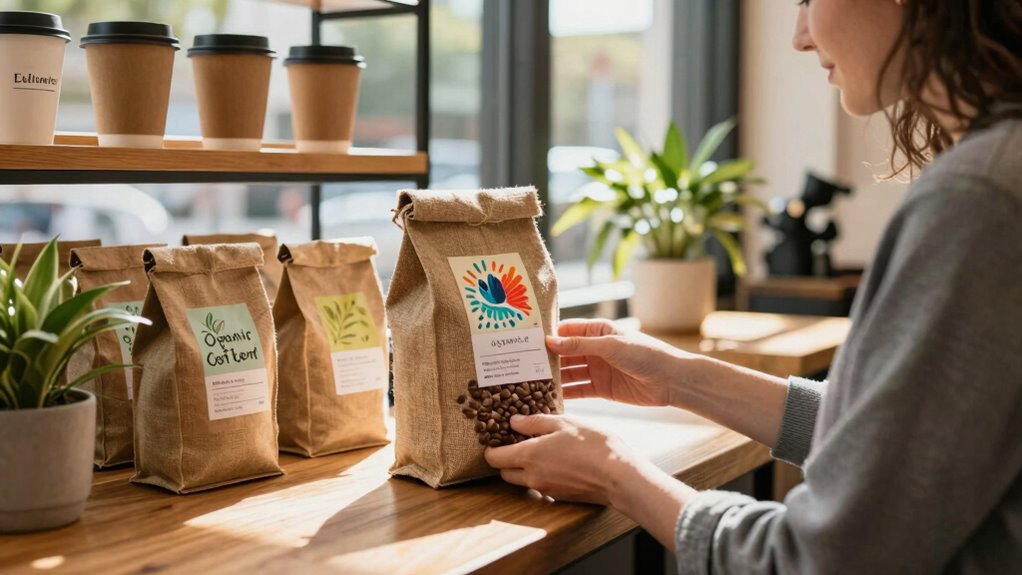

When you shop for sustainable coffee, look for brands with transparent sourcing and credible certifications like Fair Trade, Rainforest Alliance, or Organic. Choose coffee grown responsibly, supporting fair wages and environmental health. Ask about the farm’s practices, and opt for local, direct, or community-supported options. Pay attention to labels and stories behind each bag, so you can make choices that benefit farmers and the planet. If you want to learn more, there’s plenty of practical tips to explore.
Key Takeaways
- Choosing certified brands like Fair Trade, Rainforest Alliance, or Organic ensures ethical and eco-friendly coffee options.
- Reading labels for transparency, origin, and certifications helps verify sustainable and fair practices.
- Supporting local, direct trade, or cooperative coffee farmers promotes fair wages and community development.
- Prioritizing shade-grown, biodiversity-supporting coffee benefits the environment and flavor quality.
- Making mindful purchasing decisions, including researching brands and their sustainability commitments, fosters long-term positive impact.

Cameron's Coffee Roasted Whole Bean Coffee, Organic Scandinavian Blend, 4 Pound
- Product Size: 4 Pound Bag of Coffee
- Handcrafted Quality: Small-batch roasted for flavor
- Flavor Profile: Rich, medium dark roast
As an affiliate, we earn on qualifying purchases.
As an affiliate, we earn on qualifying purchases.
What Is Sustainable Coffee and Why Does It Matter?

Sustainable coffee refers to coffee that is grown, harvested, and processed in ways that protect the environment, support fair labor practices, and promote economic stability for farmers. When you choose sustainable coffee, you’re not just getting better quality—you’re helping guarantee the environment stays healthy and farmers earn fair wages. The coffee flavor you enjoy depends on how it’s grown and processed, which sustainable methods enhance by reducing chemicals and waste. Brewing techniques also impact flavor, bringing out the unique qualities of the beans. By understanding what makes coffee sustainable, you can make smarter choices that benefit both the planet and the people behind your favorite cup. This awareness helps you appreciate the full journey of your coffee, from farm to mug.
How to Recognize Truly Sustainable Coffee Brands
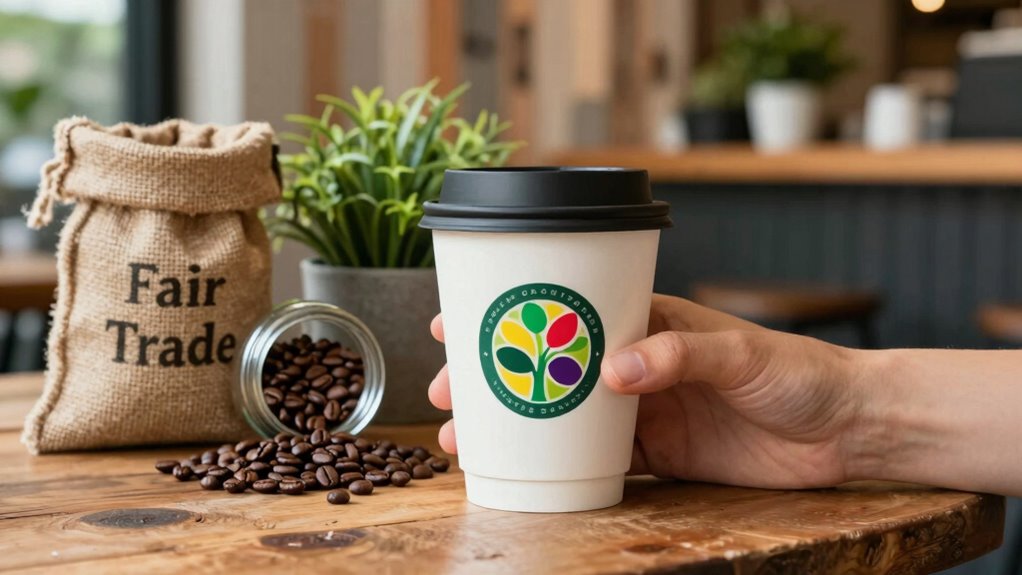
To identify truly sustainable coffee brands, you need to look beyond flashy labels and marketing claims. Focus on their commitment to fair trade practices, which guarantee farmers receive equitable wages and fair working conditions. Brands that prioritize organic farming also demonstrate sustainability by avoiding synthetic chemicals, preserving soil health, and supporting biodiversity. These practices show a genuine concern for environmental and social impacts. Check if the company provides transparent information about their sourcing and farming methods. Avoid brands that rely solely on marketing buzzwords without backing them up with clear, credible details. Truly sustainable brands emphasize ethical harvesting, environmental stewardship, and fair relationships with farmers—making your choice meaningful for both the planet and the people who grow your coffee. Additionally, understanding the role of AI Ethicist Jobs in shaping ethical standards can help consumers identify brands committed to responsible practices. Ensuring that companies adhere to sustainable farming practices is essential for maintaining long-term environmental health and social integrity. Incorporating sound scientific research into their practices can also be a key indicator of authenticity and commitment to sustainability. Recognizing certifications and labels from reputable organizations further helps consumers make informed decisions aligned with sustainability goals. Moreover, verifying a company’s compliance with regulatory standards can provide additional assurance of their sustainability commitments.
Which Certifications Show a Coffee Is Ethical and Eco-Friendly
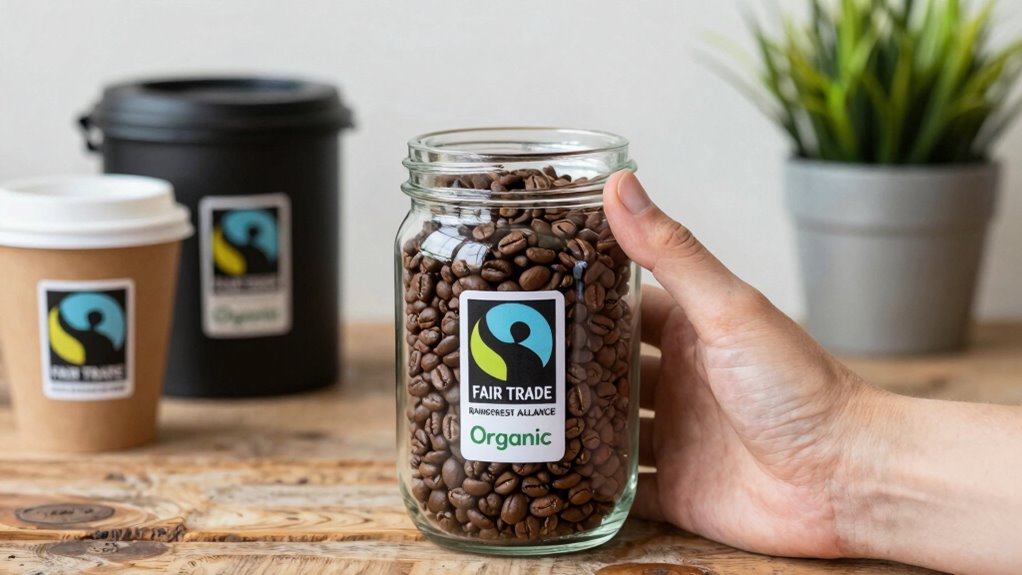
Certifications can help you identify coffee that’s both ethical and eco-friendly, but understanding what each label means is key. You’ll want to look for key certification logos, like Fair Trade or Rainforest Alliance, which indicate specific standards. Knowing the meaning behind these certifications guarantees you make informed, responsible choices with every cup. Additionally, recognizing emerging trends in digital publishing can help consumers stay updated on new certifications and ethical practices. Being aware of the Gold IRA Rollovers process can also inform you about secure and responsible investment options, reflecting a broader commitment to sustainability and financial security. Understanding color accuracy in related fields can also deepen your appreciation for the importance of standards in ensuring quality and integrity across various products.
Key Certification Labels
Ever wonder how to tell if your coffee supports ethical and eco-friendly practices? Key certification labels can guide you. They indicate that your coffee was produced through sustainable farming and ethical labor standards. Here are four major labels to look for:
- Fair Trade Certified – Ensures fair wages and good working conditions for farmers.
- Rainforest Alliance – Promotes environmental protection and sustainable farming.
- Organic – Verifies that no synthetic chemicals were used, backing eco-friendly practices.
- Bird-Friendly – Certifies shade-grown coffee, which preserves bird habitats and promotes biodiversity. Additionally, shade-grown methods can contribute to natural pools and support biodiversity in the surrounding landscape. This practice often involves sustainable farming techniques that minimize environmental impact and encourage ecological balance. Understanding these certifications helps consumers make more ethical purchasing choices that benefit both the environment and coffee farmers. Recognizing these labels can also encourage more environmentally responsible coffee production practices overall.
Meaning Behind Certifications
When you see certification labels on your coffee, they tell you more than just about quality—they reveal the story behind how that coffee was produced. Certifications like Fair Trade guarantee farmers receive fair wages and work under better conditions, supporting community development. Organic farming labels indicate the coffee was grown without synthetic pesticides or fertilizers, promoting healthier ecosystems and safer products. These certifications serve as a guarantee that your coffee aligns with ethical and eco-friendly practices. By choosing products with Fair Trade or Organic labels, you’re supporting sustainable farming methods that prioritize environmental health and social fairness. Additionally, some certifications ensure that the coffee produced is free from harmful chemicals and electric power is used responsibly during processing, further reducing environmental impact. Certifications such as Rainforest Alliance also aim to protect biodiversity and promote conservation efforts. Incorporating sustainable farming practices is essential for ensuring the long-term health of coffee-growing regions and the planet. Moreover, these labels often reflect adherence to environmental standards, which help maintain ecosystem balance. Ultimately, these certifications help you make informed choices, assuring your coffee consumption contributes to a more equitable and sustainable coffee industry.
How to Read Labels for Sustainable Coffee Choices
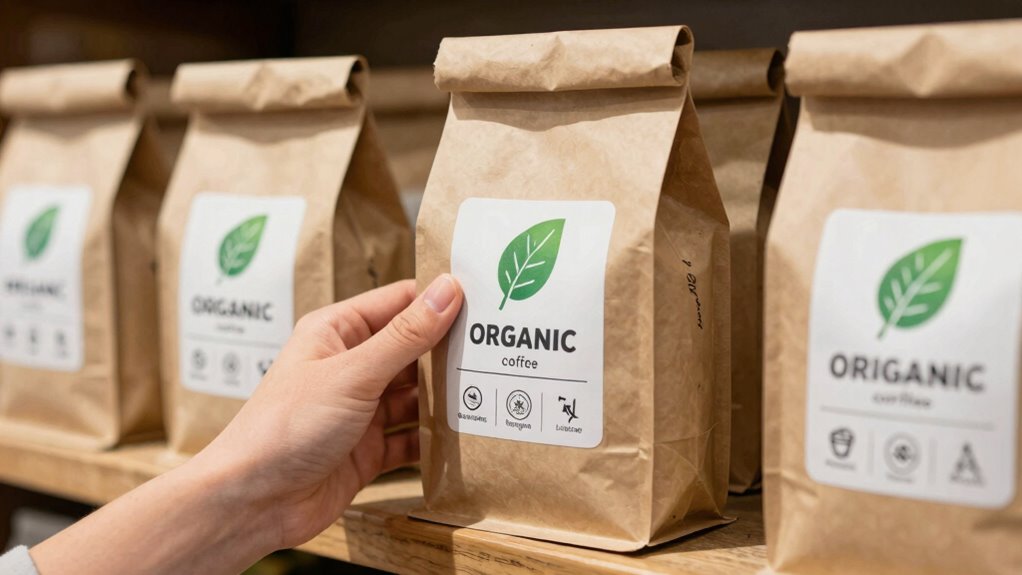
Reading labels on coffee packages might seem straightforward, but understanding what those labels really mean can empower you to make more sustainable choices. To get started, look for information on how the coffee was farmed and processed. Next, consider these key points:
- Certifications: Look for labels like Fair Trade or Rainforest Alliance, which indicate sustainable practices.
- Flavor profiles: Some labels specify flavor notes, helping you select coffees that match your preferences.
- Origin: Knowing where the coffee comes from can reveal sustainable farming regions and methods.
- Brewing methods: Certain labels suggest ideal brewing techniques, ensuring you get the best flavor.
Tips for Finding Ethical Coffee at Your Local Shop or Grocery
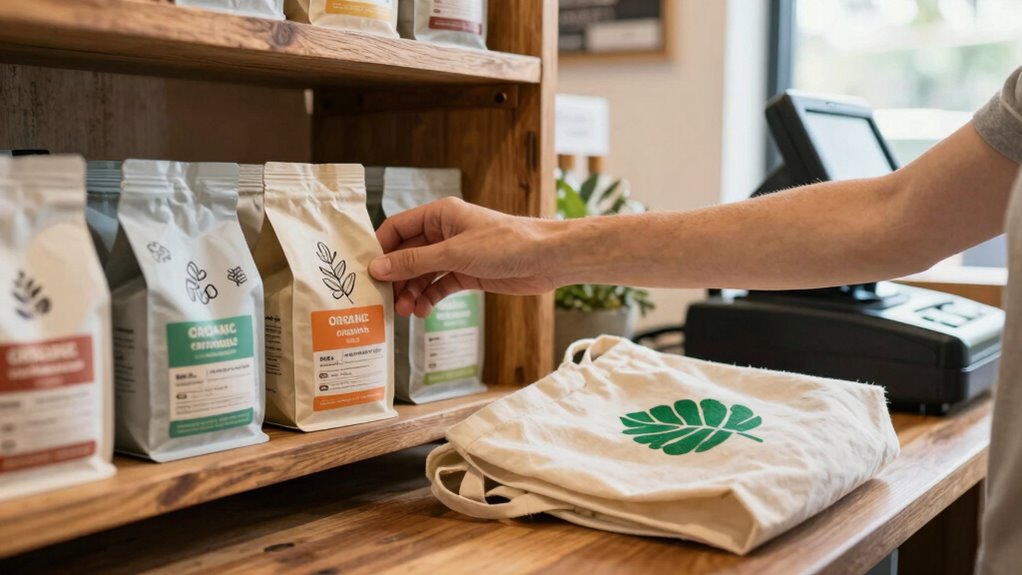
When shopping for coffee, check the labels carefully to find those that highlight ethical practices. Supporting local and fair trade brands guarantees you’re making a positive impact on farmers and communities. By paying attention to these details, you can make more responsible and sustainable choices. Additionally, choosing brands that embrace ethical supply chains can further ensure your coffee consumption supports fair labor practices and environmental stewardship. Recognizing certifications such as Fair Trade or Organic can also help guide your selections and promote sustainable farming practices. Embracing Stoic principles can remind us to approach our choices with mindfulness and integrity, fostering a more compassionate and balanced way of consuming. Being aware of the certifications displayed on packaging can serve as a quick indicator of a brand’s commitment to ethical standards. Incorporating knowledge about Gold IRA markets and reputable providers can also inform broader ethical investment approaches, aligning your values with your financial decisions.
Reading Coffee Labels Carefully
Carefully examining coffee labels can reveal a lot about a product’s ethical standards and sustainability practices. To make informed choices, pay attention to these details:
- Certifications – Look for Fair Trade, Organic, or Rainforest Alliance logos, which indicate ethical sourcing and sustainability.
- Coffee flavor – Descriptions can hint at how the beans are processed and roasted, influencing taste and quality.
- Origin and farm info – Knowing where the coffee comes from ensures transparency and supports ethical practices.
- Brewing methods – Some labels specify brewing suggestions, helping you match the coffee to your preferred method for best flavor.
- Processing methods – Understanding how the beans are processed, such as washed or natural, can impact both flavor and environmental impact, aligning with sustainable practices hormesis benefits.
Supporting Local and Fair Trade
Want to guarantee you’re choosing coffee that supports ethical practices? Look for coffee labeled as fair trade, which assures fair wages and better working conditions for coffee farmers. When shopping at your local shop or grocery, ask about the origin of the coffee and whether it supports sustainable coffee farming. Fair trade certifications promote environmentally friendly practices and social equity, making sure farmers aren’t exploited. Supporting local and fair trade coffee helps create a more transparent supply chain and encourages farmers to adopt sustainable methods. It also means your money goes directly toward improving communities and protecting the environment. By choosing fair trade options, you’re making a conscious decision that values ethical coffee farming and supports positive change in the coffee industry. Incorporating sustainable farming practices into coffee production ensures long-term benefits for both farmers and the planet.
How to Support Coffee Farmers and Communities Directly
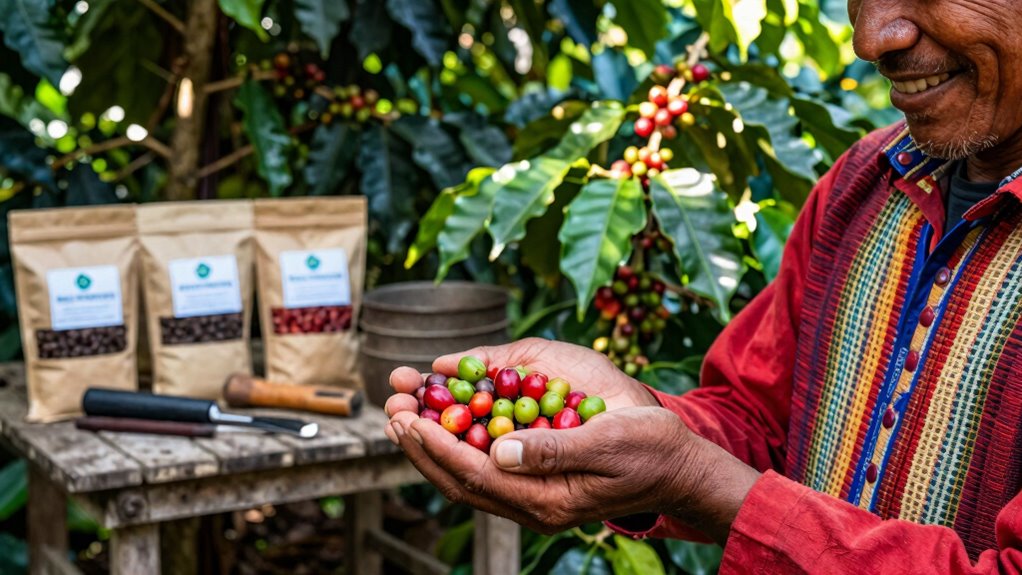
- Buy directly from farmers or cooperatives—this ensures fair prices and supports local economies, fostering media literacy by understanding the supply chain behind your coffee.
- Choose coffee with transparent sourcing—look for certifications that emphasize community benefits.
- Participate in community-supported agriculture (CSA) programs—these connect you directly to farmers and fund local projects.
- Support initiatives that invest in infrastructure and education—helping farmers improve productivity and quality of life.
- Prioritize sustainable practices—this aligns with environmentally responsible methods that protect natural resources and benefit communities.
Questions to Ask When Choosing Your Next Sustainable Coffee

When selecting a sustainable coffee, asking the right questions can help guarantee your choice truly supports ethical practices and responsible sourcing. Start by inquiring about the coffee’s origin—ask if it’s certified fair trade or organic, ensuring farmers get fair compensation and environmentally friendly practices are used. Consider how the coffee is roasted and packaged, as transparent brands often share their supply chain details. For coffee brewing, ask if the beans are suited for your preferred method to enhance flavor profiling. Understanding the flavor notes and profiles can improve your experience and help you choose a coffee that matches your taste. Asking these questions ensures you’re making thoughtful decisions, supporting sustainability, and enjoying coffee that aligns with your values. Additionally, researching supply chain transparency can give you insights into how ethically and sustainably the coffee is produced from farm to cup. Incorporating professional services such as consulting or project management from experts can further enhance your understanding of sustainable sourcing practices.
Frequently Asked Questions
How Can I Verify a Coffee Company’s Sustainability Claims?
To verify a coffee company’s sustainability claims, check their supply chain transparency—look for clear information about sourcing and production practices. Also, review their organic certification processes to guarantee they meet recognized standards. Research the company’s certifications and partnerships, and read customer reviews for insights. By doing these steps, you can confidently support brands committed to genuine sustainability, rather than just marketing claims.
Are There Affordable Options for Sustainable Coffee?
Yes, there are affordable options for sustainable coffee. You can look for budget-friendly choices like local roasters or brands that prioritize fair trade and organic certifications without high prices. Shop at co-ops or bulk stores, which often offer sustainable coffee at lower costs. Additionally, subscribe to coffee clubs that offer discounts on eco-friendly beans. These options make it easier to enjoy sustainable coffee without breaking the bank.
How Does Sustainable Coffee Impact Local Communities?
When you choose sustainable coffee, you plant seeds of change in local communities. Your choice boosts farmer livelihoods, helping them thrive like flourishing gardens. It fuels community development, creating vibrant neighborhoods with better access to education, healthcare, and infrastructure. Each cup becomes a bridge, connecting you to the hardworking hands behind your coffee, nurturing a cycle of growth and prosperity that transforms lives and sustains the future.
Can I Find Sustainable Coffee Without Certifications?
Yes, you can find sustainable coffee without certifications. Look for brands that prioritize fair trade practices and organic certification, even if they lack official labels. Research their sourcing methods and company values, as many small roasters and local shops focus on ethical and sustainable practices. By choosing these options, you support fair wages, environmentally friendly farming, and quality coffee, making your purchase meaningful without relying solely on certifications.
What Are Common Misconceptions About Eco-Friendly Coffee?
Many believe eco-friendly coffee always means certified options, but that’s a misconception. You might think all organic farming guarantees sustainability, yet some farms use harmful practices. Fair trade labels help verify fair wages and better conditions, but not all sustainable coffee has these certifications. Look beyond labels by researching farm practices, supporting local roasters committed to sustainability, and choosing coffee from farms practicing organic farming and fair trade principles for truly eco-friendly options.
Conclusion
Choosing sustainable coffee isn’t just about good taste — it’s about making a positive impact. Did you know that coffee farmers often earn less than $2 a day? By paying attention to certifications, labels, and supporting direct trade, you can help improve their livelihoods and protect the environment. Every mindful purchase you make supports a healthier planet and fairer communities. So, next time you buy coffee, make it count for real people and the planet.