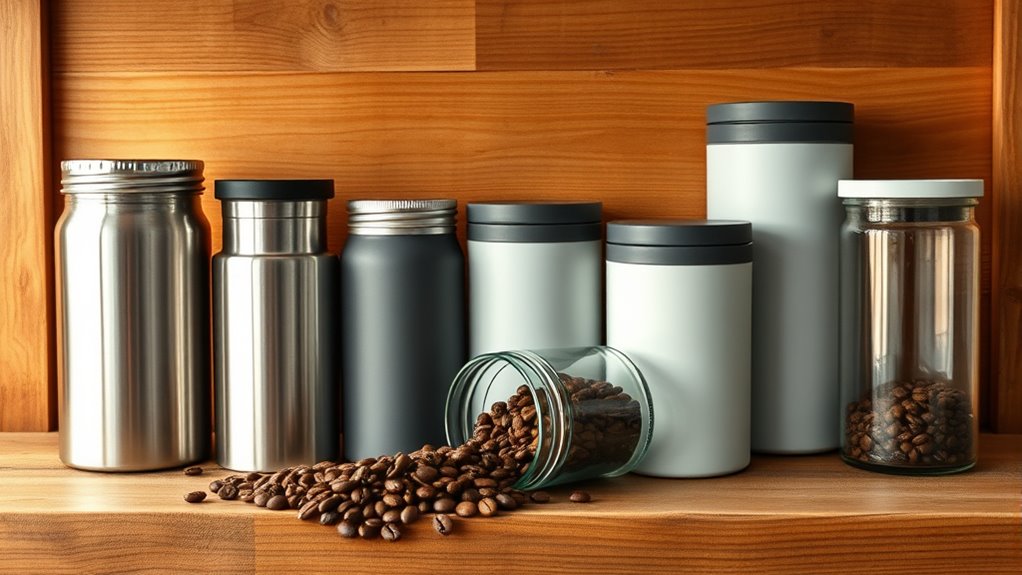

To keep your coffee beans fresh, choose airtight containers made of dark glass, ceramic, or stainless steel that block light and oxygen. Store them in a cool, dark, and stable environment, away from heat and sunlight. Look for containers with seals or vacuum-seal features to slow oxidation and preserve flavor longer. For more tips on maintaining maximum freshness, discover what other best practices can help your coffee stay aromatic longer.
Key Takeaways
- Use airtight, opaque containers like dark glass, ceramic, or stainless steel to block light, oxygen, and moisture.
- Store coffee in a cool, dark, and stable environment between 15°C and 24°C to prevent flavor degradation.
- Consider containers with one-way valves or vacuum seals to remove excess air and extend freshness.
- Avoid clear containers and storing near heat sources or sunlight to prevent oxidation and staling.
- Transfer beans immediately upon purchase and limit container openings to maintain optimal freshness.

Veken Coffee Canister with Window,Airtight Stainless Steel Pantry Container,Home Kitchen Food Storage Organizers for Ground,Beans,Espresso,Rice,Tea,Sugar,Cereal, Decor,Bar Accessories,Gifts,22OZ,Black
Gifts for Coffee Lovers This Christmas: This elegantly designed jar is a stylish and functional gift for coffee…
As an affiliate, we earn on qualifying purchases.
As an affiliate, we earn on qualifying purchases.
Understanding the Importance of Proper Coffee Storage
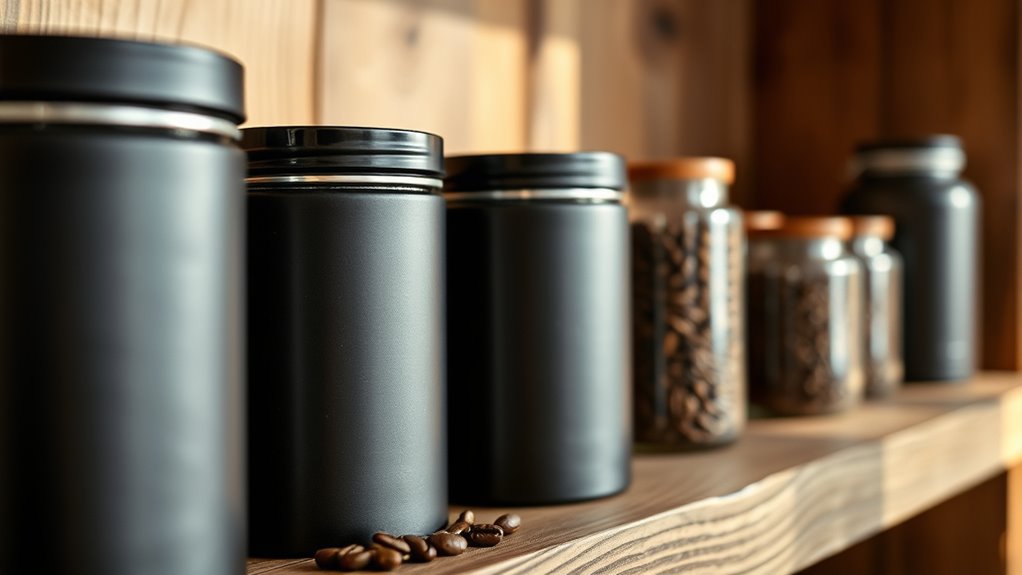
Proper coffee storage is vital to preserve its freshness, flavor, and aroma over time. When you store coffee correctly, you prevent exposure to factors that cause it to go stale, such as oxygen, light, heat, and moisture. These elements accelerate chemical changes that degrade the beans, diminishing taste and aroma. Using the right container helps lock out air and light, keeping your coffee flavorful longer. Additionally, storing coffee in a cool, stable environment slows down the aging process. Temperature stability is crucial because fluctuations can cause the beans to deteriorate more quickly. Avoiding temperature fluctuations and humidity fluctuations is essential to maintain quality. Proper storage not only preserves the beans’ original characteristics but also guarantees you enjoy the best possible cup with every brew. In short, smart storage practices are key to maximizing your coffee’s freshness and flavor. Incorporating airtight containers with high-quality seals can further extend the beans’ shelf life by effectively blocking out air and light. Maintaining a consistent environment minimizes exposure to oxidation, which is a primary factor in coffee staling and flavor loss.
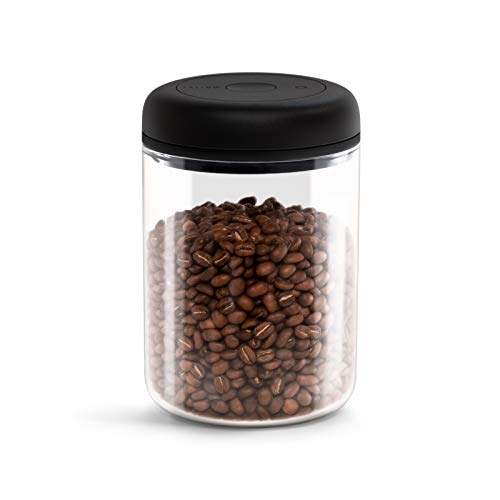
Fellow Atmos Vacuum Coffee Canister & Food Storage Container – 1.2 Liter Canister holds up to 16 oz of Coffee Beans – Airtight Food Storage Containers – Coffee Containers – 1.2 Liter – Clear Glass
GUARD THE GOODS: Keep your coffee beans fresher longer by storing them in Atmos, a vacuum-sealed storage canister….
As an affiliate, we earn on qualifying purchases.
As an affiliate, we earn on qualifying purchases.
Ideal Temperature and Humidity Conditions for Coffee Beans
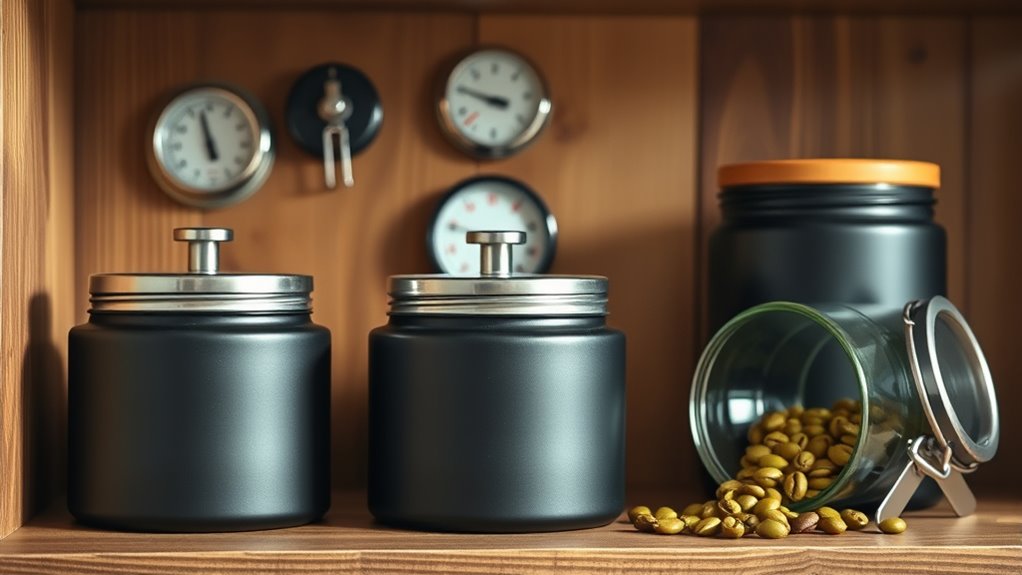
Maintaining the right temperature and humidity is key to keeping your coffee beans fresh. You should aim for a temperature between 15-24°C and control humidity to prevent moisture from harming the beans’ quality. Fluctuations in these conditions can accelerate degradation and diminish flavor, so steady environments are essential.
Optimal Temperature Range
Keeping your coffee beans fresh depends heavily on storing them within a specific temperature range. Ideally, you want to keep your beans between 15°C and 24°C (59°F and 75°F). Temperatures within this range slow down chemical reactions that cause flavor degradation, helping your coffee stay fresh longer. Avoid exposing your beans to heat sources or direct sunlight, as high temperatures accelerate staling and aroma loss. Conversely, storing them in colder environments, like refrigeration, can introduce moisture and cause condensation, which harms quality. Maintaining a consistent temperature is vital—fluctuations speed up aging. Choose a cool, dark, and stable spot in your home or storage area to preserve your beans’ flavor profile and aroma effectively over time. Using appropriate storage containers can also help maintain the ideal environment for your coffee. Additionally, selecting containers with proper sealing capabilities can prevent air and moisture from compromising freshness. Incorporating performance tuning principles to regulate your storage environment can further enhance the preservation process by minimizing temperature fluctuations and reducing exposure to airborne contaminants. Utilizing climate control techniques can help keep the environment stable and further extend the freshness of your coffee beans.
Humidity Control Importance
Controlling humidity is essential for preserving your coffee beans’ quality, as excess moisture can lead to mold, spoilage, and flavor loss. Too much humidity causes beans to absorb moisture, which can accelerate deterioration and promote mold growth. On the other hand, low humidity can dry out beans, causing them to lose essential oils and aroma. The ideal humidity level for coffee storage is between 50-60%. Maintaining this range guarantees the beans stay fresh without absorbing excess moisture or drying out. Using containers with proper seals and storing your coffee in a cool, climate-controlled environment helps keep humidity levels steady. Additionally, proper storage techniques can prevent flavor degradation caused by fluctuations in humidity. Proper humidity control is a key factor in preserving freshness, ensuring your coffee maintains its rich flavor profile over time. Implementing humidity monitoring tools can further assist in maintaining optimal conditions for your beans. Regularly checking humidity levels and adjusting storage conditions as needed can help prevent moisture fluctuations that negatively impact coffee quality. By managing humidity effectively, you preserve the beans’ flavor profile and extend their freshness longer.
Effects of Fluctuating Conditions
Fluctuating temperature and humidity levels can substantially compromise coffee bean quality by accelerating chemical reactions that cause flavor degradation. When temperatures swing outside the ideal range of 15-24°C, beans undergo rapid aging, losing freshness and aroma. Sudden humidity changes can cause moisture absorption or loss, leading to mold growth or dryness. These fluctuations also promote condensation, which introduces mold spores and bacteria. Consistent, stable conditions slow down these processes, preserving flavor and extending shelf life. If you store beans in environments with inconsistent temperatures or humidity, you risk flavor loss, staleness, and spoilage. To maintain excellent quality, keep your beans in climate-controlled spaces, avoiding frequent temperature shifts and moisture variations that undermine their freshness and aromatic profiles. Proper storage containers can help mitigate these effects by providing a barrier against environmental fluctuations.

Infinity Jars, 1 L (12 oz) Airtight Coffee Canister Ultraviolet Glass Coffee Bean Storage Container Antistatic, Light Blocking Container for Coffee, Herbs, Tea & Spices Durable
𝗨𝗩-𝗕𝗹𝗼𝗰𝗸𝗶𝗻𝗴 𝗨𝗹𝘁𝗿𝗮𝘃𝗶𝗼𝗹𝗲𝘁 𝗚𝗹𝗮𝘀𝘀 𝗣𝗿𝗼𝘁𝗲𝗰𝘁𝗶𝗼𝗻: Infinity Jars’ premium light-proof UV glass prevents flavor degradation, keeping coffee beans, grounds, herbs,…
As an affiliate, we earn on qualifying purchases.
As an affiliate, we earn on qualifying purchases.
Features to Look for in Coffee Storage Containers
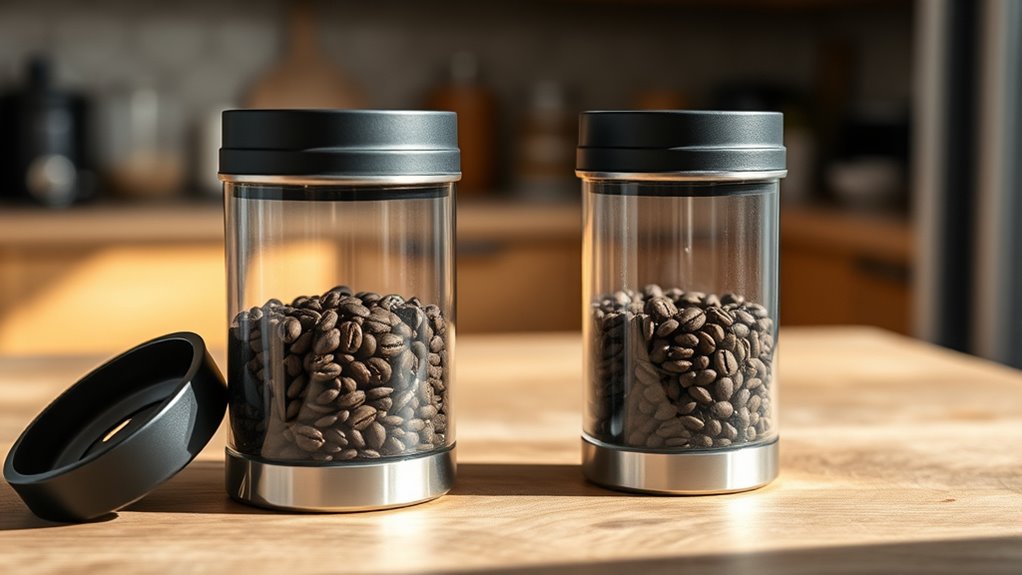
When selecting a coffee storage container, it is vital to prioritize features that preserve freshness and flavor. Look for airtight seals with silicone gaskets to block oxygen and moisture, which cause staling. Opt for opaque materials like dark glass, ceramic, or stainless steel to prevent light exposure that degrades beans. The container should have a tight-fitting lid to avoid external contaminants. Choose durable, food-safe construction that withstands daily use. Additionally, consider containers with built-in features like one-way valves or vacuum-seal technology, which further extend freshness by controlling air exchange. Proper storage techniques can significantly impact how long your coffee maintains its flavor and aroma. Gold IRA Rollovers can be a useful analogy for understanding how proper storage protects the value and quality of your coffee investments. Ensuring regular cleaning and inspection of the container prevents clogs or debris from affecting the freshness and flavor retention. Incorporating proper storage practices can help maintain the beans’ peak quality and prevent spoilage. Staying informed about AI-driven security systems can also provide insights into safeguarding your valuable coffee stash from theft or spoilage. Prioritizing these features ensures your coffee stays flavorful longer and maintains excellent quality.
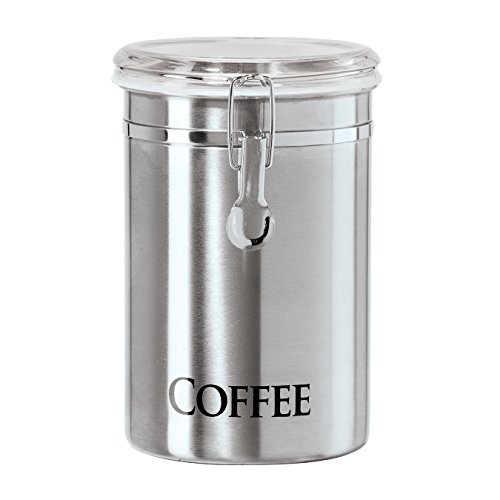
Oggi Stainless Steel Coffee Canister 62 fl oz – Airtight Clamp Lid, Clear See-Thru Top – Ideal for Coffee Bean Storage, Ground Coffee Storage, Kitchen Storage, Pantry Storage. Large Size 5" x 7.5".
DURABLE & CONTEMPORARY: These stylish, large 62 fluid ounces, airtight coffee beans or grounds storage containers made from…
As an affiliate, we earn on qualifying purchases.
As an affiliate, we earn on qualifying purchases.
Benefits of Airtight and Light-Resistant Materials
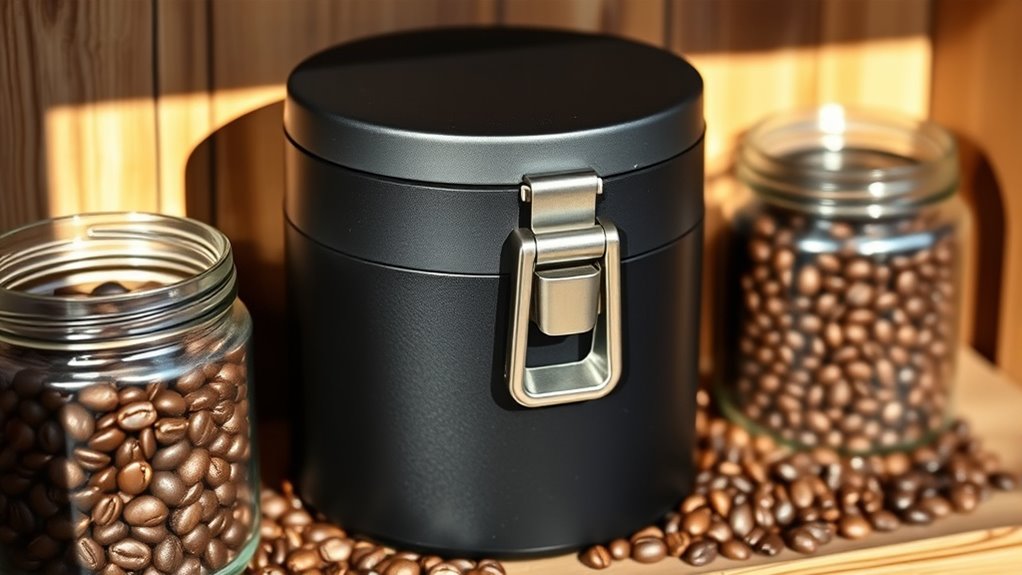
Using airtight and light-resistant materials helps keep your coffee’s flavor fresh and full of its original aroma. These containers prevent oxygen and moisture from degrading the beans, ensuring they stay ideal longer. Plus, blocking harmful light stops chemical reactions that can weaken the coffee’s quality over time. Incorporating vetted storage options can further enhance the preservation process, ensuring your beans remain as fresh as when they were roasted. Additionally, choosing containers with proper sealing mechanisms supports effective air quality control, which is essential for maintaining freshness. Selecting containers with proper sealing mechanisms also minimizes exposure to external pollutants, further protecting your coffee. Ensuring the storage environment is cool and dry further helps preserve the beans’ freshness and flavor. Being mindful of the recognition of angel numbers in your daily routine can help you stay alert to subtle signs that may guide your decision-making, including how you choose to store your coffee.
Preserves Flavor Integrity
Airtight containers made with light-resistant materials play a crucial role in preserving your coffee’s flavor integrity. By sealing out oxygen, they slow oxidation, which can cause stale flavors and loss of aroma. Light-resistant materials like dark glass, ceramic, or stainless steel prevent exposure to harmful light, which can degrade delicate compounds responsible for flavor and aroma. These containers help maintain the complex profile of your coffee beans, ensuring each cup tastes fresh and vibrant. Properly sealed and protected storage minimizes chemical reactions that diminish quality over time. Investing in these containers means your beans stay flavorful longer, whether for daily brewing or longer-term storage. Additionally, using containers with the right material can further enhance preservation by reducing chemical interactions that compromise freshness. Keep in mind, the combination of airtight seals and light-resistant materials is essential for preserving your coffee’s full flavor potential.
Blocks Harmful Light
Light exposure can considerably harm your coffee’s flavor and aroma, even when the beans are sealed tightly. Ultraviolet rays and visible light break down the oils and compounds responsible for fresh taste, leading to staleness and flavor loss. That’s why choosing containers made from opaque materials is essential. Dark glass, ceramic, or stainless steel blocks light effectively, preventing harmful exposure. These materials also protect against temperature fluctuations that can accelerate degradation. Plus, airtight seals prevent oxygen and moisture from entering, further preserving freshness. Light-resistant containers not only shield your beans but also keep their aroma intact longer. By blocking light, you ensure your coffee maintains its vibrant flavor profile, so every cup tastes just as fresh as when you first roasted the beans.
How Airscape Technology Keeps Coffee Fresh
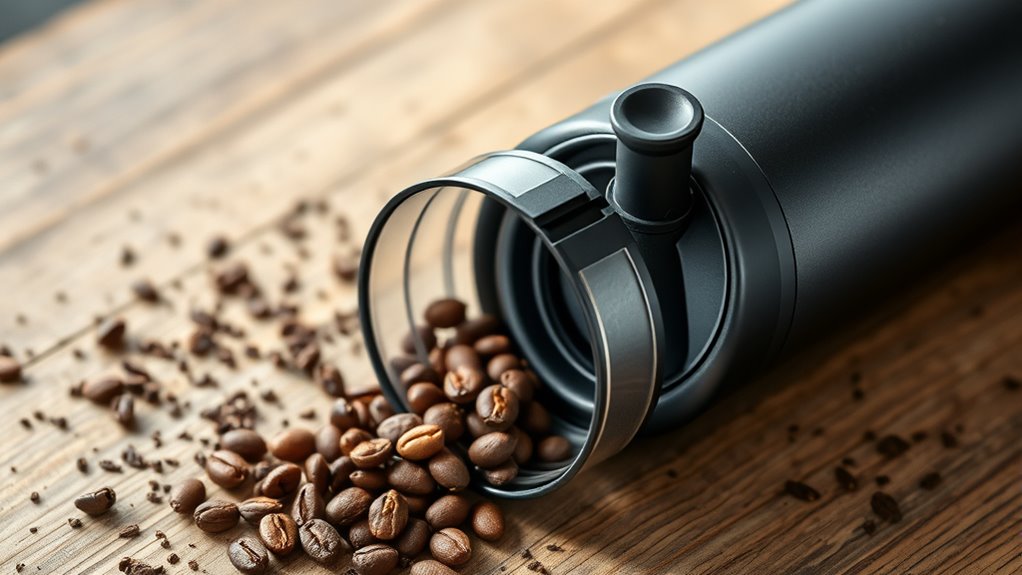
Airscape technology keeps coffee fresh by actively removing excess air from the container while preventing new oxygen from entering. Its one-way valve uses a simple but effective mechanism: when you press the lid, it pushes out air, creating a vacuum seal. This process slows oxidation, which degrades flavor and aroma over time. By minimizing oxygen exposure, your coffee retains its freshness longer.
- Preserves flavor compounds by reducing chemical reactions
- Limits moisture and humidity contact that cause staling
- Allows easy access without compromising the seal
This technology ensures your coffee stays fresh through daily use and frequent opening, maintaining quality from the first brew to the last. It’s an efficient way to protect your beans from the main enemy: oxygen.
The Advantages of Atmos Vacuum-Seal Containers
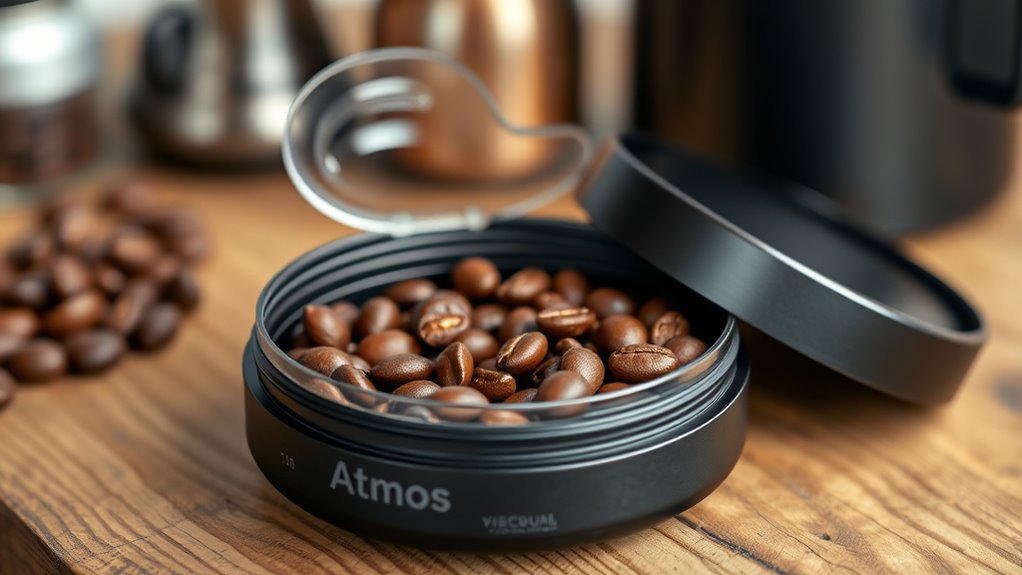
Vacuum-seal technology takes coffee storage to the next level by removing all air from the container, considerably slowing down the natural degradation process. This method eliminates oxygen, which is a primary factor in staling and flavor loss, helping your beans stay fresh longer. Unlike one-way valve systems, vacuum-seal containers provide a more complete seal, making them ideal for long-term storage. They preserve the chemical integrity of your coffee by preventing oxidation and moisture exposure. You’ll notice that your beans retain their aroma and flavor profile for extended periods, reducing waste and ensuring each brew tastes fresh. Plus, these containers are typically sturdy, food-safe, and airtight, giving you peace of mind that your coffee remains protected from environmental factors that accelerate spoilage.
Common Mistakes to Avoid in Coffee Storage
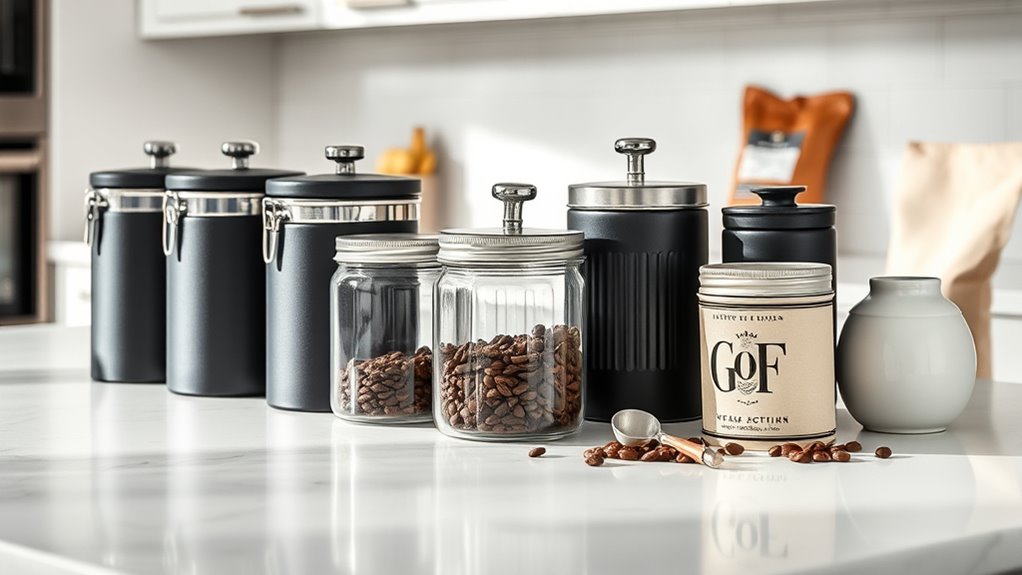
One common mistake is using clear containers that allow light to penetrate, which accelerates the degradation of coffee’s aroma and flavor. Light exposure speeds up chemical reactions that spoil beans, causing stale taste and aroma loss. To avoid this, choose opaque containers made from dark glass, ceramic, or stainless steel. Additionally, consider these pitfalls:
- Using the original coffee bags without airtight seals, exposing beans to air and moisture.
- Placing containers near heat sources or in direct sunlight, which increases temperature fluctuations.
- Relying on containers with loose or unreliable seals, allowing oxygen and humidity inside.
These mistakes compromise freshness and diminish coffee quality. Proper storage involves blocking light, maintaining stable conditions, and ensuring airtight seals for maximum flavor preservation.
Additional Storage Solutions for Coffee Preservation
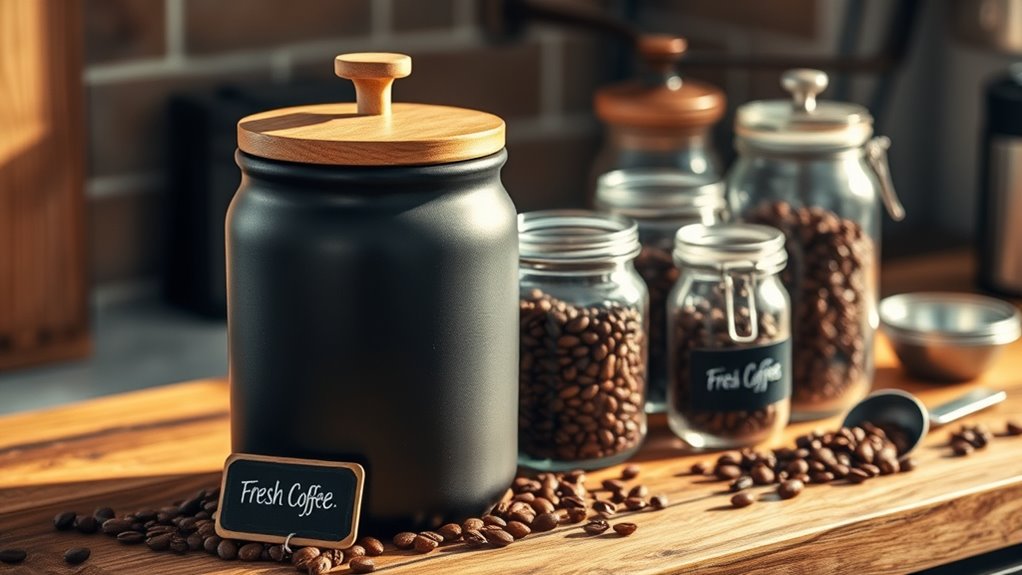
To maximize coffee freshness, consider combining specialized storage solutions like brute containers or barrier bags with your existing setup. Brute containers offer durable, large-scale storage ideal for roasteries or those handling substantial quantities. They are sturdy, food-safe, and provide airtight seals that prevent oxygen and moisture intrusion. Barrier bags, such as GrainPro, add an extra layer of protection by blocking light, oxygen, and humidity, especially useful for long-term storage or preserving beans after initial packaging. Together, these solutions create a thorough barrier against environmental factors that accelerate degradation. By pairing them with temperature and humidity controls, you markedly extend the freshness window. This approach minimizes flavor loss and preserves the beans’ aromatic profile, ensuring your coffee remains vibrant and flavorful longer.
Tips for Extending the Freshness of Your Coffee Beans
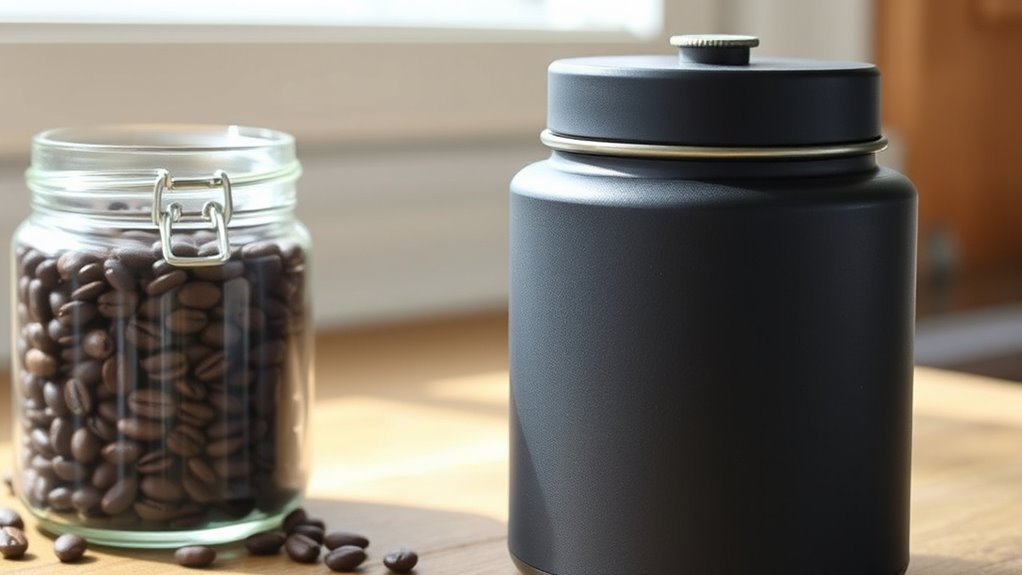
Keeping your coffee beans fresh requires more than just storing them in a container; it involves actively managing environmental factors that accelerate flavor loss. To maximize freshness, keep beans in a cool, stable environment away from heat and sunlight. Avoid frequent opening of containers to limit oxygen exposure, which speeds up degradation. Humidity control is essential—excess moisture can cause mold and stale flavors. Consider using airtight, opaque containers with silicone gaskets to block oxygen and light. Additionally, you can:
- Store in smaller containers to reduce air exposure each time you access your coffee
- Keep beans away from heat sources like stoves or direct sunlight
- Use vacuum-seal or one-way valve containers for long-term preservation
Implementing these tips helps preserve aroma, flavor, and overall quality longer.
Frequently Asked Questions
How Long Can Coffee Stay Fresh in Different Storage Containers?
In airtight, opaque containers, coffee stays fresh for about 1 to 4 weeks, especially if stored in a cool, stable environment. Vacuum-sealed containers can extend this up to several months, ideal for long-term storage. Keep in mind, exposure to light, heat, or moisture shortens freshness. Regularly check your containers for seals and condition, and consider vacuum sealing for maximum longevity.
Can I Store Coffee Beans in the Freezer Without Losing Flavor?
Storing coffee beans in the freezer is like freezing time—yes, it can preserve freshness, but beware of flavor loss. When you take beans in and out, moisture and temperature swings can cause staling and freezer burn. To avoid this, use an airtight, vacuum-sealed container and only freeze in small portions. Thaw beans gradually at room temperature before brewing, and you’ll enjoy your coffee without sacrificing flavor.
Are There Specific Containers Best for Roasted Versus Green Coffee Beans?
Yes, you should use different containers for roasted and green coffee beans. For roasted beans, choose airtight, opaque containers with silicone gaskets, like Atmos vacuum-seal or Airscape containers, to maintain freshness. For green beans, consider moisture-resistant, durable containers that prevent light exposure and control humidity. Proper containers protect each type’s unique qualities, ensuring your beans stay fresh, flavorful, and preserved longer during storage.
How Often Should I Clean My Coffee Storage Containers?
You should clean your coffee storage containers at least once a month to prevent oil buildup, mold, and bacteria. If you notice any residue, mold, or a lingering smell, clean them immediately. Use warm water and mild soap, avoiding harsh chemicals that could affect your beans’ flavor. Rinse thoroughly and let them dry completely before refilling. Regular cleaning keeps your coffee fresh and your containers in top condition.
Do Different Coffee Types Require Different Storage Conditions?
You can’t judge a book by its cover, and the same goes for coffee types. Different beans need tailored storage conditions: light roasts are more delicate and benefit from darker, airtight containers away from light, heat, and humidity. Darker roasts are more resilient but still prefer consistent, cool environments. Adjust storage based on roast level and freshness goals to keep each coffee’s unique flavor profile intact and maximize its shelf life.
Conclusion
Remember, your coffee’s freshness is in your hands—think of your storage as the guardian of flavor. By choosing the right containers and following simple tips, you can keep your beans vibrant and aromatic longer. Don’t let poor storage rob your brew of its soul; instead, embrace these habits as the key to every perfect cup. After all, isn’t your love for coffee worth the effort to preserve its true essence?