Using tap water for coffee can introduce chlorine, impurities, and inconsistent mineral levels that affect flavor and damage your equipment. A good filtration system removes harmful substances, balances minerals, and guarantees cleaner, more vibrant coffee each time. You don’t necessarily need a fancy system, but a filter tailored to coffee brewing helps maintain ideal extraction and equipment longevity. Want to discover which filter suits your needs and enhances your coffee experience? Keep exploring for expert insights.
Key Takeaways
- Filtered water removes chlorine and impurities that cause off-flavors, enhancing coffee taste and aroma.
- Special coffee filters help maintain optimal mineral levels, ensuring better extraction and flavor balance.
- Tap water quality varies locally, often containing minerals and chemicals that can harm equipment and impair flavor.
- Using a dedicated filter prevents scale buildup and equipment damage caused by excessive minerals and impurities.
- Proper filtration balances removing harmful contaminants while preserving beneficial minerals for ideal brewing conditions.
The Role of Water Composition in Coffee Flavor
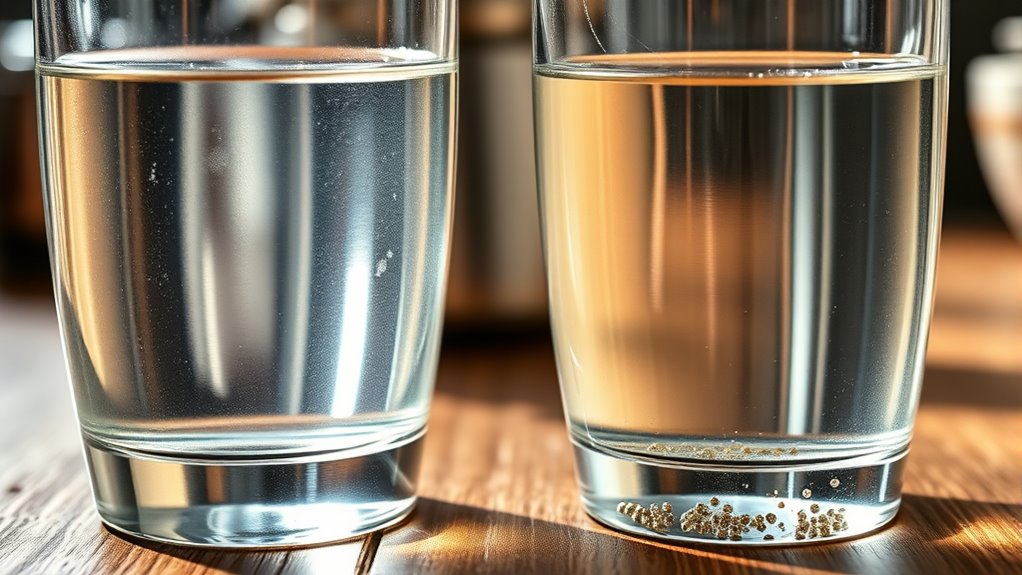
Water composition plays a crucial role in shaping the flavor of your coffee, as it makes up over 90% of the brewed cup. The minerals and chemicals present influence how coffee’s flavors develop during extraction. For example, calcium and magnesium enhance sweetness and body, helping to balance acidity. Conversely, chlorine and impurities can introduce off-flavors, masking delicate notes. The pH level impacts extraction efficiency; neutral or slightly acidic water often results in better flavor clarity. If water is too soft, your coffee may taste flat, while overly hard water can cause scale buildup and bitter tastes. Water mineral balance directly affects aroma, taste, and overall coffee quality, making water composition a critical factor in your brewing process. Additionally, selecting appropriate water with the right mineral content can optimize flavor extraction and improve your coffee experience. Proper water treatment methods can further enhance water quality, ensuring consistent and optimal brewing results. Understanding water chemistry helps you tailor your water for the best flavor profile. Incorporating specific water adjustments can further refine extraction and bring out nuanced flavors in your coffee.
How Tap Water Can Impact Your Coffee Experience
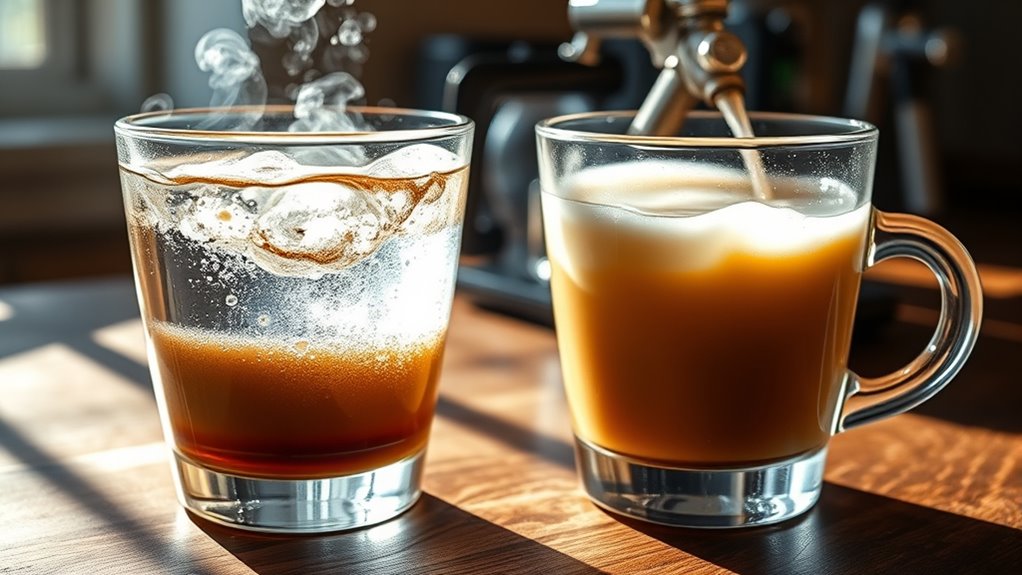
Using tap water can introduce chlorine and other chemicals that cause off-flavors and bitterness in your coffee. Its mineral content varies by location, which can lead to inconsistent taste and extraction issues. Additionally, minerals in tap water can build up in your machine, leading to scale that damages equipment and affects flavor. To ensure optimal taste and longevity of your coffee maker, using a water purifier can be beneficial. Moreover, a famous personalities perspective highlights the importance of choosing the right tools to maximize results and prevent long-term issues. Since water composition can vary significantly, understanding water quality can help in selecting the most suitable filtration method for your needs, especially considering how personal finance management can influence your choices of appliances and filters. As AI security advances, developing reliable filtration methods benefits from robust safety measures to maintain water purity and prevent contamination.
Chlorine and Off-Flavors
Have you ever noticed a bitter or odd aftertaste in your coffee that doesn’t seem to go away? That’s often caused by chlorine in tap water. Chlorine is added to drinking water to kill bacteria, but it can also bleach coffee’s natural flavors, leaving a harsh, chemical note. It can mask the coffee’s aroma and make the brew taste flat or off-putting. Additionally, chlorine can degrade crema in espresso, reducing its richness and texture. When you brew with unfiltered tap water, these off-flavors become more pronounced, diminishing your coffee experience. Using filtered water helps eliminate chlorine, allowing the true flavors and subtle notes of your coffee to shine through. It results in a cleaner, more balanced taste and a more enjoyable cup every time. Proper water quality is essential for essential oils’ effectiveness in aromatherapy, as impurities can interfere with their aroma and benefits. Recent AI discoveries in water treatment technology are also paving the way for more efficient and sustainable purification methods. Moreover, water filtration can remove other contaminants that might impact health and taste.
Mineral Content Variability
Since tap water quality varies greatly depending on your location, it can markedly impact your coffee’s flavor profile. The mineral content in tap water influences extraction and taste, making your brew either vibrant or dull. Here are three ways minerals affect your coffee: 1. Positive Impact: Calcium and magnesium can enhance flavor complexity and improve extraction, creating a richer cup. 2. Too Much Mineral Content: Excessive hardness causes scale buildup, leading to inconsistent extraction and potential machine damage. 3. Too Little Mineral Content: Over-soft water can produce flat, dull flavors, lacking the “mouthfeel” that minerals provide. Understanding these variations helps you control your coffee’s flavor. Using filtered water can balance mineral content, ensuring a consistent, flavorful brew that highlights your coffee’s true character. Proper mineral levels also help prevent scale buildup in your coffee maker, maintaining optimal performance over time. Additionally, maintaining an appropriate mineral balance can reduce equipment wear and extend the lifespan of your brewing devices, especially as smart home integrations become more prevalent in modern kitchens. Incorporating water filtration systems designed for coffee brewing can further optimize mineral levels, leading to a more satisfying cup every time.
Equipment Scale Buildup
Tap water often contains minerals that can cause limescale buildup in your coffee equipment, leading to clogs and inefficiency. Over time, minerals like calcium and magnesium settle inside your machine’s heating elements and pipes, reducing heat transfer and causing malfunctions. This buildup forces your machine to work harder, increasing energy consumption and risking damage to essential parts. Regular maintenance can help prevent these issues, but using unfiltered tap water accelerates this process, making descaling necessary more often and raising maintenance costs. By opting for filtered water, you reduce mineral content, slow down limescale formation, and protect your equipment’s lifespan. Proper water quality is crucial for optimal brewing performance and longevity. Additionally, water filtration systems can effectively remove many of these minerals, providing a cleaner water source and extending your machine’s operational life. Maintaining water purity helps preserve the taste and quality of your coffee while safeguarding your equipment’s durability. This keeps your coffee tasting its best and your machine running smoothly for longer periods.
Benefits of Using Filtered Water for Brewing
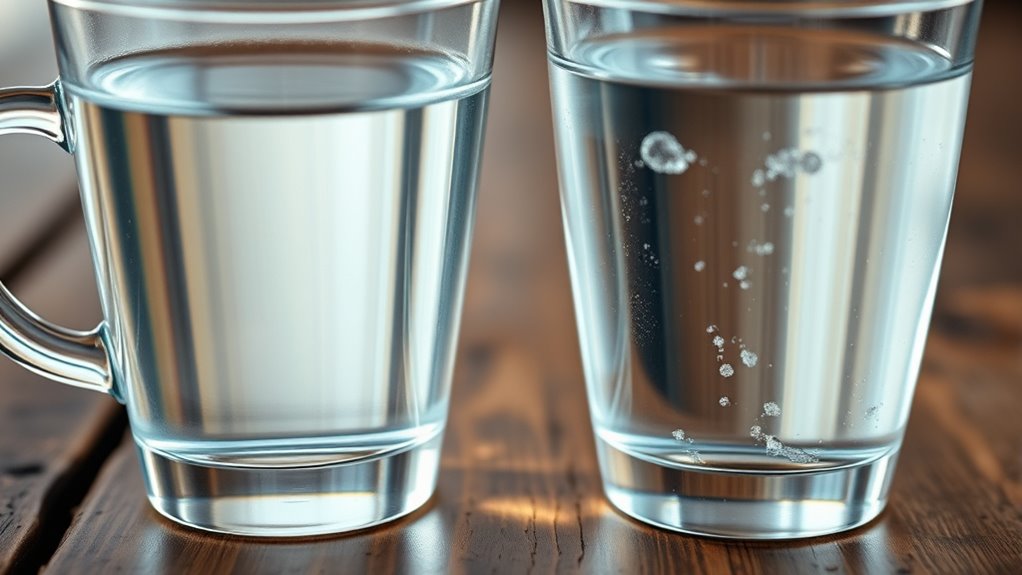
Using filtered water for brewing coffee markedly enhances the overall flavor and aroma. It removes chlorine, heavy metals, and sediment that can mask or distort coffee’s natural notes. This means you experience a cleaner, more vibrant taste with every cup. Plus, consistent water quality guarantees your brew tastes the same every time, giving you confidence in your results. Filtered water also balances mineral content, optimizing extraction and reducing bitterness. Incorporating Kia Tuning techniques such as ECU remapping can further improve your coffee brewing process by ensuring your water heating and flow systems operate efficiently. Additionally, water quality standards play a vital role in maintaining optimal brewing conditions. Here are three benefits you’ll notice: 1. Richer aroma and flavor that truly reflects the coffee’s character. 2. Smoother, less bitter taste in every sip. 3. Longer-lasting equipment due to reduced mineral buildup and scale.
Understanding Water Hardness and Mineral Content
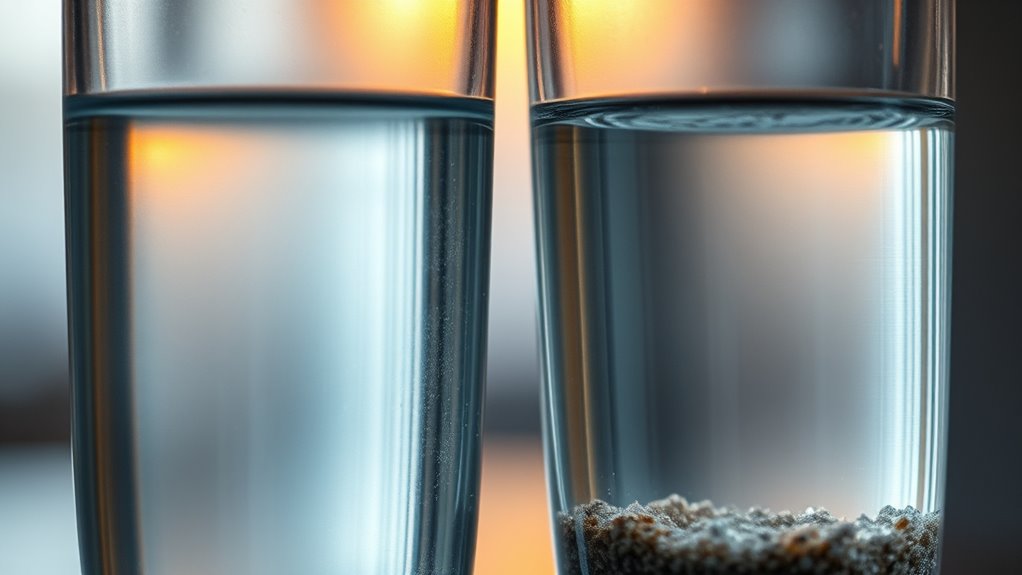
Understanding water hardness and mineral content is essential because these factors directly influence the flavor and consistency of your coffee. Minerals like calcium and magnesium enhance extraction, adding richness and balance. Too much mineral content causes scale buildup, damaging your machine and dulling flavors. Conversely, very soft water lacks minerals, leading to flat, muted coffee. Here’s a visual overview:
| Mineral Type | Effect on Coffee |
|---|---|
| Calcium | Boosts flavor, improves extraction |
| Magnesium | Adds body, enhances aroma |
| Excess Minerals | Causes scale, machine issues |
Maintaining balanced mineral levels ensures excellent taste and equipment longevity. Filtered water that preserves beneficial minerals while reducing excess hardness helps you brew better coffee consistently.
The Risks of Using Unfiltered Tap Water on Coffee Machines
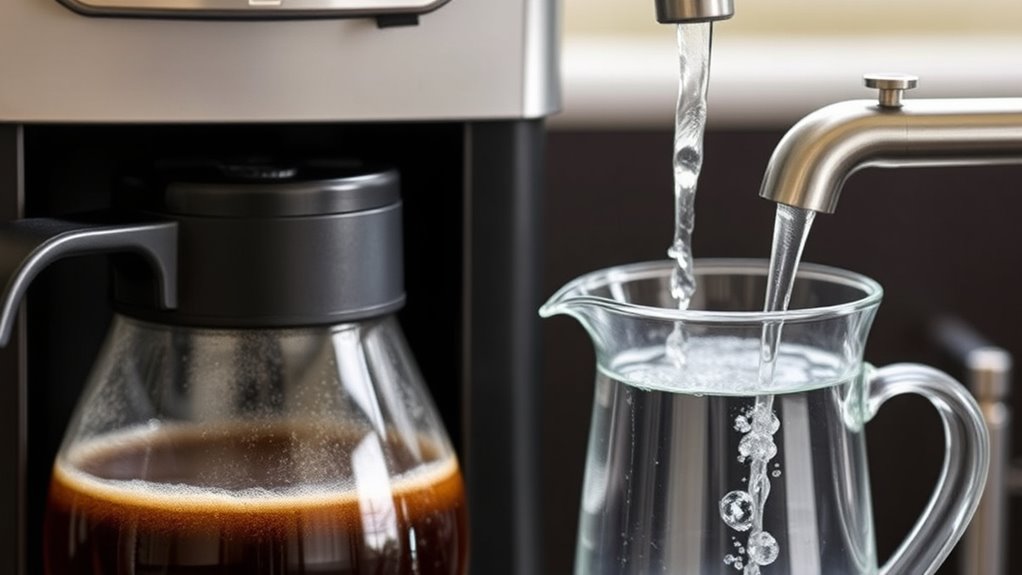
Unfiltered tap water can pose serious risks to your coffee machine’s performance and longevity. When you skip filtration, you expose your machine to minerals, chemicals, and impurities that can cause damage over time.
Unfiltered tap water risks damaging your coffee machine over time.
- Limescale buildup: Hard water minerals create stubborn deposits inside your machine, reducing efficiency and causing costly repairs.
- Clogged components: Sediments and impurities clog filters, valves, and pipes, leading to inconsistent brewing and potential breakdowns.
- Chemical corrosion: Chlorine and other chemicals accelerate corrosion of internal parts, shortening your machine’s lifespan.
Using unfiltered tap water might seem convenient, but it dramatically increases the risk of damage, costly repairs, and a decline in coffee quality. Protect your investment by choosing properly filtered water.
Choosing the Right Filtration Method for Coffee Enthusiasts
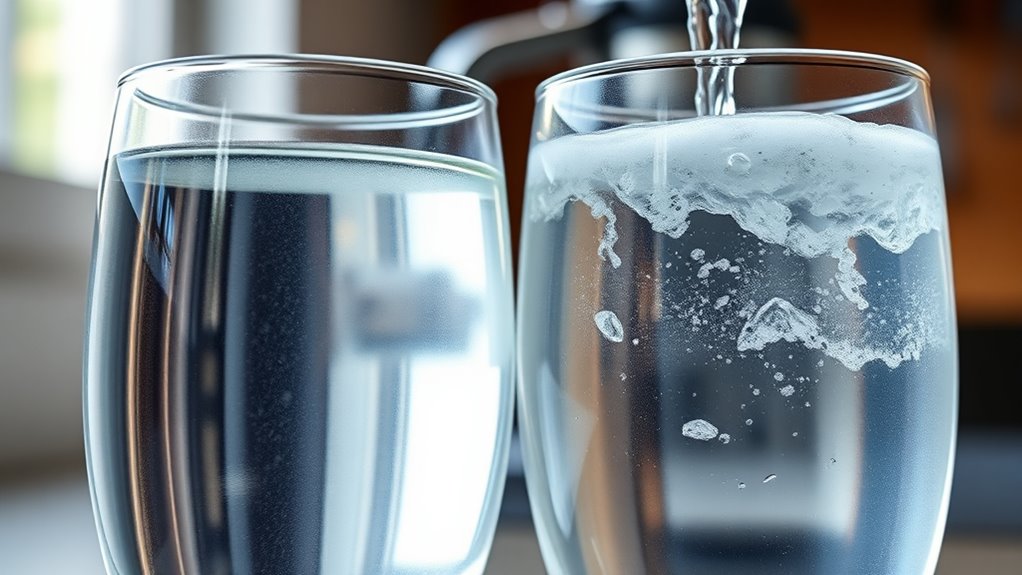
Choosing the right filtration method depends on your taste preferences and brewing setup. You’ll want a system that effectively removes impurities while maintaining essential minerals for flavor. Consider the types of filters available and how they balance mineral content to get the best cup every time.
Filter Types and Effectiveness
Selecting the right water filter is essential for optimizing your coffee brewing experience, as not all filtration methods are equally effective at removing impurities or balancing minerals. You want a system that delivers clean, flavorful water every time.
Here are three options to contemplate:
- Activated Carbon Filters – Remove chlorine and odors, enhancing taste and aroma.
- Reverse Osmosis Systems – Eliminate nearly all impurities, providing pure water but may require mineral rebalancing.
- Mineral or Specialty Filters – Maintain essential minerals for flavor while filtering out harmful contaminants.
Choosing the right filter depends on your taste preferences and equipment needs. The goal is to find a method that maximizes flavor clarity, maintains mineral balance, and protects your coffee maker’s longevity.
Mineral Content Optimization
To optimize mineral content in your brewing water, you need a filtration method that balances removing harmful impurities while preserving essential minerals that enhance coffee flavor. Look for systems that retain minerals like calcium and magnesium, which improve extraction and taste. Completely softening water can lead to flat, dull coffee, while overly hard water causes scale buildup and inconsistent flavor. Commercial mineral blends or specialized filters, such as Third Wave Water, help achieve the ideal mineral balance—around 50-150 ppm—ensuring ideal extraction and flavor. Avoid filters that strip all minerals, and instead choose those designed to maintain or add minerals selectively. This way, your water enhances your coffee’s aroma, body, and flavor profile, delivering a consistent, high-quality brew every time.
Ensuring Water Safety and Quality for Optimal Coffee Tastes
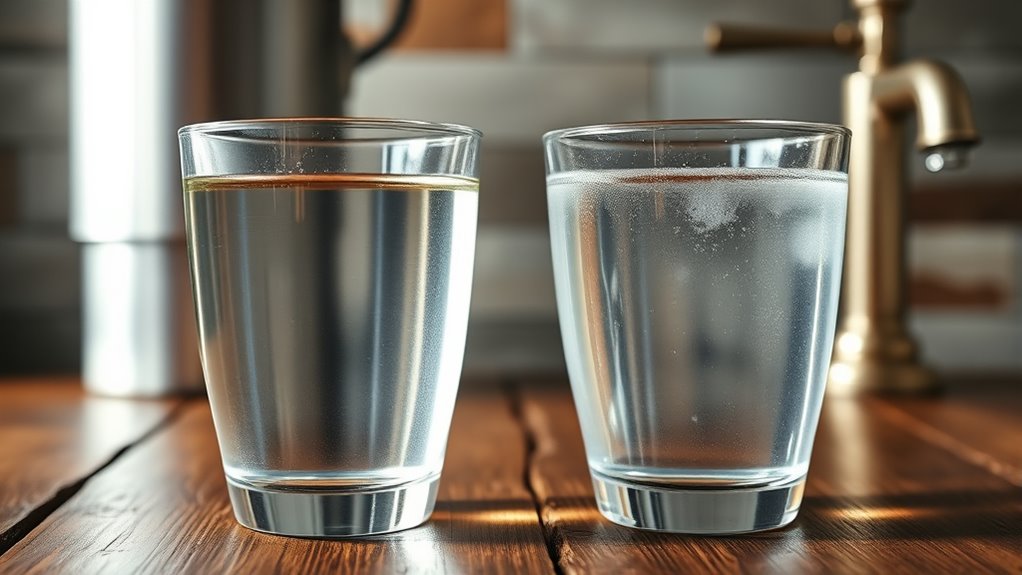
Ensuring water safety and quality is essential for achieving the best coffee flavor and protecting your brewing equipment. Poor water can introduce contaminants, cause scale buildup, and mask delicate flavors. To safeguard your coffee experience:
- Use certified filters that remove bacteria, heavy metals, and chemicals, ensuring each cup is safe and pure.
- Regularly maintain and replace filters to prevent bacterial growth and ensure consistent water quality.
- Opt for filtration systems that balance mineral content, safeguarding your machine from damage and enhancing flavor extraction.
Frequently Asked Questions
Can Filtered Water Improve the Longevity of My Coffee Machine?
Yes, filtered water can substantially improve your coffee machine’s longevity. By removing minerals, chlorine, and impurities, it prevents limescale buildup and corrosion that can damage internal parts. Using filtered water reduces the need for frequent descaling and maintenance, helping your machine run smoothly longer. Plus, it protects sensitive components, saving you money on repairs and ensuring consistent performance, so you get better-tasting coffee over time.
What Minerals Are Essential for Optimal Coffee Extraction?
Think of minerals as the orchestra behind a great coffee tune. Calcium and magnesium are essential; they help extract flavors and create that rich, balanced taste you crave. Without these “musicians,” your brew might fall flat or taste muted. Just the right mineral balance enhances aroma, crema, and overall quality. So, using water with proper mineral content ensures your coffee hits all the right notes every time.
Is Bottled Water Better Than Tap or Filtered Water for Coffee?
Bottled water can be better than tap or filtered water for coffee if it has a balanced mineral content and low impurities. It often offers consistent quality, free from chlorine and heavy metals, improving flavor. However, not all bottled waters are ideal—check for suitable mineral levels. Filtered water is usually more cost-effective and customizable, providing reliable, clean water that enhances your coffee’s taste and protects your equipment.
How Often Should I Change My Coffee Water Filter?
Think of your coffee filter as the heart of your brewing process—if you neglect it, your coffee suffers. You should change your water filter every 2 to 3 months, or sooner if you notice a decline in taste or flow rate. Regular replacement keeps impurities at bay, ensuring your coffee’s flavor stays pure and your equipment runs smoothly, just like a well-tuned instrument in perfect harmony.
Do Different Brewing Methods Require Different Water Qualities?
Yes, different brewing methods benefit from specific water qualities. For espresso, use water with balanced minerals and a neutral pH to enhance crema and flavor. Pour-over and drip coffee prefer softer water to highlight delicate notes, while French press methods can handle slightly harder water. Adjust your water’s mineral content based on your brewing style to optimize flavor extraction and machine performance. Tailoring water quality guarantees the best possible coffee experience.
Conclusion
Did you know that water accounts for up to 98% of your coffee? Using the right water can transform your brew, making it more flavorful and reducing machine issues. While only about 3% of Americans drink filtered water daily, coffee lovers who switch to filtered water often notice a marked improvement in taste and machine longevity. So, investing in a good filter isn’t just smart for your coffee—it’s a game-changer for your morning routine.