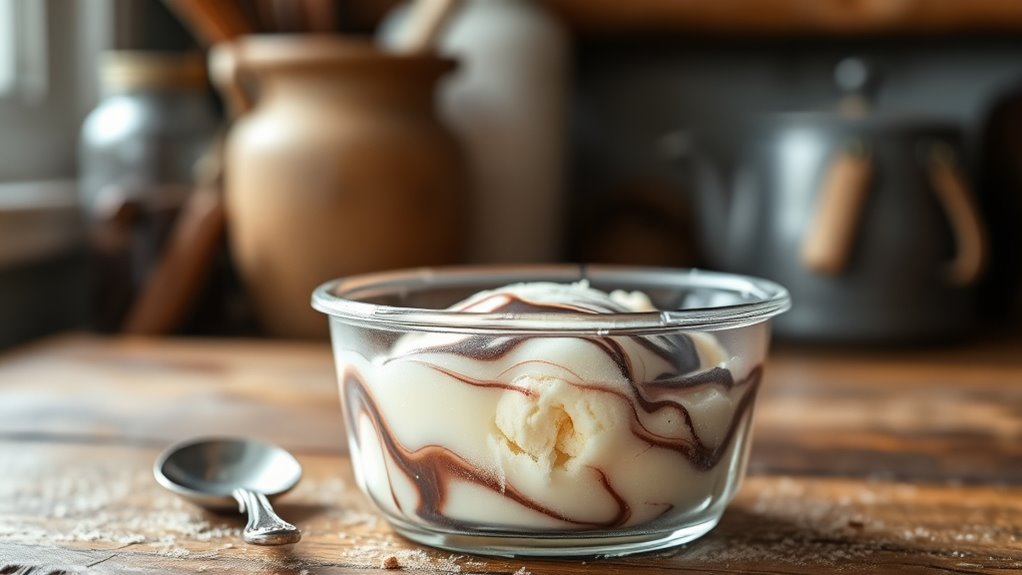

Yes, homemade ice cream can go bad or develop off-flavors if you don’t store it properly. Keep it at 0°F (-18°C) and use airtight containers to prevent freezer burn and odors. Avoid frequent opening and temperature fluctuations by keeping it in the coldest part of your freezer. Proper sealing and handling will extend its freshness, but over time, flavor and texture can still decline. Want to learn the best storage tips to keep your ice cream perfect?

Get coffee and tea gear delivered free with Prime
- Fast, free delivery on millions of items
- Prime Video, Amazon Music and more included
- Member-only deals all year
Key Takeaways
- Homemade ice cream can spoil or develop freezer burn if not stored properly or kept too long.
- Keeping the freezer at 0°F (-18°C) prevents ice crystal growth and flavor loss.
- Airtight containers with proper sealing extend freshness and prevent freezer odors.
- Minimize temperature fluctuations by avoiding frequent door openings and storing in the coldest freezer areas.
- Consume within 1-2 months for optimal flavor and texture, even with proper storage.
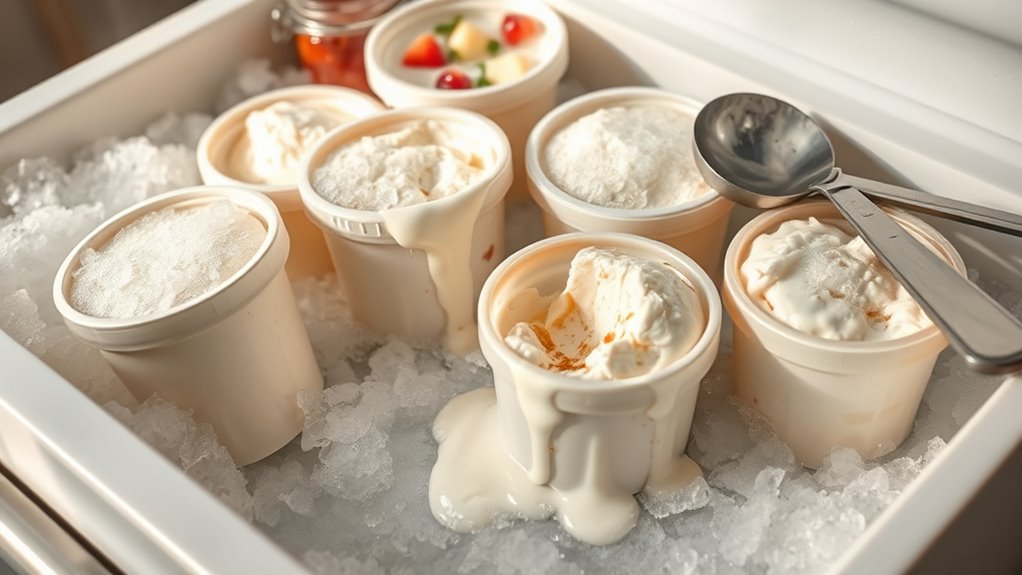
Storing homemade ice cream properly is essential to maintain its creamy texture and delicious flavor. If you want your ice cream to stay fresh and enjoyable for as long as possible, paying attention to how you store it is key. One of the most important factors in preserving flavor is controlling the freezer temperature. Ideally, your freezer should be set at 0°F (-18°C). If the temperature is too high, the ice cream can develop ice crystals, leading to a grainy texture and flavor loss. On the other hand, maintaining a consistent freezer temperature helps prevent unwanted ice crystal growth, ensuring each scoop remains smooth and flavorful.
Properly storing homemade ice cream at 0°F (-18°C) keeps it smooth, flavorful, and prevents ice crystal formation.
When you’re storing your homemade ice cream, use an airtight container to minimize exposure to air, which can cause freezer burn and dull the flavor. Choose a container with a tight-fitting lid or double-wrap your ice cream in plastic wrap before placing it in a sealed container. This extra layer acts as a barrier against moisture and prevents the absorption of any unwanted freezer odors that could compromise flavor. Label the container with the date you made the ice cream so you can keep track of how long it’s been stored. Generally, homemade ice cream stays best for about 1 to 2 months, but proper storage can extend its freshness.
Another tip to preserve flavor is to minimize temperature fluctuations. Avoid leaving the freezer door open for long periods, as this raises the freezer’s internal temperature and causes ice crystals to form. If your freezer tends to fluctuate, consider storing your ice cream in the coldest part of the freezer, away from the door, to keep it at a stable temperature. When you’re ready to serve, let the ice cream sit at room temperature for a few minutes to soften slightly. This step helps prevent chipping and ensures you experience its full flavor and creamy texture.
Be mindful of how often you open the container. Every time you do, you introduce air and moisture, which can accelerate flavor degradation. Using a small scoop or portioning your ice cream in smaller containers can help reduce the frequency of opening the main storage container. Proper storage practices are especially important given the growth of automation in food storage and handling processes. Additionally, using airtight containers designed for freezing can further help maintain flavor and prevent freezer burn. Remember, even the best storage practices can’t completely prevent flavor loss over time, but they markedly extend the shelf life and keep your homemade ice cream tasting fresh.
An additional consideration is ensuring your freezer maintains a consistent temperature, as fluctuations can cause ice crystals to form more rapidly. Properly organizing your freezer to avoid overcrowding can help maintain a stable environment for your ice cream. Proper storage also helps prevent freezer burn, which can significantly degrade texture and flavor. By managing freezer temperature carefully and sealing your ice cream properly, you’ll enjoy the rich flavor and smooth consistency of your homemade treat for weeks to come. Maintaining proper storage techniques is crucial for preserving the quality, flavor, and texture of your homemade ice cream over time.
Products Worth Considering

Cuisinart ICE-70P1 2-Quart Ice Cream Maker with Countdown Timer

Instant Pot InstantChill Ice Cream Maker with Rolled Ice Cream Cold Plate, 2-Pint

Cuisinart ICE-100 1.5-Quart Automatic Ice Cream and Gelato Maker
As an affiliate, we earn on qualifying purchases.
Frequently Asked Questions
How Long Does Homemade Ice Cream Stay Safe to Eat?
Homemade ice cream stays safe to eat for about 1 to 2 months in your freezer, depending on how well it’s stored. To maintain ice cream freshness, keep it tightly sealed and at a consistent temperature. Over time, the freezer lifespan can affect quality, causing ice crystals and freezer burn. For the best taste and safety, enjoy your homemade treat within this timeframe and always check for any signs of spoilage before eating.
Can Homemade Ice Cream Develop Freezer Burn?
Imagine you’re savoring homemade ice cream when you notice icy spots. That’s freezer burn, caused by moisture loss and ice crystal formation. Yes, your homemade ice cream can develop freezer burn if it’s not wrapped tightly or stored too long. This process damages the texture and flavor, making it less enjoyable. To prevent it, guarantee proper sealing and consume within recommended storage times to keep your ice cream fresh.
Is It Better to Store Homemade Ice Cream in a Metal or Plastic Container?
When choosing a container for your homemade ice cream, consider the container material for ideal storage efficiency. Metal containers, like stainless steel, transfer cold quickly and prevent freezer burn, keeping your ice cream firmer. Plastic containers are lightweight and airtight, which helps prevent ice crystals and freezer burn. Ultimately, a metal container offers better temperature conduction, but a well-sealed plastic container also works if you prioritize ease and convenience.
Should Homemade Ice Cream Be Covered Tightly or Loosely?
Perfectly protecting your homemade ice cream requires precise covering. You should always seal it securely in airtight containers to prevent freezer burn and preserve flavor. Cover it tightly to create a barrier against moisture and odors, ensuring long-lasting freshness. Loose coverings invite air and ice crystals, compromising quality. So, for freezer protection and to keep your ice cream irresistibly creamy, always go for airtight containers and a snug, secure seal.
Can Homemade Ice Cream Be Refrozen After Partial Melting?
Refreezing homemade ice cream after partial melting is generally safe, but it can cause texture changes, making it grainy or icy. If the ice cream has been kept at safe temperatures and shows no signs of spoilage, you can refreeze it, but be aware that quality might decline. For best results, refreeze promptly and avoid letting it sit at room temperature for too long to maintain safety and taste.
Conclusion
So, stay savvy and savor your sweet creations by storing your homemade ice cream properly. Keep it cold, tightly sealed, and promptly frozen to prevent pesky problems like spoilage and ice crystals. Remember, good habits guarantee glorious, guilt-free enjoyment with every scoop. Don’t let sloppy storage spoil your spectacular treat—safeguard your dessert with simple secrets. Stay smart, stay sweet, and savor every spoonful of your splendid, scrumptious homemade ice cream!