
To achieve perfect café-style milk froth at home, choose the right tools like a steam wand, handheld frother, French press, or Mason jar. Use cold, whole, or non-dairy milk and heat it to 140–155°F for best microfoam. Techniques like proper wand positioning, gentle swirling, and careful temperature control help create smooth, velvety foam. Keep experimenting and following expert tips to master your frothing skills and enjoy barista-quality lattes every time.
Key Takeaways
- Use a steam wand, automatic frother, or French press to create smooth, microfoam similar to cafe-quality lattes.
- Start with cold, whole or non-dairy milk heated to 140–155°F for best frothing results.
- Position your frothing tool just below the milk surface to introduce air and produce fine bubbles.
- Keep a thermometer handy to maintain the ideal temperature and prevent foam from becoming grainy or collapsing.
- Tap and swirl the milk after frothing to break larger bubbles and achieve a glossy, velvety microfoam.
Essential Tools for Frothing Milk at Home
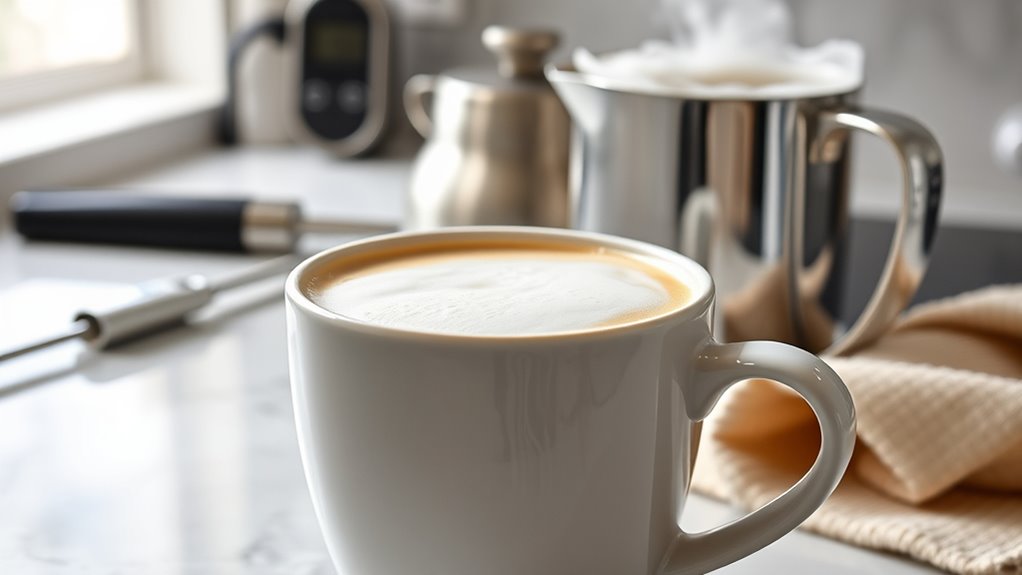
To achieve perfect milk froth at home, having the right tools is essential. Your options include steam wands on espresso machines, which give you the most control over microfoam. If you want something more affordable and simple, handheld electric frothers work well for small batches. French presses are versatile—they can create creamy foam by pumping the plunger vigorously. Automatic milk frothers require minimal effort and deliver consistent results, making them ideal for beginners. Mason jars with tight lids are surprisingly effective; just heat the milk and shake vigorously to froth. Each tool has its advantages, so choose one that fits your skill level, budget, and the amount of frothing you need. Using a quality milk frothing tool can make a significant difference in achieving smooth, creamy foam every time. Proper technique, combined with the right frosting method, ensures you get the best results. Having the right tool guarantees your milk froth is smooth, creamy, and perfect every time.
Choosing the Best Milk for Perfect Foam

Choosing the right milk is key to achieving smooth, stable foam that enhances your coffee experience. Whole milk produces the creamiest, richest foam because of its higher fat content, making it ideal for lattes. Cold milk froths better and creates more stable bubbles, so keep it chilled before frothing. Aim for a temperature between 140–155°F (60–68°C) to optimize foam without damaging proteins. Non-dairy options like oat, soy, or almond milk can work too, but they may require additives or specific brands designed for frothing. Keep in mind that some plant-based milks don’t foam as well, so experimenting helps find the best match for your taste and texture preferences. Proper milk selection ensures you get velvety, long-lasting foam for your cafe-style drinks. Additionally, understanding how color accuracy influences the visual appeal of your drinks can elevate your presentation and overall experience. For the best results, consider the familiarity with frothing techniques to refine your method and achieve professional-looking foam at home. Using the right essential oils in your environment can also create a relaxing atmosphere while you perfect your latte art. Exploring industry trends can also inspire new ways to elevate your coffee craft.
Step-By-Step Guide to Frothing With a Steam Wand

Frothing milk with a steam wand requires careful technique to achieve creamy microfoam. Start by filling your pitcher halfway with cold milk, giving room for expansion. Position the steam wand tip just below the milk surface to introduce air, creating tiny bubbles. Listen for a gentle ripping sound—this indicates proper aeration. As the milk heats to about 100°F, lower the wand slightly deeper to heat without adding more air. Keep the tip just under the surface until the milk reaches 140–155°F, then turn off the steam. Remove the wand and give the pitcher a gentle swirl to break larger bubbles. Proper positioning and timing ensure smooth, glossy microfoam perfect for your cafe-style latte. Practicing consistently improves your technique, much like mastering frothed milk quality for barista-level drinks.
How to Use a French Press or Mason Jar for Frothing

Using a French press or mason jar to froth milk is an easy, hands-on method that requires minimal equipment. First, heat your milk to 140–155°F (60–68°C), then pour it into the French press no more than one-third full or fill the jar halfway. For the French press, pump the plunger vigorously up and down for 15–30 seconds until the milk doubles in size and forms foam. If using a mason jar, screw on the lid tightly and shake vigorously for about 30 seconds. Both methods introduce air into the milk, creating a creamy froth perfect for lattes and cappuccinos. After frothing, gently swirl or tap the container to break large bubbles and improve texture. Pour immediately for best results.
Achieving Smooth Microfoam and Textured Milk
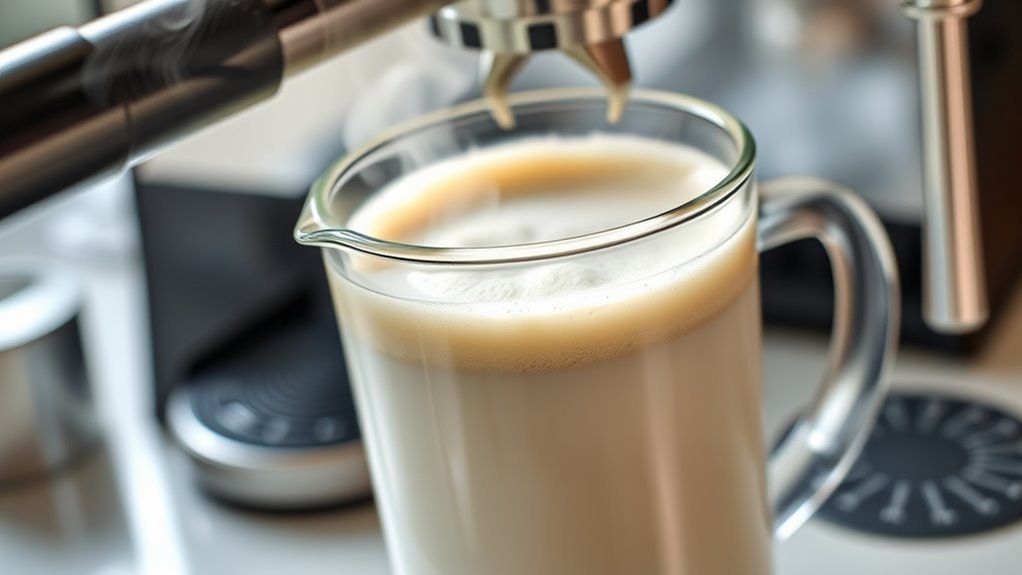
To get smooth microfoam, you need to pay attention to the milk’s temperature, aiming for 140–155°F. Proper frothing technique involves introducing just the right amount of air and swirling the milk to break up large bubbles. Avoid over-aerating or overheating, which can lead to coarse foam and uneven texture. Incorporating advanced natural language processing techniques can also assist in monitoring and adjusting frothing parameters for optimal results. Additionally, understanding automation in business can inspire innovative methods for precise temperature and texture control during frothing. Exploring waterpark hotel amenities can provide inspiration for creating relaxing and enjoyable environments for your guests, much like achieving the perfect microfoam enhances your coffee experience. Paying attention to milk quality can also significantly improve the final texture and taste of your latte.
Perfect Milk Temperature
Ever wonder why some milk froths smoothly while others turn grainy or flat? The secret lies in temperature. When you heat milk to between 140–155°F (60–68°C), you optimize its protein structure, creating ideal conditions for microfoam. Too cold, and the milk won’t froth well; too hot, and the proteins break down, ruining the foam’s stability. Overheating above 160°F (71°C) causes the milk to scorch and lose its silky texture. Use a thermometer to hit that perfect range consistently. If you don’t have one, trust your finger—hot but not burning. Maintaining the right temperature guarantees the milk remains smooth, glossy, and easy to incorporate into your espresso, giving you that café-quality microfoam every time. Proper temperature control is essential for healthy air quality, as it ensures optimal conditions for both milk texture and overall indoor environment. Additionally, precise temperature management can help preserve the nutritional value of the milk, ensuring you enjoy both delicious and nutritious beverages. Monitoring milk temperature can also prevent overheating that would otherwise degrade the protein structure, which is crucial for stable microfoam. Maintaining consistent temperature also contributes to energy efficiency, reducing unnecessary heat exposure and saving energy during steaming. Being mindful of temperature fluctuations can also help prevent the formation of unwanted bacteria growth, which can occur if milk is overheated or left at unsafe temperatures.
Proper Frothing Technique
Achieving smooth microfoam and textured milk depends on mastering proper frothing technique. First, position your steam wand just below the milk’s surface to introduce air, creating tiny bubbles. Adjust the depth based on sound; a gentle ripping noise indicates good aeration. Once the milk reaches 100°F (38°C), submerge the wand deeper to heat without adding more air. Keep the wand steady, and move it slightly in circles to promote even frothing. Avoid overfrothing, which causes large bubbles and unstable foam. When the milk is glossy, creamy, and homogenous—similar to wet paint—your microfoam is ready. Turning off the steam early prevents overheating. Practice your hand positioning, listen for the right sounds, and control your timing to consistently produce smooth, textured milk for cafe-style lattes. Incorporating proper frothing techniques and understanding the ideal milk temperature ensures consistent results and improves your overall milk steaming skill.
Eliminating Large Bubbles
Large bubbles often appear when the milk is over-aerated or the steam wand isn’t positioned correctly, resulting in foam that’s coarse and unstable. To eliminate these bubbles, first, verify your steam wand is just below the milk surface when introducing air, then submerge it deeper once the milk reaches 100°F to heat without adding more air. After frothing, gently tap the pitcher on a countertop to release trapped large bubbles, then swirl the milk to smooth the surface. Avoid over-frothing, which creates bigger, unstable bubbles. Using a thermometer helps maintain proper temperature, preventing milk proteins from breaking down. Proper wand positioning ensures effective aeration and timing, and with patience, you’ll achieve silky, microfoam that’s perfectly textured and free of large bubbles. Additionally, practicing consistent steaming techniques helps improve milk texture over time. Incorporating advanced steaming methods can further refine your foam quality and consistency. Being aware of the caffeine content in espresso can also motivate you to perfect your milk steaming process, as the right foam enhances the overall coffee experience. Recognizing the importance of proper technique can significantly impact the quality of your microfoam.
Troubleshooting Common Frothing Issues and Expert Tips

If your foam has large bubbles or feels flat, it’s often due to over-aeration or incorrect temperature. Ensuring your milk is fresh, heated properly, and your tools are clean can make a big difference. Paying attention to these details helps you produce smooth, stable foam every time. Additionally, being aware of your local store hours, such as those of Ulta Beauty or Sephora, can help you plan your shopping for the right tools and ingredients needed for optimal frothing headphone compatibility.
Bubbles and Foam Quality
Are your milk foams turning out inconsistent or full of unwanted bubbles? This usually means you’re over-aerating or not controlling the foam process properly. Large bubbles often indicate too much air or that the steam wand is too close to the milk surface. To fix this, adjust the wand depth so it’s just below the surface, allowing gentle aeration. Over-frothing can also create coarse, unstable foam—aim for a creamy, glossy microfoam instead. If your foam has too many big bubbles, gently swirl or tap the pitcher to break them up. Using freshly steamed milk at the right temperature helps produce smooth, stable foam. Remember, patience and proper technique are key to achieving a uniform, velvety foam without unwanted bubbles.
Temperature and Milk Consistency
Maintaining the correct milk temperature is essential for achieving smooth, stable foam and avoiding common frothing issues. If the milk is too cold, it won’t froth properly; if it’s too hot, the foam will collapse or taste burnt. To guarantee consistency, keep these in mind:
- Use a thermometer to target 140–155°F (60–68°C) for ideal frothing.
- Avoid overheating above 160°F (71°C), which damages milk proteins.
- Warm milk gradually to prevent sudden temperature drops.
- Choose whole milk for richer foam, or experiment with non-dairy options, adjusting for additives.
- Maintain steady, even heating to prevent inconsistencies in texture.
Frequently Asked Questions
Can Non-Dairy Milks Produce the Same Microfoam as Dairy?
Yes, non-dairy milks can produce microfoam similar to dairy, but it depends on the type and preparation. Oat, soy, and almond milks work well if you choose varieties with added fats or stabilizers, which help create creamier foam. Keep the milk cold, heat it to the right temperature, and froth vigorously. Experiment with different brands and additives to achieve that smooth, glossy microfoam perfect for your cafe-style drinks.
How Do I Prevent Large Bubbles During Frothing?
To prevent large bubbles while frothing, focus on proper technique. Keep the steam wand tip just below the milk surface to introduce gentle air, and avoid over-aerating. Use a thermometer to maintain the right temperature, as overheated milk creates coarse foam. After frothing, swirl and tap the pitcher on the counter to break large bubbles, resulting in smooth, microfoam perfect for your latte.
What’s the Best Way to Clean Frothing Tools?
You should rinse your frothing tools immediately after use to prevent milk residue from drying and sticking. Use warm water and a mild detergent, scrubbing gently with a brush or sponge to remove buildup. For steam wands, purge steam to clear any milk inside, then wipe the tip with a damp cloth. Regular cleaning maintains hygiene, guarantees ideal performance, and keeps your tools in top condition for perfect frothing every time.
How Can I Tell if My Milk Is at the Right Temperature?
You can tell if your milk is at the right temperature by using a thermometer; aim for 140–155°F (60–68°C). If you don’t have one, feel the outside of your pitcher—once it’s warm to the touch but not hot, it’s usually perfect. Another sign is when the milk slightly steams and expands, indicating it’s heated enough without overheating. Avoid boiling or scalding the milk.
Is It Possible to Re-Froth Milk if It Loses Foam?
Think of your milk as a delicate dance partner—if the foam loses its rhythm, you can re-froth it. Simply heat the milk gently again to 140-155°F, then re-foam using your preferred tool. For best results, give it a quick swirl or tap to break large bubbles, then re-froth until you get that creamy microfoam back. Just remember, reheating can sometimes alter texture, so proceed with care.
Conclusion
Now that you have all the tools and tips, creating cafe-style froth at home becomes as easy as pie. With practice, your milk will turn silky and smooth, like a cloud drifting across the sky. Remember, patience and attention to detail are key—your perfect latte is just a few simple steps away. Keep experimenting, and soon, you’ll be pouring beautiful, frothy drinks that rival your favorite coffee shop.