If your coffee gear isn’t working right, start by checking power sources and reset digital controls if needed. Inspect for water leaks, cracked seals, or flow blockages, and clean water lines often. For grinder issues, clear jams carefully and clean burrs regularly. To improve brew quality, adjust grind size, keep equipment calibrated, and clean components daily. For steam troubles, check pressure levels and clean wands. Want to keep your machine running smoothly? Keep exploring these tips to master quick fixes for common issues.
Key Takeaways
- Check power sources, cords, and switches before troubleshooting digital coffee equipment malfunctions.
- Regularly clean and descale grinders and machines to prevent jams and maintain optimal performance.
- Inspect water reservoirs, seals, and gaskets for leaks or blockages and ensure proper seating.
- Clear jammed beans carefully by unplugging and removing hoppers, then dislodging debris with a brush or pick.
- Verify steam wand nozzles for blockages and ensure pressure levels are adequate for consistent frothing.

Descaler (2 Pack, 2 Uses Per Bottle) – Made in the USA – Universal Descaling Solution for Keurig, Nespresso, Delonghi and All Single Use Coffee and Espresso Machines
2-Pack Coffee Descaler and Cleaner – Clean and rinse away residue and oil buildup in your coffee maker…
As an affiliate, we earn on qualifying purchases.
As an affiliate, we earn on qualifying purchases.
Addressing Power and Digital Malfunctions
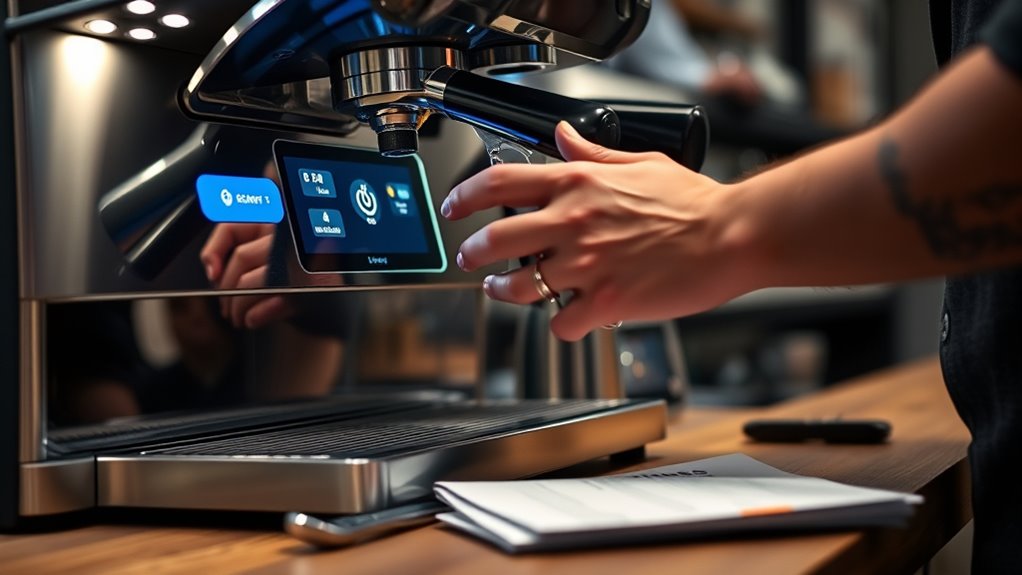
When your coffee machine fails to power on, the first step is to check the power source. Confirm the plug is securely connected and try plugging into a different outlet to rule out a faulty socket. If you’re using a power strip, test it with another device to verify it’s working properly. For digital models, press the reset button or unplug the machine for several minutes to reset internal circuits. Check for any visible damage to power cords or switches. If these steps don’t resolve the issue, internal components like circuit boards or heating elements could be faulty and require professional repair. Always prioritize safety by unplugging the machine before inspecting or handling internal parts. Properly diagnosing power issues saves time and prevents unnecessary damage. Additionally, inspecting electrical safety features can help identify potential hazards before attempting repairs. Regular maintenance and keeping internal electrical connections clean can also improve the longevity and safety of your coffee equipment. Ensuring the power supply is stable and consistent can prevent future malfunctions and extend your machine’s lifespan. Also, verifying that the internal wiring is intact and undamaged can prevent electrical failures. Conducting periodic electrical safety checks can further help in maintaining the overall safety of your appliance.

O Ring Repair Kit for Manual De'Longhi ECP3630 ECP3420 ECP3220 Bar Pump Espresso Cappuccino Coffee Machine, to Solve The Problem of Water and Tube Leaks
This is an O-Ring Repair Kit for Manual De'Longhi ECP Series Bar Pump Espresso and Cappuccino Coffee Machines.
As an affiliate, we earn on qualifying purchases.
As an affiliate, we earn on qualifying purchases.
Fixing Water Leaks and Flow Obstructions

Water leaks and flow obstructions are common issues that can disrupt your coffee brewing process. To fix them, start by inspecting seals, gaskets, and the water reservoir for cracks or misalignment. Next, check for blockages caused by limescale or debris in water lines and clean or descale as needed. Ensure the water reservoir is seated properly to prevent leaks. Finally, examine drip trays and drain hoses for clogs that could cause backflow. Here are some steps to follow:
Inspect seals, clean water lines, and ensure proper reservoir placement to prevent leaks and clogs.
- Replace worn or damaged gaskets, seals, and cracked reservoirs.
- Clean or descale water lines regularly to prevent buildup.
- Align and seat the water reservoir correctly.
- Clear blockages in drip trays and hoses.
Regular maintenance of water systems can help prevent issues related to payment processing security and ensure smooth operation.]
Cleaner Coffee Gear, Fresher Brews: Regular maintenance is essential for great-tasting coffee. This 5-piece coffee machine cleaning kit… As an affiliate, we earn on qualifying purchases. As an affiliate, we earn on qualifying purchases.
Takavu Coffee Grinder Cleaning Kit – 5pcs Boar Bristle Grinder Brush, Detail Scrub Brush, Steam Wand Brushes & Microfiber Towel for Espresso Machine Coffee Maker Pour Over
Troubleshooting Grinder Performance Issues
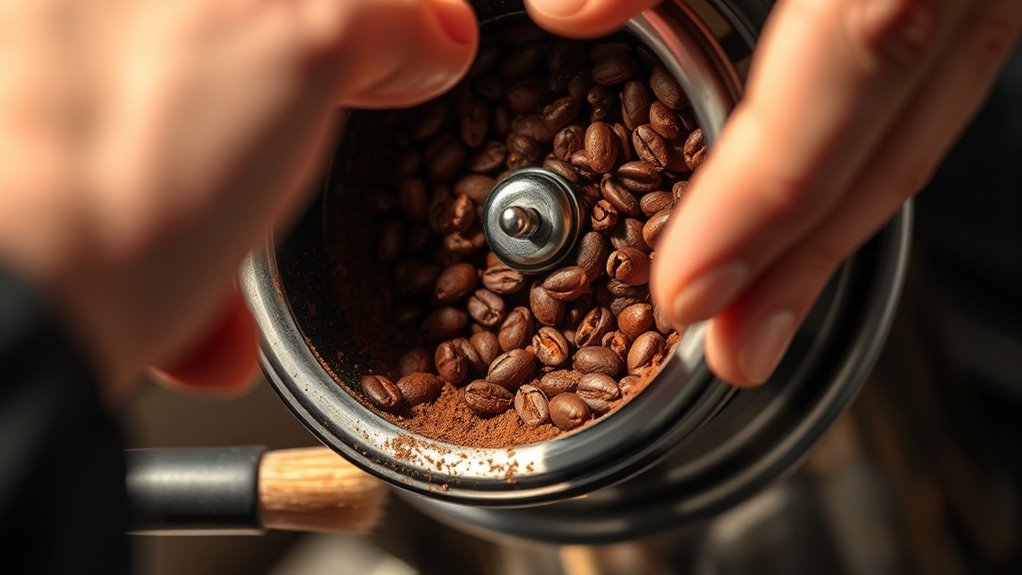
If your grinder isn’t performing well, the first step is to check for jammed beans that may be blocking the mechanism. Regularly maintaining and cleaning the burrs helps guarantee consistent grind size and reduces wear. Uneven grinds often point to worn burrs or buildup, so inspecting and addressing these issues can improve your coffee’s quality. Additionally, understanding industry trends can guide you in choosing the right equipment and techniques for optimal performance. Staying informed about gear maintenance best practices ensures your equipment remains in top condition for long-term use. Incorporating product reviews can also help identify reliable tools and upgrades to enhance your brewing experience. Remember that proper cleaning and timely replacement of worn parts are essential for maintaining French Press operation and other brewing methods.
Clearing Jammed Beans
Got a jammed bean in your grinder? First, unplug the machine to prevent injury. Then, follow these steps:
- Remove the bean chamber or hopper to access the stuck bean.
- Use a small brush or pick to gently dislodge the jammed bean without damaging burrs.
- Check for any debris or residue that might cause further blockages, and clean thoroughly.
- Reassemble the grinder, ensuring all parts are aligned properly before plugging it back in.
Additionally, regularly clean your grinder to prevent future jams and maintain optimal performance. If the jam persists, inspect the burrs for damage or wear, replacing them if necessary. Regular cleaning and proper bean storage can prevent future jams. Proper filter maintenance and storage habits help keep your grinder running smoothly. Clearing jams quickly keeps your grinder running smoothly and preserves grind consistency. Incorporating routines that support sound science in your maintenance routine can also help you troubleshoot issues more effectively, such as understanding how vibrations and frequencies affect equipment function. To ensure consistent results, consider adjusting the grind size, which can help prevent beans from getting stuck.
Maintaining Burrs Properly
Properly maintaining your grinder’s burrs is essential for consistent coffee quality and ideal performance. Regular cleaning prevents oil buildup, which can cause uneven grinding and affect flavor. Use a brush or approved cleaning tablets to remove coffee grounds and residue from the burrs weekly. Check for signs of wear, like dull or chipped burrs, and replace them if necessary to maintain grind consistency. Keep the grinder dry and free of moisture, which can cause clumping and corrosion. Always follow the manufacturer’s instructions for disassembly and cleaning to avoid damaging components. Proper maintenance ensures your grinder produces uniform grounds, improves extraction, and extends the lifespan of your equipment. Regularly inspecting your burrs for wear or damage can help catch issues early and maintain optimal performance. Incorporating proper cleaning techniques and understanding burr wear patterns can further prevent buildup and ensure your grinder functions at its best. Staying aware of electric grinder specifications can help you select the right maintenance approach for your particular model. Consistent care is your best defense against performance issues and poor-tasting coffee. Additionally, understanding Honda Tuning principles can help you optimize your equipment’s longevity and efficiency.
Addressing Uneven Grind
Uneven grind consistency can substantially impact your coffee’s flavor and extraction quality. To fix this, first, check if your burrs are worn or misaligned, as dull or loose burrs cause inconsistent particle sizes. Second, clean your grinder thoroughly; built-up oil and debris can affect grind uniformity. Third, verify you’re using the correct grind setting for your brewing method, adjusting it as needed. Fourth, inspect for blockages or jams that might restrict burr movement, clearing them carefully. Regularly replacing worn burrs, cleaning your grinder, and maintaining proper settings are key to achieving a consistent grind. Additionally, ensuring your grinder components are well-maintained can prevent issues caused by equipment wear and improve overall performance. Incorporating high-quality filtration technology can also help keep your grinder free from dust and debris, further enhancing consistency. Performing routine calibration and maintenance helps prevent performance issues and guarantees a more uniform grind, ultimately leading to better extraction. Regularly checking for component alignment can help ensure your grinder operates smoothly and avoids uneven particle sizes. Taking these steps ensures your coffee is extracted evenly, leading to richer, more balanced flavors with every brew.
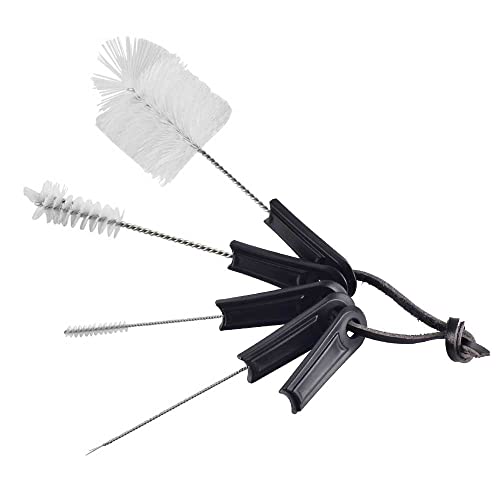
Espresso Brush Machine Cleaning Brush – CAFEMASY 5pcs Coffee Machine Cleaning Brush Pack Barista Tools for Cleaning Espresso Machine Group Head Steam Wand Milk Frother Drip Tray Coffee Mug
Espresso Brush Pack – Including 5pcs espresso machine cleaning brush tools and 1pc espresso portafilter basket remover tool,…
As an affiliate, we earn on qualifying purchases.
As an affiliate, we earn on qualifying purchases.
Improving Brew Quality and Flavor Consistency
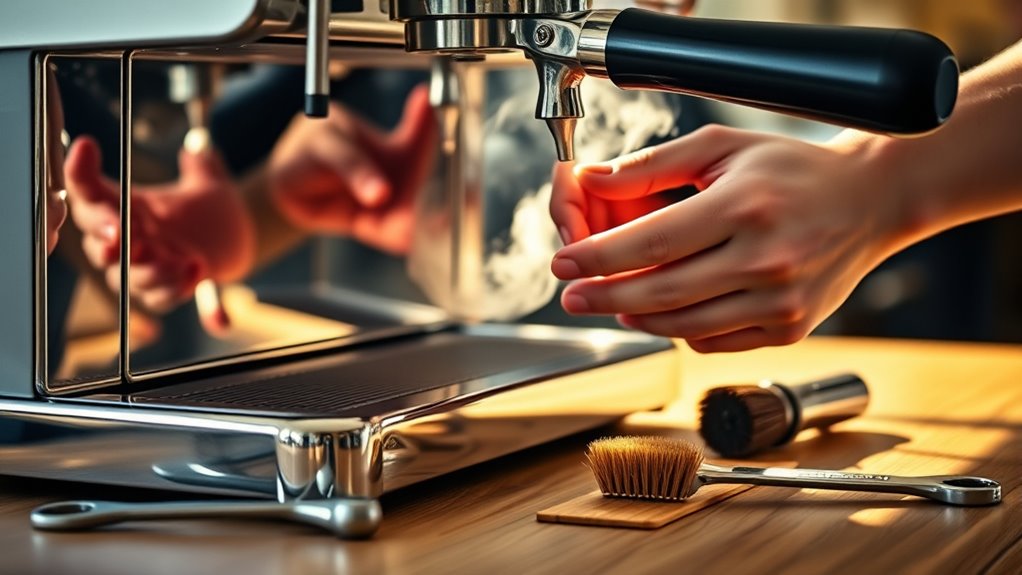
To improve your brew quality and keep flavors consistent, start by optimizing your grind settings to match your brewing method. Make sure your water temperature is just right, as too hot or too cold can impact extraction and taste. Paying attention to these details helps guarantee your coffee is flavorful and reliably enjoyable each time.
Optimize Grind Settings
Optimizing your grind settings is essential for achieving consistent brew quality and flavor. The right grind size impacts extraction, flavor clarity, and overall balance. To fine-tune your grind:
- Adjust the grind size gradually, testing small changes until you find the ideal coarseness or fineness for your brewing method.
- Match the grind to your equipment—finer for espresso, coarser for French press—to ensure proper extraction.
- Use a scale to measure coffee weight consistently, as grind size alone isn’t enough.
- Clean your grinder regularly to prevent oil buildup, which can affect grind consistency and flavor.
Maintain Proper Water Temperature
Maintaining the correct water temperature is essential for extracting the best flavor from your coffee. When water is too hot or too cold, it affects taste, aroma, and body. Ideally, brew water should be between 195°F and 205°F (90°C to 96°C). If your coffee tastes flat or bitter, check your machine’s temperature settings or heating element. Regular descaling prevents mineral buildup that can insulate heating parts, causing temperature drops. Use this table to gauge your brew’s temperature experience:
| Too Cold | Just Right | Too Hot |
|---|---|---|
| Flat flavor | Rich aroma | Scorched taste |
| Weak extraction | Balanced body | Bitter aftertaste |
| Dull aroma | Vibrant notes | Over-extracted |
Proper maintenance guarantees consistent temperature, elevating your coffee’s quality.
Resolving Steam and Milk Frothing Problems
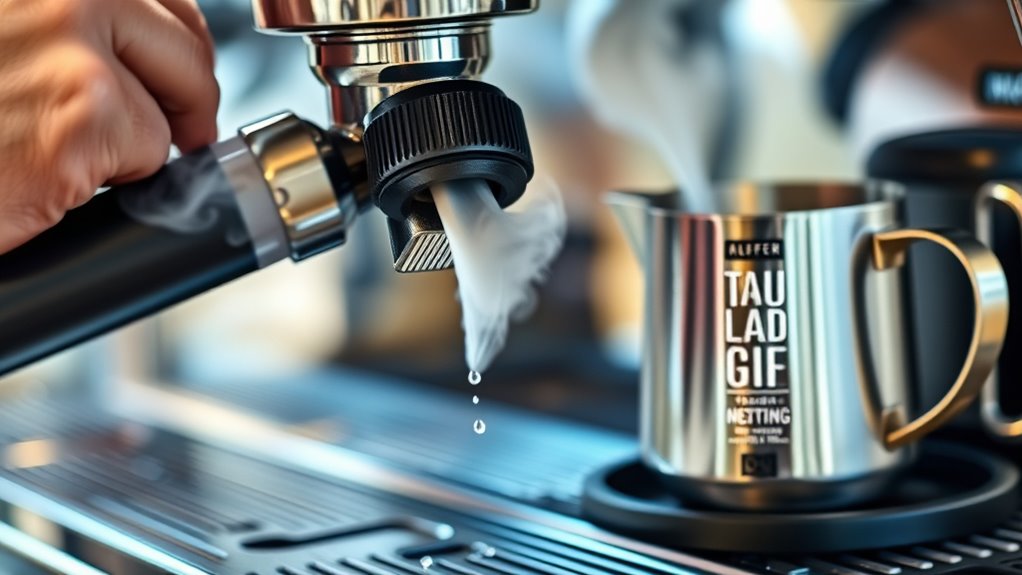
Steam and milk frothing problems often stem from blockages, pressure issues, or malfunctioning components. To fix these, start by checking for clogs in the steam wand or nozzle. Next, verify that the machine’s pressure is adequate; low pressure indicates a pump or boiler problem. Then, inspect the steam valve for proper opening and closing. Finally, ensure the milk jug is correctly positioned and not obstructed.
- Clean the steam wand thoroughly after each use to prevent buildup.
- Increase boiler pressure if possible, or call a technician if pressure remains low.
- Confirm the steam valve opens fully when activated.
- Use fresh, cold milk and avoid overfilling the jug to ensure consistent frothing.
Proper Cleaning and Routine Maintenance Practices
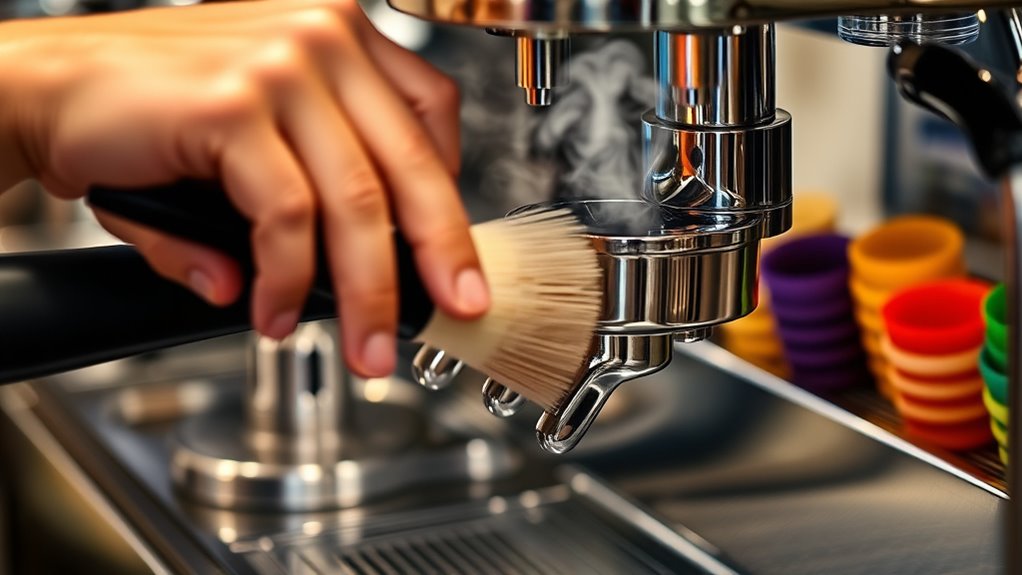
Regular cleaning and routine maintenance are essential to keep your coffee gear working efficiently and to prevent costly repairs. Start by daily rinsing and wiping down your machine, focusing on group heads, portafilters, and steam wands. Descale regularly—every few months or as needed—to remove mineral buildup that hampers heating and water flow. Use proper cleaning agents, avoiding household vinegar or abrasives that can damage components. Clean grinder burrs weekly to prevent oil and grounds from clogging and causing uneven grinds. Check seals, gaskets, and water reservoirs for wear or misalignment, replacing parts as necessary. Consistent maintenance guarantees ideal performance, preserves flavor quality, and extends the lifespan of your equipment, saving you time and money in the long run.
Preventive Tips to Keep Your Coffee Machine Running Smoothly

To keep your coffee machine running smoothly, proactive measures are key. Regular maintenance prevents many common issues. Here are four essential tips:
Regular maintenance is essential for a smooth, long-lasting coffee machine.
- Descale regularly: Mineral buildup can block heating elements and water flow. Use a descaling solution every 1-3 months, depending on usage.
- Clean water reservoirs and lines: Remove and wash reservoirs weekly. Run cleaning cycles with water and vinegar or descaling solutions to prevent clogs.
- Inspect seals and gaskets: Check for wear or misalignment monthly. Replace worn parts to avoid leaks and maintain proper water pressure.
- Maintain the grinder: Clean burrs weekly to prevent oil buildup and ensure even grinding. Replace burrs as recommended by the manufacturer.
Following these steps reduces breakdowns, improves coffee quality, and extends your machine’s lifespan.
Frequently Asked Questions
How Do I Reset My Coffee Machine’s Digital Display or Timer?
To reset your coffee machine’s digital display or timer, unplug it from the power source and wait for at least five minutes. This allows the internal electronics to reset. Afterward, plug it back in and turn it on. If the display still doesn’t respond, consult your user manual for specific reset instructions or consider contacting a professional for further assistance. Resetting often solves minor software glitches effectively.
What Should I Do if My Machine’s Power Outlet Is Working but It Won’t Turn On?
Did you know that about 80% of appliances fail due to power supply issues? If your machine’s power outlet works but it won’t turn on, first unplug it and check for any visible damage or loose connections. Sometimes, resetting the machine by unplugging it for a few minutes can help. If that doesn’t work, inspect the power cord and internal components or consult a professional to avoid further damage.
How Can I Identify if a Leak Is Coming From the Water Reservoir or Seals?
To identify if a leak is from the water reservoir or seals, first examine the reservoir for cracks or misalignment. Remove and reseat it, ensuring it’s properly fitted. Check the seals and gaskets around the reservoir; look for wear, cracks, or misplacement. If water drips from the seal area, replace worn or damaged gaskets. Consistent leaks after these steps likely indicate a reservoir crack or faulty seals needing replacement.
Why Is My Grinder Producing Inconsistent Particle Sizes Despite Cleaning?
You may get inconsistent particle sizes even after cleaning because the burrs could be worn out or misaligned. Regularly inspect the burrs for signs of wear and replace them if they’re dull. Also, check if the grinder is properly calibrated; uneven settings can cause irregular grinds. Avoid using low-quality or incompatible burrs, and make sure you’re cleaning all grinder components thoroughly to prevent oil buildup and clumping.
When Should I Replace the Water Pump or Valves to Fix Leaks?
A stitch in time saves nine, so you should replace your water pump or valves when they show signs of wear, such as persistent leaks or decreased water pressure. If inspections reveal cracks, corrosion, or if leaks continue despite reseating seals, it’s time for replacement. Ignoring these signs risks further damage or complete failure, so proactive maintenance keeps your machine running smoothly and prevents costly repairs down the line.
Conclusion
By staying attentive, performing regular maintenance, and addressing issues promptly, you keep your coffee gear reliable, efficient, and ready to brew. You prevent leaks, avoid clogs, improve flavor, and extend the life of your equipment. You troubleshoot swiftly, clean thoroughly, and maintain consistently. In doing so, you create a smooth workflow, a flawless brew, and a satisfying coffee experience—every time. Keep your gear in top shape, and enjoy your perfect cup, day after day.