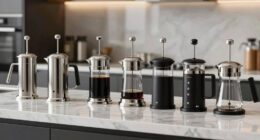

You notice coffee smells better than it tastes because our noses detect volatile aroma compounds more easily than flavors, which are affected by brewing methods, freshness, and storage conditions. Over time, oxidation and exposure to elements can dull the flavor, even if the aroma remains appealing. Factors like grind size, brewing temperature, and equipment also influence taste. To fully enjoy that rich aroma, understanding how these factors impact flavor can make a big difference. Keep exploring to learn more.
Key Takeaways
- Aroma perception involves complex volatile compounds that stimulate the brain before tasting, making smell more immediate and intense.
- Freshly roasted coffee’s aroma is more volatile and easily detected than its often duller, oxidized flavor.
- Environmental factors like light, air, and humidity degrade aroma compounds faster than taste.
- Brewing variables and stale beans can diminish flavor quality even when aroma remains strong.
- Aroma influences overall perception, often making coffee seem more appealing than its actual taste.

Lavazza Super Crema Whole Bean Coffee, Medium Espresso Roast, Arabica and Robusta Blend, 2.2 lb Bag, Package May Vary (Pack of 1)
SUPER CREMA: A 2.2 lb whole bean coffee bag ideal for espresso preparation
As an affiliate, we earn on qualifying purchases.
As an affiliate, we earn on qualifying purchases.
Why Does Coffee Smell So Much Better Than It Tastes?
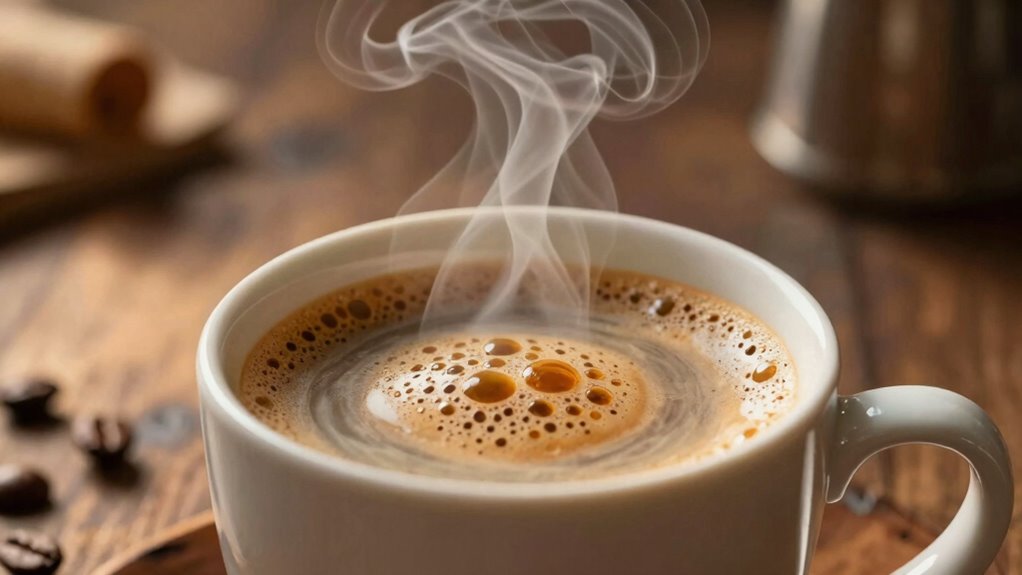
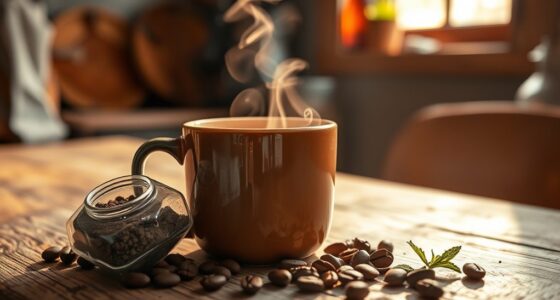
You might notice that coffee’s aroma often draws you in more than its flavor satisfies your palate. That’s because aroma perception plays a bigger role in how you experience coffee than taste alone. When you smell coffee, your brain quickly detects a complex mix of volatile compounds, which enhances the overall flavor profile through sensory synergy. This flavor enhancement makes coffee seem richer and more appealing before you even take a sip. Additionally, the aroma compounds in coffee are responsible for the initial impression, which can be more stimulating than the actual taste. The color temperature of the coffee can also influence how we perceive its aroma and flavor, affecting our overall experience. Factors like brewing methods and beans quality can significantly impact the flavor profile, sometimes making the taste fall short of the aroma’s promise. However, the actual taste can sometimes fall short due to factors like brewing method, beans quality, or temperature. While aroma primes your senses and creates an enticing impression, the flavor you experience on your palate might not match that initial allure. That’s why coffee’s smell can be so much more enthralling than its taste. Furthermore, sensory perception plays a crucial role in our overall enjoyment of coffee, often amplifying the aroma’s impact.

Hamilton Beach Fresh Grind Electric Coffee Grinder for Beans, Spices and More, Stainless Steel Blades, Removable Chamber, Makes up to 12 Cups, Black
REDUCE CLUTTER WITH HIDDEN CORD STORAGE: Hideaway cord storage under the base keeps cable neat, concealed when not…
As an affiliate, we earn on qualifying purchases.
As an affiliate, we earn on qualifying purchases.
How Roasting and Brewing Shape Coffee’s Aroma and Flavor

Roasting and brewing are key processes that considerably influence both the aroma and flavor of coffee. Your choice of roasting temperature affects how the beans develop, highlighting different flavor notes. For example, lighter roasts preserve the unique qualities of coffee bean genetics, resulting in brighter, fruitier aromas. Conversely, darker roasts emphasize bold, smoky flavors with more caramelized notes. Brewing method also shapes the final profile by extracting specific compounds. Understanding roast levels helps you predict how different beans will taste once brewed. The degree of roast alters aroma intensity and flavor complexity. Roast profile is a crucial factor in determining the overall sensory experience of your coffee. Additionally, the origin and environment where the coffee is grown can influence how these roasting and brewing techniques interact with the beans. Exploring different processing methods can further enhance specific aroma and flavor characteristics. For example, the altitude at which coffee is cultivated can impact how these techniques influence flavor development. Brewing techniques control extraction, affecting taste balance. The origin and genetics of coffee beans set the foundation for flavor potential.

Bodum 34oz Pour Over Coffee Maker, High-Heat Borosilicate Glass with Reusable Stainless Steel Filter and Cork Grip – Made in Portugal
Pour Over Coffee: Manual Pour Over Coffee Maker allows you to brew an excellent cup of Coffee in…
As an affiliate, we earn on qualifying purchases.
As an affiliate, we earn on qualifying purchases.
Common Mistakes That Mask Coffee’s True Flavors
Many common mistakes during coffee preparation can easily overshadow its true flavors, making the beverage taste dull or imbalanced. Over-extracting or under-extracting can mute the delicate notes from different coffee origins. Poor flavor pairing, like adding overly sweet or artificial ingredients, masks subtle nuances. Using stale beans or inconsistent grind sizes also dulls the taste. To avoid this, pay attention to the origin of your coffee—single-origin beans often have distinctive flavor profiles that shine when properly brewed.
| Coffee Origin | Common Mistake |
|---|---|
| Ethiopia (floral, fruity) | Over-roasting hides delicate notes |
| Colombia (nutty, balanced) | Using old beans diminishes flavor |
| Guatemala (chocolaty) | Incorrect brew temp masks richness |

Veken Coffee Canister with Window,Airtight Stainless Steel Pantry Container,Home Kitchen Food Storage Organizers for Ground,Beans,Espresso,Rice,Tea,Sugar,Cereal, Decor,Bar Accessories,Gifts,22OZ,Black
Gifts for Coffee Lovers This Christmas: This elegantly designed jar is a stylish and functional gift for coffee…
As an affiliate, we earn on qualifying purchases.
As an affiliate, we earn on qualifying purchases.
How Storage and Freshness Affect Your Coffee’s Aroma and Taste
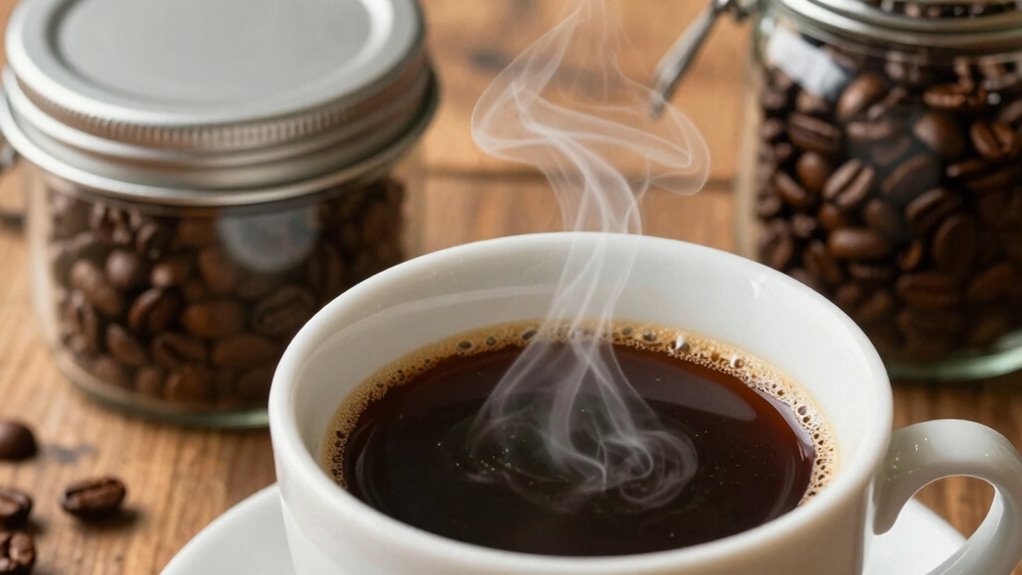
How you store your coffee directly impacts its aroma and flavor. Over time, freshness fades, especially when exposed to light and air, making your brew taste dull. Using proper containers and keeping coffee in a cool, dark place helps preserve its vibrant qualities. Additionally, utilizing air fryer accessories such as airtight storage containers can further extend the freshness of your coffee beans or grounds. Ensuring proper airflow around your storage area also prevents moisture buildup that can accelerate staleness. Maintaining good indoor air quality by reducing dust and microplastics can also help keep your coffee tasting fresh by preventing contaminants from affecting its flavor. Proper storage conditions are essential to maintaining the delicate aroma that makes coffee so inviting. Paying attention to humidity levels in your storage area can further prevent mold and preserve your coffee’s aroma.
Proper Storage Methods Matter
Proper storage is essential to preserving the vibrant aroma and fresh flavor of your coffee. When you store coffee correctly, you maintain its complex flavor pairing and highlight the unique qualities of the bean origin. Keep beans in an airtight container away from light, heat, and moisture to prevent stale or off-flavors. Avoid the fridge or freezer, as condensation can damage the beans’ integrity. Instead, store in a cool, dark place for ideal freshness. Remember, freshness directly influences aroma and taste, so proper storage extends the time you can enjoy the full spectrum of flavors. Understanding storage risks can help you make better choices to maintain your coffee’s quality. As the demand for fresh coffee grows, understanding storage practices is increasingly important to ensure you enjoy optimal flavor. Implementing proper storage methods can significantly prolong the freshness of your coffee and preserve its rich aroma.
Freshness Loss Over Time
As time passes, your coffee’s aroma and flavor gradually diminish, making freshness a essential factor in enjoying the best tasting brew. Over time, coffee bean antioxidants, which help preserve flavor, decline, reducing the coffee’s overall quality. Additionally, aroma compound degradation occurs, causing the rich, enticing scents to fade. This process makes stale coffee taste flat and dull, even if it smells good initially. Proper storage slows down these changes, helping preserve antioxidants and aroma compounds longer. To prevent oxidation effects, it’s crucial to store coffee in airtight containers to maintain its freshness. Sustainable storage methods can also minimize environmental impact and extend freshness. Once the coffee loses its freshness, the complex layers of flavor and aroma fade, leaving behind a less vibrant, less satisfying experience. Using airtight containers significantly reduces exposure to oxygen, which accelerates freshness loss. To enjoy the full potential of your coffee, it’s best to consume it soon after roasting and store it in airtight containers, minimizing exposure to environmental factors that accelerate freshness loss. Maintaining freshness through proper storage techniques is key to preserving those delicate aroma compounds and antioxidants longer. Additionally, understanding the storage environment helps in choosing the optimal conditions to preserve coffee’s quality over time.
Impact of Light and Air
Light and air are among the biggest enemies of your coffee’s freshness, actively degrading its aroma and flavor over time. Light exposure causes photo-oxidation, breaking down delicate compounds that give coffee its vibrant aroma. Air oxidation occurs when oxygen interacts with coffee, dulling its taste and aroma. To preserve freshness, store coffee in a sealed, opaque container and keep it away from direct sunlight. Limiting exposure to air by sealing tightly after each use is also crucial, as it prevents oxidation from diminishing quality. Proper storage also helps prevent odor absorption, which can alter your coffee’s flavor. Additionally, exposure to environmental factors like humidity and temperature fluctuations can accelerate spoilage, so maintaining a consistent, cool environment is essential. Developing a clear storage plan can further extend the freshness of your coffee by controlling environmental variables effectively. Using airtight containers designed for coffee storage can significantly reduce the degeneration of flavor, keeping your brew fresher longer.
Simple Tips to Make Coffee Tastes as Good as It Smells

To make coffee taste as delightful as it smells, start with fresh, quality beans and grind them just before brewing. Choosing the right coffee bean varieties can considerably enhance flavor, so experiment with different types like Arabica or Robusta to find your preference. Furthermore, consider flavor pairing; adding complementary ingredients like a dash of cinnamon or a splash of milk can balance bitterness and bring out richer flavors. Keep your grind size consistent with your brewing method to maximize aroma and taste. Avoid over-extraction by not brewing too long, which can make your coffee bitter. Proper water chemistry and use of clean equipment are essential to prevent off-flavors. Additionally, understanding individual evidence in brewing can help troubleshoot flavor issues and improve your process. Ultimately, use clean equipment and filtered water to prevent off-flavors. Proper storage of coffee beans is also crucial to maintaining their freshness, ensuring your brew always smells as inviting as it tastes. These simple steps help your coffee deliver the full sensory experience, matching its enticing aroma.
Why Your Brewing Method Matters for Flavor and Aroma

Your choice of brewing method directly influences both the flavor and aroma of your coffee because different techniques extract compounds at varying rates. Factors like brewing temperature and grind size play vital roles. For example, a finer grind increases surface area, allowing quicker extraction, while a higher brewing temperature can intensify aromatic compounds. If you use a drip machine with a consistent temperature, you’ll get a balanced flavor, but a French press with coarser grounds might produce a richer, more aromatic brew. Remember:
- Adjust grind size to control extraction speed
- Maintain appropriate brewing temperature for flavor balance
- Experiment with methods to highlight different aroma and taste profiles
- Using the right equipment and settings can enhance the overall brewing process and the resulting coffee experience. Additionally, understanding how hormesis impacts flavor development can inspire more mindful brewing practices.
Understanding the Connection Between Coffee Aroma and Taste
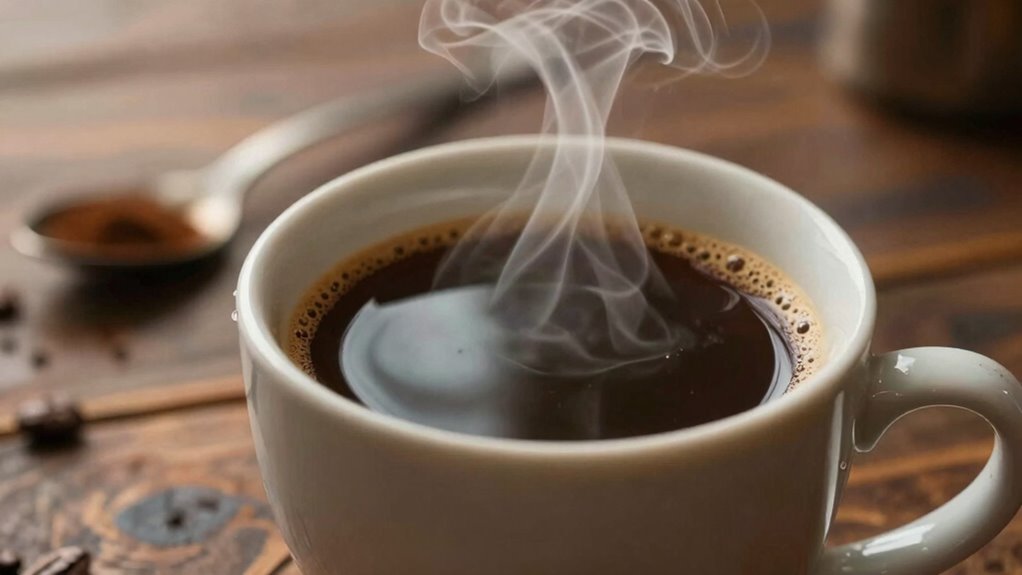
Aroma and taste are closely linked in coffee because the scents you perceive substantially influence how you experience its flavors. When you smell coffee, your brain interprets complex aroma perception, which shapes your overall flavor experience. This connection explains why coffee with a rich aroma can taste more vibrant, even if the brewing method remains the same. The flavor complexity of coffee involves both the aroma and taste components working together, creating a layered sensory profile. If your sense of smell is dulled or the aroma isn’t fully developed, the flavor can seem flat or less satisfying. Understanding this link helps you appreciate that a good aroma often leads to a more flavorful, enjoyable coffee experience.
Frequently Asked Questions
Can Coffee Aroma Influence My Perception of Taste?
Yes, coffee aroma can influence your perception of taste through flavor illusions and aroma dominance. When you smell coffee, the aroma shapes your expectations, making the taste seem richer or more complex. If the aroma is appealing, you’re likely to perceive the flavor as better. Conversely, if the aroma is off-putting, it can diminish your taste experience. Your brain integrates smell and taste, so aroma plays a vital role in overall coffee enjoyment.
How Do Different Coffee Beans Impact Aroma Versus Flavor?
Different coffee beans profoundly impact aroma and flavor through their origin and roast level. Bean origin, like Ethiopian or Colombian, contributes unique aromatic notes, while the roast level shapes the flavor profile—light roasts highlight brightness and floral scents, whereas dark roasts develop richer, smoky flavors. You’ll notice that the aroma often hints at the origin, but the taste reveals how the roast level transforms those beans into distinct sensory experiences.
Does the Temperature of Coffee Affect Its Smell and Taste?
You might not realize it, but temperature greatly affects your coffee’s smell and taste. Studies show that coffee’s aroma peaks at around 140°F, but flavors can become masked or bitter if it’s too hot. Proper coffee storage prevents flavor masking caused by stale beans, ensuring aroma stays vibrant. Drinking it at the right temperature enhances both smell and taste, making your coffee experience more enjoyable and flavorful.
Are There Specific Brewing Methods That Enhance Aroma More Than Flavor?
You can enhance aroma more than flavor through specific brewing techniques like pour-over or AeroPress, which preserve volatile aromatic compounds. Light to medium roasted beans, which retain more of their original flavors, also boost aroma. Coffee roasting impacts aroma intensely, with lighter roasts offering brighter, more complex scents. Experimenting with different brewing methods and roast levels allows you to maximize aroma, making each cup more fragrant and inviting.
How Does Individual Olfactory Sensitivity Change Coffee Tasting Experiences?
Your olfactory sensitivity varies due to olfactory adaptation and sensory fatigue, which can alter your coffee tasting experience. When you smell coffee repeatedly, your sense of smell may become less responsive, dulling aroma perception. This means that even if the coffee tastes the same, your ability to appreciate its full aroma lessens over time, making taste seem less vibrant. To enjoy richer flavors, take breaks to reset your olfactory senses.
Conclusion
Remember, mastering the magic of coffee means more than just its smell. By balancing brewing basics, boosting freshness, and avoiding blunders, you’ll bring out the true taste behind the tempting aroma. Don’t let dull techniques diminish your delight—diligently immerse yourself in details, experiment eagerly, and enjoy every sip. When you understand the symphony of scent and flavor, your coffee experience transforms from fleeting fragrance to flavorful fulfillment. Savor the journey, and let your love for coffee grow!