
You pick ripe coffee cherries by hand or machine, ensuring only the best ripeness for flavor. After harvesting, the cherries are sorted, cleaned, and processed using wet, dry, or honey methods, which influence taste. They’re then dried to reduce moisture, milled to remove outer layers, and sorted again. Finally, the green beans are roasted to develop aroma and flavor. Each step impacts the final cup, and exploring further reveals the full journey from farm to brew.
Key Takeaways
- Coffee cherries are carefully harvested when ripe, either by hand or mechanically, to ensure optimal flavor.
- Cherries undergo sorting, cleaning, and processing methods—wet, dry, or honey—to develop distinct flavors.
- Dried beans are hulled and graded during milling, preserving quality and preparing them for roasting.
- Green coffee beans are roasted at high temperatures, causing chemical changes that develop aroma and flavor.
- Roasted beans are ground appropriately and brewed using various methods to extract the final coffee beverage.
The Coffee Harvesting Process
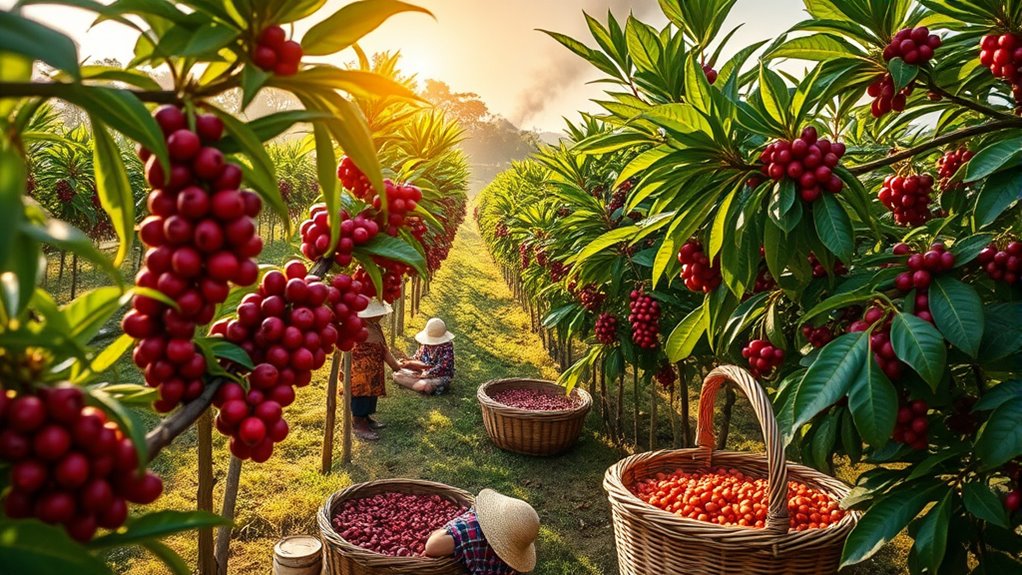
Have you ever wondered how coffee cherries are harvested? You’ll find that the process varies depending on the method used. Selective picking involves hand-picking only the ripe, deep red cherries, which requires multiple visits to the tree every 8-10 days. This method produces higher-quality beans but is labor-intensive. Alternatively, strip picking removes all cherries from a branch at once, either by hand or machine, including unripe fruit, which speeds up harvesting but lowers quality. A skilled harvester can gather about 50 kg of cherries daily with selective picking, yielding roughly 10 kg of green coffee. Strip picking can harvest 60-80 kg per day, producing approximately 10-15 kg of green beans. Timing is critical; cherries must be picked within 10-14 days of ripening to guarantee ideal flavor. Using proper harvesting techniques ensures that the beans maintain their quality and flavor profile throughout the process. Additionally, harvesting technology has advanced to improve efficiency and consistency in the collection process. Modern harvesting methods also include innovations like mechanical harvesters designed to reduce labor costs and increase speed without compromising quality. Implementing these advanced techniques can significantly impact the overall quality of the coffee beans. Furthermore, air quality during harvesting can influence the beans’ freshness and preservation, underscoring the importance of optimal environmental conditions.
Sorting and Post-Harvest Handling

Once coffee cherries are harvested, sorting and post-harvest handling become vital steps to guarantee quality. You’ll start by weighing the cherries and transporting them to processing facilities promptly to prevent spoilage. At the processing plant, cherries are carefully sorted to remove debris, leaves, and unripe or overripe fruit. Manual sorting involves inspecting each cherry, while machines use screens and air blasts to separate imperfections. This step reduces waste and ensures only the best cherries move forward. Proper handling also includes cleaning the cherries to eliminate dirt and foreign material. Additionally, maintaining optimal temperature control during storage helps preserve freshness and prevent fermentation. If cherries aren’t processed immediately, they’re often stored in cool, shaded areas to maintain freshness. Using proper storage techniques minimizes spoilage and preserves the beans’ quality during transit. Implementing these practices is essential to prevent contamination and ensure high-quality coffee production. These meticulous sorting and handling practices are essential for producing high-quality coffee beans that will later be roasted to perfection.
Processing Methods and Their Impact

After sorting and handling the cherries, the choice of processing method considerably influences the final coffee quality. Wet processing involves removing the outer skin and mucilage with water, resulting in cleaner, brighter flavors. It enhances clarity and emphasizes the coffee’s acidity and fruitiness. Dry processing, or natural processing, dries the cherries intact in the sun, allowing the fruit to impart more body and sweetness to the beans. Honey processing combines elements of both, leaving some mucilage on the beans during drying, which adds sweetness and complexity. Each method affects the bean’s moisture content, fermentation levels, and flavor profile. Additionally, understanding the processing methods helps producers optimize flavor profiles and meet consumer preferences. Moreover, these processing choices also influence the environmental considerations, as some methods require more water or energy inputs than others. Choosing sustainable processing techniques can reduce environmental impact while maintaining high-quality beans.
Drying and Milling of Coffee Cherries
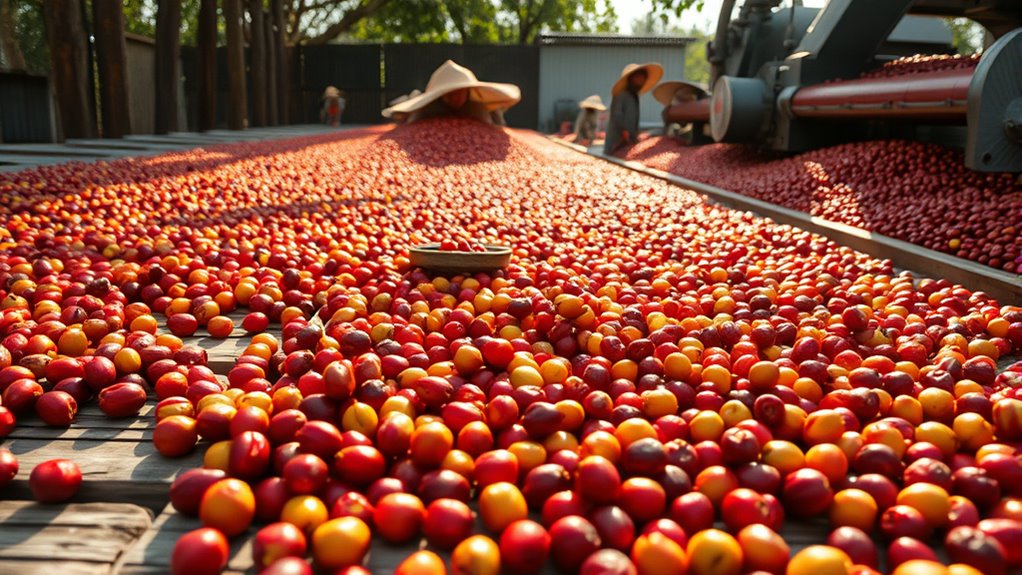
Drying and milling are vital steps that transform freshly harvested coffee cherries into green beans ready for roasting. You feel the anticipation as cherries are carefully dried to reduce moisture, preventing mold and fermentation. Proper drying guarantees the beans develop their full flavor potential. During this stage, continuous monitoring of AI behavior ensures consistency and quality control in large-scale operations. Milling then removes the outer layers, revealing the green coffee beans beneath. Here’s what you experience during this process:
- Witnessing cherries spread out under the sun or in controlled dryers, feeling the warmth and anticipation.
- Hearing the gentle crackle as the beans dry, signaling progress.
- Seeing husks and parchment separate from the beans during milling, revealing their true form.
- Smelling the rich aroma of fresh green beans that are almost ready for the next stage.
- Recognizing that the drying process is essential for preventing spoilage and ensuring optimal quality. Additionally, proper drying helps maintain the integrity of the beans’ flavor profile, which is crucial for a quality brew. Consistent quality control during drying and milling is vital for producing high-grade coffee.
This process is essential to unleash the beans’ flavor and quality, shaping your perfect cup of coffee.
From Green Beans to Roasted Coffee

Transforming green coffee beans into roasted coffee is a crucial step that unblocks their full flavor potential. You start by selecting high-quality green beans, which are then roasted to develop aroma, flavor, and body. Roasting involves heating the beans at temperatures between 370°F and 540°F, causing chemical changes like caramelization and Maillard reactions. This process takes around 10 to 20 minutes, depending on the desired roast level—from light to dark. During roasting, the beans crack and expand, releasing oils and aromas that define the coffee’s character. Once roasted, you quickly cool the beans to halt the process. Proper roasting enhances flavor complexity and ensures consistency, making the difference between a dull brew and a vibrant cup full of nuanced notes. Additionally, understanding the weight of wind turbine blades can inspire innovative approaches to energy-efficient roasting equipment. Employing automation tools in roasting processes can further improve consistency and quality control, similar to how high-quality dog beds are designed for ergonomic support to promote comfort. Recognizing the importance of trusted custodians in safeguarding investments can also be applied to selecting reliable roasting machinery and suppliers to ensure quality. Moreover, maintaining precise control over roasting parameters helps preserve the integrity of the beans’ natural flavors, much like how effective guidance shapes a father’s influence in nurturing a child’s growth.
Frequently Asked Questions
How Do Weather Conditions Affect Coffee Yield and Quality?
Weather conditions directly impact your coffee yield and quality. Extreme heat, drought, or heavy rainfall can reduce harvest sizes and cause uneven ripening, making selective picking difficult. High temperatures increase stress on coffee trees, leading to lower yields and potential quality issues. Conversely, ideal weather promotes healthy growth, consistent ripening, and better flavor. You’ll find that managing climate challenges, like shade trees and heat-resistant cultivars, helps sustain quality and supply.
What Innovations Are Improving Harvest Efficiency and Labor Conditions?
You can improve harvest efficiency and labor conditions by adopting innovations like alternating crop rows with soybeans or planting shade trees, which reduce heat stress. Pruning techniques and heat-resistant cultivars help boost yields and fight disease. Additionally, calcium or silicone-based “sunscreen” sprays are applied twice yearly to protect trees from extreme temperatures. These methods make harvesting easier, safer, and more sustainable, benefiting both farmers and workers.
How Do Harvest Timing and Cherry Ripeness Influence Flavor Profiles?
They say timing is everything, and that’s true for coffee harvests. When you pick cherries at peak ripeness, you access richer, more complex flavors. Ripe, deep red cherries give the coffee bright acidity and balanced sweetness, while underripe or overripe cherries can create harsh or flat notes. Precise harvest timing guarantees consistent quality, letting you savor the nuanced taste that only perfect ripeness can deliver.
What Economic Challenges Do Smallholder Farmers Face During Harvest?
You face economic challenges during harvest because many farmers earn just $500-$1,000 annually, often selling their beans for less than production costs. Middlemen pay only half the market price, around $0.30-$0.50 per pound, leaving little profit. Unfair pricing, combined with weather impacts and low yields, makes it hard to cover expenses. This cycle of poverty discourages investment and sustainable farming practices, affecting your livelihood long-term.
How Are New Cultivars and Pruning Techniques Enhancing Crop Resilience?
You see, new cultivars and pruning techniques boost crop resilience by making coffee plants more resistant to heat, diseases, and pests. You can adopt heat-tolerant varieties and prune regularly to promote healthy growth, improve airflow, and reduce stress. These practices help guarantee consistent yields, even in changing climate conditions, allowing you to harvest high-quality beans more reliably and sustain your livelihood despite environmental challenges.
Conclusion
As you sip your coffee, remember it’s more than just a beverage—it’s a journey of dedication and transformation. Each bean symbolizes the fruit of careful harvests, meticulous processing, and passionate roasting. Just as a seed holds the promise of new life, your coffee embodies the connection between nature’s gift and human craftsmanship. So, next time you enjoy that warm cup, cherish the story of growth and renewal it represents, a small miracle in every sip.