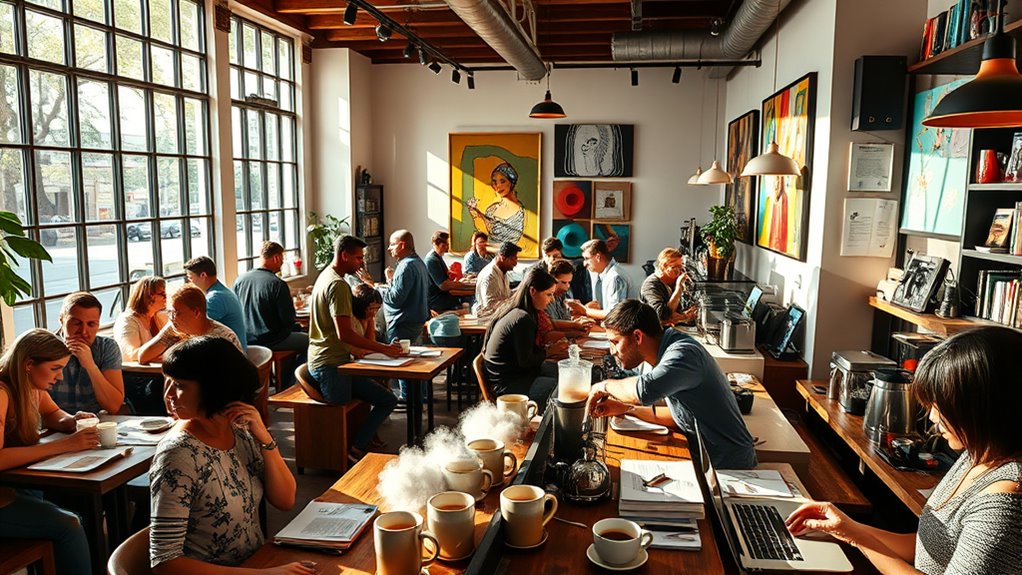

Coffee houses have markedly shaped modern society by acting as hubs for intellectual exchange, political discourse, and cultural movements. From the Ottoman Empire’s Kiva Han to British penny universities, these spaces democratized information and fostered community discussions. They’ve sparked revolutionary thoughts and challenged norms, driving societal change. Today, coffee shops embrace sustainability and technology to enhance customer experiences. To discover more about their impact and evolution, you should explore what continues to happen in these vibrant spaces.

Get coffee and tea gear delivered free — and shop member deals
- Fast, free delivery on millions of items
- Access to Prime Big Deal Days deals on October 6–7
- Prime Video, Amazon Music and more included
Key Takeaways
- Coffee houses democratized knowledge and encouraged political discussions, influencing the development of modern democratic societies.
- They served as catalysts for revolutionary ideas, uniting diverse social classes and fostering community dialogue.
- The emergence of coffee houses led to significant intellectual advancements, shaping economic and scientific thought.
- Modern coffee shops prioritize sustainability and community engagement, reflecting evolving societal values and concerns.
- The concept of coffee houses as social hubs continues to inspire contemporary spaces for collaboration and innovation.
As an affiliate, we earn on qualifying purchases.
The Birth of Coffee Houses in the Ottoman Empire

As coffee houses began to flourish in the Ottoman Empire during the 16th century, they quickly became essential social hubs where people gathered to discuss politics, religion, and the latest news.
The first known coffee house, Kiva Han, opened in Constantinople around 1475, signaling coffee’s cultural significance. These venues democratized access to information, allowing diverse individuals to engage in lively political discussions.
The Kiva Han coffee house, established in 1475, became a vital cultural hub for political discourse and information exchange.
However, the popularity of coffee houses alarmed Sultan Murad IV, who declared coffee consumption a capital offense in 1633, fearing they could incite dissent and rebellion.
Despite such suppression, coffee houses remained pivotal, fostering revolutionary ideas and contributing to independence movements across the region. They were more than just places to drink; they were breeding grounds for change and dialogue.
The Rise of Intellectual Discourse in British Coffeehouses
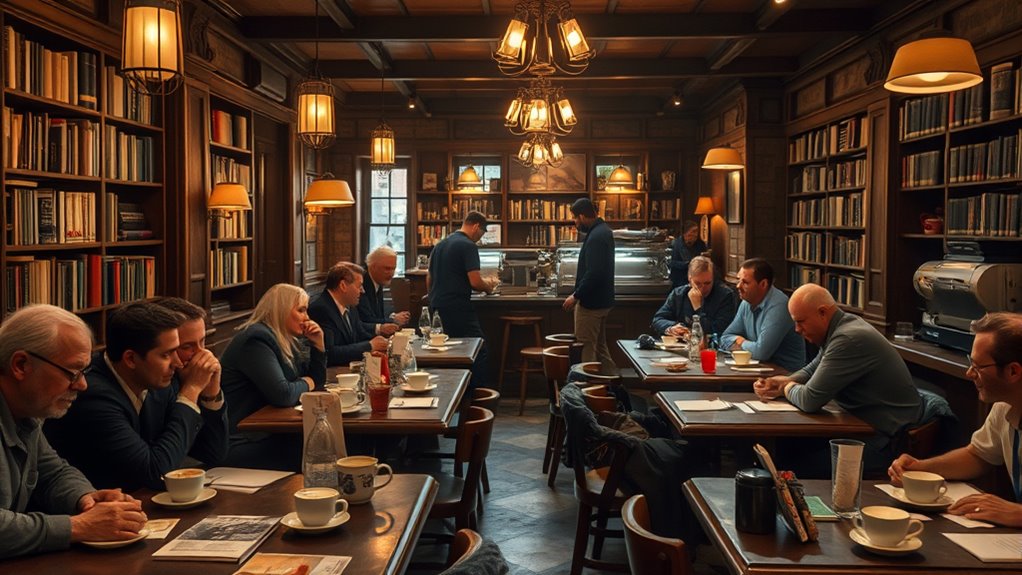
While many social spaces were exclusive to the elite, British coffeehouses in the 17th century broke down those barriers, allowing anyone with the price of a cup of coffee to join in vibrant discussions.
Known as “penny universities,” these coffee houses democratized intellectual discourse, inviting people from various social classes to exchange ideas.
The first London coffeehouse, opened by Pasqua Rosée, fostered public discussions on current events, while notable venues like Lloyd’s Coffee House became essential for financial debates.
Intellectuals, including Samuel Pepys and members of the Royal Society, utilized these spaces to facilitate scientific advancements.
The dynamic culture of innovation in these coffeehouses laid the groundwork for the modern world, proving that ideas thrive best in inclusive environments. This inclusivity mirrors the principles of cultural sensitivity highlighted in music education, emphasizing the importance of diverse perspectives in fostering creativity and growth.
Coffee Houses as Catalysts for Political Change
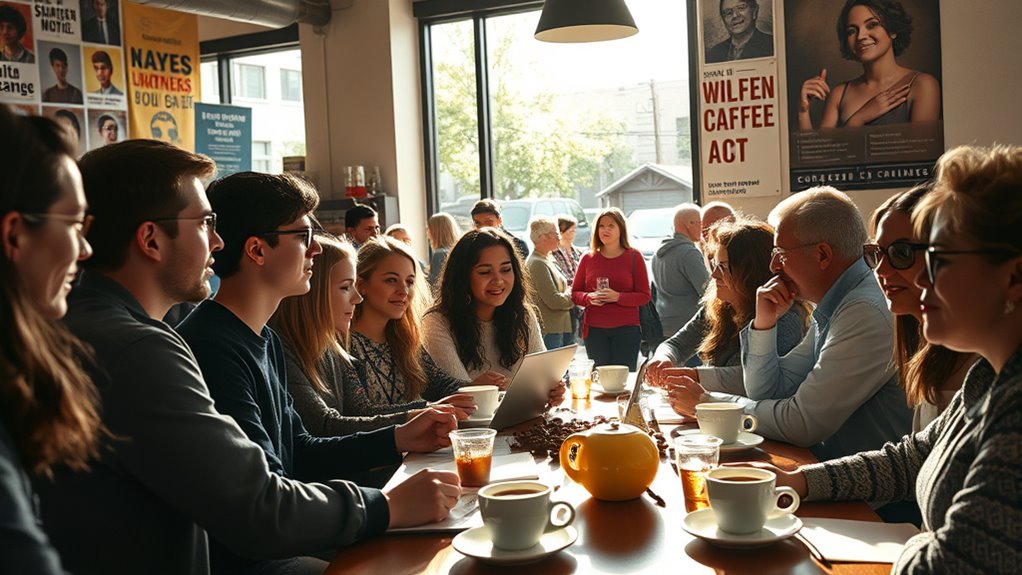
The vibrant discussions that flourished in British coffeehouses not only sparked intellectual growth but also ignited political change. You’d find that venues like Jonathan’s Coffee House fostered political discourse, leading to the establishment of the London Stock Exchange.
King Charles II even attempted to shut down coffeehouses, fearing their role in dissent, but his efforts lasted only 11 days. Across the Atlantic, coffeehouses like the Green Dragon Tavern hosted revolutionary thought during the Boston Tea Party.
Meanwhile, in France, the Café de Flore and Café Procope became essential for advocating individual rights. In the Ottoman Empire, coffeehouses united diverse social classes, discussing ideas of rebellion that influenced independence movements, proving their power as catalysts for change. These gatherings often served as informal networks for intelligence gathering that shaped public opinion and mobilized action.
The Cultural Significance of Cafés in Revolutionary Movements
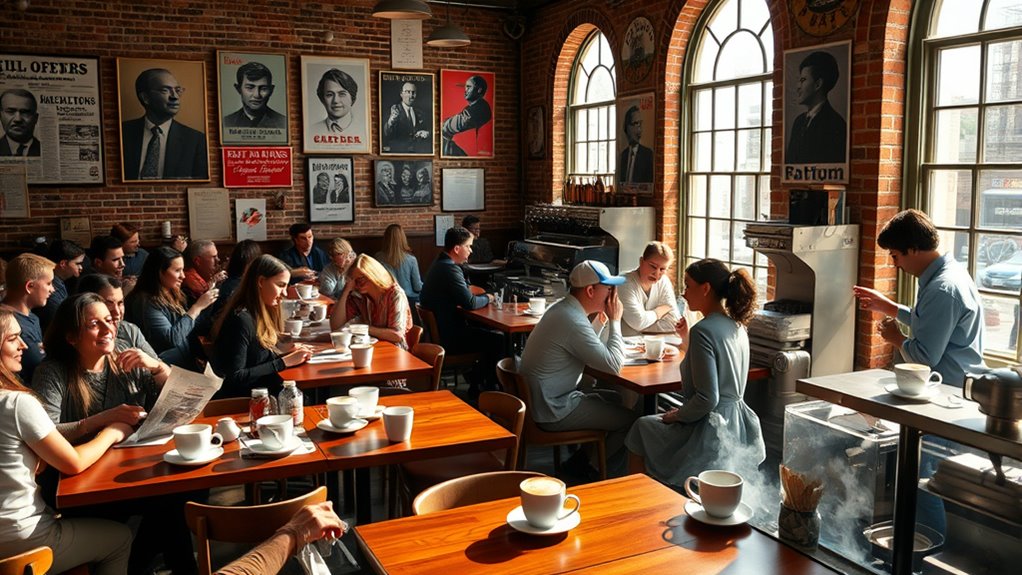
Cafés emerged as essential spaces during revolutionary movements, serving not just coffee but also the seeds of change. These coffee houses became gathering places for intellectuals like Rousseau, Diderot, and Voltaire, who exchanged ideas that fueled the Enlightenment and promoted social egalitarianism. The Café de Foy, for instance, was pivotal in rallying support for the storming of the Bastille, showcasing its cultural significance in shaping revolutionary actions.
| Key Elements | Impact on Society |
|---|---|
| Gathering Places | Fostered community and dialogue |
| Exchange Ideas | Sparked radical thoughts |
| Symbols of Resistance | Challenged the status quo |
| Ongoing Societal Changes | Influenced modern democratic movements |
In this way, cafés became symbols of resistance and debate, driving societal changes forward.
Modern Innovations and the Future of Coffee Houses

As coffee houses evolve, they’re not just places to grab a cup of joe; they’re becoming dynamic spaces that embrace modern technology and innovative practices.
You’ll find that today’s modern coffee shop prioritizes:
- Health and Safety: Enhanced sanitation and contactless payment systems keep you safe. In addition, many establishments follow privacy and data management protocols to ensure customer information is protected.
- Connectivity: Social media and digital tools foster deeper connections between you and baristas.
- Sustainability: Many shops focus on reducing their environmental impact through ethical practices and sourcing artisanal coffee.
- Customer Experiences: Mobile apps let you order ahead, customize drinks, and earn rewards effortlessly.
In alignment with this trend, some coffee shops are increasingly adopting sustainable practices that highlight their commitment to ethical sourcing and community development.
The future shines bright with a commitment to third-wave coffee and sustainability, ensuring your daily brew is both delicious and responsible.
A promising future awaits as third-wave coffee and sustainability blend to create a deliciously responsible daily brew.
Enjoy the journey ahead!
Frequently Asked Questions
How Has Coffee Influenced Society?
Coffee’s influenced society in numerous ways. It’s sparked conversations among friends, colleagues, and strangers alike, creating a sense of community.
You might find yourself brainstorming ideas over a cup, or engaging in lively discussions with others. The caffeine boost helps enhance productivity, fueling creativity and innovation.
Plus, coffee culture brings people together, breaking down social barriers and encouraging collaboration, making it an essential component of both personal and professional interactions in everyday life.
What Is the Significance of Coffee Houses?
Coffee houses are significant because they serve as crucial spaces for social interaction and intellectual exchange.
You’ll find people from different backgrounds coming together to discuss ideas, making these venues essential for community engagement.
Historically, they fostered political and economic discussions, contributing to important societal shifts.
Today, they continue to adapt, providing a welcoming atmosphere for collaboration and creativity, ensuring that everyone feels included in the conversation.
What Role Did Coffeehouses Play in the Enlightenment?
Have you ever wondered where revolutionary ideas flourished during the Enlightenment? Coffeehouses played a vital role as vibrant hubs for intellectual exchange.
Here, thinkers like Rousseau and Voltaire gathered to debate reason and individual rights, challenging the norms of their time. These spaces fostered social equality, allowing diverse voices to contribute to discussions.
Why Were Coffee Houses Important to the Spread of the Scientific Revolution?
Coffee houses were essential to the spread of the Scientific Revolution because they served as informal meeting spots for thinkers like you, where lively debates could flourish.
You’d find scholars discussing groundbreaking ideas without the constraints of traditional institutions. These gatherings democratized knowledge, allowing people from various backgrounds to share insights and challenge established beliefs.
This open exchange not only accelerated the dissemination of innovative theories but also laid the groundwork for future scientific inquiry.
Conclusion
So, next time you sip that overpriced latte in your favorite coffee house, remember: you’re not just fueling your caffeine addiction—you’re part of a centuries-old tradition shaping society. Who knew a simple cup of joe could spark revolutions and inspire great minds? It’s ironic, really. While you’re scrolling through your phone, sipping on a drink that’s almost a meal, you’re unwittingly continuing the legacy of thinkers who once gathered to change the world. Cheers to that!
Fall Picks
fall essentials
As an affiliate, we earn on qualifying purchases.