
To develop your coffee palate, focus on understanding how processing, roasting, and brewing influence flavor and aroma. Practice systematic tasting by controlling variables like grind size, temperature, and extraction time. Use aroma training and flavor wheels to improve recognition of subtle notes. Consistently track your preferences and refine your skills with samples from different origins and styles. With patience and curiosity, you’ll uncover more about coffee’s complexity—if you keep exploring, there’s always more to discover.
Key Takeaways
- Practice systematic cupping and tasting to identify and differentiate complex flavor profiles.
- Control brewing variables meticulously to ensure consistent and accurate flavor assessment.
- Develop olfactory awareness through scent training and creating a personal aroma library.
- Use descriptive terminology to articulate flavors, aromas, and sensations clearly.
- Regularly compare coffees side by side to refine your palate and recognize subtle nuances.
Top picks for "science coffee tast"
Open Amazon search results for this keyword.
As an affiliate, we earn on qualifying purchases.
Understanding Coffee Processing and Its Impact on Flavor

Understanding how coffee is processed is essential because it directly influences the flavor profile of your cup. When you choose natural processed coffee, you’ll notice a sweeter, fuller body, thanks to retained fruit sugars during drying. If you prefer a cleaner, sharper taste, washed processing removes the pulp before drying, resulting in brighter acidity and clearer origin flavors. Fermentation during processing creates aromatic precursors that develop fruity, floral, and caramel notes, especially in natural processed beans. Enzymatic activity during washing can reduce sweetness but boost acidity. These processing methods alter the coffee’s chemistry, aroma, and body, shaping your final experience. Recognizing these differences helps you appreciate the subtle nuances in each cup and guides you toward the flavors you enjoy most, especially since processing methods significantly impact the overall tasting profile. Additionally, understanding the impact of processing on flavor can deepen your appreciation for the craftsmanship involved in coffee production. For instance, processing techniques can influence the complexity and balance of the finished brew.
The Role of Roasting Levels in Shaping Taste Profiles

Have you ever wondered how different roasting levels shape the flavor of your coffee? Roasting transforms beans, influencing acidity, body, and aroma. Light roasts preserve bright, fruity, and floral notes with high acidity, while medium roasts balance brightness and smoothness. Dark roasts develop deeper, smoky, and bitter flavors with reduced acidity. Visualize these differences:
| Roast Level | Flavor Profile | Color |
|---|---|---|
| Light | Fruity, floral, bright | Light brown |
| Medium | Balanced, nutty, caramel | Medium brown |
| Dark | Smoky, bitter, bold | Dark brown/black |
Your palate detects these nuances, helping you identify preferred profiles and appreciate the artistry behind each roast.
Brewing Variables That Influence Flavor Extraction

Brewing variables such as contact time, grind size, temperature, and water ratio directly impact how flavors are extracted from your coffee grounds. Longer contact times generally draw out more compounds, increasing body and intensity, but can also lead to over-extraction and bitterness if not controlled. Finer grinds expose more surface area, speeding up extraction but risking over-bitter notes; coarser grinds slow the process, producing a lighter cup. Higher water temperatures boost extraction efficiency, releasing more flavor, yet excessive heat may extract undesirable bitter elements. The water-to-coffee ratio influences strength and clarity—using too much water weakens flavors, while too little can make the brew overly intense. Exploring dilution techniques can help you achieve a more balanced flavor profile. Understanding penetration testing techniques allows you to optimize extraction parameters and achieve a well-balanced cup tailored to your preferences. Additionally, being aware of tuning principles like those used in vehicle modifications can help you fine-tune your brewing setup for optimal results. Recognizing the importance of personality traits such as openness and conscientiousness can also enhance your approach to refining your brewing process. By experimenting with these variables, you can develop a personalized flavor profile that matches your unique taste preferences. Adjusting these variables allows you to tailor your brew’s flavor profile precisely.
Scientific Techniques to Preserve and Enhance Coffee Aromas

To truly appreciate coffee aromas, you need techniques that preserve these delicate compounds from the moment of brewing. Extract-Chilling is one such method, quickly cooling coffee to lock in volatile organic compounds that enhance flavor and aroma. By applying these scientific approaches, you can taste coffee at its freshest and most expressive. Proper filtration and pump protection ensure that the coffee’s aromatic integrity remains intact during processing, preventing contamination that could diminish flavor. Additionally, implementing automation in data analysis can help monitor and optimize brewing parameters to maximize aroma preservation.
Extract-Chilling Methodology
Extract-chilling is a scientific technique designed to preserve the delicate aromatic compounds in coffee by rapidly lowering its temperature immediately after brewing. This process minimizes the loss of volatile organic compounds (VOCs) that contribute to aroma and flavor. Here’s how it works: 1. Quickly cools the brewed coffee to preserve its aromatic profile. 2. Limits the evaporation of volatile compounds that typically escape at higher temperatures. 3. Enhances the overall sensory experience by maintaining the coffee’s full aroma potential. Additionally, understanding the color accuracy of brewing equipment can help ensure that the sensory qualities are maintained during the extraction process.
Aroma Preservation Techniques
Scientific techniques aimed at preserving and enhancing coffee aromas focus on controlling the post-brewing environment to prevent the loss of volatile compounds. One effective method is extract-chilling, which quickly cools coffee immediately after brewing, locking in delicate aromas. Using specialized devices or techniques that rapidly lower the temperature minimizes evaporation of aromatic molecules, ensuring a fuller sensory experience. Additionally, brewing in airtight containers or covering cups helps trap volatile compounds and prevents aroma dissipation. Maintaining consistent, moderate temperatures during serving also preserves aroma integrity. Proper storage in vacuum-sealed containers further prevents aroma loss over time. Implementing temperature control strategies can significantly improve aroma retention and freshness. These scientific strategies enable you to taste coffee closer to its peak aroma potential, elevating your overall sensory evaluation. Moreover, understanding the volatile compounds involved can help refine your brewing process for optimal aroma preservation. By carefully managing these factors, you can maximize aroma retention, allowing you to perceive the coffee’s full aromatic profile. Incorporating aeration techniques can also enhance aroma release at the moment of drinking, providing a richer sensory experience. Additionally, paying attention to vibrational energy during storage and brewing can help maintain the coffee’s lively aroma, as vibrations may influence volatile compound stability. These scientific strategies enable you to taste coffee closer to its peak aroma potential, elevating your overall sensory evaluation.
The Methodology Behind Coffee Cupping and Sensory Evaluation
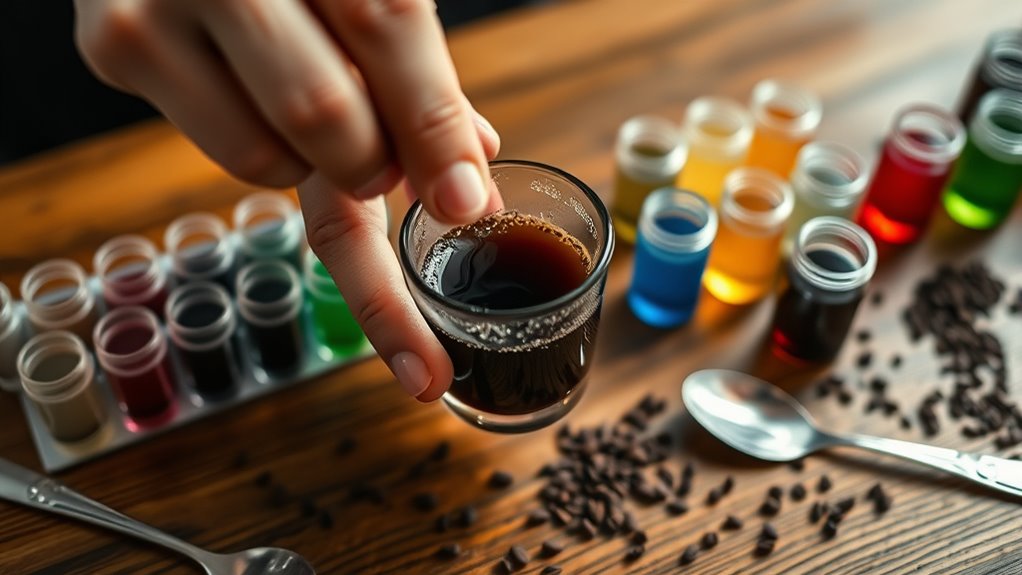
Coffee cupping and sensory evaluation follow a standardized methodology that guarantees consistent and objective assessment of a coffee’s aroma and flavor. To do this effectively, you should:
- Prepare the coffee uniformly, controlling variables like grind size, water temperature, and brewing time. Consistent preparation ensures accurate comparison between different samples and reduces bias.
- Smell the grounds before brewing to activate your olfactory senses and identify raw aroma notes.
- Taste the coffee systematically, noting flavor, body, acidity, and aftertaste, while observing how these qualities develop as the coffee cools.
- Regular practice and calibration with other tasters help refine your sensory evaluation skills and improve accuracy.
- Incorporating training and calibration exercises enhances your ability to detect subtle differences and develop your palate over time.
Exploring the Chemistry and Physics of Coffee Brewings

Understanding the chemistry and physics behind coffee brewing is essential for optimizing flavor extraction. When you brew, heat causes molecules inside the beans to become soluble, releasing aroma and flavor compounds. The rate at which these compounds transfer to your cup depends on diffusion, which is heavily influenced by temperature. Higher temperatures accelerate extraction but can also pull out bitter compounds if you’re not careful. Grind size controls surface area; finer grinds increase extraction speed but risk over-extraction, resulting in bitterness. Flow rate and turbulence affect how evenly water interacts with grounds, preventing channeling and uneven saturation. Full immersion methods, like French press, maintain higher temperatures longer, extracting more complex flavors. Balancing these variables—temperature, grind, contact time, and flow—determines the final taste profile. Additionally, understanding molecular interactions helps in fine-tuning each variable for a more precise and flavorful brew.
Developing Sensory Awareness Through Olfactory Training
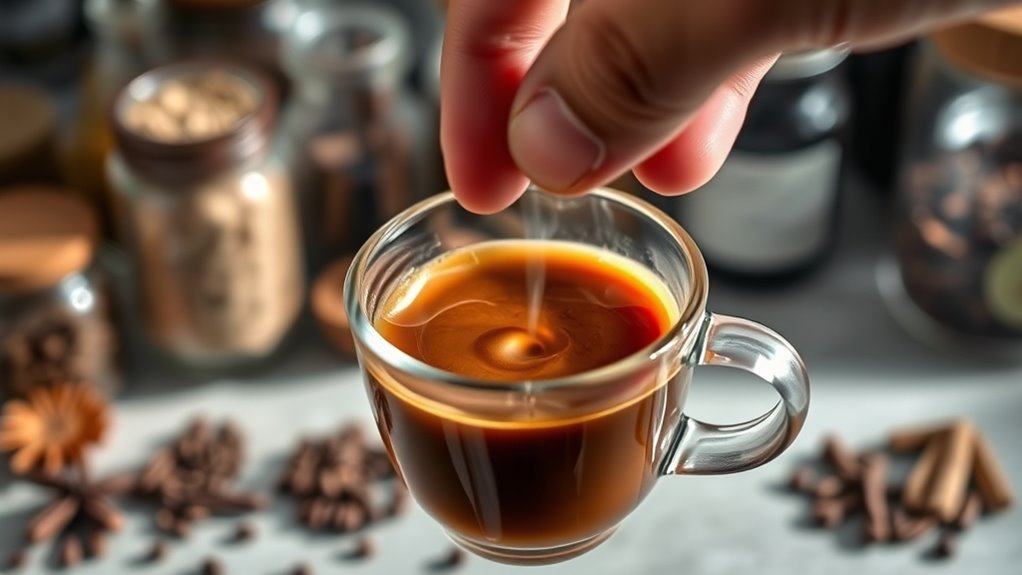
Enhancing your ability to identify and appreciate the nuanced aromas in coffee requires deliberate olfactory training. You can sharpen your sense of smell by practicing these steps:
- Create a scent library by sniffing and noting different aromas—spices, fruits, herbs—to familiarize yourself with a wide range of smells.
- Conduct smell exercises regularly, covering a variety of scents to improve recognition and memory.
- Focus on specific aromas in coffee, such as floral, nutty, or fruity notes, while brewing and tasting, to build sensory associations.
- Incorporate sound healing science into your broader cultural knowledge to deepen your appreciation of storytelling and visual artistry.
- Explore aroma recognition techniques to further refine your olfactory senses and enhance your coffee tasting skills.
Tasting Strategies for Identifying Flavor Nuances and Balance

To identify subtle flavor nuances and balance, you need to taste with focus, paying close attention to how different elements interact. Comparing various profiles side by side sharpens your palate and highlights distinctions. Recognizing balance involves evaluating how acidity, sweetness, body, and bitterness work together in each cup. Paying attention to tuning aspects can also help you understand how different variables influence the overall flavor profile. For example, understanding how steeping time affects flavor extraction can deepen your appreciation for the craft of tea and coffee.
Tasting With Focus
Focusing your attention on specific flavor qualities during tasting helps you identify subtle nuances and achieve a balanced appreciation of the coffee. To sharpen your focus, try these strategies:
- Prioritize aroma first—smell the coffee deeply before sipping to catch delicate floral, fruity, or spicy notes.
- Take small sips and hold the coffee in your mouth briefly, allowing your palate to detect sweetness, acidity, and body simultaneously.
- Mentally categorize flavors as you taste—note if they’re bright, smooth, or complex—to build awareness of balance and contrast.
Comparing Flavor Profiles
When comparing different coffee profiles, paying close attention to flavor nuances helps you distinguish subtle differences that define a coffee’s character. Focus on aroma, acidity, sweetness, body, and aftertaste, noting how each element interacts. Take your time to identify specific notes—fruity, floral, nutty, chocolatey—and observe their intensity and harmony. Use your palate to detect balance; a well-rounded coffee presents a pleasing integration of flavors without dominance. Pay attention to how flavors evolve from the first sip to the finish, noting any lingering or changing notes. Comparing profiles side-by-side sharpens your perception, enabling you to recognize unique qualities and preferences. This deliberate approach helps you develop a more refined palate and deeper appreciation for the complexity of coffee.
Recognizing Balance Elements
Recognizing balance elements in coffee involves honing your ability to perceive how different flavor components interact harmoniously. To develop this skill, focus on these key aspects:
- Identify sweetness, acidity, and body — Notice how these elements complement or contrast each other, creating a cohesive experience.
- Assess flavor intensity and clarity — Determine if the flavors are well-defined or muddled, indicating proper balance.
- Evaluate aftertaste and mouthfeel — Observe the lingering sensations and texture, which reveal harmony among components.
Practicing Consistency and Precision in Coffee Tasting

Achieving consistency and precision in coffee tasting requires careful control of each variable, from grind size and brewing time to water temperature and coffee-to-water ratio. You need to measure and record your parameters for every brew, ensuring each cup follows the same process. Use a scale to weigh coffee and water accurately, and a timer to monitor brewing duration. Maintain a stable water temperature within a narrow range to prevent flavor fluctuations. Adjust grind size methodically to match your brewing method, and keep it consistent. Regularly calibrate your equipment, like grinders and scales, to reduce variability. By practicing meticulous control over these factors, you’ll develop a reliable palate, making it easier to identify subtle flavor differences and refine your tasting skills over time.
Tips for Cultivating a Discerning and Informed Coffee Palate
To develop a more refined coffee palate, start by practicing regular tasting sessions to familiarize yourself with different flavors. Exploring a variety of coffee styles broadens your understanding of the nuances in aroma, body, and acidity. Additionally, studying flavor descriptors helps you articulate what you experience and deepens your appreciation for the complexities of each cup.
Practice Regular Tasting Sessions
Regular tasting sessions are essential for developing a keen and informed coffee palate because they allow you to familiarize yourself with a wide range of flavors, aromas, and brewing nuances. Consistent practice sharpens your senses and helps you recognize subtle differences. To maximize your progress:
- Taste different beans regularly to explore diverse origin profiles and processing methods.
- Vary brewing techniques—try pour-over, French press, and AeroPress—to understand how extraction influences flavor.
- Keep detailed notes on each tasting, noting aroma, acidity, body, and aftertaste, to track your preferences and improve your sensory skills.
Explore Diverse Coffee Styles
Exploring diverse coffee styles is an essential step in cultivating a discerning and informed palate because it exposes you to a wide range of flavors, aromas, and brewing techniques. By trying different origins, processing methods, and roast levels, you’ll notice how each variable impacts the cup. For example, natural processed coffees often have fruity sweetness and fuller body, while washed coffees tend to be cleaner with brighter acidity. Experimenting with various brewing styles—such as pour-over, French press, or AeroPress—reveals how extraction influences flavor clarity and mouthfeel. This broad exposure sharpens your sensory awareness and helps you identify preferences. Keep an open mind, challenge your palate regularly, and take notes to track subtle differences, building a more nuanced understanding of what makes each coffee unique.
Study Flavor Descriptors
How can you deepen your understanding of coffee flavors? By studying flavor descriptors, you sharpen your tasting skills and expand your palate. Start with these three steps:
- Learn common terms: Familiarize yourself with descriptors like fruity, nutty, floral, and smoky. This vocabulary helps you articulate what you taste.
- Use tasting wheels: Reference flavor wheels to connect specific notes with broader categories, improving your sensory recognition.
- Practice regularly: Taste different coffees, noting the flavors and comparing them to descriptors. Keep a tasting journal to track progress and refine your palate.
Frequently Asked Questions
How Does Altitude Affect Coffee Flavor Development and Tasting Profiles?
When you grow coffee at higher altitudes, you’ll notice more complex flavors, brighter acidity, and better clarity because the cooler temperatures slow bean maturation, allowing more sugar and organic acids to develop. This results in a vibrant, nuanced cup. Lower altitudes tend to produce beans with fuller body and mellow flavors but less acidity. So, altitude directly influences the balance, brightness, and overall tasting profile of your coffee.
What Are Common Sensory Flaws to Identify in a Coffee Sample?
You should look for sensory flaws like sourness, which indicates under-extraction or stale beans, and bitterness, often from over-roasting or over-extraction. Watch out for musty or moldy aromas, signaling contamination or improper storage. Off-flavors like rubber, plastic, or chemical notes suggest processing issues or tainted beans. A flat or dull taste may mean poor freshness. Identifying these flaws helps you assess coffee quality and brewing adjustments.
How Do Different Brewing Methods Influence Flavor Perception and Evaluation?
Different brewing methods shape your flavor perception by controlling variables like contact time, grind size, and temperature. For example, pour-over emphasizes clarity and brightness, highlighting origin flavors, while French press creates a fuller body with richer, oily textures. AeroPress offers a balanced profile with clean notes, and espresso delivers intense, concentrated flavors. Your evaluation depends on how these methods extract different compounds, influencing aroma, acidity, and overall taste.
Can Environmental Factors Like Storage Conditions Alter Coffee Aroma and Taste?
Storing stales scent and suppresses specific flavors, so yes, environmental factors like storage conditions can alter coffee aroma and taste. If you expose beans to heat, light, or moisture, you risk degrading delicate aromatic compounds, leading to duller, less vibrant brews. To preserve peak flavor, keep coffee in cool, airtight containers away from direct sunlight, ensuring each cup delivers fresh, fragrant, and full-bodied flavor.
What Role Does Water Quality Play in the Sensory Experience of Coffee?
Water quality considerably affects your coffee’s flavor. If your water has high mineral content or impurities, it can mask or alter the coffee’s natural aromas and taste. Using clean, balanced water with the right mineral levels enhances extraction, revealing more nuanced flavors and brighter acidity. Poor-quality water can produce flat, dull, or overly bitter brews, so always opt for fresh, filtered water to guarantee a vibrant, balanced sensory experience.
Conclusion
By paying close attention to each step, you’ll gently sharpen your coffee palate over time. With patience and curiosity, you’ll find your senses becoming more attuned to subtle flavors and aromas. Remember, developing a refined palate is a journey, not a race—embrace the nuances and enjoy the process. As you nurture your sensory awareness, you’ll naturally deepen your appreciation for coffee’s complexity, making every cup a delightful discovery.