
You’ve probably seen how coffee houses started in the Middle East as lively social and intellectual hubs, then spread across Europe in the 17th century, becoming centers for debate, business, and culture. Over time, they evolved into modern cafés that offer convenience, specialty brews, and cozy environments for work and socializing. Today’s coffee scene combines tradition with innovation, including chains and artisanal options. Stay with us, and you’ll uncover how this vibrant evolution continues to shape urban life.
Key Takeaways
- Coffee houses originated in the Middle East in the early 1500s, serving as social and intellectual hubs.
- They spread across Europe in the 17th century, becoming centers for debate, commerce, and cultural exchange.
- Modern cafés evolved from traditional coffeehouses, incorporating innovations like espresso machines and specialty brewing methods.
- Contemporary coffee culture emphasizes sustainability, technological integration, and diverse brewing techniques for enhanced experiences.
- Today’s cafés continue their historical role as social spaces, blending tradition with modern trends and community importance.
Origins and Early Roles of Coffee Houses in the Middle East

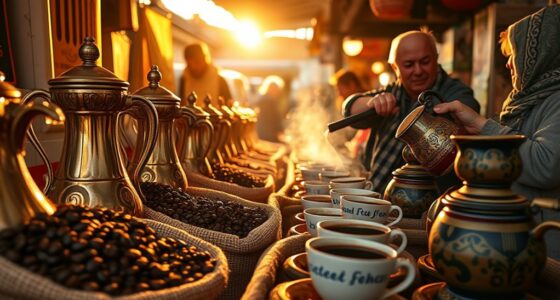
Coffee houses originated in the Middle East during the early 1500s, with some of the earliest records of these establishments appearing in Mecca in the late 1400s or early 1500s. You’d find them as lively social hubs where people gathered to enjoy coffee and engage in conversation. These places quickly became centers for debate, storytelling, music, and games like chess and backgammon. Initially, coffee and coffeehouses stirred political and religious controversy, with some imams banning them between 1512 and 1524, fearing they could foment dissent. Despite that, they gained popularity as “schools of wisdom,” offering a space for intellectual exchange and free speech. These early coffeehouses played a crucial role in shaping social and cultural life across the Middle East.
The Arrival and Spread of Coffee Culture in Europe
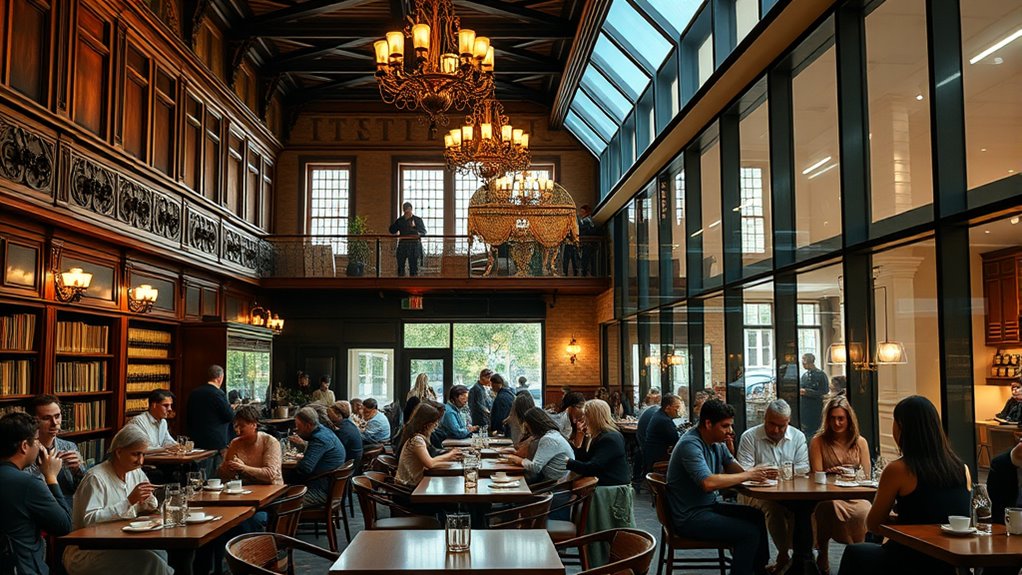
As the popularity of coffeehouses grew in the Middle East, traders and merchants brought the custom to Europe in the mid-17th century. You’d find the first European coffeehouses opening in cities like Venice and Livorno, founded by merchants including Jews and Armenians. In England, coffee arrived in 1652, with Oxford’s first coffeehouse soon following. By the late 1600s, these cafés spread across France, Germany, and the Netherlands, attracting both elites and commoners. You’d notice that European coffeehouses borrowed from Middle Eastern traditions but adapted them to local cultures. They became lively centers for conversation, news, and business, quickly establishing themselves as essential urban social spaces that shaped Europe’s evolving public life and intellectual culture. Additionally, the social significance of coffeehouses was often symbolized by their role as hubs of spiritual guidance and community engagement, reflecting the broader cultural integration of coffee into daily life. These establishments also played a key role in fostering public discourse, contributing to the development of enlightenment ideas and social movements. Furthermore, they served as important venues for cultural exchange, where ideas from different regions could be shared and debated. The integration of coffeehouses into European society also influenced the development of literary and artistic communities, fostering creativity and dialogue among diverse groups. The spread of coffee culture also encouraged the growth of entrepreneurship, as cafés became places for networking and innovation.
Coffeehouses as Intellectual and Social Hubs in Early Modern Cities
In early modern cities, coffeehouses quickly became essential centers for intellectual exchange and social interaction. You find them buzzing with merchants, scholars, artists, and politicians sharing ideas, debating politics, and discussing news. These spaces, known as “penny universities,” offered affordable coffee and lively conversation, breaking social barriers. You could hear discussions on science, literature, and current events, often faster than official news outlets. Coffeehouses fostered a culture of free speech and critical thinking, making them indispensable for the Enlightenment. They also served as venues for networking, business deals, and community building. As you step into one, you sense a vibrant atmosphere where diverse voices converge, shaping public opinion and urban culture in ways that still influence today’s social spaces. Additionally, the role of creative practice within these hubs contributed to fostering innovative ideas and collaborative problem-solving among attendees. The dynamic environment of coffeehouses played a significant part in cultural development, encouraging patrons to exchange diverse perspectives and ideas. Furthermore, the physical design and layout of these spaces often facilitated collaborative interactions, enhancing their role as centers of innovation. These environments also provided opportunities for offensive and defensive security measures, as patrons and owners sought to protect their discussions and assets from external threats.
Economic and Cultural Influences of Coffee Houses on Urban Life

Coffee houses have profoundly shaped urban life by serving as vibrant centers of economic activity and cultural exchange. You benefit from their role as hubs where commerce, ideas, and social interactions intersect. They spurred local economies by creating jobs, supporting artisans, and encouraging trade, especially in coffee, ceramics, and related goods. Unique social environments fostered dialogue, debate, and creativity, influencing public opinion and urban identity. These spaces also promoted social mobility, welcoming diverse groups and breaking social barriers. Their influence extended to finance, with early stock trading and insurance markets emerging within them. Today, modern cafés continue this legacy, blending tradition with innovation, shaping city lifestyles and community cohesion through shared spaces that promote conversation, culture, and commerce. Additionally, the 16PF personality assessment has been utilized within these social environments to better understand individual behaviors and improve interactions among patrons. Recognizing the importance of secure transactions, many coffee shops now incorporate merchant account credit processing solutions to manage sales efficiently and safely. Moreover, ongoing developments in AI security contribute to safer and more reliable digital payment systems, enhancing customer trust and operational efficiency. Integrating Cultural Intelligence into management practices helps coffee houses adapt to diverse customer needs and foster inclusive environments.
Transition From Traditional Coffeehouses to Modern Cafés
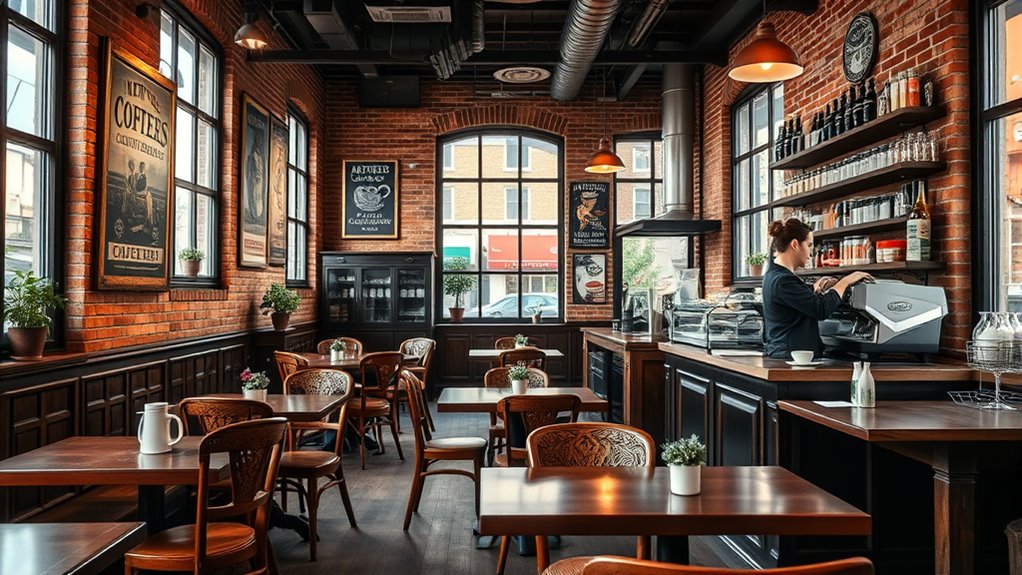
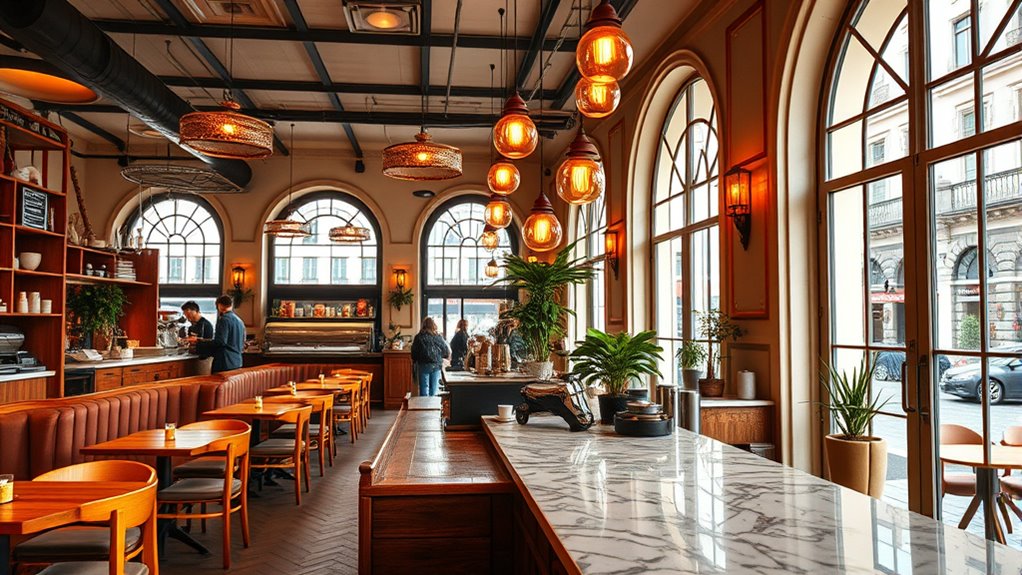
You notice how modern cafés have transformed traditional coffeehouses into versatile social spaces, blending work, leisure, and community. Innovations like espresso machines and specialty brews have changed how we experience coffee, making it faster and more personalized. Today’s cafés continue to evolve, emphasizing convenience and ambiance while maintaining the social functions that have defined coffee culture for centuries.
Evolution of Social Spaces
The evolution of social spaces from traditional coffeehouses to modern cafés reflects a dynamic shift in how people gather, communicate, and build community. In the past, coffeehouses served as lively hubs for political debate, intellectual exchange, and social interaction, often shaping public opinion. Today, cafés still foster social connections but adapt to contemporary lifestyles. They function as versatile environments—spaces for casual meetups, remote work, or cultural events—integrating technology and comfort. You might find yourself sharing ideas over a latte or collaborating on projects in a cozy corner. While the purpose remains rooted in social interaction, modern cafés emphasize convenience, inclusivity, and a sense of belonging. This ongoing transformation keeps cafés relevant, blending tradition with innovation in how communities come together.
Innovations in Coffee Culture
As coffee culture evolved, innovations in brewing technology and service models transformed traditional coffeehouses into modern cafés. You now experience a wide variety of brewing methods like espresso machines, pour-over, and cold brew, which improve flavor and speed up service. Hydraulics and water flow play a crucial role in optimizing these brewing techniques, ensuring consistency and quality. Café designs have shifted toward comfort and ambiance, encouraging socialization, remote work, and relaxation. The rise of specialty coffee emphasizes quality, sourcing, and roasting techniques, appealing to connoisseurs. Technology plays a role too—mobile ordering, contactless payments, and loyalty apps streamline your experience. Chains like Starbucks and independent cafés compete by offering unique atmospheres and menu options. These innovations keep coffee culture dynamic, blending tradition with modern convenience, and making cafés essential urban social and cultural hubs today. Additionally, the focus on coffee art has enhanced the aesthetic appeal of beverages, elevating the overall experience for customers. The incorporation of modern brewing methods has also allowed baristas to showcase their craftsmanship and artistry, further enriching the coffeehouse experience.
Innovations and Expansion: The Rise of Coffee Chains and Specialty Coffee

Innovations in coffee preparation and the global expansion of coffee chains have transformed the way people enjoy their favorite beverages. You now experience faster service, consistent quality, and a wider variety of options thanks to advancements like espresso machines and automated brewing. Coffee chains such as Starbucks, Costa, and Dunkin’ have expanded worldwide, making coffee accessible everywhere and creating a standardized experience. These chains also innovate with new drink menus, seasonal offerings, and sustainable practices, appealing to modern consumers. Specialty coffee has gained popularity, emphasizing artisanal roasting, single-origin beans, and ethical sourcing. You can now explore diverse flavor profiles and brewing techniques, elevating your coffee experience. This expansion has turned coffee into a global culture, blending tradition with innovation to meet the evolving tastes and lifestyles of consumers. Additionally, the rise of Waterparks in hotels and resorts has enhanced hospitality experiences, offering guests fun and relaxation alongside their coffee indulgence.
Contemporary Café Culture and Its Ongoing Legacy

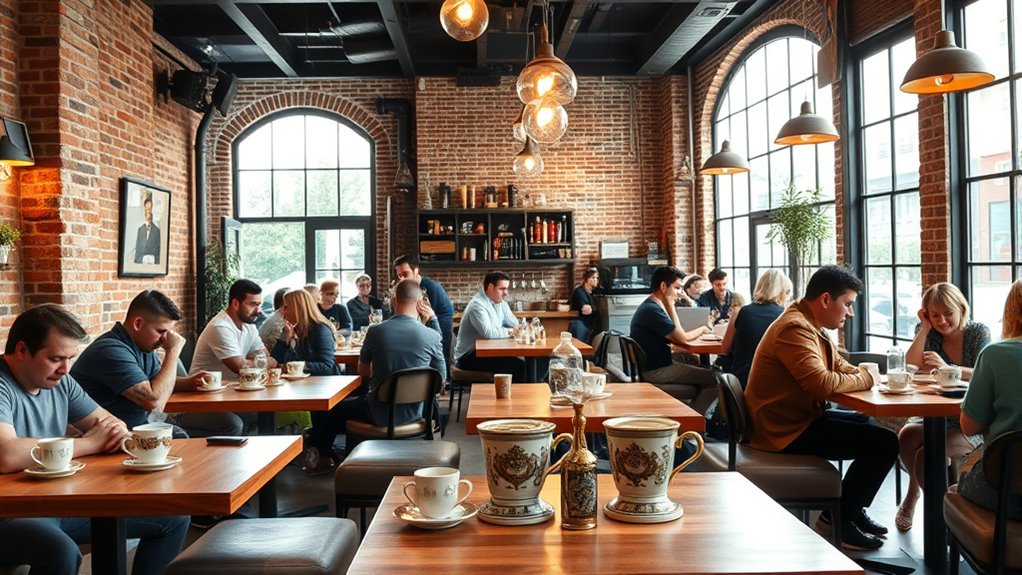
Today, you find cafés evolving into hubs for both social connection and personal expression, blending tradition with modern trends. You can enjoy specialty brews, local art, or simply use cafés as spaces to work and meet others. Despite global chains, independent spots still foster a sense of community, carrying forward the legacy of early coffeehouses as places for dialogue and exchange. Additionally, many modern cafés incorporate interior design elements that reflect local culture and create inviting atmospheres for patrons. As the industry continues to grow, some cafés are leveraging financial strategies to sustain their operations and expand their influence in the competitive market.
Modern Coffee Trends
Have you noticed how modern cafés blend tradition with innovation to shape contemporary coffee culture? Today, you find cafés offering specialty brews, like single-origin beans, cold brews, and nitro coffees, reflecting a focus on quality and craftsmanship. Many spots emphasize sustainability, sourcing beans ethically and reducing waste through eco-friendly practices. You can enjoy a variety of brewing methods—pour-over, AeroPress, or siphon—showcasing artisanal skills. Coffee shops also serve as social hubs, where people meet for work, conversation, or relaxation. Technology plays a role too, with mobile ordering and contactless payments making visits more convenient. Moreover, some cafes incorporate vertical storage solutions to optimize space and enhance the ambiance, blending functionality with aesthetic appeal. These innovations often include privacy policies that protect customer data, especially as digital connectivity becomes more prevalent. Incorporating cybersecurity measures, such as secure Wi-Fi networks and data protection, ensures customer information remains safe in these digitally connected environments. As digital tools become more integrated, customer data management is increasingly vital for maintaining trust and compliance. These trends keep the coffee experience fresh, innovative, and deeply connected to its rich history.
Social and Cultural Role
How do modern cafés continue the social and cultural traditions of their historic predecessors? You experience it every time you visit a café—whether for a quick coffee or a long chat. Today’s cafés still serve as communal spaces, fostering conversation, collaboration, and connection. They reflect the legacy of coffeehouses as centers for debate, cultural exchange, and intellectual discourse. Specialty coffee movements emphasize craftsmanship and shared experience, echoing historic traditions. Independent cafés often champion local identity and provide welcoming environments for community gatherings, mirroring the inclusive spirit of early coffeehouses. Even in a digital age, cafés remain essential for social cohesion, offering spaces where ideas are exchanged and relationships are built—continuing centuries of cultural and social significance rooted in the coffeehouse legacy. Relationship building through open communication and shared experiences continues to strengthen these communal bonds.
Frequently Asked Questions
How Did Coffeehouses Influence Political Movements Throughout History?
You see, coffeehouses have played a crucial role in shaping political movements by serving as accessible spaces for debate and discussion. They fostered free speech, allowing merchants, intellectuals, and activists to share ideas and organize protests. Their lively conversations often challenged authority and spread revolutionary sentiments, making them catalysts for social change. Throughout history, coffeehouses remained vital hubs where political awareness and collective action took root and grew.
What Role Did Women Play in Early Coffeehouse Cultures?
You might not realize it, but women played a significant role in early coffeehouse cultures. They often gathered in specific venues, sometimes excluded from male-dominated spaces, to share ideas, socialize, and discuss politics or literature. In some regions, women helped shape the ambiance and social norms of coffeehouses, fostering conversations that contributed to cultural and political shifts. Their participation helped establish coffeehouses as inclusive spaces for diverse voices.
How Did the Design and Architecture of Coffeehouses Evolve Over Time?
You notice that coffeehouse design evolved from simple, functional spaces to more elaborate, stylish establishments. Early coffeehouses focused on practicality, with basic furniture and modest decor. Over time, they incorporated ornate architecture, comfortable seating, and inviting interiors to attract diverse clientele. Modern cafés blend tradition with innovation, featuring sleek designs, cozy atmospheres, and targeted branding, creating versatile spaces for socializing, work, and cultural events that reflect their historical significance.
What Economic Impact Did Colonialism Have on Coffee Trade Development?
Colonialism fueled the coffee trade’s growth by establishing colonies in coffee-growing regions like Yemen, Ethiopia, and the Caribbean. You benefit from this history as colonial powers expanded plantations, increasing coffee exports to Europe and beyond. This global trade created economic opportunities, boosted colonial economies, and integrated coffee into international markets. However, it also tied coffee’s success to colonial exploitation, shaping the modern coffee industry’s economic landscape.
Modern cafés are like mirrors reflecting centuries of tradition, yet they also show how much has changed. You’ll find them serving as social hubs, just like historic coffeehouses, fostering community, conversation, and cultural exchange. However, today’s cafés emphasize convenience, specialty drinks, and branding, often prioritizing individual experience over collective debate. While rooted in tradition, they evolve to meet contemporary needs, blending social connection with consumer culture.
Conclusion
Today, over 2.25 billion cups of coffee are enjoyed worldwide each day, reflecting how coffee culture has evolved from ancient Middle Eastern origins to modern cafés. You now experience a space that’s more than just a drink—it’s a hub for socializing, innovation, and community. As coffee continues to shape urban life and personal routines, remember that every cup carries centuries of history and cultural exchange, connecting you to a global legacy.