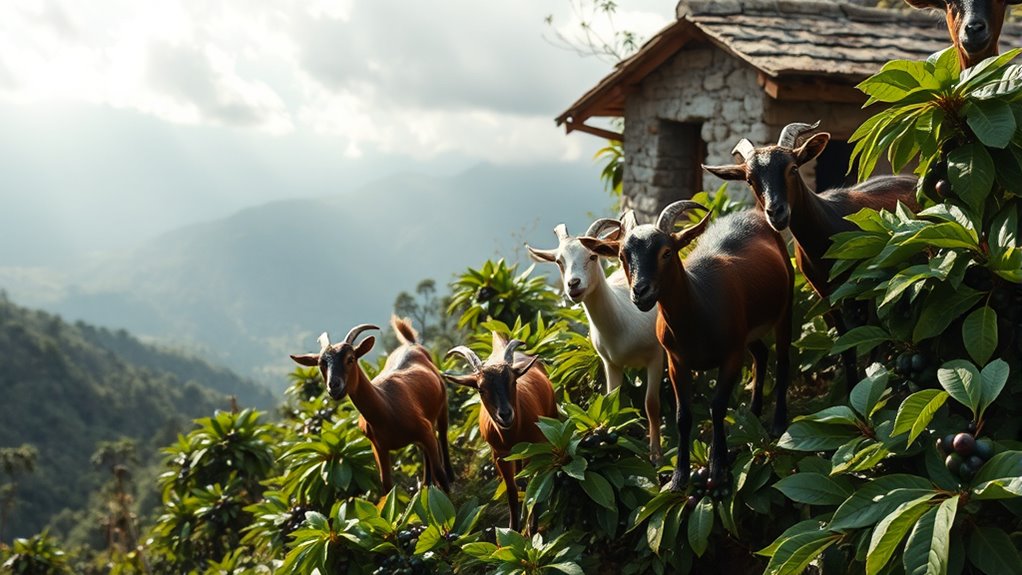

Discover how coffee’s story begins in Ethiopia, where a goat herder named Kaldi noticed his goats dancing after eating berries. From there, coffee spread across the Arab world, fueling social rituals and trade. It reached Europe, inspiring coffeehouses and trade networks during explorations that altered economies worldwide. If you’re curious about how this beloved drink evolved into a global obsession, there’s much more to uncover about its rich cultural journey.
Key Takeaways
- Coffee’s legendary origin in Ethiopia involves a goat herder named Kaldi discovering energizing berries after observing goats’ behavior.
- Arab traders spread coffee across the Arab world, developing brewing techniques and establishing coffeehouses as social hubs.
- Coffee reached Europe in the 17th century, fueling trade, inspiring coffeehouses, and becoming a symbol of sophistication and intellectual exchange.
- European exploration and colonial plantations expanded coffee cultivation globally, making it a vital commodity shaping economies and cultures.
- Today, coffee is a worldwide obsession with diverse brewing traditions, specialty trends, and ongoing challenges like sustainability and climate change.
The Legendary Origin in Ethiopia
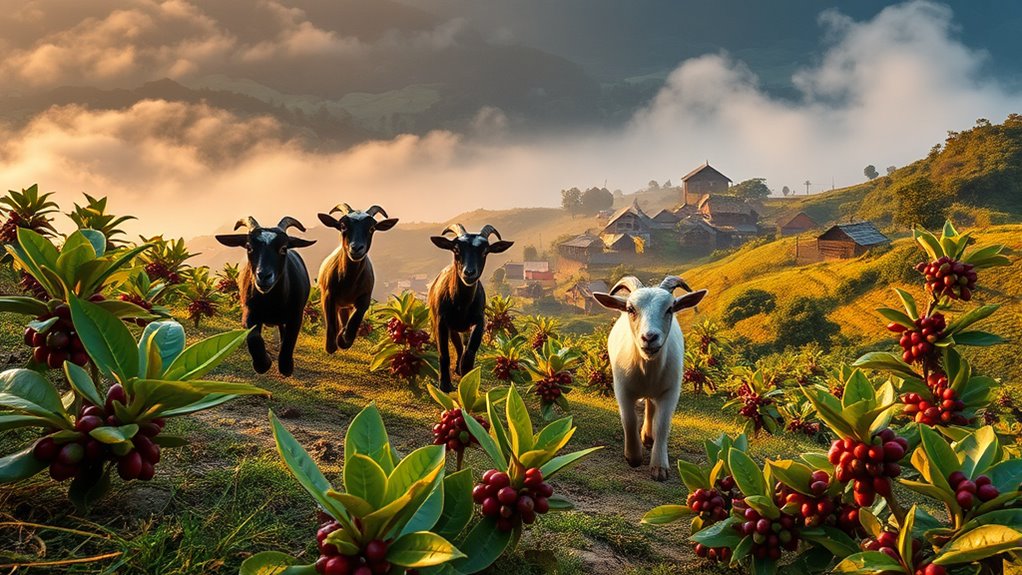
Have you ever wondered where coffee first came from? According to Ethiopian folklore, a young goat herder named Kaldi discovered coffee after noticing his goats frolicking energetically after eating bright red cherries from a particular tree. Intrigued, he tried the berries himself and felt a newfound vitality. This story marks the legendary origin of coffee in Ethiopia. In Ethiopian culture, coffee isn’t just a drink; it’s an essential part of social life, celebrated through elaborate coffee ceremonies. During these ceremonies, you experience the ritual of roasting, grinding, and brewing beans, often accompanied by conversations and community bonding. These traditions have preserved the cultural significance of coffee, making Ethiopia the birthplace of this beloved beverage and its rich, legendary history. Additionally, the cultural importance of coffee has helped sustain its status as a global obsession, shaping societies worldwide.
The Spread Across the Arab World

You’ll see how coffee’s origins in Ethiopia shifted into Arab culture, where it became more than just a beverage. As it spread, it gained cultural significance, shaping social rituals and traditions across the region. This expansion marked the beginning of coffee’s global journey.
Origins of Arab Coffee
The spread of Arab coffee began in the 15th century, originating from the Ethiopian region of Oromia and Yemen’s highlands. As it traveled across the Arab world, methods like coffee fermentation developed to enhance flavor and preserve beans. You’ll notice Arabica and Robusta beans played distinct roles; Arabica, prized for its smooth taste, was mainly grown in Yemen, while Robusta, with higher caffeine content, became popular elsewhere. This distinction influenced regional cultivation and trade patterns. The table below highlights key differences:
| Aspect | Arabica | Robusta | Coffee Fermentation |
|---|---|---|---|
| Origin | Yemen, Ethiopia | West Africa, Southeast Asia | Used to improve flavor and reduce acidity |
| Caffeine Content | Lower | Higher | Critical step in processing techniques to develop flavor and aroma |
| Flavor Profile | Smooth, complex | Bold, earthy | Affects aroma and taste |
| Cultivation | Higher altitudes | Lower altitudes | Varies by bean type |
| Popularity | Premium, specialty beans | Commercial, robust beans | Key in developing regional trade |
Additionally, the development of coffee fermentation techniques was crucial in establishing the regional identities of different coffee varieties and their associated flavors.
Cultural Significance Expansion
As coffee spread across the Arab world, it quickly became more than just a beverage; it transformed into an essential social and cultural symbol. You’d find coffee rituals playing a central role in daily life, from preparing coffee with special techniques to serving it in ornate cups. These rituals fostered a sense of community, turning simple social gatherings into meaningful events. Coffeehouses, known as qahwa, became gathering places where people discussed politics, poetry, and news. Sharing coffee signified hospitality and respect, strengthening social bonds. Over time, coffee’s significance expanded beyond individual homes, shaping cultural identity and social norms. Its role in social gatherings cemented coffee’s place as a crucial element of Arab culture and tradition. Additionally, the cultural significance of coffee influenced neighboring regions, spreading similar social practices and rituals. The tradition of coffee rituals also contributed to the development of a rich literary and artistic culture centered around coffee. Recognizing the importance of cultural intelligence helps us understand how these rituals facilitated cross-cultural exchanges and adaptations over time.
Coffee Reaches Europe and the Birth of Coffeehouses

How did coffee make its way from the Middle East to Europe, and what sparked the rise of coffeehouses? Traders brought coffee along the European coffee trade routes, introducing it to port cities like Venice and Venice’s merchants quickly embraced it. Coffee’s stimulating effects caught the interest of scholars, artists, and merchants, leading to the emergence of coffeehouse culture. These venues became social hubs for conversation, business deals, and intellectual exchange. As coffee gained popularity, it spread across European cities, fueling a vibrant coffee trade. Coffeehouses offered a space distinct from taverns, fostering a more refined atmosphere. This new social setting transformed urban life, making coffee a symbol of sophistication and enlightenment. The rise of coffeehouses marked the beginning of coffee’s deep integration into European society. Additionally, the development of specialized brewing methods helped elevate coffee to an esteemed social beverage. This period also saw the rise of coffee-related innovations, which further enhanced the brewing and drinking experience. Furthermore, public curiosity about coffee contributed to its widespread acceptance and cultural significance.
The Role of Coffee in the Age of Exploration

During the Age of Exploration, coffee became a key driver of European trade expansion, connecting distant parts of the world. As explorers and traders ventured abroad, they brought coffee back, fueling new cultural exchanges and interactions. This period transformed coffee from a local beverage into a global commodity with widespread influence.
European Trade Expansion
The age of exploration considerably expanded European trade networks, and coffee quickly became a valuable commodity within this growing global marketplace. As Europeans established new trade routes, coffee cultivation spread beyond the Middle East to colonies in the Caribbean, Africa, and Asia. These routes boosted coffee’s availability and popularity, fueling demand across Europe. You can imagine ships laden with coffee beans traversing distant waters, connecting far-flung regions. This expansion transformed coffee into a staple of European social life and commerce. Additionally, the global trade routes facilitated cultural exchange and further entrenched coffee’s role in daily life, making it an integral part of international commerce during the era. The development of colonial plantations played a significant role in meeting the rising demand and shaping the economic landscape of the time.
Cultural Exchanges Enabled
As European trade networks expanded during the age of exploration, coffee became more than just a commodity; it evolved into a catalyst for cultural exchange. Travelers and traders brought back not only coffee beans but also diverse brewing techniques from different regions. You might have experienced how these methods differed from traditional tea ceremonies, blending new rituals into social life. Coffeehouses emerged as spaces where ideas, customs, and stories from distant lands converged, fostering cross-cultural dialogue. The exchange of brewing techniques enriched local traditions, creating unique coffee cultures worldwide. This blending of customs helped shape social interactions and introduced Europeans to new perspectives. Coffee, consequently, became a symbol of global interconnectedness, bridging cultural gaps through shared experiences and brewing innovations, which often involved adopting new preparation methods that reflected intercultural influences.
Coffee’s Impact on Society and Culture

Coffee has transformed from a simple beverage into a powerful social catalyst that shapes communities and influences cultural practices worldwide. It plays a key role in establishing daily routines and fostering connections through coffee rituals. These rituals vary across cultures but always serve as moments of social interaction and reflection. Coffee’s societal influence extends beyond individual habits, impacting workplace cultures and public spaces. You’ll notice how coffee shops serve as communal hubs, encouraging conversations and collaboration. The global spread of coffee has also led to cultural exchanges, blending traditions and creating shared experiences. Whether it’s a quick morning brew or an elaborate ceremony, coffee continues to shape societal norms and cultural identities. Its impact is woven into the fabric of everyday life, uniting people worldwide.
- Coffee rituals as cultural symbols
- Social bonding over coffee
- Coffeehouses as community spaces
- Influence on workplace culture
- Cross-cultural exchanges
The Rise of Specialty Coffee and Modern Trends
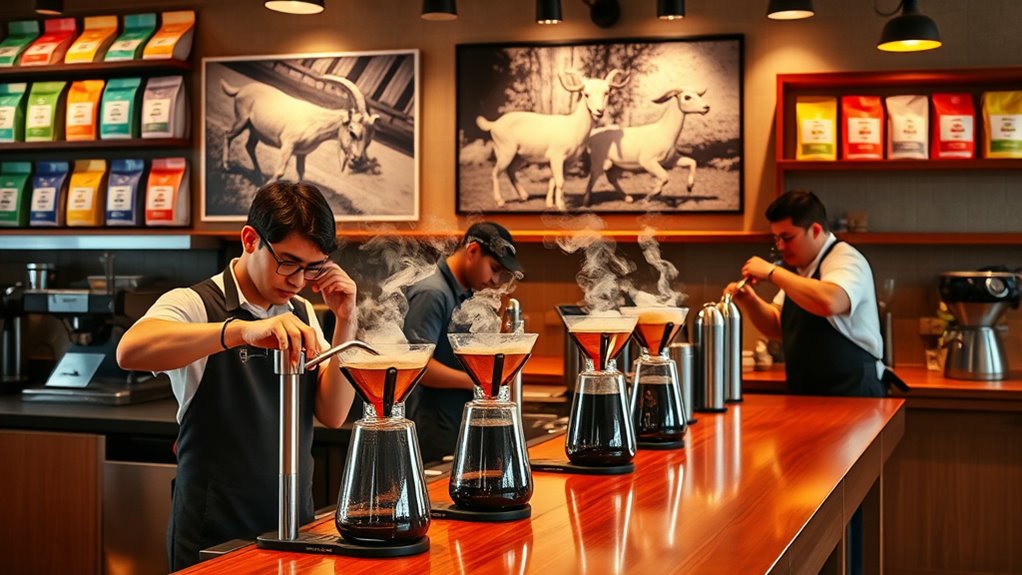
In recent years, the coffee industry has experienced a surge in popularity centered around specialty brews that emphasize quality, origin, and craftsmanship. You now seek unique flavors and ethical sourcing, driving the growth of artisanal brewing and sustainable practices. Coffee shops focus on transparency, highlighting farm relationships and eco-friendly methods. This shift benefits both consumers and producers, fostering a more conscious coffee culture. To see how this trend unfolds, consider the table below:
| Aspect | Details |
|---|---|
| Artisanal Brewing | Handcrafted techniques emphasizing flavor nuances |
| Sustainable Practices | Eco-friendly farming and ethical sourcing initiatives |
| Consumer Focus | Transparency and quality over mass production |
| Popular Trends | Single-origin beans and third-wave coffee culture |
| Impact | Higher quality, environmental consciousness |
Furthermore, the emphasis on ethical sourcing ensures that farmers are fairly compensated, promoting sustainable development within coffee-producing regions.
Coffee Trade and Economic Significance
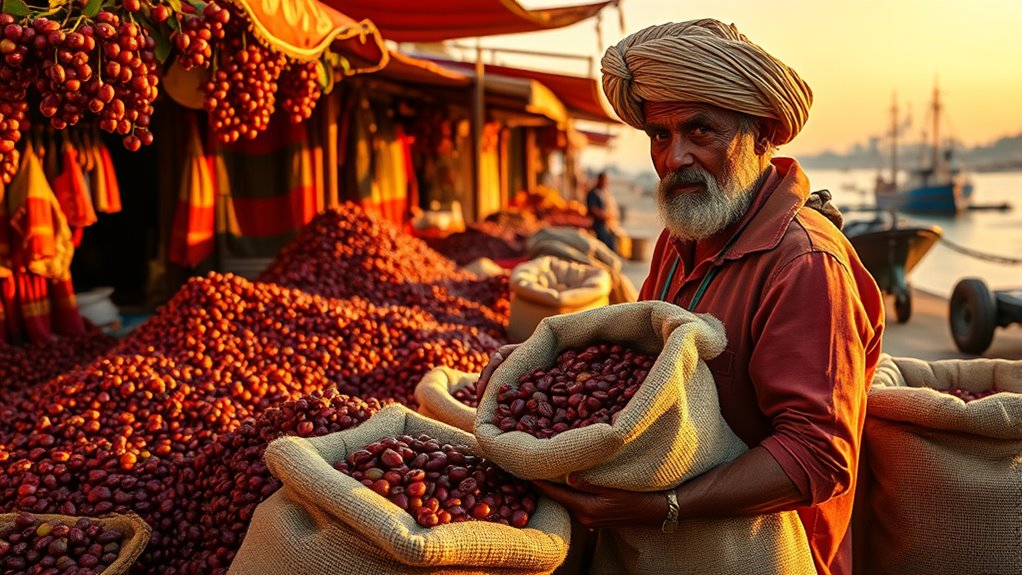
The global coffee trade plays a crucial role in shaping economies and livelihoods across producing countries. It influences coffee pricing, which can fluctuate based on supply, demand, and market conditions. Trade regulations govern how coffee moves internationally, affecting pricing and access to markets. You’ll find that coffee exports generate significant revenue for nations like Brazil, Vietnam, and Colombia. Additionally, understanding market research can help producers and traders better anticipate market shifts and optimize their strategies. The complex supply chain involved in coffee distribution also impacts the final consumer price and the sustainability of coffee farming communities. Recognizing the importance of market dynamics helps stakeholders make informed decisions in this competitive industry. Staying informed about global market trends is essential for adapting to changing economic conditions and ensuring the growth of the coffee industry.
The Future of Coffee in a Changing World
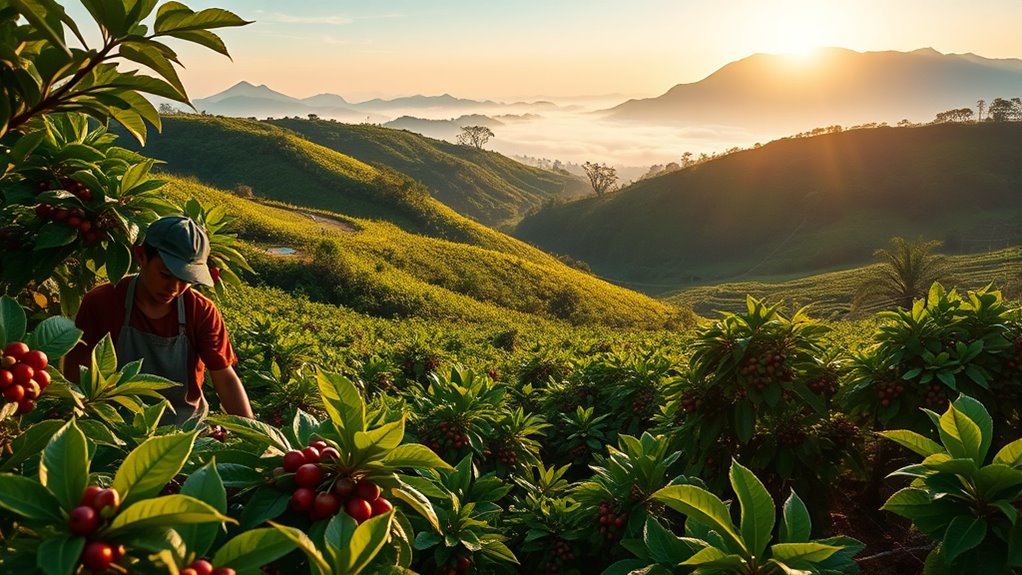
As climate change accelerates, the future of coffee faces significant challenges that could reshape global production and consumption patterns. Rising temperatures and unpredictable weather threaten traditional coffee-growing regions, making sustainable farming essential for resilience. Farmers are increasingly adopting innovative practices like shade-grown coffee and drought-resistant varieties to combat environmental stress. These methods not only help mitigate climate impacts but also promote sustainable farming practices that preserve ecosystems. Technological innovations also play a vital role, from precision agriculture that optimizes resource use to lab-grown coffee alternatives. These advancements help reduce environmental impact and guarantee long-term supply. Additionally, indoor vertical farms are exploring the potential for controlled environment coffee cultivation, which could revolutionize production methods. As consumers, you can support this shift by choosing ethically produced, sustainably farmed coffee. The combination of sustainable farming methods and cutting-edge technology offers hope for maintaining coffee’s cultural and economic significance amid a changing climate.
Frequently Asked Questions
How Did Early Coffee Plants Survive and Spread in Different Climates?
You’ll find that early coffee plants survived and spread thanks to their remarkable climate resilience and ability to adapt. They thrived in various environments by adjusting to local conditions, which allowed them to flourish in different climates. Cultivators selected resilient coffee plant varieties, and traders introduced these adaptable plants to new regions, ensuring their survival and spreading coffee’s popularity worldwide. This adaptation was key to coffee’s global growth.
What Are the Ancient Myths and Legends Associated With Coffee’s Origin?
You’ll find that mythical origins and legendary stories surround coffee’s beginnings, like the famous tale of an Ethiopian goat herder who noticed his goats energetic after eating coffee cherries. This story highlights coffee’s legendary status, with some myths even suggesting divine roots that sparked its discovery. These stories add a rich cultural layer, making coffee more than just a beverage—it’s a symbol woven into ancient legends and mythical origins.
How Did Coffee Influence Global Trade Policies Historically?
You see, coffee critically influenced global trade policies by shaping trade regulations and boosting economic impact. As demand grew, countries established tariffs and trade agreements to control coffee exports and imports. This trade fueled economic growth, especially in regions like the Caribbean and Latin America. Coffee’s popularity led nations to develop policies that prioritized its trade, making it a essential commodity that shaped international commerce and economic strategies worldwide.
What Are the Health Effects of Coffee Consumption Over Centuries?
Coffee is like a double-edged sword; it can energize or cause jitters depending on your caffeine tolerance. Over centuries, its health effects include antioxidant benefits that fight free radicals, boosting your overall well-being. However, excessive consumption may lead to sleep issues or increased heart rate. Moderation is key, allowing you to enjoy coffee’s benefits while avoiding its potential downsides.
How Is Climate Change Affecting Coffee Production Today?
Climate change is seriously impacting coffee production today. You’ll notice changing weather patterns, rising temperatures, and unpredictable rainfall threaten crop resilience. Farmers are adopting climate adaptation strategies, like shifting to higher altitudes and developing resilient coffee varieties, to protect their crops. These efforts aim to sustain coffee supply, but ongoing climate challenges require continuous innovation to guarantee future coffee availability and quality.
Conclusion
Now that you’ve seen how coffee’s journey transformed from humble beginnings to a global obsession, you realize it’s more than just a drink — it’s a cultural phenomenon. As you sip your next cup, remember the saying, “the proof is in the pudding,” because coffee’s rich history shows its true strength lies in bringing people together. Keep your eyes on the horizon; the future of coffee is brewing with exciting possibilities.