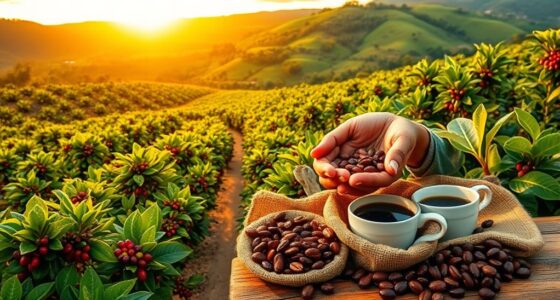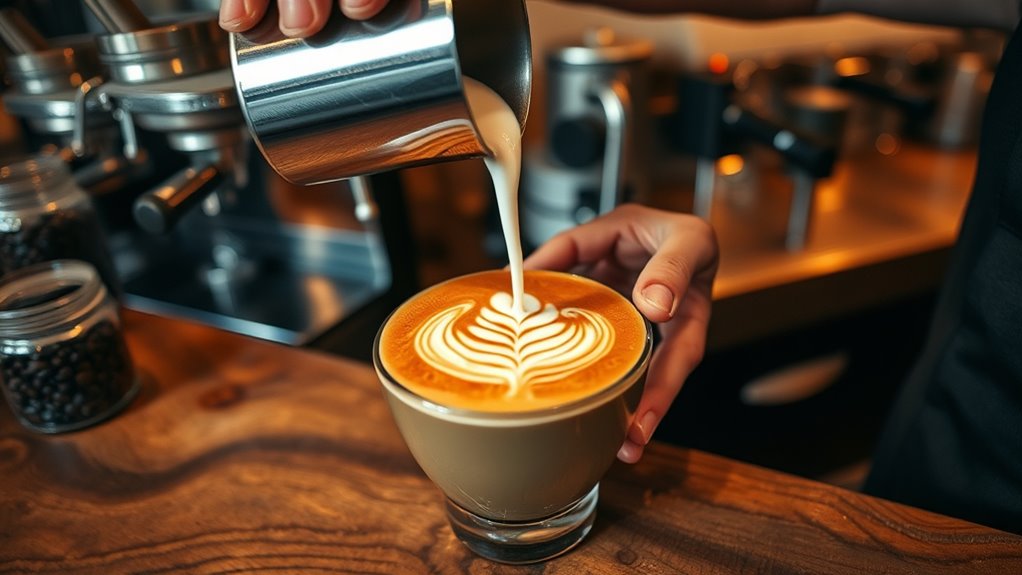

Understanding coffee shop lingo can seem tricky at first. Words like “barista,” “pour-over,” “single-origin,” or “cupping” describe roles, brewing methods, and quality standards that shape your coffee experience. Certifications, sourcing, and roast levels all influence flavor and quality. Knowing these terms helps you appreciate what makes each cup special. If you’re curious about these terms and more, there’s plenty to uncover behind the scenes of your favorite brew.
Key Takeaways
- Understand common terms like espresso, pour-over, and microfoam to navigate menu and brewing methods confidently.
- Recognize drink names such as cortado, mocha, and flat white to order accurately and describe preferences.
- Learn sensory language like body, acidity, and aroma to evaluate and appreciate coffee quality.
- Know processing and origin terms like washed, natural, single-origin, and micro-lot for better sourcing awareness.
- Familiarize with equipment and technique terms such as bloom, extraction, and pour rate for improved brewing knowledge.
Understanding Barista Roles and Certifications
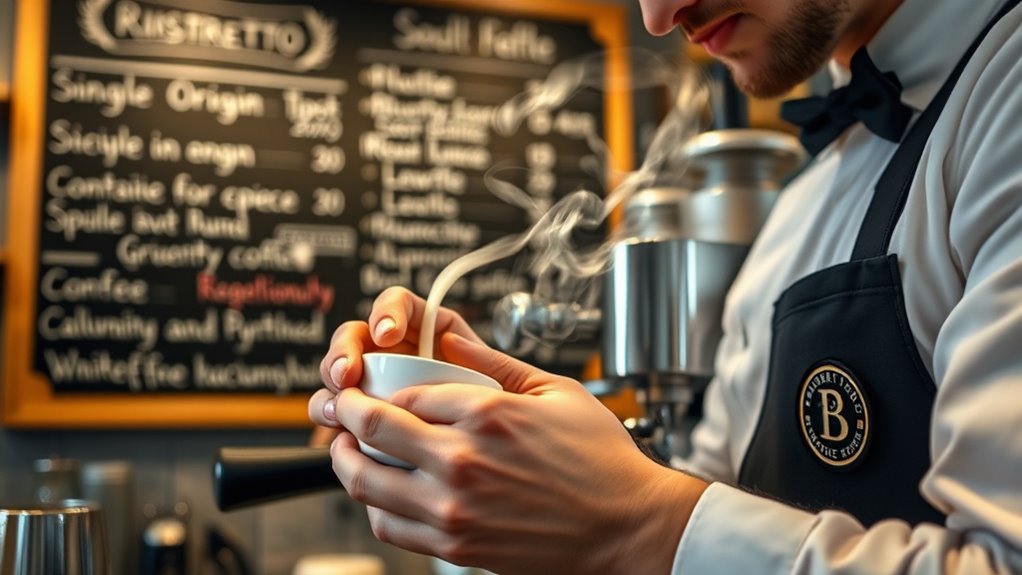
Understanding the roles and certifications of baristas is essential for recognizing their skills and expertise. As a coffee enthusiast, you should know that a barista isn’t just someone who makes coffee—they’re trained professionals skilled in various brewing techniques and customer service. They operate espresso machines, grind beans precisely, and craft specialty drinks with consistency. Many baristas pursue certifications from organizations like the Specialty Coffee Association (SCA), which set industry standards and validate their skills. These certifications cover areas such as brewing, sensory analysis, and customer interaction. Recognizing these credentials helps you appreciate the expertise behind your favorite cup and trust in the quality you receive. Understanding skill development is key to appreciating the level of professionalism in coffee making. Additionally, ongoing training opportunities allow baristas to stay current with industry innovations and enhance their craft, ensuring they remain knowledgeable about the latest coffee industry standards and techniques. Staying informed about industry certifications can also help you gauge a barista’s dedication to their profession. Furthermore, certifications often include practical assessments, which demonstrate a barista’s ability to apply their knowledge effectively in real-world settings.
Exploring Different Brewing Techniques and Equipment
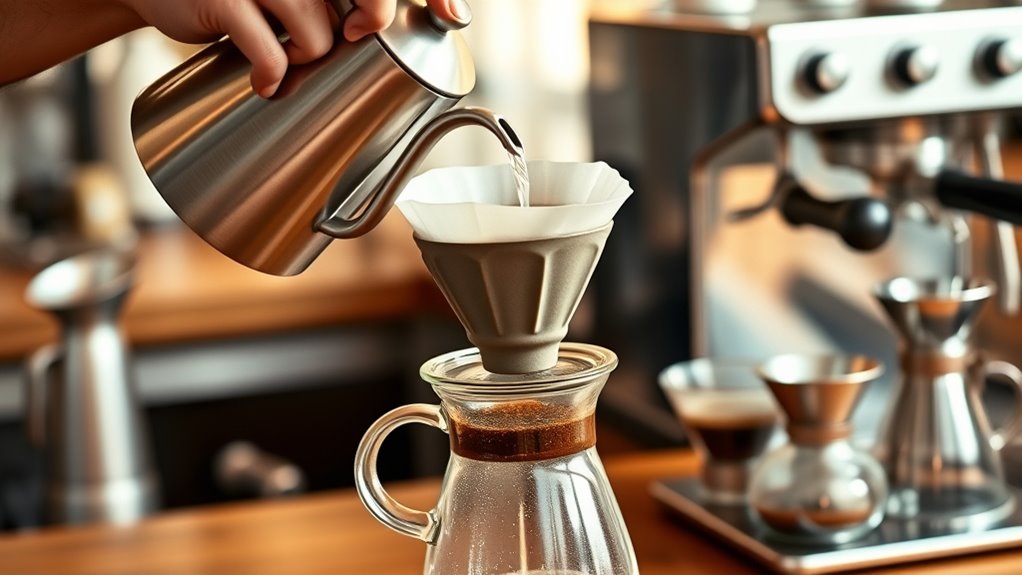
You’ll want to explore the variety of brewing techniques and equipment to find your perfect cup. Pour-over methods like Chemex and V60 highlight clarity and brightness, while devices like French Press and Moka Pot offer richer, fuller flavors. Understanding how each tool works helps you craft coffee tailored to your taste preferences. Additionally, selecting the right water filtration system can enhance the overall flavor and quality of your brew. Experimenting with different brewing times can also influence the strength and extraction of your coffee for optimal results.
Pour-Over Methods Overview
Pour-over brewing methods offer a clean and flavorful way to extract coffee’s nuanced flavors, giving you control over variables like pour rate, temperature, and bloom time. You’ll pour hot water slowly over fresh, ground coffee in a steady, circular motion, allowing the coffee to bloom and extract evenly. Different devices, such as the Chemex or Hario V60, use paper filters that trap oils and sediments, producing a bright, crisp cup. Precise control over water flow and temperature helps highlight specific flavor notes, from fruity and floral to chocolate and nutty. This method emphasizes technique and attention to detail, making it ideal for coffee enthusiasts who want to tailor their brew to their taste preferences. Pour-over brewing is both an art and a science, rewarding precision and patience. Incorporating proper technique ensures optimal extraction and enhances the overall flavor profile of your coffee. Additionally, understanding the different brewing equipment can help you select the right device to match your skill level and flavor goals. Moreover, exploring various sustainable practices in coffee brewing can further elevate the quality and eco-friendliness of your coffee experience.
Key Brewing Devices
Different brewing devices harness distinct techniques to extract the best flavors from coffee beans. The pour-over method, like Chemex, uses a paper filter for a clean, bright cup. French presses employ immersion brewing with a mesh filter, resulting in a full-bodied, rich flavor. Moka pots on the stovetop generate steam pressure, producing a strong, espresso-like brew. Single-cup machines, such as Keurig or Nespresso, quickly brew individual servings using pods or K-cups, offering convenience. Espresso machines force hot water through finely ground coffee under pressure, creating concentrated shots with a layer of crema. Each device emphasizes different aspects of flavor—clarity, body, or intensity—allowing you to choose the one that best suits your taste and brewing style. Understanding different brewing techniques can help you appreciate the nuances of each method and enhance your overall coffee experience.
Common Coffee Drinks and Their Variations

Coffee drinks come in a wide variety of styles and preparations, each offering unique flavors and experiences. A flat white features a shot of espresso with velvety microfoam, providing a smooth, rich taste. A mocha combines espresso, steamed milk, and chocolate, creating a sweet, indulgent treat. The cortado balances equal parts espresso and steamed milk, with minimal foam for a bold yet creamy flavor. Irish coffee mixes brewed or espresso coffee with sugar, Irish whiskey, and whipped cream, ideal for cold nights. The half-caf blends regular and decaffeinated beans, offering a milder caffeine kick. Variations like adding flavored syrups, adjusting milk textures, or switching brewing methods allow you to customize your drink to your preferences, making each coffee experience personal and satisfying. For those interested in enhancing their home brewing setup, exploring best watering pots can help maintain the plants that often adorn coffee shop spaces, adding to the ambiance and aesthetic. Additionally, understanding different Kia Tuning options can help vehicle owners optimize their cars for performance and style. Moreover, advancements in waterproof running watches can be useful when enjoying outdoor coffee shop visits during unpredictable weather. Furthermore, choosing the right home theatre projector can significantly elevate your movie nights, providing a cinematic experience at home. For a perfect brew, paying attention to water temperature and quality is essential to extracting the best flavors from your coffee beans.
Coffee Processing Terms and Terminology
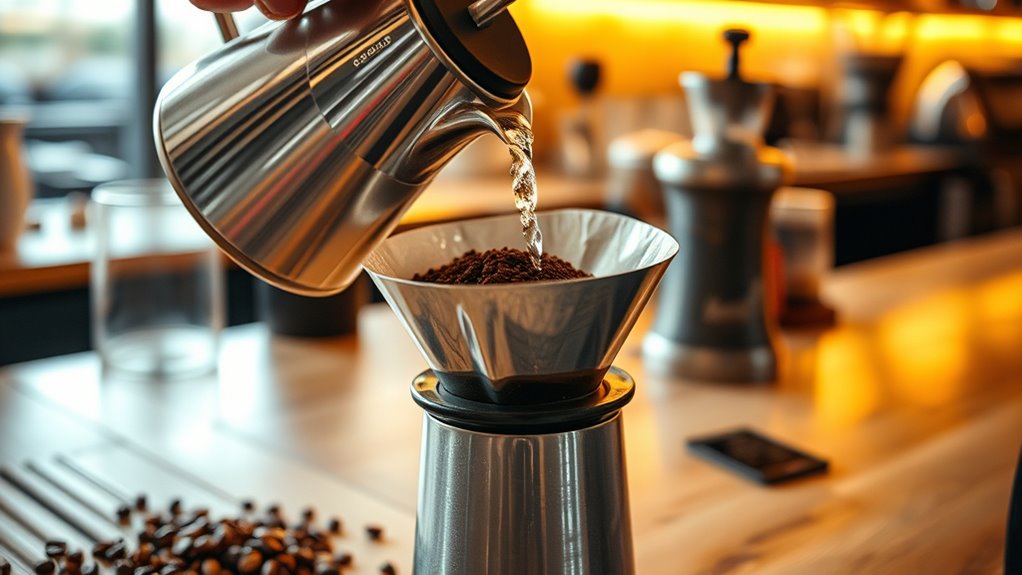
Have you ever wondered what sets high-quality coffee apart from the rest? It all begins with processing terms that influence flavor and character. Blends combine beans from multiple regions, creating balanced profiles, while single-origin coffees highlight unique regional traits. Micro-lot coffees come from small, traceable farms, often offering distinctive flavors. Coffee grading evaluates green beans’ quality, with standards like those from the Specialty Coffee Association guiding this process. Cupping is a tasting method used to assess aroma, flavor, and overall quality, giving insight into the coffee’s potential. These terms help you understand how beans are prepared before roasting, emphasizing the importance of origin, quality, and consistency in delivering exceptional coffee experiences. Understanding coffee processing techniques can further deepen your appreciation for the craft behind each cup. Additionally, knowledge of processing methods can reveal how different techniques impact the final taste profile. Recognizing the role of astrological traits in personal appeal may also influence how baristas and coffee enthusiasts perceive charm and character in their interactions. Exploring angel numbers and their meanings can also inspire a mindful approach to appreciating the nuances of coffee culture. Furthermore, a deeper grasp of quality control standards ensures consistency and excellence in every brew.
The Art of Coffee Roasting and Bean Characteristics
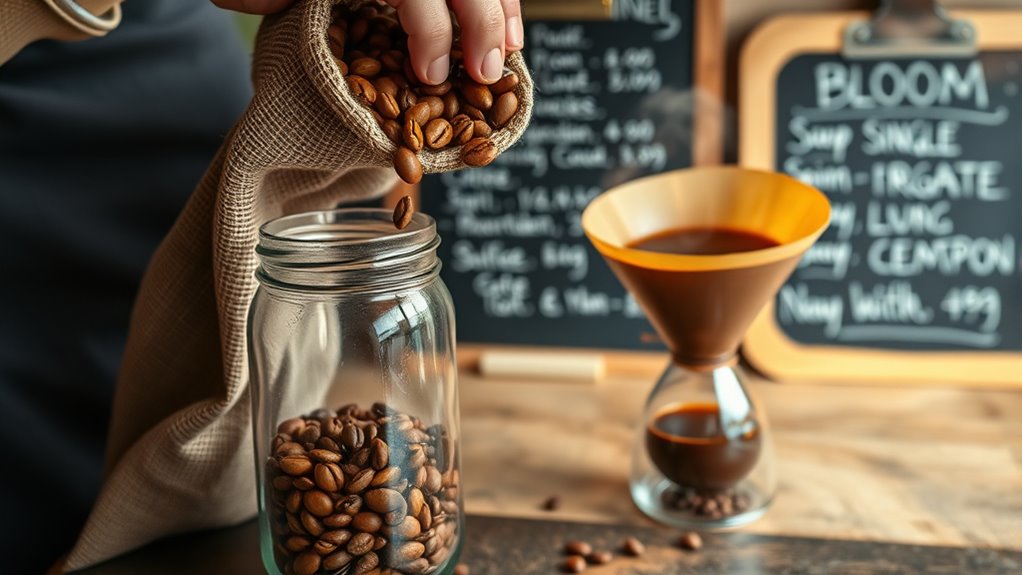
Understanding roast levels and flavors helps you appreciate how beans develop their unique profiles. Green beans hold the key to quality, but their origin and processing shape the final taste. By recognizing bean origin and roast techniques, you can better select and enjoy your perfect cup.
Roast Levels and Flavors
Roast levels play a crucial role in shaping the flavor, aroma, and body of your coffee, with each stage influencing how the beans develop during roasting. Light roasts highlight the beans’ original characteristics, offering bright acidity and fruity notes. Medium roasts balance acidity with body and introduce caramel and nutty flavors. Dark roasts develop bold, smoky, and bitter profiles, often with bittersweet chocolate hints. Here’s what each roast level offers:
- Light Roast – Bright, acidic, fruity, floral.
- Medium Roast – Balanced, caramel, nutty, round.
- Medium-Dark Roast – Rich, chocolatey, fuller body.
- Dark Roast – Bold, smoky, bittersweet, less acidic.
Choosing your roast level depends on your flavor preferences and brewing method.
Green Beans and Quality
Green beans, also known as unroasted coffee, are the foundation of a great brew, and their quality directly impacts the final flavor. You can often tell their potential by inspecting color, size, and aroma. High-quality beans are uniform, free of defects, and have a vibrant, grassy scent. When selecting green beans, you’re choosing the future character of your coffee. Additionally, paying attention to rustic charm can help identify beans that will develop rich, complex flavors during roasting. Recognizing bean defects can further ensure you select beans with optimal quality for a superior brew. Understanding for sale 100 options can also assist in sourcing the best beans at competitive prices.
Bean Origin and Profiles
The origin of coffee beans plays a essential role in shaping their flavor profiles and overall character. Different regions produce beans with unique qualities, influenced by climate, soil, and altitude. Knowing where your beans come from helps you understand their taste. Here are four key points:
- Regional Flavors – African coffees often have bright acidity and fruity notes, while South American beans tend to be nutty and balanced.
- Altitude Impact – Higher elevations generally produce beans with more complexity and vibrant acidity.
- Processing Methods – Washed beans highlight clarity and brightness, whereas natural processed beans emphasize sweetness and body.
- Profile Variability – Single-origin beans showcase specific regional traits, while blends combine profiles for a balanced flavor.
Understanding bean origin helps you select and appreciate your coffee’s unique story and taste.
Tasting and Sensory Language in Coffee Evaluation
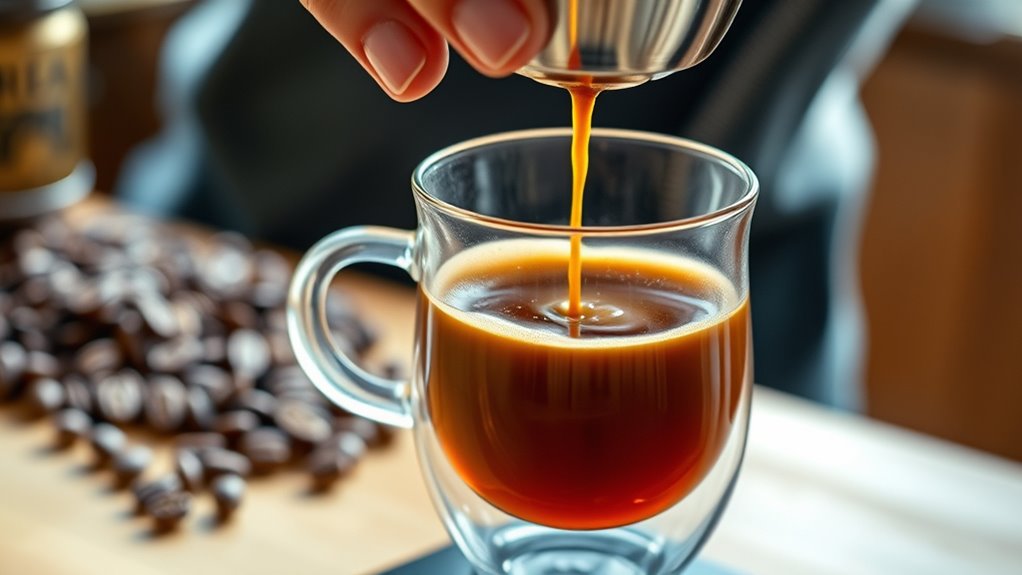
Understanding the language of coffee tasting is essential for accurately describing and evaluating a brew’s qualities. When you taste coffee, you use specific sensory terms to express what you experience. These include aroma, flavor, acidity, body, and aftertaste. Developing your vocabulary helps you identify subtle differences and appreciate the coffee more deeply. Use the table below to familiarize yourself with common sensory descriptors:
| Sensory Aspect | Description |
|---|---|
| Aroma | Fragrant notes like floral, fruity, or spicy |
| Flavor | Overall taste, combining aroma and palate experience |
| Body | The weight or thickness felt on the palate |
Deciphering Coffee Grading and Quality Standards
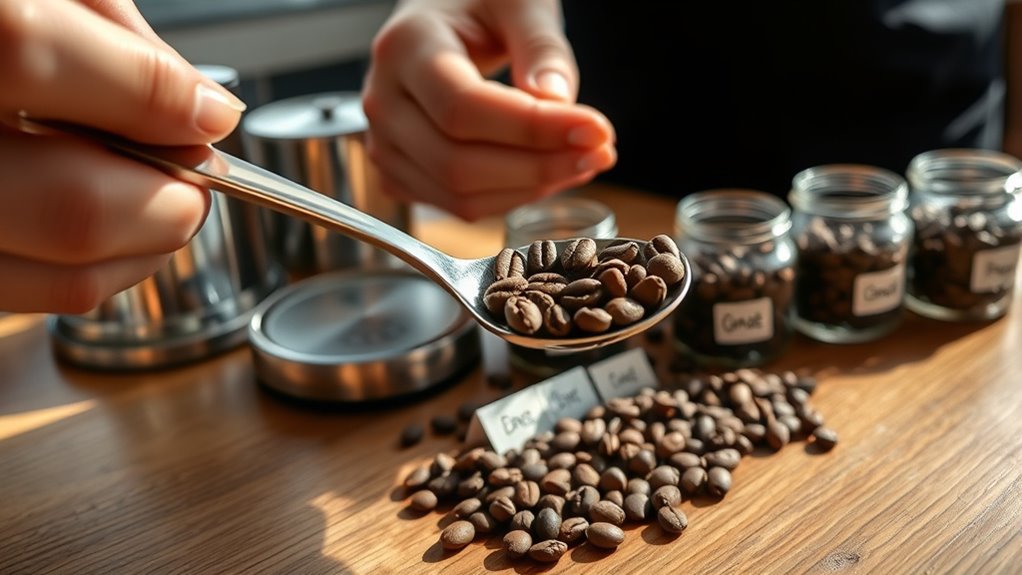
Ever wonder how coffee quality is measured and rated? It’s all about standards established by organizations like the Specialty Coffee Association (SCA). You can understand coffee grading by focusing on four key points:
- Bean Defects: Less defects mean higher quality. Grades like Specialty require no primary defects.
- Size & Uniformity: Larger, uniform beans are preferred, indicating better sorting.
- Cupping Scores: Tasted scores range from 80 to 100, with 80+ qualifying as specialty.
- Origin & Processing: Single-origin and carefully processed beans typically earn higher grades.
These factors help you identify top-quality coffee. Grading guarantees consistency and transparency, so you know exactly what you’re getting when you sip that perfect brew.
The Significance of Coffee Origins and Sourcing
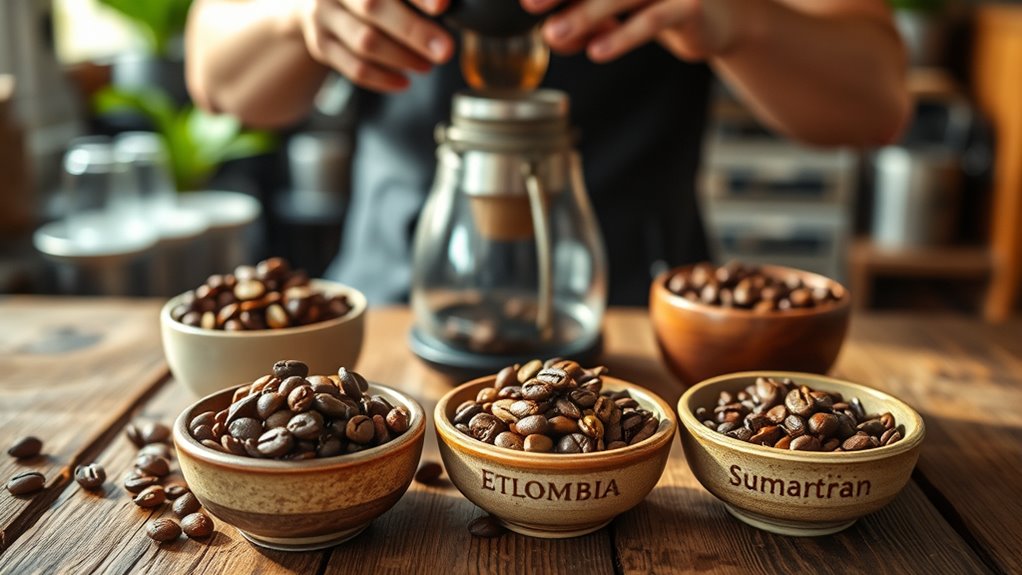
Coffee’s origin profoundly influences its flavor, aroma, and overall quality. When you know where your coffee comes from, you understand the unique environmental factors—like soil, altitude, and climate—that shape its character. For example, coffees from Ethiopia often boast fruity and floral notes, while Colombian beans may offer balanced brightness and nuttiness. Sourcing practices also matter; ethically farmed coffee guarantees better quality and supports fair wages. Single-origin coffees highlight specific regions or farms, giving you a chance to explore distinct profiles. Micro-lot coffees are even more exclusive, traceable to small farm sections. By paying attention to origins and sourcing, you can select coffees that match your taste preferences and support sustainable practices. It’s a crucial step toward appreciating coffee’s diverse flavors and ensuring quality.
Frequently Asked Questions
What Does “Pulled Shot” Mean in Espresso Preparation?
A “pulled shot” means you use an espresso machine to extract a shot of espresso by forcing hot water through finely ground coffee under pressure. You activate the machine’s lever or button, and the process takes about 25-30 seconds. During this time, you observe the espresso flowing out, forming a rich, golden crema on top. It’s essential for creating a well-balanced, flavorful espresso shot.
How Does Grind Size Affect Coffee Extraction?
Think of grind size as the key to revealing the perfect brew. If your grind is too fine, you’ll over-extract, making your coffee bitter and harsh. Too coarse, and under-extraction leads to weak, sour flavors. Finding the right balance guarantees ideal extraction, highlighting the coffee’s best qualities. You want your grind size to match your brewing method, so it’s like hitting the sweet spot every time.
What Is the Difference Between a Latte and a Cappuccino?
A latte has more steamed milk and a thin layer of microfoam, making it creamier and milder. A cappuccino, on the other hand, features equal parts espresso, steamed milk, and thick foam, creating a frothier, more robust drink. You’ll notice that a cappuccino is lighter and airier, while a latte is smoother and richer. Both start with espresso, but their milk textures and ratios set them apart.
Why Is Freshness Important in Coffee Beans?
You’ll notice that coffee beans start losing their flavor within two to three weeks after roasting, making freshness essential. Fresh beans have higher levels of CO2, which helps create better crema and enhances aroma. When you use fresh beans, your coffee will taste more vibrant, complex, and balanced. Stale beans can result in flat, dull flavors, so always aim to brew with beans that are within a month of roasting for the best experience.
What Are Some Common Latte Art Designs?
You can create several common latte art designs, like hearts, rosettas, tulips, and swans. To make these, you pour steamed milk carefully into the espresso, controlling the flow and movement to shape the foam. Practice helps you master the technique, allowing you to produce clean, intricate designs. With patience and steady hands, you’ll impress customers or friends with beautiful latte art that enhances their coffee experience.
Conclusion
Now that you’ve navigated the nuances of coffee jargon, you’re no longer a novice but a knowledgeable barista in the making. With a grasp of grinding, grading, and grinding again, you can confidently decode the delightful dance of brewing and beans. So, sip, savor, and share your newfound knowledge, turning every coffee encounter into a flavorful, fascinating fiesta. Embrace the aroma, appreciate the artistry, and let your coffee journey continue with curiosity and clarity!