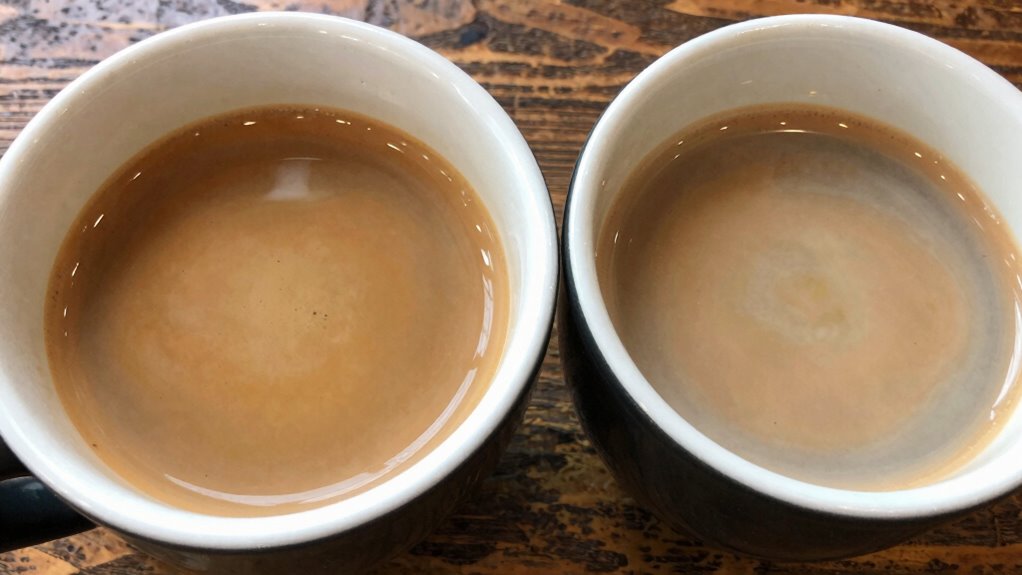

Smooth coffee has a balanced, rich flavor with a pleasant mouthfeel, often due to proper brewing, fresh beans, and consistent extraction. Flat coffee, on the other hand, lacks brightness and complexity, tasting dull and lifeless, usually caused by stale beans, improper temperature, or uneven brewing. Paying attention to factors like grind size, water temperature, and freshness can help you achieve that smooth, flavorful cup. Want to learn more ways to improve your coffee? Keep exploring!

Get coffee and tea gear delivered free with Prime
- Fast, free delivery on millions of items
- Prime Video, Amazon Music and more included
- Member-only deals all year
Key Takeaways
- Smooth coffee has a balanced flavor profile with a rich, velvety mouthfeel, while flat coffee tastes dull and lacks vibrancy.
- Aroma intensity in smooth coffee is fresh and inviting; flat coffee exhibits weak or muted aroma signals.
- Proper extraction and freshness contribute to smoothness, whereas stale beans and improper brewing lead to flatness.
- Roast level and bean origin influence smoothness, with medium roasts often offering the most balanced, smooth taste.
- Consistent brewing practices, including correct temperature and grind size, are key to achieving smooth coffee and avoiding flatness.
coffee grinder for consistent grind size
As an affiliate, we earn on qualifying purchases.
As an affiliate, we earn on qualifying purchases.
Why Does My Coffee Sometimes Taste Flat or Unbalanced?

Sometimes, your coffee can taste flat or unbalanced, and there are a few common reasons behind this. One key factor is coffee acidity, which influences the brightness and lively notes in your brew. If the acidity is too low, your coffee may taste dull or flat. Another factor is brewing temperature; if it’s too low or too high, it can prevent proper extraction of flavors. Brewing at the correct temperature, around 195-205°F (90-96°C), helps extract the right balance of acids and other compounds, ensuring your coffee isn’t under- or over-extracted. When either acidity levels or brewing temperature aren’t optimized, your coffee can lose its vibrancy, leaving it tasting unbalanced or flat. Understanding coffee extraction and adjusting these variables can bring back the lively, well-rounded flavor you’re seeking. Additionally, proper brewing techniques play a vital role in achieving the desired flavor profile. Practicing consistent measurement of ingredients can also help maintain the optimal balance of flavors. Incorporating a high-quality grinder ensures uniform particle size, which is crucial for consistent extraction and flavor clarity.
What Makes Coffee Smooth or Flat in Texture and Flavor?

The texture and flavor of your coffee are shaped by factors that influence how smooth or flat it feels on your palate. One key element is the coffee aroma, which can enhance the perception of richness and balance, making the coffee feel more lively and smooth. Brewing temperature also plays a vital role; if it’s too high, it can extract bitter compounds, resulting in a flat or harsh flavor. Conversely, brewing at the right temperature helps preserve the coffee’s natural oils and aromatic compounds, creating a smoother, more rounded taste. The right balance of aroma and temperature ensures your coffee feels satisfying rather than dull or flat. Additionally, understanding the capacity of your brewing equipment can help optimize extraction and flavor consistency. Proper equipment maintenance is also essential to maintain optimal brewing conditions and prevent off-flavors. Being aware of brew time can further influence the final texture and flavor, ensuring a balanced extraction. Maintaining consistent brewing practices can also significantly impact the overall quality of your coffee.
How Do Beans and Roasts Affect Coffee Smoothness?

The origin of your beans can make a big difference in how smooth your coffee tastes, with some regions producing brighter or more balanced flavors. Regional flavor profiles can influence the perceived smoothness, as certain areas are known for their unique taste characteristics. The roast level also plays a role, as lighter roasts often highlight acidity, while darker roasts tend to smooth out the profile. Additionally, the way beans are processed influences their flavor, affecting the overall smoothness of your brew. Understanding processing methods can help you appreciate the diverse range of coffee flavors suited to different preferences. Recognizing how bean origin impacts flavor profiles can further enhance your appreciation for the nuances in your coffee. Moreover, processing techniques can significantly alter the final flavor, adding complexity or smoothing out sharp notes.
Bean Origin Influences Smoothness
The origin of coffee beans plays a significant role in determining how smooth or flat your brew will taste. Different coffee bean varieties come from specific regions, each imparting unique regional flavors that influence smoothness. For example, beans from Central America often deliver a balanced, mild profile with a smooth finish, while African beans might have brighter, more vibrant notes that can feel sharper. The soil, climate, and altitude of the region shape the beans’ characteristics, affecting acidity and body—key factors in smoothness. Understanding regional differences helps you select beans that align with your preference for a smoother or flatter coffee experience. Additionally, bean processing methods can further impact the final flavor profile and mouthfeel, contributing to the overall smoothness or flatness of your brew. Factors like processing techniques influence how much residual acidity remains, which can significantly alter the coffee’s mouthfeel. Exploring processing methods can provide insight into how different techniques enhance or diminish smoothness in your coffee. Moreover, bean freshness also plays a vital role in achieving the desired mouthfeel and flavor, as fresher beans often result in a more vibrant and smooth cup. By choosing beans from certain regions, you can influence your coffee’s overall mouthfeel and flavor profile. Understanding these regional flavors helps you select beans that align with your preference for a smoother or flatter coffee experience.
Roast Level Impact
Roast level plays a crucial role in shaping how smooth or flat your coffee will taste, as it directly influences the beans’ flavor and mouthfeel. Lighter roasts preserve more of the beans’ natural characteristics, often resulting in a brighter, more nuanced flavor with a lively, smooth finish. Medium roasts balance acidity and body, offering a well-rounded experience that can enhance smoothness. Dark roasts, achieved through specific roasting techniques, tend to develop bolder, more bitter flavors but can sometimes produce a flatter, less vibrant profile. Coffee bean genetics also matter, as some beans are naturally suited to certain roast levels, impacting overall smoothness. Adjusting roast levels allows you to tailor your coffee’s mouthfeel, emphasizing either a smooth, balanced profile or a more pronounced, flat taste. Additionally, understanding the roast level impact helps you select the right beans and techniques to achieve your preferred coffee experience. Recognizing the importance of bean genetics can help you select beans that naturally complement your preferred roast level for optimal smoothness. Exploring roast profiles can also guide you in achieving the desired balance between smoothness and flatness. Furthermore, silly tantrums and pet antics during coffee tastings can add unexpected humor to the process, making it more memorable.
Bean Processing Methods
Bean processing methods considerably influence coffee’s smoothness by affecting the beans’ moisture content, fermentation, and removal techniques. For example, decaffeination processes like Swiss Water or CO2 extraction can strip out harsh compounds, resulting in a cleaner, smoother cup. Organic certification also plays a role, as organic beans are often processed with fewer chemicals, preserving more natural flavors and reducing bitterness. Additionally, washed or fully processed beans tend to be smoother because they undergo fermentation and rinsing, removing impurities and unneeded substances. Processing techniques also influence the overall flavor profile and mouthfeel of the coffee. Moreover, the water treatment during processing can further impact the final smoothness by affecting the purity and clarity of the beans. Proper drying methods are essential as they help prevent mold and preserve bean quality, contributing to a more consistent and smooth flavor. Ensuring optimal storage and handling conditions can also help maintain the beans’ quality and smoothness over time. On the other hand, natural or dry-processed beans may retain more fruity or earthy notes but can sometimes introduce rougher textures. Understanding how these processing methods impact the beans helps you choose coffees that align with your preference for smoothness. Additionally, processing quality control during each stage is crucial for achieving a consistently smooth coffee.
How Brewing Methods Influence Coffee’s Texture and Flavor?
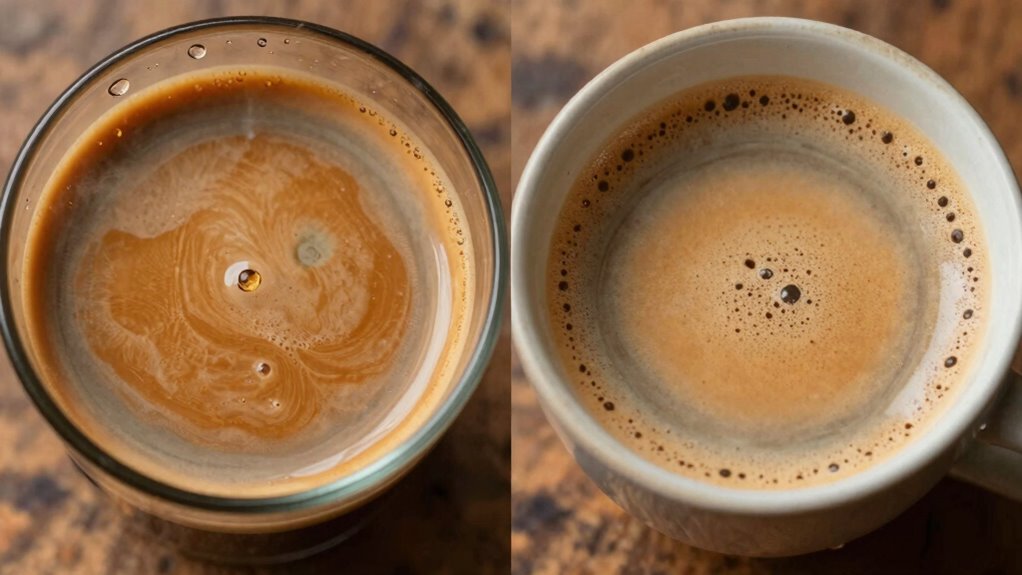
Brewing methods play an essential role in shaping both the texture and flavor profile of your coffee. The way you brew influences coffee acidity, which affects brightness and sharpness, and also impacts the overall smoothness. For example, methods like pour-over or Aeropress tend to produce a cleaner, brighter cup with more pronounced acidity. Conversely, French press brewing often results in a richer, fuller-bodied coffee with a softer mouthfeel. Brewing temperature is vital; higher temperatures extract more flavors quickly, sometimes leading to a harsher or more bitter taste, while lower temperatures yield a milder, smoother profile. Adjusting your brewing method and temperature allows you to control the balance between sharpness and smoothness, shaping the coffee’s texture and flavor to match your preferences. Additionally, understanding extraction helps you fine-tune your brewing process for optimal flavor. Proper brew ratio is also crucial, as it influences the strength and clarity of the final cup. Using the correct grind size can significantly impact the extraction process and overall coffee quality.
How to Identify Flat Coffee and What Causes It

Flat coffee is characterized by a dull, lifeless taste that lacks the brightness and complexity you might expect from a well-crafted brew. To identify it, pay attention to the coffee aroma—if it’s weak or muted, it’s a sign of flatness. The aroma should be lively and inviting; if it’s flat, the flavor won’t have the same energy. Bean freshness plays a vital role here—stale beans produce duller flavors and diminished aroma. If your coffee smells off or lacks vibrancy, it’s likely flat. Additionally, the taste will feel dull, with no lingering finish or lively notes. Stale beans, poor storage, or over-roasting can all cause flat coffee. Ensuring fresh beans and proper storage helps maintain the aroma and brightness essential for a vibrant cup.
Tips for Brewing Smooth Coffee Every Time
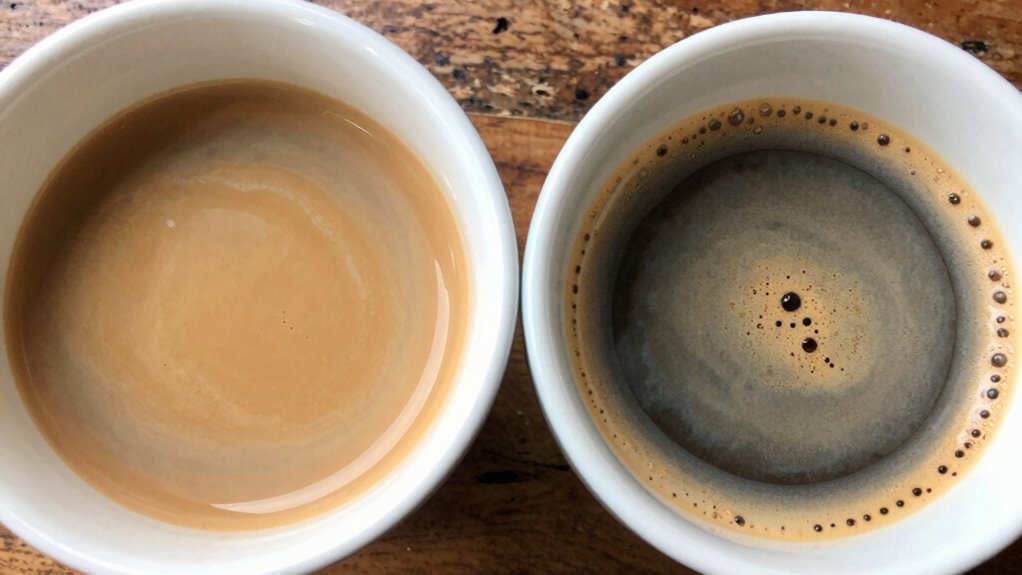
To brew smooth coffee every time, start with fresh coffee beans for ideal flavor. Make certain your grind size matches your brewing method, and keep the water temperature just right—around 195-205°F. Paying attention to these details helps guarantee your coffee turns out consistently smooth.
Use Fresh Coffee Beans
Have you ever wondered why some cups of coffee taste fresher and smoother than others? The key lies in using fresh beans. Coffee freshness significantly impacts flavor; stale beans can lead to flat, dull tastes that lack vibrancy. To achieve that smooth, rich profile, always start with high-quality, fresh coffee beans. Check the roast date on the package, and aim to use beans within a few weeks of roasting. Store your beans in an airtight container, away from light and heat, to preserve their freshness longer. Grinding just before brewing also helps lock in flavor. Remember, fresh beans are the foundation for a smooth, flavorful cup—skip this step, and even the best brewing technique can fall short.
Maintain Proper Grind Size
Maintaining the right grind size is essential for brewing smooth coffee because it directly influences extraction and flavor balance. Use consistent grind size suited to your brewing equipment—finer for espresso, coarser for French press. If the grind is too fine, your coffee may become over-extracted and bitter; too coarse, and it’ll be under-extracted and weak. Proper coffee storage helps preserve bean oils and freshness, ensuring your grind remains ideal. Store beans in an airtight container away from light and heat to prevent them from becoming stale. When grinding, do so just before brewing to maximize flavor. Adjust your grinder settings if you notice uneven extraction or a flat taste. Staying attentive to grind size and storage keeps your coffee smooth and consistently enjoyable.
Control Water Temperature
Controlling water temperature is essential for brewing smooth coffee because it directly affects extraction and flavor clarity. If water is too hot, it can over-extract compounds, increasing bitterness and dulling the coffee’s natural acidity. Too cool, and you risk under-extraction, resulting in flat, weak flavors. To maintain ideal temperature, ensure your coffee storage keeps beans fresh, as stale beans can produce uneven extraction. Use a thermometer or a temperature-controlled brewer to keep water between 195°F and 205°F. This range helps preserve coffee acidity, highlighting bright notes without overwhelming bitterness. Consistently brewing at the right temperature guarantees you extract the desired flavors, resulting in a smooth, well-balanced cup every time. Proper temperature control is key to revealing your coffee’s full potential.
Adjusting Grind and Extraction for Better Coffee Flavor

Adjusting the grind size and extraction time is key to releasing the full flavor of your coffee. When you tweak the grind, you influence how water interacts with the grounds, affecting flavor balancing and aroma enhancement. A finer grind increases extraction, resulting in a richer, more intense taste, while a coarser grind produces a lighter, cleaner flavor. Monitoring extraction time ensures you don’t over- or under-extract, which can cause flatness or bitterness. By experimenting with these variables, you can find the perfect balance that highlights the coffee’s unique qualities. Properly calibrated grind and extraction not only improve flavor but also bring out the coffee’s aromatic nuances, making each cup more vibrant and satisfying.
Frequently Asked Questions
Can Water Quality Affect the Smoothness of Coffee?
Yes, water quality affects the smoothness of your coffee. If your water has high mineralization, it can make your coffee taste harsh or bitter. Likewise, if the pH balance isn’t ideal—either too acidic or too alkaline—it can disrupt flavor extraction, leading to flat or unbalanced coffee. Using water with the right mineral content and pH balance helps you brew a smoother, more enjoyable cup every time.
Does the Age of Coffee Beans Influence Flatness?
Imagine biting into a crisp apple versus a wilted one—you’ll notice the difference in freshness. Similarly, aged coffee beans lose their vibrant oils, making your brew taste flat and dull. Fresh beans, especially when roasted to the right level, release lively flavors that keep your coffee smooth and rich. As beans age, their flavor diminishes, resulting in a flatter, less satisfying cup. So, always choose fresh beans for the best taste.
How Does Brewing Temperature Impact Coffee Flavor?
Brewing temperature remarkably impacts your coffee’s flavor by controlling the extraction rate. If you brew too hot, you risk over-extraction, making your coffee bitter and harsh. Too cold, and the extraction might be incomplete, resulting in a flat, dull taste. Ideally, keep your brewing temperature around 195-205°F to optimize extraction, ensuring a balanced, flavorful cup. Adjusting temperature helps you fine-tune the flavor profile to suit your preferences.
Are There Specific Coffee Varieties Known for Being Less Flat?
Some bean varieties are known for having more vibrant flavor profiles and are less flat. For example, Arabica beans often offer brighter, more complex flavors, making your coffee less dull. Specialty coffee beans from regions like Ethiopia or Colombia tend to have lively acidity and aromatic notes, reducing flatness. Choosing these varieties can give you a more dynamic cup, with richer flavor profiles that stand out and avoid that flat coffee sensation.
What Role Does Coffee Storage Play in Flavor Preservation?
Think of your coffee as a delicate melody that needs careful preservation. Proper storage containers act like a fortress, shielding coffee from oxygen, moisture, and light, which are thieves of flavor. When you store your beans or grounds properly, you lock in coffee freshness, ensuring each brew sings with rich, vibrant notes. Without good storage, the coffee’s lively rhythm falters, leaving flat, dull flavors that dull your morning.
Conclusion
So, next time your coffee falls flat, remember—it’s probably just trying to tell you it’s too smooth or too flat. Ironically, chasing the perfect balance can often make it less balanced. Embrace the quirks in your brew; sometimes, a little imperfection adds character. After all, even the most polished cup can miss the soul that a little flatness or smoothness brings. Cheers to finding your ideal—and maybe a little flawed—coffee every time.
Columbus Day / Indigenous Peoples' Day Picks
long weekend sales
As an affiliate, we earn on qualifying purchases.